
This guide contains affiliate links. If you book through them I earn a small commission at no extra cost to you. Hotels included are ones I’ve researched in depth or stayed at; trade-offs are real.
Most luxury hotel rankings for Kyoto are barely-disguised press releases. The same six properties, in the same order, with the same photographs of cherry blossoms and tatami corridors, and not a single negative sentence about any of them.
That’s not a ranking. That’s a brochure.
What follows is what I actually think after years of staying in Kyoto’s top properties, eating their breakfasts, walking their corridors at 5am, and watching what they charge in cherry-blossom week versus a wet Tuesday in late January. Eleven hotels and ryokan, ranked by what you actually get for the money. Every one of them has something I’d quietly tell you to skip.
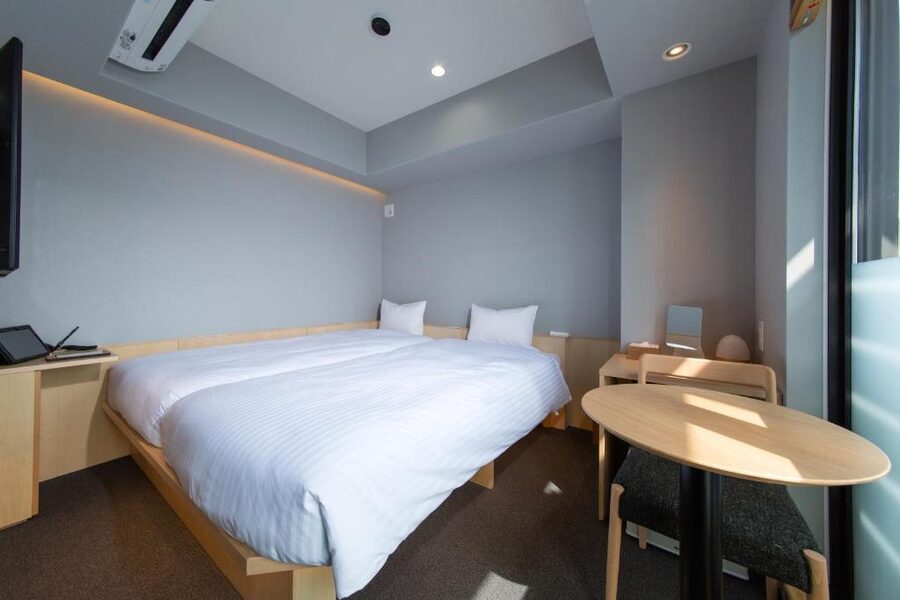
Aman Kyoto sits well outside the centre, a feature for some travellers, a flaw for others. Worth getting that decision right before you book.
In This Article
- The quick-reference ranking
- How I rank these (so you can disagree on purpose)
- 1. Tawaraya Ryokan, the actual answer
- 2. Hiiragiya, Tawaraya’s neighbour, half the queue
- 3. Park Hyatt Kyoto, the best mainstream luxury hotel in the city
- 4. Aman Kyoto, the most overrated, but the architecture is real
- 5. Four Seasons Hotel Kyoto, the garden, the family suites, the central location
- 6. The Ritz-Carlton Kyoto, riverside, reliable, the breakfast is the hook
- 7. Hoshinoya Kyoto, boat to dinner, novelty that earns it
- 8. HOTEL THE MITSUI KYOTO, the onsen, the gate, the surprise of the list
- 9. Six Senses Kyoto, the newest entry, the location is the question
- 10. Suiran, a Luxury Collection Hotel, Arashiyama at a livable price
- 11. Yura Nijojo Bettei MGallery, quiet entry-luxury done well
- What this list deliberately doesn’t include
- Why Aman is fourth, not first
- How to book any of these without losing money
- Quick recommendations by traveller type
The quick-reference ranking
| Rank | Hotel / Ryokan | Best for | From / night (low season) | Book |
|---|---|---|---|---|
| 1 | Tawaraya Ryokan | Heritage ryokan, repeat travellers | ¥85,000 | Direct only |
| 2 | Hiiragiya | Ryokan craft without the queue | ¥75,000 | Direct only |
| 3 | Park Hyatt Kyoto | Mainstream luxury done well, the bath view | ¥120,000 | Booking.com |
| 4 | Aman Kyoto | Resort isolation, garden architecture | ¥250,000 | Booking.com |
| 5 | Four Seasons Hotel Kyoto | Pond garden, families, central location | ¥130,000 | Booking.com |
| 6 | The Ritz-Carlton Kyoto | Riverside, Italian dining, repeat-luxury crowd | ¥140,000 | Booking.com |
| 7 | Hoshinoya Kyoto | River-access seclusion, Arashiyama base | ¥150,000 | Direct only |
| 8 | HOTEL THE MITSUI KYOTO | Onsen + heritage gate near Nijo | ¥110,000 | Booking.com |
| 9 | Six Senses Kyoto | Wellness-led luxury, southern Higashiyama | ¥160,000 | Booking.com |
| 10 | Suiran, a Luxury Collection Hotel | Riverside Arashiyama, mid-luxury value | ¥75,000 | Booking.com |
| 11 | Yura Nijojo Bettei MGallery | Quiet entry-luxury, Nijo location | ¥55,000 | Booking.com |
How I rank these (so you can disagree on purpose)
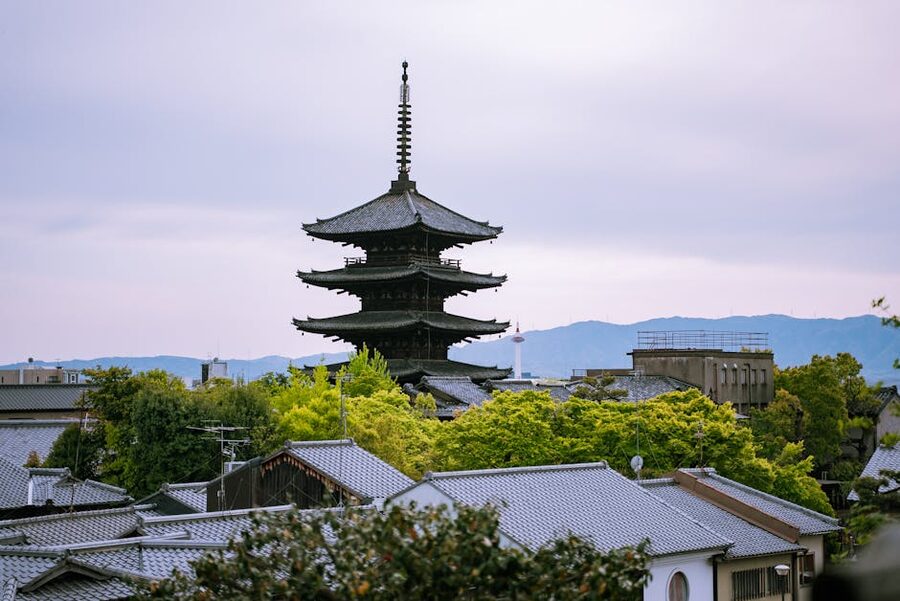
Higashiyama, with the Yasaka pagoda anchoring the skyline, is the right base for most luxury Kyoto trips. Three of the eleven hotels here are within a ten-minute walk of this view.
Three things matter for a Kyoto luxury stay, and one of them is the one most rankings ignore.
The first is location relative to walking. Kyoto’s pleasure is in the walking, Gion to Higashiyama at 7am, the canal up to Nanzen-ji, Pontocho at dusk. A hotel that puts you in a 25-minute taxi away from all of that has to earn it. That’s the Aman test, and Aman doesn’t always pass.
The second is what the room actually feels like. Square metres are the headline. Whether the bath has a window, whether the tatami is real, whether there’s a futon or a Western bed and which one suits your bones, whether the corridor floor squeaks the way old wood actually does or whether it’s been padded into hotel silence, that’s the texture. The brand-name hotels tend to do square metres. The ryokan do texture.
The third is service in the very specific Kyoto sense. Not “warm” service, every five-star hotel claims warm service. Service that knows who you are and what you ordered last time and adjusts the rice ratio at breakfast accordingly. That’s a different thing. Tawaraya does it. Hiiragiya does it. The Park Hyatt does a respectable hotel-grade version of it. Aman does it on its own terms. The Ritz does the international-standard version, which is fine, but it’s not what the ryokan do.
I weight all three. Then I weight price reality on top of that, because the difference between ¥85,000 and ¥250,000 a night is not abstract. It’s the difference between three nights and one.
1. Tawaraya Ryokan, the actual answer
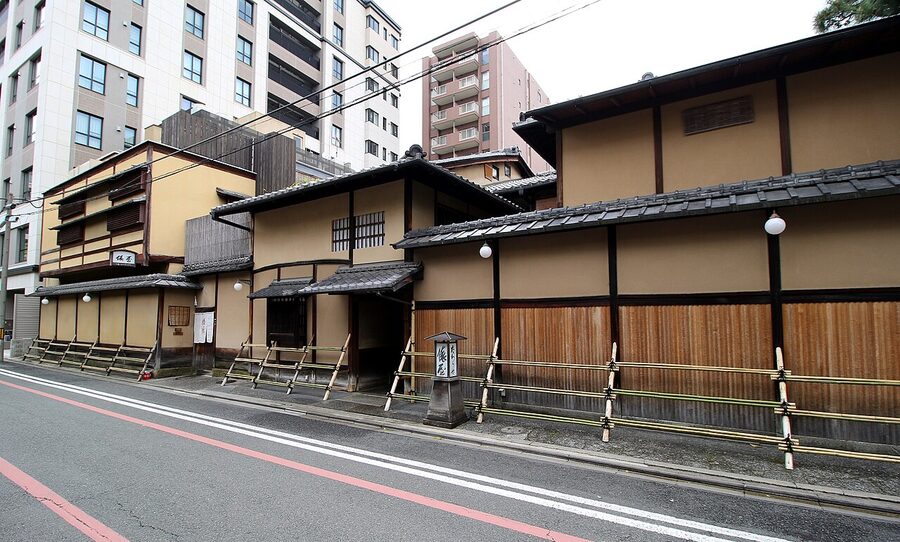
Tawaraya doesn’t appear on Booking. The first time you call to reserve, you’re already part of how it works.
Nearest station: Karasuma-Oike (Karasuma / Tozai lines), exit 1, 6 min walk
To Nijo Castle: 10 min walk
Best for: repeat travellers, ryokan obsessives, anyone willing to slow down
From: ¥85,000 / night low season, up to ¥220,000+ in sakura and autumn weeks
Tawaraya is the answer to “what’s the best ryokan in Kyoto” if you take the word ryokan seriously. Eleven generations of the Okazaki family. Eighteen rooms. A small inner garden you reach through a corridor that bends in a way no architect would draw it. A bath cut from a single block of hinoki cypress. Breakfast that arrives on a low table at the time you said you wanted it, not a service window.
If you want to know whether Tawaraya is for you, the question is whether you can sit on a tatami floor and read a novel for three hours without checking your phone. If the answer is yes, you’ll never want to stay anywhere else in Kyoto. If the answer is no, you’ll find Tawaraya boring and you’ll wish you’d booked the Ritz.
The thing nobody quite warns you about: Tawaraya is more expensive once you factor in the kaiseki dinner (which you’ll want, and which runs ¥30,000-45,000 per person on top of the room) and the breakfast (included, but the better one is the rice-porridge breakfast, which is a separate ¥6,000). Two nights with dinner both nights is over a million yen for two people in cherry-blossom week. And it’s worth it. But know what you’re booking.
What’s good:
- The okami remembers everything. If you mentioned in a 2019 visit that you preferred the rice slightly underdone, the 2026 visit gets it right without you saying anything
- The hinoki bath actually smells of hinoki, because the wood is replaced often enough that it does
- The garden rooms (numbers 1, 2, 5) look out onto interior courtyards you cannot see from the street
- The ryokan slippers fit Western feet, which sounds trivial until you’ve stayed at a ryokan where they don’t
What’s not:
- You book by phone or fax (yes, fax, they still have one). Email goes through but takes days. This is the system; it isn’t going to change for you
- The non-garden rooms, particularly the smaller ones at the back, are charming but tight, and the price isn’t proportionally lower than the garden rooms. If you’re paying ryokan rates, get a garden room or don’t bother
- Tawaraya doesn’t do English breakfasts. If you need bacon and eggs, this is not your hotel
To book: phone +81 75 211 5566 or email reservations via the official site. They don’t list on Booking, Agoda, or anywhere else. Lead time for cherry blossom and autumn weeks is six months minimum.
2. Hiiragiya, Tawaraya’s neighbour, half the queue
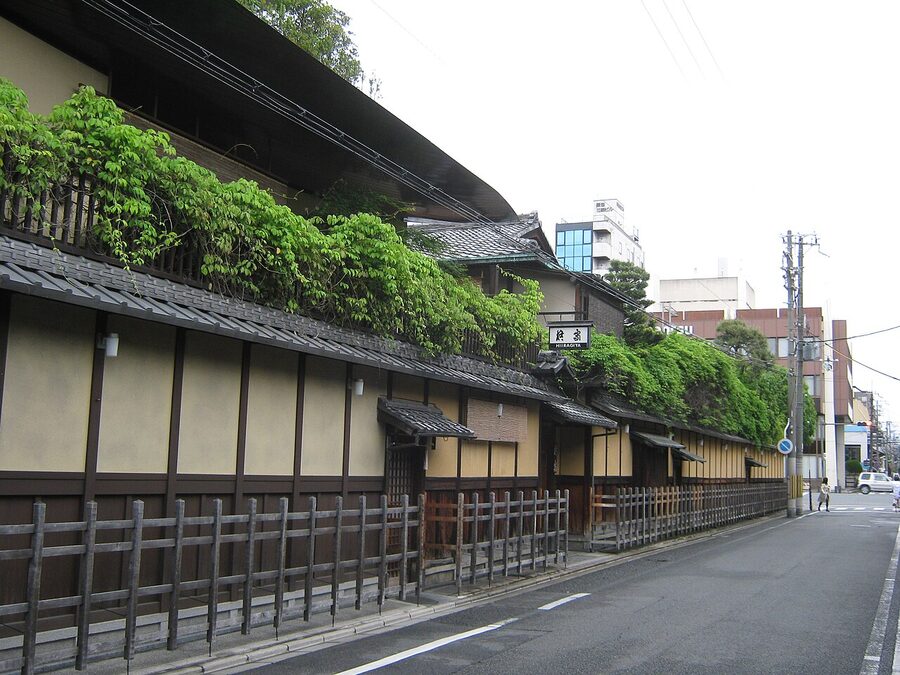
Hiiragiya is across the road from Tawaraya. The two ryokan have been keeping an eye on each other for two centuries and the rivalry is part of why both are good.
Nearest station: Karasuma-Oike (Karasuma / Tozai lines), exit 1, 5 min walk
To Nijo Castle: 10 min walk
Best for: first-time ryokan stay at the top end, travellers who can’t get into Tawaraya
From: ¥75,000 / night low season, up to ¥190,000 in peak weeks
Hiiragiya is what you book when Tawaraya is full, and that’s not a slight, it’s the actual scenario for most travellers, because Tawaraya fills up first. Same neighbourhood, same cultural credibility (six generations, Charlie Chaplin and Yasunari Kawabata both stayed here), and a slightly different feel. Hiiragiya is a touch more formal, the rooms have a touch more colour, and the service is a touch more visible.
I’d rank Hiiragiya second to Tawaraya by a small margin. The kaiseki is nearly the equal of Tawaraya’s, the rooms are arguably more varied (their newer wing has rooms with private outdoor baths that Tawaraya doesn’t offer at all), and the price is ten or fifteen percent lower. The reason it’s second is that Tawaraya’s intangibles, the corridor that bends, the silence at 5am, the okami’s memory, are still ahead. But you’ll notice the difference only if you’ve stayed at both.
For most readers, Hiiragiya is the right call. You’ll pay ¥75,000-150,000 a night for the room, get one of the best kaiseki dinners in Kyoto on the premises, and walk out the front door into central Kyoto.
What’s good:
- Several rooms have private outdoor baths, rare for a central-Kyoto ryokan and worth the upgrade
- Kaiseki dinner is served in your room as standard. You don’t move
- You can actually book Hiiragiya by email reasonably reliably, which Tawaraya makes harder
- The newer wing rooms are easier on Western backs than the heritage rooms (slightly higher futon, more space around the table)
What’s not:
- The standard rooms in the original wing share the look-feel of a heritage ryokan but aren’t quite as spacious as the Tawaraya equivalents
- Like Tawaraya, no Booking.com listing, book direct via the official site or by email
- The breakfast is fine but doesn’t quite hit the level of the dinner
To book: via the Hiiragiya website’s reservation form or by email. Lead time three to four months in normal weeks, six months in sakura/autumn.
3. Park Hyatt Kyoto, the best mainstream luxury hotel in the city
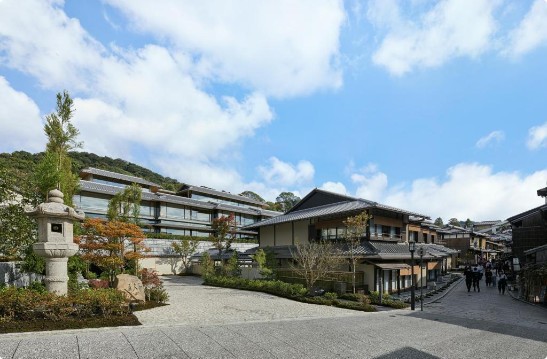
Park Hyatt’s setting is the real luxury, five minutes’ walk from Yasaka pagoda, with the slope of Higashiyama for a back garden.
Nearest station: Gion-Shijo (Keihan line), exit 6, 12 min walk uphill; or taxi from anywhere central
To Yasaka pagoda (Hokan-ji): 4 min walk
Best for: first-time luxury Kyoto, the bath view, mainstream-luxury reliability
From: ¥120,000 / night low season, ¥260,000+ in sakura
If you want Kyoto’s best mainstream luxury hotel, properly vetted, reliable service, the kind of place where the concierge actually knows what they’re doing, the Park Hyatt is the answer. Most guides put Aman first by reflex. Most guides are wrong on this one.
The setting is what does it. The hotel sits halfway up the slope of southern Higashiyama, four minutes’ walk from Yasaka pagoda, ten minutes from Kiyomizu-dera, twenty from Gion. You can walk to dinner. You can walk back from a temple at 6am. You can stand on the terrace at sunset and watch the city below switch on its lights.
The other thing the Park Hyatt has, and which Aman doesn’t, is a bath view. Several of the deluxe room categories have a bath positioned to look out over Yasaka pagoda. That’s the kind of detail that justifies an extra ¥30,000 a night in the upgrade. Ask for a high floor, southwest-facing.
Service-wise, this is hotel-grade rather than ryokan-grade, the staff don’t remember you across years the way Tawaraya does, but within the hotel category it’s about as good as Kyoto offers. Concierge knowledge of what’s open, what’s overrated, and how long Kiyomizu’s queue actually is at 8am is genuine.
What’s good:
- Bath view from upgraded rooms, the photo competitors run is real, you can see the pagoda from the tub
- The Yasaka neighbourhood is the best walking base in Kyoto, and the hotel exits straight into it
- Breakfast at Yasaka is the best hotel breakfast I’ve had in Japan; the kaiseki version is worth the upgrade
- The bar, Kohaku, is open to non-guests and is one of the best hotel bars in the country
What’s not:
- The walk back from anywhere down in central Kyoto is uphill. After dinner, with a few drinks in you, that’s a longer walk than you think it is
- Standard king rooms don’t have the bath view. If you want it, pay for the upgrade or don’t book
- The pool is small, a long lap pool is not what this hotel does
- Sakura-week pricing crosses ¥300,000 a night for the suites, which is ridiculous, but that’s Kyoto in cherry-blossom season everywhere
To book: Booking.com is usually the best price for the standard rooms. For the suites, the Hyatt direct rate sometimes undercuts Booking by 5-8%; check both.
4. Aman Kyoto, the most overrated, but the architecture is real
Aman’s grounds are a former failed garden of a textile collector. The architecture frames it the way a museum frames a painting.
Nearest station: none nearby, taxi from Kyoto Station 25 min, from Shijo 18 min
To Kinkaku-ji: 10 min by taxi
Best for: resort isolation, repeat luxury travellers, garden-architecture obsessives
From: ¥250,000 / night low season, ¥600,000+ for top suites in peak
Full review: Aman Kyoto Review
I’m going to lose some readers with this ranking, so let me explain.
Aman Kyoto is the most-photographed luxury hotel in Japan. The architecture by Kerry Hill is a genuine achievement, pavilions tucked into a forested hillside in the far north of Kyoto, on the failed garden grounds of a textile-magnate’s private estate. The grounds are stunning. The hot-spring baths are exceptional. The service is superb in the way that Aman service is consistently superb worldwide.
And it’s not in Kyoto.
I mean that practically, not philosophically. Aman is twenty-five minutes by taxi from Kyoto Station, eighteen from central Kyoto, and the only meaningful walking in the immediate vicinity is between the pavilions. You’re not going to wander out for dinner. You’re not going to walk to a temple. You’re going to taxi everywhere, and the hotel will arrange those taxis politely and add them to your bill, and at the end of three nights you’ll have spent more time in cars than you have walking the city you came to see.
If you’re using Kyoto as a backdrop for a resort experience, that’s fine. Aman is excellent at being a resort. If you’re using a Kyoto trip to actually see Kyoto, the location is the wrong call. The Park Hyatt at half the price puts you in the city.
The other catch: Aman’s food is not Kyoto’s best. The on-property restaurants are good, not great, and the price is significant. If you want kaiseki at this level, eat at one of the two- or three-Michelin places downtown and let Aman handle the room.
What’s good:
- The architecture and grounds are the real reason to come, the pavilions are worth the visit even if you don’t stay
- The hot-spring baths (rotenburo) are the best of any luxury hotel in Kyoto by a long way
- Service is Aman service: anticipatory, calibrated, never intrusive
- The Pavilion Suites with private gardens are spectacular, if you can stomach the price
What’s not:
- Twenty-five minutes by taxi from anything you came to Kyoto for. After two days you’ll feel it
- The on-site restaurants charge top-tier prices for food that wouldn’t earn a Michelin star at half the cost. Eat in town
- Some of the standard “Pavilion Garden” rooms are smaller than the photographs suggest, ask for the larger Aman category if you’re paying these prices
- Cherry-blossom and autumn pricing is genuinely silly
To book: Booking.com sometimes lists Aman Kyoto, but Aman direct via aman.com is the more reliable path and includes the suite categories Booking doesn’t always show.
5. Four Seasons Hotel Kyoto, the garden, the family suites, the central location
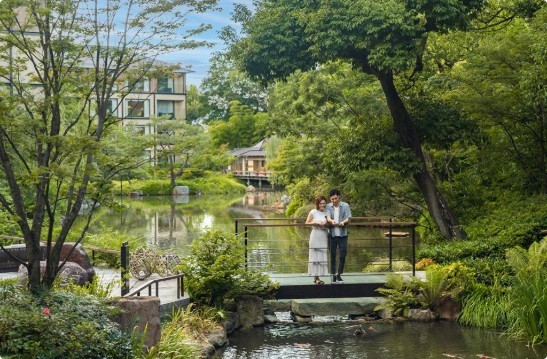
Four Seasons’ Shakusui-en garden is 800 years old. The hotel was built around it, not the other way around.
Nearest station: Shichijo (Keihan line), exit 4, 12 min walk
To Sanjusangen-do: 8 min walk
Best for: families, garden views, central-east Kyoto base
From: ¥130,000 / night low season, ¥320,000+ in sakura
The Four Seasons sits on the Shakusui-en pond garden, a 12th-century landscape that the hotel inherited and built around. That’s the differentiator. From the right rooms you look out onto a pond with carp and a tea pavilion that has been there since well before the hotel was a hotel. The lobby connects directly to the garden through a glass corridor that’s worth the price of an upgrade.
This is the hotel I’d book for families at the top end. Several of the Four Seasons’ suite categories are genuinely large, the Premier Garden View suites have separate living areas and bathtubs that can fit two adults. The pool is the largest of any luxury hotel in Kyoto, the gym is the best-equipped, and the Italian restaurant (Brasserie) does a children’s menu that doesn’t insult anyone.
The location is fine but not exceptional. You’re a 12-minute walk from Sanjusangen-do (the 1,001 statues temple), 15 minutes from the start of southern Higashiyama, and a taxi or quick subway ride from Gion proper. It’s central-east Kyoto rather than walking-distance Kyoto. The Park Hyatt’s setting is better for a couples trip; the Four Seasons’ is better for a family.
What’s good:
- The Shakusui-en garden, a real 12th-century pond garden inside the hotel grounds
- Largest pool of any luxury hotel in Kyoto. Family-trip useful
- The Premier Garden View suites are properly large and look directly onto the garden
- Italian restaurant does a credible breakfast and a kid-friendly menu, useful for travellers with under-tens
What’s not:
- Standard rooms (without the garden view) face the road or the inner court and aren’t worth the Four Seasons price tag, pay for the garden view or stay elsewhere
- The walk to Gion proper is 25 minutes through a residential area that isn’t particularly scenic
- The kaiseki restaurant on-site is competent rather than special; for serious kaiseki, go out
To book: Booking.com for standard rooms; Four Seasons direct sometimes has better suite-category rates including breakfast.
6. The Ritz-Carlton Kyoto, riverside, reliable, the breakfast is the hook
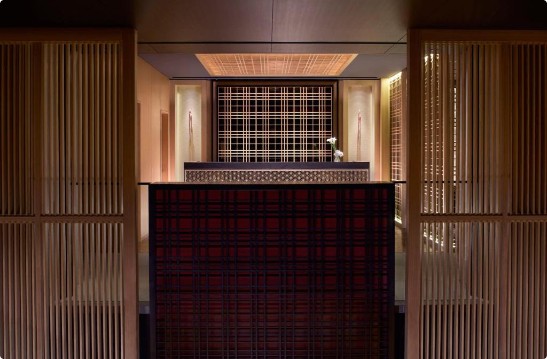
The Ritz-Carlton sits directly on the Kamogawa. The river-view rooms are the only reason to book this hotel, but they’re a real reason.
Nearest station: Kyoto-Shiyakusho-mae (Tozai line), exit 3, 5 min walk
To Pontocho: 5 min walk across the river
Best for: repeat-luxury travellers, river view, Italian breakfast
From: ¥140,000 / night low season, ¥350,000+ in peak weeks
The Ritz sits directly on the Kamogawa river, opposite Pontocho, with the Higashiyama mountains in the distance behind. River-view rooms look out across the water; non-river-view rooms look at a wall. That’s the only structural decision you need to make about this hotel.
The hotel itself is what you’d expect from a Ritz at this price point: large rooms with proper bathtubs, a credible spa, polished but slightly impersonal service. It does what it does well. It’s not going to surprise you in any direction. If you’re a Ritz-Carlton loyalist or a Marriott Bonvoy points-burner, this is your Kyoto play.
The breakfast is the actual sell. Mizuki, the hotel’s Japanese restaurant, does a kaiseki breakfast that is genuinely one of the best in the city, better than the Park Hyatt’s, comparable to the Tawaraya in technique. The Italian restaurant (La Locanda) does a Sunday brunch that’s ¥9,000 and worth it. You’ll eat well at the Ritz.
The rest of it is a hotel. Good rooms, a serviceable pool, a spa that’s fine. The main reason to pay Ritz-Carlton money over Park Hyatt money is if you specifically want the river view, you want to be five minutes from Pontocho on foot, and you don’t care about the Higashiyama walking that the Park Hyatt is built around.
What’s good:
- River-view rooms put you above the Kamogawa with the eastern mountains as a backdrop
- Mizuki kaiseki breakfast is one of the best in Kyoto, full stop
- Five-minute walk to Pontocho, ten minutes to Gion across the river
- The spa, La Sothys facials are credible, is open until 11pm, useful after a long temple-walking day
What’s not:
- City-view (non-river) rooms are not worth the Ritz price. Pay the upgrade or don’t book
- Service is polished, not personal. After three nights nobody knows your name. After three nights at Tawaraya, everyone does
- The Italian restaurant is a Ritz-Carlton Italian restaurant. Competent. Forgettable
To book: Booking.com for non-loyalty bookings; Marriott direct if you have Bonvoy points or status.
7. Hoshinoya Kyoto, boat to dinner, novelty that earns it
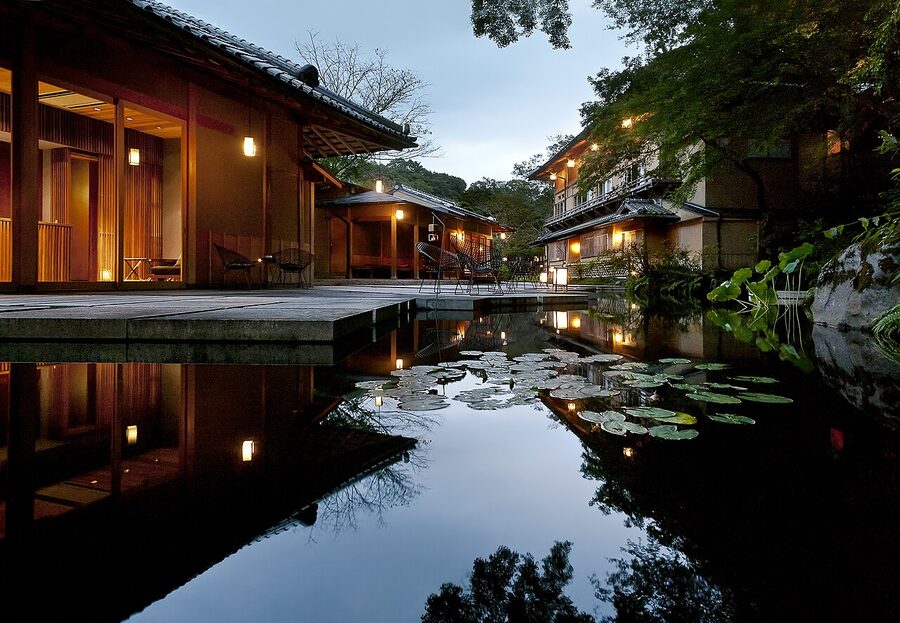
The boat from Arashiyama station is the only way to check in. It’s a marketing flourish that happens to also be a practical access route.
Nearest station: Hankyu Arashiyama (Hankyu Arashiyama line), boat from Togetsukyo bridge, 15 min
To Tenryu-ji: 5 min walk + boat back
Best for: Arashiyama base, river isolation, repeat travellers wanting a different setting
From: ¥150,000 / night low season, ¥350,000+ in peak weeks
Full review: Hoshinoya Kyoto Review
You can only check into Hoshinoya by boat. The boat picks you up at the Togetsukyo bridge on the Hozugawa river in Arashiyama, takes 15 minutes upriver, and drops you at a private jetty that doesn’t connect to the road. That’s the hook. It’s also the catch.
The hook works because the setting is real. Hoshinoya occupies a stretch of the Hozugawa with no other buildings on either bank. From the rooms you see river, forest, the occasional cormorant fisherman in season. Dinner, kaiseki served in your room, comes via the boat. Breakfast comes via the boat. The Hoshinoya boat staff are extremely good at making this not feel like a logistical problem.
The catch is what happens if you want to leave. The boat runs scheduled times. If you want to be in Gion at 7pm for dinner somewhere downtown, you need to take a boat back, then a taxi, then a return taxi, then a boat. Two nights at Hoshinoya is the right number, long enough to feel the seclusion, short enough not to feel trapped.
Food on-property is good but priced like a luxury hotel restaurant, kaiseki is ¥30,000+ per person for dinner. If you came to Kyoto for the food, you’ll want to eat in town some nights, which means logistics.
What’s good:
- The setting is genuinely without peer in central Kyoto luxury, no other property on the river bank
- The boat ride is novel for the first time and useful logistically thereafter
- Cherry-blossom views from the riverside rooms are the best in any Kyoto luxury hotel
- Tea ceremony in the morning at the on-property pavilion is included, a real one, not a tourist version
What’s not:
- You’re committed to Arashiyama. Going into central Kyoto is a 40-minute round trip in transit, every time
- The food markup on-site is real, eating in town is meaningfully cheaper for the same quality
- Not on Booking.com or Agoda; book direct via hoshinoresorts.com
- The water-garden suites (with their own outdoor bath) are an enormous price jump from the river-view rooms
To book: direct via the Hoshino Resorts site (hoshinoresorts.com). Two-night minimum in peak weeks; one-night stays available off-peak. Book the river-view room as the standard category, the back-facing rooms are not the experience you came for.
8. HOTEL THE MITSUI KYOTO, the onsen, the gate, the surprise of the list
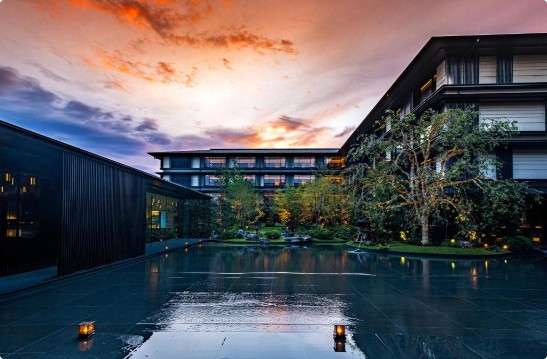
The Kajiimiya Gate at the entrance is from a private 1703 estate. The hotel was built around it.
Nearest station: Nijojo-mae (Tozai line), exit 1, 4 min walk
To Nijo Castle: 2 min walk
Best for: luxury hotel + real onsen, Nijo location, garden integration
From: ¥110,000 / night low season, ¥260,000+ in peak
The Mitsui is the underrated property on this list. It opened in late 2020, was rebranded as a Luxury Collection (Marriott) hotel, and most international travellers walked straight past it on their way to Park Hyatt or Aman.
What it has, and what nothing else on this list has at the same scale, is a real natural hot spring on-site. The Mitsui drilled to a genuine onsen source, not the recirculated water that some Tokyo “onsen hotels” run, and built a public bath area that’s a credible imitation of a Japanese ryokan onsen. There’s also an in-room thermal bath option in the higher categories. For travellers who want luxury hotel rooms but the bathing experience of a ryokan, this is the closest you get in central Kyoto.
The other unusual thing is the architecture. The hotel is built around a relocated 17th-century gate (the Kajiimiya Gate) and a working garden, both of which the Mitsui family kept in private hands for three centuries before the property became a hotel. The lobby looks out onto the garden through a long glass wall.
The location is good, three minutes from Nijo Castle, ten from the Karasuma subway corridor, but you’ll be relying on the subway or taxis to get to Higashiyama. It’s not a walking-base in the way Park Hyatt is.
What’s good:
- Genuine on-site natural hot spring, rare for a city luxury hotel
- The Kajiimiya Gate and inner garden are unique architectural assets
- Italian restaurant (Toki) is a credible high-end option, and breakfast there is well-executed
- The thermal-bath suites are worth the upgrade if onsen is part of why you came
What’s not:
- You’re 25 minutes’ walk from Gion or central Pontocho, not a walking base for the famous bits
- The standard rooms don’t have private onsen baths; the upgrade is significant
- Service is Marriott-grade, competent but not on the same plane as Park Hyatt or Aman
To book: Booking.com works fine for standard rooms; check Marriott direct for the upgraded onsen-bath categories.
9. Six Senses Kyoto, the newest entry, the location is the question
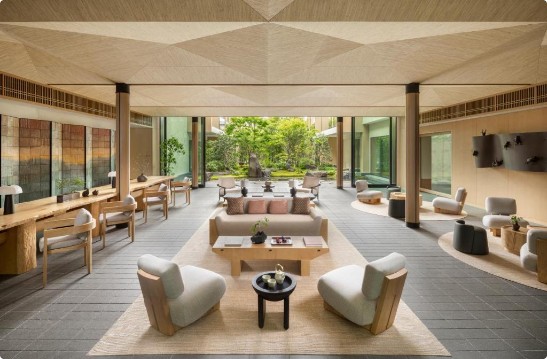
Six Senses is the newest international luxury entry in Kyoto. Whether the location works depends on what you want from a Kyoto trip.
Nearest station: Shichijo (Keihan line), exit 1, 8 min walk; or Kiyomizu-Gojo, 12 min
To Sanjusangen-do: 6 min walk
Best for: wellness-led luxury, repeat travellers, southern-Higashiyama base
From: ¥160,000 / night low season, ¥380,000+ in peak
Six Senses opened in 2024 and the international travel press wrote a lot about it, mostly favourably, mostly because Six Senses’ marketing is very good at courting travel writers. Having stayed there I’d say it’s a good hotel that hasn’t quite earned its top-of-list rankings yet.
The wellness-led positioning is real. The spa is Six Senses-branded with the breathwork programmes and biohacking gadgets the brand is known for. The on-site Japanese restaurant is decent. The architecture incorporates an existing minka structure that was on the site before, which is a nice touch.
The location is the question. Six Senses sits in southern Higashiyama, near Toyokuni Shrine, which is a relatively quiet residential corner of the city. You’re a 6-minute walk from Sanjusangen-do, 15 from Kiyomizu, and 25 from Gion proper. It’s a fine base for slow temple-walking days; it’s not a base for night-life, dining, or the central districts.
Compared to Park Hyatt or Four Seasons at similar prices, Six Senses’ weakness is that the location does fewer things well. It’s not in walkable Higashiyama. It’s not in central Kyoto. It’s at the southern fringe, which is quiet and pleasant but means more taxis. If you specifically want the Six Senses brand experience, fine. If you want best-in-class Kyoto luxury, Park Hyatt is a better call at the same price.
What’s good:
- Six Senses spa is genuinely strong, the spa treatments are easily the best on this list
- The minka building integration is well-done, more than a token nod to heritage
- The pool and wellness areas are the largest of the new-build hotels in this segment
- Service in the brand’s signature Asian-resort tradition, calm, anticipatory, not overdone
What’s not:
- Location is southern Higashiyama, which is not central Kyoto, taxis to Gion, taxis back
- Pricing is on the high end given the location; you could get Park Hyatt for less in many weeks
- The brand cachet was higher in 2024 than it is now; the property hasn’t yet developed a personality of its own
To book: Booking.com handles bookings; check Six Senses direct for spa-package add-ons that don’t always appear on Booking.
10. Suiran, a Luxury Collection Hotel, Arashiyama at a livable price
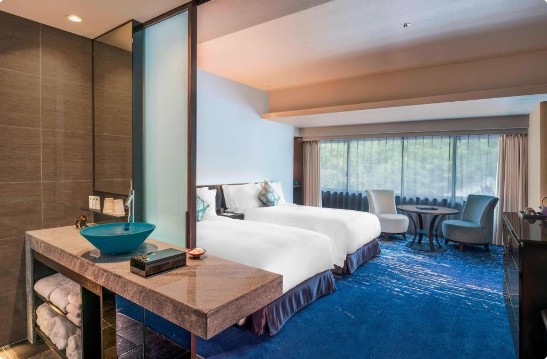
Suiran is the affordable cousin of Hoshinoya. River-side rooms, no boat, half the price.
Nearest station: Saga-Arashiyama (JR Sagano line), 8 min walk; Hankyu Arashiyama, 12 min
To Tenryu-ji: 5 min walk
Best for: Arashiyama at a livable price, mid-luxury value, riverside base
From: ¥75,000 / night low season, ¥180,000+ in peak weeks
If you want Arashiyama-river luxury but Hoshinoya is too rich, Suiran is the answer. Same general stretch of riverbank, properly-sized rooms in the upgraded categories with private outdoor baths, and Marriott Luxury Collection branding. Half the Hoshinoya price for what is, in practice, eighty percent of the experience.
The structure is a converted historic villa. The grounds are real. Several rooms have private rotenburo (outdoor bath) on the terrace, looking at the river, which is the upgrade I’d push you toward. The kaiseki restaurant on site (Kyo-Suiran) is competent and is included in some packages.
The catch is location-internal. Suiran is in central Arashiyama proper rather than the more isolated stretch Hoshinoya occupies, which means more day-tripper foot traffic in the morning. If you want to wake up to absolute quiet at 7am, Hoshinoya does that better. If you want walking-distance access to Tenryu-ji, the bamboo grove, and the Sagano railway, Suiran is the better base.
What’s good:
- Rooms with private outdoor baths overlooking the Hozugawa, a genuine ryokan-style feature at hotel prices
- Walking distance to Tenryu-ji, bamboo grove, and Togetsukyo bridge
- Half the Hoshinoya price for a similar Arashiyama riverside experience
- Kaiseki on-site is well-executed, particularly in the autumn season
What’s not:
- Day-tripper noise, Arashiyama gets crowded between 9am and 3pm and you’ll feel it
- Standard rooms don’t have private outdoor baths; pay for the upgrade
- Same Arashiyama-base trade-off as Hoshinoya, central Kyoto is a 25-minute taxi or a slow train
To book: Booking.com covers most rooms; Marriott direct sometimes has rate parity with breakfast included.
11. Yura Nijojo Bettei MGallery, quiet entry-luxury done well
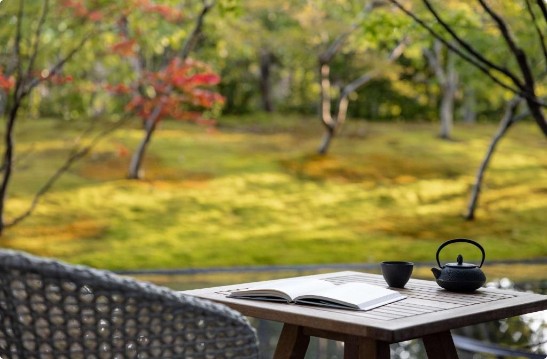
Yura sits on a quiet stretch of road five minutes from Nijo Castle. It’s the only hotel on this list under ¥60,000 a night in low season.
Nearest station: Nijojo-mae (Tozai line), exit 1, 6 min walk
To Nijo Castle: 5 min walk
Best for: quiet luxury at the entry end, Nijo location, repeat city travellers
From: ¥55,000 / night low season, ¥130,000 in peak
Yura is the surprise of the list, a small Accor MGallery property (formerly branded Garrya Nijo) that runs at meaningfully lower prices than the rest of this ranking and delivers a genuinely high-end experience. About forty rooms. A quiet street. A small inner courtyard garden you can sit in.
The rooms are smaller than the Park Hyatt or Four Seasons categories, but they’re well-designed, proper desk, proper bath, decent natural light, surprisingly thoughtful storage. The design is more Japanese-minimal than the international luxury chains; the staff are genuinely small-hotel-professional, which means they remember things. After two nights they’ll know what time you like coffee and where you go for breakfast.
This is the hotel I’d book for a third or fourth visit to Kyoto, when you’ve already done the Park Hyatt or the ryokan and you don’t want to spend ¥150,000 a night again. The location is fine, five minutes to Nijo Castle, ten to the Karasuma subway corridor, and the price is genuinely sub-luxury, which makes a longer stay feasible.
What’s good:
- Lowest entry-level luxury pricing on this list by a meaningful margin
- Small enough for the staff to actually know you after a couple of nights
- Inner garden courtyard that’s quiet and you can use
- Walking distance to Nijo Castle and the western edge of central Kyoto
What’s not:
- Rooms are smaller than the international-chain luxury equivalents
- No spa, no pool, no on-site kaiseki at the level of the other hotels on this list
- Location is fine but not exceptional, Higashiyama and Gion are 20+ minutes by foot or a quick subway
To book: Booking.com consistently has the best rates; Accor direct sometimes matches.
What this list deliberately doesn’t include

The good news about Kyoto’s luxury hotels is that you can walk to almost all of them from Pontocho. The bad news is the walk back uphill after dinner.
Three properties that often appear in Kyoto luxury rankings and that I’ve left off, with reasons.
The Hotel Seiryu Kyoto Kiyomizu. Beautiful conversion of a former elementary school, very good location near Kiyomizu, but the rooms are small for the price and the on-site dining is overpriced. It’s a four-star at five-star money. If you want southern Higashiyama luxury, the Park Hyatt is the better call.
Hyatt Regency Kyoto. A solid five-star and a good hotel, but it’s a Hyatt Regency, not a Park Hyatt. Different brand standard. The location is decent (near Sanjusangen-do) and the price is below the Four Seasons next door. It’s a good four-star for travellers who don’t need true luxury, but the brief here is luxury, and Hyatt Regency is one tier below.
Conrad Osaka. Yes, I know, it’s not in Kyoto. But it appears on Kyoto luxury hotel lists distressingly often, presumably because it’s nearby and points-bookable. Stay in Kyoto if you came to Kyoto. The bullet train back to Osaka at the end of the trip is fine; commuting from Osaka to Kyoto every day is a 30-minute train each way and you’ll resent it by day three.
Why Aman is fourth, not first
Most luxury Kyoto guides put Aman first. I’ve put it fourth, behind two ryokan and the Park Hyatt. Let me be specific about why.
Aman Kyoto is genuinely beautiful. The architecture is real. The grounds are real. The service is excellent in a way that Aman service is consistently excellent. None of that is at issue.
What’s at issue is the location. Aman is twenty-five minutes from Kyoto Station by taxi. The walk to anything else is not a walk, it’s a transit-required journey. You will, over a three-night stay, get into a taxi a lot. Each of those taxis is a small lump of friction. Each is a few minutes you’re not walking the city. Add it up and you’ve spent four or five hours of your three-night Kyoto trip in cars.
If you came to Kyoto specifically to disappear into a forested resort that happens to be located in a Kyoto postcode, that’s exactly what Aman delivers. If you came to Kyoto to walk Kyoto, Gion at 6am, the Philosopher’s Path in autumn, Nishiki Market at 4pm, Aman is the wrong base. The Park Hyatt at half the price puts you in the city. That’s why the Park Hyatt is third on this list and Aman is fourth, even though Aman is the more expensive hotel.
I’d book Aman for a fourth or fifth Kyoto visit, when you’ve already walked the city and you want a different experience. I’d not book it for a first or second visit.
How to book any of these without losing money
A few practical notes that apply across the list.
Booking.com is usually the best price for the international chains (Park Hyatt, Four Seasons, Ritz-Carlton, Six Senses, MGallery, Luxury Collection). For brand loyalists with status, the brand-direct site sometimes adds breakfast or a room upgrade that beats the Booking rate by a small margin. Always check both.
Tawaraya, Hiiragiya, and Hoshinoya don’t list on Booking. Tawaraya in particular requires phone or email contact in advance, there is no online reservation system. Build in two weeks of lead time for the email reply, more if you want a specific room.
Cherry-blossom and autumn-leaf weeks are different from the rest of the year. Sakura week (typically late March to early April) and the autumn peak (mid-November) cross every Kyoto luxury hotel into a different price tier. Late January, early February, and the high-summer humidity weeks (mid-July through August) are the value windows. Park Hyatt at ¥120,000 in February is an entirely different proposition from Park Hyatt at ¥320,000 in sakura.
Cancellation policies tighten dramatically in peak weeks. Most hotels move from “free cancellation 48 hours” off-peak to “non-refundable” or “free cancellation 14 days out” in cherry blossom and autumn. Read the fine print before you book; this is where money goes wrong.
Quick recommendations by traveller type
First time in Kyoto, top-end budget: Park Hyatt Kyoto. Best mainstream luxury, walking-distance Higashiyama, the bath view earns the upgrade.
Heritage ryokan obsessive: Tawaraya. Book six months out. Be willing to call.
Couples, garden views, family suite: Four Seasons Kyoto. Premier Garden View room, request the high-floor side.
Wanting something different on a fourth visit: Hoshinoya Kyoto for two nights. The boat is real.
Onsen lover who wants hotel-grade rooms: HOTEL THE MITSUI KYOTO. Real natural hot spring on-site, central Nijo location.
Best value entry-level luxury: Yura Nijojo Bettei MGallery. Smaller rooms, but properly luxurious for the money.
For broader district context, see the pillar guide on where to stay in Kyoto, the deeper look at where to stay in Higashiyama for travellers leaning toward eastern Kyoto, the Arashiyama base guide for the Hoshinoya / Suiran angle, and the ryokan-only ranking for travellers who’ve already decided against Western-style luxury hotels.