
This guide contains affiliate links. If you book through these links I earn a small commission at no extra cost to you. I only recommend hotels I’ve genuinely researched and would consider booking myself.
Most Kyoto guides put Gion at the top of the “where to stay” list. They’re wrong for most travellers. If you’ve never been to Kyoto and you’re trying to figure out one base for four nights, Downtown beats Gion at almost everything that actually matters: walkability, food, transport, price, the ability to come and go without feeling like you’re disturbing a museum. I’ve stayed all over this city. The neighbourhood I keep going back to is Downtown.
By “Downtown” I mean the rectangle bounded roughly by Oike-dori on the north, Shijo-dori on the south, Karasuma-dori on the west, and the Kamogawa river on the east. Within that grid you’ve got Kawaramachi (the transport hub and shopping spine), Pontocho (the lantern-lit alley along the river), Kiyamachi (the parallel canal-side street), and Nishiki Market (the covered food arcade running west off Teramachi). Five minutes by foot connects all of them.
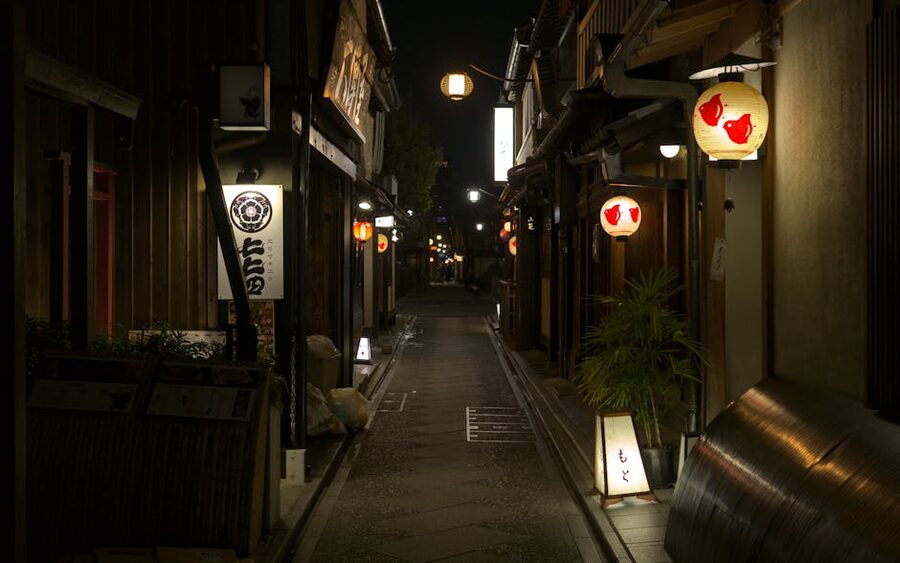
This guide is opinionated. There are 16 hotels below across three budget tiers, all within five to ten minutes’ walk of each other. I’ll tell you which ones I’d book in your situation, which ones are coasting on location, and which ones are actually worth the splurge.
In This Article
- Quick-reference table
- Why Downtown is underrated
- How to choose between Pontocho, Kawaramachi, and Nishiki
- Which station you actually want
- Pontocho and Kiyamachi: the river-side strip
- The Mitsui Kyoto, a Luxury Collection Hotel & Spa: best luxury in Downtown
- Solaria Nishitetsu Hotel Kyoto Premier: best mid-luxury on the river
- Mitsui Garden Hotel Kyoto Sanjo Premier: best mid-range on the river
- Kawaramachi: the transport hub
- Hotel Kanra Kyoto: best luxury machiya in Downtown
- The Thousand Kyoto: best for first-timers wanting newer-build comfort
- Cross Hotel Kyoto: best mid-range design hotel
- Royal Park Hotel The Kyoto Sanjo: solid mid-range pick
- Hotel Resol Kyoto Kawaramachi Sanjo: budget-friendly four-star
- Tokyu Stay Kyoto Sanjo Karasuma: best for longer stays
- Nishiki Market: the food obsession base
- Mitsui Garden Hotel Kyoto Shijo: closest to Nishiki
- Good Nature Hotel Kyoto: best for organic / wellness travellers
- Ace Hotel Kyoto: the design-hotel splurge
- NODE Hotel Kyoto: boutique art-focused stay
- Budget Downtown: under ¥20,000
- OMO5 Kyoto Sanjo by Hoshino Resorts: best budget-mid
- Piece Hostel Sanjo: best private hostel room
- Len Kyoto Kawaramachi: hostel-cafe hybrid
- What most Kyoto guides get wrong about Downtown
- Booking strategy and timing
- Getting in and out
- Picking the right one for you
Quick-reference table
| Sub-area | Best for | My pick | From / night | Book |
|---|---|---|---|---|
| Pontocho / Kiyamachi | River views, food crawl, atmosphere | The Mitsui Kyoto | ¥120,000 | Check prices |
| Kawaramachi | Transport, shopping, walkability | Hotel Kanra Kyoto | ¥55,000 | Check prices |
| Nishiki Market | Food obsession, location-first | Mitsui Garden Hotel Kyoto Shijo | ¥28,000 | Check prices |
| Karasuma / Sanjo | Design hotels, calmer streets | Ace Hotel Kyoto | ¥45,000 | Check prices |
| Budget tier | Sub-¥10,000 stays in Downtown | OMO5 Kyoto Sanjo | ¥18,000 | Check prices |
Prices are starting rates in low season. Cherry blossom (late March to early April) and autumn colour (mid-November) push everything up by 50-150%. Budget for that.
Why Downtown is underrated
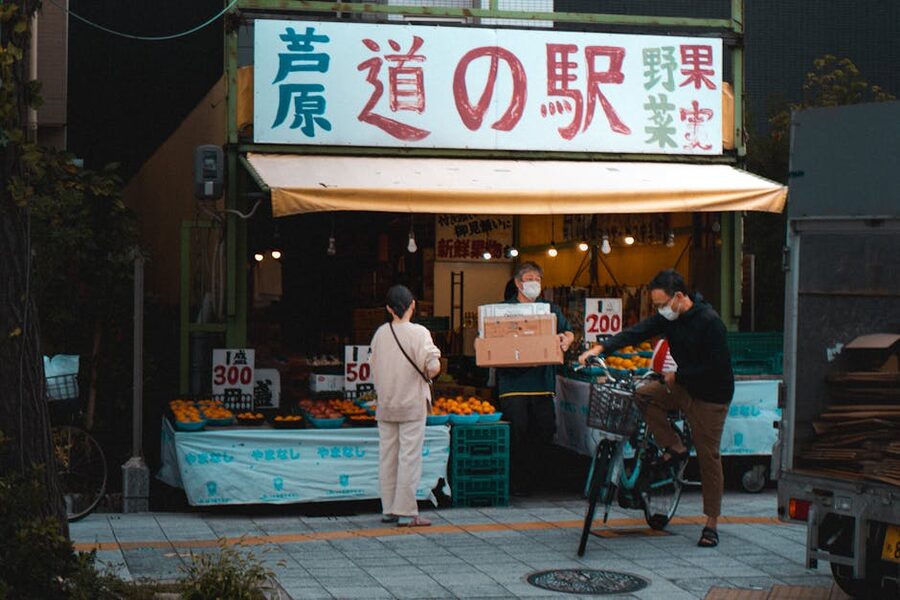
The case against Downtown that you’ll read in other guides goes something like this: it’s too modern, too commercial, you might as well be in any Japanese city. That’s wrong on two counts.
First, Downtown’s “modern” label is a trick of geography. The buildings on Shijo-dori and Kawaramachi-dori are mostly post-war department stores and offices. But the streets running off them (Pontocho, Kiyamachi, Sakaimachi, Nishiki Koji), are the city’s densest concentration of pre-1920 wooden architecture. Pontocho specifically is one of the most photographed streets in Japan. You’re 90 seconds’ walk from a Daimaru department store to a row of *hanamachi* (geisha district) tea houses with discreet lanterns and reservation-only entrances. That’s not Anywhere Japan. That’s specifically Kyoto.
Second, the practical case. Downtown sits at the intersection of two subway lines (Karasuma north-south, Tozai east-west), the Hankyu Kyoto line to Osaka, and the Keihan line up to Demachiyanagi. Walk seven minutes east and you’re at the river; walk eight minutes south and you’re at Shijo Station; walk ten minutes south-east and you’re crossing the bridge into Gion. Higashiyama and Gion are 15 minutes by foot or one stop by Keihan. Even the so-called “far” temples are reasonable: Kiyomizu-dera is 25 minutes’ walk, Nijo Castle is 20 minutes north-west, Kyoto Imperial Palace is 15 minutes north.
The thing is, when people complain that Kyoto is exhausting, they almost always stayed at Kyoto Station and spent two hours a day on buses. Downtown halves that.
How to choose between Pontocho, Kawaramachi, and Nishiki
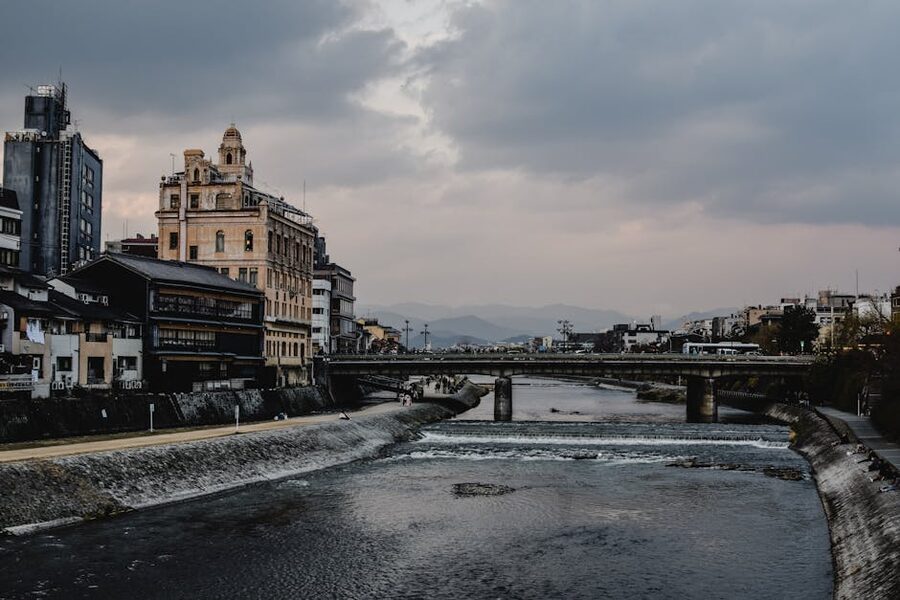
The three sub-areas inside Downtown matter more than people realise. Within ten minutes’ walk you can choose:
- Pontocho / Kiyamachi (river-side strip): Best atmosphere, narrowest streets, highest food density. Slight noise risk on weekends. The hotels here are smaller, often higher per-night.
- Kawaramachi (Shijo-Kawaramachi crossing): Best transport, Hankyu Kawaramachi station is right there, plus all the bus lines. Best shopping. The hotels are mid-size to chain. Easiest to get to and from.
- Nishiki / Karasuma (west side of Downtown): Quieter streets at night. Closer to the subway. Walk five minutes east when you want the river or restaurants. Often best value because you’re not paying for the river view.
If you can’t decide, default to Karasuma side. You get the same access to everything, you sleep better, and you’ll spend half your time walking east anyway.
Which station you actually want
This trips up first-timers. There are five stations in walking distance of Downtown and they’re not interchangeable.
- Hankyu Kyoto-Kawaramachi: The eastern terminus of the Hankyu line from Osaka. Handy for day trips to Osaka or Arashiyama (transfer at Katsura). Underground at the Shijo-Kawaramachi crossing.
- Keihan Sanjo / Gion-Shijo: Across the river. Use this for day trips up to Demachiyanagi (then onward to Eizan Railway for Kurama or Kibune) or south to Fushimi Inari and Tofuku-ji.
- Subway Karasuma, Shijo / Karasuma-Oike: Karasuma line north to Imperial Palace and Kyoto Station, south to nothing useful. Tozai line east-west across town. The two intersect at Karasuma-Oike, which is the workhorse station for getting around the city.
- Subway Tozai, Sanjo Keihan / Kyoto Shiyakusho-mae: Sanjo Keihan is the main interchange between the Keihan line and the Tozai subway. Useful but five to ten minutes’ walk from the Pontocho hotels.
Buses are still relevant in Kyoto, but if you stay Downtown you’ll use them maybe once or twice, for Kinkaku-ji, Daitoku-ji, or anywhere west of Nijo. Everywhere else, walk or take the subway.
Pontocho and Kiyamachi: the river-side strip
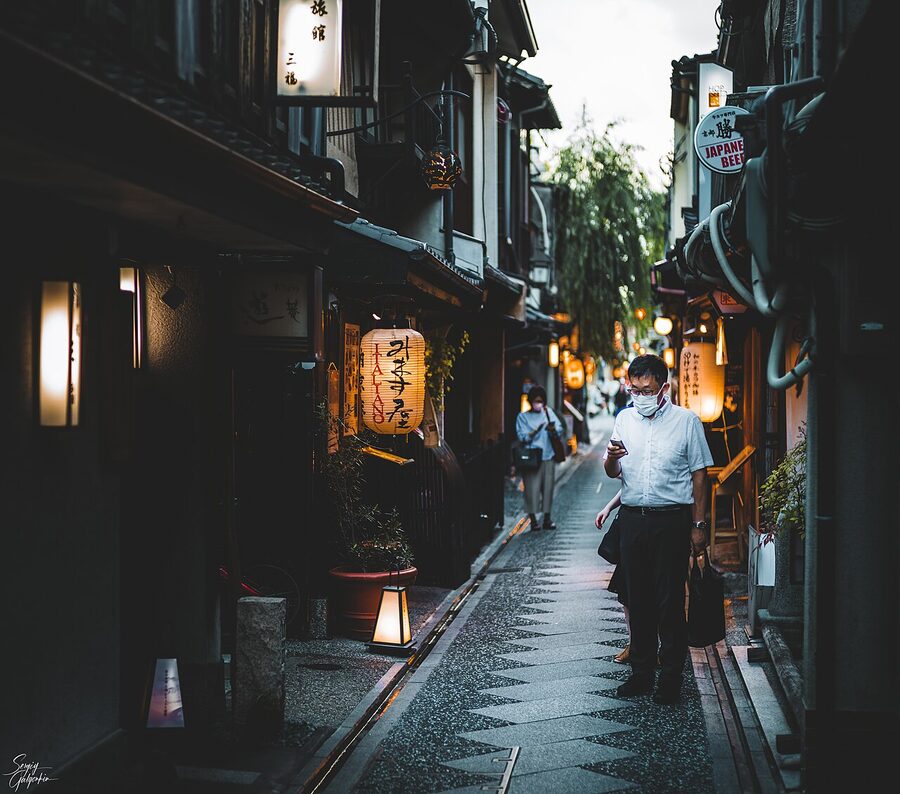

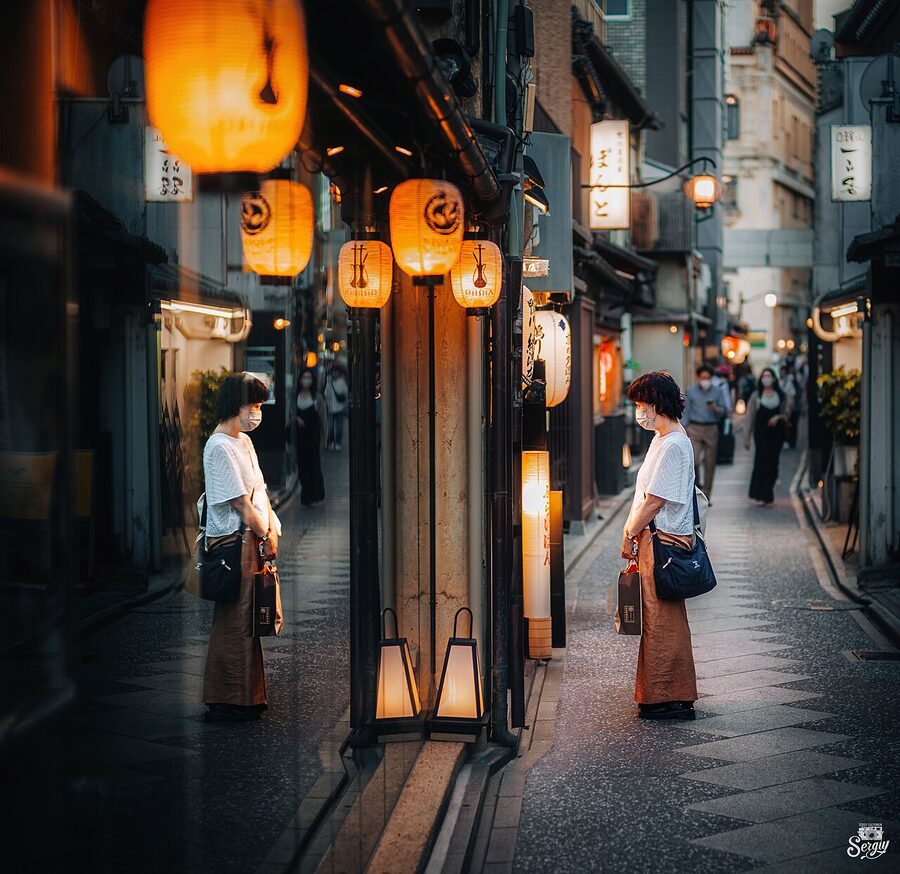
Pontocho is a single alley about 500m long, running parallel to the Kamogawa between Shijo-dori and Sanjo-dori. It’s barely wide enough for two people to pass. The west side of the alley backs onto Kiyamachi: a parallel street running along the Takase-gawa canal, prettier in cherry blossom season than half the famous spots.
Atmosphere is the whole sell here. The drawback is straightforward: there are very few hotel beds inside Pontocho itself. The named luxury hotels here back onto the strip rather than sit inside it. So when I say “Pontocho area” I mean within three minutes’ walk of the alley, which is most of Kiyamachi and the streets immediately east of Kawaramachi-dori.
One real warning: Friday and Saturday nights, Kiyamachi-dori turns into the loudest drinking street in Kyoto. If you’re a light sleeper and you’re booking a room facing west onto Kiyamachi, ask for a higher floor or a room on the other side of the building. The hotels know this. They’ll usually accommodate.
The Mitsui Kyoto, a Luxury Collection Hotel & Spa: best luxury in Downtown
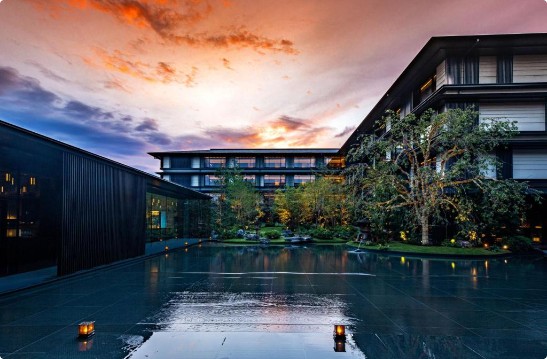
Nearest station: Karasuma-Oike (Karasuma & Tozai subway lines), 7 min walk
To Pontocho: 10 min walk east
Best for: Honeymooners, repeat visitors who want the in-house onsen, anyone with a budget
From: ¥120,000/night low season, ¥250,000+ in sakura
The Mitsui sits on land owned by the Mitsui family for 250 years, immediately south of Nijo Castle. Strictly speaking that puts it on the edge of Downtown rather than dead centre, but the location works in its favour: you’re 12 minutes’ walk to Pontocho, six minutes to Karasuma-Oike subway, and you’ve got Nijo Castle as essentially your front garden. The spa is the best in any Kyoto hotel I’ve tried, they sourced and piped in actual hot spring water from a property in Nara, then built a thermal bathhouse you’d find in a top-tier ryokan around it. Most “spa” hotels in Kyoto give you tap water in a tile pool. This is the real thing.
Rooms start at 50 sqm, which is enormous by Kyoto standards. The Garden View rooms (low floors) look onto the central reflecting pool, these are the ones to book. Skyline rooms higher up have less character. The breakfast is a Japanese set served in the wood-panelled restaurant off the lobby; ¥7,000 per person and worth every yen, particularly the grilled fish course.
What’s good:
- The in-house thermal onsen, actual hot spring water, not heated tap
- 50 sqm minimum room size in a city where 25 sqm is standard luxury
- Genuinely useful concierge, they pre-booked me a kaiseki spot at a place that doesn’t take foreigners directly
- Walking distance to Nijo Castle and Karasuma-Oike subway
What’s not:
- The 12-minute walk to Pontocho and the river feels longer when it’s raining
- You’re paying Mitsui Kyoto prices in an area that’s adjacent to, not inside, the Downtown buzz
- Breakfast at ¥7,000 is good but not the steal it ought to be at this price point
Check prices: Booking.com | Agoda
Solaria Nishitetsu Hotel Kyoto Premier: best mid-luxury on the river
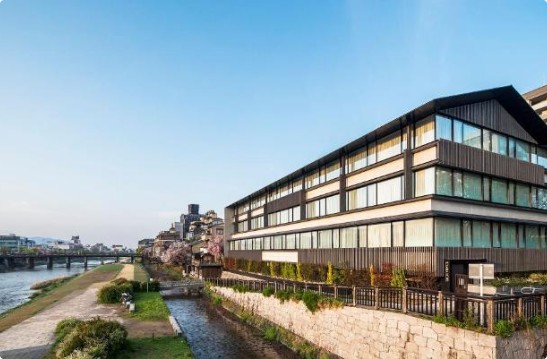
Nearest station: Sanjo Keihan, 5 min walk; Subway Sanjo Keihan or Kyoto Shiyakusho-mae, 5 min walk
To Pontocho: 2 min walk south
Best for: First-time visitors who want river-side without ryokan prices
From: ¥45,000/night low season, ¥110,000 in peak
This one I’d book over The Mitsui for most travellers. The location is genuinely better, you’re on Kiyamachi, the canal-side street that flanks Pontocho, and Sanjo bridge is a 90-second walk. Pontocho’s south end starts directly across the street. From the upper floors on the east side you’ve got an unobstructed Kamogawa view; from May to September you can watch the noryo-yuka dining platforms light up below you.
Rooms are around 30-35 sqm, modern, clean, slightly anonymous in the way Japanese business-luxury rooms always are. The breakfast buffet is fine but not a destination. What you’re paying for is the location, and the location delivers. Ask for a room on the 7th floor or higher facing east. The floors below get partially blocked by the buildings on the other side of the canal.
What’s good:
- 2 minutes from Pontocho’s south entrance, full stop
- East-facing river view rooms (request specifically)
- Breakfast restaurant on the top floor with a Higashiyama view
- Newer building (opened 2018) so the rooms feel fresh
What’s not:
- Friday and Saturday nights, Kiyamachi outside is loud until 1am
- The lobby is small and gets congested at check-in
- Bath in the standard rooms is the typical Japanese unit-bath, not the separate room you’d get at this price elsewhere
Check prices: Booking.com | Agoda
Mitsui Garden Hotel Kyoto Sanjo Premier: best mid-range on the river
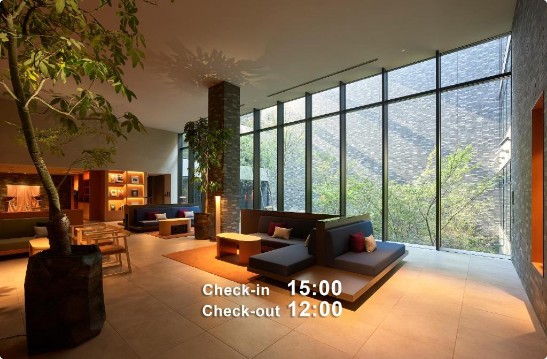
Nearest station: Subway Sanjo Keihan, 6 min walk; Karasuma-Oike, 8 min
To Pontocho: 4 min walk east
Best for: Mid-budget travellers who want the public bath
From: ¥22,000/night low season, ¥60,000 in peak
Mitsui Garden is Mitsui’s chain brand, and this Sanjo Premier branch is the strongest of the three Downtown locations (they also have Shijo and another Sanjo property). The selling point is the rooftop public bath: proper segregated men’s and women’s daiyokujo with an open-air section. You don’t get private onsen, but for ¥22,000 a night you don’t expect one. After a long day of walking, soaking on the rooftop with the city lights below is something a standard Western hotel can’t give you.
Rooms are tight (22-26 sqm) but well-designed. The bed quality is genuinely good, Mitsui Garden uses Simmons mattresses across the chain. Breakfast is a hot Japanese-Western buffet, ¥2,800, fine but skip it and walk three minutes to a kissaten (Showa-era coffee shop) instead.
What’s good:
- Rooftop public bath with open-air section, included in stay
- Simmons beds, actually comfortable
- Walking distance to Pontocho, Kawaramachi shopping, and Sanjo Keihan
- Often available under ¥25,000 outside peak
What’s not:
- Rooms are small, 22 sqm is the standard double
- The lobby and breakfast room get crowded, go for breakfast at 7am or skip it
- The street-facing rooms catch some Kiyamachi noise on weekends
Check prices: Booking.com | Agoda
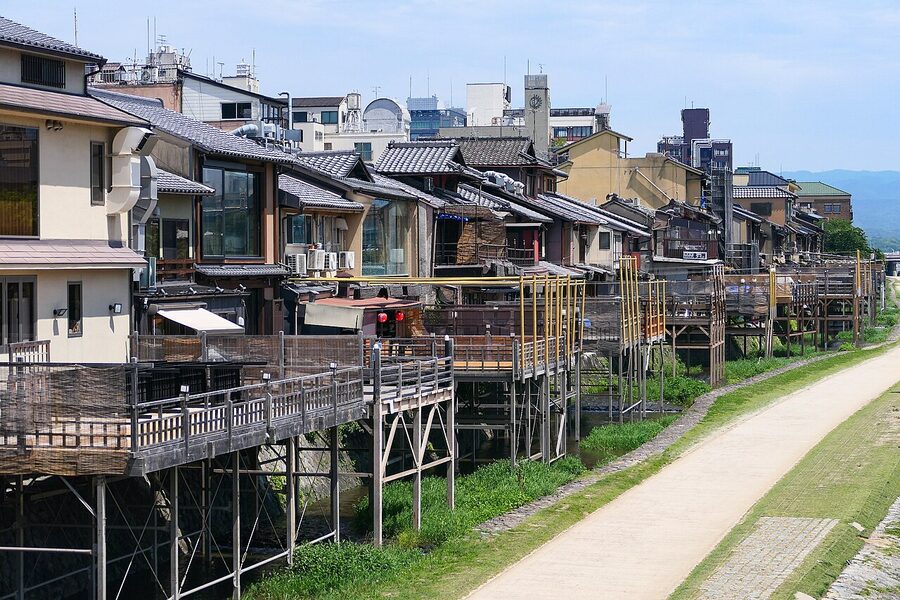
Kawaramachi: the transport hub
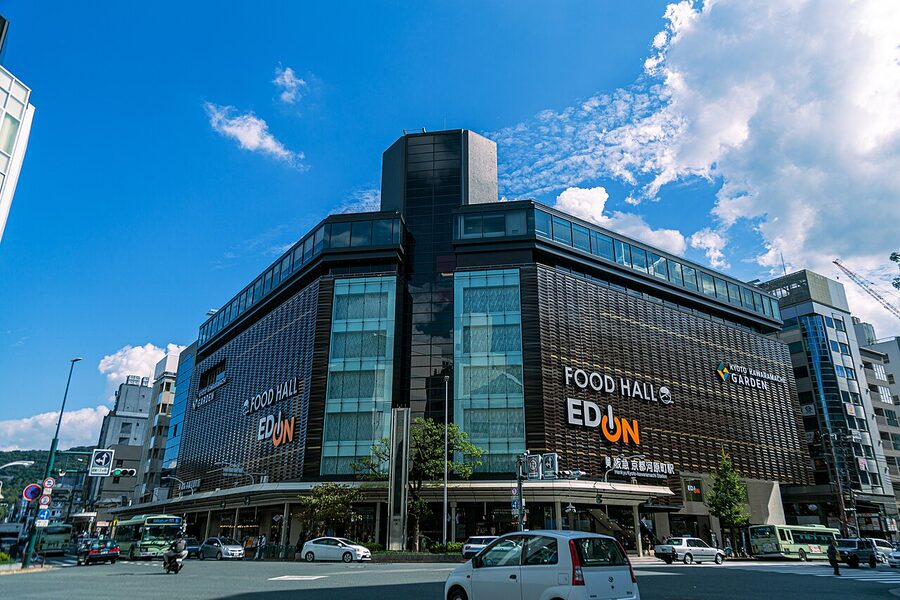

Kawaramachi-dori is the main north-south artery on the east side of Downtown. The Shijo-Kawaramachi intersection, where it crosses Shijo-dori, is the practical centre of the city. Department stores on every corner (Takashimaya, OPA, Marui), the underground Hankyu station entrance, the bus terminal directly above. Within five minutes’ walk you’ve got Pontocho, Nishiki Market, Sanjo bridge, and the Kamogawa.
The hotels in this stretch range from luxury machiya (traditional townhouse) conversions to chain mid-range. The trade-off versus Pontocho/Kiyamachi is atmosphere, Kawaramachi-dori itself is a busy commercial street, not an old wooden alley. But you’re trading 3 minutes of walking for substantially lower noise, more rooms to choose from, and frankly more reliable hotel quality.
Hotel Kanra Kyoto: best luxury machiya in Downtown
Nearest station: Subway Karasuma-Oike, 4 min; Subway Gojo, 5 min
To Pontocho: 9 min walk east
Best for: Couples, design lovers, anyone who wants ryokan-feel without committing to a real ryokan
From: ¥55,000/night low season, ¥130,000 in peak
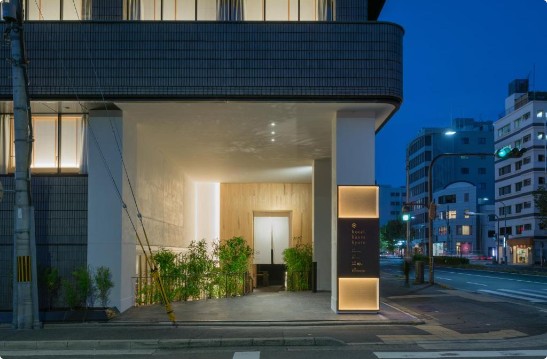
Kanra is the right answer for “I want to stay in a machiya but I also want a Western bed and a proper shower”. They took a former office building and gutted it, lining every room with cedar, putting in deep soaking tubs (separate from the shower, in actual rooms, not unit-baths), and laying tatami runners between the bed and the bath. The rooms feel calm and considered in a way that’s rare at this price point.
It’s on Higashinotoin-dori, four minutes from Karasuma-Oike subway and nine minutes from Pontocho. Slightly off the main shopping artery, which works in its favour for sleep but means you’re walking for everything. The in-house Italian restaurant Kanra Lounge is genuinely good for breakfast or a glass of wine, but skip it for dinner, you can do better in this city.
What’s good:
- The in-room cedar soaking tubs in even the standard category, a real upgrade from unit-bath
- Calm location, tucked off the main streets
- Free yukata and the staff actually explains how to wear them properly
- Free morning yoga class on the rooftop
What’s not:
- Standard rooms are 32-34 sqm, which is small if two people need to spread out
- No public onsen, which some travellers expect at this price
- Breakfast restaurant gets crowded between 8 and 9am, eat early
Check prices: Booking.com | Agoda
The Thousand Kyoto: best for first-timers wanting newer-build comfort
Nearest station: Subway Shijo (Karasuma line), 2 min walk
To Nishiki Market: 4 min walk east
Best for: First-time Kyoto visitors who want predictable comfort
From: ¥42,000/night low season, ¥95,000 in peak
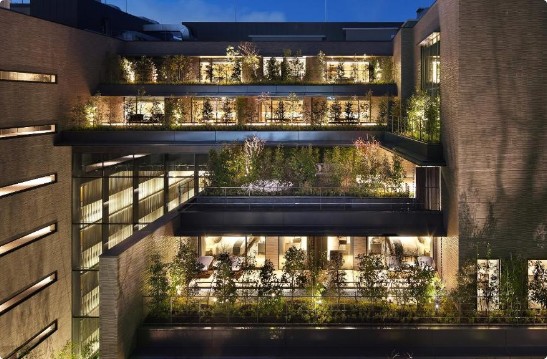
The Thousand opened in 2019 and feels it. Clean lines, understated palette, none of the fussy “we’re in Kyoto so everything must look traditional” decor that some of the older hotels lean into. The rooms are a generous 35-43 sqm, the beds are excellent, the bathrooms have separate tubs and showers (a non-trivial spec at this price). Karasuma subway is two minutes from the door, direct line to Kyoto Station in seven minutes.
The catch is location. The Thousand is on the south side of Downtown, closer to Shijo than to Sanjo. You’re a ten-minute walk to Pontocho and the river. Fine if you don’t mind walking. If you’ve travelled with kids or older parents who want to come and go for naps, this is a strong choice, the train access is the best of any luxury hotel in this guide.
What’s good:
- Subway Shijo two minutes from the door, direct to Kyoto Station
- 35 sqm standard rooms with separate bath and shower
- Newest of the Downtown luxury options, feels fresh, not tired
- Breakfast is excellent, Japanese set is one of the best in town
What’s not:
- The location is slightly south of the Downtown action; you’ll walk for Pontocho and the river
- The architecture is anonymous, could be a luxury hotel in any city
- No public bath of any kind
Check prices: Booking.com | Agoda
Cross Hotel Kyoto: best mid-range design hotel
Nearest station: Hankyu Kawaramachi, 3 min walk; Subway Sanjo Keihan, 6 min
To Pontocho: 4 min walk east
Best for: Couples and design-conscious travellers in their 30s-40s
From: ¥28,000/night low season, ¥75,000 in peak
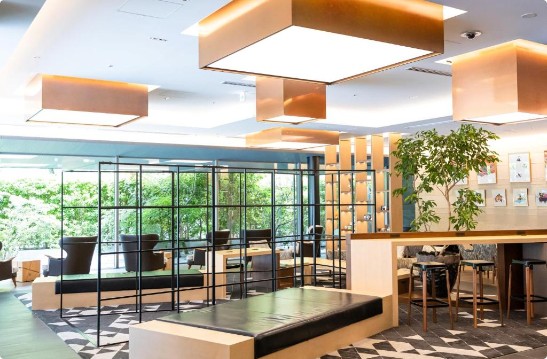
Cross is the best of the design-led mid-range hotels in the area. The rooftop bar, branded as Cross Bar, has a proper view of Higashiyama and stays open until midnight. The lobby has a coffee bar that’s better than half the kissaten in the area (Bean Cha is the operator). Rooms are 25-30 sqm, decorated in a soft urban-modern palette that doesn’t try too hard to be “Kyoto”.
The location is dead centre on Kawaramachi-dori, three minutes from the Hankyu station entrance. You can walk to Pontocho in four minutes. The neighbourhood gets noisy on weekends, book a higher floor if you’re a light sleeper, or specifically request a room not facing Kawaramachi-dori.
What’s good:
- Rooftop bar with Higashiyama view, actually decent drinks, not just decor
- Excellent in-house coffee bar in the lobby
- Three minutes from Hankyu station, direct to Osaka in 45 minutes
- Often discounted on Booking, I’ve seen ¥22,000 in February
What’s not:
- Street-side rooms catch noise from Kawaramachi-dori; ask for a back room
- Bath/shower combo unit-bath in standard rooms, workable but not luxurious
- Breakfast is over-priced at ¥3,800; eat out
Check prices: Booking.com | Agoda
Royal Park Hotel The Kyoto Sanjo: solid mid-range pick
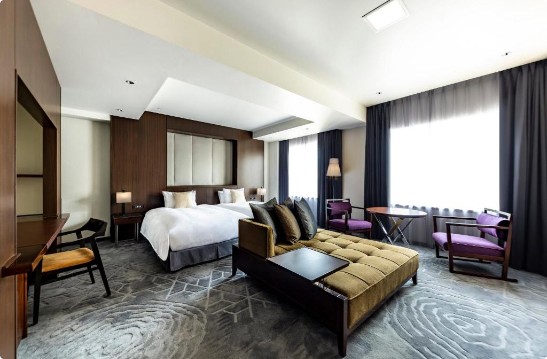
Nearest station: Subway Karasuma-Oike, 4 min; Hankyu Karasuma, 6 min
To Pontocho: 5 min walk east
Best for: Travellers who don’t want to overpay for a “design” hotel
From: ¥25,000/night low season, ¥55,000 in peak
Royal Park is a Mitsubishi-owned chain that runs solid four-star hotels. The Kyoto Sanjo branch sits on Sanjo-dori, four minutes from Karasuma-Oike subway and five minutes from Pontocho. Rooms are 22-30 sqm, well-appointed if not exciting. The on-site restaurant Tatsumi does a serviceable Japanese-Western breakfast for ¥2,500.
The pitch here is location plus reliability at a price point that doesn’t punish you. You’re not getting an in-house onsen or an art collection. You are getting a clean, quiet room within five minutes of every part of Downtown that matters.
What’s good:
- Genuinely quiet location on Sanjo-dori, away from Kawaramachi noise
- Four minutes from Karasuma-Oike (the subway interchange)
- Reliable chain quality, you know what you’re getting
- Often the best price-to-comfort ratio in this guide
What’s not:
- The decor is corporate, no character to speak of
- Standard rooms at 22 sqm are tight for two people with luggage
- The breakfast is fine, not a destination
Check prices: Booking.com | Agoda
Hotel Resol Kyoto Kawaramachi Sanjo: budget-friendly four-star
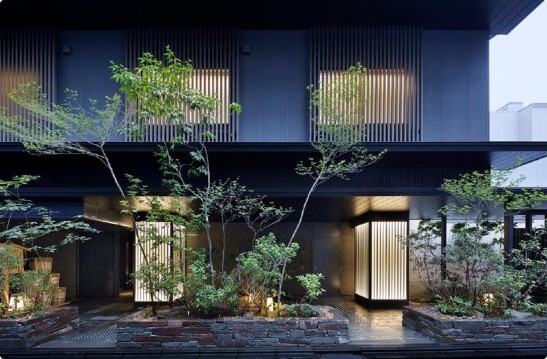
Nearest station: Subway Sanjo Keihan, 5 min; Hankyu Kawaramachi, 6 min
To Pontocho: 3 min walk east
Best for: Solo travellers and couples on a tighter budget who still want the location
From: ¥15,000/night low season, ¥40,000 in peak
Resol is a budget-business chain, and this Kyoto location punches above its weight thanks to where it sits: three minutes from Pontocho’s south entrance, six minutes from the Hankyu station. The rooms are small (18-22 sqm) and the bathrooms are unit-baths, but everything is clean and the bed is decent. The lobby has a coin laundry, which is useful on a longer trip.
This is the hotel I’d book for a solo trip on a budget where the criterion is “I want to be in the heart of it without spending ¥40,000”. It’s not exciting. It does the job.
What’s good:
- Location is excellent, three minutes from Pontocho, six from Hankyu
- Coin laundry in the building (¥300/wash)
- Often available under ¥15,000 outside peak
- Free coffee in the lobby 24 hours
What’s not:
- Rooms are small even by Japanese standards, 18 sqm doubles are tight
- Unit-bath bathrooms; no separate shower
- The lobby is small and feels crowded at check-in/out
Check prices: Booking.com | Agoda
Tokyu Stay Kyoto Sanjo Karasuma: best for longer stays
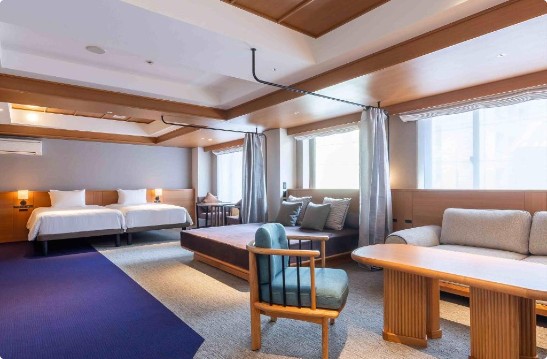
Nearest station: Subway Karasuma-Oike, 3 min
To Pontocho: 9 min walk east
Best for: Long-stay travellers, families, anyone who needs to do laundry
From: ¥18,000/night low season, ¥45,000 in peak
Tokyu Stay is the chain that puts a washer-dryer in every room. For a four-night stay it’s a curiosity. For a 10+ night stay it changes the trip, you’re not packing dirty clothes home or hunting down a coin laundry in a foreign neighbourhood at 11pm. The Sanjo Karasuma branch is a three-minute walk from the Karasuma-Oike subway interchange, which gives you the best transport access of any hotel on this list except The Thousand.
Rooms are 18-24 sqm, the layout is functional, the kitchenette has a microwave and small fridge. Not exciting. But if you’re on a long trip with kids, this is a sensible choice.
What’s good:
- In-room washer-dryer, a real benefit on a long trip
- Three minutes from Karasuma-Oike subway interchange
- Microwave and fridge in every room
- Per-night price drops sharply if you book 5+ nights
What’s not:
- Bland decor; you don’t stay here for the experience
- Walking distance to Pontocho is 9-10 minutes, fine, but not adjacent
- No on-site restaurant or breakfast service
Check prices: Booking.com | Agoda
Nishiki Market: the food obsession base
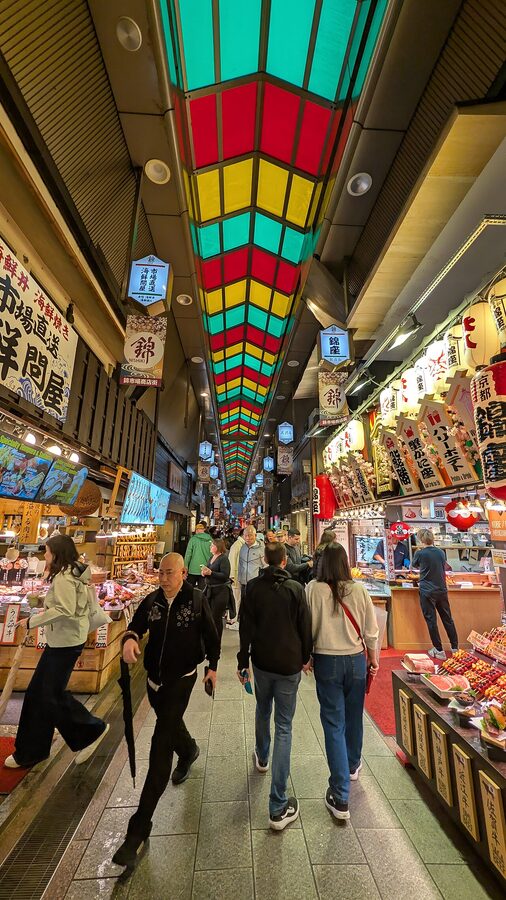

Nishiki is a covered arcade running 400m east-west, between Teramachi-dori (east) and Takakura-dori (west). Around 130 stalls. Locals call it “Kyoto’s kitchen” because most of the high-end ryokan and restaurants source ingredients here in the morning. By mid-morning the tourists arrive and the experience changes, it becomes a food court with samples.
If you’re a food obsessive, and Kyoto rewards food obsessives more than any city in Japan, staying within five minutes’ walk of Nishiki is a real upgrade. You can do the morning market run before breakfast, drop your purchases at the hotel, and then head out to a temple with a picnic of pickles and dashi-maki tamago. The hotels in this section are the ones that put you within 200m of the arcade.
Mitsui Garden Hotel Kyoto Shijo: closest to Nishiki
Nearest station: Hankyu Karasuma, 3 min; Subway Shijo, 4 min
To Nishiki: 2 min walk north
Best for: Food obsessives, first-time visitors who want the most central possible base
From: ¥22,000/night low season, ¥58,000 in peak
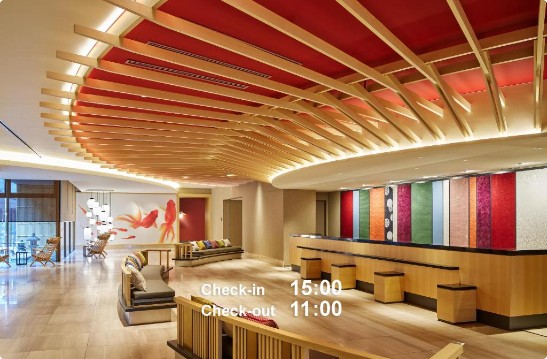
Of all the Mitsui Garden branches in Kyoto, the Shijo location wins on pure proximity. Two minutes to Nishiki, three minutes to Hankyu Karasuma, four minutes to Daimaru’s incredible basement depachika (food hall, buy a slice of cake from the chef Sadaharu Aoki counter and thank me later). You’re a six-minute walk to Pontocho, eight to the river.
The rooftop bath here is smaller than the Sanjo Premier branch but still functional, with an open-air section. Rooms are 22-26 sqm, beds are good (Simmons, like the rest of the chain). The on-site Italian restaurant is over-priced for what it is, eat literally anywhere else.
What’s good:
- Two minutes from Nishiki Market, eat your way back to the room
- Three minutes from Hankyu Karasuma, direct to Osaka
- Rooftop public bath with open-air section
- Daimaru depachika across the road, possibly the best food hall in Japan
What’s not:
- Standard rooms are 22 sqm, tight for two people with luggage
- Lobby is small and gets busy at check-in
- The on-site restaurant is the weak link, skip it
Check prices: Booking.com | Agoda
Good Nature Hotel Kyoto: best for organic / wellness travellers
Nearest station: Hankyu Kawaramachi, 1 min; Subway Shijo, 8 min
To Nishiki: 3 min walk west
Best for: Vegans, vegetarians, organic-food obsessives, design-curious travellers
From: ¥38,000/night low season, ¥85,000 in peak
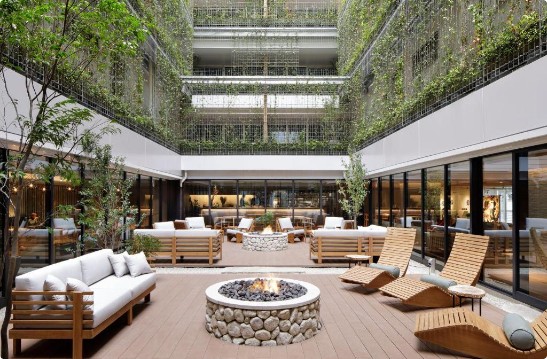
Good Nature is a 2019 Marubeni-funded experiment: a “good for you, good for the planet” hotel with organic restaurants, biodegradable in-room amenities (or none, you’re encouraged to bring your own), and a sustainability-focused marketplace on the lower floors. It sounds preachy on paper. In practice it’s actually a very pleasant hotel with one of the best vegetarian restaurants in central Kyoto on the ground floor.
The location is unbeatable, one minute from the Hankyu Kawaramachi station entrance. Rooms are 25-32 sqm, lots of natural wood, low-impact textiles. The downside: if you don’t care about the wellness angle, you’re paying a premium for it. The next-door Hankyu department store gives you a more conventional alternative for less.
What’s good:
- One minute from Hankyu Kawaramachi station entrance
- Excellent in-house vegetarian restaurant (Hyssop)
- Marketplace on lower floors has good Kyoto-made gifts to take home
- Genuinely thoughtful sustainability program, towels, sheets, no plastic
What’s not:
- You pay a wellness-brand premium that other downtown hotels don’t charge
- No in-room toothbrush or razor by default, bring your own or buy at the lobby store
- The street outside (Kawaramachi-dori) is loud at night
Check prices: Booking.com | Agoda
Ace Hotel Kyoto: the design-hotel splurge
Nearest station: Subway Karasuma-Oike, 1 min
To Nishiki: 5 min walk east
Best for: Design lovers, people in their 30s-40s, anyone who wants a hotel scene
From: ¥45,000/night low season, ¥120,000 in peak
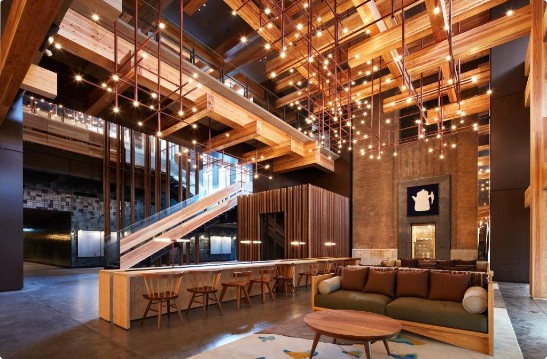
Ace took the 1926 Shinpuhkan building (a former telephone exchange) and worked with Kengo Kuma plus Commune Design to create a hotel that’s the most design-driven of any in this guide. The lobby has a working coffee bar, an Italian restaurant (PIOPIKO), a Mexican-Californian (Mr. Maurice’s Italian, confusingly named), and a basement live-music venue. It has a hotel-as-public-space feel that’s unusual in Kyoto.
Rooms are 30-40 sqm, kitted with vintage textiles, a turntable in some categories, and proper bathrooms with separate showers. The catch: this is the loudest hotel on this list. The lobby gets busy with locals, the basement bar runs late, and the rooms above the public spaces catch some of it. Ask for a higher floor and a room not above the bar.
What’s good:
- One minute from Karasuma-Oike subway interchange
- Best lobby and ground-floor scene of any hotel in Downtown
- The Kuma-renovated building is genuinely beautiful
- 30-40 sqm rooms with proper separate showers
What’s not:
- Late-night noise from the public spaces if you book a low floor
- Pricey breakfast (¥4,500) that isn’t a clear winner
- The “Ace scene” doesn’t suit everyone, quieter travellers should look elsewhere
Check prices: Booking.com | Agoda
NODE Hotel Kyoto: boutique art-focused stay
Nearest station: Subway Karasuma-Oike, 5 min; Hankyu Karasuma, 6 min
To Nishiki: 4 min walk east
Best for: Art-curious solo travellers and couples
From: ¥35,000/night low season, ¥85,000 in peak
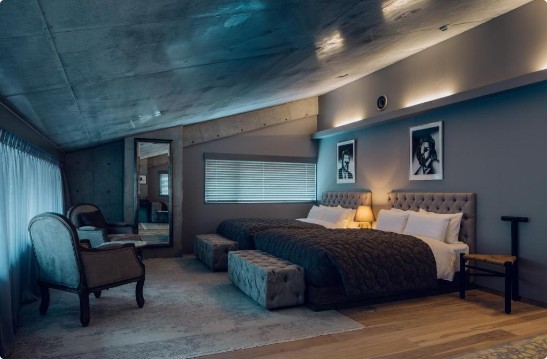
NODE is a 27-room boutique that operates on a “hotel as gallery” principle. Each room has at least one piece of contemporary art, sometimes from a Kyoto-based artist, sometimes a Tokyo or international name. The selection rotates annually. The ground-floor restaurant and bar (NODE) doubles as the gallery’s public space.
The rooms are mid-sized (24-32 sqm) and minimalist. Think pale walls, natural wood floors, tatami sleeping area, with the artwork as the focal point. It’s a particular taste. If you want a hotel where the bed and the bath are the experience, this isn’t it. If you want a hotel that feels like a considered apartment in someone’s design-forward home, this is exactly it.
What’s good:
- Genuinely interesting art in every room, not generic hotel decor
- Quiet location off Sanjo-dori, away from the main shopping streets
- Excellent ground-floor restaurant for breakfast and dinner
- Small enough that the staff remembers you
What’s not:
- 27 rooms, books out fast in peak season
- The “art hotel” framing is a real preference; it doesn’t suit everyone
- Standard rooms have a unit-bath, separate bath/shower only in higher categories
Check prices: Booking.com | Agoda
Budget Downtown: under ¥20,000
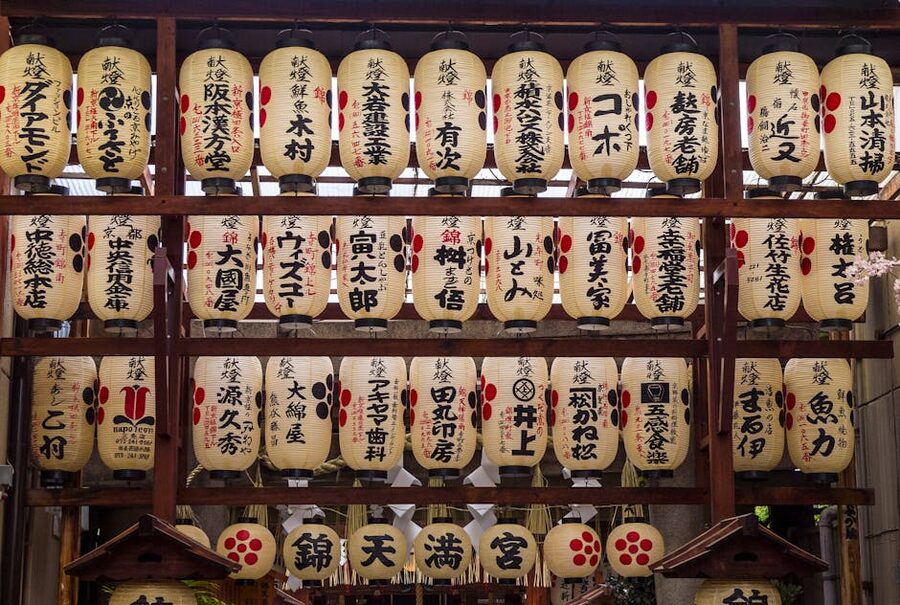
Downtown Kyoto isn’t cheap. The two budget brackets that genuinely work are: solid mid-range business hotels (Resol, Tokyu Stay above) at ¥15-20k, or hostel-boutique hybrids at ¥6-12k for a private room. Real backpacker hostels exist too but the better ones are in this range.
OMO5 Kyoto Sanjo by Hoshino Resorts: best budget-mid
Nearest station: Subway Sanjo Keihan, 1 min walk
To Pontocho: 7 min walk south
Best for: First-time Kyoto travellers on a budget
From: ¥12,000/night low season, ¥35,000 in peak
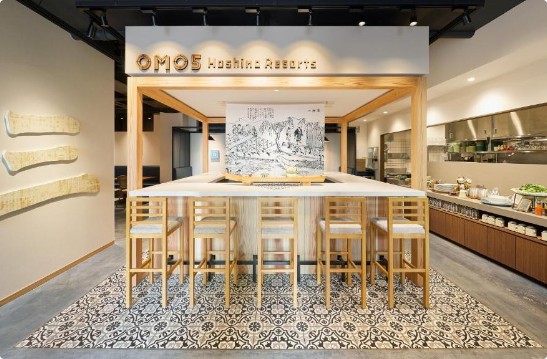
OMO is Hoshino Resorts’ city-hotel brand. The pitch is “neighbourhood-immersive”, they offer free morning walking tours run by staff (the “OMO Rangers”) who genuinely know the area. The Sanjo branch sits on Sanjo-dori a minute from the Sanjo Keihan station, putting you across the river from Gion and a seven-minute walk south to Pontocho.
Rooms are tiny, 16-24 sqm, but well-designed in OMO’s compact style with under-bed storage and pull-out work surfaces. The lobby has a coffee corner and reading nook with neighbourhood guides. For a Hoshino-quality experience under ¥20,000, this is hard to beat in Kyoto.
What’s good:
- One minute from Sanjo Keihan, best subway access at this price
- Free OMO Ranger morning walks, actually informative
- Hoshino Resorts service standards at a budget price
- Lobby is comfortable enough to work from
What’s not:
- Rooms are very small, 16 sqm doubles are a stretch
- Unit-bath bathrooms; no separate shower
- Breakfast isn’t included and the on-site option is mediocre
Check prices: Booking.com | Agoda
Piece Hostel Sanjo: best private hostel room
Nearest station: Subway Sanjo Keihan, 5 min
To Pontocho: 8 min walk south-west
Best for: Solo travellers, social-minded couples
From: ¥4,500/dorm bed, ¥12,000 private double low season
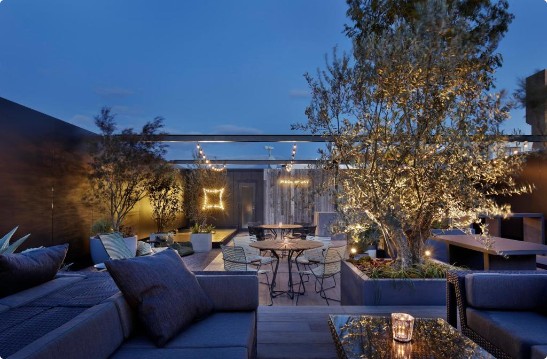
Piece is the hostel I’d send anyone to who wants the budget experience without the actual roughness of cheaper hostels. The dorms are clean and well-organised; the private rooms are a fair price for what they are; the rooftop and ground-floor common spaces are well-used. The sister property in Kyoto Station area is also good but this Sanjo branch is in a better location.
The catch is real: this is a hostel. Light sleepers, families, anyone who values complete quiet should pay a bit more for OMO5 or Resol instead.
What’s good:
- One of Kyoto’s best-run hostels, clean and well-staffed
- Rooftop terrace and large common kitchen
- Easy meeting place for solo travellers
- Private rooms exist and are decent value
What’s not:
- Hostel ambient noise, common spaces busy until late
- Shared bathrooms even in some private-room categories
- Books out fast, reserve early in cherry blossom season
Check prices: Booking.com | Agoda
Len Kyoto Kawaramachi: hostel-cafe hybrid
Nearest station: Hankyu Kawaramachi, 6 min walk
To Pontocho: 4 min walk west
Best for: Solo travellers who want a base they can hang around in
From: ¥4,000/dorm bed, ¥10,000 private double low season
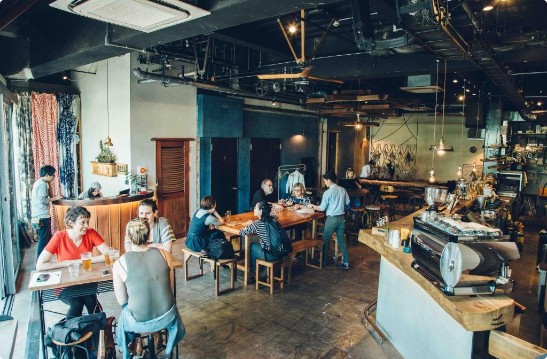
Len opened in 2015 and pioneered the hostel-cafe hybrid in Kyoto. The ground-floor cafe (Cafe Bar Len) is a working coffee shop and bar by day, restaurant by night, and the rooms above feel like an extension of it rather than a separate hostel space. Most useful: it’s actually inside Downtown, on Sanjo-dori between Kiyamachi and Kawaramachi-dori. Two minutes’ walk to the river.
Same hostel caveats apply, the cafe is busy until late, light sleepers should pay more elsewhere. But if your idea of a holiday includes hanging out in a good coffee shop in your slippers, this is a hard combination to find at this price.
What’s good:
- The cafe is genuinely good, open to the public, you don’t need to be a guest
- Inside Downtown proper, four minutes from Pontocho
- Good mix of dorm and private categories
- Solo-friendly atmosphere; easy to meet other travellers
What’s not:
- Rooms are above a working cafe, noise is real until midnight
- Private rooms are small and basic
- Limited storage in dorms, bring a small lock
Check prices: Booking.com | Agoda
What most Kyoto guides get wrong about Downtown

Three things you’ll read elsewhere that are wrong, in order of how often they show up:
“Downtown is too commercial.” True only if you stay on Shijo-dori and Kawaramachi-dori and never look at a side street. The streets between Karasuma-dori and the Kamogawa contain the densest concentration of pre-war Kyoto townhouses anywhere in the city. Walk Sakaimachi-dori between Sanjo and Shijo. Walk Tominokoji-dori. Walk the back lanes off Pontocho. You’re a minute from a department store but you’d never know it.
“Stay in Gion if you want geisha.” Pontocho is also a *hanamachi*: one of the five active geisha districts in Kyoto. It’s smaller and less famous than Gion’s Hanamikoji, but you have a meaningful chance of seeing a maiko or geiko walking to a tea house assignment in Pontocho between 5:30pm and 7pm. You’re more likely to actually see one here than in Gion proper, where they stick to the back streets to avoid tourists.
“Avoid Downtown, too far from the temples.” The serious temple cluster is in Higashiyama (east) and from Downtown you can walk to Kiyomizu-dera in 25 minutes through Yasaka shrine. Or take a 12-minute bus to Ginkaku-ji. Or 20 minutes’ walk north to the Imperial Palace. The only “famous” temples that are genuinely a haul from Downtown are Kinkaku-ji (40 minutes by bus) and Ryoan-ji (45 minutes by bus). Both are also a haul from Gion. From Kyoto Station, both are 50 minutes. Downtown isn’t the loser here.
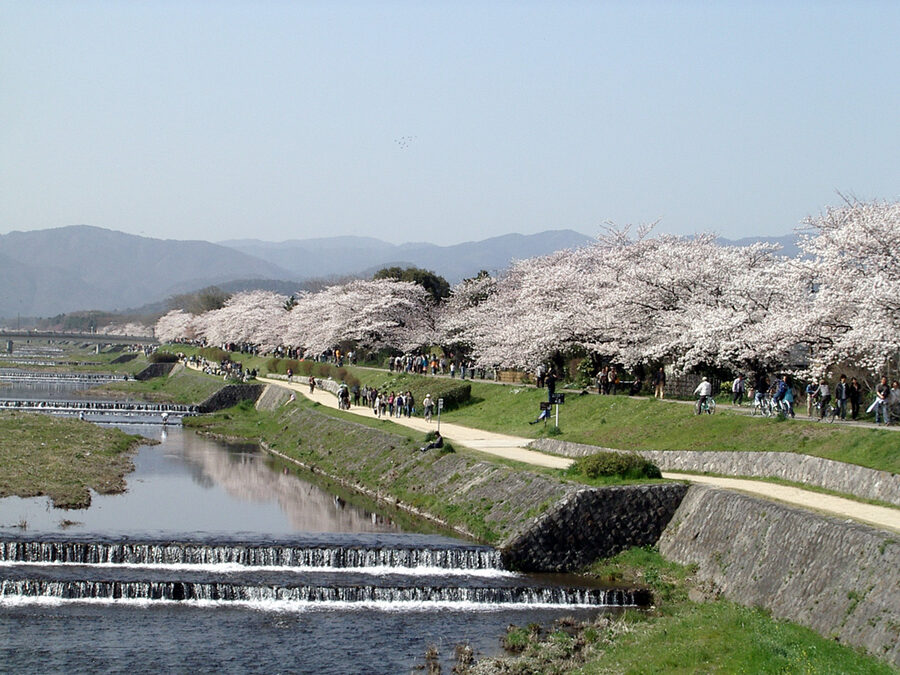
And one contrarian opinion that might cost me readers: I’d take Downtown over Gion in cherry blossom season specifically. Gion gets crowded to the point of road-closure with photo-tourists chasing maiko. Downtown also gets busy, but it’s a wider, more diffuse busy. The Kamogawa banks at sunset with the cherry blossoms in bloom and a beer from the konbini are the single best free thing in Kyoto in early April. You can’t do that from a Gion ryokan.
Booking strategy and timing
A few practical notes on actually booking these:
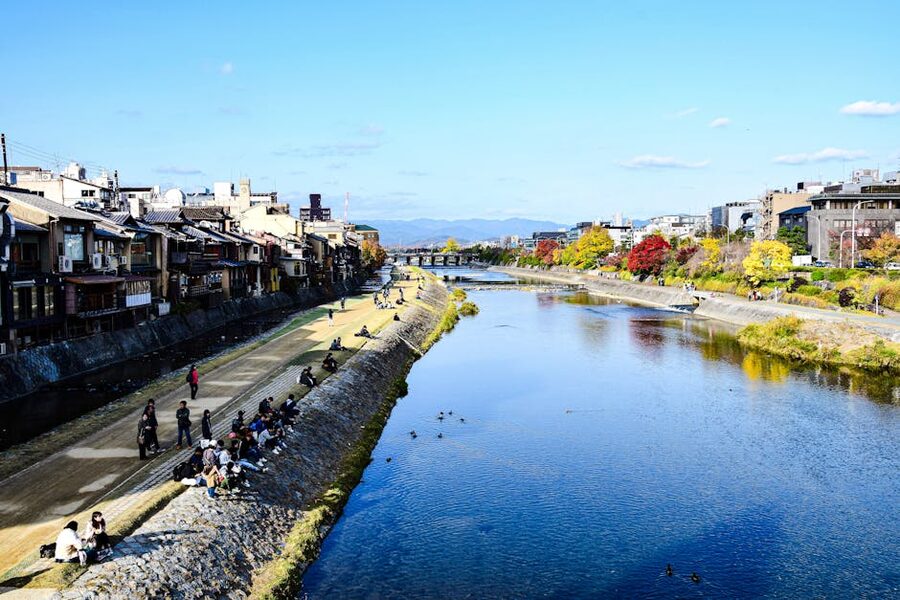
Book early for cherry blossom and autumn. Sakura runs roughly late March through the first week of April; the autumn colour peak is mid-November. Both periods see prices double or triple, and the best rooms (river-facing at Solaria, garden-view at The Mitsui) sell out 3-6 months in advance. If you’re targeting these periods, book by late autumn for the following spring, and by spring for the following autumn.
Booking.com and Agoda are usually within ¥1,000 of each other for the chain hotels. Always check both. Agoda has slightly better cancellation flexibility for some Japanese chains; Booking has better customer service if something goes wrong on arrival.
The shoulder seasons are dramatically cheaper. February (the coldest month, lows can hit -2°C) and the second half of June (rainy season, humid and overcast) see prices drop 40-50%. The Mitsui Kyoto in mid-February goes for around ¥75,000 instead of its usual ¥120,000. If you don’t mind cold weather or rain, you save serious money.
Check the cancellation policy specifically for sakura week. Most hotels switch to non-refundable rates for the week of April 1-7. Read the fine print, paying 10% more for a flexible rate is worth it if your travel plans aren’t locked in.
For the luxury tier, also check the hotel’s own website. The Mitsui Kyoto, Hotel Kanra, and Ace Hotel sometimes offer “best rate guarantee” deals direct that include breakfast or a credit at their restaurants. Worth a five-minute check before pulling the trigger on Booking.
Getting in and out
From Kansai International Airport (KIX) the cleanest route to Downtown is the Haruka limited express. 75 minutes to Kyoto Station, then a 12-minute taxi or 8-minute Karasuma subway hop to Karasuma-Oike. The whole journey runs ¥3,500-4,000 with the taxi, ¥3,300 by subway. The Karasuma subway gets you to the Karasuma-Oike interchange, which is walking distance to most hotels in this guide.
From Itami (Osaka Itami Airport, the older domestic airport) the airport bus to Kyoto Station runs every 20 minutes, takes 50 minutes, ¥1,400. Then same subway or taxi onward.
From central Tokyo, the Shinkansen drops you at Kyoto Station, 2hrs 12min on the Nozomi. From the station, the Karasuma subway runs every 5-7 minutes; ¥260 to Karasuma-Oike, 6 minutes. Simpler than figuring out which bus to take.
Going home, leave 90 minutes between your hotel checkout and the Haruka departure. Kyoto Station’s airport-train platforms can be a 10-minute walk from the main concourse and the security line at KIX gets ugly in peak season.
Picking the right one for you
First time in Kyoto, splurging? The Mitsui Kyoto. The onsen alone justifies the price, and the Karasuma-Oike location works for everything. If you want river views specifically and don’t need the spa, Solaria Nishitetsu Kyoto Premier instead.
First time, mid-budget? Mitsui Garden Hotel Kyoto Sanjo Premier or Cross Hotel Kyoto. The first wins on the rooftop bath, the second on the location and rooftop bar.
Couples on a romantic trip? Hotel Kanra. The in-room cedar tubs and the calm side-street location do a lot of work.
Long stay, families, or anyone who needs to wash clothes? Tokyu Stay Kyoto Sanjo Karasuma. The in-room washer-dryer changes the math on a 10+ night trip.
Solo design lover? NODE Hotel Kyoto for art-quietness, Ace Hotel Kyoto for hotel-as-scene.
Food obsession is the whole point of the trip? Mitsui Garden Hotel Kyoto Shijo. Two minutes from Nishiki, three from Daimaru’s basement food hall, four from the Hankyu line to Osaka if you want to eat there too.
Tight budget but you want to stay Downtown? OMO5 Kyoto Sanjo if you want a proper hotel; Piece Hostel Sanjo if you want a private room in a hostel.
If you’re still unsure between districts, the broader pillar guide, Where to Stay in Kyoto, walks through all six accommodation districts in detail. The case for staying in Gion specifically is in Where to Stay in Gion, and if Kyoto Station’s transport convenience appeals to you instead, Hotels Near Kyoto Station covers that case in detail.
.jpg)