
This guide contains affiliate links. If you book through them, we earn a small commission at no extra cost to you. Every hotel below is one I’d actually consider, not a paid placement.
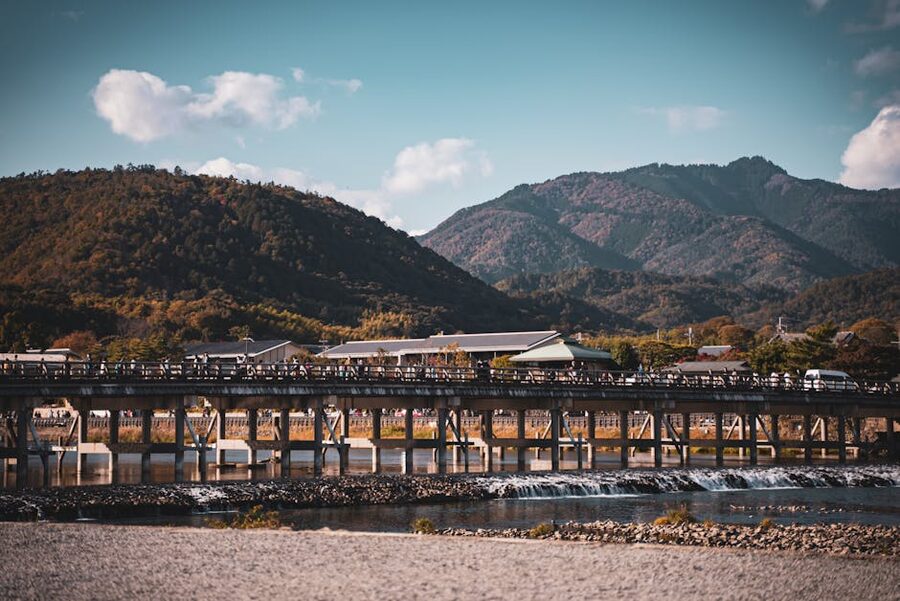
It’s 5:47am on the Hozugawa. The river is doing that flat-grey thing it does just before sunrise, the cormorants are still hunched on the far bank, and from the corner room of a riverside ryokan the only sound is water against the boatmen’s launches at Togetsukyo. Twenty minutes from now, the first tour buses for the bamboo grove will start unloading two stations away in central Arashiyama. From this room you wouldn’t know.
That’s the case for staying in Arashiyama instead of central Kyoto. Not the bamboo grove. Not Tenryu-ji. The river at 5:47am, before anyone is awake to share it with you.
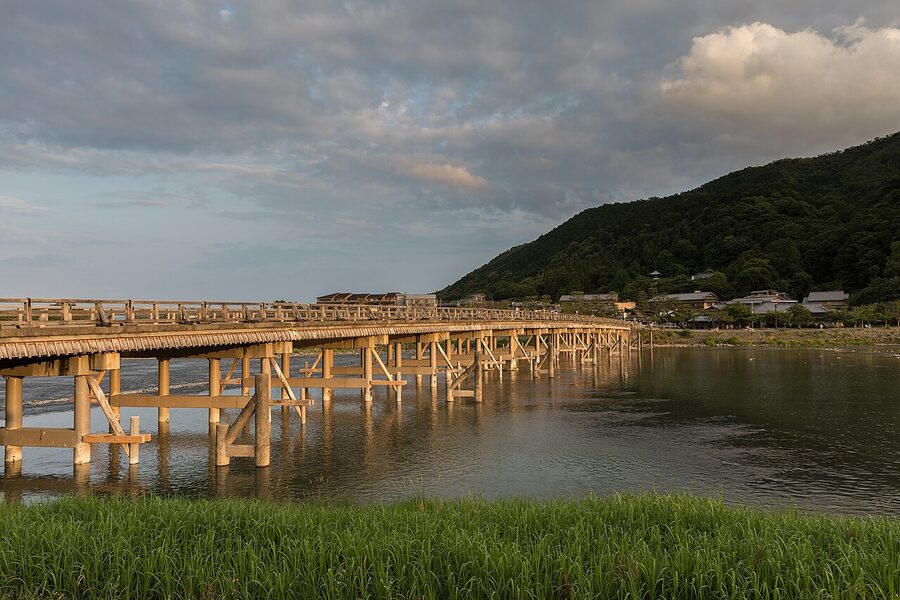
Most Kyoto hotel guides wave Arashiyama away as a day trip. They’re wrong, but only for some travellers. Arashiyama works if you’ve already done central Kyoto, or if you want a slower base, or if you’re spending real money on a riverside room and want to actually use it. It doesn’t work if you’re trying to do six districts in three days and need easy taxi access to Gion at 9pm. Sort yourself into the right group first.
This guide covers what you actually need to decide where to base yourself in Arashiyama: which sub-area, which hotel within it, what each one trades off, and how to read seasonal pricing that swings two-and-a-half-fold between February and the second week of November.
In This Article
- The quick read: who Arashiyama is for
- Getting there, getting around, and the four-station problem
- The two-station luggage workaround
- How to read Arashiyama’s pricing seasons
- Riverside Arashiyama: best for the view, the splurge, and the dawn quiet
- Suiran, A Luxury Collection Hotel: best riverside luxury hotel
- Hoshinoya Kyoto: best self-contained resort
- Togetsutei: best riverside onsen ryokan
- Rangetsu: best mid-range riverside ryokan
- Saga and Tenryu-ji north: best for design-led, quieter base
- MUNI Kyoto: best small luxury hotel
- The GrandWest Arashiyama: best mid-range hotel
- Hotel Binario Saga Arashiyama: cheapest decent hotel
- The onsen ryokan question: what works in Arashiyama, what doesn’t
- Kadensho, Arashiyama Onsen: best onsen ryokan on a budget
- Ranzan: old-school riverside ryokan
- Homm Stay Nagi Arashiyama: best for groups and apartments
- What most Arashiyama guides get wrong
- “Hoshinoya is the best luxury hotel in Arashiyama”
- “Stay near the bamboo grove”
- “Arashiyama is a quiet escape from Kyoto”
- Booking platforms: what to use and what to skip
- The mathematics of one night vs three
- Quick recommendations by traveller type
The quick read: who Arashiyama is for
You should base yourself in Arashiyama if:
- You want river views and you want to actually use them at dawn or dusk, when nobody’s around
- You’ve been to central Kyoto before and you’re choosing pace over checklist
- You’re booking a top-tier ryokan or resort hotel where the property itself is the point
- You’re travelling with kids and you want one quiet base, not a march around the city
- You’re here in autumn for the koyo and you want to walk the temples between 6:30 and 9am while everyone else is still on the train out
You should not base yourself in Arashiyama if:
- It’s your first three days in Kyoto and you’re doing Fushimi Inari, Gion, Higashiyama, Kinkaku-ji
- You’re a foodie chasing Pontocho and Nishiki at midnight
- You’re on a tight budget and the cheap rooms in central Kyoto are a third of the price
- You hate transit. Arashiyama-to-Gion is at least 35 minutes door-to-door any time after 5pm
If neither list quite describes you, the answer is usually that one or two nights in Arashiyama, four or five in central Kyoto, is the right split. I’ll come back to that at the end.
| Sub-area | Best for | Top pick | From/night | Book |
|---|---|---|---|---|
| Riverside (Hozugawa) | The view, the splurge | Suiran (Luxury Collection) | ¥85,000 | Check prices |
| Saga / Tenryu-ji north | Boutique, design-led | MUNI Kyoto | ¥75,000 | Check prices |
| Saga station / town | Mid-range and families | The GrandWest Arashiyama | ¥18,000 | Check prices |
| Onsen ryokan (riverside) | Onsen-first travellers | Togetsutei | ¥45,000 | Check prices |
| Self-contained resort | Boat-access ryokan-style stay | Hoshinoya Kyoto (book direct) | ¥120,000 | Official site |
Getting there, getting around, and the four-station problem
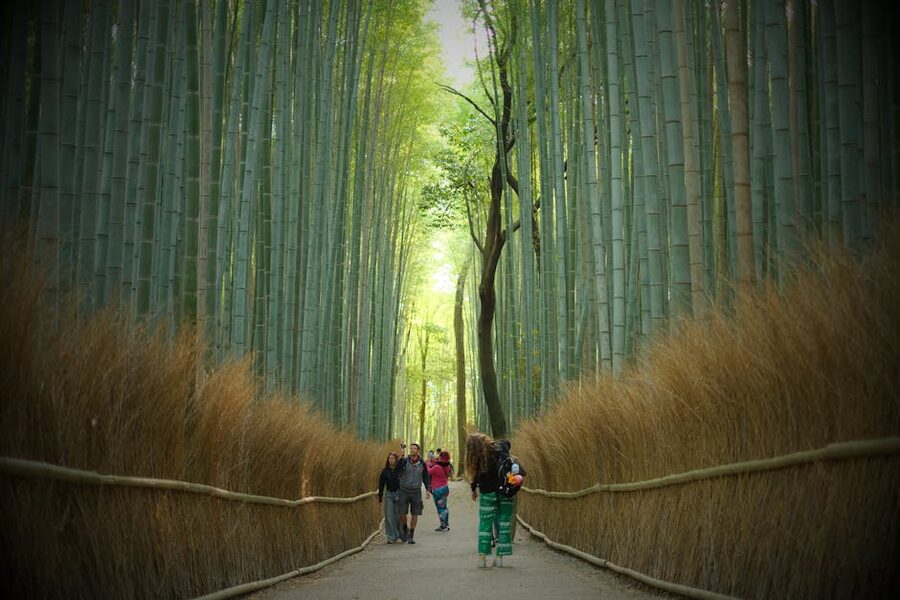
Arashiyama is on the western edge of Kyoto City, about 30 minutes from Kyoto Station. The trick is that four different stations all call themselves Arashiyama, and the difference between them is the difference between a 4-minute walk and a 25-minute one with luggage.
- JR Saga-Arashiyama (Sagano Line, JR West) is fastest from Kyoto Station, 17 min for ¥240. The least scenic but most useful station for getting in. About 12 minutes’ walk from Togetsukyo bridge.
- Hankyu Arashiyama (Hankyu Arashiyama Line) sits south of the river, 10 minutes’ walk to Togetsukyo. Best for travellers coming from Osaka or Hankyu Kawaramachi.
- Randen Arashiyama (Keifuku Electric Railway, locally called the Randen) is a single-car tram. Drops you on the main shopping street, 5 minutes from Togetsukyo. Slower than JR but more atmospheric, and Kimono Forest at the station is worth seeing at night.
- Torokko Arashiyama is the Sagano Scenic Railway. This is a tourist train, not transit. Useful as an attraction (the run up the gorge to Kameoka is genuinely good), useless for arriving with bags.
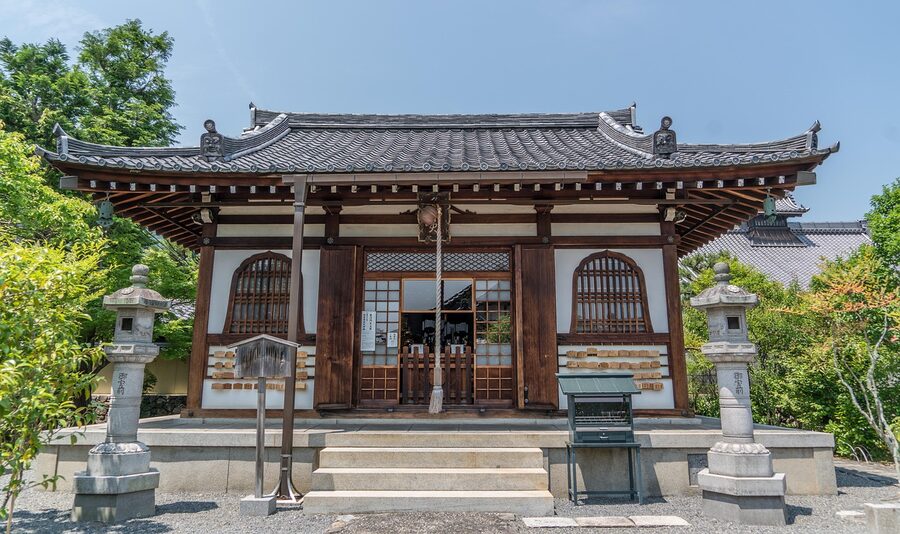
Practical: from Kyoto Station, take the JR Sagano Line. It runs direct, no transfers, every 10-15 minutes during the day. From Hankyu Kyoto-Kawaramachi, change at Katsura to the Hankyu Arashiyama branch. Adds five minutes but lands you closer to most riverside hotels. Don’t take the Randen for arrival unless you’re staying directly on Tenryu-ji-mae street; with two suitcases on a single-car tram in November, you’ll regret it.
Once you’re in Arashiyama, walk. The whole tourist core is 15 minutes end to end, and bicycle rental from any of the three main stations runs about ¥1,000-1,500/day if you want to push north to Adashino Nenbutsu-ji. Buses run but they’re slow and tourist-heavy.
The two-station luggage workaround
If your hotel is in central Kyoto for most of the trip but you want one or two nights in Arashiyama, use Yamato Transport’s same-day luggage forwarding (takkyubin) from your central Kyoto hotel reception. Drop bags before 11am, they’ll arrive at the Arashiyama property by early evening for ¥1,500-2,500 per case. Better than dragging cases on the JR Sagano Line at peak.
How to read Arashiyama’s pricing seasons
Arashiyama’s seasonal pricing swing is sharper than central Kyoto’s because the riverside hotels are more weather-dependent and the autumn-leaves traffic is heavier here than anywhere except Kiyomizu. A room that’s ¥45,000 in February can be ¥130,000 the second week of November. That’s not exaggeration. It’s how the Suiran and Hoshinoya price.
The bands, roughly:
- Peak (sakura late March-early April; koyo second-fourth week of November): 100% premium over base. Three to six months out is when the riverside-view rooms go.
- High (October, mid-late March, early May Golden Week): 30-50% premium.
- Shoulder (May-June, September): base prices, full availability.
- Valley (mid-January through February, then late June through August): 20-30% off shoulder. Worth booking the highest-tier room you can. The upgrade-to-suite cost in February is sometimes less than a basic room in November.
Practical: if your dates are flexible, the third week of October beats the second week of November for koyo every year I’ve checked it. Maples are 80% turned, prices are 30-40% lower, and the morning crowds at Tenryu-ji are about a quarter of peak.
Riverside Arashiyama: best for the view, the splurge, and the dawn quiet
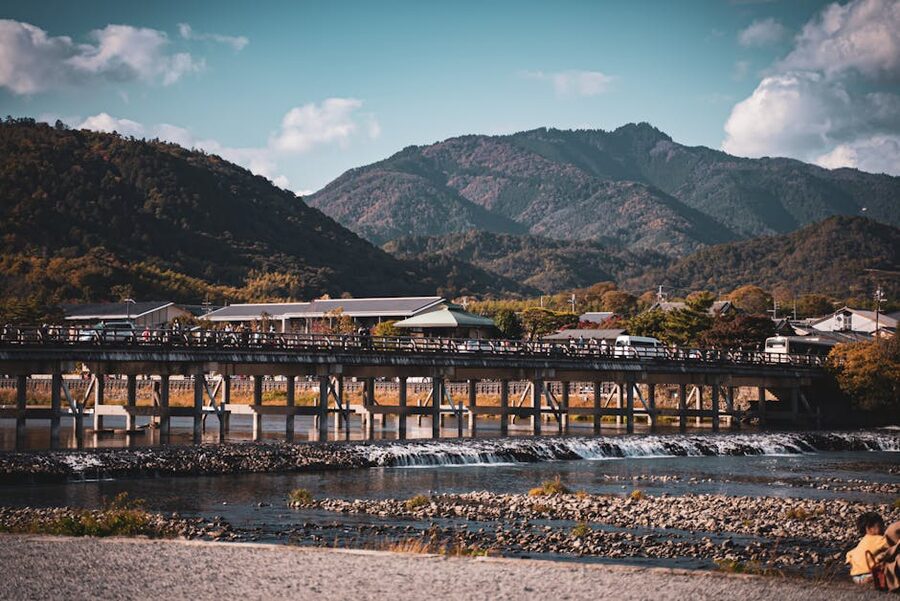
The riverside strip runs along the north bank of the Hozugawa (called the Katsuragawa downstream of Togetsukyo, but I’ll use Hozugawa for the whole stretch, since it’s how the boatmen and most locals refer to it). This is where you stay if the view is the reason you’re here. Three or four properties have actual riverside rooms; everything else is “near the river” which is not the same thing.
It’s also the loudest part of Arashiyama between 10am and 4pm. Togetsukyo bridge gets shoulder-to-shoulder in autumn, and rickshaw runners shout for trade on the south end. After 5pm the day-trip crowd thins out and by 7pm it’s quiet again. If you’re in a riverside room you don’t really care about the daytime noise; you’ll be at the temples or out for the day.
Suiran, A Luxury Collection Hotel: best riverside luxury hotel
Nearest station: JR Saga-Arashiyama, 8 min walk via Tenryu-ji’s south path
To Togetsukyo: 4 min walk
Best for: Couples, photographers, anyone for whom the river view is non-negotiable
From: ¥85,000/night low season, ¥220,000+ at peak
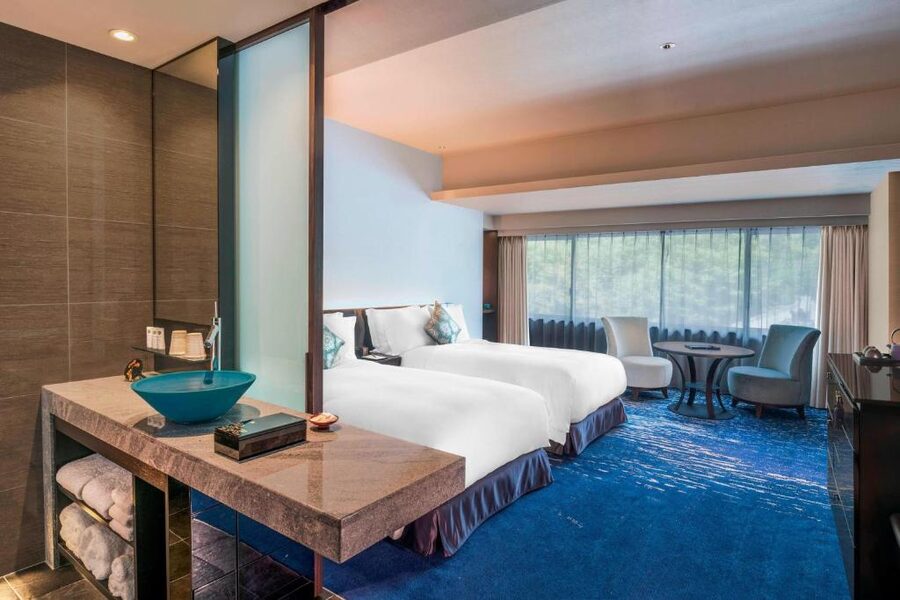
Suiran is the riverside benchmark. It’s a Marriott Luxury Collection property, so service is hotel-trained rather than ryokan-omotenashi, but the building itself is genuinely old in places, the gardens are part of the original Iwasaki villa estate, and the riverside rooms have private outdoor baths fed from the Arashiyama Onsen line. You sit in a wooden tub on your balcony with steam coming off the water, the river twenty metres below, and at 6am you have the view to yourself.
Book a Sansui Tsuki room or higher. The Modern Japanese Twin rooms are perfectly nice but don’t have the bath-on-balcony, and that’s the entire reason to be at Suiran. Rates jump about ¥30,000 for that upgrade. Pay it. Anything below Sansui-class, you’re paying Marriott prices for a hotel room near the river.
What’s good:
- The Sansui Tsuki rooms with private balcony onsen are the best riverside view-from-bath in Kyoto, full stop
- Kyo-Suiran restaurant for kaiseki and Sagano restaurant for French-Japanese, both walkable distance, often Marriott Bonvoy-discounted
- 4 minutes from Togetsukyo and the bamboo grove entrance, so you can walk out at 6am before anyone arrives
- Marriott Bonvoy points for status travellers, one of very few luxury Kyoto properties on a major points programme
What’s not:
- Service is excellent hotel service, not ryokan service. If you want the okami who remembers your tea preference, this isn’t it
- The cheaper room categories (no balcony bath) are not worth what they cost. Book Sansui or skip
- Hotel breakfast is ¥6,500 and not great. Walk to a Saga-Arashiyama bakery for half the cost
Check prices at Suiran: Booking.com | Agoda
Hoshinoya Kyoto: best self-contained resort
Nearest station: JR Saga-Arashiyama, 8 min to the Hoshinoya dock + 10 min boat
To Togetsukyo: at the dock by Togetsukyo
Best for: Couples doing one big-spend night; travellers who like a property that operates as a closed world
From: ¥120,000/night low season, ¥350,000+ at peak with kaiseki
Hoshinoya doesn’t list on Booking.com or Agoda. Book direct on Hoshino Resorts. They take a deposit on confirmation and final payment about a month out. It’s worth the friction.
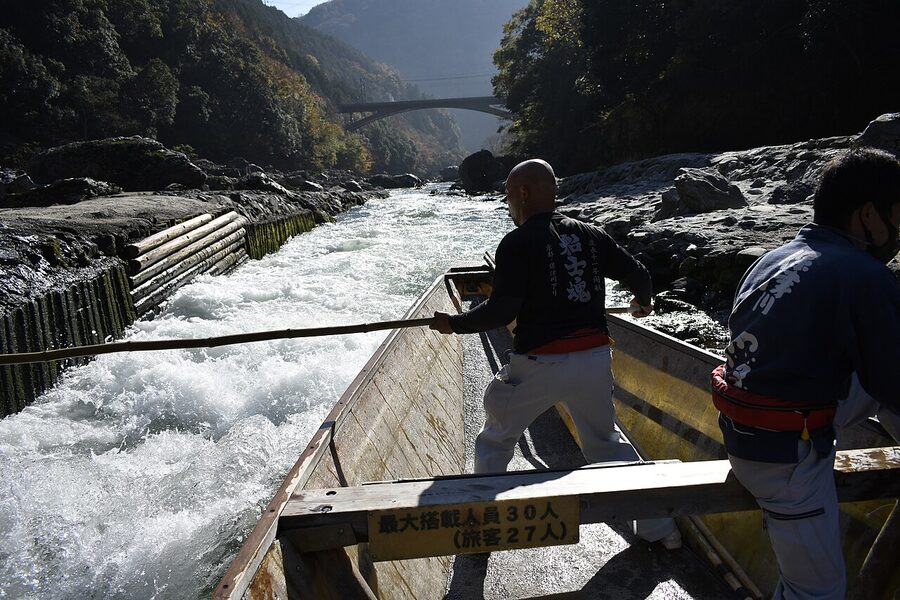
What you’re paying for is access. The property sits in a small valley about 10 minutes upriver from Togetsukyo, reachable only by Hoshinoya’s private launch. There’s no road in for guests. Once you’re there you eat there, you do tea ceremony there, you take the bath in your room or the property’s bathhouse. You stay one or two nights, you don’t dip in and out. That’s the design.
My take: Hoshinoya Kyoto is overrated for first-time Kyoto visitors. The property itself is beautiful and the experience is real, but you’re spending most of your time on the river instead of in the city, and if it’s your first Kyoto trip you’re missing two thirds of what you came for. It’s the right call for a return trip, an anniversary, or a honeymoon. Anything where the point is the room, not the city.
What’s good:
- The boat-only access genuinely changes the feel. Once you’re checked in you’re somewhere else
- Kaiseki at the in-house restaurant is among the best hotel kaiseki in Japan (the boat back to town runs until about 10pm if you eat out, but most don’t)
- The cliffside bathhouse with the river view is one of those places that looks identical to the press photos
- One of the few Kyoto luxury properties that actually feels rural rather than urban
What’s not:
- Cut off from everything. Last boat back from town is around 9:45-10pm; if you miss it you’re getting a long cab around to the property’s road entrance, which costs ¥3,000+ from town
- Food is good but you’re trapped with hotel pricing. Kaiseki dinner adds ¥30,000-45,000/person
- If your Kyoto trip is short, this is the wrong base. Eats two days for the property alone
Check prices at Hoshinoya Kyoto: Hoshino Resorts (book direct) | Michelin Hotels
Togetsutei: best riverside onsen ryokan
Nearest station: Hankyu Arashiyama, 7 min walk over Togetsukyo
To Togetsukyo: at the bridge, north end
Best for: Travellers who want a real ryokan with onsen at a sane price
From: ¥45,000/night with kaiseki; ¥35,000 room-only off-peak
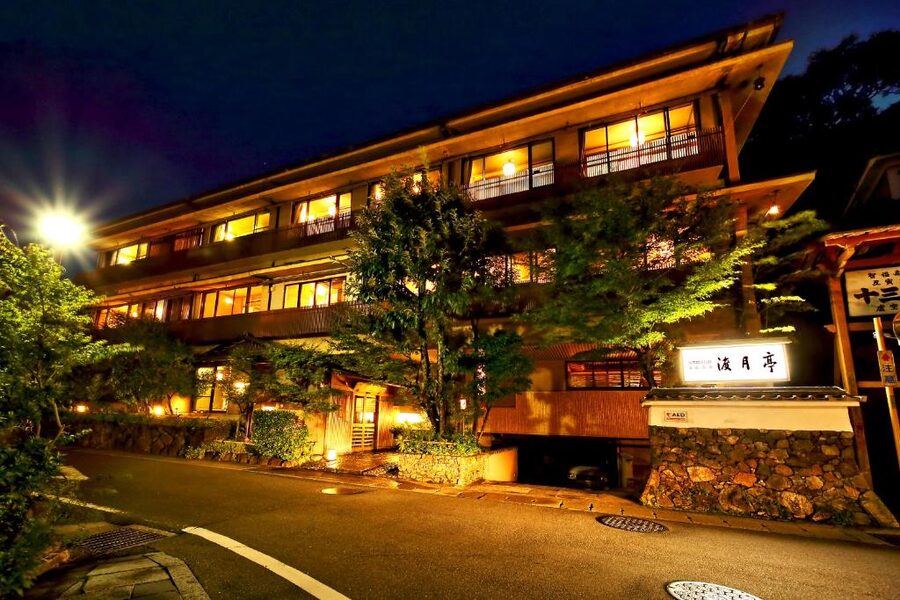
Togetsutei is what most travellers want when they say “I want a riverside ryokan in Arashiyama” but can’t quite stomach Suiran prices. It’s a working onsen ryokan, has been there since 1923, and the upper-floor rooms with their own outdoor baths look directly over Togetsukyo bridge. Service is real ryokan service: okami greets you, futon laid out during dinner, breakfast served in your room.
The catch: the building shows its age. Hallways are narrow, the elevator is small, and a couple of the lower-tier rooms face the inner courtyard rather than the river. Book the Tsukimi or Aoi-class riverside rooms. Ground-floor “river view” rooms are technically river view but you’re looking through hedges.
What’s good:
- Real ryokan, not a hotel pretending to be one. Okami service, kaiseki dinner included on most rates
- The onsen rotenburo is real Arashiyama Onsen water, and the upper-floor private outdoor baths look straight over the river
- Walking distance to everything in central Arashiyama: Togetsukyo at the front door, bamboo grove 6 minutes
- About half the price of Suiran for a comparable bath-on-balcony view
What’s not:
- The building is dated. Perfectly clean, beautifully kept, but you’ll notice the 1980s renovation in places
- Kaiseki is solid rather than exceptional. Fine for one or two nights, not a Tawaraya-level food experience
- English support is limited. Staff manage but if you have dietary requests, write them clearly when booking
Check prices at Togetsutei: Booking.com | Agoda
Rangetsu: best mid-range riverside ryokan
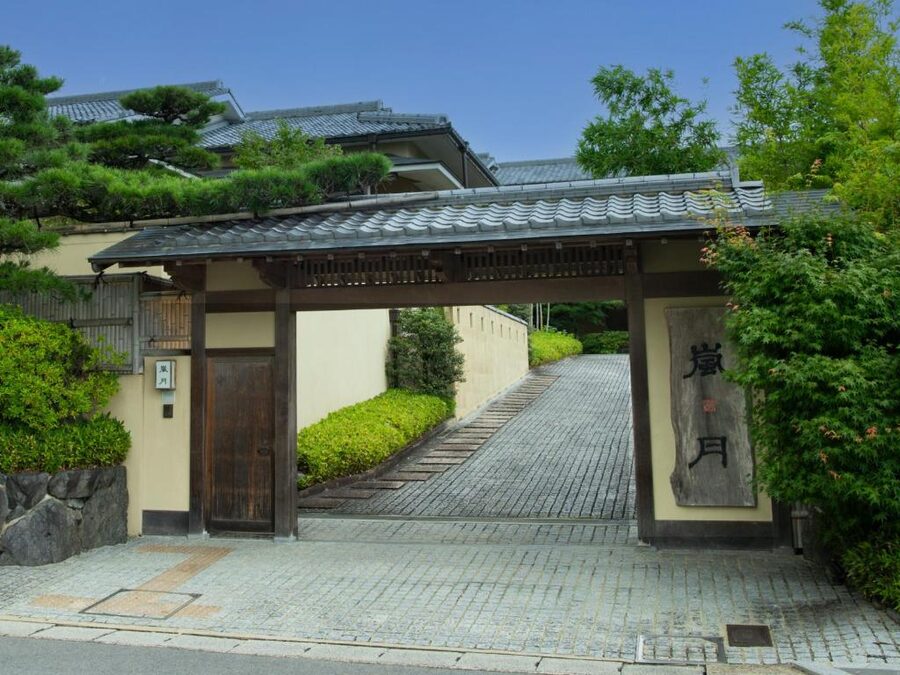
Nearest station: Hankyu Arashiyama, 5 min walk
To Togetsukyo: 3 min walk to the bridge’s south end
Best for: Couples and small families who want river atmosphere without ryokan-grade pricing
From: ¥30,000-50,000/night with dinner
Rangetsu is on the south bank, which most riverside snobs will tell you is wrong, but if you walk it, you’ll see the south bank actually has the better view of Togetsukyo at sunrise (the bridge frames against the eastern hills). The property is mid-range ryokan style, kaiseki dinner included on most plans, and the riverside rooms are genuinely riverside, not “river view from the lobby.”
Best room: the corner Tsuki-class with the cypress bath. Outside of peak, it usually books for ¥45,000-55,000 with two-meal plan. The standard rooms are fine but the kitchen tower of the building blocks half the riverside windows on lower floors.
What’s good:
- South-bank position means sunrise photos are easier. The light comes from behind you, not into you
- Kaiseki is well above what you’d expect at this price point (the chef has been there over a decade)
- Easy walk to Hankyu Arashiyama for Osaka day trips, and to the rickshaw stand if you want one
- Kid-tolerant. They’ll bring child-portion kaiseki on request, which a lot of higher-end ryokan won’t
What’s not:
- The ground-floor “garden view” rooms are a downgrade not a side-grade. Go upper-floor riverside or skip
- Onsen is small (single tub for men, single for women). Fine, not destination-class
- The south-bank walk to bamboo grove is 12-14 minutes versus 5-6 from north-bank hotels
Check prices at Rangetsu: Booking.com | Agoda
Saga and Tenryu-ji north: best for design-led, quieter base
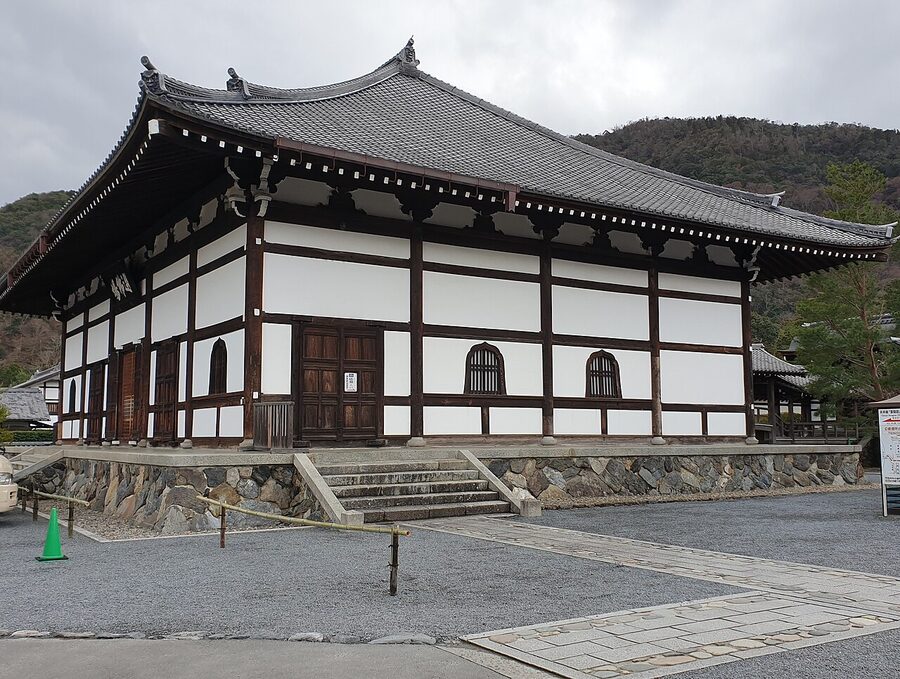
Walk five minutes north of Tenryu-ji’s main gate and the noise drops by half. This is the residential edge of Arashiyama: narrow streets, a couple of preserved machiya rows, and the start of the longer temple walks (Jojakko-ji, Nison-in, Adashino Nenbutsu-ji further up). Two design-led boutique hotels base themselves up here, and they’re a smarter pick than the riverside if you don’t care about the bridge view.
MUNI Kyoto: best small luxury hotel
Nearest station: Hankyu Arashiyama, 5 min walk; JR Saga-Arashiyama 10 min
To Togetsukyo: 90 seconds
Best for: Couples; design-led travellers; anyone who hates the chain-hotel feel
From: ¥75,000/night low season, ¥180,000-250,000 at peak
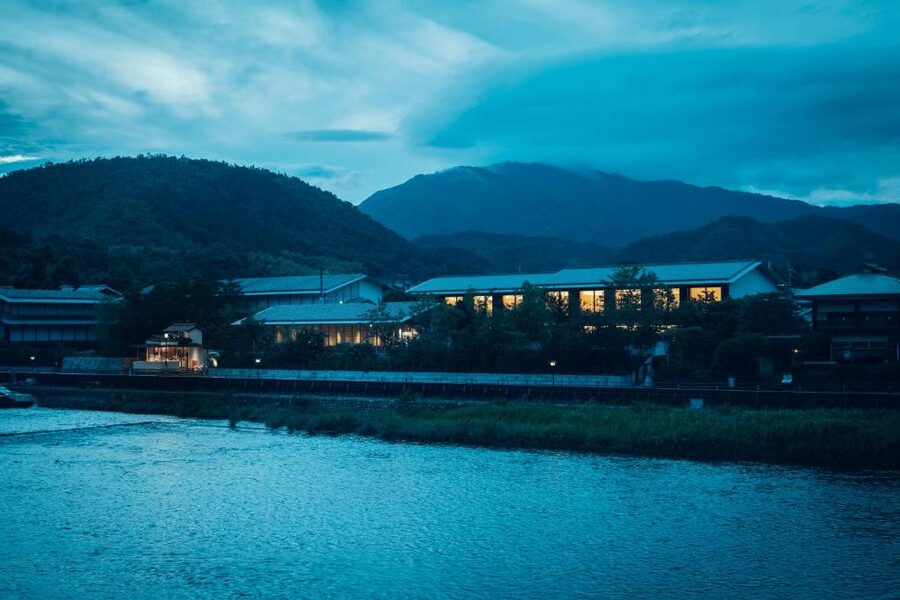
MUNI is the best small luxury hotel in Arashiyama. Twenty-one rooms across two contemporary buildings, in-house Alain Ducasse-group bistro and a more formal kaiseki room. Most rooms have terraces with river views over Togetsukyo to the south or the mountains to the west. Architecture is by Tadao Ando-trained Hidesato Tsuruta, all dark wood, clean lines, deep windows.
The room I’d book: a Suite River Side terrace, fourth floor or higher. The terraces have proper outdoor seating and a private dining setup if you order in. Standard rooms are smaller than at Suiran but the design is better, and the food is markedly better.
This is where I’d send a couple on a romantic Kyoto trip if budget tops out around ¥100,000/night. Better than the Aman experience for the same money in many ways: less ceremony, more bespoke.
What’s good:
- The Maison Cinq Sens restaurant (Ducasse-group) is genuinely the best non-kaiseki dinner in Arashiyama and walk-in friendly for hotel guests
- Architecture and room design beat anything else in this price band in Kyoto
- Closer to Togetsukyo than Suiran (90 seconds versus 4 minutes), which matters in November when crowds make 4 minutes feel like 15
- Just 21 rooms, so service is properly attentive. Staff know you by night two
What’s not:
- No onsen. The in-room baths are deep but it’s tap water, not hot spring
- Pricing creep year on year. Was ¥55,000 in 2022, ¥75,000+ now in 2026
- If you want traditional Japanese ryokan atmosphere, this is the wrong choice. It’s a design hotel
Check prices at MUNI Kyoto: Booking.com | Agoda
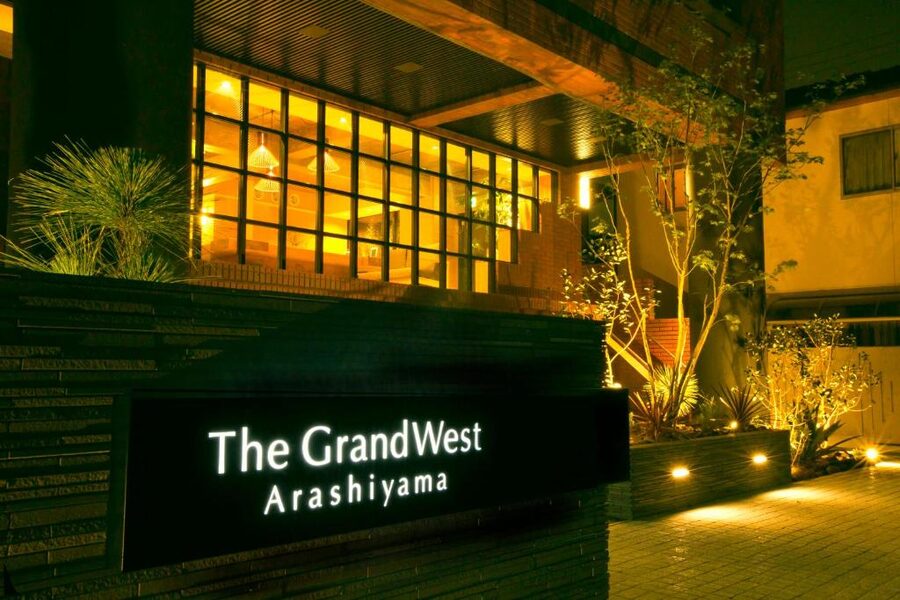
The GrandWest Arashiyama: best mid-range hotel
Nearest station: JR Saga-Arashiyama, 6 min walk
To Togetsukyo: 15 min walk through the bamboo grove
Best for: First-time Arashiyama base on a sensible budget; families
From: ¥18,000/night low season, ¥40,000-55,000 at peak
The GrandWest is the answer if “I want to stay in Arashiyama” doesn’t mean “I want to spend ¥85,000 a night.” It’s a 2019-build mid-range hotel close to JR Saga-Arashiyama, sensibly furnished rooms, modern bathrooms, breakfast buffet that’s better than it has any right to be at this price.
The trade-off: it’s a 12-minute walk to the river, and the hotel itself doesn’t have any of the atmosphere you came to Arashiyama for. You’re paying for clean modern hotel rooms in a tourist-area zip code. But on a 7-day Kyoto trip where you want one or two nights west of the city without the price hit, this is the right call.
What’s good:
- Stays under ¥30,000 even in October most years; one of the few Arashiyama hotels that doesn’t double in autumn
- Family rooms (twin + sofa bed) are actually large enough. Not the case at most Kyoto mid-range
- Bath/shower setup is modern, with a proper soaking tub even in standard rooms
- 15 minutes’ walk to the bamboo grove via the back-route through Saga-Arashiyama, which is the route that avoids the worst of the crowds
What’s not:
- Atmosphere is generic. Could be any 2019 mid-range hotel in any Japanese city
- Not riverside. If river view is the goal, this isn’t it
- Restaurant on-site is mediocre. Walk five minutes to the main shopping street for better options
Check prices at The GrandWest Arashiyama: Booking.com | Agoda
Hotel Binario Saga Arashiyama: cheapest decent hotel
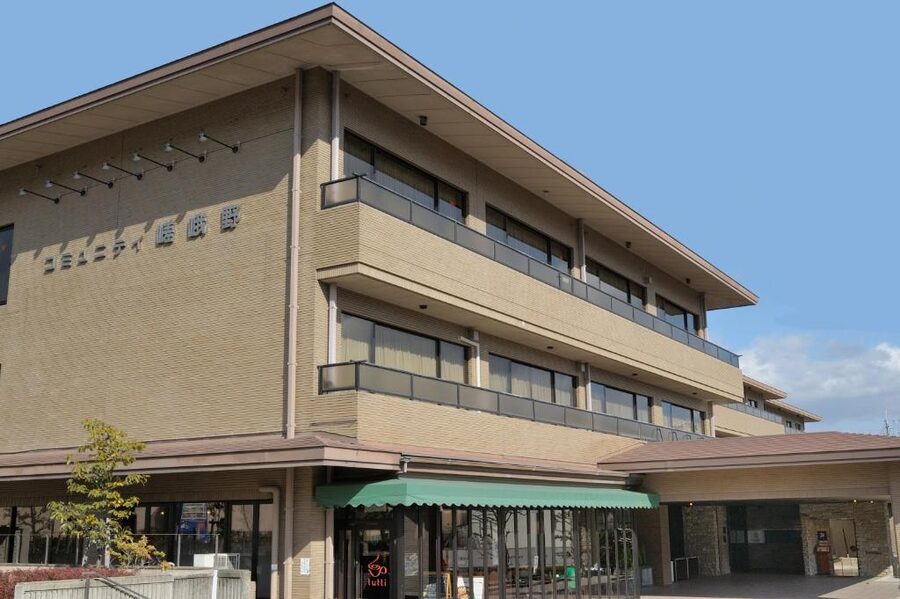
Nearest station: JR Saga-Arashiyama, 5 min walk
To Togetsukyo: 15 min walk
Best for: Travellers who want Arashiyama postcode at lowest sensible cost; couples on a tighter budget
From: ¥12,000/night low season, ¥25,000-35,000 at peak
Binario Saga Arashiyama is a step below the GrandWest in finish but a step closer to the JR station, and the price is consistently ¥6,000-10,000 lower for an equivalent date. If you’re prioritising “stay in Arashiyama” but not “experience the riverside,” this works fine. The rooms are small Japanese business-hotel size: fine for one or two adults, tight for a family of four.
What’s good:
- Cheapest decent hotel within actual walking distance of Saga-Arashiyama station
- Takes pets in some rooms (rare for Japan). The owners’ inn is dog-tolerant and the small rooms upstairs allow them
- 5-minute walk to the bakeries on Saga-Arashiyama main road. Better breakfast than the hotel’s
What’s not:
- Rooms are small, about 13 sqm in the standard category
- No bath, only shower in most rooms
- Hotel atmosphere is closer to a Japan business hotel than a tourist destination property
Check prices at Hotel Binario Saga Arashiyama: Booking.com | Agoda
The onsen ryokan question: what works in Arashiyama, what doesn’t
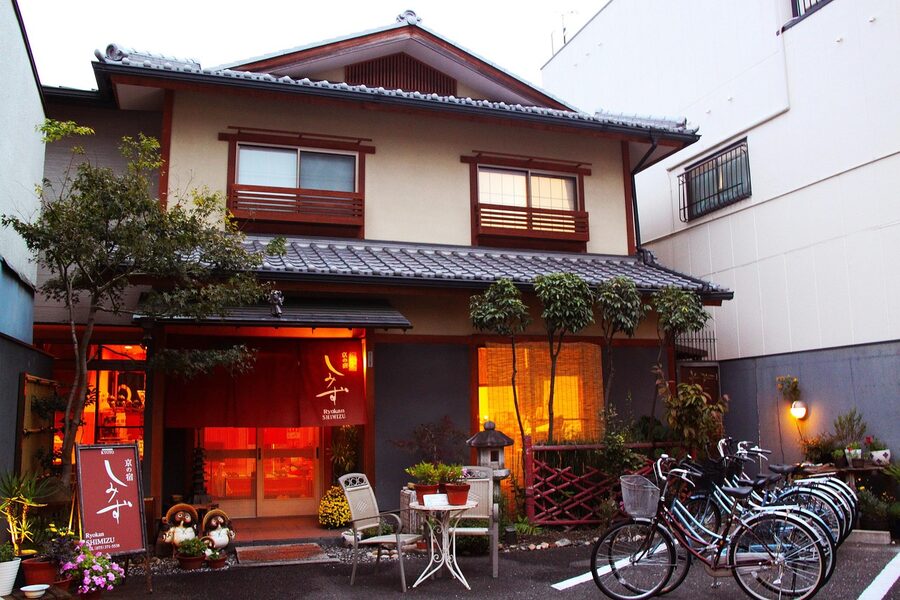
Kyoto isn’t an onsen city. The Arashiyama Onsen line was only tapped in the early 2000s, and only a handful of riverside properties draw from it. Outside of those, “onsen” on a Kyoto hotel page means a heated public bath that may or may not have any actual hot-spring water in it. Worth knowing before you book.
Properties drawing real Arashiyama Onsen water:
- Suiran (rooms with balcony bath)
- Togetsutei (public rotenburo plus upper-floor private outdoor baths)
- Hoshinoya Kyoto (private bath in higher-tier rooms; cliffside bathhouse)
- Kadensho Arashiyama Onsen (the most affordable real-onsen option here)
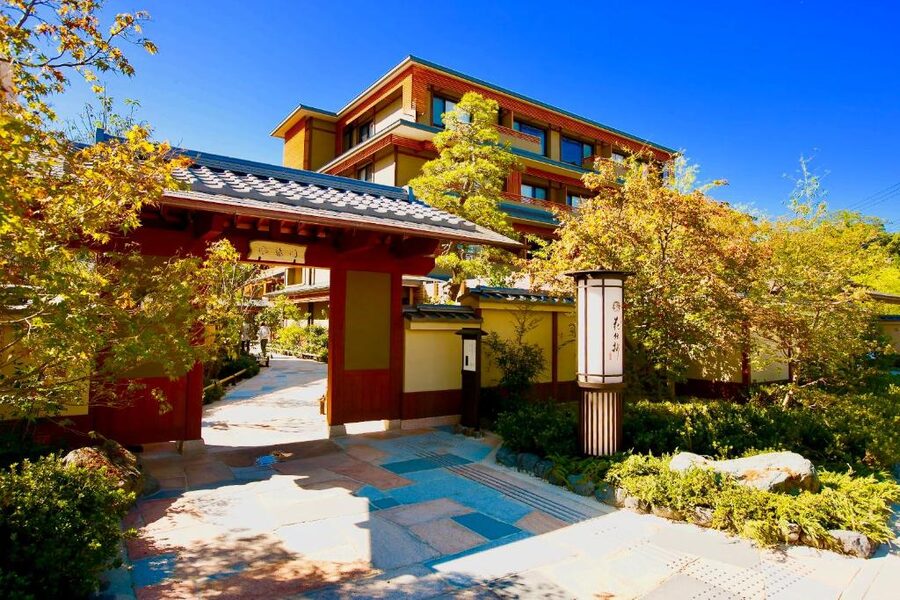
Kadensho, Arashiyama Onsen: best onsen ryokan on a budget
Nearest station: Randen Arashiyama, 4 min walk
To Togetsukyo: 7 min walk
Best for: Travellers who want real Arashiyama Onsen at half the Togetsutei price; families with kids who hate kaiseki
From: ¥18,000-30,000/night with dinner buffet (currently in renovation through 2026, check before booking)
Kadensho is what you book if you want the onsen experience without the ryokan price tag. The catch is the dinner format: instead of the served-in-room kaiseki you’d get at Togetsutei, Kadensho runs a hot/cold buffet with sushi and tempura stations and a Japanese dessert bar. For kids, that’s actually better than kaiseki. For solo travellers wanting traditional ryokan, it’s a step down.
The onsen is real, the same Arashiyama Onsen water as Suiran and Togetsutei, and the public rotenburo is open from 5am, which matters if you want a soak before walking to Tenryu-ji. There’s no private outdoor bath option in any of the rooms, so if that matters to you, look elsewhere.
What’s good:
- Real Arashiyama Onsen at the lowest price of any property tapping that water
- Buffet dinner format works well for families and travellers who don’t want a 2-hour kaiseki commitment
- 5am public bath opening for early-morning soaks before temple walks
- Owned by Kyoritsu Resort group, operations are tight, English support is decent
What’s not:
- Buffet dinner can feel like a midrange hotel rather than a ryokan. Manage expectations
- No private balcony bath options at any tier
- The 2026 reopening means rates and availability are still settling. Check Booking before assuming a price
Check prices at Kadensho Arashiyama Onsen: Booking.com | Agoda
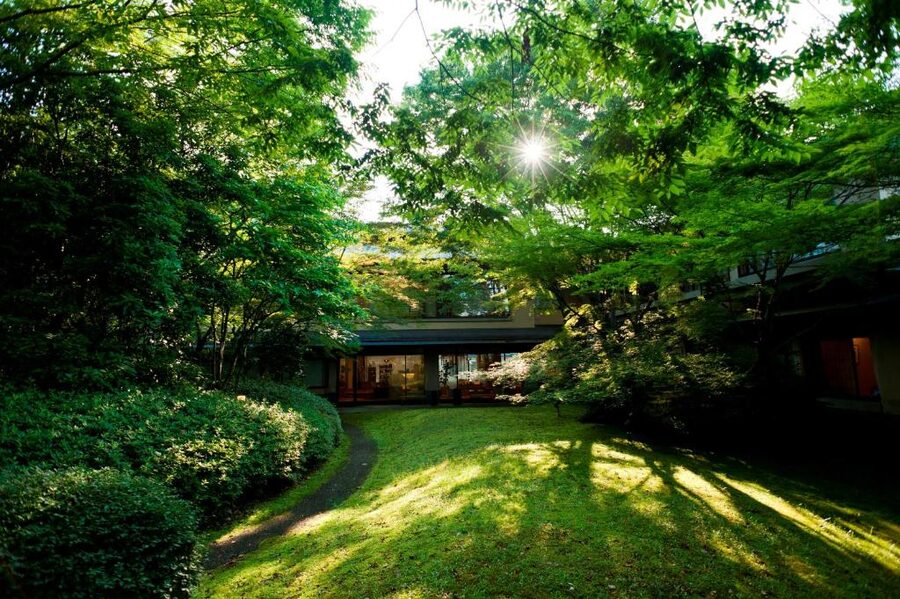
Ranzan: old-school riverside ryokan
Nearest station: Hankyu Arashiyama, 6 min walk
To Togetsukyo: 5 min walk
Best for: Travellers who want pre-renovation ryokan atmosphere and don’t mind dated rooms
From: ¥35,000/night with kaiseki, often less off-peak
Ranzan is the older, slightly worn alternative to Togetsutei. Same general riverside position, similar price band, but the rooms haven’t seen a serious renovation since the 90s. If you want “real ryokan that hasn’t been Instagrammed yet,” this is closer to the truth than the polished options. If you want en-suite Western bathrooms with rainfall showers, look elsewhere.
The kaiseki dinner is included on most rates and it’s solid, same Arashiyama style, served in your room by a personal attendant. Bath is the small old-style sento layout, no rotenburo. The owner’s family has been running it for four generations, which you can feel in the service.
What’s good:
- Genuine traditional ryokan atmosphere. Almost no one stays here who isn’t already a return ryokan visitor
- Kaiseki dinner is well above average for the price
- Family-run for four generations, service is personal in a way the chain ryokan can’t match
What’s not:
- Rooms haven’t been renovated in a long time. Fine if you expected ryokan, jarring if you expected hotel
- No outdoor bath at any tier
- English support is minimal. Fine in person but tricky for special requests via email
Check prices at Ranzan: Booking.com | Agoda
Homm Stay Nagi Arashiyama: best for groups and apartments
Nearest station: JR Saga-Arashiyama, 8 min walk
To Togetsukyo: 12 min walk
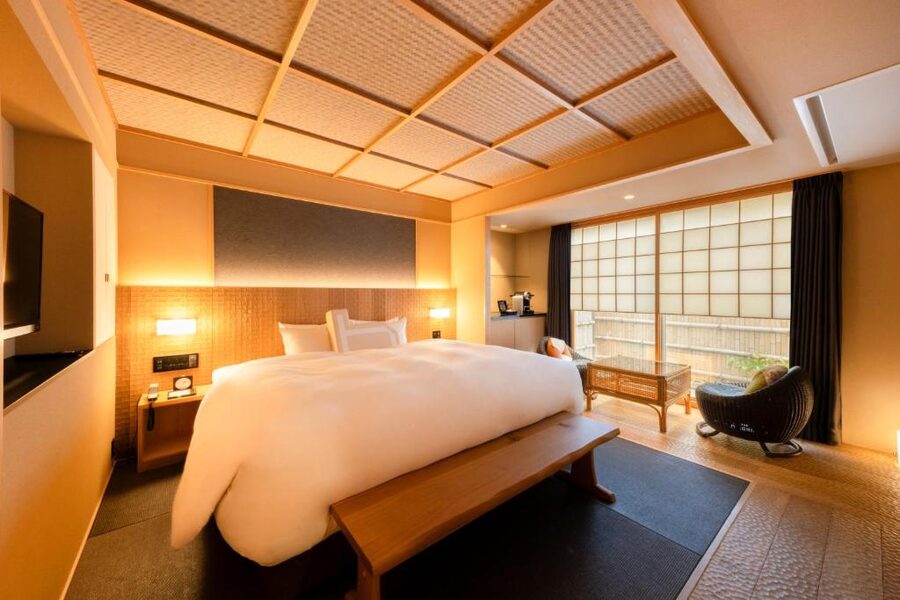
Best for: Families of 4-6, longer stays of 4+ nights
From: ¥28,000/night for a 2-bedroom unit, sleeps four comfortably
Nagi is the answer for groups. Banyan Group’s serviced apartment line, two- and three-bedroom units, full kitchen, washing machine, separate living space. For four travellers it works out around ¥7,000 per person per night even at peak, far less than two ryokan rooms, and the kitchen lets you cut food costs.
What’s good:
- Apartment format means kids can sleep when they need to without disturbing adults
- Washing machine pays for itself on a 7+ night Kansai trip
- Banyan Group operations standard. Clean, decent furniture, working wifi, English support
What’s not:
- No on-site restaurant. Eat out or cook (which is half the point)
- Not in the heart of Arashiyama; it’s in the residential streets behind
- One-night stays don’t work. Minimum stay is usually two, sometimes three on weekends
Check prices at Homm Stay Nagi: Booking.com | Agoda
What most Arashiyama guides get wrong
Three things every other Arashiyama hotel guide tells you, where I’d push back.
“Hoshinoya is the best luxury hotel in Arashiyama”
It’s the most photographed. It’s the most known. It’s also the wrong call for first-time Kyoto visitors, and I’ll keep saying it. The boat-only access cuts you off from the city for the duration of your stay. The food is locked to the property’s restaurants. If your Kyoto trip is six days or more and you want one night where the resort is the experience, fine. But if you have three nights total and you’re picking Hoshinoya, you’ve made a bad call. Suiran or MUNI are better luxury choices for travellers who want to actually use Kyoto.
“Stay near the bamboo grove”
Most of the time when you read this, the writer means “stay in central Arashiyama.” Which is fine advice but ignores a real problem: between roughly 10am and 4pm in autumn and spring, the streets within 200 metres of the bamboo grove entrance are unpleasant. Coaches stop, hawkers shout, the whole thing is a tourist core. If you stay riverside-east of the bridge, or north up in the Saga preserved street, you’re 5-10 minutes from the grove but you don’t sleep in the noise.
“Arashiyama is a quiet escape from Kyoto”
It is, between 6am and 9am, and after 5:30pm. From late morning through mid-afternoon, the parts of Arashiyama that are most photographed are also the most crowded streets in Kyoto outside Kiyomizu. If you’re booking riverside, you’re booking for the four hours of quiet at the start and end of the day. If you don’t intend to actually be in your room or out at the river during those hours, the quiet sales pitch is wasted money. Book a central Kyoto hotel.
Booking platforms: what to use and what to skip
Three real options, in order of usefulness:
- Booking.com covers most of Arashiyama, including all the chain hotels and most mid-range ryokan. Genius levels 2-3 typically save 10-15%. Free cancellation rates are usually within 5% of non-refundable, so I always book free-cancel
- Agoda usually within 2-3% of Booking, sometimes cheaper for the smaller ryokan. Worth checking both for any single booking. The “Coins” rebate scheme adds 4-7% off if you have a balance
- Direct booking on the hotel’s site required for Hoshinoya Kyoto. Worth checking for Suiran (Marriott direct booking gets Bonvoy points and free wifi). For everything else, Booking or Agoda will be cheaper
What I’d skip: Expedia (consistently 5-10% more for the same room than Booking), Hotels.com (since their Stay 10 Get 1 Free programme changed it’s not worth chasing), and Trip.com (decent prices but the cancellation enforcement is aggressive; they’ll charge you for a free-cancel rate if you change your mind 24 hours out).
For Hoshinoya specifically: book direct on the Hoshino Resorts site. They take a 10-30% deposit on confirmation. Cancellation is reasonable, no charge until 14 days out, scaled fee from 14 to 1 days.
The mathematics of one night vs three
The single best thing I’d tell anyone reading this guide: if you can’t decide whether to base in Arashiyama or central Kyoto, do one or two nights west, the rest in the city. Most travellers I know who tried five nights in Arashiyama got bored of the commute by night three. Most who tried zero nights wished they’d done one or two.
One night, on a 5-7 day Kyoto trip:
- Day before you arrive in Arashiyama: send your luggage via takkyubin from your central Kyoto hotel
- Arrive late afternoon, settle in, walk the river at sunset
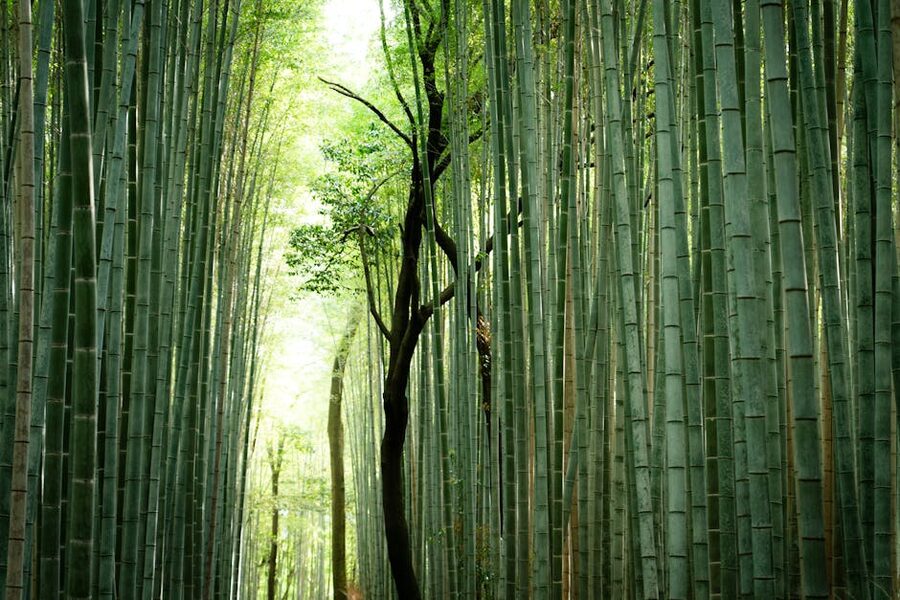
- Wake at 5:30am, walk the bamboo grove and Tenryu-ji while it’s empty
- Eat breakfast, check out around 11am
- Send luggage back to central Kyoto, head out for the rest of the day
That’s the whole experience compressed into 18 hours, and it’s what most people actually want from Arashiyama. Two nights gets you a proper rest day; three is overkill unless your specific reason for being there is the property itself.
Quick recommendations by traveller type
First Kyoto trip, want one night riverside? MUNI Kyoto. Better food, better design, easier than Hoshinoya, ten minutes closer to everything else.
Splurge anniversary or honeymoon? Suiran’s Sansui Tsuki room. The balcony onsen is the photo you came for.
Onsen-first traveller, mid-range budget? Togetsutei upper-floor riverside. Real Arashiyama Onsen, real ryokan service, half Suiran’s price.
Family of four? Homm Stay Nagi or The GrandWest, depending on whether you want kitchen or not. Avoid all the ryokan; they’re not built for kids.
Couples in their 30s, design-led, ¥80-100k budget? MUNI Kyoto, every time.
Returning Kyoto visitor, want the most unusual stay? Hoshinoya Kyoto, one night, eat the kaiseki, take the boat back at 9pm.
Mid-range, value-seeking? The GrandWest if you want comfort, Hotel Binario if you want cheap.
Whatever you book, send your luggage ahead via takkyubin and walk the bamboo grove before 7am. That’s the trip.
For more on accommodation across the rest of Kyoto, the Kyoto pillar guide covers all six districts. For the eastern side of the city, see where to stay in Higashiyama. For luxury options across the whole city, the best luxury hotels in Kyoto ranks them. And for ryokan stays anywhere in Kyoto (not just Arashiyama), the best ryokan in Kyoto is the place to start.