
This guide contains affiliate links. If you book through them I may earn a small commission at no cost to you. I only recommend stays I’d actually book myself.
The first time I checked into a machiya in Kyoto, the operator’s manager met me on a side street in Nakagyo, walked me 90 seconds through a roji alley I would never have found on Google Maps, and handed over a key that fit a 100-year-old front door. There was no front desk. No bellhop. No concierge calling me by name. Just a small wooden house, two stories, all mine for three nights.
I’ve been booking machiya stays in Kyoto for years now and the answer to the most common question is simple. For two people, or four, or six who want a kitchen and a bath and the run of a place that was built before electricity, a restored townhouse beats almost any hotel in the city for the same price. For solo travellers, business travellers, anyone who wants breakfast served, or anyone who panics at a Japanese front-door lock, it doesn’t.
This guide is the trade-off list nobody writes properly. The pros, the cons, the operators worth booking with, the ones I’d skip, and the cost reality at each tier. If you’ve come from a Marriott Bonvoy mindset and you want a machiya because they look beautiful on Instagram, read the cons section twice before you commit your trip to one.
I’ll cover what a machiya actually is, who it suits, who it doesn’t, the operator landscape in 2026 (it’s changed twice since 2018), how to book, and the eight or nine specific properties I’d recommend across price tiers from ¥25,000 a night to ¥220,000.
In This Article
- What you’re actually renting
- Why a machiya beats a hotel for the right traveller
- Who shouldn’t book a machiya
- The operator landscape in 2026
- Where the good machiya are
- The machiya operators worth booking with
- Sowaka: best high-end machiya stay in Gion
- MUNI Kyoto: the riverside machiya hotel in Arashiyama
- Iori Stay: the heritage operator with the deepest catalogue
- Kyoto Machiya Inn (Machiya Residence Inn): the biggest mid-tier portfolio
- Hatoba-an: the easy first-timer’s machiya
- Nazuna Kyoto: boutique chain with onsen-style baths
- Kyo no Ondokoro: the modern villa-machiya
- Yadoya Manjiro: the cheapest machiya I’d actually recommend
- Kyoto Machiya Cottage Karigane: value pick for families
- How to actually book, and what to verify before you do
- Cost reality across the year
- Honest thoughts on the most overrated machiya hype
- What you actually want for your trip type
- The practical checklist before you arrive
- What I’d book this year
What you’re actually renting
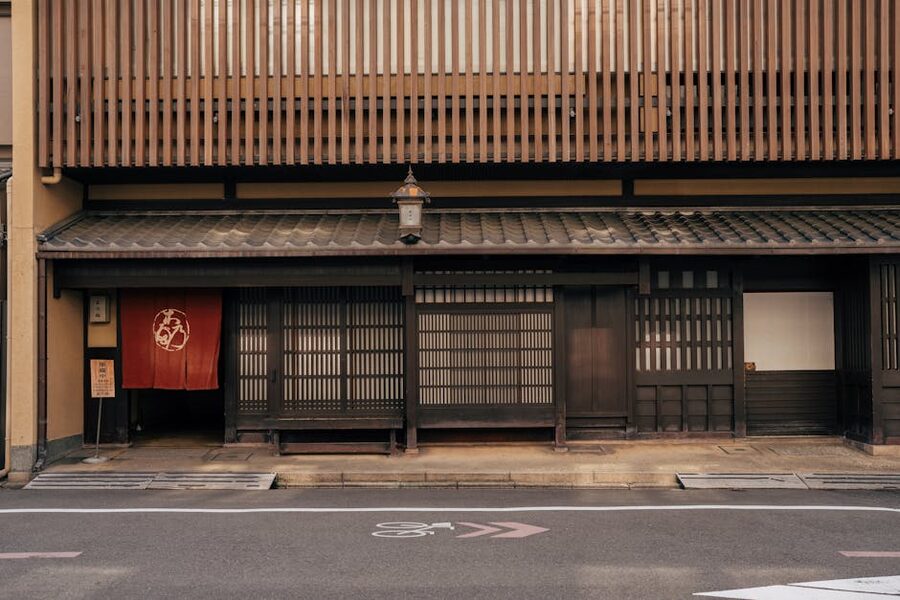
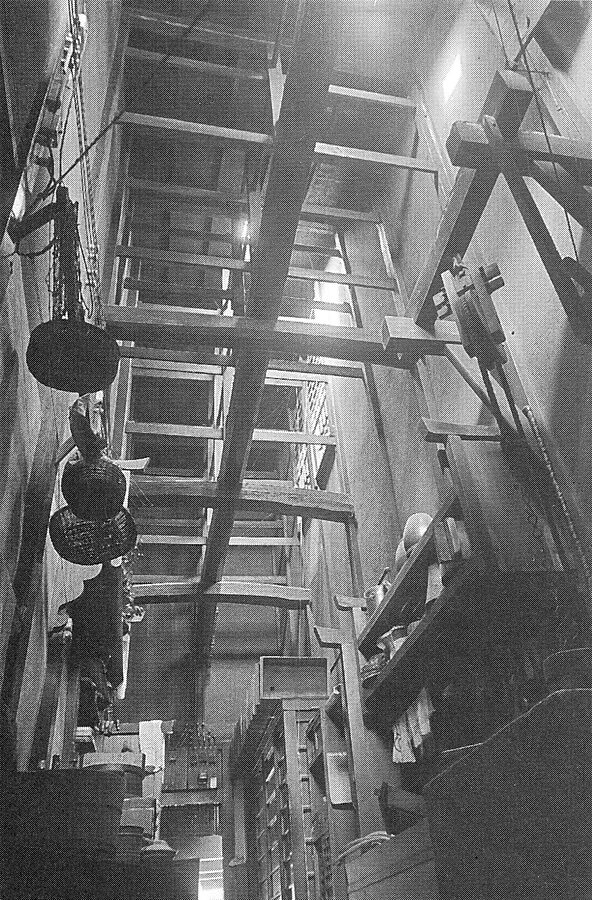
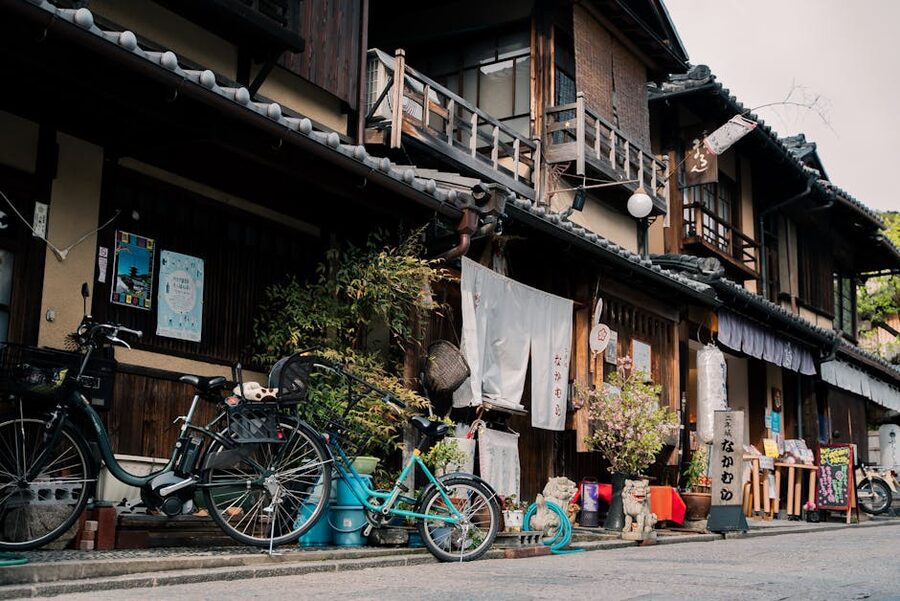
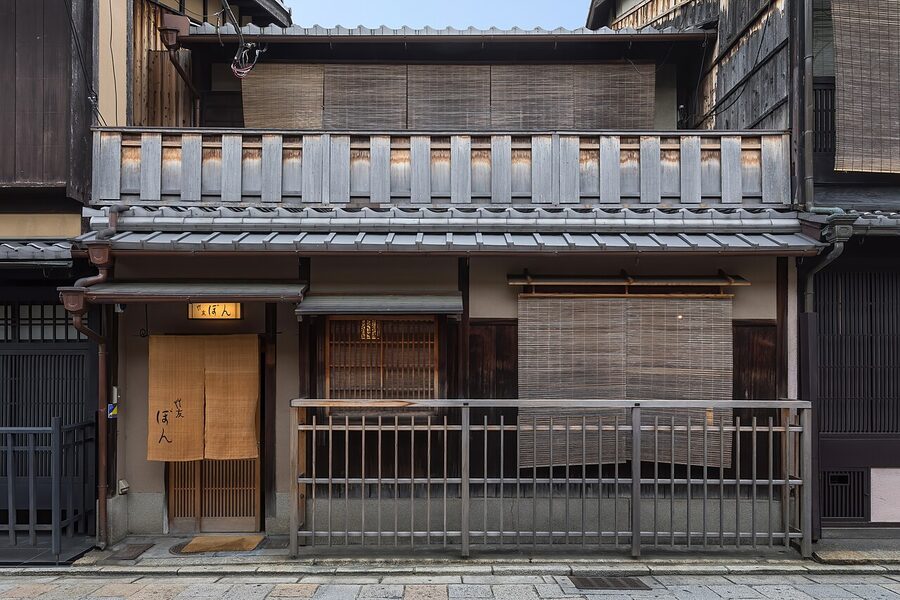
A machiya (町家) is a Kyoto townhouse, usually 80 to 130 years old, two stories, wooden frame with lath-and-plaster walls, clay tile roof, and a long narrow footprint that earned them the nickname unagi no nedoko, eel’s bed. Most are about 4 metres wide on the street and 20 to 30 metres deep. The classic plan is a shop or earthen-floored entryway at the front, living rooms in the middle, and a tiny courtyard garden (tsubo-niwa, 坪庭) toward the back to bring light and air into the centre of the house.


What you’re renting is almost always the entire house. Not a room. The whole thing. Front door, kitchen, bathroom, futon room, sitting room, garden if there is one. Most machiya for tourists sleep two to six. A handful sleep eight or nine.
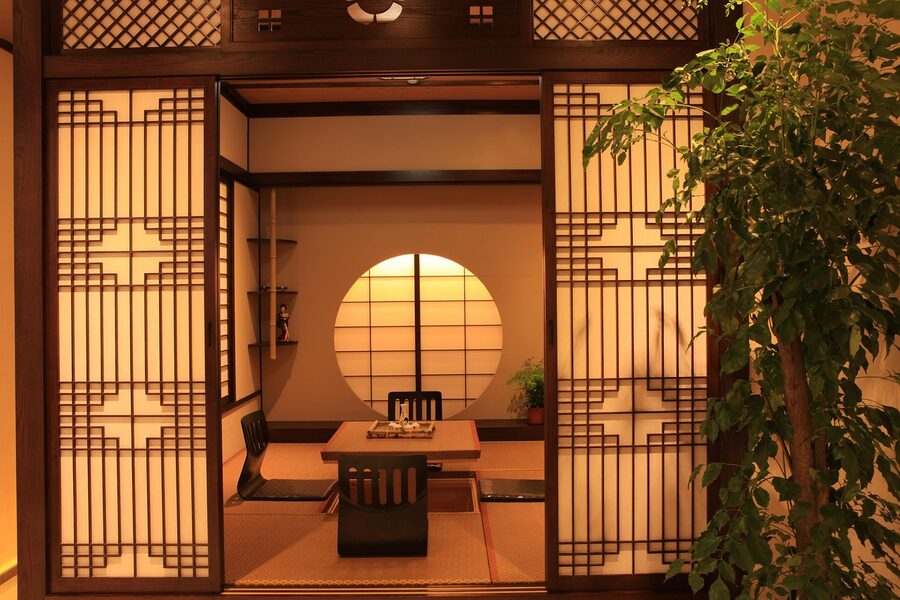
The interiors have been heavily renovated. Tatami floors, sliding paper screens (shōji), wooden ceilings, exposed beams. But the bath is modern, the kitchen has an induction hob and a fridge, and the toilet is a heated washlet. You’re not slumming it in a 1923 plumbing setup. The good operators have spent ¥30 to ¥80 million per house on the renovation. It shows.

Most have either Japanese-style sleeping (futon laid out on tatami at night) or a hybrid layout, Japanese-style downstairs, low Western beds upstairs. If you’re three generations of family travelling together, the second style is what you want. Grandparents who can’t get up off a futon are real.
Why a machiya beats a hotel for the right traveller
Six reasons, in order of how much they actually matter.
1. Space. A standard four-star Kyoto hotel room is 24 to 32 m² for two people. A machiya for the same money is 60 to 110 m². You get a kitchen, a bath you can lie down in, two sleeping rooms, and a small garden. You can spread your luggage out and not bash a knee on the bed.
2. Privacy. No corridors. No lobby. No fellow guests. You shut the front door and the world goes away. For couples this is the actual luxury. For families with one tired toddler at 7pm, it’s the difference between a survivable holiday and one where you lose your mind.
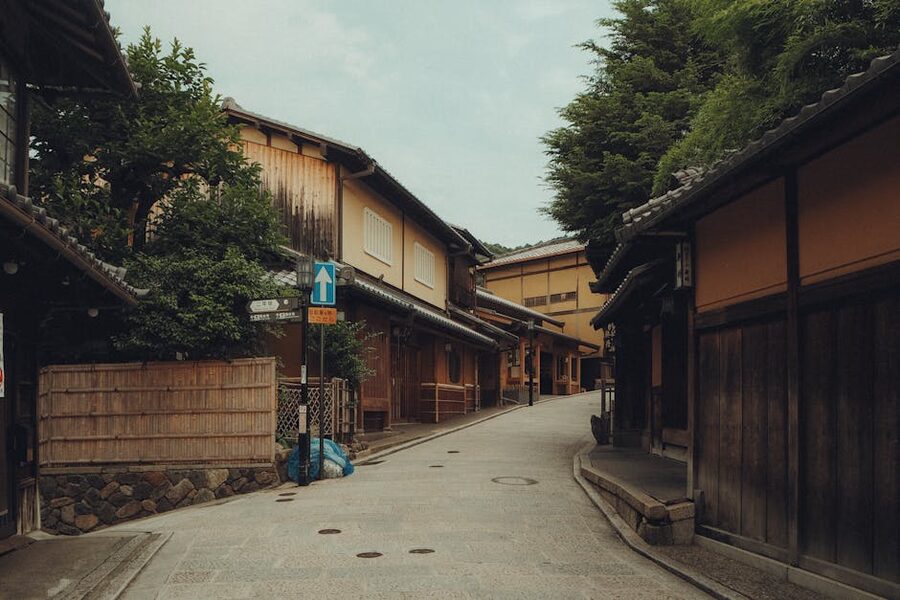
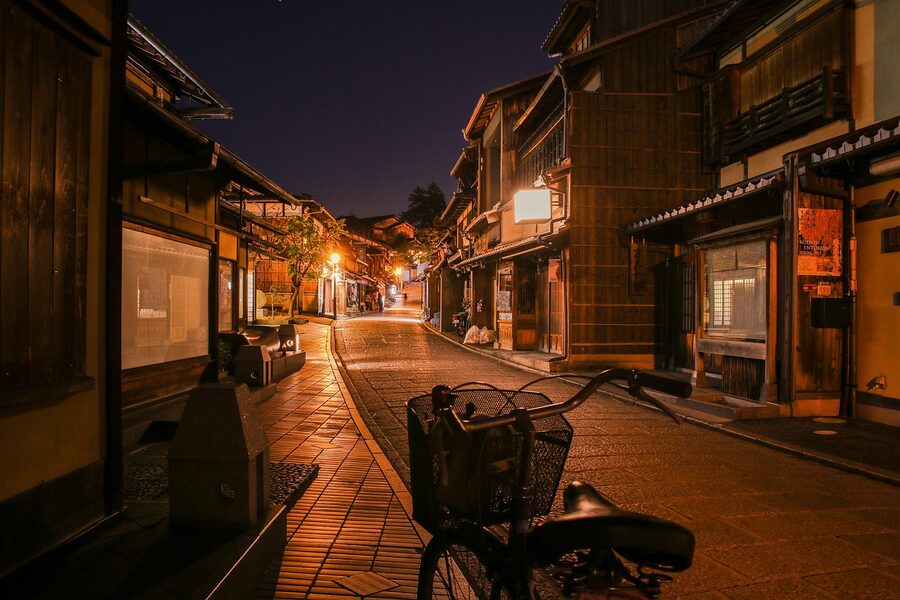
3. The neighbourhood. Hotels cluster around stations. Machiya are scattered through the residential blocks of Nakagyo, Shimogyo, and Kamigyo wards, exactly the lived-in parts of central Kyoto that day-trippers never see. You walk to the konbini past elderly women on bicycles. You hear the temple bell at 6am because there’s a temple two streets away.


4. The kitchen. Sounds boring. Isn’t. Walking the morning market at Nishiki, picking up still-warm tofu, sashimi-grade tuna at ¥1,800 for two, a bottle of Junmai for ¥2,500, then cooking it back at the house, that’s a Kyoto night that most travellers never get and won’t forget. The kitchens are real: gas or induction hob, fridge, dishwasher in the better ones, plates and glasses for the number of guests.
5. Cost per head. Past two people the machiya math beats the hotel math. A three-bedroom machiya for six people in Higashiyama costs ¥80,000 to ¥140,000 a night. Six four-star hotel rooms is ¥120,000 to ¥240,000 plus you’re scattered. Family or friend group of six? You’re saving ¥40,000 a night.
6. The form itself. A machiya is a building type. There’s nothing else like it anywhere else in Japan. The fact that you get to sleep inside one for the price of a hotel room is, on a quiet evening with the rain on the courtyard tiles, genuinely unreasonable.
Who shouldn’t book a machiya
I keep meeting people who’ve booked one because the photos are good and then spend three days complaining about everything that isn’t a hotel. Read this list. If two of these apply to you, book a hotel.
You want breakfast served. No machiya I’ve stayed in has breakfast service. A handful (Sowaka, Sakura Rakuen) are technically ryokan-machiya hybrids and do bring breakfast trays. The rest, you walk to a kissaten or eat what you bought from the konbini. If your idea of a hotel is the breakfast buffet, skip the machiya entirely.
You don’t want to handle a Japanese key. Most operators send you a digital code or a key in a lockbox a day before arrival. There’s no front desk. If you arrive at 11pm and the code doesn’t work, you call a number and wait 20 minutes. It’s fine. But if that scenario fills you with dread, this isn’t your trip.
You panic when you can’t find an address. Kyoto addresses are not numbered. They are described. A machiya at “Nakagyo-ku, Aneyakōji-dōri Tominokōji nishi-iru” is on Aneyakōji street, west of the Tominokōji intersection, and that’s all the data you get. The operators send maps. Google Maps mostly works. Sometimes it doesn’t and you stand on a corner asking a delivery driver. If that’s not in your range, hotel.
You’re a solo traveller. A whole house for one person doesn’t add up financially or atmospherically. The smallest machiya I’ve stayed in (a one-bedroom in Nishijin) was ¥22,000 a night, which is more than you’d pay for a sharp three-star hotel room near Shijo. The space is wasted on you. So is the kitchen. Go book a Mitsui Garden or a Solaria.
You have mobility issues. Steep wooden stairs, low doorways, futon sleeping in a few houses, and bath rooms with a step into them. Some operators (Iori, Sowaka) offer accessible-leaning machiya. Most don’t. Ask before you book.
You arrive at midnight. Self-check-in works fine in daylight. At midnight in the rain after a missed shinkansen, in an unmarked alley, it’s a test. Hotels have night staff. Plan accordingly.
The operator landscape in 2026
Kyoto’s machiya rental scene has consolidated twice in the past five years. The 2018 minpaku law killed about half the unlicensed Airbnb supply. Then COVID killed a chunk of the legitimate operators. What’s left is a smaller, more professional market. Three brackets are worth knowing.

Hotel-grade operators (¥40,000–¥220,000/night). MUNI Kyoto, Sowaka, Sakura Rakuen, Hoshinoya-adjacent properties. These run their machiya like four- or five-star hotels: full breakfast service in some cases, in-house restaurants, real concierge, English staff, polished interiors with original furniture. You’re paying for the operation as much as the building.
Mid-tier serviced machiya (¥25,000–¥80,000/night). Iori Stay, Kyoto Machiya Inn (Suoan), Nazuna, Kyo no Ondokoro, Hatoba-an, Yadoya Manjiro. These are the workhorses. Self-check-in, small in-person greeting, manuals in English, kitchen stocked with basics, no breakfast. The buildings are properly restored and the operators have 20 to 60 houses each, which means more consistency than a one-off rental.
Independent and Airbnb (¥18,000–¥45,000/night). One-machiya operators on Airbnb or Booking, often a family that moved out, restored their grandparent’s house, and now lets it. Quality is a coin flip. The good ones are extraordinary at the price. The bad ones have last-minute cancellations, broken aircon, and a host who doesn’t reply. I’d only book in this bracket if you read 30+ recent reviews and the most recent ones are all five stars.
One contrarian note: the cheapest machiya I’d actually recommend is around ¥30,000 a night. Below that, you’re either getting a one-room rebuild that isn’t really a machiya, or you’re getting somebody’s amateur conversion. Pay the extra ¥8,000 and stay with a real operator.
Where the good machiya are
Geography matters more than you’d think. A machiya in the wrong area is just an inconvenient house.
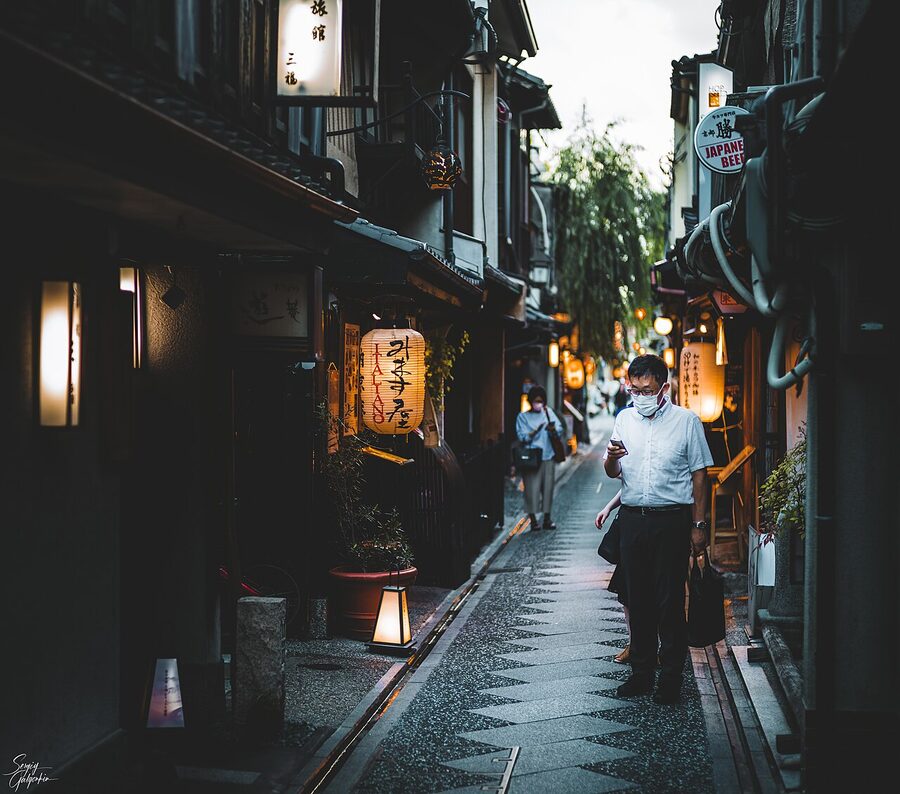

Nakagyo (central Kyoto). The bullseye. Most of the good Iori, Kyo no Ondokoro, and Nazuna properties are here. You walk to Nishiki Market in 6 minutes, the Karasuma subway in 5, and Pontocho in 10. If you’re staying for three nights and you don’t know Kyoto, base yourself in Nakagyo.
Higashiyama and Gion. The visual postcard area. Sowaka, the high-end Hatoba-an properties, and a handful of Iori houses sit east of the Kamogawa. You’re 10 minutes’ walk from Kiyomizu-dera, 15 from Yasaka Shrine. The trade-off is tourist density during the day. If you don’t leave the house before 9am you’ll have the streets to yourself for an hour. (For more on the trade-offs of basing yourself in either area, see my Higashiyama hotels guide.)
Nishijin (north-west central). The weaving district. Quiet residential streets, Suoan and a couple of Iori properties, almost no other tourists at night. About 15 minutes by bus or 25 by walking from central Kyoto. Excellent for return travellers who already know the city. Less ideal for first-timers because you’re a bit removed from the dinner scene.
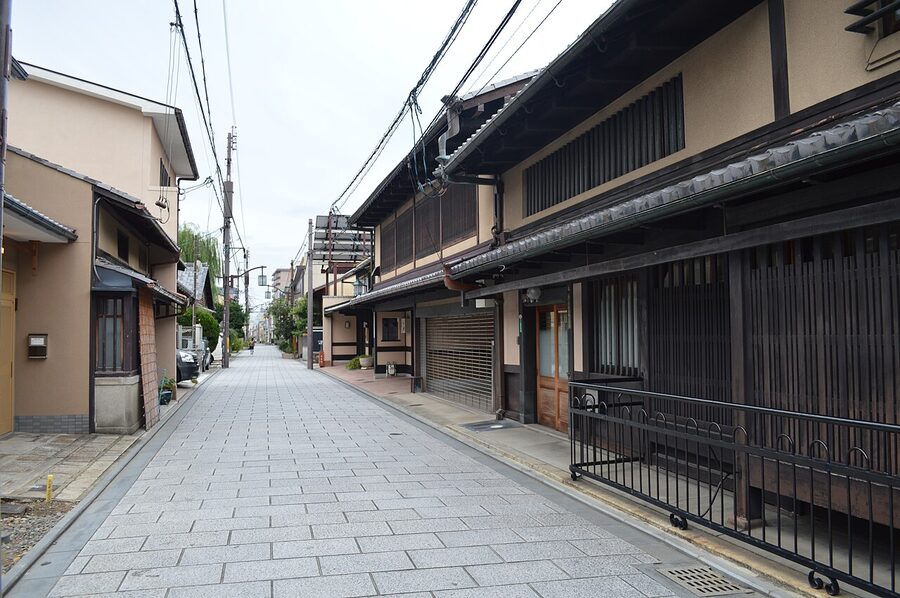

Shimogyo and around Kyoto Station. Less character but more practical. A few good operators (Machiya Inns, some Hatoba-an) put their cheaper houses here. Useful if you’re treating Kyoto as a base for day trips and need station access.
Arashiyama (west). Two-night stays only. MUNI Kyoto sits on the Hozugawa river and is the only machiya-style property out here that’s worth the displacement from central Kyoto. Beautiful, quiet, and you’ll spend an extra ¥800 in cab fare every time you go to dinner.
Avoid: Fushimi (too far south), Yamashina (suburban), and anything labelled “near Nishi-Honganji” without a specific street name. The latter usually means somewhere along the JR tracks where you’ll hear trains all night.
The machiya operators worth booking with


Specific recommendations across all three price brackets. I’ve stayed in or toured every one of these. Where I’ve stayed multiple times, I’ll say so.
Sowaka: best high-end machiya stay in Gion

Where: Gion, Higashiyama-ku, 6 minutes’ walk from Yasaka Shrine.
Sleeps: 1–4 per room (multiple rooms in the property, not a single rental)
From: ¥85,000/night low season; ¥160,000+ in sakura/autumn
Sowaka is the most polished machiya stay in Kyoto. It was a Meiji-era ryōtei (high-end traditional restaurant) before the renovation, which means the building is bigger than a typical machiya and the rooms are properly large for the price tier. There’s an in-house restaurant (La Bombance), a small bar in the original earthen-floor entryway, and the staff are genuinely fluent. Breakfast is served and worth the premium.
What it is not: a private rental of a whole house. Sowaka has 11 rooms in the main building and a few annex rooms across the street. You’re sharing the property with other guests in the way you would at a small ryokan. If you wanted Pontocho-style total privacy, Sowaka is the wrong call.
What it is: the best transition from “hotel comfort” to “machiya feel” for travellers who like ryokan but find them too rule-bound. Skip a regular suite and book one of the corner rooms with the small private garden. The bath setup is excellent.
What’s good:
- Genuine fluent English staff and 24-hour reception (rare in machiya world)
- The bath in the corner rooms looks onto a private garden
- Walking distance to Yasaka, Hanami-koji, Maruyama Park
What’s not:
- Not a private machiya rental, you’re sharing the property
- Sakura-week pricing is genuinely silly (¥160k+)
Book it: Booking.com | Direct (sowaka.com)
MUNI Kyoto: the riverside machiya hotel in Arashiyama
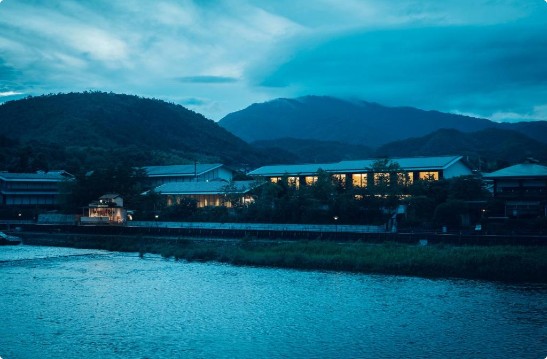
Where: Arashiyama, Ukyo-ku, 4 minutes’ walk from Togetsukyo bridge
Sleeps: 1–3 per room
From: ¥70,000/night low season; ¥130,000 in autumn
MUNI is the bridge between hotel and machiya. Designed by Kengo Kuma (yes, that one), the rooms aren’t strictly machiya in the original sense, it’s a contemporary building that uses Kyoto townhouse vocabulary. The river-facing rooms are the reason to book.
The trade-off is location. You’re not in central Kyoto. You’re in Arashiyama, which means a 25-minute train ride to Shijo every time you go to dinner. For a two-night stay where you want quiet and you’ve already done central Kyoto, MUNI is excellent. For a first-time five-day trip, it’s the wrong base.
The Michelin-starred MUNI La Table restaurant on site is genuinely good, French-Japanese, around ¥18,000 a head. If you’d rather not commit, the breakfast at the bistro on the ground floor is the better-value way to use the kitchen.
What’s good:
- Hozugawa river view from the corner rooms is the best in any Arashiyama property
- Kengo Kuma-designed contemporary interiors with machiya bones
- An on-site Michelin restaurant that’s worth the booking
What’s not:
- Not a strict machiya, the building is new construction, machiya-styled
- Arashiyama location adds ¥5,000–¥8,000 in cab fares over a typical stay
Book it: Booking.com | Direct (munihotels.com)
Iori Stay: the heritage operator with the deepest catalogue
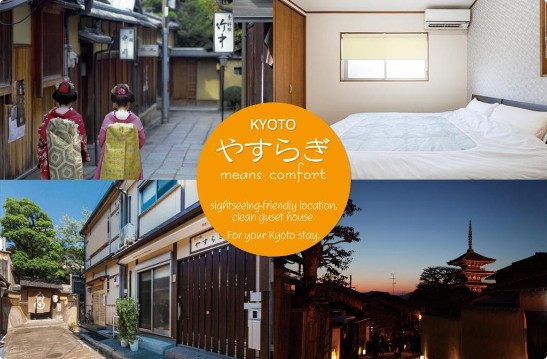
Where: Various, Nakagyo, Shimogyo, Higashiyama (13 properties)
Sleeps: 2–6 depending on the house
From: ¥40,000/night low season; ¥110,000+ in peak (per house, not per person)
Iori is the original. Founded in 2003 by Alex Kerr, the American writer who literally wrote Lost Japan, Iori restores genuinely old machiya and rents the entire house. Their catalogue includes 200+ year-old buildings on streets like Iseya-cho and Sujakuoji. These are not cosmetic restorations.
What you get is the most architecturally serious machiya rental in the city. The wood is original, the gardens are real, and the operator’s manual reads like a small guidebook (because Alex Kerr writes them). The downside is that Iori houses are not the most modern. The bathroom in some of them is fine but small. The aircon works but it’s not a smart-home setup. You’re sleeping inside a 19th-century building and they want you to feel that.
Pick from their catalogue with care. The Yasuragi (柳治), Setogawa, and Kogetsu are my pick of the bunch. Yasuragi is the most traveller-friendly: two bedrooms, a real kitchen, a beautiful tsubo-niwa, 5 minutes from Nijo-jo subway. Setogawa is the most photogenic but has a sleeping loft you climb a steep ladder to reach.
What’s good:
- The most architecturally serious operator in the city
- Whole-house rental, you have the place entirely to yourself
- Operator handover is a 30-minute orientation, not a key drop
What’s not:
- Some houses have steep stairs and tight bathrooms
- No food service, kitchen yes, breakfast no
Book it: Booking.com (Yasuragi) | Direct (iori-stay.com)
Kyoto Machiya Inn (Machiya Residence Inn): the biggest mid-tier portfolio
Where: 60+ properties across central Kyoto
Sleeps: 2 to 9 depending on the house
From: ¥28,000/night low season for a small one-bed; ¥85,000+ for a six-sleeper
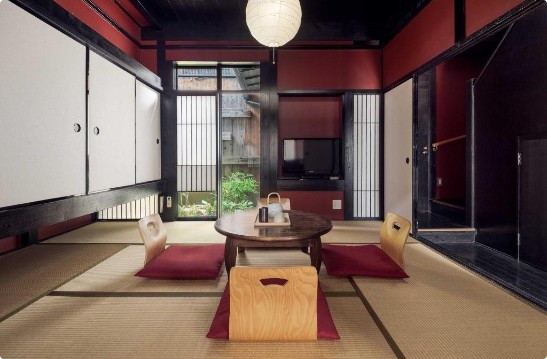
If Iori is the heritage operator, Machiya Residence Inn is the operator’s operator. They have over 60 houses, a search interface that lets you filter by sleep capacity, district, parking, and bath type, and a check-in process that’s been smoothed out over 15 years. For most travellers, this is where I’d start.
The trade-off is consistency over personality. The Iori houses have the wow factor; the Machiya Inn houses are reliably good. The renovation is clean, modern enough that nothing feels dated, but you don’t get the same “I’m sleeping inside a museum” feeling. For a family of four where two are teenagers who care about the wifi and not the wood beams, this is exactly the right call.
Pick of the catalogue: Suoan (three-bedroom, Shimogyo, near Nishi-Honganji), Hatoba-an (Higashiyama, three-bedroom, my own pick for first-time machiya stays), and Karigane (a four-bed with a small Western-style sitting room, useful for older travellers).
What’s good:
- Largest catalogue means actual choice, 60+ houses, not 10
- Self-check-in is properly worked out; lockboxes are well-marked
- Pricing transparent on Booking; no surprise cleaning fees
What’s not:
- Less architectural drama than Iori, most houses are competent renovations rather than heritage projects
- The bigger six-sleepers can have a slightly hotel-functional feel
Book Suoan: Booking.com | Direct (kyoto-machiya-inn.com)
Hatoba-an: the easy first-timer’s machiya
Where: Higashiyama-ku, near Yasaka-dori
Sleeps: 4 (three bedrooms)
From: ¥45,000/night low season; ¥85,000 in autumn
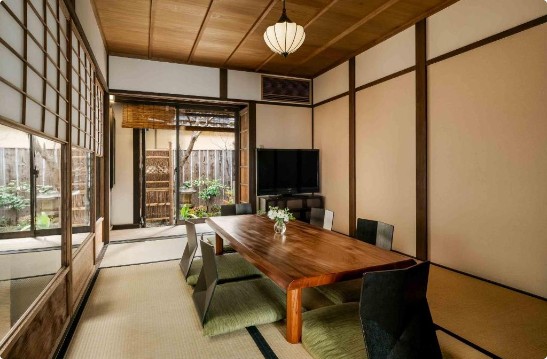
If a friend asked me which one machiya to book for their first-time machiya stay, this is what I’d send them. Hatoba-an is part of the Machiya Residence Inn catalogue, but the location and the layout earn it its own entry. Three bedrooms, a generous tatami sitting room, a tsubo-niwa courtyard you can see from the kitchen, and a bath with a view of a small bamboo screen.
The location is what sells it. You’re in the residential streets behind Yasaka-dori. Eight minutes to Kiyomizu-dera if you go up the hill, twelve to Gion proper if you go north, ten to the Maruyama Park entrance. You can be in the Higashiyama tourist core in under fifteen minutes on foot, but the house itself sits on a quiet residential block where you’ll see school kids walking to class in the morning.
The trade-off is that Higashiyama at peak season is loud during the day and very quiet at night, there’s no late-night dining within walking distance. Plan accordingly. Eat early, walk back through the lit streets, and treat the house as a retreat.
What’s good:
- Best location-to-price ratio I’ve found for a four-sleeper in Higashiyama
- Three bedrooms means real privacy for two couples
- Quiet residential street with the temple-walking core 10 minutes away
What’s not:
- No dinner restaurants within easy walking after 9pm
- Stairs are steep; not great for older travellers with knees
Book it: Booking.com | Direct (kyoto-machiya-inn.com)
Nazuna Kyoto: boutique chain with onsen-style baths
Where: Several properties, Tsubaki (near Higashi Hongan-ji), Nijo, Higashi Honganji
Sleeps: 2–4 per machiya (each is a separate rental)
From: ¥38,000/night low season; ¥110,000 in cherry blossom
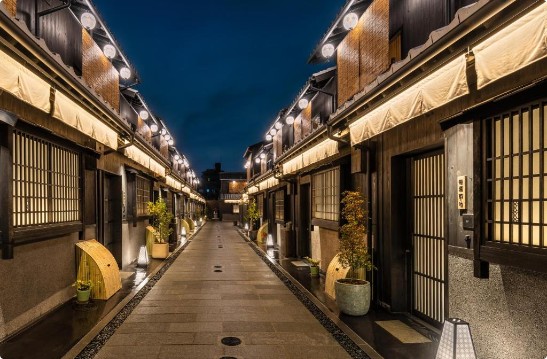
Nazuna is a small chain (six properties as of 2026) that’s carved out a niche on a single feature: every machiya has a private bath with water trucked in from Yunohana onsen. The water isn’t just hot, it’s actual mineral spring water, carbonated and slightly cloudy, the same as you’d get at the source. For travellers who want an onsen-ryokan experience but don’t want to leave Kyoto for Kurama, this is the practical answer.
The Tsubaki property near Higashi Hongan-ji is the most accessible (10 minutes’ walk from Kyoto Station). The Nijo property is the prettiest but has a sleeping loft you reach via a steep ladder, which rules it out for a family with grandparents.
The trade-off: the houses themselves aren’t as architecturally serious as an Iori. They’re competent renovations with the bath as the headline feature. Don’t book Nazuna for the building. Book it for the bath.
What’s good:
- Real Yunohana onsen water in a private bath (the only chain in Kyoto doing this)
- Tsubaki location is a 10-minute walk from Kyoto Station
- Smaller portfolio means consistent quality
What’s not:
- The buildings are renovations rather than heritage restorations
- Bath capacity is small, one or two people, not the family
Book it: Booking.com | Direct (nazuna.co)
Kyo no Ondokoro: the modern villa-machiya
Where: Multiple properties across Nakagyo and Kamigyo (8 houses)
Sleeps: 3–6 per house
From: ¥55,000/night low season; ¥140,000+ in autumn
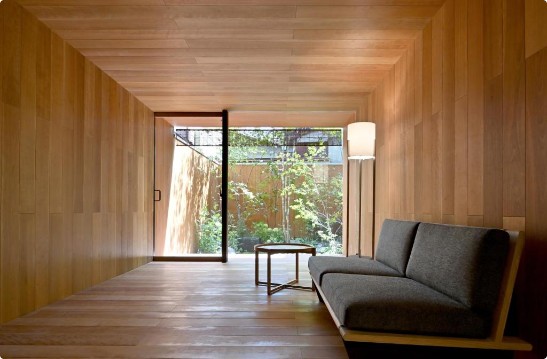
Kyo no Ondokoro is the operator that figured out how to do machiya for a Tokyo creative-class clientele. The houses are 100-year-old buildings with original wood frames, but the interiors lean contemporary, black-framed glass walls onto the courtyard, mid-century lighting, a kitchen with a Vola tap. They got a Michelin Key in the latest hotel guide for the Nishijin Villa, which is fair.
What you’re paying for is the design intelligence. The Marutamachi and Goshonishi houses sit in genuinely good locations, the latter is a 4-minute walk to the Imperial Palace gardens. The Nishijin Villa is more remote but is the prettiest of the eight.
The trade-off is price. You’re paying ¥30,000+ a night more than a comparable Iori for the design layer. If the design is what you came for, it’s worth it. If you want the heritage building first and the design language second, Iori is the better book.
What’s good:
- The most thought-through design language of any operator in the city
- Kitchens are properly equipped (real cookware, sharp knives)
- Smaller catalogue means each house is consistently maintained
What’s not:
- Premium pricing, you’re not getting a bargain at this tier
- Some houses lean too contemporary if heritage detail is what you came for
Book it: Booking.com (Goshonishi) | Direct (kyo-ondokoro.kyoto)
Yadoya Manjiro: the cheapest machiya I’d actually recommend
Where: Nakagyo-ku, near Karasuma subway
Sleeps: 4
From: ¥28,000/night low season; ¥58,000 in autumn
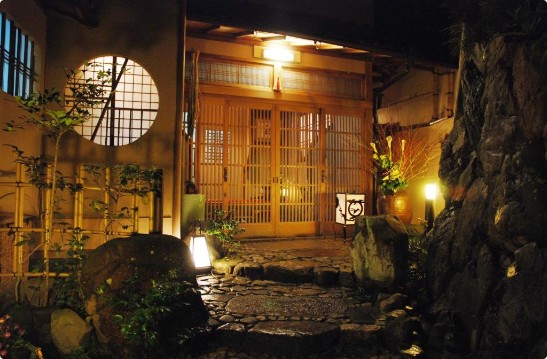
Yadoya Manjiro is what I send people to when they ask “what’s a real machiya for under ¥40,000”. It’s a single house run by the family that owns it. There’s no chain, no slick web presence, no English-speaking concierge. There’s a key in a lockbox, a kitchen, two bedrooms, a tatami room, and a small garden. The renovation is honest, clean, undramatic, with the original beams and lattice work intact.
What it lacks: any of the polish of the bigger operators. The kitchen has the basics. There’s no breakfast. The host’s English is functional rather than fluent. The bath is decent but small.
What it has: the actual machiya experience at the actual price the form deserves. For a couple or a family of four travelling on a real budget, this is the one I’d book.
What’s good:
- Honest pricing, no peak-season ¥150k spikes
- Real, family-run operation
- Karasuma subway 4 minutes’ walk, fastest route to anywhere in central Kyoto
What’s not:
- No frills, no concierge, no breakfast
- Single property, book early for autumn or sakura
Book it: Booking.com
Kyoto Machiya Cottage Karigane: value pick for families
Where: Shimogyo-ku, between Kyoto Station and Shijo
Sleeps: 6 (three bedrooms plus convertible sitting room)
From: ¥45,000/night low season; ¥95,000 in peak
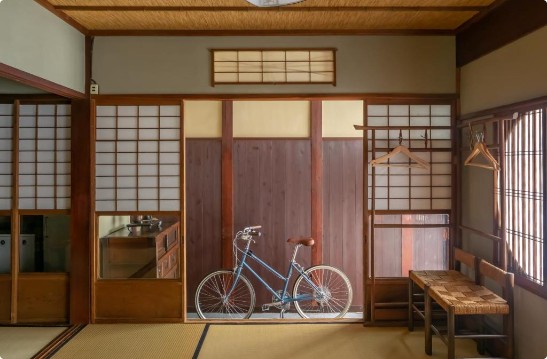
Karigane is a six-sleeper that’s smarter than its size suggests. The layout has three real bedrooms, plus a Western-style sitting room with a chair and a sofa-bed setup that means older guests don’t have to cope with futon-on-tatami sleeping. For a family of three generations, this is the most practical machiya in the catalogue I’ve toured.
The location is more practical than romantic, between Kyoto Station and Shijo, on a not-particularly-pretty residential street. You’re trading some atmosphere for accessibility. Worth it for a base-of-trip stay where you’re doing day trips out to Nara or Hiroshima.
What’s good:
- Three real bedrooms plus convertible sitting room (six sleepers, comfortably)
- Walking distance to Kyoto Station, saves a cab on day-trip days
- Western seating option for older travellers
What’s not:
- The street itself is unremarkable, no temple bells, no koban garden
- The sitting-room sleeper isn’t as comfortable as a real bed
Book it: Booking.com
How to actually book, and what to verify before you do
Bookings work three ways. Each has trade-offs.
Booking.com. Most operators are listed. Filtering for “entire home” + “Kyoto” + “Japanese-style” gets you most of the catalogue. The advantage is the free-cancellation tier, which lets you lock in a sakura-week machiya in October when you’re still nine months out and adjust later. The disadvantage is occasional pricing weirdness, some operators run ¥3,000–¥5,000 surcharges on Booking that you don’t see direct. Always cross-check.
Operator direct. Iori, Machiya Residence Inn, Sowaka, Nazuna, MUNI, and Kyo no Ondokoro all run their own booking sites. Direct is sometimes 5-8% cheaper for the same dates. The downside is that cancellation policies are stricter. Useful when you’re certain about your dates and within 60 days of arrival.
Airbnb. Some real machiya operators list there, especially the smaller ones. The disadvantage is that Airbnb’s cancellation messaging on Japanese listings is often translated badly. Read the cancellation policy in Japanese using Google Translate before you commit.
Before you confirm any booking, verify these five things:
- Licensed minpaku status. All legal machiya stays in Kyoto carry a minpaku permit number that should appear on the listing. If it doesn’t, walk away, unlicensed rentals are technically illegal and can be shut down between booking and arrival.
- Maximum guest count. Each property has a fire-code maximum that’s strictly enforced. If you have an extra friend joining for one night, you cannot just bring them. Operators check.
- Check-in process. Self-check-in via lockbox is standard. If it’s “meet at the train station and walk together to the house”, that’s a red flag, legitimate operators don’t do that for liability reasons.
- Bath setup. Some properties have a Western-style shower-only setup hiding behind the photos. If a soaking bath is what you’re booking for, confirm in writing.
- Address-area precision. The exact address comes after booking, but the operator should give you a specific street name and a 200m radius before you pay. “Central Kyoto” isn’t enough.
Cost reality across the year
Machiya pricing in Kyoto runs three steep peaks plus a deep valley. If you can flex your dates, the savings are large.
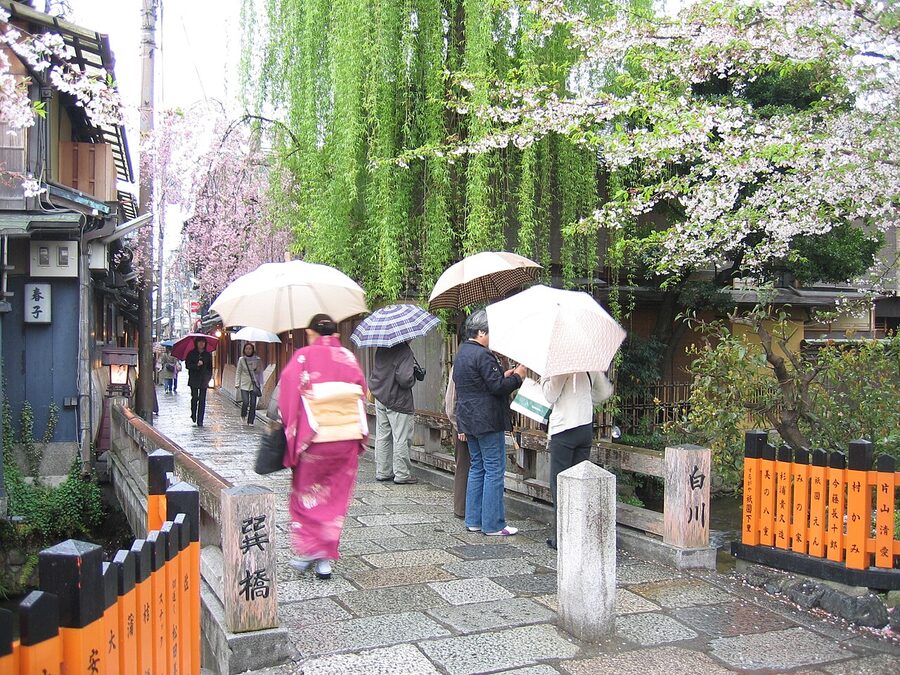

Sakura week (late March to early April): the worst-value machiya pricing of the year. A house that’s ¥45,000 in February will be ¥120,000 to ¥160,000 from about March 25 to April 7. If you can shift your dates to mid-April you’ll see prices fall by half. The blossoms last another week or two in the north of the city, even if Maruyama Park is bare.
Autumn leaves (mid-November to early December): the second peak, often more expensive than sakura because it lasts longer and competes with autumn colour tour groups. Expect 2.5x summer pricing.
Golden Week (April 29 to May 5): Japanese domestic peak. International travellers often forget this one. Operators sell out 4 months ahead.
Deep summer (mid-July to late August): the actual valley. Kyoto’s summer is famously humid and unpleasant, temperatures hit 36-37°C with 80% humidity. Smart machiya operators discount 30-40% in these months. If heat doesn’t bother you and you can spend the worst of the day inside an air-conditioned house with a tsubo-niwa, this is the steal of the year.
Late January to mid-February: the second valley. Cold (but Kyoto rarely snows below freezing for long), no festivals, fewer tourists. Pricing is typically the lowest of the year.
One booking trick: most operators discount weekly stays. A six-night booking is often cheaper per night than a four-night booking by 8-12%. If you’re already going for five nights, push to seven and you’ll usually save money on the per-night rate.
Honest thoughts on the most overrated machiya hype
Three things that get said about Kyoto machiya rentals that don’t survive contact with the actual experience.
“Authentic Japanese living.” No. You’re staying in a building type that was a working merchant’s house from 1860 to about 1970, then sat empty, then was bought by a tourism operator in 2010 and renovated for foreign visitors. The form is real. The experience is a curated version of it. Modern Kyoto residents do not live in machiya in the way you think. Most live in concrete apartments. The remaining occupied machiya are mostly small businesses, restaurants, and very wealthy families.
This isn’t a complaint. The form is still beautiful and the renovation is still excellent. But “you’re living like a Kyoto local” is a marketing line, not a description.
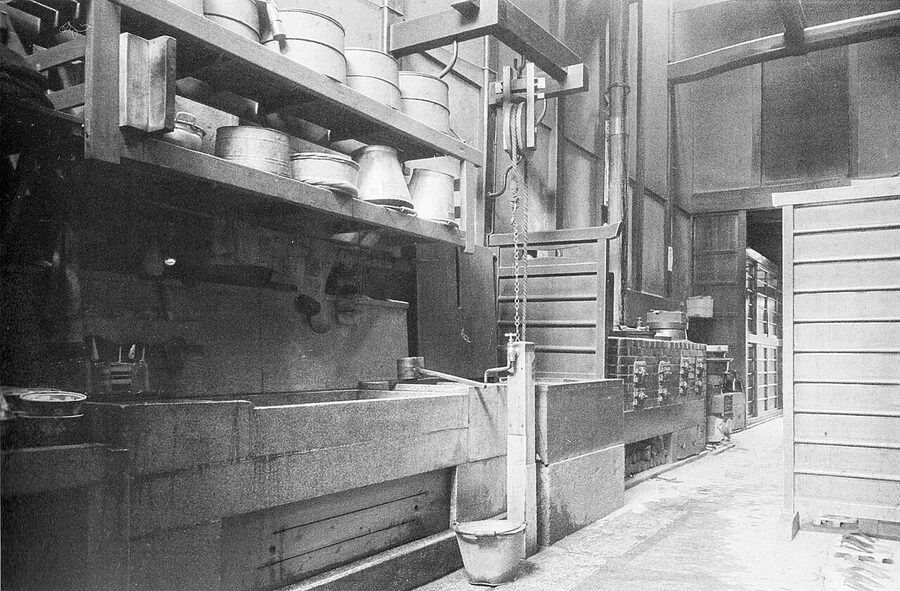

“It’s a hidden experience that few tourists know about.” Also no. Roughly 60% of high-end Kyoto guidebooks now have a machiya rental section. Sowaka has been on Condé Nast’s hot list for years. The houses themselves are not crowded with tourists, that’s the appeal, but the sector itself is mainstream now. Don’t book a machiya thinking you’re discovering something.
“The cheaper end is just as good.” No. The under-¥30,000 tier is where you find the operators who couldn’t afford to do the renovation properly. Air conditioning that hums. Walls thinner than they should be. A “garden” that’s a planter on a concrete slab. There are honourable exceptions, Yadoya Manjiro is one, but the rule holds. If you’re below ¥30,000, you’re getting a marginal product.
The corollary: above about ¥80,000 a night, you’re paying for service rather than the house. Sowaka and MUNI are great, but if your goal is the machiya form itself, an Iori or Kyo no Ondokoro at ¥55,000 gives you 90% of the building experience for 60% of the price.
What you actually want for your trip type
Quick recommendations by who you are.
Couple, four nights, first time: Hatoba-an in Higashiyama. Three bedrooms is overkill but the layout means privacy and storage. Or Yasuragi (Iori) in Nakagyo if you want something more architecturally serious.
Family of four with teenagers: Suoan or any Machiya Residence Inn three-bedroom in Nakagyo or Shimogyo. The chain consistency matters with kids, you don’t want surprises.
Family of six (three generations): Karigane for the Western seating and three real bedrooms. Or a six-sleeper Iori, but only if all the adults are mobile.
Couple’s anniversary, splurge: Sowaka in Gion. The corner room with the private garden bath. Or MUNI Kyoto if you want Arashiyama river views.
Two couples splitting a house: any Iori three-bedroom or Kyo no Ondokoro Goshonishi. Get the one with two bathrooms.
Solo traveller still wanting to try one: book a small one-bedroom Machiya Inn property for two nights in shoulder season. ¥30,000 a night is the floor where it makes sense. Below that, hotel.
You hate self-check-in: Sowaka or MUNI. Skip every other operator. The 24-hour staffed model is the actual differentiator and it’s worth the premium if it matches what you want.

The practical checklist before you arrive
Eight things you want sorted before you fly.
- Print the operator’s PDF map. Kyoto addresses don’t number reliably. Google Maps gets the area; the PDF gets you the house.
- Check the lockbox code 24 hours before arrival. Operators send the code via email. If it hasn’t arrived by 24 hours before, write to them. Don’t wait until you’re standing on the street.
- Confirm garbage day. Kyoto runs strict trash separation rules. The operator will leave instructions. Following them matters because the neighbour will know if you don’t.
- Note the Wi-Fi name and password. Most machiya have a paper sheet by the modem. Photograph it.
- Buy a Suica or Icoca. Self-check-in operators don’t help with transit. You want an IC card before you leave the airport. Buy one at the JR ticket counter or via Klook for collection.
- Pack light. The houses have steep stairs and narrow alleys. A 28kg roller bag is your enemy.
- Plan your first dinner. Most machiya operators don’t cook for you and the sit-down restaurants in Kyoto fill up by 7pm. Book a table for arrival night before you fly.
- Bring an English-Japanese phrase card. The neighbour might want to ask why your trash bag is the wrong colour. Knowing how to nod and apologise saves the relationship.
What I’d book this year
If I were planning a four-night Kyoto trip in October 2026, here’s the booking I’d make on the day this guide goes live.
Two-couple split: Iori Yasuragi in Nakagyo at about ¥85,000 a night. Splitting four ways works out at ¥42,500 a couple, significantly less than two boutique hotel rooms in the same area. Walk to Nishiki for breakfast, take the Karasuma line for day trips to Fushimi or Uji, walk home through Pontocho with a sake bottle from the corner shop.
Family of four: Suoan via Machiya Residence Inn at ¥75,000 a night. Three bedrooms, kitchen, ten minutes’ walk to the JR Sagano line for the Arashiyama day, fifteen to Karasuma for everything else.
Couple, splurge: Sowaka, three nights, corner room, around ¥130,000 a night. Skip the in-house dinner once and walk to Gion. Use the bath at 6am while the city’s still asleep.
Couple, value: Yadoya Manjiro at ¥35,000 a night, four nights. Take the saving and put it into a kaiseki dinner.
The other accommodation forms are excellent in their own ways, see the main Where to Stay in Kyoto guide for the hotels and the ryokan guide if a traditional inn with full meal service is what you actually want. For travellers specifically chasing the bath experience, the private-onsen hotels list covers the in-room bath alternative. But for the right traveller, patient, kitchen-friendly, willing to walk to dinner, here for more than two nights, the machiya is the one I’d pick out of all of them.