
Reviewed · OSAKA PREFECTURE
Full Day Tour of Kyoto with Private Transportation
Kyoto’s biggest sights are spread across the city, and this private tour tackles them in one long, carefully packed day. You’ll visit Kiyomizu-dera, the old lanes of Sannenzaka and Ninenzaka, Kinkaku-ji, Arashiyama, and Fushimi Inari without wrestling with trains between each stop.
I like the private vehicle and flexible guide most. Guides such as Ben, Christine, Lewis, and Somei can adjust the pace, suggest meals, help with photographs, and shape the day around children, food needs, or a cruise departure. I also like that entrance fees to Kiyomizu-dera and Kinkaku-ji are included.
The tradeoff is simple: this is a lot of Kyoto in one day. You’ll spend part of the 8 to 10 hours in the vehicle, and each major stop gets a limited window. Crowds, traffic, and the long ride from Osaka can make the schedule feel brisk.
In This Review
- Kyoto’s greatest hits from a private van
- Key points to know
- Starting at Kiyomizu-dera Temple
- Walking the old lanes of Sannenzaka and Ninenzaka
- Seeing Kinkaku-ji, Kyoto’s Golden Pavilion
- Two hours in Arashiyama
- A quick stop at the Arashiyama Kimono Forest
- Finishing at Fushimi Inari-taisha
- What the private transport adds
- The guides make or break the day
- Lunch, food needs, and free time
- Who gets the best value
- Practical details before you book
- Should you book this Kyoto day tour?
- FAQ
- Where does the tour operate from?
- How long does the tour last?
- Is the tour private?
- Which entrance fees are included?
- Is lunch included?
- Is the tour suitable for young children?
- What is the cancellation policy?
Kyoto’s greatest hits from a private van
The tour costs $247.92 per person and includes private transportation, fuel, parking, an English-speaking guide, and admission to two temples. That is not a budget day out, especially for a solo visitor, but the value improves for families and groups who would otherwise pay separate train or taxi fares and lose time navigating Kyoto.
The tour is private, so only your group takes part. That matters more than it may sound. You can ask to slow down for a child, shorten a temple visit, stop for a special meal, or make a practical change if someone develops a headache. One family even used the flexibility to return children to their accommodation for a nap before continuing.
The strongest part of this outing is not just the list of sights. It is the ability to connect distant parts of Kyoto in one day while a guide handles parking, timing, directions, and explanations.
Key points to know
- Six major Kyoto stops in one day: You cover Kiyomizu-dera, Ninenzaka and Sannenzaka, Kinkaku-ji, Arashiyama, the Kimono Forest, and Fushimi Inari.
- Private transportation from Osaka or Kyoto: Travel time to the sights and back to your hotel is included, along with fuel and parking fees.
- English-speaking guides with different strengths: Ben, Christine, Lewis, Somei, Nozo, and others are named in the feedback, with praise for clear English and helpful local advice.
- A useful choice for families and cruise passengers: The schedule can be adjusted for children, dietary needs, port pickup, and a firm return time.
- Included temple admissions: Kiyomizu-dera and Kinkaku-ji admissions, listed as 500 yen each, are covered.
- A physically active day: Expect walking on stone lanes, temple grounds, shrine paths, and the Arashiyama area. Moderate fitness is advised.
Other private tours in Osaka Prefecture


Starting at Kiyomizu-dera Temple
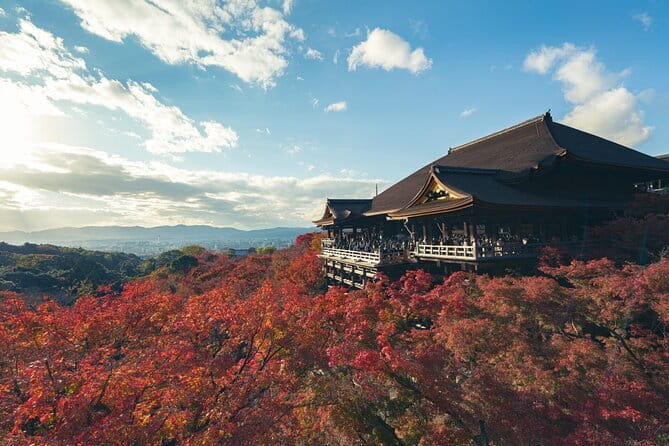
Kiyomizu-dera is a strong first major stop because it gives you the classic Kyoto view right away. Its wooden stage projects from the hillside, looking over trees and toward the city. In cherry-blossom season the hills are soft with pink, while autumn brings maple color.
You have about two hours here, with admission included. That is enough time to see the main temple area, take in the view, and walk through the surrounding approach without treating the visit as a rushed photo stop.
The approach can be crowded, and the stone surfaces are not ideal for fast walking or strollers. Wear shoes you can use comfortably for several hours. Your guide can help explain the temple’s setting and customs, but you should still allow time simply to look around. Kyoto’s famous sights are better when you do not turn every minute into a checklist.
Walking the old lanes of Sannenzaka and Ninenzaka
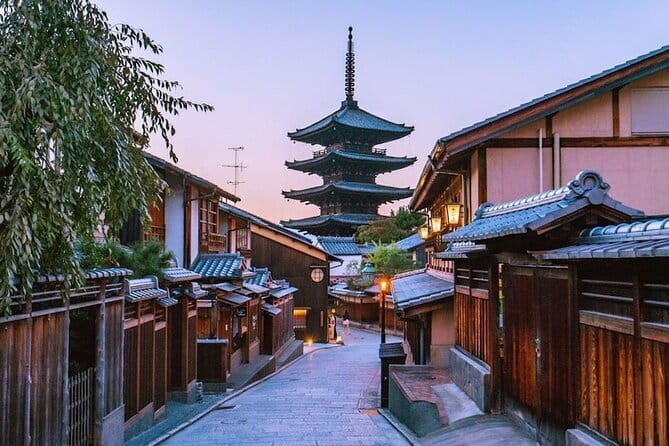
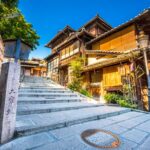
From Kiyomizu-dera, the tour continues into Sannenzaka and Ninenzaka, two traditional lanes lined with wooden buildings, small shops, teahouses, and food stops. The lanes lead toward Yasaka Pagoda and offer some of the most recognizable old-Kyoto scenes.
This one-hour visit is free, but you’ll likely want spending money here. The appeal is not a single monument. It is the chance to stroll through a preserved-looking shopping district, browse crafts and sweets, and see how Kyoto presents its traditional side to modern visitors.
The lanes are attractive but can be packed. If you want better photographs or a calmer walk, tell your guide early in the day that you prefer less crowded timing. The schedule cannot erase Kyoto’s popularity, but private transport and a guide who knows the area can reduce wasted time.
Seeing Kinkaku-ji, Kyoto’s Golden Pavilion
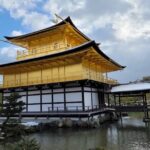
Kinkaku-ji, known as the Golden Pavilion, is one of Kyoto’s most instantly recognizable sights. The gold-covered building reflects in the pond beside it, creating the kind of view that works even when you have only an hour.
Admission is included, listed at 500 yen. The visit follows a set route, so this is not a place where you wander freely through every room. You’ll see the pavilion from the garden path and have time for photographs and a short walk through the grounds.
I would treat Kinkaku-ji as a visual stop rather than a long, quiet temple visit. The pavilion is striking, but the route can feel crowded, and one hour goes quickly. Your guide’s timing advice is useful here, particularly if the day is busy or the weather is poor.
Two hours in Arashiyama
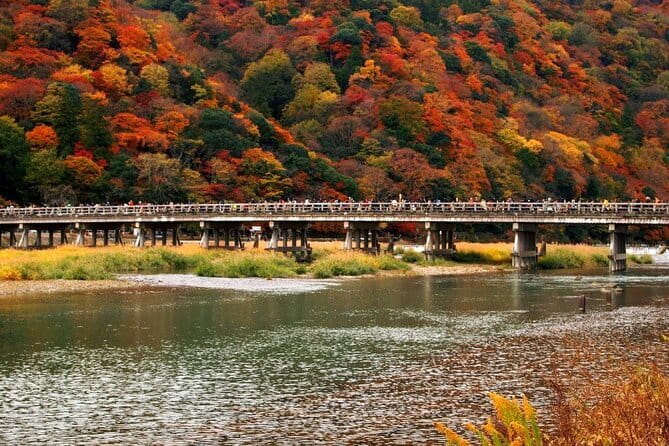
Arashiyama provides the day’s strongest change of mood. The bamboo grove gives you tall green stalks, filtered light, and a narrow walking route that feels very different from the temple courtyards. The grove is free to enter, and you can also walk toward the Togetsukyo Bridge over the Katsura River.
The two-hour allocation covers the main Arashiyama sights, but it is not generous if you want a long bamboo walk, bridge photographs, shopping, and a relaxed meal. Decide what matters most before you arrive. Some people will prefer the grove and bridge, while others may want time for food or local shops.
The bamboo path is often crowded, especially at popular hours. The setting remains attractive, but do not expect solitude simply because the grove looks peaceful in photographs. A guide can help you make the most of the available time and point out useful photo positions.
The Togetsukyo Bridge adds an important second view. Instead of only looking upward at bamboo, you get open space, river scenery, and surrounding hills. The bridge itself is included as part of the Arashiyama visit, with no separate admission.
A quick stop at the Arashiyama Kimono Forest
The Kimono Forest is a colorful outdoor installation near Arashiyama Station. More than 600 cylindrical pillars are wrapped in patterned kimono fabric and lit as part of the display. It takes about 30 minutes, and there is no admission charge.
This is a lighter stop after temples and shrine paths. You can photograph the fabric columns, enjoy a short pause, and see a modern presentation of traditional Japanese design. It is not a substitute for a temple, museum, or long cultural visit, so the short timing feels appropriate.
Because it is close to the other Arashiyama sights, the stop adds variety without demanding much extra walking or money. If your group has young children, this may be one of the easier places to keep everyone interested.
Finishing at Fushimi Inari-taisha

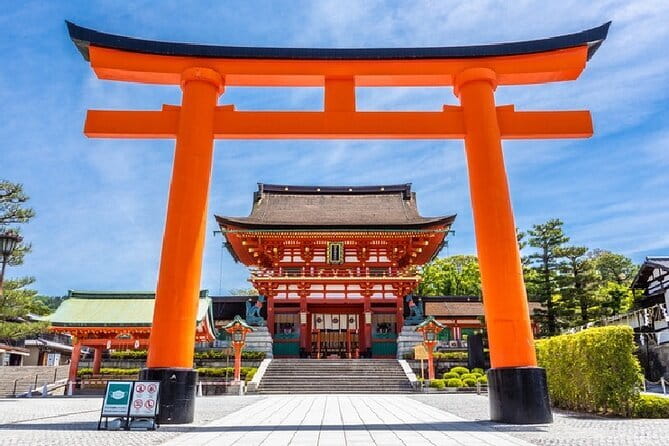
Fushimi Inari is famous for its thousands of red torii gates, which climb the wooded slopes of Mount Inari. The gates form a tunnel-like path and create one of Kyoto’s most memorable visual experiences.
You have about an hour here, and admission is free. That is enough for an introduction and a walk beneath the first stretch of gates, but not enough to explore every path on the mountain. If you want to hike farther, ask your guide what the timing allows. The full route requires much more energy and time than a quick visit.
This stop can be demanding late in the day. By this point, you may already have walked through Kiyomizu-dera, Ninenzaka, Kinkaku-ji, and Arashiyama. Good shoes, water, and realistic expectations will help. The shrine is worth including, but you should not expect a complete mountain hike within the scheduled hour.
What the private transport adds
Kyoto’s attractions sit in different parts of the city. On public transportation, you would need to plan multiple train and bus connections, then walk from stations or stops. That can be rewarding for independent visitors, but it takes time and energy.
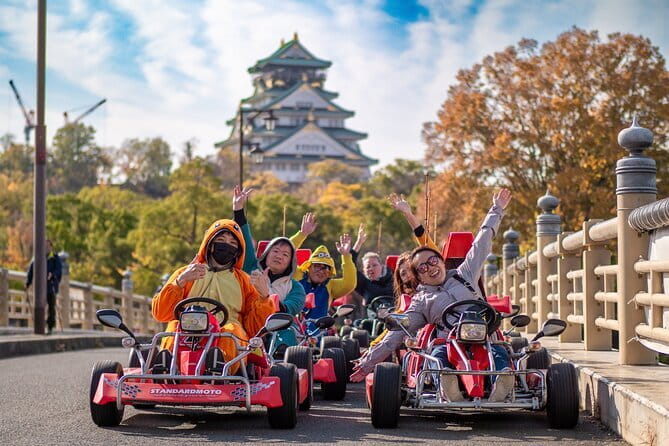
Here, travel time from Osaka or Kyoto to the destinations and back to your hotel is included. Fuel and parking fees are also covered. The vehicle is especially useful for families, older adults, larger parties, and cruise passengers working against a fixed return time.
The practical advantage is door-to-door movement. Several people praised the comfort of spacious, air-conditioned vans, while one family noted reclining seats. Vehicle size can vary, so you should confirm arrangements for a large party. If infants or toddlers are joining you, bring your own car seat. The supplied information specifically warns that car seats are not provided.
The ride from Osaka can be long, and traffic may affect the day. The remaining hours are assigned to travel, so the advertised 8 to 10 hours does not mean 8 to 10 hours walking around Kyoto. That distinction is important when comparing this outing with a hotel-based Kyoto tour.
The guides make or break the day
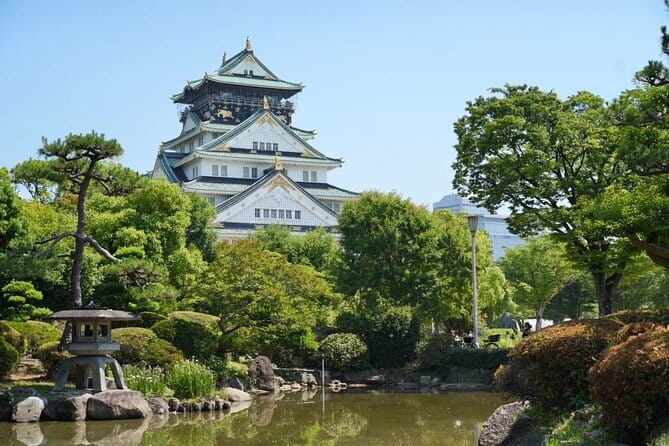
The named guides receive unusually strong praise for clear English, patience, local knowledge, and flexibility. Ben, also called Yujiro in some feedback, is described as energetic and helpful with photographs, food suggestions, cultural explanations, and hard-to-find souvenirs.
Christine is praised for planning, timing, family care, port pickups, dietary questions, and quick changes when plans shift. She helped one group arrange a kimono photo session and worked with another group to visit ceramic shops after a medical issue changed the day.
Lewis is described as calm, organized, and strong at explaining the importance of each site. He also helped shape a sake-tasting stop and kept a shore excursion on time. Somei received praise for avoiding crowds, taking photographs, adjusting the route, and finding a halal restaurant. Other guides named in the feedback include Caroline, Nozo, and Benji.
You may not receive a specific guide by name unless the operator confirms it. Still, the repeated pattern is clear: the guide is the main reason to choose this format. At booking, tell the operator about children, mobility concerns, food restrictions, photography interests, port deadlines, and any site you would trade away to gain more time elsewhere.
Lunch, food needs, and free time
Lunch is not included, and you pay for personal expenses. That keeps the price clearer, but you should budget for a meal and snacks. Guides have helped groups find ramen, sushi, wagyu beef, vegan food, halal food, and restaurants suited to allergies.
Do not assume every meal is included simply because a guide may recommend or arrange a stop. Tell the guide your preferences before the tour. The day includes free time in shopping areas, but the exact amount depends on traffic, walking pace, and how long you stay at each temple.
Who gets the best value
I would recommend this tour to a first-time Kyoto visitor with only one day, especially if you are based in Osaka. It is also a strong fit for families, groups of friends, older relatives, and cruise passengers who need private pickup and a reliable return.
The price is harder to justify for a solo visitor or a couple who enjoy figuring out trains and buses. Independent travelers can spend less, stay longer at fewer sites, and choose quieter corners of Kyoto. This tour charges for time, comfort, parking, guiding, and flexibility.
The group discount option may improve the per-person value. Since the experience is private, a larger party can share the vehicle and guide rather than paying for several separate taxis or joining an inflexible group schedule.
Practical details before you book
Confirmation is provided at booking, pickup is offered, and mobile tickets are available. Service animals are allowed, and the experience is near public transportation, though the tour itself is built around private transport.
Plan for moderate physical activity. You’ll walk through temple grounds, along stone-paved lanes, through Arashiyama, and beneath the torii gates at Fushimi Inari. Weather matters, and poor conditions can lead to a new date or a full refund. You can cancel for a full refund up to 24 hours before the start time, but late cancellations and changes are not accepted.
Should you book this Kyoto day tour?
Book it if your priority is seeing Kyoto’s signature sights in one day without managing a complicated transport plan. The private van, hotel or port pickup, English-speaking guide, included parking, and flexible schedule solve real problems.
Skip it if you prefer slow temple visits, long walks, or a narrow focus on one district. The itinerary is ambitious, and you will spend time in transit. For most first-time visitors with limited time, though, the tour offers a practical way to see a great deal of Kyoto while leaving the logistics to someone else.
FAQ
Where does the tour operate from?
The tour operates from Osaka Prefecture and can include travel from Osaka or Kyoto to the destinations and back to your hotel. Pickup is offered.
How long does the tour last?
The experience lasts approximately 8 to 10 hours. The remaining hours are allotted to travel between Osaka or Kyoto, the sightseeing stops, and your hotel.
Is the tour private?
Yes. Only your group participates in the activity, with private transportation and an English-speaking guide.
Which entrance fees are included?
Admission to Kiyomizu-dera and Kinkaku-ji is included. Each entrance fee is listed as 500 yen.
Is lunch included?
No. Lunch and personal expenses are not included. Tips are also not included, though they are welcomed.
Is the tour suitable for young children?
Families with babies, toddlers, children, and teenagers have used the flexible format. Moderate physical fitness is required, and you must bring your own car seat for babies or young children who need one.
What is the cancellation policy?
You can cancel up to 24 hours before the experience for a full refund. Changes or cancellations made less than 24 hours before the start time are not accepted. If poor weather causes the tour to be canceled, you’ll be offered another date or a full refund.
More Private Tours in Osaka Prefecture
More tours in Osaka Prefecture we've reviewed
Osaka Prefecture, compared.
 ★ 5.0Kyoto private tour (Shore excursion available from Osaka or Kobe port)From $237
 ★ 4.5Private Transfer by Sedan from Itami Airport ITM to Kyoto CityFrom $117
 ★ 5.0Private arrival transfer from Osaka Itami International airport to Kyoto CityFrom $79
 ★ 5.03 Days Private Osaka Kyoto and Nara Tour With English DriverFrom $1,646
 ★ 4.0Kyoto Highlights Private Tour with Pick and DropFrom $569
 ★ 3.0From Osaka/Kyoto: Hiroshima Miyajima Luxury Tour with GuideFrom $391