
Reviewed · OSAKA PREFECTURE
Kyoto Highlights Private Tour with Pick and Drop
Kyoto packs centuries of temples, shrines, imperial buildings, gardens, and old streets into one compact city. This private day trip lets you cover a remarkable amount from Osaka, with pickup and drop-off included and room for your group to shape the day. Fushimi Inari’s red torii gates and Arashiyama’s bamboo grove give you two very different Kyoto scenes in a single outing.
I like the private vehicle for up to six people, especially if you are traveling with family or friends and want to avoid train changes. I also like the ability to adjust the day around your interests. Drivers Ali and Imran are specifically named in past feedback as helpful with routes, restaurants, and sightseeing choices.
The main concern is time. An eight to ten-hour day includes driving, and the planned stops add up to eight hours before traffic, meals, and entrance lines. You will need to treat this as a highlights tour, not a slow exploration of every temple.
In This Review
- Key things to know before booking
- What the $569.27 group price really buys you
- Arashiyama starts the day with bamboo and mountain views
- Fushimi Inari gives you Kyoto’s most famous walk
- Kiyomizu-dera pairs a wooden stage with wide city views
- Gion offers old streets, tea houses, and careful etiquette
- Sanjusangendo brings you face to face with 1,001 statues
- Ginkakuji shows Kyoto’s quieter side
- Nishiki Market turns the day toward food
- Kyoto Imperial Palace adds imperial history without an admission fee
- Can eight stops fit into eight to ten hours?
- What the private format is like in practice
- Who should book this Kyoto day trip?
- Should you book it?
- FAQ
- Where does this Kyoto tour begin and end?
- How long does the tour last?
- How many people can join the private tour?
- Is an English-speaking guide included?
- Are entrance fees included?
- Is Kinkakuji included in the planned route?
- What is the cancellation policy?
Key things to know before booking
- Pickup anywhere in Osaka: Private transportation takes you from your Osaka starting point to Kyoto and back.
- Eight major Kyoto areas: The route can include Arashiyama, Fushimi Inari, Kiyomizu-dera, Gion, Sanjusangendo, Ginkakuji, Nishiki Market, and Kyoto Imperial Palace.
- A driver, not a dedicated guide: An English-speaking driver is included, but a guide and admission charges are not.
- A full day with travel included: The advertised duration is about eight to ten hours, including time on the road.
- Best for small groups: The vehicle accommodates up to six people, making the $569.27 group price easier to justify when shared.
- Allow extra money for tickets and lunch: Several temples charge admission, and those costs are separate from the tour price.
What the $569.27 group price really buys you
The price is $569.27 per group of up to six people, not per person. At full capacity, that works out to roughly $95 per person before entrance fees and lunch. For a couple, the per-person cost is much higher, but the value improves quickly as your group grows.
You are paying for private transportation, an English-speaking driver, pickup in Osaka, and return drop-off. That can be useful if your group values door-to-door service more than the low cost of public transportation. Kyoto is easy to reach from Osaka by train, but a private vehicle removes station transfers and lets you keep your group together.
The price does not include a separate guide. That distinction matters. Your driver may help with directions and sightseeing choices, but you should not assume you will receive a detailed explanation at every temple. Ali and Imran are the driver names connected with positive experiences, including help finding the right paths in Arashiyama and suggestions for restaurants and sightseeing stops.
Entrance fees are also separate. Charges are specifically listed for Kiyomizu-dera, Arashiyama, Sanjusangendo, Kinkakuji, and Ginkakuji. Lunch, taxes, and all other fees are excluded. Carry a little extra spending money, and ask before departure which admission tickets you will need for your exact route.
Other private tours in Osaka Prefecture

Arashiyama starts the day with bamboo and mountain views
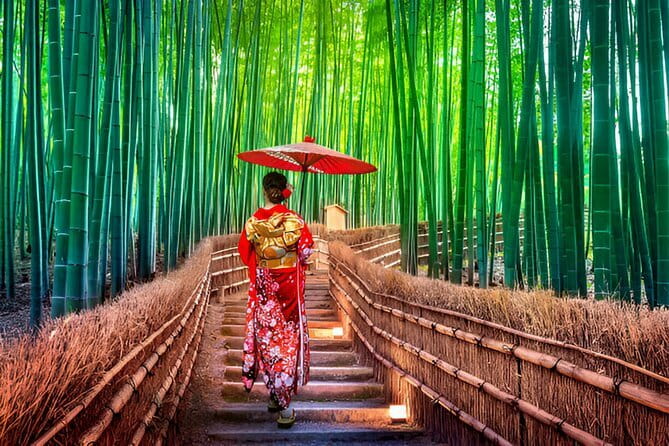
Arashiyama is usually one of Kyoto’s most visually striking areas, and it gives you a strong opening to the day. The bamboo grove creates a cool, quiet corridor of tall green stalks, though the walk itself is not a long wilderness outing. The main attraction is the atmosphere and the unusual sight of bamboo rising high above the path.
You get about 90 minutes here. That is enough to walk through the grove and see some of the surrounding sights, but it is tight if you also want Tenryu-ji Temple, Togetsukyo Bridge, and Iwatayama Monkey Park.
Tenryu-ji is a UNESCO World Heritage site with carefully designed gardens and views toward the mountains. Togetsukyo Bridge crosses the Katsura River and is a good place to pause for seasonal scenery. Iwatayama Monkey Park requires a hike uphill, so you will need to choose carefully. The stop description refers to the monkey park, bamboo grove, temple, and bridge, but it does not promise that all admission charges are covered.
The best approach is to tell the driver what matters most. If you want the bamboo grove and bridge, skip the monkey park. If the monkeys are a priority, expect less time for the temple grounds. Arashiyama is one of the places where a private vehicle helps with arrival, but the clock still limits how much you can see.
Fushimi Inari gives you Kyoto’s most famous walk
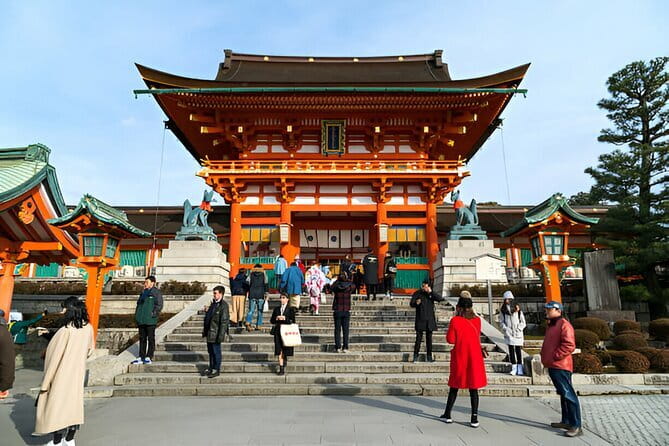
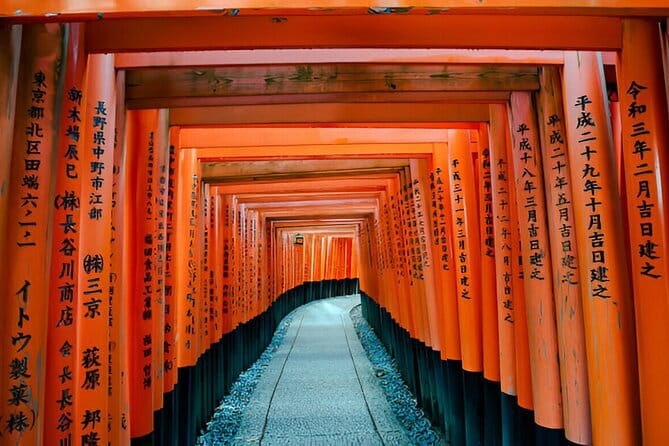
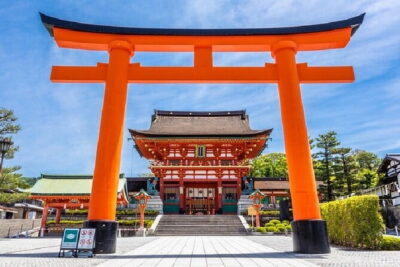
Fushimi Inari-taisha is one of Kyoto’s essential stops. Its path runs beneath thousands of orange-red torii gates, climbing through the wooded slopes of Mount Inari. The gates form a long tunnel that changes character as you move away from the lower shrine buildings.
You have about one hour here, and that is enough for the lower section and a taste of the uphill route. It is not enough for a relaxed climb through the entire shrine complex. The path continues far beyond the first photogenic stretch, so set a turnaround point before you start walking.
Admission is free, which helps balance the extra temple fees elsewhere. The shrine is dedicated to Inari, associated with rice and prosperity, and smaller shrines appear along the route. Take a moment to look beyond the gates at the stone fox figures and traditional buildings. The lower section can be busy, so walking a little farther uphill usually gives you a quieter feel.
Fushimi Inari works well on a private tour because you do not need to worry about finding your next train or bus. Still, the visit involves walking and steps. Wear shoes with good support, and do not spend the entire hour taking photographs at the entrance.
Kiyomizu-dera pairs a wooden stage with wide city views
Kiyomizu-dera sits on a hillside and is known for its large wooden stage projecting from the main hall. From here, you can look across Kyoto and the surrounding hills. The temple grounds also include pagodas, gardens, and Otowa Waterfall, where visitors traditionally drink from its sacred streams for health, longevity, and success.
The planned stop lasts about one hour. That gives you time to see the main stage and a few key corners, but not to study every building. Admission is not included. You should also expect some uphill walking around the temple area.
This is one of the most rewarding stops for a first visit because it combines architecture, religious tradition, and a clear view over Kyoto. The setting changes with the seasons, especially during cherry blossom time and autumn foliage. The famous wooden structure is the focus, but the surrounding streets and temple approach also help you understand the area’s old Kyoto character.
Because Kiyomizu-dera is popular, ask your driver how much time remains before the next stop. A short visit can work, but you will want to keep moving rather than linger at every photo point.
Gion offers old streets, tea houses, and careful etiquette
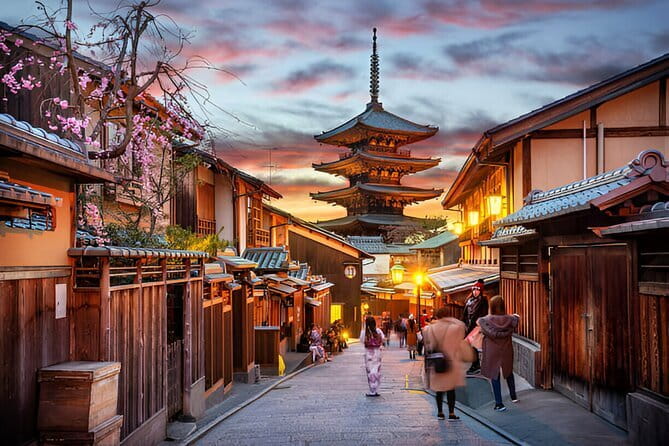
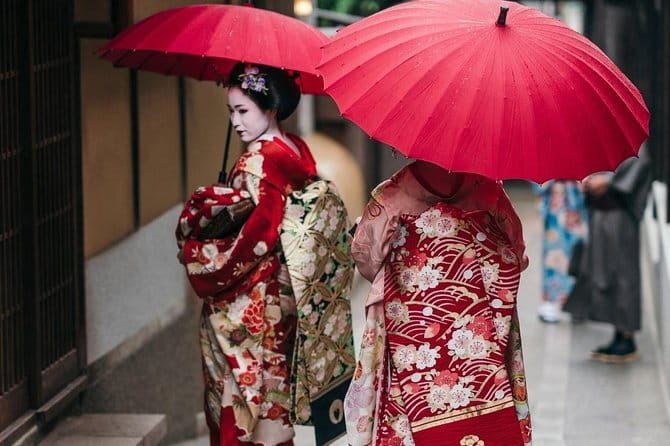
Gion is Kyoto’s traditional entertainment district, with preserved machiya townhouses, tea houses, restaurants, and artisan shops. Hanamikoji Street is the best-known route through the area, with wooden facades and lanterns that create a strong sense of place.
You have one hour here, and it is free to enter. Use the time for a walk rather than expecting a formal performance or arranged encounter with geisha or maiko. You might see them moving between appointments, particularly later in the day, but sightings are never guaranteed.
Gion rewards quiet observation. Keep your camera ready, but respect private entrances and posted restrictions. The district is still a working neighborhood, not a theme park. That is part of its appeal.
This stop can also serve as a useful break from temple interiors. You can browse a shop, take photographs from public streets, or ask the driver for a nearby place to eat. Since lunch is not included, Gion may be a practical point to discuss food, though an hour does not leave much room for a long meal.

Sanjusangendo brings you face to face with 1,001 statues
Sanjusangendo is a different kind of temple experience. Its long wooden hall contains 1,001 life-sized statues of Kannon, the Buddhist figure associated with mercy, arranged around a central statue. The repeated figures create a powerful interior sight, even for visitors who are not experts in Buddhist art.
The stop lasts one hour, and admission is extra. The hall is the main reason to come, so you can get a worthwhile visit without covering a large outdoor area. The gardens add a calmer finish after the impressive interior.
This stop is particularly useful if you want more than famous views and photo locations. It offers a concentrated look at religious sculpture and temple design. Since photography rules may apply inside sacred buildings, be prepared to experience the room without relying on your camera.
Ginkakuji shows Kyoto’s quieter side
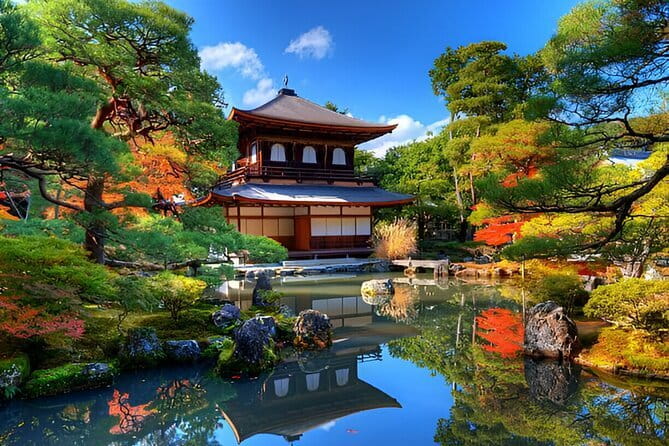
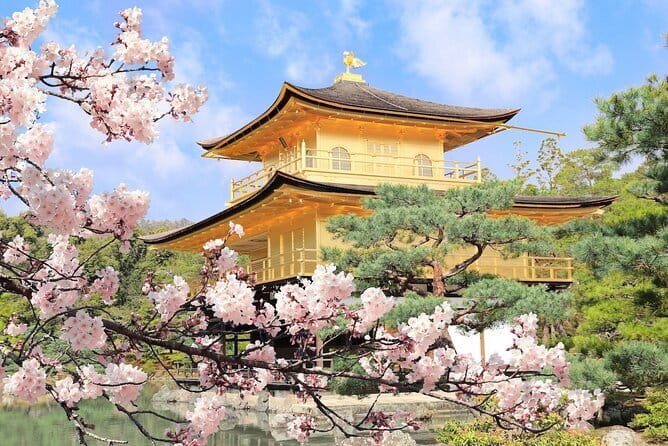
Ginkakuji, or the Silver Pavilion, is often misunderstood. The pavilion is not covered in silver. Its appeal comes from restrained design, the surrounding moss garden, and the carefully shaped sand garden called the Sea of Silver Sand.
You get about an hour, with admission not included. The grounds follow a walking route around ponds, moss, trees, and garden features. Compared with the bright gates of Fushimi Inari or the gold exterior of Kinkakuji, Ginkakuji feels subdued and thoughtful.
This is a good choice if you enjoy Japanese garden design. It is less suitable if you want a grand interior tour or a single dramatic building. The value comes from how the parts work together: understated architecture, paths, water, moss, and sand.
There is an important planning issue here. The headline highlights include Kinkakuji, the Golden Pavilion, but the timed itinerary names Ginkakuji and does not give Kinkakuji its own stop. Kinkakuji admission is listed among the excluded fees, yet the schedule does not make clear whether both pavilions are included. Ask the operator to confirm the exact temple route before booking.
Nishiki Market turns the day toward food
Nishiki Market is known as Kyoto’s Kitchen. The market stretches for about five blocks and includes more than a hundred shops and stalls selling seafood, produce, Kyoto specialties, snacks, and souvenirs.
One hour lets you sample a few items and browse, but it is not enough for a slow food crawl. Lunch is not included, so this can be a useful place to buy food, though market stalls may not provide the kind of relaxed seated meal your group wants.
I like Nishiki as a counterpoint to the temples. You see everyday food culture, shopkeepers at work, local ingredients, and small edible souvenirs. The narrow market route can feel crowded, so stay together and agree on a meeting point if your group spreads out.
Be selective. Trying one or two regional foods is more realistic than attempting to eat your way through five blocks in an hour. If lunch is important to you, tell the driver early so the schedule can allow for it.
Kyoto Imperial Palace adds imperial history without an admission fee
Kyoto Imperial Palace was the home of Japan’s Imperial Family until the capital moved to Tokyo in 1869. The grounds sit inside Kyoto Gyoen National Garden, with broad paths, formal gates, traditional buildings, and gardens.
The planned visit is one hour, and admission is free. That makes it a useful stop when your budget is already carrying several temple fees. The palace offers a different view of Kyoto, focused on court life and national history rather than pilgrimage or garden aesthetics.
You can see important buildings such as Shishinden Hall and walk through the surrounding gardens. The spacious grounds also provide a break from narrow streets and packed temple approaches. Still, one hour gives you only a taste of the complex.
Because this is one of eight possible stops, you should confirm whether it replaces another location or is added to the route. The total day includes travel, and trying to fit every listed area into one outing may leave each visit short.
Can eight stops fit into eight to ten hours?
The scheduled visits total about eight and a half hours:
- Arashiyama, 90 minutes
- Fushimi Inari, one hour
- Kiyomizu-dera, one hour
- Gion, one hour
- Sanjusangendo, one hour
- Ginkakuji, one hour
- Nishiki Market, one hour
- Kyoto Imperial Palace, one hour
That calculation leaves no real margin for traffic, parking, lunch, restroom breaks, or entrance lines. Travel time is explicitly included in the eight to ten-hour duration. You should therefore view the route as a menu of major sights, not a promise that you will thoroughly visit all eight.
The private format helps because the driver can adjust the order and timing. It does not remove Kyoto’s distances or the time needed to walk from vehicle drop-off points to temple entrances. The best day will come from choosing priorities before pickup.
For a first visit, I would rank Fushimi Inari, Arashiyama, Kiyomizu-dera, and either Gion or Nishiki Market highest. Add Sanjusangendo if religious art interests you. Choose Ginkakuji for gardens, or Kyoto Imperial Palace for imperial history. Confirm the place of Kinkakuji, since it appears in the tour highlights and fee information but not in the timed stop list.
What the private format is like in practice
Pickup and drop-off are included from anywhere in Osaka. That is the biggest practical advantage for a group. You do not need to organize a Kyoto station meeting point, and you can keep bags and purchases in the vehicle during the day.
The vehicle is intended for a maximum of six people. One past complaint described a small vehicle, a smoke smell, and an attempt to bring seven people despite the stated limit. That account also raised concerns about phone use while driving, though the operator disputed the passenger count and other claims. The useful lesson is simple: keep your booking to six or fewer, and state your vehicle and non-smoking needs clearly before the day.
The tour is private, so only your group participates. That gives you more control than a coach tour, but the driver’s role is not the same as having a licensed cultural guide. If detailed explanations at each site are essential, ask in advance what commentary your English-speaking driver provides or arrange a separate guide.
Most people can participate, and the tour is near public transportation, but the day still involves walking at Arashiyama, Fushimi Inari, and Kiyomizu-dera. The uphill paths and temple grounds may be tiring. The supplied information does not give specific accessibility arrangements, so ask the provider directly if your group has mobility needs.
Who should book this Kyoto day trip?
I would consider it for a family or friend group of four to six people staying in Osaka. The shared price becomes more reasonable, and the vehicle makes a long sightseeing day easier to manage. It also suits first-time visitors who want to see Kyoto’s best-known places without planning several train and bus routes.
It is less suitable for someone who prefers slow travel. You may want half a day at Arashiyama alone, or an unhurried afternoon in Gion and Nishiki Market. This route asks you to keep moving.
It also may not suit you if you expect a traditional guided tour with long explanations. An English-speaking driver is included, while a guide is not. That is a major difference in what you receive for the price.
The tour has a 4.2 rating from five published ratings, with strong praise for drivers Ali and Imran. The positive details are practical: timely pickup, help finding Arashiyama’s monkey park, bridge, and bamboo grove, and assistance choosing restaurants and sights. The small number of ratings means I would treat the score as useful but not conclusive.
Should you book it?
Book this tour if you want private Osaka pickup, a flexible vehicle, and a fast introduction to Kyoto’s major sights. It offers its best value to groups of four to six who would rather pay for convenience than manage public transportation.
Before paying, confirm the vehicle size, non-smoking request, exact list of temples, and whether Kinkakuji is included in the route. Decide which four or five places matter most, since all eight stops are unlikely to receive generous time once driving and lunch are counted.
Cancellation is free up to 24 hours before the start time. Within 24 hours, the payment is not refunded, and late changes are not accepted. If you book, build your day around priorities rather than trying to collect every famous name. That approach will give you a better Kyoto experience.
FAQ
Where does this Kyoto tour begin and end?
Pickup and drop-off are offered anywhere in Osaka. The tour uses private transportation for your group.
How long does the tour last?
The experience lasts approximately eight to ten hours. Travel time is included in that duration.
How many people can join the private tour?
The tour is for a private group of up to six people. Only your group participates.
Is an English-speaking guide included?
An English-speaking driver is included. A separate guide is not included in the stated price.
Are entrance fees included?
No. Admission fees are excluded for Kiyomizu-dera, Arashiyama, Sanjusangendo Temple, Kinkakuji Temple, and Ginkakuji Temple. Taxes and lunch are also excluded.
Is Kinkakuji included in the planned route?
Kinkakuji appears among the tour highlights and excluded admission fees, but it is not listed as a timed stop in the supplied schedule. Confirm the exact route with Milkyway Tours before booking.
What is the cancellation policy?
You can cancel at least 24 hours before the experience start time for a full refund. Cancellations or changes made within 24 hours are not accepted and are not refunded.
More Private Tours in Osaka Prefecture
More tours in Osaka Prefecture we've reviewed
Osaka Prefecture, compared.
 ★ 5.0Full Day Tour of Kyoto with Private TransportationFrom $247
 ★ 5.0Kyoto private tour (Shore excursion available from Osaka or Kobe port)From $237
 ★ 4.5Private Transfer by Sedan from Itami Airport ITM to Kyoto CityFrom $117
 ★ 5.0Private arrival transfer from Osaka Itami International airport to Kyoto CityFrom $79
 ★ 5.03 Days Private Osaka Kyoto and Nara Tour With English DriverFrom $1,646