
Reviewed · HALF-DAY
Rural Brewery Town Walk: Half-Day Private Tour Near Kyoto
Kinomoto is the star here: a small Shiga town where soy sauce still ferments in family-run buildings and sake makers trace their work back centuries. You’ll visit three specialty breweries, taste local products, and see a side of Japan that most Kyoto day trips skip.
I like the private format and the help with local trains, especially if you are not comfortable navigating rural Japan. I also like the mix of food, drink, and religion: the old breweries give the tour flavor, while Jizoin Temple adds a useful look at village life. The main catch is that train fares are extra, and brewery access can change with the season and staff availability.
In This Review
- Key points to know before you book
- Why Kinomoto makes a better half-day than another Kyoto street
- Daiko Soy Sauce and the craft of fermentation
- Tomita Shuzo, four centuries of sake making
- Jizoin Temple and the ceramic frogs
- Yamaji Brewery and the mulberry liquor
- What the $106 price really covers
- Timing, transport, and the small details that matter
- Who will enjoy this Kinomoto walk most
- Should you book this private Shiga tour?
- FAQ
- Where does the tour begin?
- Where does the tour end?
- How long does the experience last?
- Is the tour private?
- Are train fares included?
- Are tastings included?
- What breweries will I visit?
- Can I cancel for a full refund?
Key points to know before you book
- Kinomoto is the real attraction: This quiet Shiga town offers an easygoing look at local production and village traditions.
- Three makers, three different tastes: Compare soy sauce, several sake styles, and Yamaji Brewery’s unusual mulberry liquor.
- A private guide handles the tricky parts: Guide Asami has helped arrange visits and train connections for a more personal outing.
- The breweries are old working businesses: Tomita Shuzo has operated for about 400 years, while Yamaji Brewery is nearly 500 years old.
- Jizoin Temple adds a local story: Its Jizo deity is linked to prayers for eye care, with ceramic frogs left as offerings.
- Budget for the train and food: The $106 tour price includes the guide and listed fees, but not local train fares, snacks, or extra drinks.
Why Kinomoto makes a better half-day than another Kyoto street
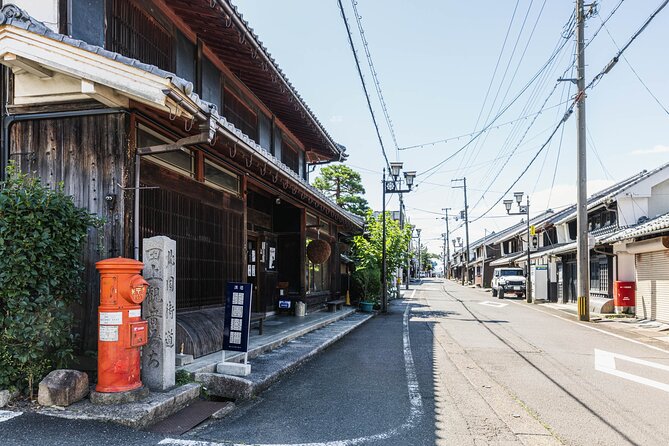
Kyoto has no shortage of beautiful lanes, temples, and tasting rooms. Kinomoto offers something different: a functioning small town where local businesses remain tied to traditional production.
You begin at Maibara Station, then take a local train to Kinomoto. The train ride itself is not presented as a scenic highlight, but it matters because it gets you into rural Shiga without asking you to sort out every connection alone. You pay the fare separately, so ask about the cost when planning your day.
The tour ends at Kinomoto Station, which makes the route practical. You do not need to return to Maibara with the guide, and you can continue from Kinomoto after the walk if your plans allow. The experience lasts about three to four hours, though exact timing may depend on train schedules, conversations, and brewery access.
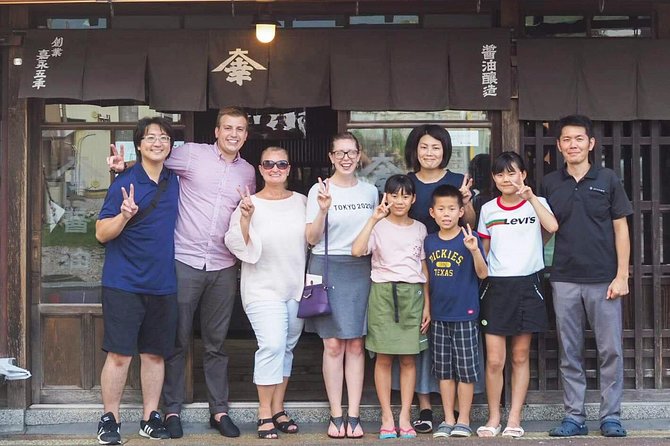
The private setup is especially useful here. In a large group, a small shop or tasting counter can feel crowded. With only your own party, the guide can adjust the pace and explain unfamiliar brewing terms as you go. Asami, a local guide mentioned in connection with this experience, has helped visitors find the breweries and coordinate visits that would be difficult to arrange independently.
If you're still narrowing it down, here are other tours in Shiga Prefecture we've reviewed.
Daiko Soy Sauce and the craft of fermentation
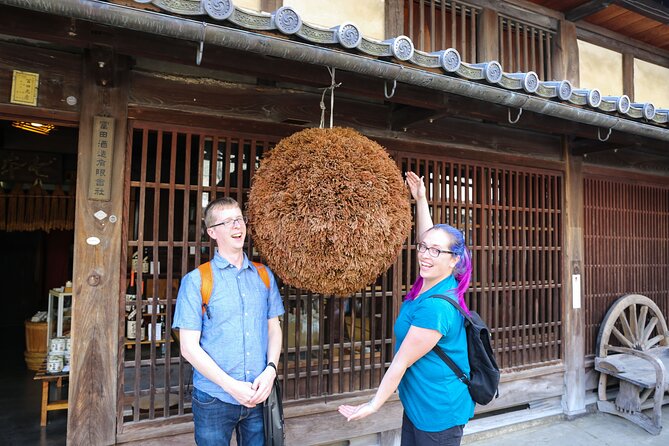
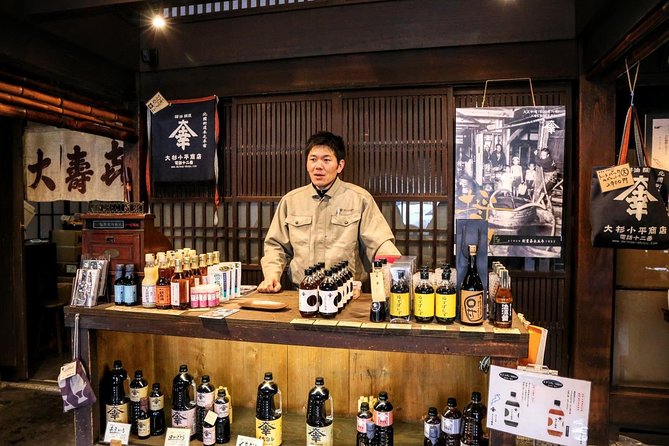
The first stop is Daiko Shoyu, a family-run soy sauce brewery that has operated for more than 100 years. This is not simply a place to buy a bottle for the kitchen. The stop explains how soy sauce is made, how different varieties are used, and why fermentation matters to Japanese food.
Soy sauce begins with a fermented mash, so its production has useful similarities to sake. That connection gives the whole walk a clear theme. You are not just sampling unrelated local products. You are seeing how fermentation shapes the food and drink of the region.
The company normally welcomes a closer look at the brewing area outside the active winter brewing season. During the winter season, production is underway, and access may be more limited. The tour description is careful on this point, so you should treat a behind-the-scenes look as possible rather than guaranteed.
Thirty minutes is enough for an introduction, a look at the varieties, and questions. If you have only used supermarket soy sauce, pay attention to the discussion of different uses. The value here is learning to notice soy sauce as an ingredient with its own character, not just a salty dip.
This stop is also a good reason to choose a guided visit. A small family business may not offer the kind of regular English-language explanation you find at a major attraction. Your guide provides context and helps the visit feel like a meeting with a local producer rather than a quick shop stop.
Tomita Shuzo, four centuries of sake making
Next comes Tomita Shuzo, a sake brewery connected to the Tomita family for about 400 years. It is one of the region’s better-known sake makers and has received awards in Japan and overseas.
The visit centers on the traditional storefront, an explanation of sake types, and an introduction to the friendly staff. This is a compact stop, listed at about 30 minutes, so do not expect a long technical class on rice polishing, yeast, or fermentation chemistry. You will get a practical introduction, a chance to ask questions, and a taste of the brewery’s work.
The tasting is one of the strongest reasons to book this tour. Sake can seem confusing when you face a shelf of unfamiliar labels, but sampling several styles with a guide gives you a way to compare them. If you do not drink alcohol, the tour still has cultural value, though the experience is clearly built around brewery visits and tastings.
The tour includes admission fees, and complimentary tastings are often provided. Extra alcoholic drinks are not included, so plan to pay if you want more than the offered samples. The wording around tastings suggests some flexibility, which is another reason to confirm the day’s arrangements with the guide.
Tomita Shuzo also gives the tour a strong sense of continuity. The family’s long connection to Kinomoto is not presented in a museum display. It remains part of an active storefront where people still come to buy sake. That makes the stop more immediate than simply reading about old brewing traditions.
Jizoin Temple and the ceramic frogs
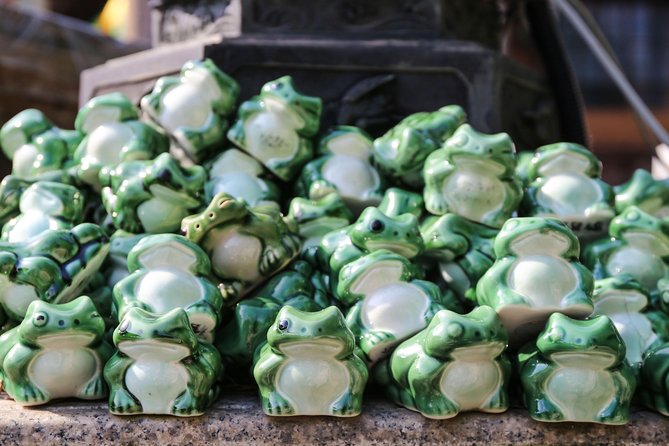
The drink and food stops could easily make this feel like a brewery crawl. Jizoin Temple keeps it from becoming one-dimensional.
This local temple is tied closely to Kinomoto’s community and customs. Your guide explains the grounds and main hall, then introduces the temple’s main Jizo deity. People come to pray for eye care and leave small ceramic frog statuettes as offerings.
That frog tradition is the kind of detail I value on a local walk. It gives you a way to understand how a temple functions for people who live nearby. You are not just looking at an old building. You are seeing the practical hopes and habits attached to it.
There is also a pitch-dark maze beneath the main hall, used for meditation. The description does not promise a long visit or guarantee that every part will be open, but it is an unusual feature and worth asking about.
Allow about 30 minutes here. The temple stop may appeal most to people who want cultural context rather than a checklist of major religious sites. It is not offered as one of Kyoto’s grand temple complexes. Its appeal is local scale and the connection between the building, the deity, and village life.
Yamaji Brewery and the mulberry liquor
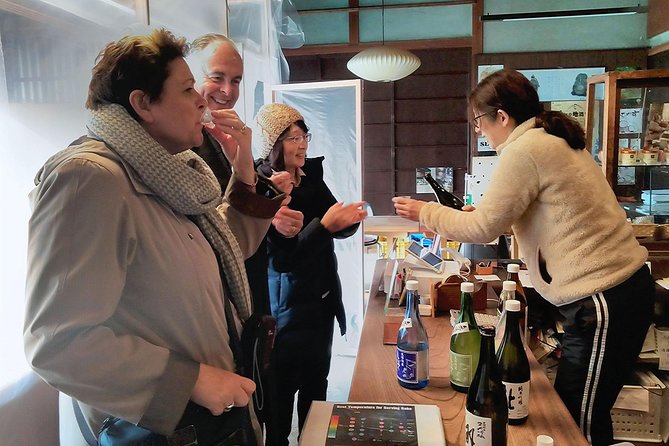
The final listed stop is Yamaji Brewery, a small sake maker that has been operating for almost 500 years. It is recognized as the fourth-oldest sake brewery still running in Japan, a remarkable claim that gives the visit real weight.
Yamaji makes several kinds of sake, but the special item to watch for is its mulberry liquor. That unusual drink gives this stop a different identity from Tomita Shuzo. If the tasting is available, compare the fruit-based liquor with the sake rather than treating it as an afterthought.
The owners are happy to welcome visitors with tastings, but access to the brewing area depends on the season and staffing. As with Daiko Shoyu, a look behind the storefront may happen, but it is not assured every time. Small working businesses need to keep production and sales moving, and the tour respects that reality.
That uncertainty is not necessarily a flaw. It is part of visiting active local producers instead of a purpose-built attraction. Still, I would keep your expectations sensible. You are booking a guided introduction to a historic brewery, not a guaranteed factory tour with every room open.
What the $106 price really covers
At $106, this is not the cheapest way to spend a half-day in Shiga. The price includes a professional guide plus listed fees, and the activity is private for your group. It does not include train fares, snacks, or additional alcoholic drinks.
The value depends on how much help you want. If you are comfortable finding Kinomoto, locating three small producers, explaining your needs, and arranging tastings in Japanese, you may spend less by going alone. But the tour’s main service is not simply walking from one address to another. It is making the visits work.
The guide handles the local train connection from Maibara, leads you through the old town, explains the production methods, and helps you interact with staff. The private format also means you can ask basic questions without feeling rushed or self-conscious.
Group discounts are available, which can improve the per-person value if several people share the booking. Since the price is listed per experience rather than clearly broken down per participant, check the final booking details carefully for your party size.
Bring some extra money for the train and food. The tour does not provide snacks, but there are places along the route to buy them. You may also want to purchase a bottle or specialty product, though the supplied details do not promise shipping or luggage support, so consider how you will carry anything you buy.
Timing, transport, and the small details that matter
You meet at Maibara Station and finish at Kinomoto Station. That start and end point arrangement is important: plan your larger route around both stations rather than assuming the guide will return you to your starting point.
The local train fare is separate. Keep that in mind when comparing the $106 price with a self-guided outing. The ticket is mobile, and the tour operates near public transportation, making it suitable for people who prefer rail travel over driving.
The experience runs for approximately three to four hours. The four listed stops are each planned at around 30 minutes, but the total includes train movement and walking between locations. Brewery conversations can also take a little longer or shorter depending on the day.
Good weather is required. If poor weather forces cancellation, you are offered another date or a full refund. For your own cancellation, you can cancel at least 24 hours before the start time for a full refund. Changes or cancellations inside that window are not accepted for a refund.
Confirmation is sent within 48 hours of booking, subject to availability. Since brewery access can depend on staffing and season, I would avoid booking this as the one activity that must fit a rigid train connection later the same day.
Who will enjoy this Kinomoto walk most
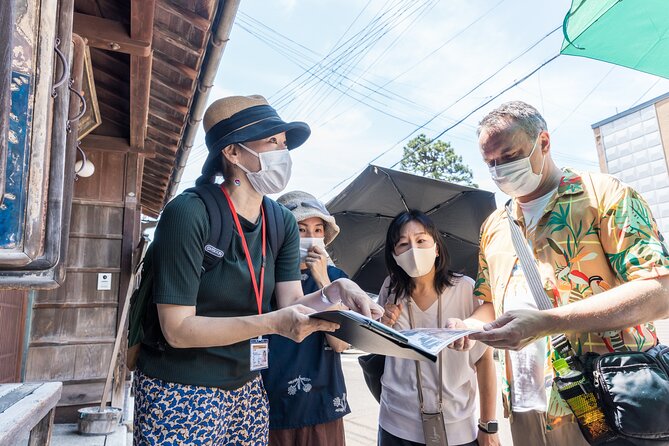
I recommend this tour to people who have already seen the major Kyoto sights and want a quieter regional outing. It suits anyone curious about sake, Japanese food production, and the way old businesses fit into a living town.
It is also a good choice if you like local trains but do not want to handle every step alone. The guide’s help matters more in Kinomoto than it would on a standard sightseeing route, because the appeal lies in small producers rather than famous signs and large visitor facilities.
Food and drink enthusiasts will get the most from the combination of soy sauce, sake, and mulberry liquor. The temple stop broadens the appeal for people who want a cultural visit, though someone seeking grand architecture may find Jizoin modest.
I would think twice if you do not drink and have little interest in fermentation. You can still enjoy the town and temple, but much of the tour’s shape comes from tasting and learning about brewed products. I would also reconsider if you need guaranteed access to every brewing room. The behind-the-scenes portions depend on season and staffing.
Should you book this private Shiga tour?
Book it if you want a personal introduction to a small Japanese town and value the guide’s help more than a packed schedule of major sights. The strongest parts are the access to small family businesses, the private train-and-walking format, and the unusual contrast between two sake breweries, a soy sauce maker, and a local temple.
Do not book it expecting a full-day food tour or a polished museum experience. It is a short, flexible outing built around working businesses, so tastings and production-area access can vary. Add the train fare and a little money for snacks or extra drinks to your budget.
For a half-day beyond Kyoto’s usual route, this is a thoughtful choice. Kinomoto gives you local texture, and the guide helps you notice what you would likely miss on your own.
FAQ
Where does the tour begin?
The tour begins at Maibara Station in Shiga Prefecture.
Where does the tour end?
The tour ends at Kinomoto Station in Kinomotocho, Nagahama, Shiga.
How long does the experience last?
The tour takes approximately three to four hours.
Is the tour private?
Yes. Only your group participates in the private activity.
Are train fares included?
No. All train fares are separate from the tour price.
Are tastings included?
Tastings are included at the listed brewery stops, and complimentary tastings are often provided. Additional alcoholic drinks must be purchased separately.
What breweries will I visit?
The route includes Daiko Soy Sauce, Tomita Shuzo, and Yamaji Brewery. The first is a soy sauce producer, while the other two make sake. Yamaji Brewery is also known for mulberry liquor.
Can I cancel for a full refund?
Yes, if you cancel at least 24 hours before the experience start time. Cancellations made less than 24 hours ahead are not refunded. If poor weather cancels the tour, you are offered a different date or a full refund.
More Private Tours in Shiga Prefecture
More tours in Shiga Prefecture we've reviewed
Half-Day, compared.
 ★ 5.0Kyoto Arashiyama Bamboo forest & Garden Half-Day Walking TourFrom $129
 ★ 5.0Half-Day Private Walking Tour in KyotoFrom $95
 ★ 5.0Kyoto top must-see Golden pavilion and Bamboo forest half-day Private tourFrom $122
 ★ 4.5Kyoto Private & Personalized Half-Day Walking Tour with a LocalFrom $137
 ★ 4.9Kyoto: Half-day Guided Bike Tour with Fushimi InariFrom $773h 30m
 ★ 4.4Kyoto: Half-Day Private Tour Gion Geisha District & KiyomizuFrom $774 hours