
Reviewed · CYCLING TOURS
Japan’s Rural Life & Nature: Private Half Day Cycling Near Kyoto
A short bullet-train ride from Kyoto takes you to Maibara, where city crowds give way to rice paddies, village lanes, mountain views, and the broad country around Lake Biwa. I like the easy 13-kilometer route and the way guide Tako adds local stories rather than simply leading you from one photo stop to the next.
I also like the private format, which gives your group room to pause for pictures or spend extra time at a temple. The main drawback is that this is a weather-dependent outdoor activity, and the $255 price is easier to justify for two or more people than for a solo cyclist.
In This Review
- Key points at a glance
- Why this half-day ride is a smart break from Kyoto
- The train ride to Maibara sets the tone
- Saienji shows you a real village, not just a temple
- Iwaya Zenkodo combines a short hike with a curious past
- A natural spring tells an everyday local story
- The former lake area is now rice country
- What the cycling is really like
- Tako adds the detail that makes the ride worthwhile
- What is included, and what the $255 price buys
- Lake Biwa and Hikone make useful add-ons
- Who should book this ride
- Final verdict: book it for the countryside, not a checklist
- FAQ
- Where does the cycling tour begin and end?
- How long is the cycling route?
- Is the ride suitable for beginners?
- What is included in the price?
- Can I visit Lake Biwa or Hikone Castle during the tour?
- What happens if the weather is poor?
Key points at a glance
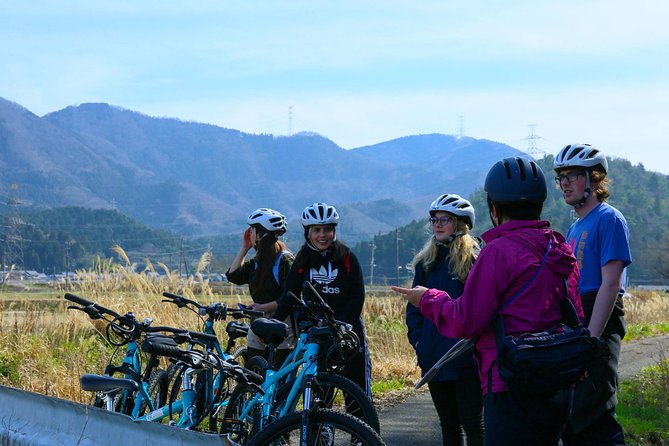
- A 20-minute bullet-train escape from Kyoto: Reach Maibara quickly, then trade station platforms for quiet farm roads.
- About 13 kilometers of beginner-friendly cycling: The route is active but not designed as a hard workout.
- Tako guides with local detail: Her fluent English and binder of historical material help connect villages, temples, farming, and daily life.
- Several stops beyond the bike ride: Visit Saienji, Iwaya Zenkodo Temple, an Inari shrine, a cave, and a community spring.
- A private tour with drinks included: Coffee, tea, water, and snacks are provided, but lunch is not.
- Easy add-ons after the ride: You can spend more time at Lake Biwa or continue to Hikone Castle.
Why this half-day ride is a smart break from Kyoto
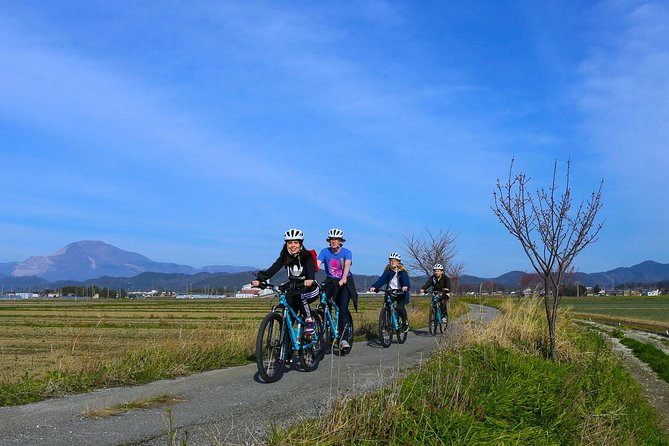
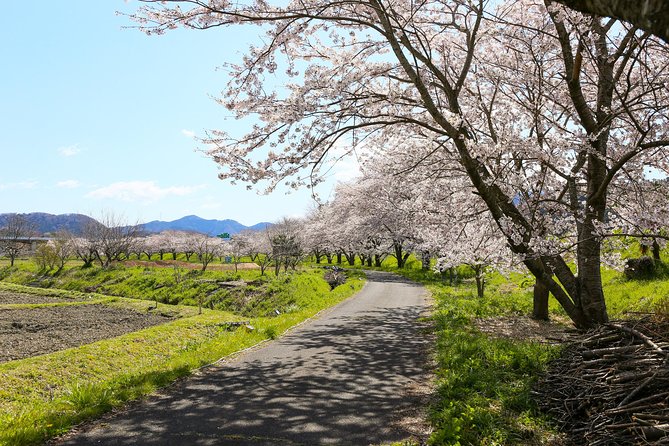
Kyoto gives you temple roofs, narrow lanes, and crowds. This ride gives you the Japan that exists beyond the famous sights: farmers working rice fields, small village communities, old religious sites, and roads where the pace is set by bicycles rather than tour buses.
The contrast is the point. You do not need a full day in the countryside to feel the change. After roughly 20 minutes on the shinkansen from Kyoto, you meet at Maibara Station and begin a route through the farming districts around town.
The ride covers about 13 kilometers, or roughly 8 to 9 miles, over three to four hours with stops. It is described as suitable for beginners, so the focus is on seeing and understanding the area, not racing through it.
Guide Tako is an important part of the experience. She speaks fluent English, knows the local area well, and uses a binder to explain Japanese history and regional stories. That extra context matters here because a rice field, spring, or village lane can look ordinary if you do not know why it is there.
This is also a private activity. Only your group participates, which is useful if one person wants more photo time, if you are traveling with a child, or if you want to ask plenty of questions without slowing down a large party.
If you're still narrowing it down, here are other tours in Shiga Prefecture we've reviewed.
The train ride to Maibara sets the tone
The tour begins and ends at Maibara Station in Shiga Prefecture. If you are coming from Kyoto, the bullet train takes about 20 minutes, making this one of the simplest ways to add rural scenery to a Kyoto stay.
Your train fare is not listed among the tour inclusions, so check that cost when working out your total budget. The fast trip is still valuable because it saves you from arranging a complicated local connection and puts you directly at the meeting point.
The station is more than a place to meet the guide. It marks the change from major sightseeing center to a quieter part of Japan. From there, the route follows rural roads and former farming areas that were later joined administratively with Maibara.
That local government detail helps explain why the area can feel like a collection of separate villages even though it is now part of one municipality. Tako uses the ride to connect those communities with the region’s past.
Saienji shows you a real village, not just a temple
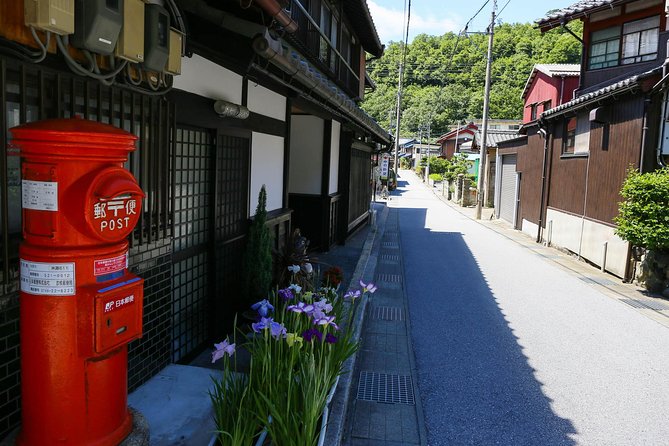
The first notable stop is Saienji, a Chinese-influenced Zen temple. The stop lasts about 15 minutes, so expect a brief look rather than a long temple visit.
What makes Saienji useful is the surrounding village. The temple and the small community share the same name, giving you a chance to see how a religious site fits into a traditional rural settlement. This is different from visiting a major Kyoto temple designed for a steady stream of sightseers.
You will want to keep your expectations sensible. This is not a grand, all-morning temple complex with extensive grounds and multiple halls. Its value comes from the setting and from Tako’s explanation of how village life and religious places have long been linked.
The short stop also helps keep the tour moving. You spend enough time to look around, hear the story, and take pictures, then return to the bicycles before the outing becomes a sequence of long indoor visits.
Iwaya Zenkodo combines a short hike with a curious past
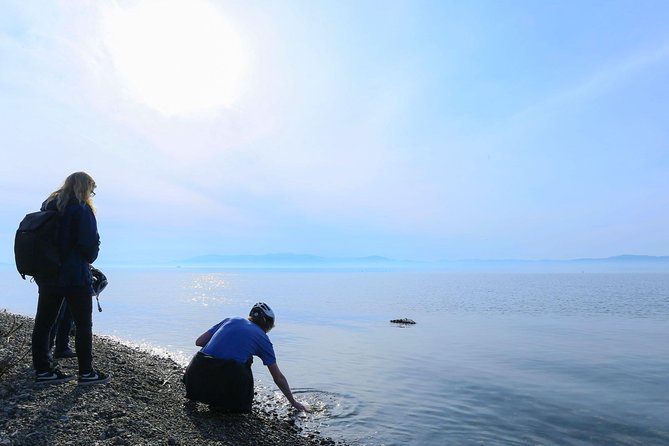
At Iwaya Zenkodo Temple, the bicycle ride gives way to a short walk. The temple is built into the side of a small mountain that rises about 120 meters, and the stop lasts around 30 minutes.
This is the most active section of the outing. You should be comfortable getting off the bike and walking uphill for a short period. The provided information calls for a short hike, but it does not describe a difficult climb, so the stop fits the tour’s moderate fitness requirement rather than an athletic itinerary.
The site includes the temple, an Inari Shrine, and an old man-made cave with an unusual story. Those details give this stop more variety than a quick roadside viewpoint. You are seeing how sacred places can use the shape of the mountain itself, rather than arriving at a separate, formal temple compound.
Refreshments are provided during the tour, and this is one of the planned pauses for a drink and a breather. Take advantage of it, especially on a warm day or after rain, when the short climb may feel more demanding.
The trade-off is clear: if you want nonstop cycling, this stop interrupts the rhythm. If you like small places with local stories, it is likely to be one of the most memorable parts of the route.
A natural spring tells an everyday local story
The stop listed as 南世継外れ温泉 is a natural spring connected to underground water flowing between Mount Ibuki and Lake Biwa. The tour allows about 10 minutes here.
The spring is not presented as a polished hot-spring resort. It is an untreated water source shared by the local community, and it is not for drinking. Locals use it for washing vegetables and other household tasks, giving you a glimpse of practical rural life rather than a staged cultural display.
That distinction is worth keeping in mind. You are stopping to see and understand the spring, not to bathe in it or fill your water bottle. Use the treated drinking water supplied by the tour instead.
Short stops like this make the ride feel grounded. A famous temple can tell you about belief and architecture, but a community spring shows how geography still affects daily routines.
The former lake area is now rice country
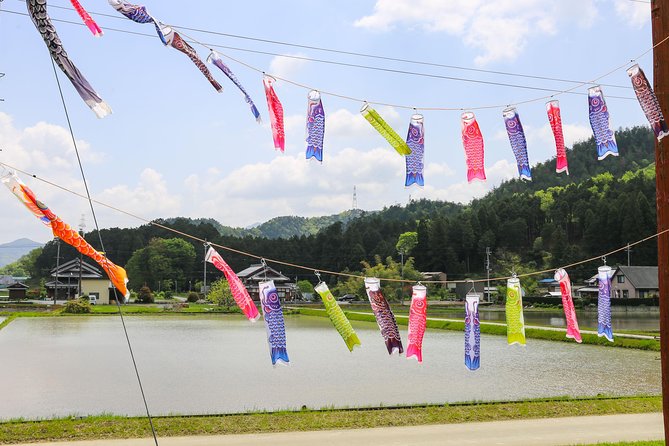
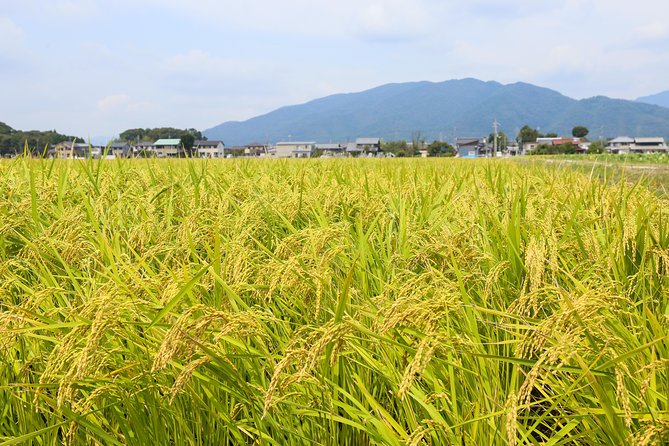
One of the most interesting pieces of context comes from the agricultural land near Lake Biwa. Before the war, this area was a smaller inland lake. It was later drained and converted to farmland to produce more rice during Japan’s post-war recovery.
As you cycle through the fields, you are not just looking at pleasant countryside. You are passing through a place shaped by food needs, public works, and changes in rural life. That makes the paddies part of the tour’s story, not filler between temple stops.
The views here will depend on the season and weather. The supplied information does not promise a particular crop stage or color, so book this for the countryside itself rather than for a guaranteed seasonal spectacle.
You may also ride toward the lakeside and see how the farming area relates to Lake Biwa. The route uses backroads and village streets, which makes the ride feel quieter and safer than a route built around busy main roads. Still, you should pay attention to your guide and road conditions. Beginner-friendly does not mean completely effortless.
What the cycling is really like
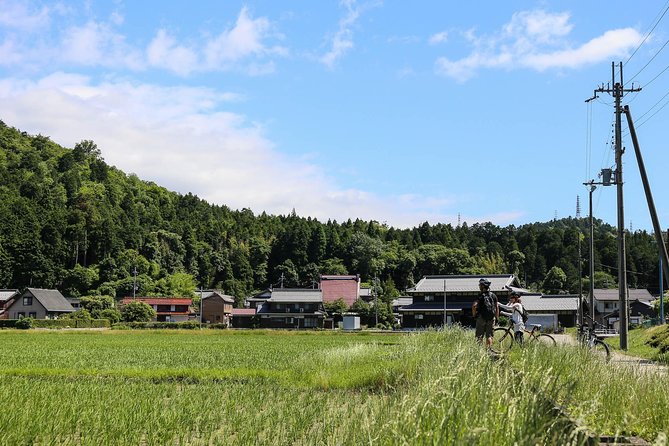
The route is designed for people with a moderate level of physical fitness. You should be ready to pedal for several miles, stop and start in villages, and walk briefly at Iwaya Zenkodo Temple.
The ride has been described as easy for beginners, and the bicycles used on the tour have been described as new. The route also includes many pauses, so you are not expected to maintain a hard pace for the full three to four hours.
Rain is a real consideration. At least one outing continued in wet weather, but the provider requires good weather and may cancel the tour if conditions are poor. If that happens, you are offered another date or a full refund.
Wear clothing that works for cycling and walking, and plan for changing conditions. The supplied information does not specify helmet policy, bicycle style, child-seat availability, or electric-bike options, so ask the provider before booking if any of those points matter to you.
The private setup is especially helpful for families and mixed-ability groups. One review described an 11-year-old enjoying the ride, but that does not guarantee that every child will find the distance or temple walk comfortable.
Tako adds the detail that makes the ride worthwhile
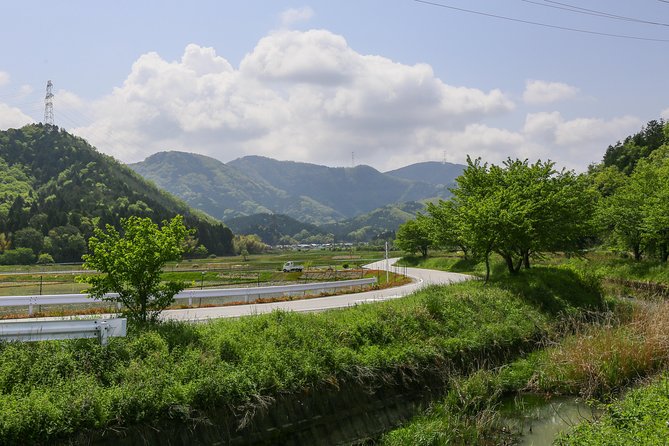
A rural bike ride can be pleasant on its own, but without context, it can also become a long series of fields and side streets. Tako helps prevent that.
Her English is described as fully fluent, and she brings historical material in a binder. That is useful in a region where the most meaningful sights are often modest: a village name, a spring, an agricultural district, or a temple built into a low mountain.
The tour also leaves room for conversation. You can ask about local customs, farming, the temple sites, or the way villages around Maibara have changed. The private format means the guide can adjust the amount of explanation and the pace for your group.
There is a warm human side to the route, too. A local older man once came out to greet the guide and spent time talking with the group. Encounters like that cannot be promised, but they show the kind of neighborhood connection this tour can make possible.
Do not expect a scripted performance at every stop. The appeal is the chance to see how a guide with local ties interprets places that are easy to miss on your own.
What is included, and what the $255 price buys
The $255 cost covers the professional guide, bicycle use, and coffee or tea. The tour description also includes water and snacks, which is helpful because there is no lunch included.
The price makes the most sense when shared by a couple, family, or small group. Since this is private, you are paying not only for the bike but also for personal guiding, route planning, local interpretation, and the convenience of meeting at Maibara Station.
For one person, the cost is harder to defend unless you place a high value on a private guide. For two or more people, it becomes a more reasonable way to see rural Shiga without renting bicycles, finding the route, and researching the temples and agricultural history yourself.
Group discounts are available, though the amount is not specified. Ask about the discount before booking rather than assuming it applies automatically.
The lack of lunch is not a major problem on a half-day outing, but you should plan your meal before or after the ride. Drinks and snacks keep the tour comfortable, but they are not a substitute for lunch.
Lake Biwa and Hikone make useful add-ons
The ride gives you a taste of the area, not a full Lake Biwa day. If you want more time beside the lake, you can build that into your plans after the tour.
Hikone Castle is another practical add-on. It is close enough to make sense as a follow-up, and one guide even provided a ride there after the cycling tour. That was extra help, not a stated part of the standard program, so do not count on transportation unless you arrange it directly.
The best plan is to treat the bike ride as the morning or afternoon anchor, then leave flexibility around it. The tour ends back at Maibara Station, so you have a clear return point for onward travel.
Do not cram too many major sights into the same block of time. The ride already includes cycling, temples, a spring, and countryside stops. Lake Biwa or Hikone Castle works best as a separate add-on, not as another rushed item on the same schedule.
Who should book this ride
I would point this tour toward you if you want a quiet change from Kyoto’s famous sights and enjoy seeing ordinary places with an explanation. It suits couples, families with active older children, and small groups who prefer a private outing.
It is also a good choice if you want a manageable first cycling experience in Japan. The distance is moderate, the route is described as beginner-friendly, and the guide stays with your group.
You may want another activity if you dislike uncertain weather, have trouble cycling for several miles, or want a major attraction at every stop. This is not a castle tour, a strenuous mountain ride, or a food-focused excursion.
The outing also requires a little flexibility. Rural roads, local conversations, weather, and seasonal farm views cannot be controlled as tightly as a city sightseeing schedule. That unpredictability is part of the appeal, but it is not right for every itinerary.
Final verdict: book it for the countryside, not a checklist
Book this tour if you want to see rural Japan near Kyoto without spending a full day on complicated transport. The bullet-train connection is quick, the private ride is approachable, and the stops give you more than pretty scenery. You get temples, farming history, a community spring, village roads, and a guide who can explain what you are seeing.
The $255 price is fair for a private experience shared by several people, especially with bicycle use, drinks, snacks, and an English-speaking guide included. It is less attractive for a solo visitor or anyone seeking a budget bike rental.
My practical advice is to choose a day with a solid weather forecast, confirm the train and meeting details, ask about any bicycle equipment needs, and leave time for Lake Biwa or Hikone Castle only if you can do so without rushing. For a personal look at Shiga beyond Kyoto’s main circuit, this is a strong half-day choice.
FAQ
Where does the cycling tour begin and end?
The tour begins and ends at Maibara Station in Shiga Prefecture. The activity ends back at the meeting point.
How long is the cycling route?
The route covers about 13 kilometers, or approximately 8 to 9 miles, and the full experience lasts about three to four hours, including stops.
Is the ride suitable for beginners?
The route is described as beginner-friendly, but you should have a moderate level of physical fitness. The tour includes cycling and a short hike at Iwaya Zenkodo Temple.
What is included in the price?
The price includes a professional guide, use of a bicycle, coffee or tea, and, according to the tour description, water and snacks. Lunch is not included.
Can I visit Lake Biwa or Hikone Castle during the tour?
You can spend additional time at Lake Biwa or Hikone Castle as part of your wider plans. The standard activity ends back at Maibara Station, so these are best treated as add-ons.
What happens if the weather is poor?
The experience requires good weather. If the provider cancels because of poor conditions, you can choose another date or receive a full refund. You can cancel for a full refund if you do so at least 24 hours before the start time.
More Private Tours in Shiga Prefecture
More tours in Shiga Prefecture we've reviewed
Cycling Tours, compared.
 ★ 5.0Hidden Kyoto E-Biking tourFrom $116
 ★ 5.0Bike Tour Exploring North Kyoto plus LunchFrom $106
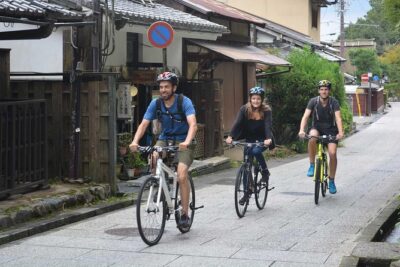 ★ 5.0Arashiyama Bamboo Forest & Hidden Gems Bike Tour (Early Bird)From $106
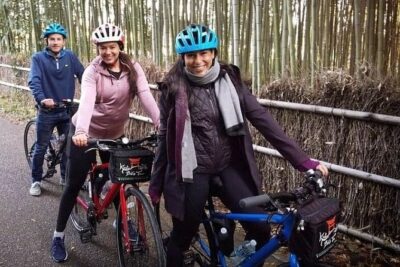 ★ 5.05 Top Highlights of Kyoto Full Day Bike Tour (E-bike option)From $172
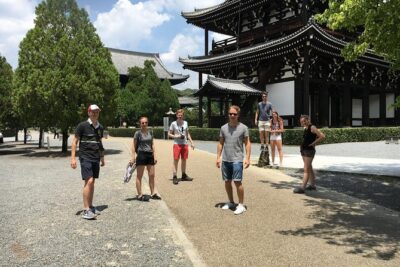 ★ 5.0Full Day Biking Tour Exploring the Best of KyotoFrom $119
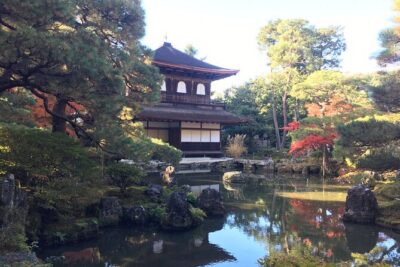 ★ 5.0E-Bike Tours of the highlights of Kyoto!!!From $109