
Reviewed · E-BIKES
Kyoto E-Bike Tour
Kyoto’s best moments are not always found on its busiest temple lanes. This four-hour E-bike tour links major sights with quieter corners, giving you a practical way to see Gion, Nanzenji, Heian Shrine, the Philosopher’s Path, Shimogamo Shrine, and the Imperial Palace in one outing.
I like the small group, limited to six people, because it keeps the ride personal. I also like the range of the route: you get famous Kyoto sights, local cultural context, nature, and a visit to Murin-an, rather than spending four hours at one crowded attraction.
The main drawback is the meeting point. The guide waits in front of Kyoto Tourist Lounge Gion, but the starting spot can be hard to identify, so check Google Maps carefully and arrive early. The bikes also require a height of more than 145 centimeters, making this unsuitable for small children.
In This Review
- Key Points
- Why This E-bike Route Works in Kyoto
- Starting in Gion on Yamatoooji Dori
- Gion: A Short Introduction to Kyoto’s Old Quarter
- Nanzenji: Temple Grounds and a Quieter Pace
- Heian Shrine: A Change in Scale
- The Philosopher’s Path: The Scenic Middle of the Ride
- Shimogamo Shrine and Kyoto’s Natural Side
- Kyoto Imperial Palace: A Broad Finish
- Murin-an: The Extra Cost to Plan For
- What the Guide Adds to the Ride
- How Much Value Do You Get for $87?
- Who Should Book This Kyoto Ride?
- Practical Tips for a Better Morning or Afternoon
- Should You Book the Kyoto E-bike Tour?
- FAQ
- How long is the Kyoto E-bike tour?
- Where does the tour start?
- Where does the tour end?
- What language is the tour conducted in?
- How many people are in the group?
- Is an E-bike included?
- What sights does the route visit?
- Is the Murin-an entrance fee included?
- Is the tour suitable for young children?
- Can I cancel the booking?
Key Points
- A six-person maximum keeps the English-language tour easier to follow and more flexible.
- The route covers seven Kyoto stops, from Gion and Nanzenji to the Imperial Palace.
- E-bikes make a long city route manageable, especially for anyone who wants to cover more ground without a hard workout.
- Ben may be your guide, and his explanations of Kyoto’s history received especially strong praise.
- Murin-an costs extra, with admission priced at either 900 or 1,300 yen depending on the date.
- The starting location needs attention, since signage may not clearly identify the exact meeting spot.
Why This E-bike Route Works in Kyoto

Kyoto is spread across a broad city area, with temples, shrines, gardens, and old neighborhoods separated by busy roads. Walking between all these places takes time. A regular bicycle can help, but Kyoto’s route includes enough distance that some people may spend more energy pedaling than looking around.
An E-bike changes the balance. You can ride through the city without treating the tour as an athletic event, then arrive at each stop ready to listen and explore. The tour is still active, but the electric assistance makes it more approachable for people who want a scenic ride rather than a demanding cycle.
The route also gives you a useful first look at several different sides of Kyoto. Gion brings traditional streets and old city character. Nanzenji and the Philosopher’s Path add temple grounds, trees, and water. Heian Shrine and Shimogamo Shrine show different forms of religious architecture, while the Imperial Palace adds a broad look at Kyoto’s former center of power.
With only six participants, you should have a better chance to hear the guide clearly and ask questions. The tour is conducted in English, and Ben is specifically associated with strong historical explanations. If he is leading your departure, expect the cultural background to be one of the main strengths.
Other cycling tours in Kyoto

Starting in Gion on Yamatoooji Dori
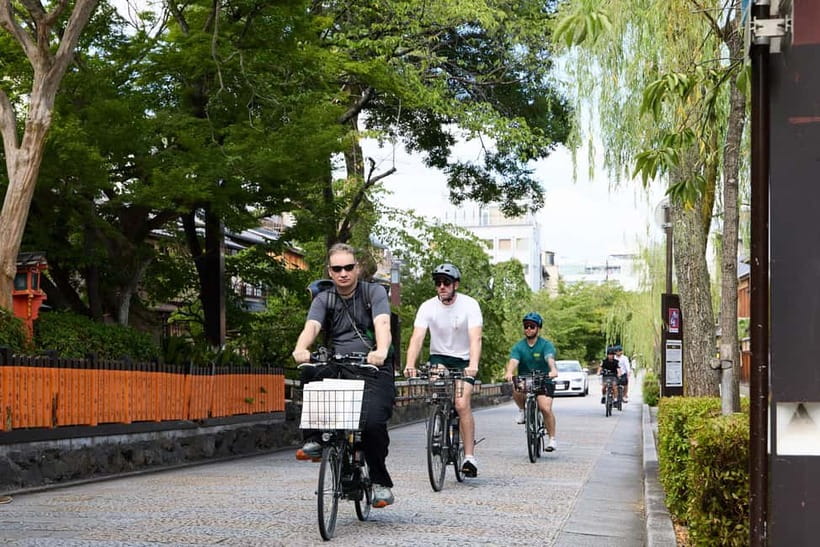
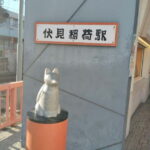
The meeting point is in front of Kyoto Tourist Lounge Gion, facing Yamatoooji Dori Street. This is the place to slow down and confirm your location rather than assuming the first tourist lounge sign you see is the exact spot.
The guide waits outside, but the signage at the start has been described as insufficient. I would open Google Maps before leaving your hotel, save the location, and arrive with enough time to find the guide. A confusing start can easily eat into a four-hour tour, and this route has plenty to cover.
Once the bikes and group are organized, the position in Gion is convenient for beginning with one of Kyoto’s most recognizable areas. You are not starting in an anonymous suburb and spending the first part of the ride just getting to the interesting places.
Gion: A Short Introduction to Kyoto’s Old Quarter
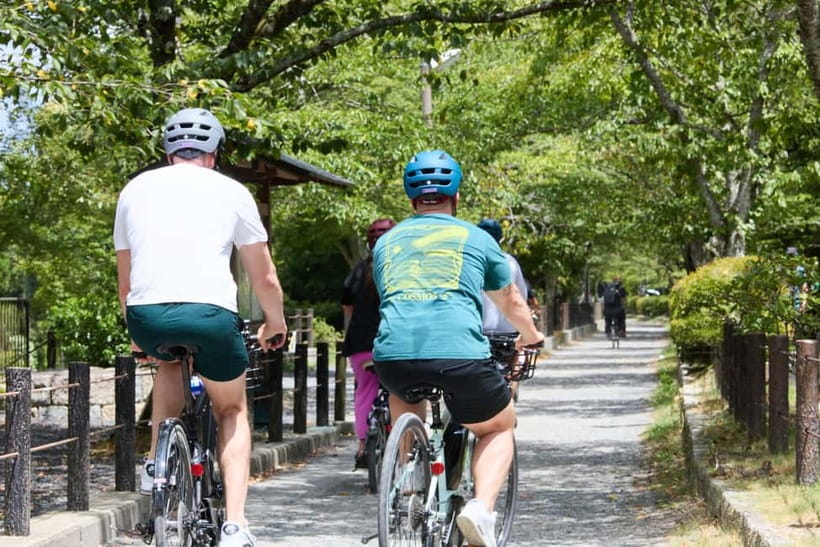
The Gion stop lasts about 20 minutes. That makes it a brief orientation rather than a long neighborhood walk, but it gives the guide a chance to explain the area and point out details you might miss while passing through on your own.
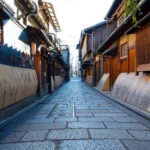
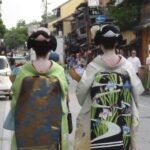
Gion is famous for its traditional streets and connection to Kyoto’s geisha culture. The short visit works best as a visual introduction before the route moves toward temples and shrines. You should not expect a full exploration of every lane, shop, or teahouse.
This is also where the tour begins to show its balance. You see one of Kyoto’s best-known districts, but the day is not built around staying in the most crowded area. The bikes let the group move onward while other visitors remain on foot.
Nanzenji: Temple Grounds and a Quieter Pace
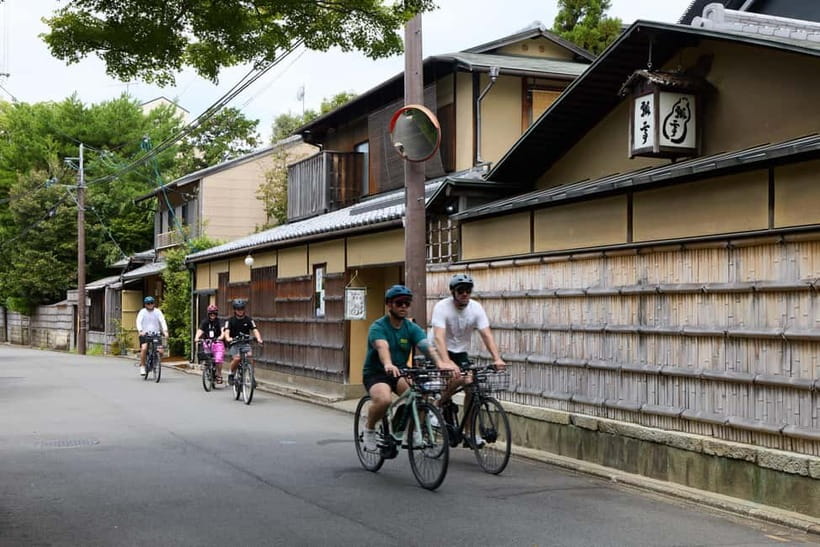
After Gion, the route reaches Nanzenji for about 30 minutes. This is one of the more substantial stops, and the extra time matters. Temple grounds are not simply photo backdrops. Their gates, courtyards, paths, and surrounding structures help explain how religion and daily life have shaped Kyoto.
The stop gives you time to look around while the guide supplies context. Since the tour combines culture with movement, the commentary can help tie what you see to the wider city instead of leaving you to guess why the site matters.
Thirty minutes is enough for an introduction, but not for every building or paid area connected with Nanzenji. Keep your expectations in check. This is a survey tour, designed to give you a well-chosen look at several places rather than an exhaustive examination of one temple complex.
Heian Shrine: A Change in Scale
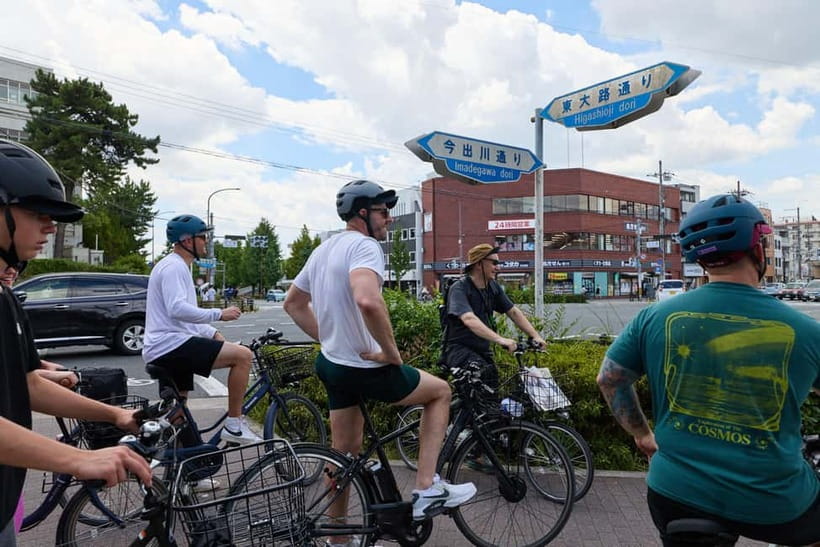
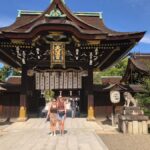
The tour then allows about 30 minutes at Heian Shrine. Its large approach and bold architectural style offer a clear contrast with the more enclosed feel of temple grounds.
This is a good place for photographs and for noticing how Kyoto presents different periods and styles of religious architecture. The guide’s role is important here because a large, impressive entrance can tell you only so much on its own.
The stop is long enough to avoid a rushed glance, though the total tour schedule means you will still be making an introduction rather than a full shrine visit. If Heian Shrine is high on your personal list, you may want to return later with extra time. On this ride, its value is as part of a broader picture of Kyoto.
A few more Kyoto tours and experiences worth a look

The Philosopher’s Path: The Scenic Middle of the Ride
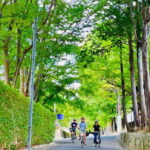
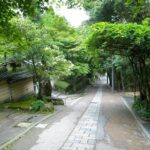
The Philosopher’s Path receives about 30 minutes and is likely to be one of the most pleasant riding sections. The path follows a canal and is known for its trees and calm setting, particularly during seasonal displays.
The tour description emphasizes peaceful places, and this is where that promise makes the most sense. You get a break from major roads and a chance to enjoy Kyoto at a slower speed. The E-bike is useful here because it lets you move steadily without turning the path into a strenuous ride.
Conditions can vary by season and by how busy the path is, so do not picture an entirely empty lane. Still, compared with Kyoto’s most crowded attractions, this section offers a calmer rhythm. Ride with care, follow the guide’s pace, and remember that a scenic path is shared space, not a private cycle track.
Shimogamo Shrine and Kyoto’s Natural Side
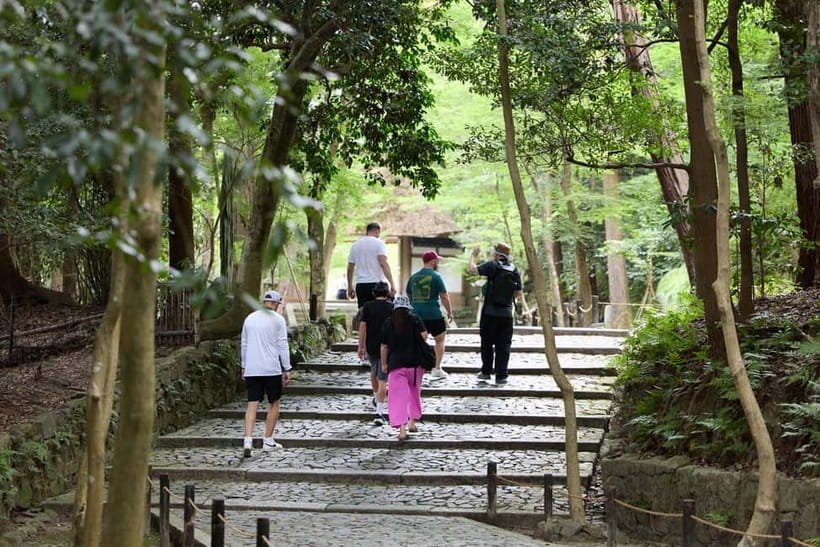
Shimogamo-jinja Shrine receives about 20 minutes. The shorter stop keeps the tour moving, but it adds another important type of Kyoto setting: a shrine connected with wooded surroundings and a sense of older natural space.
You will not have the same amount of time here as at Nanzenji or Heian Shrine. The benefit is variety. In a single morning or afternoon, you see a temple, several shrine environments, a canal-side path, and the formal center of the city.
For me, this is one of the route’s useful choices. A standard sightseeing plan can become a list of famous names. Adding Shimogamo Shrine makes the outing feel less predictable and gives the guide another setting in which to explain Kyoto’s customs and religious traditions.
Kyoto Imperial Palace: A Broad Finish
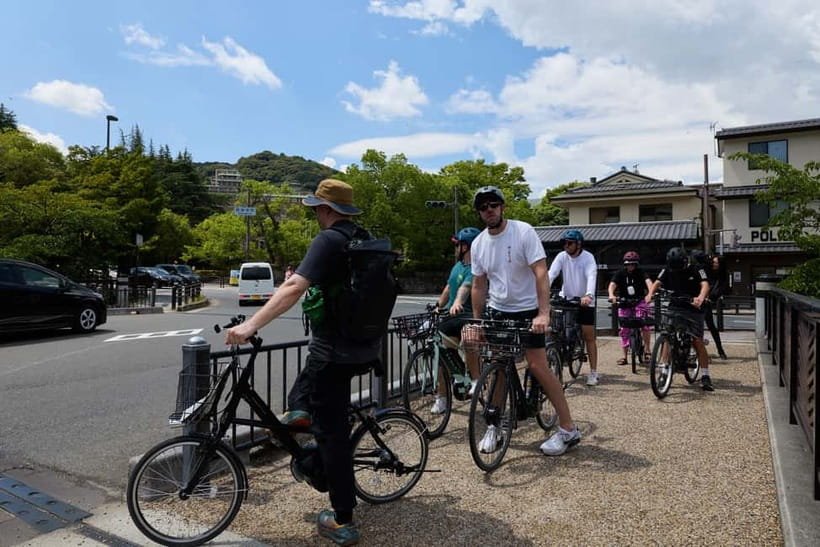
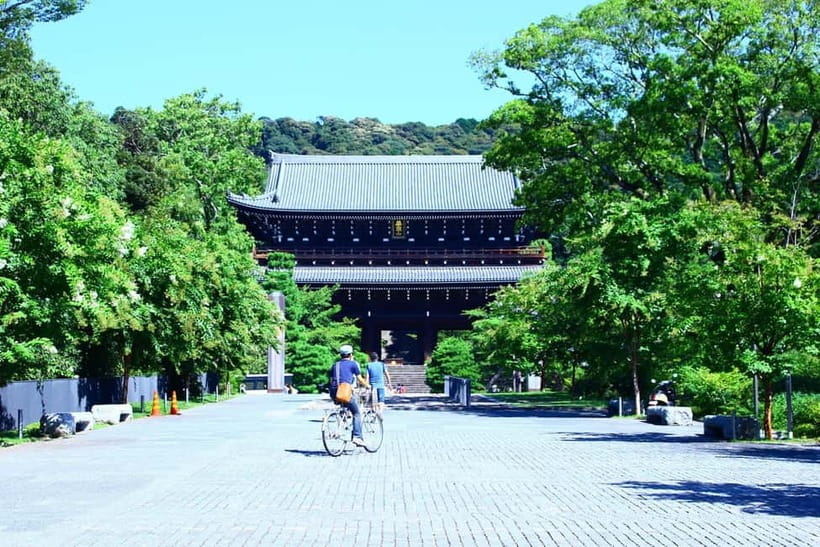
The final sightseeing stop is Kyoto Imperial Palace, with about 30 minutes set aside for a visit. The palace grounds offer a different scale again, with open space and a strong connection to the city’s former imperial role.
After the narrower streets and shaded paths earlier in the route, the palace provides room to pause and take in the layout. The guide can help place Kyoto’s political past within the city you are seeing today.
As with the other stops, half an hour is a useful introduction, not a complete palace tour. The advantage is that you reach the palace without giving up the other sites. The disadvantage is simple: anyone who wants detailed palace architecture or a long wander through the grounds will need a separate visit.
Murin-an: The Extra Cost to Plan For
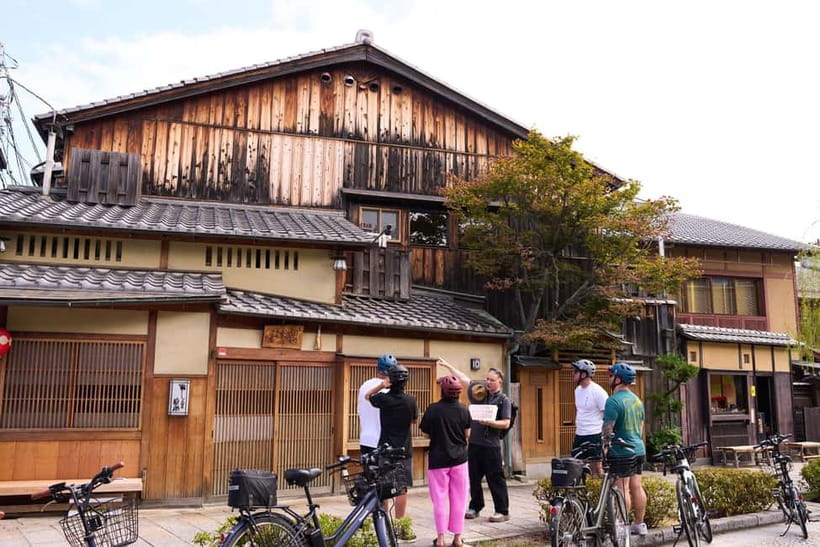
Murin-an is the one expense you need to add to the tour price. Admission is not included and depends on the date. The fee is 900 yen on many listed dates, including April 1 to 14, April 27 to May 31, September 28 to 30, October 14 to 21, November 1, November 4 to 8, November 11 to 14, December 1 to 7, and March 29 to 31.
On November 2, 3, and 9 to 10, as well as November 15 to 30, the listed price is 1,300 yen. The dates are specific, so check the charge before booking if your budget is tight.
The extra fee is not a flaw in the tour itself, but it does affect the real cost. At $87 per person, the tour already includes the E-bike, guide, small-group format, and the route through several major areas. Add the Murin-an entrance fee when comparing it with other Kyoto activities.
Murin-an also helps explain why the tour is more than a transport service. You are not simply riding past famous buildings. You are given time to enter a quieter cultural site and hear about Kyoto through a local guide’s perspective.
What the Guide Adds to the Ride
The guide is a major part of the value. A bicycle can take you from place to place, but it cannot explain why a shrine is arranged in a certain way or how Kyoto’s different districts fit together.
Ben is the guide named in the available tour information, and the strongest praise centers on his clear explanations of the history and background of each sight. He also made room for additional places beyond the planned list, which suggests some flexibility when the group’s pace allows it.
That does not mean every departure will follow the same pattern. Guides and conditions can vary. Still, the small group gives the experience a better chance of feeling like a guided outing rather than a fixed procession.
The group limit of six is especially helpful at stops where you need to hear instructions or gather around a guide. It also suits people who prefer not to ride in a large pack. You should still expect a shared pace and shared decisions, not a private custom tour.
How Much Value Do You Get for $87?
The price makes more sense when you count what the tour replaces. You receive four hours of bike use, an English-speaking guide, visits to six named sightseeing areas plus Gion, cultural commentary, and the convenience of covering a wide part of Kyoto under your own power.
The value is strongest for a first or second visit, when you want orientation and variety. Instead of spending half a day figuring out routes between distant areas, you can see how several parts of the city relate to one another.
The price is less attractive if you want a slow, detailed visit to one temple or shrine. Thirty minutes at a stop is enough for an introduction, but not enough for a devoted architectural study. You are paying for range, local explanation, and E-bike convenience.
Insurance is not included, so read the booking terms carefully and consider your own coverage. Murin-an admission is also extra. Those are modest but important additions to the advertised price.
Who Should Book This Kyoto Ride?
I would recommend this tour to adults and older children who like active sightseeing but do not want a hard cycling challenge. The minimum height is more than 145 centimeters, and the activity is not suitable for children under 10 or babies under one year.
It is a good match for anyone who wants to avoid spending the entire day in dense tourist zones. The route still includes famous places, but it also gives you quieter paths, less obvious shrine stops, and time outside the main crowds.
You should be comfortable riding an E-bike and following a group route. This is not the right choice if you want complete control over every stop, a private guide, or long unhurried visits inside each site.
The tour may also suit photographers, though the schedule is active. You get many scenic settings, but you will need to balance pictures with the group’s departure time.
Practical Tips for a Better Morning or Afternoon
Check the starting point on Google Maps before you leave. Look for Kyoto Tourist Lounge Gion in front of the building facing Yamatoooji Dori, and arrive early because the meeting signage may not be obvious.
Wear comfortable clothes and shoes suitable for four hours of riding and sightseeing. The tour includes nature, temples, shrines, city streets, and open palace grounds, so conditions can change during the route.
Keep the Murin-an fee in cash or confirm the accepted payment method before the day of the tour. The supplied information gives the fee in yen, but it does not specify payment methods.
Ask about the day’s exact starting time when you check availability. The duration is four hours, but departure times vary by date.
Finally, do not book this as a substitute for every major Kyoto attraction. Book it as a strong city overview, one that gives you a sense of place and helps you decide where to return for a longer visit.
Should You Book the Kyoto E-bike Tour?
Book it if you want to see a broad slice of Kyoto in four hours, prefer a small group, and like the idea of combining well-known sights with quieter areas. The E-bike removes much of the strain from a long route, while an English-speaking guide adds context that you would miss on a self-guided ride.
I would be cautious if you are under 145 centimeters tall, traveling with young children, or hoping to spend an hour or more at each temple. Also allow for the Murin-an entrance fee and take the meeting-point warning seriously.
For most active visitors, the mix is appealing: Gion, Nanzenji, Heian Shrine, the Philosopher’s Path, Shimogamo Shrine, the Imperial Palace, and Murin-an, all tied together by bike. The modest group size and strong guide feedback make this a good way to get your bearings in Kyoto without spending the day in the thickest crowds.
FAQ
How long is the Kyoto E-bike tour?
The tour lasts four hours.
Where does the tour start?
It starts in front of Kyoto Tourist Lounge Gion, facing Yamatoooji Dori Street.
Where does the tour end?
The activity ends back at the Kyoto Tourist Lounge Gion meeting point.
What language is the tour conducted in?
The live tour guide speaks English.
How many people are in the group?
The group is limited to six participants.
Is an E-bike included?
Yes. Comfortable E-bike rental is included in the tour price.
What sights does the route visit?
The route includes Gion, Nanzenji Temple, Heian Shrine, the Philosopher’s Path, Shimogamo-jinja Shrine, Kyoto Imperial Palace, and Murin-an.
Is the Murin-an entrance fee included?
No. Murin-an admission costs either 900 yen or 1,300 yen, depending on the date.
Is the tour suitable for young children?
The activity requires participants to be over 145 centimeters tall. It is not suitable for children under 10 or babies under one year.
Can I cancel the booking?
Yes. You can cancel up to 24 hours in advance for a full refund. You can also reserve now and pay later.
More E-Bikes in Kyoto
More Cycling Tours in Kyoto
More tours in Kyoto we've reviewed







E-Bikes, compared.
 ★ 5.0Hidden Kyoto E-Biking tourFrom $116
 ★ 5.05 Top Highlights of Kyoto Full Day Bike Tour (E-bike option)From $172
 ★ 5.0E-Bike Tours of the highlights of Kyoto!!!From $109
 ★ 4.9Kyoto: Memory Kyoto E-Bike TourFrom $105
 ★ 4.9Kyoto: City Secrets eBike TourFrom $1273h 45m
 ★ 5.0Pedal Adventure Kyoto’s iconic landmarks on an e-bike tourFrom $86