
Reviewed · FUSHIMI INARI TOURS
Kyoto: Fushimi Inari Night Walking Tour with Guide
Fushimi Inari is famous for its endless orange torii gates, but night changes the mood completely. As lanterns glow and the crowds thin, the shrine feels quieter, more reflective, and far less like a must-see checklist stop. You’ll walk the lower and middle sections with a local guide, then return to JR Inari Station.
I like the small group limit of 10, which leaves room for questions and real conversation. I also like the guides’ cultural focus: Goku and Kate have been praised for explaining shrine traditions clearly, while still making time for broader conversations about Japanese life.
The main trade-off is simple: this is not a full climb to the top of Mount Inari. The tour covers the lower and middle sections, so serious hikers or anyone seeking the summit will need to continue on their own.
In This Review
- Key points
- Why Fushimi Inari feels different after sunset
- Meeting at JR Inari Station
- Walking through the lower torii gates
- Entering the Senbon Torii
- What the guide adds to the visit
- Small group, real questions, and a slower pace
- Is $38 a fair price?
- Who should book this night walk?
- Practical details before you go
- My booking advice
- FAQ
- Where does the Fushimi Inari night tour meet?
- How long does the tour last?
- Does the tour reach the top of Mount Inari?
- What languages are available?
- How many people can join the tour?
- What should I bring?
- Can I cancel the booking?
Key points
- A quieter Fushimi Inari: Evening lantern light gives the shrine a more private, thoughtful feel.
- A two-hour guided walk: Expect about 1.5 hours at the shrine, plus meeting and return time.
- Local guides with cultural training: Learn about Shinto, rituals, torii gates, and Japanese customs.
- Small groups capped at 10: The format suits questions, conversation, and personal attention.
- Meet at the only ticket gate: JR Inari Station is the clear starting point and the nearest rail stop.
- Lower and middle sections only: Bring comfortable shoes, but do not expect a full mountain hike.
Why Fushimi Inari feels different after sunset
Fushimi Inari Taisha is one of Kyoto’s most recognizable sights. During the day, its torii gates can feel almost too famous for their own good. The orange corridors attract large numbers of people, and the first stretch near the entrance can become crowded.
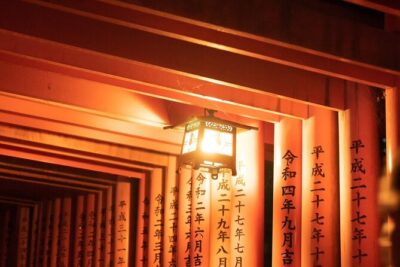
At night, the visual details take over. Vermillion gates catch the soft light, shrine buildings take on a subdued tone, and the sound level drops as you move away from the entrance. The tour is designed around this quieter period, giving you time to notice the setting rather than simply push through it with a camera raised.
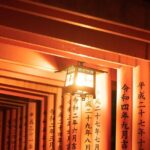
The lanterns are not just decoration. They help shape the shrine’s evening atmosphere and point your attention toward the religious character of the site. Your guide can explain how Fushimi Inari connects with Shinto beliefs, shrine etiquette, and local customs. That context matters here because the torii gates are more than a dramatic backdrop for photos.
The timing also helps in warmer months. One participant specifically found an evening visit a smart choice during the hot summer season. If you are visiting when the sun sets around 6:00 PM, the tour begins as daylight fades and continues into the darker, calmer part of the evening.
A few more Kyoto tours and experiences worth a look

Meeting at JR Inari Station
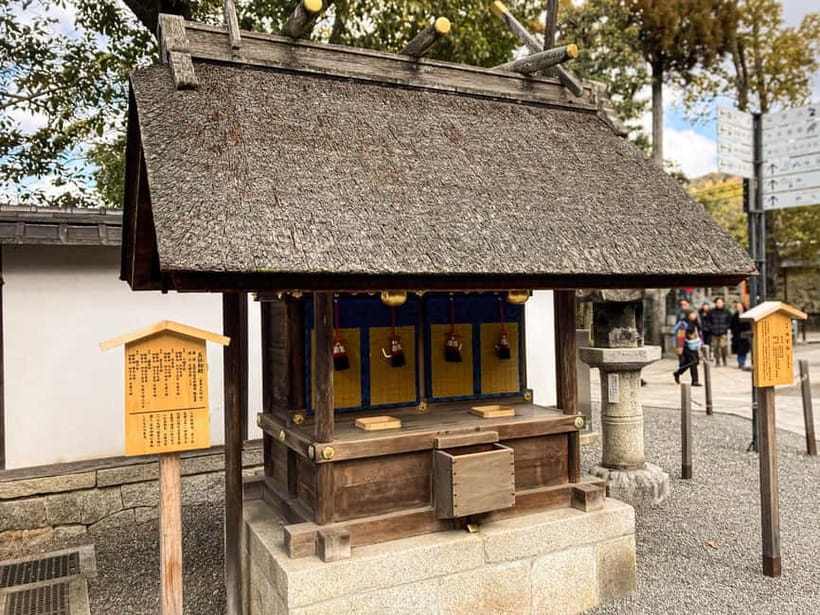
The tour begins at the ticket gate at JR Inari Station. This is the nearest station to Fushimi Inari Shrine, and there is only one ticket gate, so you do not have to guess which exit to use.
That simplicity is useful after a full day in Kyoto. You can arrive by train, find the single gate, and meet the guide without wandering around a large station complex. Keep WhatsApp or SMS available, since the guide may contact you before the start.
The experience lasts two hours, with about 1.5 hours set aside for the guided portion at Fushimi Inari. The remaining time covers meeting, getting started, and returning to the station. The tour ends back at JR Inari Station, which makes it easy to continue by train or follow the guide’s suggestions for food and nearby sights.
Be ready before the start time. The information provided does not include a hotel pickup, private transport, or food stop. You are responsible for getting to the station and for your own drinks and personal expenses.
Walking through the lower torii gates
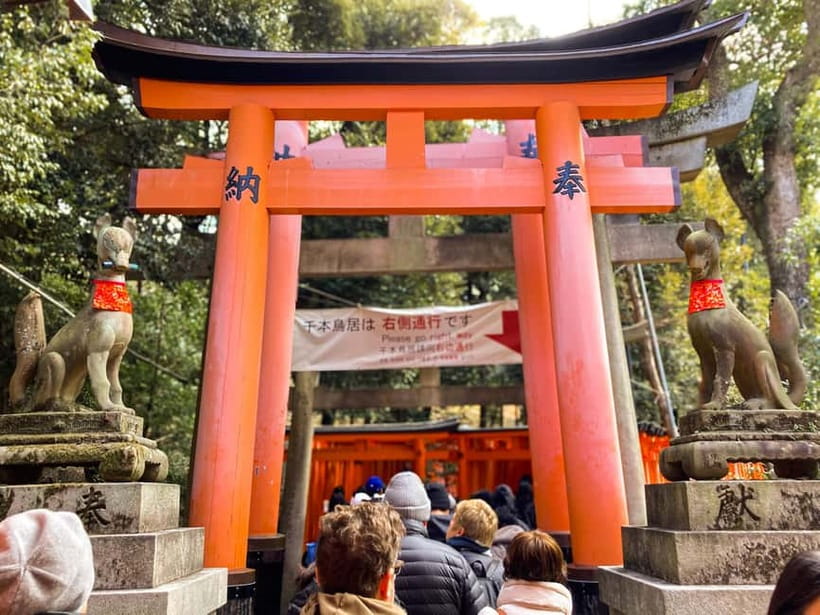
The first part of the shrine visit introduces you to the architecture and the basic meaning of the site. Fushimi Inari is dedicated to Inari, a Shinto deity associated with rice, agriculture, and prosperity. Fox figures appear around the shrine because foxes are regarded as messengers of Inari.
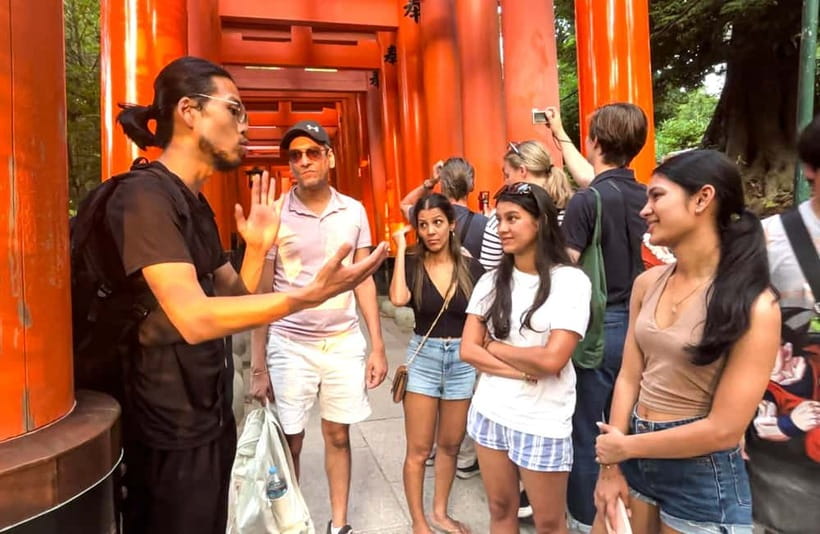
Your guide can make sense of details that are easy to miss when you walk alone. You’ll learn about torii gates, the way they mark a transition into sacred space, and the customs connected with visiting a Shinto shrine. You can also ask about ritual actions, religious symbols, and the differences between Shinto shrines and Buddhist temples.
That last point is especially useful if this is your first visit to Japan. Shrines and temples can look similar at a quick glance, but their traditions and rituals are different. A trained local guide can explain those distinctions without turning the walk into a lecture.
The lower section is also the easiest place to get photographs of the closely packed torii. At night, the orange paint and lantern light create strong lines for pictures. Your guide can point out quieter angles and allow time for photography rather than keeping you moving every minute.
Bring a charged smartphone. The tour does not include professional photographs or equipment, and the best way to use the free time is to have your camera ready before you arrive.
Entering the Senbon Torii
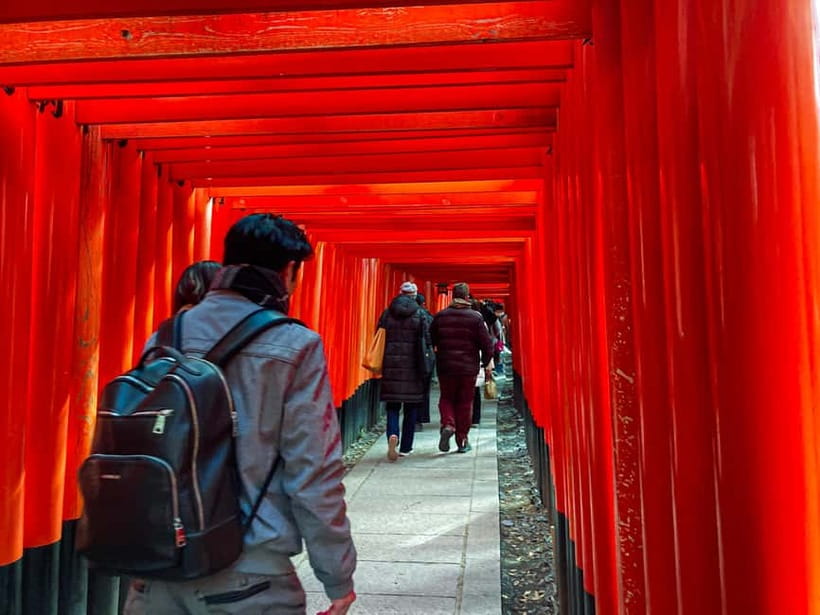
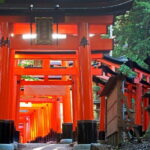
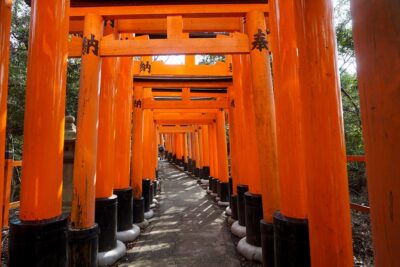
The Senbon Torii, or thousand torii gates, is the visual heart of the visit. The gates form a long passage up the wooded slope, with one gate after another creating a tunnel-like effect.
The gates were donated by individuals, families, and businesses. Their presence reflects the continuing practice of offering torii in thanks for good fortune or in hope of future blessings. Your guide can explain the meaning behind this custom and help you read the site as a working religious place, not simply a photogenic walkway.
At night, the Senbon Torii rewards patience. Stop for a moment and let the group move ahead. Listen to the quieter evening air, watch the light shift across the gates, and take in the repetition of the architecture. The tour includes free time for quiet reflection and photos at selected points, which is a welcome contrast to a rushed sightseeing stop.
Still, you should set sensible expectations. The tour does not cover every torii on the mountain, and it is not intended as a complete hike. You will see part of the Senbon Torii and continue through the lower and middle sections, but anyone wanting the full route must plan additional time and effort beyond the scheduled walk.
What the guide adds to the visit
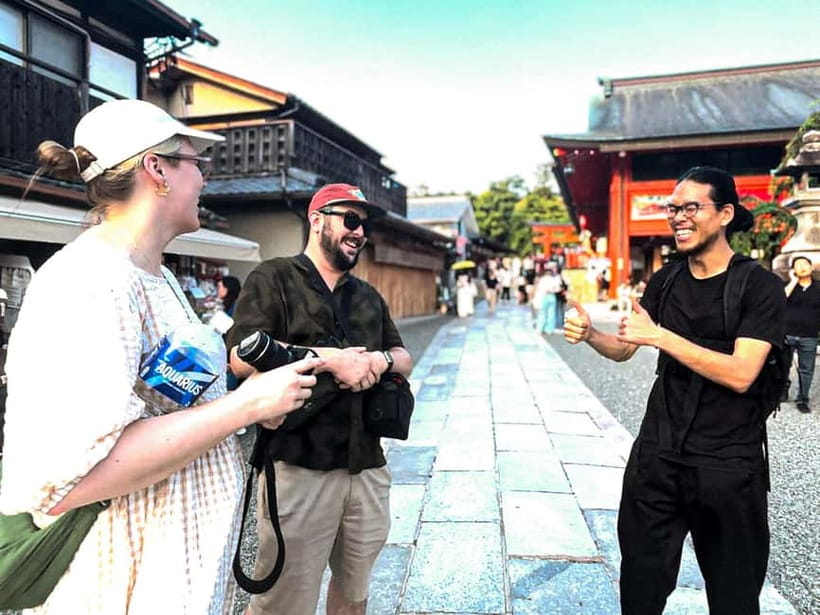
The guide is the main reason to choose this experience instead of walking through Fushimi Inari alone. All guides are local professionals with formal training in tourism and Japanese culture, including Shinto shrines, Buddhist temples, and historical customs.
The tone is meant to be conversational. You can ask about shrine rituals, Japanese spirituality, cultural differences, or daily life in Kyoto. The guide can adjust the discussion to your interests, so you are not locked into a fixed script about dates and names.
Goku is one guide associated with the tour. He received especially strong praise for his explanations of the shrine and related traditions, as well as his willingness to discuss subjects beyond Fushimi Inari. On one date, he led the walk for a single participant rather than canceling it, which suggests a useful degree of care when group numbers are low.
Kate is another guide to know by name. Her detailed explanation of Fushimi Inari and her handling of the evening timing earned particular appreciation during a hot summer visit. These individual examples point to the personal nature of the experience, but guide assignment depends on availability.
English is the default language. French, Spanish, Russian, and Portuguese may also be available, but you should request your preferred language in advance. Do not assume every departure will offer every language.
A few more Kyoto tours and experiences worth a look





Small group, real questions, and a slower pace
The group is limited to 10 people. That is small enough for you to hear the guide clearly and ask questions without stopping the entire tour for every point.
A small group also suits the shrine itself. Fushimi Inari has narrow sections where a large tour can feel awkward. A smaller party can pause for photographs, keep the walking pace manageable, and use quieter routes when available.
The experience includes local tips about Kyoto traditions and nearby places, along with optional help after the tour. You might ask for a dinner suggestion, advice on transport, or another shrine or temple to visit. The details of those recommendations will depend on your guide and your interests, but the chance to ask a local at the end is useful.
The tour is not a silent private walk. You will share the route with other participants unless your departure has only one booking. The single-person departure led by Goku shows that the tour may still operate with very low numbers, but that should not be treated as a guaranteed private tour.
Is $38 a fair price?
At $38 per person, this is a reasonable price if you want cultural explanation and a calmer evening visit. Fushimi Inari itself does not require an expensive admission experience, so you are paying mainly for the guide, the small-group format, the planned route, and the chance to ask questions.
If you already know Shinto customs, shrine etiquette, and the symbolism of torii gates, you may find the price less compelling. You can walk through the shrine on your own and spend longer on the mountain.
For most first-time visitors, though, the guide adds real value. The best part is not simply identifying the torii gates. It is understanding why they are there, how the shrine is used, and how Japanese religious customs differ from assumptions you might bring from home.
The evening timing adds value in summer because it avoids the worst daytime heat. It also changes the mood of the site. In winter, the information notes that a daytime option is available, which may suit you better if you prefer more light and warmer conditions.
Food and drinks are not included. Plan a meal separately before or after the walk, and carry what you need for two hours. There is no promise of a restaurant stop during the tour.
Who should book this night walk?
I would choose this tour if you are visiting Kyoto for the first time and want more than a quick photo at the shrine entrance. It suits you especially well if you like asking questions, learning how religious places work, and connecting a famous sight with ordinary Japanese customs.
It is also a good fit for photographers who prefer softer light and fewer people. The guide does not replace your own time with the camera. Free time is built into the walk, and the evening gates offer plenty of strong compositions.
Couples, solo visitors, and small families can all use the format well, provided everyone is comfortable walking on uneven or sloped paths. Comfortable shoes are essential. The route is not presented as a full mountain trek, but it still involves walking through the lower and middle parts of a hillside shrine.
You may want to skip it if your main goal is reaching the summit, completing a serious hike, or spending several hours exploring every section at your own pace. You may also prefer a daytime visit if darkness, cooler weather, or reduced visibility would make you uncomfortable.
Practical details before you go
Arrive at the ticket gate of JR Inari Station, the station’s only gate. Keep your phone charged and available for WhatsApp or SMS contact from the guide.
Wear shoes you can walk in comfortably. The tour focuses on shrine paths and torii corridors, not a flat city sidewalk.
The sunset timing matters. In the season described, sunset is around 6:00 PM, so the exact light will depend on the departure time and date. Check the available start times when booking.
The tour is offered in English by default, with French, Spanish, Russian, and Portuguese possible on selected departures. Request your language ahead of time.
You can cancel up to 24 hours before the activity for a full refund, and the reserve-now, pay-later option keeps you from paying at the time of booking. These terms make the tour easier to fit into a changeable Kyoto schedule.
My booking advice
Book the Fushimi Inari Night Walking Tour if you want a focused two-hour introduction to the shrine, a quieter setting, and a guide who can explain the beliefs behind what you see. At $38, the small group and personal conversation make the cost fair, especially for a first visit.
Choose a different plan if you want the summit or a long independent hike. This tour covers the lower and middle sections, with the strongest value coming from the guide’s cultural explanations, not from covering every inch of the mountain.
FAQ
Where does the Fushimi Inari night tour meet?
You meet the guide at the ticket gate at JR Inari Station. The station has only one ticket gate, making the meeting point easy to find.
How long does the tour last?
The full experience lasts two hours. About 1.5 hours are spent on the guided visit to Fushimi Inari Shrine.
Does the tour reach the top of Mount Inari?
No. The tour focuses on the lower and middle sections of Fushimi Inari. It does not cover the entire mountain.
What languages are available?
English is the default language. French, Spanish, Russian, and Portuguese-speaking guides may be available on request, depending on availability.
How many people can join the tour?
The experience is a small-group tour limited to 10 participants.
What should I bring?
Bring comfortable shoes and a charged smartphone. You should also have WhatsApp or SMS available so the guide can contact you before the tour.
Can I cancel the booking?
Yes. You can cancel up to 24 hours in advance for a full refund. A reserve-now, pay-later option is also available.
More Walking Tours in Kyoto



More Night Walks & Ghost Tours in Kyoto
More Fushimi Inari Tours in Kyoto
More tours in Kyoto we've reviewed







Fushimi Inari Tours, compared.
 ★ 4.8Kyoto: Fushimi Inari, Kinkakuji, Bamboo Grove 1 Day Bus TourFrom $122510 minutes - 9 hours
 ★ 5.0Fushimi Inari Hidden Hiking Tour (Private Option Available)From $63
 ★ 4.7Kyoto/Osaka: Nara, Fushimi Inari Taisha, Arashiyama Bus TourFrom $529 - 10 hours
 ★ 4.4Osaka/Kyoto: Arashiyama, Nara & Fushimi Inari Shrine w/LunchFrom $61
 ★ 5.0Kyoto: Nijo, Kinkaku-ji, Arashiyama, Kiyomizu & Fushimi InariFrom $51
 ★ 5.0Kyoto Fushimi-Inari Night Walking TourFrom $43