
Reviewed · FUSHIMI INARI TOURS
Kyoto Fushimi District Food and History Tour
Fushimi is much more than the famous tunnel of orange shrine gates. This five-hour walk links sake, samurai history, and local food in a part of Kyoto that still feels grounded in everyday life. You begin at Fushimi Inari, then move into the district’s canals, old streets, shops, and political history.
I like the route for two clear reasons: the Gekkeikan Sake Museum gives the day a strong cultural focus, and the story of Sakamoto Ryoma makes the past feel personal rather than distant. Guide Remi has also helped visitors with rail plans, so you can expect practical help as well as sightseeing.
The main consideration is that lunch, drinks, shopping, and souvenirs cost extra. Also, a solo booking may be canceled if no second person joins, so this tour works best if you can accept that small risk or have another person with you.
In This Review
- Key points to know before booking
- Why Fushimi makes such a good half-day route
- Starting at Fushimi Inari without stopping at the gates
- Sake culture at the Gekkeikan Ōkura Sake Museum
- Walking beside Fushimi’s canal
- The Fushimiguchi battlefield and the road to modern Japan
- Teradaya Inn and the escape of Sakamoto Ryoma
- Lunch and shopping on Ryoma Street
- Taiyaki, traditional sweets, and a final coffee break
- What the $78.04 price really covers
- Group size, language, and the minimum booking rule
- Who will enjoy this Fushimi tour most
- Should you book the Kyoto Fushimi Food and History Tour?
- FAQ
- Where does the tour begin?
- How long does the experience last?
- Is lunch included in the price?
- What food is included?
- Is admission included at the historic sites?
- Can I book alone, and can I request a French-speaking guide?
Key points to know before booking
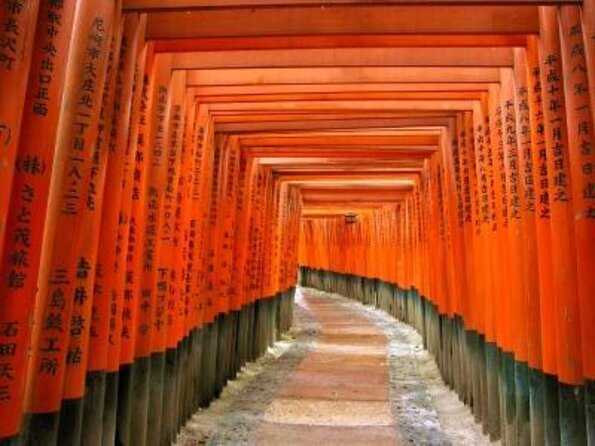
- Fushimi Inari is only the opening chapter: You visit the shrine, but the tour quickly moves beyond the torii gates into the wider district.
- Sake is explained at Gekkeikan’s old distillery: Museum admission is included, along with sake history and tasting-related insight.
- The Meiji Restoration comes alive here: The Fushimiguchi battlefield trace and Teradaya Inn connect the neighborhood to major political change.
- Lunch is flexible, not included: Your guide can help you choose and translate along Ryoma Shopping Street, but you pay for the meal.
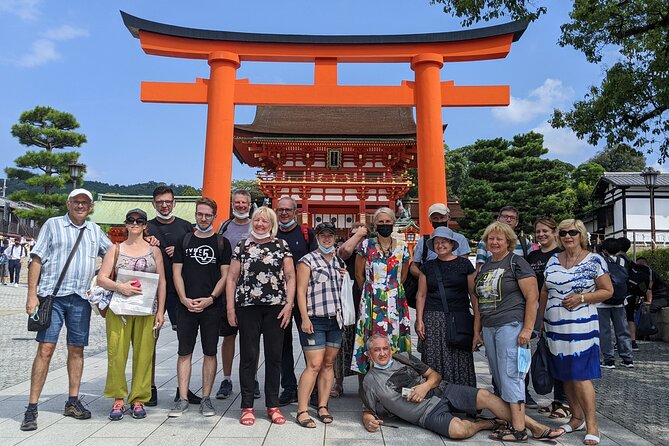
- The group stays small: A maximum of 10 people should make questions and local assistance easier.
- French may be possible, but English comes first: All guides speak at least English and Japanese, while French depends on guide availability.
Why Fushimi makes such a good half-day route
Fushimi sits only a few minutes from Kyoto Station, yet it offers a different pace from central Kyoto. The district is tied to brewing, river and canal transport, merchant streets, and the political struggles that helped bring Japan into the modern era.
That mix gives this tour more shape than a simple food walk. You are not just stopping for snacks. You are following a thread from religious tradition to sake production, then from waterways to the armed conflict that helped end the Tokugawa shogunate.
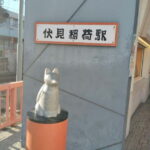
The morning start at 9:30 a.m. is useful. You have time to reach the meeting point without a painfully early wake-up, and the five-hour length leaves much of the afternoon free. I would allow extra time before the start because the meeting point is the fox statue at the entrance to Fushimi Inari Taisha, near Inari Station in Fushimi Ward.
The route includes walking between several sites, so comfortable shoes matter. The timing adds up to just under five hours, although lunch and shopping can affect the pace. This is not a quick photo stop at Fushimi Inari. It is a district walk with several guided history sections.
A few more Kyoto tours and experiences worth a look
Starting at Fushimi Inari without stopping at the gates
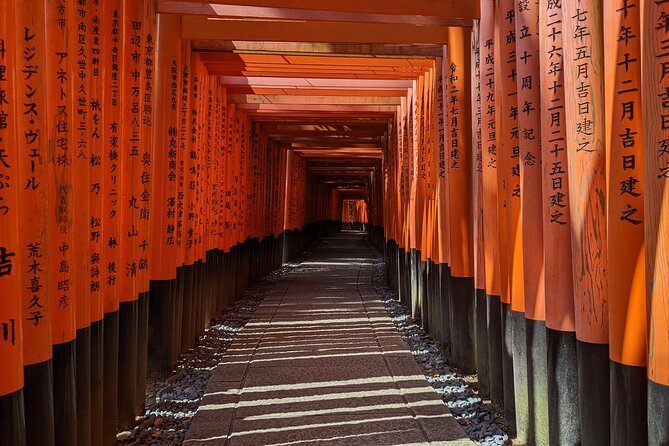
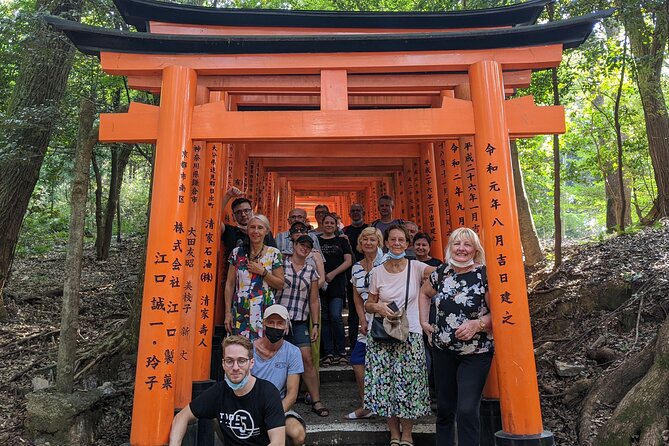
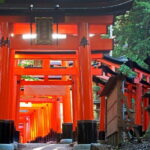
The first hour focuses on Fushimi Inari Taisha, one of Japan’s best-known religious sites. The guide explains the origin of the Inari spirit and points out lesser-known spots around the shrine grounds.
That is a smart way to handle Fushimi Inari. Many people arrive, take a few pictures beneath the torii, and leave with little sense of what the shrine represents. Here, you get context before the route turns toward the rest of Fushimi.
The shrine visit is free, which keeps the tour price focused on guiding and the included admissions. You should understand that the tour does not promise a full climb through every gate on the mountain. The stated stop lasts about one hour, and the emphasis is on selected areas and explanation.
For you, the value depends on how familiar you already are with Fushimi Inari. If you have never visited, this gives you a useful introduction without making the shrine the entire day. If you have already spent several hours there, the surrounding district and historical stops may be the stronger reason to book.
Sake culture at the Gekkeikan Ōkura Sake Museum
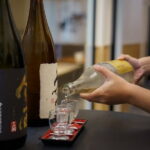
The next major stop is the Gekkeikan Ōkura Sake Museum, housed in an old sake distillery. Gekkeikan is presented as the first distillery to export Japanese alcohol overseas, giving the visit a broader place in Japan’s commercial history.
The museum stop lasts about an hour, and admission is included. That matters because the ticket is one of the clearest additions to the $78.04 price. You are not simply being led past a brewery. You have time to learn how sake production shaped Fushimi and why this district became important for the drink.
Sake lovers will get the most from this section, but you do not need to be a specialist. A good guide can connect the displays to the streets you have just walked and the canals you will see next. The result is more useful than a stand-alone tasting because you understand why sake belongs to Fushimi.
The exact tasting arrangements are not fully specified, so do not book this expecting a large tasting session or a full brewery tour unless the operator confirms it. The clear promise is museum admission and guided attention to sake culture. That is still a strong feature, especially for anyone who wants more than a drink with lunch.
Walking beside Fushimi’s canal
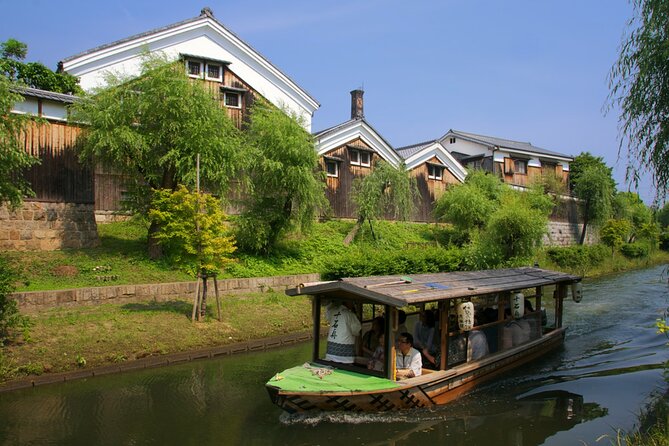
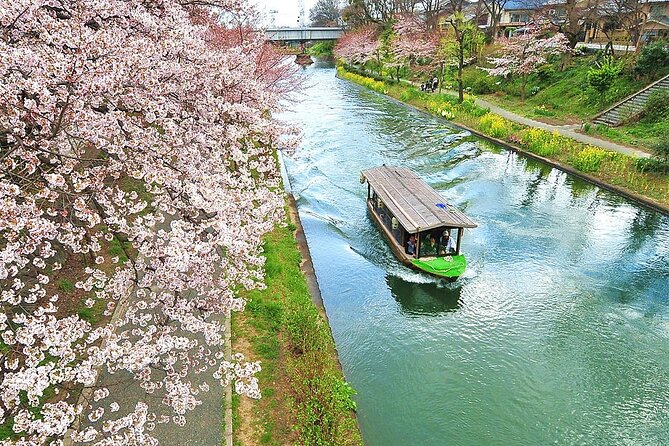
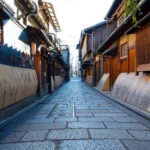
A 30-minute walk follows the Fushimi Canal. This is one of the quieter parts of the route, with traditional streets, outdoor scenery, and seasonal cherry blossoms mentioned as a particular attraction.
The canal gives the tour a needed change of pace after the shrine and museum. It also helps explain why Fushimi developed as a working district. Waterways are not just pretty backdrops here. They connect to the area’s long relationship with transport, trade, and sake.
Do not expect a long nature walk. Thirty minutes is enough to enjoy the setting and hear the guide’s explanation, but not enough for a slow, extended canal excursion. If cherry blossoms are your main reason for coming, timing your visit will matter, since the flowers are seasonal.
I like this stop because it lets you see Fushimi as a neighborhood rather than a collection of attractions. You get a brief look at the pace of the district, and that is part of what separates this route from Kyoto’s more heavily visited central sights.
The Fushimiguchi battlefield and the road to modern Japan
The 15-minute stop at the Battle of Fushimiguchi battlefield trace is short, but the subject is large. Your guide explains one of the battles connected to the beginning of the Meiji Restoration.
This is the sort of stop that benefits from a live guide. A battlefield trace may not offer much to see on its own, yet a clear explanation can show why this location mattered. You are being asked to picture the political and military conflict that helped end the shogunate and set Japan on a new course.
The time is brief, so this section will not satisfy anyone looking for a long military history lecture. That is probably a good thing for a food and neighborhood tour. You get the essential story without losing the day to dates and battle details.
For me, this is one of the route’s best ideas. The tour does not treat Fushimi as only a place for shrine photos and sake. It shows how an ordinary-looking part of Kyoto was connected to a turning point in national history.
A few more Kyoto tours and experiences worth a look

Teradaya Inn and the escape of Sakamoto Ryoma
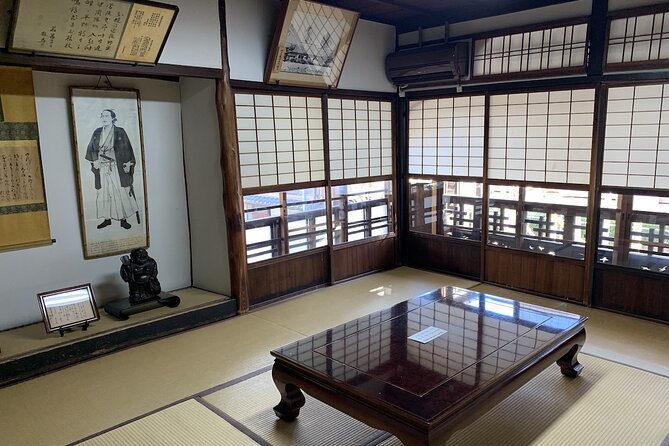
At Teradaya Historic Site, you spend about 30 minutes learning about Sakamoto Ryoma. He was an important figure in Japan’s political transformation and nearly died here when the Shinsengumi attacked.
The site gives the wider conflict a human scale. Instead of thinking only about governments and battles, you hear about one man trying to escape an assassination attempt from his room. That kind of story is easier to remember, especially when you are standing in the place connected with it.
Admission to Teradaya is included, another benefit built into the tour price. The stop is compact, so you should not expect a museum visit lasting half a day. Think of it as a focused historic house visit paired with a strong narrative from the guide.
The guide’s role matters especially here. Previous visitors singled out Remi’s ability to explain the district and help with practical rail questions. If Remi leads your group, you may get that same blend of historical detail and Kyoto navigation help, but guides are subject to availability.
Lunch and shopping on Ryoma Street
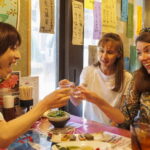
The longest stop is Ryoma Shopping Street, with about 70 minutes to explore food, drinks, and shops. The route describes it as comparable to Nishiki Market, but with more of its local character still in place.
That comparison helps, but keep your expectations sensible. You are not being promised an all-inclusive food crawl with every purchase covered. Lunch is not included, and you pay separately for food, drinks, and souvenirs. The guide can assist with shopping and translation, which is especially useful if you want to order something unfamiliar or understand what you are buying.
One of the strongest practical benefits here is choice. You can use the hour for lunch, browse local products, or ask the guide for help with a particular food purchase. The schedule does not force you into one fixed restaurant or set meal based on the information provided.
The tradeoff is that your final cost can rise. At $78.04 per person, the tour already includes guiding, museum entry, Teradaya entry, one taiyaki, and up to two sweets at the cafe. But lunch and drinks are extra, so budget for those separately.
I would see this stop as guided orientation rather than a free shopping hour. You get help understanding the street and its food, while retaining control over how much you eat and spend.
Taiyaki, traditional sweets, and a final coffee break
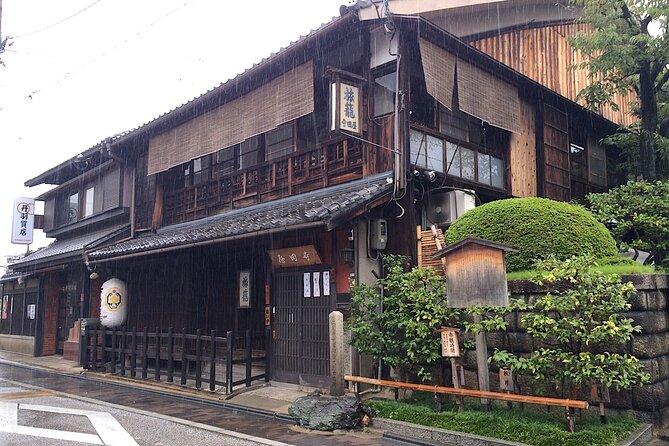
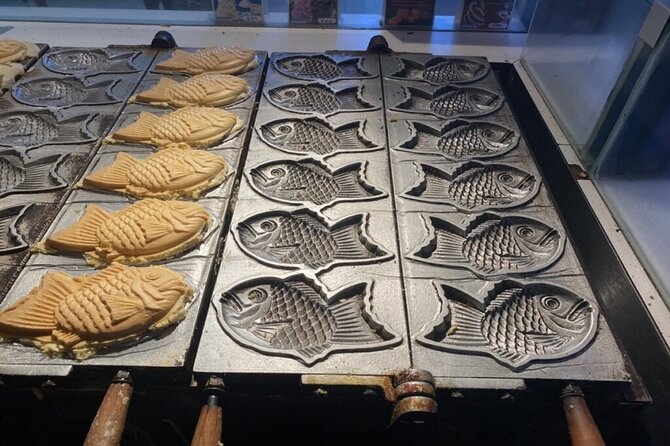
The last food stop is at Fushimikaizo Honten, a traditional Japanese sweets shop. You receive snacks, up to two sweets per person, and the tour includes one taiyaki for each participant.
Taiyaki is a Japanese waffle shaped like a fish, often filled with a sweet center. It gives the day a simple, memorable food detail without pretending to be a full meal. The sweets stop also provides a chance to sit and slow down after several hours on foot.
Coffee and tea are not included. That is easy to overlook, so keep a little extra money available if you want a drink with your sweets.
This ending works well because it is relaxed. The group has already covered religious practice, sake, canals, political history, and lunch options. A small dessert stop gives you time to ask final questions before returning to the train and meeting point.
What the $78.04 price really covers
The price is reasonable if you value a guide who can connect several different parts of Fushimi. You receive about five hours of instruction, a small-group setting capped at 10 people, entry to the sake museum, entry to Teradaya, one taiyaki, and up to two sweets.
The strongest value is not any single snack or admission ticket. It is the local explanation and translation help spread across the day. Fushimi’s sites are easy enough to visit independently, but the links between sake, canals, political conflict, and local shopping are harder to build on your own.
The price is less attractive if you mainly want to see the torii gates or spend the morning eating. You would be paying for history stops that you may not care about, and the major meal remains outside the fee.
I would also remember that the listed price is per person. Shopping, lunch, coffee, tea, and souvenirs are separate. The free cancellation policy allows a full refund when you cancel at least 24 hours before the start time, but changes or cancellations inside that window are not refunded.
Group size, language, and the minimum booking rule
A maximum of 10 people is a useful limit for this kind of walk. You can ask questions without trying to catch a guide’s attention across a large crowd, and assistance at the shopping street should be more manageable.
There is one important booking condition. At least two people must be booked for the tour to run. A single person can reserve, but the session may be canceled if no second person joins. In that case, you are offered another date or experience, or a full refund.
Language also deserves careful attention. All guides speak at least English and Japanese. A French-speaking guide cannot be guaranteed on a shared tour because the group may include several nationalities, and English becomes the main language. French can be used as an additional language if an available guide can alternate, so contact the operator ahead of time if French matters to your decision.
Who will enjoy this Fushimi tour most
I would recommend this experience to you if you want a small-group Kyoto walk with real historical range. It suits people who enjoy learning why a neighborhood matters, not just collecting famous photographs.
It is especially good for:
- First-time visitors who want Fushimi Inari plus more of the surrounding district
- Sake drinkers and anyone curious about Japanese brewing culture
- People interested in the Meiji Restoration, samurai politics, or Sakamoto Ryoma
- Visitors who appreciate help ordering food or navigating local shops
- Solo bookers who can accept the two-person minimum rule
- French speakers who contact the operator in advance about guide availability
I would choose another plan if you want a full shrine hike, a dedicated sake tasting, or an all-inclusive food tour. The day offers a sample of each subject rather than exhaustive time in one area.
Should you book the Kyoto Fushimi Food and History Tour?
Book it if you want Fushimi to make sense as a living district, not just a famous shrine stop. The included admissions, small group, guide support, and combination of sake, food, canals, and political history give the $78.04 fee solid value for the right kind of visitor.
Before booking, confirm your language needs, remember that lunch and drinks cost extra, and note the two-person minimum. If those conditions suit you, this is a well-shaped morning and early afternoon that takes you just beyond Kyoto’s usual sightseeing circuit while keeping the day practical and easy to follow.
FAQ
Where does the tour begin?
The meeting point is the fox statue at the entrance to Fushimi Inari Taisha in Fushimi Ward, near Inari Station. The tour starts at 9:30 a.m.
How long does the experience last?
The tour lasts approximately five hours. The listed stops total about four hours and 55 minutes, with lunch, shopping, and transitions forming part of the day.
Is lunch included in the price?
No. Lunch is not included, but the guide can assist you with food choices and translation on Ryoma Shopping Street.
What food is included?
Each person receives one taiyaki. The sweets stop also includes up to two traditional sweets per person. Coffee and tea cost extra.
Is admission included at the historic sites?
Yes. Admission to the Gekkeikan Ōkura Sake Museum and Teradaya Historic Site is included. Fushimi Inari and the canal and battlefield stops do not require an included admission ticket.
Can I book alone, and can I request a French-speaking guide?
A solo booking is allowed, but at least two people are needed for the tour to run. French cannot be guaranteed on a shared tour, so contact the operator ahead of time to check if a French-speaking guide is available for your date.
More Historical Tours in Kyoto
More Food Experiences in Kyoto
More Fushimi Inari Tours in Kyoto
More tours in Kyoto we've reviewed
Fushimi Inari Tours, compared.
 ★ 4.8Kyoto: Fushimi Inari, Kinkakuji, Bamboo Grove 1 Day Bus TourFrom $122510 minutes - 9 hours
 ★ 5.0Fushimi Inari Hidden Hiking Tour (Private Option Available)From $63
 ★ 4.7Kyoto/Osaka: Nara, Fushimi Inari Taisha, Arashiyama Bus TourFrom $529 - 10 hours
 ★ 4.4Osaka/Kyoto: Arashiyama, Nara & Fushimi Inari Shrine w/LunchFrom $61
 ★ 5.0Kyoto: Nijo, Kinkaku-ji, Arashiyama, Kiyomizu & Fushimi InariFrom $51
 ★ 5.0Kyoto Fushimi-Inari Night Walking TourFrom $43