
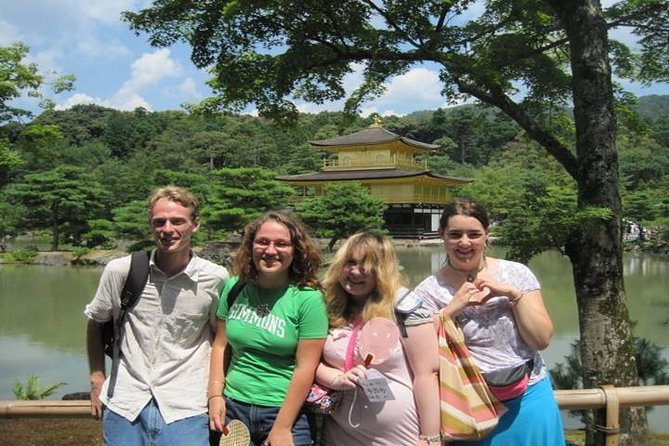
Reviewed · FULL-DAY
Kyoto Full-Day Private Tour (Osaka departure) with Government-Licensed Guide
Kyoto’s great strength is also its main problem: the sights are spread across the city. This private day trip lets you choose three or four places from more than 35 options, then tackle them with a government-licensed English-speaking guide who can lead you through Osaka and Kyoto’s train, subway, and bus systems.
I like the freedom to build a day around your own priorities, and I like the human touch. Guides such as Ichiro, Bell, Haru, Rie, Yuko, and Kiriko have helped families, cruise passengers, and first-time visitors manage busy routes, adjust for tired children, and find suitable meals. The trade-off is simple: eight hours is not enough for Kyoto’s entire menu, so a rushed plan can leave you seeing places rather than enjoying them.
- Choose three or four sights from more than 35 options, from Fushimi Inari and Kiyomizu-dera to Arashiyama and Byodo-in.
- Meet your guide on foot in Osaka, including hotel or cruise-terminal arrangements described by past customers.
- Use public transportation, with fares paid separately and no private vehicle included.
- Build in personal interests, such as temples, imperial villas, food markets, old streets, or geisha districts.
- Plan for a fast day, especially if you want both eastern and western Kyoto.
- Expect guide quality to shape the experience, with strong praise for several guides but one clear warning about communication and pacing.
In This Review
- A private Kyoto day that begins with your priorities
- Getting from Osaka to Kyoto without losing half the day
- Picking the right three or four Kyoto sights
- Fushimi Inari and Tofuku-ji
- Kiyomizu-dera, Higashiyama, and Gion
- Nijo Castle and the Kyoto Imperial Palace
- Nishiki Market and Kennin-ji
- Kinkaku-ji, Ryoan-ji, and Ninna-ji
- Arashiyama and its many layers
- Imperial villas and northern mountain shrines
- What the guide adds beyond directions
- Walking, weather, and the real pace of eight hours
- Who gets the best value from this tour
- Should you book this Osaka to Kyoto day?
- FAQ
- How long is the Kyoto private tour?
- Where does the tour begin?
- Is transportation included?
- How many sights can I choose?
- Are entrance fees included?
- Is lunch included?
- Is this a private activity?
- What happens if bad weather cancels the tour?
A private Kyoto day that begins with your priorities
The choice of sights is the heart of this experience. You are not locked into a standard bus route or a fixed list of photo stops. You can ask for major landmarks, quiet temple grounds, food, imperial history, traditional streets, or a mix.
That flexibility matters because Kyoto has several separate sightseeing zones. Fushimi Inari and Tofuku-ji sit in the southeast. Kiyomizu-dera, Gion, Higashiyama, and Kennin-ji cluster farther north. Arashiyama, Ryoan-ji, Kinkaku-ji, and Ninna-ji occupy the west and northwest. Trying to join all of these in one day is possible only at a gallop.
The advertised format is an approximately eight-hour private activity for your own group. You select three or four stops from the larger menu, and the guide helps turn those choices into a workable route. Transportation, admission, lunch, and personal costs are extra.
The price supplied is $208.04 per person. That is not a bargain if you simply want a ride between two famous temples. It becomes more useful when you value a private guide, help with Japanese transport, advance planning, and the ability to adapt the day to your group.
The experience has a 4.9 rating from 55 reviews, with 98 percent recommending it. That is a strong record, but it should not hide the key variable: your guide. The names assigned can differ, and the best results come when you discuss your must-see places, walking ability, lunch wishes, and return deadline before the day begins.
Getting from Osaka to Kyoto without losing half the day
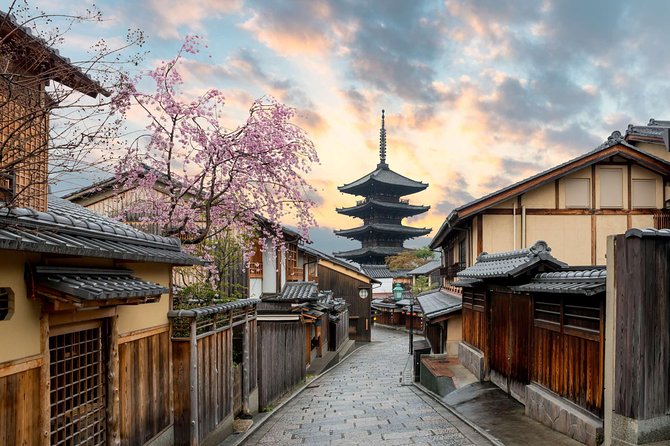
This is a walking tour with a walking pickup. A private vehicle is not included, and public-transport fares are yours to pay. Guides have met people at Osaka hotels and cruise terminals, then traveled with them by train to Kyoto and back.
That transportation help may be the tour’s most practical benefit. Osaka and Kyoto trains are efficient, but station layouts, transfers, buses, and crowded platforms can eat time when you are unfamiliar with them. Guides including Ichiro, Haru, Hiro, and Yuko were specifically praised for making the transport side manageable.
If you are arriving by ship, be exact about your meeting point and return deadline. A cruise passenger described being escorted back to the ship on time, but that success depends on a sensible route and enough buffer for delays. Tell the operator your all-aboard time before the day is planned.
The experience information labels the location as Okayama Prefecture, while the activity itself is described as an Osaka-to-Kyoto tour. That mismatch deserves a quick check before booking. Confirm the precise Osaka pickup area, meeting instructions, and the expected return point.
Picking the right three or four Kyoto sights
The long list of options is useful only if you resist the urge to pick everything. Here is how I would think about the choices.
Fushimi Inari and Tofuku-ji
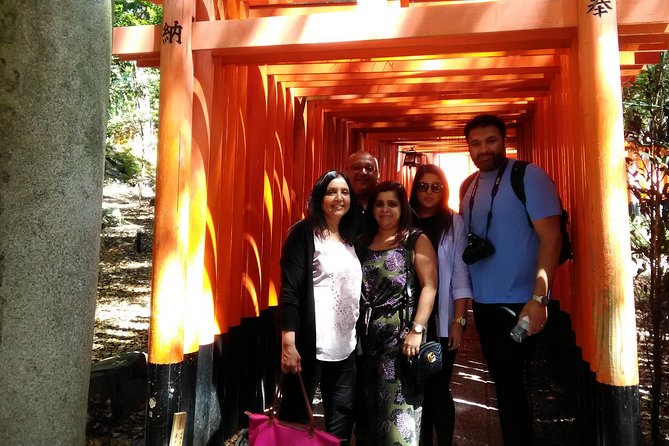
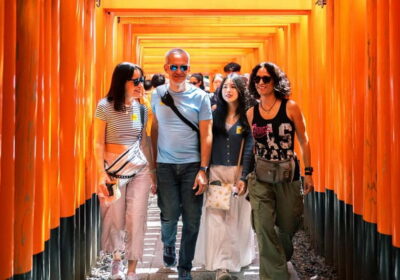
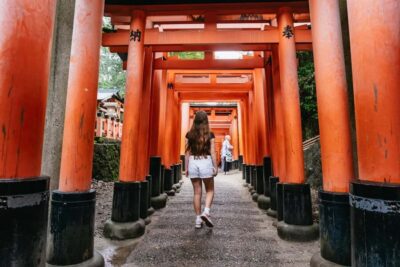
Fushimi Inari-taisha is the classic choice for its rows of vermilion torii gates. A guide can add meaning beyond the famous tunnel: Inari is linked with grain, and fox statues appear as messengers connected with the shrine.
The published stop description gives a short visit, but Fushimi Inari can easily consume much longer if you walk farther up the mountain. Decide in advance if you want the lower shrine and a short section of gates, or a more demanding climb. Tofuku-ji makes a good nearby partner, especially in autumn, when its maple trees and Tsutenkyo Bridge draw attention.
Kiyomizu-dera, Higashiyama, and Gion
Kiyomizu-dera is one of Kyoto’s essential temples, set above the eastern side of the city. A guide can point out details in the buildings and explain the temple’s place in Japanese culture, rather than leaving you to follow the crowd and take photographs.
Pair it with Higashiyama if you want old Kyoto streets, wooden buildings, and traditional shops. Gion adds narrow lanes and an introduction to geisha customs and rituals. The route may also include Pontocho and Miyagawacho, two districts with their own atmosphere.
This is a strong combination for a first visit, but it involves walking on slopes and through busy lanes. One family guide adjusted the day to suit a young daughter’s stamina, while another guide helped a group that was not prepared for the amount of walking. Tell your guide early if you need frequent pauses.
Nijo Castle and the Kyoto Imperial Palace
Nijo Castle offers a direct connection to the Tokugawa shoguns. Built in 1603 as Tokugawa Ieyasu’s Kyoto residence, it is a UNESCO World Heritage site and a good choice if political history interests you.
The Kyoto Imperial Palace gives you another side of power. It was the Imperial Family’s residence until 1868, when the emperor and capital moved to Tokyo. The palace sits in the spacious Kyoto Imperial Park, which also includes the Sento Imperial Palace and other sights.
These two places make a history-focused day, though both require admission fees. The palace grounds are broad, so allow time for walking rather than treating it as a quick photo stop.
Nishiki Market and Kennin-ji
Nishiki Market is Kyoto’s food corridor, a five-block shopping street lined with more than 100 shops and restaurants. You can browse seasonal foods, pickles, Japanese sweets, dried seafood, sushi, cookware, and knives.
It is a good lunch area, but the market is narrow and busy. Your guide can help explain unfamiliar foods and suggest a place to eat. One guide recommended a traditional Japanese restaurant at the end of the day, and another helped a group combine the market with temples and a bamboo-forest walk.
Kennin-ji sits close to Hanamikoji and Shijo streets. Its dry gardens offer a quiet pause from the surrounding activity, and it is often described as Kyoto’s oldest Zen temple. This pairing works well for food, traditional streets, and a calmer temple visit.
Kinkaku-ji, Ryoan-ji, and Ninna-ji
Kinkaku-ji, the Golden Pavilion, is one of Kyoto’s most recognizable sights. Its upper two floors are covered in gold leaf and reflect over a pond. The setting is striking, but the route through the grounds is organized for viewing, not wandering wherever you wish.
Ryoan-ji offers a very different experience, with its famous Zen rock garden. Its fifteen stones are arranged in groups over a rectangular bed of pebbles, though not all are visible from any single viewpoint. It rewards a slower look.
Ninna-ji adds imperial connections and a five-story pagoda. It was founded in 888 by an emperor, and members of the Imperial Family served as head priests for centuries. These three temples are geographically sensible together, but the day can feel temple-heavy. Add Nishiki or Gion if you want a change of pace.
Arashiyama and its many layers
Arashiyama is more than a bamboo grove. The central area includes Togetsukyo Bridge, river views, shops, restaurants, and Tenryu-ji, the district’s leading Zen temple and a UNESCO World Heritage site.
The bamboo paths are pleasant, especially when the stalks sway in a light breeze, but the famous section can be crowded. Okochi Sanso Garden offers a quieter paid option near the back of the grove, with gardens, tea houses, and mountain views. The villa buildings are viewed from outside.
If you want a more reflective Arashiyama day, consider Jojakko-ji, Nisonin, Gio-ji, Adashino Nenbutsu-ji, or Otagi Nenbutsu-ji. Gio-ji is known for moss and maple trees. Adashino Nenbutsu-ji has hundreds of stone figures for the dead, while Otagi Nenbutsu-ji has 1,200 more recent stone rakan statues, each with a different expression.
Tenryu-ji appears more than once in the available choices, as do Daikaku-ji, Katsura Imperial Villa, and Shugakuin Imperial Villa. Treat those repeated entries as one attraction, not extra stops.
Imperial villas and northern mountain shrines
Katsura Imperial Villa is a fine choice for garden design and traditional imperial architecture. Visits require joining a tour, buildings are viewed from outside, and photography is allowed only from designated spots. English tours are available.
Shugakuin Imperial Villa spreads across upper, middle, and lower villa areas, with gardens, buildings, and working farmland leased to local farmers. It is a more spacious choice and needs careful timing.
Kibune and Kurama offer a break from central Kyoto. Kibune sits in a forested northern valley around Kifune Shrine, dedicated to water and rain. Its water fortune reveals a message when you dip the paper in water. Kurama is known for Kurama-dera and Kurama Onsen, where day-use bath prices are listed separately.
Byodo-in in Uji is another special option, famous for its Phoenix Hall, a National Treasure and UNESCO World Heritage site. Extra travel time is expected, so it is a poor match with a long list of central Kyoto sights.
What the guide adds beyond directions
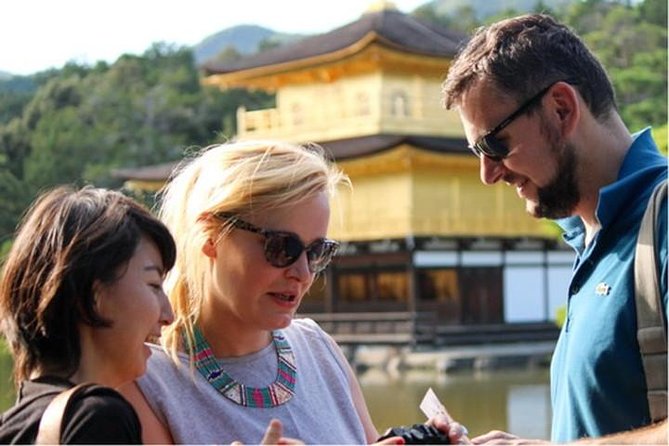
A licensed guide can do more than get you to the ticket gate. The best guides described in the supplied feedback helped shape routes before the day, explained history at each site, adjusted the pace, and handled practical details.
Ichiro was praised for arranging train travel and fitting several attractions into a short day. Bell adapted a family outing to a child’s stamina. Rie helped a couple see more of Kyoto than they could have managed alone and explained Japanese culture and history.
Haru and Kiriko were especially useful for cruise passengers. They met groups at the ship, led them to Kyoto by train, and brought them back at the end. Kiriko also helped a group visit old streets, markets, and the bamboo forest, with a fortunate geisha sighting in Gion.
Emiko helped a family combine its own choices with guide suggestions, including a Samurai and Ninja Museum visit before Nijo Castle and a traditional meal. Akira was praised for a relaxed manner and for completing a full schedule with family cooperation.
There is one important warning. One outing suffered from poor communication about the plan, unclear travel times, limited historical explanation, and a rushed pace in rainy weather. The operator responded that guides are licensed and that it would address standards. You can reduce this risk by confirming the route, asking the guide to explain the day as you go, and speaking up if the group is moving too fast.
Walking, weather, and the real pace of eight hours
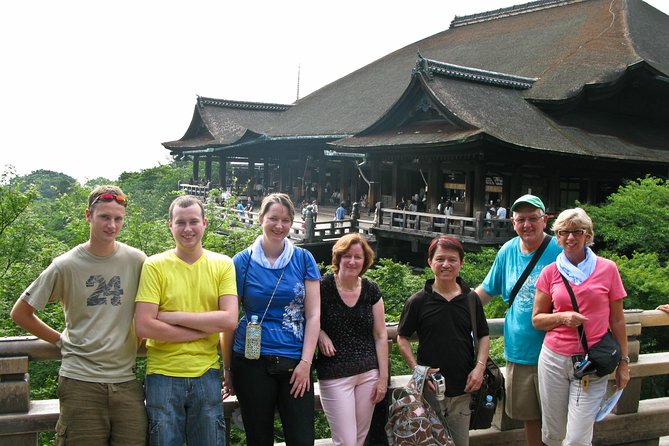
This is not a sightseeing vehicle with short walks at each stop. You meet the guide on foot, use public transportation, and walk through temple grounds, market lanes, old districts, and possibly hillside areas.
Summer heat was a concern in several outings, and one guide worried about people tiring in hot weather. Rain also made one day harder, especially when the group struggled to hear the guide while walking. The experience requires good weather, and the operator offers another date or a full refund if poor weather causes cancellation.
Wear comfortable shoes and keep your day realistic. Fushimi Inari, Kiyomizu-dera, Higashiyama, Arashiyama, and the imperial villas all have different walking demands. A private guide can adjust the plan, but cannot make a long city day physically effortless.
Admission fees are not included at Kiyomizu-dera, Nijo Castle, Kyoto Imperial Palace, Ginkaku-ji, Nanzen-ji, Tofuku-ji, Kinkaku-ji, Ryoan-ji, Arashiyama temples, the imperial villas, and many other listed sites. Transportation and lunch are also extra, so the $208.04 price is the guide service and planning framework, not the day’s full cost.
Who gets the best value from this tour
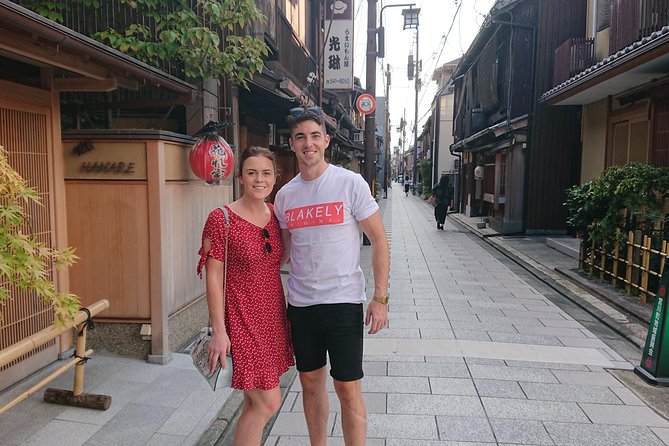
I would choose this for a first Kyoto visit from Osaka, especially if you have only one day and feel uneasy about local transport. It also suits families, cruise passengers, and small private groups with different interests.
It is a good fit if you want to combine famous sights with local food, old districts, or a less familiar temple. The private format means you can ask for a slower pace, a particular meal, or a focus on gardens and imperial history.
I would not choose it if you want a leisurely day at one or two temples, dislike public transportation, or expect a private car. I would also avoid selecting distant sites on opposite sides of Kyoto unless you accept shorter visits and more time in transit.
The activity allows most people to participate, and service animals are allowed. Still, the walking format means you should discuss mobility needs before booking. Group discounts are available, and only your own group participates, but separate tour groups cannot be combined.
Cancellation is free up to 24 hours before the start time for a full refund. Changes or cancellations inside that window are not accepted or refunded under the stated terms.
Should you book this Osaka to Kyoto day?
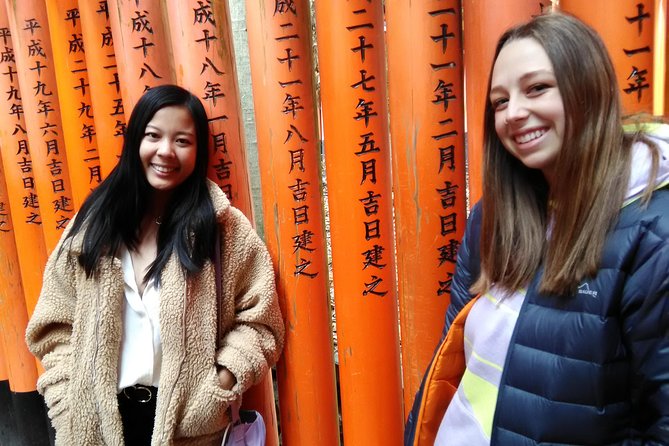
Book it if your priority is seeing a carefully chosen slice of Kyoto without spending your first hours puzzling over train lines and city districts. The strongest value comes from the guide’s route planning and local explanation, not from the number of stops.
For a balanced first day, I would choose Fushimi Inari, Kiyomizu-dera or Higashiyama, Nishiki Market, and either Gion or Nijo Castle. For a quieter day, choose Arashiyama with Tenryu-ji and one or two smaller temples, rather than adding half the city.
Before paying, confirm the Osaka pickup point, return arrangements, guide language, walking pace, chosen attractions, entrance costs, and whether your preferred sites fit into eight hours. With those details settled, this is a practical private introduction to Kyoto. Just do not mistake a long menu of options for a promise to see them all.
FAQ
How long is the Kyoto private tour?
The experience lasts approximately eight hours.
Where does the tour begin?
Pickup is offered on foot within a designated area of Osaka. Guides have also met participants at Osaka hotels and cruise terminals, but you should confirm the exact meeting point before the tour.
Is transportation included?
No. The tour uses public transportation, and transportation fees are not included. A private vehicle is not provided.
How many sights can I choose?
The tour includes a customizable plan using three or four sites from a list of more than 35 points of interest.
Are entrance fees included?
Entrance fees are generally not included. The guide’s entry fees are covered only for sights specified under the experience details.
Is lunch included?
No. Lunch and other personal expenses are separate.
Is this a private activity?
Yes. Only your group participates, and separate tour groups cannot be combined.
What happens if bad weather cancels the tour?
The experience requires good weather. If the operator cancels because of poor weather, you can choose another date or receive a full refund.
Full-Day, compared.
 ★ 4.5Kyoto: Full-Day English Guided Tour of Kyoto’s HighlightsFrom $88
 ★ 4.6Kyoto: Full-Day Guided Bus Tour to Top Highlights & TicketsFrom $50
 ★ 5.05 Top Highlights of Kyoto Full Day Bike Tour (E-bike option)From $172
 ★ 5.0Full Day Biking Tour Exploring the Best of KyotoFrom $119
 ★ 5.0Kyoto Private Car Tour – Full Day with Local Guide & Nara OptionFrom $170
 ★ 5.0Full Day Guided Tour to Kyoto and Nara from Osaka by VanFrom $96