
Reviewed · E-BIKES
5 Top Highlights of Kyoto Full Day Bike Tour (E-bike option)
Kyoto’s major sights are spread across the city, and this tour links them by bicycle in one ambitious day. You ride as far as 27 miles, or 44 kilometers, moving from Arashiyama’s bamboo to Fushimi Inari’s red gates, Gion, Kiyomizu-dera, and the Golden Pavilion. It is a fast, active way to get a broad feel for Kyoto.
I like the small maximum of eight people, which gives guides such as Rob, Cass, Peter, and Ray room to watch the group and adjust the pace. I also like the mix of famous temples, old neighborhoods, riverside paths, and quieter local streets. The trade-off is clear: this is a full day of riding and walking, so you need decent fitness. An e-bike helps, especially in heat or on inclines, but it costs extra.
In This Review
- Key points to know before you book
- Why cycling works so well in Kyoto
- Starting among the bamboo in Arashiyama
- Following the red torii at Fushimi Inari
- Seeing old Kyoto around Gion
- Kiyomizu-dera and Kyoto’s famous city view
- The Golden Pavilion at Kinkakuji
- The guides are a major part of the experience
- Standard bike or e-bike?
- What the $172.44 price includes
- Fitness, weather, and useful preparation
- Is this Kyoto bike tour right for you?
- FAQ
- Where does the Kyoto bike tour start?
- What time does the tour begin?
- Where does the tour finish?
- How long does the tour last?
- How far might I cycle?
- Is an e-bike included?
- What sights are included?
- Is lunch included?
- How many people can join the tour?
- What is the minimum age?
- Can I cancel for a refund?
- What happens if bad weather cancels the tour?
- Do I need to report food allergies?
Key points to know before you book
- Five major Kyoto sights in one day: Visit the bamboo forest, Fushimi Inari, Gion, Kiyomizu-dera, and Kinkakuji.
- Up to 44 kilometers by bicycle: You cover serious ground, often more efficiently than by bus or car.
- Choose your bike carefully: A standard bicycle is included, while an e-bike requires an extra fee and confirmation.
- Small groups matter: The tour accepts no more than eight people, allowing closer contact with the guide.
- Lunch and water are supplied: You receive a light lunch, bottled water, snacks, a helmet, and admission fees.
- Start and finish in Arashiyama: Meet at Saga-Arashiyama Station at 8:30 a.m., then return to the same meeting point.
Why cycling works so well in Kyoto
Kyoto is not a city where the main sights sit neatly around one central square. Arashiyama is in the west, Fushimi Inari is south, Kiyomizu-dera sits on the eastern hills, and Kinkakuji is northwest of the center. Public transport can reach these places, but transfers and road traffic eat into a short visit.
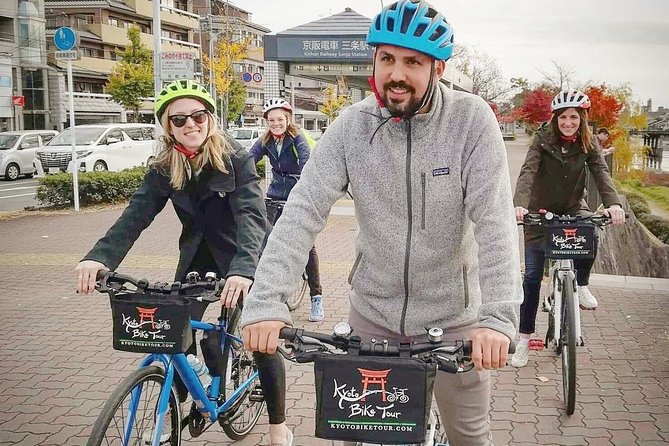
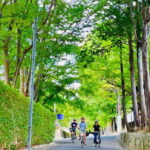
A bicycle gives you a useful middle ground. You avoid sitting in traffic, see ordinary streets between the headline sights, and get a better sense of how the city changes from one district to the next. The route includes urban riding and paved paths beside the river, along with quieter areas outside the busiest tourist zones.
That efficiency comes with a physical cost. You are not taking a gentle sightseeing spin around one neighborhood. The route can reach 44 kilometers, and each stop includes walking, standing, stairs, or time on your feet. Several people found the standard bikes manageable, while others preferred the extra help of an e-bike. If you ride regularly, a regular bike may be fine. If you are unsure, the e-bike is the safer choice, provided you arrange it in advance.
Other cycling tours in Kyoto
Starting among the bamboo in Arashiyama
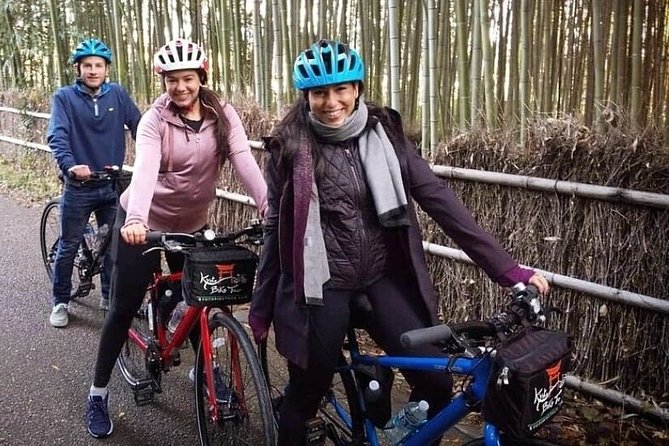
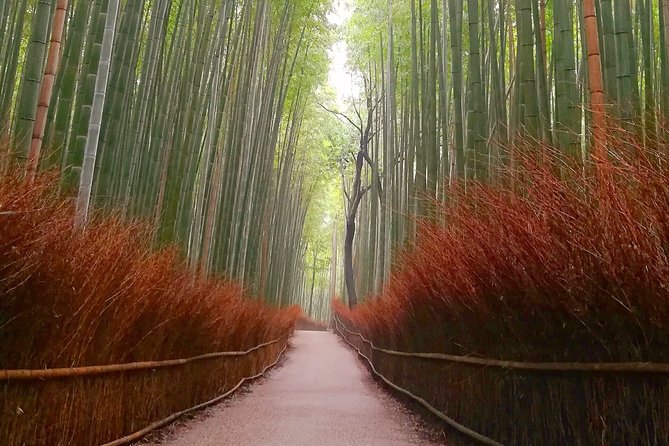
The day begins at Saga-Arashiyama Station at 8:30 a.m. This is a practical starting point because Arashiyama is already one of Kyoto’s great sightseeing areas. After receiving your bicycle and helmet, you head toward Bamboo Forest Street.
The bamboo grove is famous for its tall green stalks and unusual sound. Wind moving through the bamboo creates one of Japan’s best natural soundscapes, though the path can feel busy at popular times. The scheduled visit is about 20 minutes, so expect a focused walk and time for photographs rather than a long, quiet forest outing.
The short stop also shows how this tour works. You ride between major districts, then leave the bike to see each place on foot. That keeps the day moving, but it means you should not expect extended free time at every attraction.
Arashiyama also gives you an early look at the tour’s broader appeal. The experience is not limited to temple courtyards. You may pass rice fields, streams, gardens, and residential streets as the guide connects the well-known sights with daily Kyoto life.
Following the red torii at Fushimi Inari
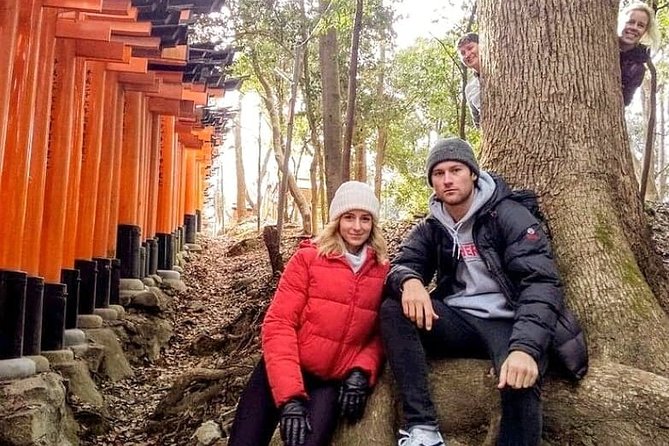
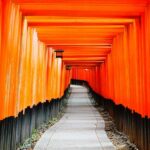
From Arashiyama, the route continues toward Fushimi Inari-taisha Shrine. The stop lasts about 30 minutes, enough to walk into the famous tunnel of red torii gates and take photographs.
Fushimi Inari’s gates climb for a long distance up Mount Inari, so this tour does not attempt to walk the entire shrine trail. Your visit is a compact introduction to the lower section, where the tightly spaced gates create the classic Kyoto image.
This is one of the places where a guide adds real value. Without context, Fushimi Inari can become a quick photo stop. With explanation, you can better understand why the shrine is important and how it fits into Japanese religious life. The short schedule keeps the route realistic, but anyone hoping to hike high into the mountain should plan a separate visit.
Seeing old Kyoto around Gion
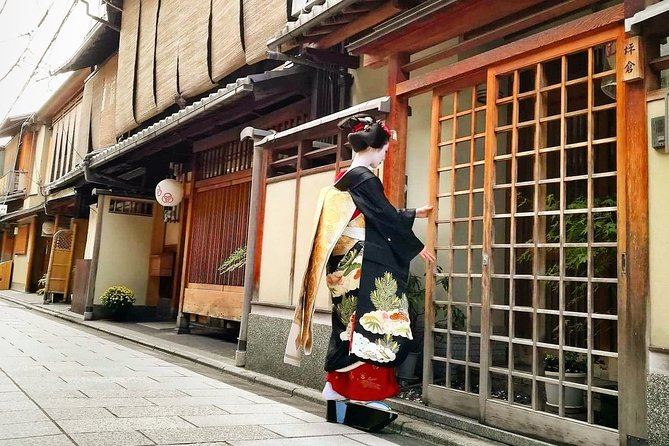
Gion is next, with roughly 20 minutes to explore the historic district. This part of the day is less about a single admission gate and more about streets, architecture, and atmosphere.
Gion is associated with geisha and maiko, and the guide can help you understand the difference between the district’s public image and its everyday role. You may walk through old lanes and see traditional buildings, but keep your camera and behavior respectful. This is a working neighborhood, not a stage set.
The brief stop is useful for orientation, though it will not satisfy anyone wanting a long look at Gion’s lanes, teahouses, or nearby shops. Think of it as a concise introduction between longer rides and temple visits.
Kiyomizu-dera and Kyoto’s famous city view
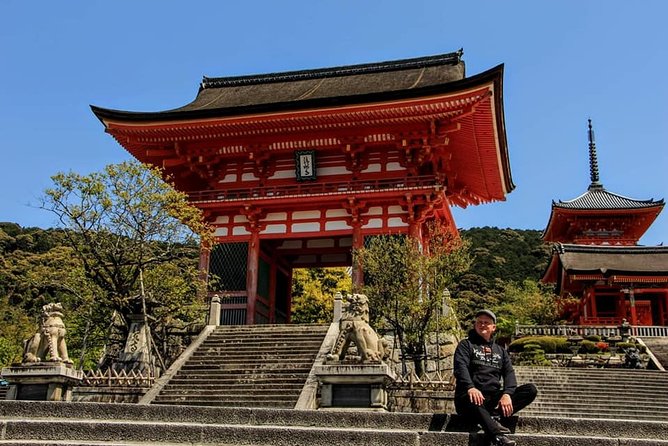
Kiyomizu-dera receives the longest stop, about one hour. That makes sense. The temple complex is large, the approach is uphill, and the view toward Kyoto is among the city’s most memorable.
You leave the bicycle behind and walk through one of Kyoto’s oldest temples. The visit includes admission, so you do not need to handle that separately during the day. Allow for steps, crowds, and a good deal of standing. Even with an e-bike, this section is on foot.
The temple is especially rewarding because it combines religious buildings with a broad view across the city. The guide’s role here is more than pointing out a famous platform. Guides Rob, Cass, Peter, and Ray are praised for explaining Japanese culture, philosophy, history, and present-day life, giving the buildings a clearer place in the story of Kyoto.
One practical point: you will want water and sun protection here, particularly in warm weather. The tour supplies bottled water, but sunscreen and a hearty breakfast are your responsibility.
A few more Kyoto tours and experiences worth a look
The Golden Pavilion at Kinkakuji
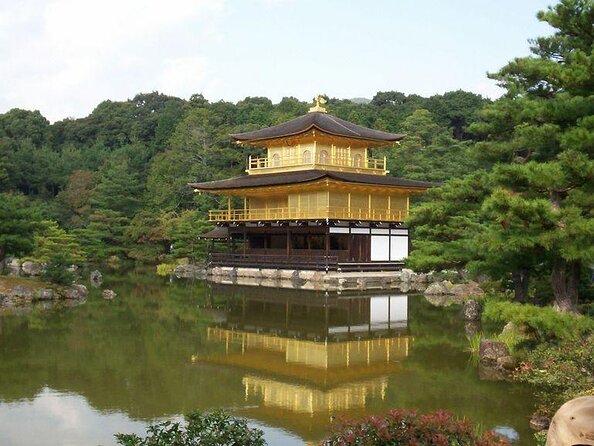
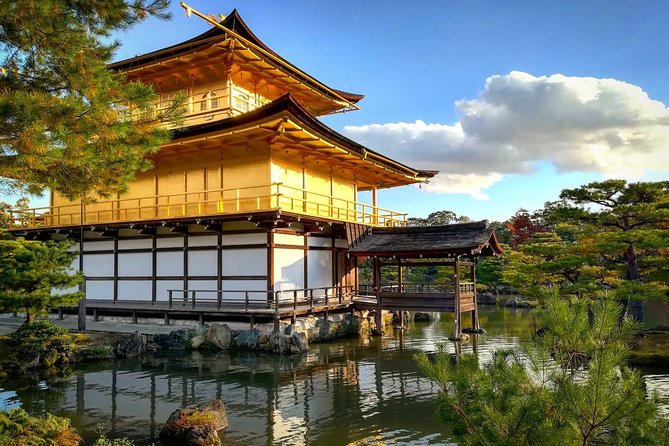
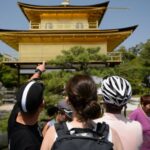
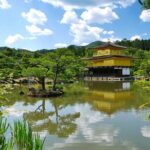
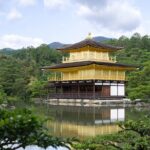
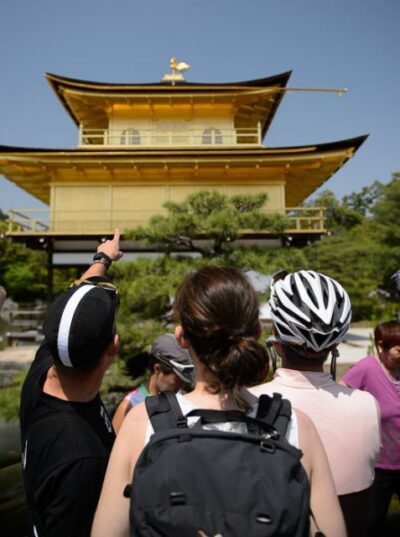
The final major stop is Kinkakuji Temple, commonly known as the Golden Pavilion. You have about 30 minutes to see the pavilion and its garden setting.
The gold-covered building is one of Kyoto’s most recognizable sights. It is photogenic from the first viewpoint, but the visit follows a set path rather than offering a long period of private wandering. This is another place where the guide can provide context that a photograph cannot.
By placing Kinkakuji late in the day, the tour gives you a strong final sight before returning to Arashiyama. You will likely be tired by then, especially after the temple walks, but the stop is short enough to remain manageable.
The guides are a major part of the experience
The tour uses native English-speaking bilingual guides, and the guide can shape the day considerably. Rob is repeatedly praised for calm road leadership, clear signals, cultural explanation, and careful attention to riders. His background living in Japan for many years gives his commentary a wider frame than a simple list of dates.
Cass is known for friendly service, safe riding, local insight, and photography. Peter is described as patient, engaging, and good at explaining culture and history, while Ray brings long-term experience in Japan and a relaxed sense of humor.
Those details matter because city cycling can make people nervous. A good guide must manage intersections, pedestrians, changing surfaces, and group spacing while still talking with the people behind him. The strongest part of this tour is not only the route. It is having someone who can keep the day orderly and help you feel comfortable on unfamiliar streets.
The small-group limit of eight is another advantage. You are less likely to be lost in a large pack, and the guide has a better chance of noticing when someone needs a slower pace, more water, or a short pause.
Standard bike or e-bike?
The regular bicycle is included in the listed price of $172.44 per person. An e-bike costs extra and requires confirmation, so do not assume one will be waiting unless you request it and receive approval.
The e-bike is worth serious consideration. The route is long, the day may be hot, and Kyoto includes inclines around temple districts. An e-bike can conserve energy for the sights and walking portions. It can also make the tour more comfortable for a mixed group, where one person rides often and another does not.
That said, the standard bikes are not automatically a poor choice. Several riders who were used to cycling found they did not need electric assistance. If you ride regularly and feel comfortable with a full day outdoors, the regular option may be enough.
I would choose the e-bike if you are uncertain about your stamina, visiting during hot weather, or traveling with family members who have different cycling abilities. Since the extra charge and availability are handled separately, arrange it before the tour date.
What the $172.44 price includes
The price is not bargain-level, but it covers more than bicycle rental. You receive the bicycle, helmet, bottled water, snacks, a light lunch, admission fees, and an English-speaking bilingual guide. For a full day that links five distant sights, those inclusions make the cost easier to justify.
You are also paying for route planning and local navigation. Reaching all five places independently in one day would require careful timing, several transport decisions, and a willingness to manage Kyoto’s busy roads and crowded approaches. A bus or taxi-based day may cost less or more depending on your choices, but it will not give you the same view of the city between attractions.
The value drops if you dislike long rides or plan to spend most of your time inside the temples. This tour is best understood as a high-coverage introduction to Kyoto, not a slow, specialist temple tour.
Fitness, weather, and useful preparation
The stated fitness level is moderate, but the distance deserves attention. You may cycle for several hours, then walk through five separate attractions. Reviews describe the day as tiring but worthwhile, and that is the right expectation.
Come with a substantial breakfast. Wear comfortable clothing, sunscreen, and shoes suitable for walking. Bring any personal food you need, and report food allergies or dietary restrictions at booking so the lunch and snacks can be planned properly.
The tour depends on good weather. If poor conditions force cancellation, you are offered another date or a full refund. The same applies if the minimum number of participants is not reached. You can cancel for a full refund up to 24 hours before the start time, but changes or cancellations inside that window are not accepted.
You must be at least 16 years old. Hotel pickup and drop-off are not included, so plan your way to Saga-Arashiyama Station. The activity ends back at the meeting point, which makes it easier to continue from Arashiyama afterward if you still have energy.
Is this Kyoto bike tour right for you?
I would book this tour if you have only one full day in Kyoto and want to see the city’s major sights without spending that day on trains, buses, and traffic-choked roads. It is also a strong choice if you enjoy active sightseeing and want local explanation along the way.
Choose the e-bike if you have any doubt about completing 44 kilometers, especially in warm weather. Choose a different style of tour if you want long, unhurried visits at each temple, a full hike through Fushimi Inari, or a quiet morning in the bamboo forest.
For fit riders, curious first-time visitors, and families with members aged 16 or older, this is an efficient and memorable introduction to Kyoto. Just arrive ready for a real day on two wheels, not a casual ride.
FAQ
Where does the Kyoto bike tour start?
The tour starts at Saga-Arashiyama Station, at 11-1 Sagatenryuji Kurumamichicho, Ukyo Ward, Kyoto.
What time does the tour begin?
The scheduled start time is 8:30 a.m.
Where does the tour finish?
The activity ends back at the meeting point at Saga-Arashiyama Station.
How long does the tour last?
The tour lasts approximately seven to eight hours.
How far might I cycle?
The route can cover up to 27 miles, or 44 kilometers.
Is an e-bike included?
No. A standard bicycle is included, while an e-bike requires an additional fee and confirmation.
What sights are included?
The route includes Bamboo Forest Street, Fushimi Inari-taisha Shrine, Gion, Kiyomizu-dera Temple, and Kinkakuji Temple.
Is lunch included?
Yes. A light lunch, snacks, and bottled water are included.
How many people can join the tour?
The maximum group size is eight travelers.
What is the minimum age?
Participants must be at least 16 years old.
Can I cancel for a refund?
Yes. You can cancel at least 24 hours before the start time for a full refund. Cancellations made less than 24 hours before the start time are not refunded.
What happens if bad weather cancels the tour?
You will be offered a different date or a full refund.
Do I need to report food allergies?
Yes. You should notify the provider of food allergies or dietary restrictions when booking.
More Full-Day in Kyoto
More E-Bikes in Kyoto
More Cycling Tours in Kyoto

More tours in Kyoto we've reviewed



E-Bikes, compared.
 ★ 5.0Hidden Kyoto E-Biking tourFrom $116
 ★ 5.0E-Bike Tours of the highlights of Kyoto!!!From $109
 ★ 4.9Kyoto: Memory Kyoto E-Bike TourFrom $105
 ★ 4.9Kyoto: City Secrets eBike TourFrom $1273h 45m
 ★ 5.0Pedal Adventure Kyoto’s iconic landmarks on an e-bike tourFrom $86
 ★ 5.0Arashiyama Bamboo Forest E-Biking TourFrom $116