
Reviewed · COOKING CLASSES
Private Japanese Home Cooking Class in Kyoto with Michiyo
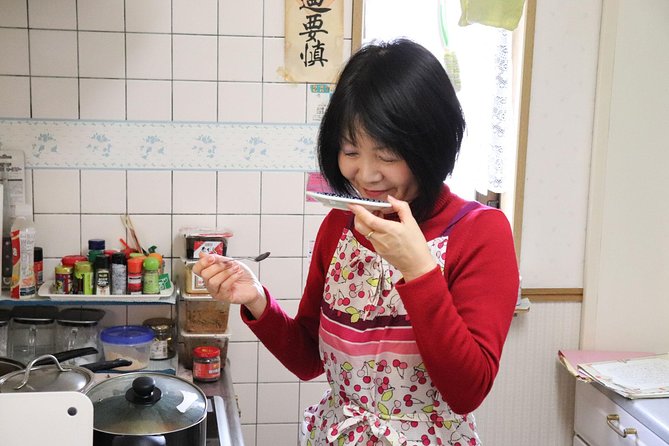
The best part of this experience is the setting: you cook in Michiyo’s private home, not in a polished cooking studio built for tourists. She and her husband welcome you into their kitchen, explain the menu, and share a meal that includes the food you helped prepare. I especially like the short station pickup and the focus on seasonal vegetables. You are not left to find an unfamiliar address, and the ingredients connect the meal to the time of year.
I also like that the class teaches two useful foundations, dashi and chirashi sushi, rather than a string of disconnected dishes. The main consideration is location: the meeting point is Otsukyo Station in Otsu, not central Kyoto, so you need to plan the train ride carefully. The home setting also means a dog, El the dachshund, is part of the household.
In This Review
- Key points at a glance
- Why a private kitchen beats a standard cooking studio
- Meeting Michiyo at Otsukyo Station
- Starting with seasonal ingredients and the menu
- Making dashi, the base of Japanese cooking
- Preparing chirashi sushi in a wooden bowl
- Sitting down for a meal with the hosts
- How the three-hour schedule works
- What the $86 price includes
- Who will enjoy this home cooking experience
- Booking, timing, and cancellation details
- Should you book Michiyo’s class?
- FAQ
- Where does the Japanese cooking class take place?
- Is transportation included?
- How long does the experience last?
- What will I learn to cook?
- Is food and drink included?
- Is this a private activity?
- Can I request dietary accommodations?
- Is the experience suitable for someone who does not like dogs?
- What is the cancellation policy?
Key points at a glance
- A real home in Otsu: Michiyo picks you up at Otsukyo Station and drives you three minutes to her house.
- Two core Japanese techniques: You learn to make dashi stock and prepare sushi rice for chirashi sushi.
- A private, personal class: Only your own group takes part, with a cooking lesson and meal lasting about three hours.
- Seasonal ingredients: Michiyo uses fresh vegetables sourced from local suppliers, and the menu changes with the season.
- Food paired with drinks: The experience includes one to two glasses of local alcohol, with non-alcoholic drinks available.
- A strong fit for curious cooks: You leave with practical ideas and recipes you can try at home, not just photographs of a meal.
Why a private kitchen beats a standard cooking studio
Cooking in a local home changes the tone from a formal lesson to a shared afternoon or evening. Michiyo and her husband host you in their own space, so the meal comes with conversation, household details, and a closer look at Japanese hospitality.
That privacy matters. Your group is not mixed with strangers, and Michiyo can give attention to your questions and cooking technique. The class is suitable for couples, families, or small groups who prefer a quieter activity over a large demonstration.
Michiyo’s husband also takes part in the welcome and meal. Both are described as speaking excellent English, which should make it easier to ask about ingredients, preparation, and daily food customs. The focus is not simply on following a recipe. You get a chance to understand why certain steps matter.
The home is in Otsu, in Shiga Prefecture, near Lake Biwa and east of Kyoto. The meeting point is Otsukyo Station on the JR Kosei Line. That is an important detail for planning: the experience is marketed as a Kyoto-area activity, but the pickup and home visit happen in Otsu.
If you're still narrowing it down, here are other tours in Otsu we've reviewed.
Meeting Michiyo at Otsukyo Station
The experience begins at Otsukyo Station, at 2 Chome-8 Ojigaoka, Otsu. Michiyo picks you up there in her car, then drives about three minutes to her home.
I like this arrangement because it removes the hardest part of a private home visit: finding the right house. You do not need to navigate an unfamiliar residential area while checking a phone map. Still, you should treat the station meeting time as important. Hotel pickup and drop-off are not included, so you must get yourself to Otsukyo Station and return there at the end.
The short car ride is practical rather than part of the sightseeing. It gets you from the railway station to the kitchen quickly, leaving most of the three-hour visit for cooking and eating.
If you are staying in central Kyoto, allow time for the train connection and check the JR Kosei Line before you go. The information provided does not give a full travel time from central Kyoto, so I would not try to squeeze this into a tight schedule. Give yourself room for a missed train or a slower connection.
Starting with seasonal ingredients and the menu
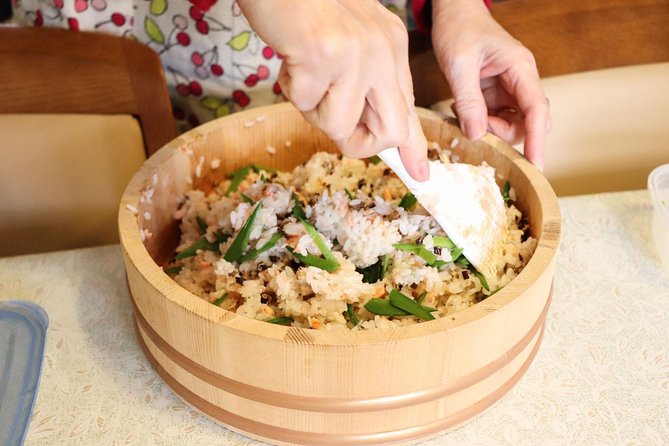
At the house, Michiyo introduces the menu for the day. The dishes depend on the season, since she prefers fresh vegetables from local sources. This is one of the more useful parts of the class for cooks: Japanese home food changes with the calendar, and the ingredients on your table may reflect what is available at that time of year.
The seasonal approach also means you should not expect one fixed menu every time. The central lessons are dashi and chirashi sushi, but the surrounding dishes can vary. If you have food allergies, restrictions, or strong dislikes, add them to the special requirements field when you book.
The menu introduction gives you a frame for the rest of the class. Instead of chopping ingredients without context, you learn what you are making and how the parts will come together at the meal.
Making dashi, the base of Japanese cooking
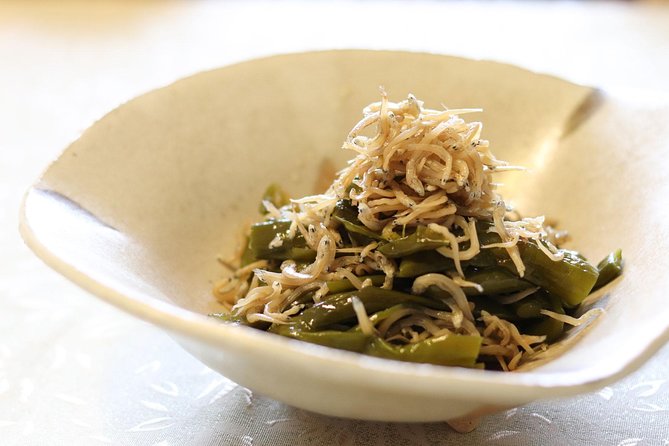
The cooking portion lasts about an hour and a half. One of the key lessons is dashi, the stock that forms the base for many Japanese dishes.
Dashi can look simple, but it carries much of the flavor in Japanese cooking. Learning it here gives you a technique you can use beyond this one meal. Michiyo shares the methods she has refined over the years, so pay attention to timing, handling, and the small choices that may not appear in a recipe.
This is a hands-on class. You are not only watching Michiyo work from across a counter. The aim is to help prepare the meal, with guidance as you go. That makes the experience a better fit for someone who wants practical cooking skills rather than a food presentation.
The class may be especially useful if you cook at home and want to recreate Japanese dishes after your trip. The dashi lesson gives you a foundation, while the sushi rice lesson shows how texture and seasoning affect the finished dish.
Preparing chirashi sushi in a wooden bowl
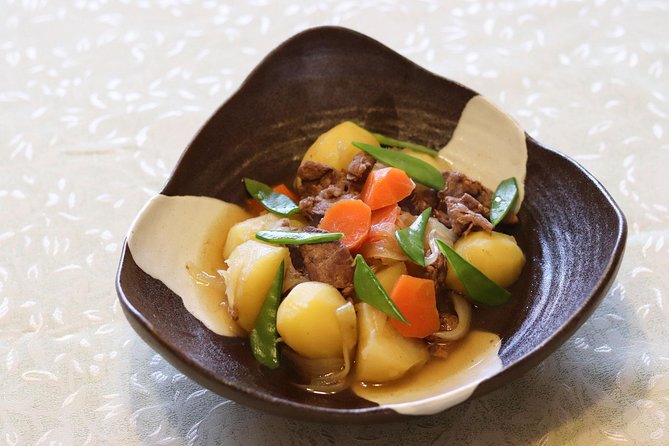
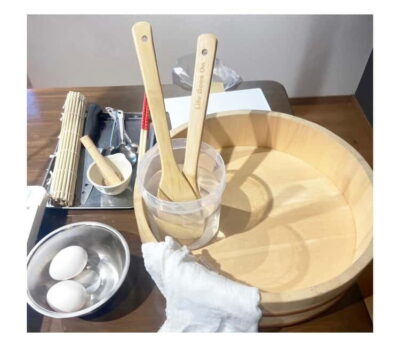
The second main technique is chirashi sushi. You learn to prepare the sushi rice, then arrange the toppings in a traditional wooden bowl.
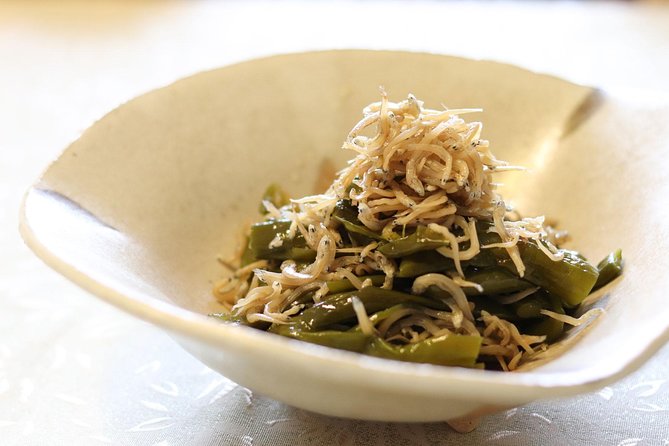
Chirashi sushi is a good dish for a home class because it combines technique with presentation. The rice needs to be prepared properly, but the final bowl also gives you room to arrange the garnish in a pleasing way. Michiyo leads you through the process, so you can focus on both the flavor and the appearance.
The use of a wooden bowl adds a traditional touch without turning the lesson into a museum display. You handle a familiar Japanese serving object in the setting where it is meant to be used, then eat the finished dish at the same table.
The exact garnish depends on the season. That gives repeat visitors a reason to find the menu different at another time of year, but it also means the meal is not fully predictable. If you are booking because of a particular ingredient, ask about it in advance rather than assuming it will be served.
Sitting down for a meal with the hosts
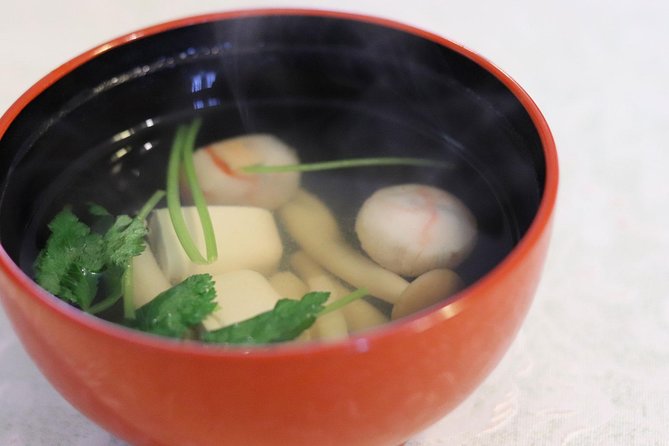
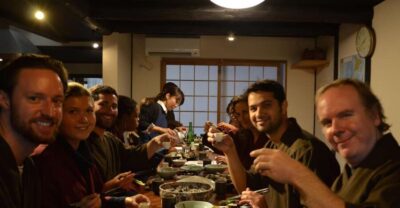
Once the cooking is done, you sit down with Michiyo and her husband to eat the meal. This shared table is the heart of the experience.
The difference between a class and a meal with a local host is that the conversation continues after the stove is turned off. You can ask about Japanese cooking, local habits, ingredients, and the dishes you have just made. The home setting makes the food feel connected to ordinary life rather than separated from it.
The included drinks add to the meal. The package provides one to two glasses of local alcohol, and non-alcoholic drinks are available. The drinks are paired with the food, so this is more than a quick taste before you leave.
If you do not drink alcohol, you are not shut out of the meal. Choose the non-alcoholic option and focus on the food and conversation. If you do drink, remember that the experience includes only one to two glasses, not an open-ended evening of drinking.
El, the family’s well-behaved dachshund, also lives in the home. This matters for anyone with dog allergies or a strong discomfort around pets. For dog lovers, the presence of a small household pet may make the visit feel even more like an ordinary home meal.
How the three-hour schedule works
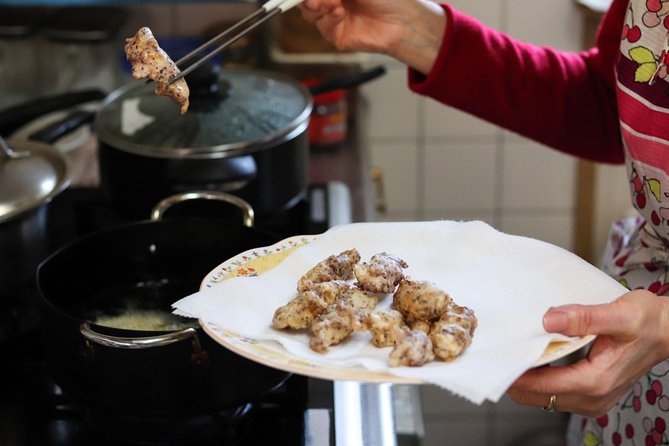
The total duration is about three hours, with roughly an hour and a half devoted to cooking. The rest allows time for the welcome, menu introduction, meal, drinks, and conversation.
That length feels sensible for this format. A shorter class would rush the preparation or leave little time to eat together. A much longer visit might be harder to fit around sightseeing. You can choose a lunch or dinner option, so the activity can work at different points in your day.
I would avoid booking this on a day when you have a major timed attraction immediately afterward. The cooking time is given as an estimate, and a private meal with conversation may not end with the exact precision of a train departure. The activity ends back at the station, which helps, but you still need a little breathing room.
For a dinner booking, consider the journey back to your accommodation after returning to Otsukyo Station. For lunch, the experience can serve as a relaxed break from temples and city streets, though you should still account for the trip out to Otsu.
What the $86 price includes
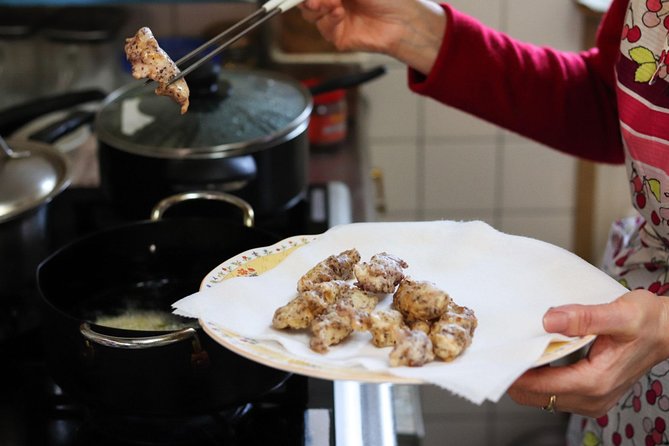
At $86 per person, the value depends on what you want from a food experience. You are paying for more than ingredients and a lesson. The price includes a private cooking class, the prepared meal, one to two glasses of local alcohol, and pickup from Otsukyo Station.
A standard restaurant meal may cost less, but it will not give you the cooking instruction, the home visit, or the direct conversation with the people who prepared the food. A group cooking class may also offer a lower price, but this experience keeps the group private and personal.
The price becomes easier to justify for couples or small groups who value time with a local host. Group discounts are available, so check the final rate for your party rather than assuming every booking will use the same per-person price.
The strongest value comes if you use what you learn later. Dashi and chirashi sushi are not just one-time dishes. They give you techniques and ideas you can bring home, and the class has already been praised for inspiring people to cook the meal again.
Who will enjoy this home cooking experience
I would choose this for people who care about how food is made, not only how it tastes. It suits curious cooks, couples, families, and small private groups who want a personal cultural activity.
It is also a good choice if you have already seen several temples and want a different side of the Kyoto area. Instead of another formal sight, you spend time in a home, use local ingredients, and share a table with residents of the region.
The class may not suit someone looking for a fast, central Kyoto activity. Otsukyo Station requires planning, and the home visit takes roughly three hours. It is also not the best match for someone who dislikes dogs, has a serious dog allergy, or wants a fixed menu with no seasonal changes.
People with dietary needs should provide details when booking. The hosts can then consider the request, but the available information does not promise that every restriction can be accommodated. Write clear requirements rather than relying on a last-minute conversation at the station.
Booking, timing, and cancellation details
The activity is often reserved well ahead, with an average booking lead time of about 67 days. That suggests you should plan early if your Kyoto dates are fixed, especially if you want a particular lunch or dinner slot.
Confirmation is sent within 48 hours of booking, subject to availability. The activity is private, and only your group takes part. Mobile tickets are supported, and free cancellation is available up to 24 hours before the local start time.
If you cancel less than 24 hours before the start, the payment is not refunded. Changes made inside that 24-hour window are not accepted. Keep the cutoff in mind when arranging trains and other reservations.
The experience is operated by Traveling Spoon. The meeting point is also the end point, with no hotel transportation included.
Should you book Michiyo’s class?
Book it if you want a personal meal with a local family, hands-on instruction, and a chance to learn techniques you can repeat at home. The station pickup, private format, seasonal ingredients, and shared dinner or lunch make this more intimate than a typical cooking demonstration.
Think twice if your schedule is packed, you need to stay in central Kyoto, or you require a guaranteed fixed menu. Otsu adds transport time, the menu changes with the season, and El the dachshund shares the home.
For most food-minded visitors, the strongest reason to book is the combination of instruction and hospitality. You make dashi and chirashi sushi, then sit down with Michiyo and her husband to eat what you prepared. That simple pattern gives the experience its value: learn, cook, ask questions, and share a meal in a real home.
FAQ
Where does the Japanese cooking class take place?
The class takes place at Michiyo’s home in Otsu, near Kyoto. You meet at Otsukyo Station on the JR Kosei Line, and Michiyo drives you about three minutes to her house.
Is transportation included?
Pickup from Otsukyo Station is included. Hotel pickup and hotel drop-off are not included, and the activity ends back at the station.
How long does the experience last?
The experience lasts about three hours. The cooking portion takes approximately one and a half hours, followed by the meal and time with the hosts.
What will I learn to cook?
You will learn to make dashi stock and prepare sushi rice for chirashi sushi. The menu can also include seasonal dishes and vegetables, and it may change depending on the season.
Is food and drink included?
The private cooking class and the meal you prepare are included. The experience also includes one to two glasses of local alcohol, with non-alcoholic drinks available.
Is this a private activity?
Yes. Only your own group participates, making the class private and personalized.
Can I request dietary accommodations?
You should provide any specific dietary requirements in the special requirements section when booking. The available information does not guarantee that every request can be accommodated.
Is the experience suitable for someone who does not like dogs?
Michiyo and her husband share their home with El, a well-behaved dachshund. Anyone with a dog allergy or concern around dogs should consider this before booking.
What is the cancellation policy?
You can cancel for a full refund up to 24 hours before the experience’s local start time. Cancellations or changes made less than 24 hours in advance are not accepted for a refund.
More tours in Otsu we've reviewed
Cooking Classes, compared.
 ★ 5.0Ramen Cooking Class at Ramen Factory in KyotoFrom $131
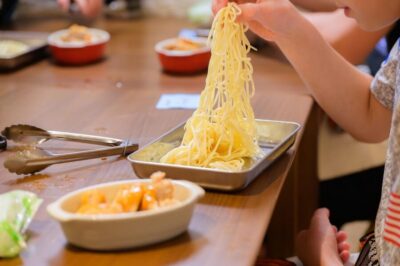 ★ 4.9Kyoto: Ramen Cooking Class at a Ramen Factory with SouvenirFrom $1271h 30m
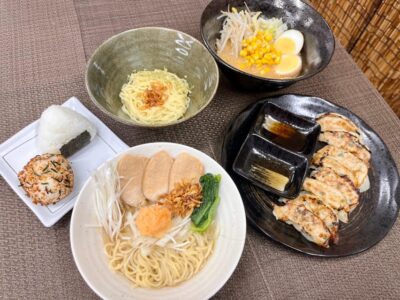 ★ 5.0Kyoto: Ramen, Gyoza, and Onigiri Cooking ClassFrom $901h 30m
 ★ 5.0Kyoto: Japanese Washoku Bento Small Group Cooking ClassFrom $582h 30m
 ★ 4.9Kyoto: Afternoon Japanese Izakaya Cooking ClassFrom $673 hours
 ★ 5.0Izakaya Style Cooking ClassFrom $71