
Reviewed · GION & GEISHA WALKS
Kyoto: Maiko Dinner in Traditional Restaurant and Tour
A maiko dinner in Gion gives you something difficult to arrange on your own: a respectful evening with a maiko, Kyoto’s apprentice geisha, in a traditional restaurant. The evening begins with a walk through Gion, then moves to a roughly 100-year-old machiya for Kyoto cuisine, sake, dance, conversation, and drinking games.
I like the way the experience joins the neighborhood to the dinner. You first see Gion’s narrow traditional streets and learn what you are looking at, then sit down for a meal where the guide explains the food and helps with translation. I also like the small group limit of seven, which makes it easier to ask questions and take part in the games.
The main drawback is the price, $292 per person. That is a serious splurge, and the evening is not suitable for children under 15, wheelchair users, vegans, or people with gluten intolerance. Still, if meeting a maiko is high on your Kyoto wish list, the combination of access, dinner, drinks, and guidance gives the cost a clear purpose.
In This Review
- Key points before you book
- Why this Gion evening feels different
- Meeting at Gion Shijo Station
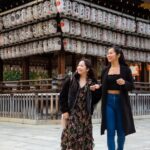
- A 40-minute walk through Gion
- Dinner inside a century-old machiya
- Kyoto sake and the all-you-can-drink package
- Meeting the maiko: dance, questions, and games
- The group photo and the evening’s final moment
- Is $292 a fair price?
- Who should book this experience?
- Final call: book it for access, not just dinner
- FAQ
- Where does the tour meet?
- How long does the experience last?
- Is the tour conducted in English?
- What is included in the price?
- Can vegetarians join?
- Are vegan or gluten-free meals available?
- Is the tour accessible by wheelchair or suitable for children?
Key points before you book
- Gion comes first: A 40-minute walk introduces you to the district where maiko culture began.
- Dinner takes place in a machiya: You eat inside a roughly 100-year-old Kyoto townhouse with a traditional atmosphere.
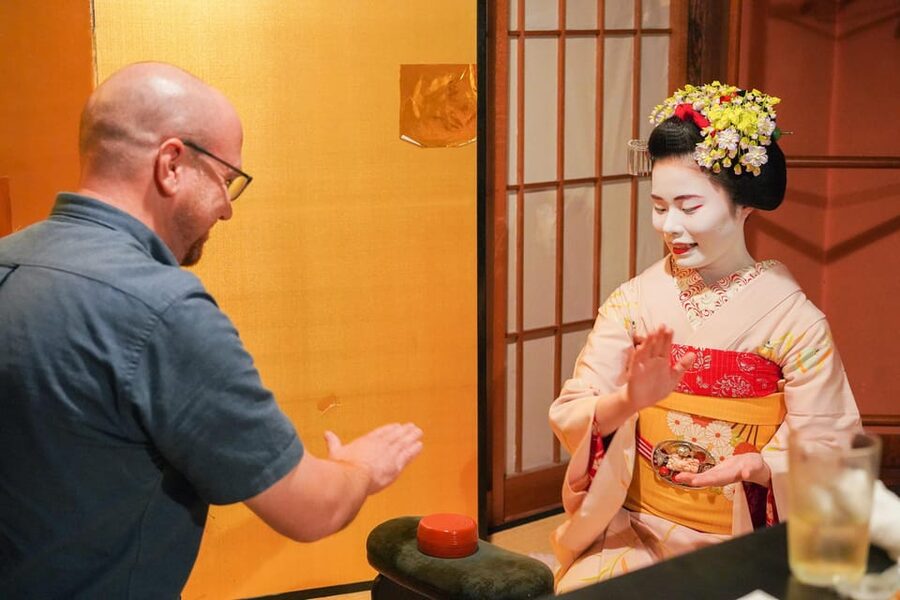
- The maiko is part of the evening: Expect traditional dance, conversation, drinking games, and a group photo.
- Drinks are included: The package includes all-you-can-drink service, including Kyoto sake.
- The group is very small: No more than seven participants join the English-speaking guide.
- Food restrictions need careful thought: A vegetarian menu is available with advance notice, but vegan and gluten-free meals are not offered.
Why this Gion evening feels different
Many first-time visitors see Gion as a pretty district for photos. That is only half the story. The streets, wooden facades, tea houses, and quiet lanes are tied to a working entertainment culture with strict customs and a long apprenticeship system.
This experience gives you a local guide before dinner, so you are not simply wandering past closed doors and guessing what happens inside. The guide explains the origins of maiko culture and points out details in the traditional machiya architecture. That context matters because Gion can otherwise feel like a stage set, especially if you visit without knowing how the district functions.
You should also understand what you are booking. A maiko is a young woman training to become a geiko, the Kyoto term for a professional entertainer often called a geisha elsewhere in Japan. Her work includes dance, music, conversation, and formal social skills. This is not a theater show with a distant performer. You are expected to listen, ask polite questions, join in when invited, and treat the meeting as a cultural exchange.
The guide helps with that balance. Before the maiko arrives, you receive advice about conversation, manners, the dinner, and the games. That small briefing is useful. Without it, you might not know when to speak, how to respond to a drinking game, or which questions are best saved for the guide to translate.
A few more Kyoto tours and experiences worth a look

Meeting at Gion Shijo Station
The meeting point is in front of the Izumo no Okuni Statue, just outside Exit 5 of Gion Shijo Station. Look for a guide holding a board marked Magical Trip.
This is a sensible starting point because it puts you directly beside Gion rather than wasting time on a long transfer. You begin near Kawabatacho and return there at the end. The total experience lasts 210 minutes, or three and a half hours, so plan your evening around a fairly fixed block of time.
The opening walk lasts about 40 minutes. Wear shoes that you can comfortably use on traditional streets and uneven surfaces. Parts of the route and restaurant are not accessible to wheelchairs or strollers, and the experience is not recommended if walking is difficult. A private tour is suggested for people who need a more manageable pace.
The weather matters here. Kyoto can reach about 40 degrees Celsius in summer and fall to about minus 5 degrees Celsius in winter. You will spend time outdoors before dinner, so dress for the season rather than relying only on the restaurant portion to keep you comfortable. The tour may be cancelled if weather makes walking unsafe.
A 40-minute walk through Gion
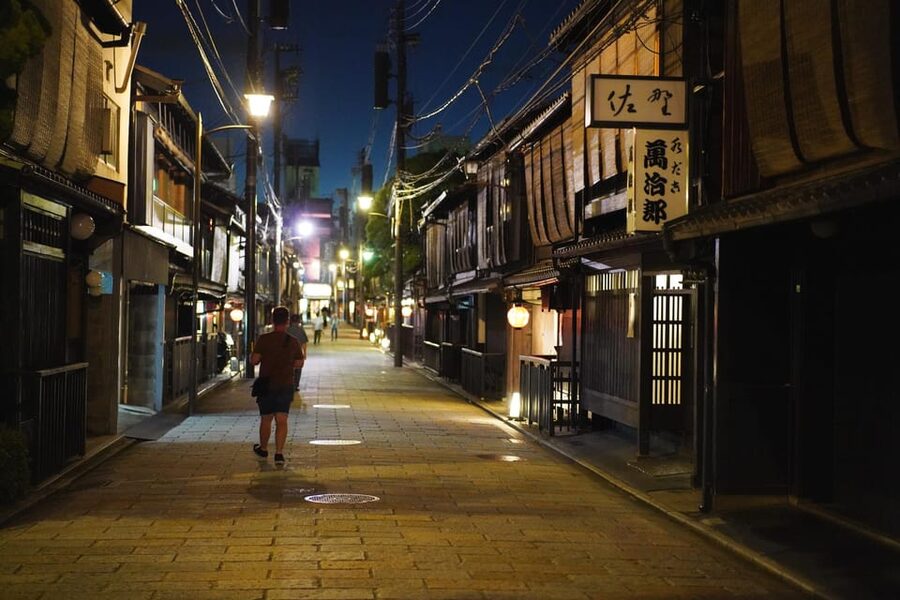
The Gion walk is not a long sightseeing tour, and that is a good thing. It gives you an introduction without using up the evening before the main event.
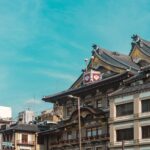
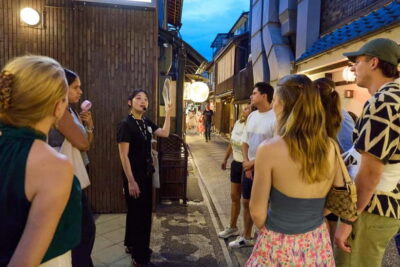
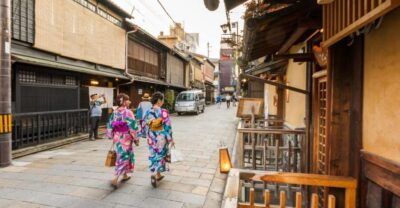
Your guide leads you through traditional streets and past machiya buildings, explaining the connection between the neighborhood and maiko culture. The value is in the interpretation. You learn why the area matters, how maiko fit into Kyoto’s traditional entertainment world, and what details you might otherwise miss.
The guides have different personalities, but the strongest praise has gone to their ability to explain and translate. Yusuke has been described as warm and passionate about the subject. Hikari has helped explain geisha and geiko customs in clear detail. Eri has been praised for making both the Gion walk and the later dinner easy to follow, while Pico has been noted for bringing energy and humor to the evening.
Those names do not guarantee who will lead your departure. They do show the kind of guide you should expect: an English-speaking host who serves as a bridge between you, the neighborhood, the food, and the maiko.
Keep your expectations realistic. Gion is a real district, not a theme park, and you may see quiet streets rather than a constant parade of costumed performers. The point is to understand the setting before entering the restaurant.
Dinner inside a century-old machiya
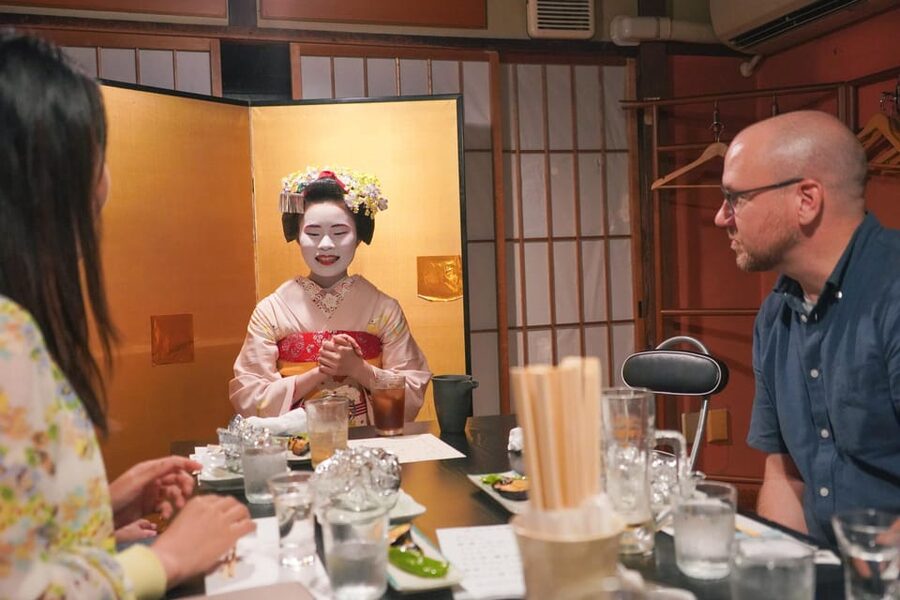
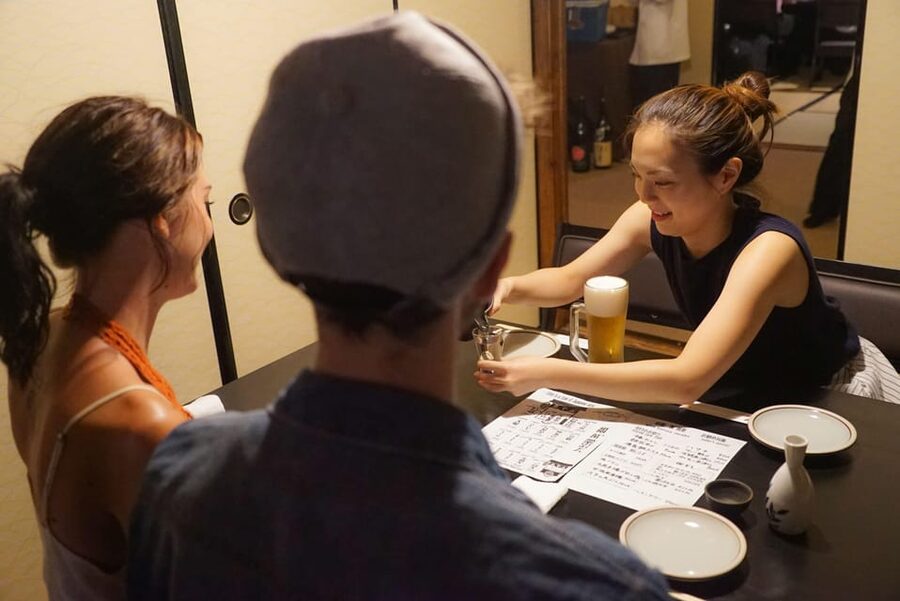
After the walk, you continue to a traditional Kyoto-style restaurant in a machiya building roughly 100 years old. The building provides much of the atmosphere. Low-key architecture, traditional rooms, and the sense of dining in an old Kyoto house make the meal feel connected to the neighborhood outside.
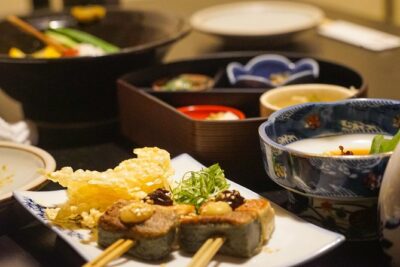
The course meal focuses on Kyoto cuisine, which is known for careful presentation and delicate flavors. The food is visually arranged, and the guide explains the dishes and how to eat them. That help is valuable if you are not familiar with Kyoto dining customs or ingredients.
The meal is not described as a single specialty dish. Instead, you receive a full course, giving you a broad sample of the restaurant’s Kyoto-style cooking. Several people have singled out the food as delicious, and one participant specifically praised the restaurant staff along with the meal.
Vegetarians can request a vegetarian menu in advance. The qualification matters: some dishes can be prepared without fish stock, but the restaurant offers only limited choices under that restriction. There are no vegan or gluten-free options. Allergies and dietary requests must be sent at least one day before the tour, and the operator cannot guarantee an allergy-free meal or substitutions because the food is prepared in a kitchen it does not control.
If food is central to your Kyoto plans, this dinner is a useful part of the value. If you are paying mainly for a fine-dining experience, keep your focus on the whole evening rather than expecting an elaborate restaurant tasting menu. The meal supports the cultural meeting, and the drinks and guide are part of the package.
Kyoto sake and the all-you-can-drink package
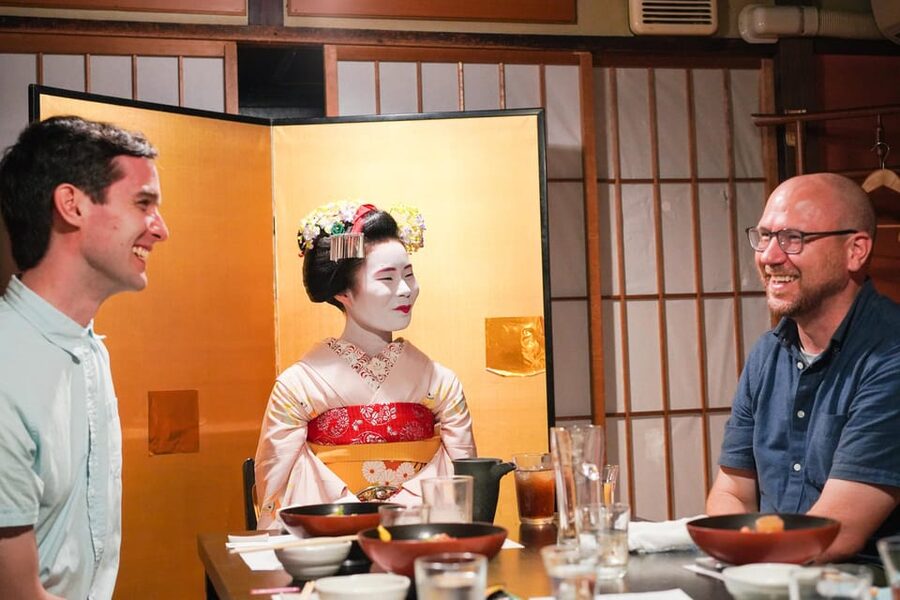
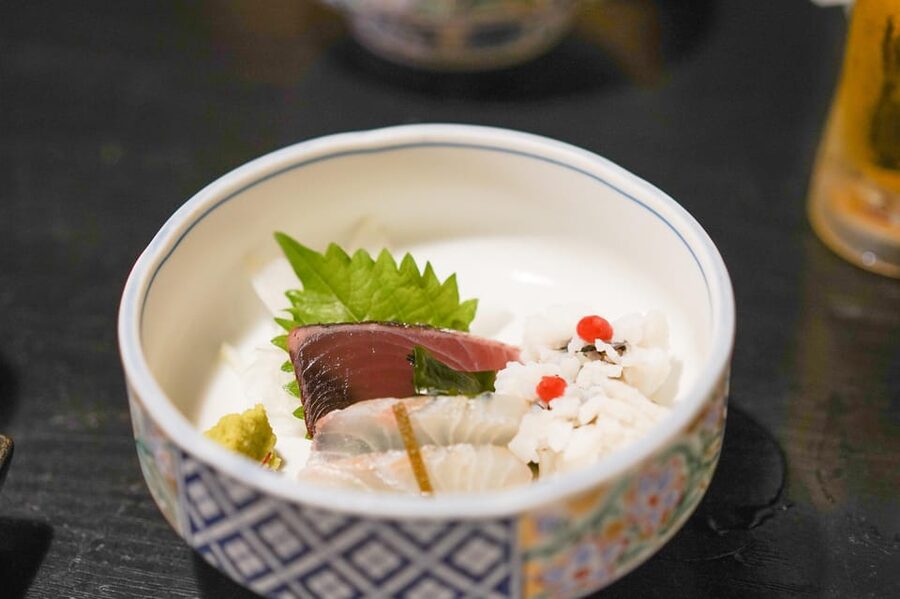
The all-you-can-drink option includes Kyoto sake along with other Japanese drinks. This can add real value to a $292 experience, especially if you plan to sample local sake during your time in Kyoto.
It also changes the rhythm of the evening. You are not simply watching a performance, eating in silence, and leaving. You can raise a glass, talk with the maiko through the guide, and join the playful drinking games. The guide explains how to participate so the games remain fun and respectful.
Use some restraint. All-you-can-drink is an inclusion, not a challenge. The maiko meeting requires attention, and you will get more from the conversation and dance if you are comfortable and alert. Drinking too much would also make it harder to follow the guide’s explanations or take part politely.
The inclusion is particularly helpful for couples and small groups who want an evening rather than a short stage performance. You are paying for food, drinks, interpretation, and direct access within a limited group.
A few more Kyoto tours and experiences worth a look

Meeting the maiko: dance, questions, and games
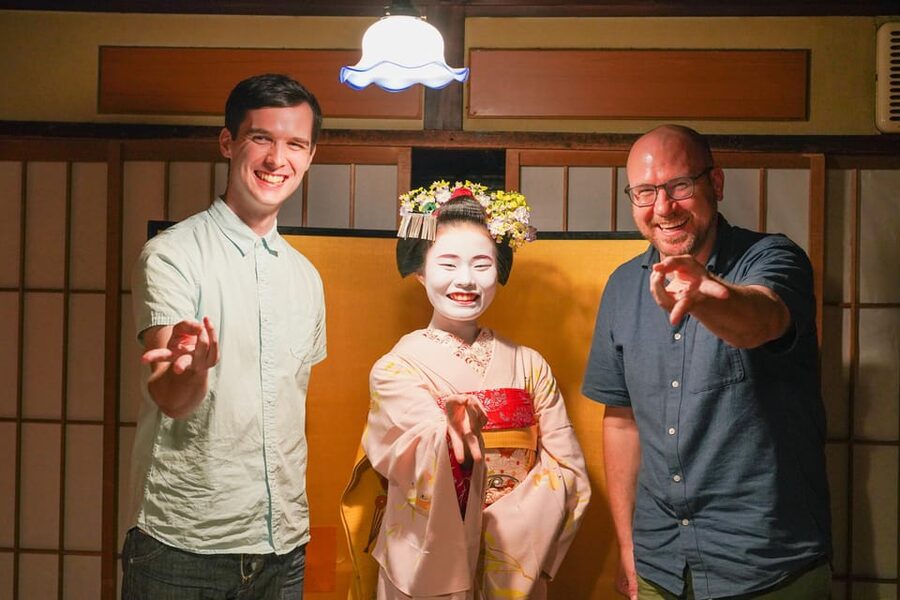
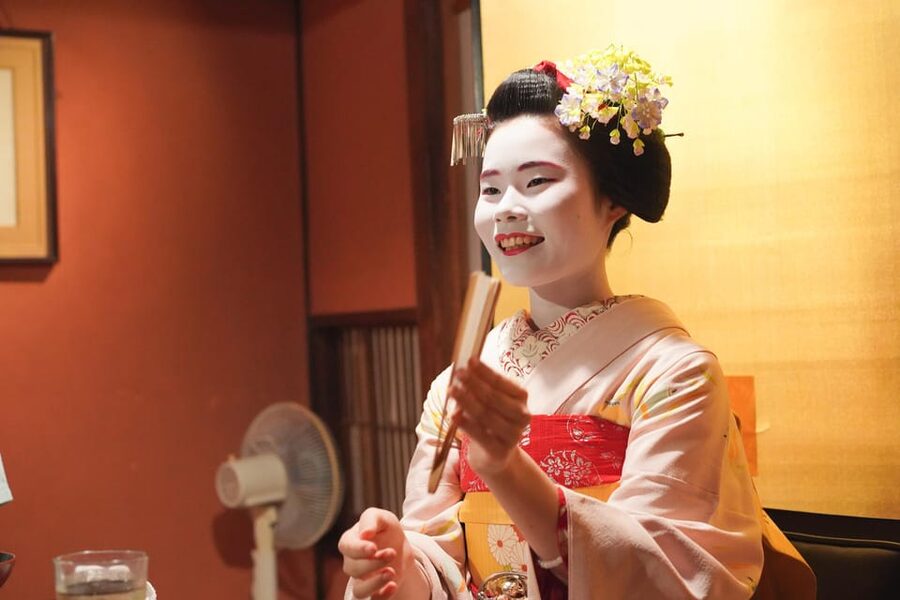
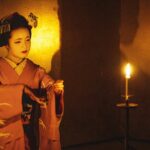
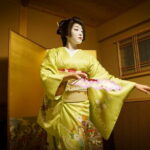
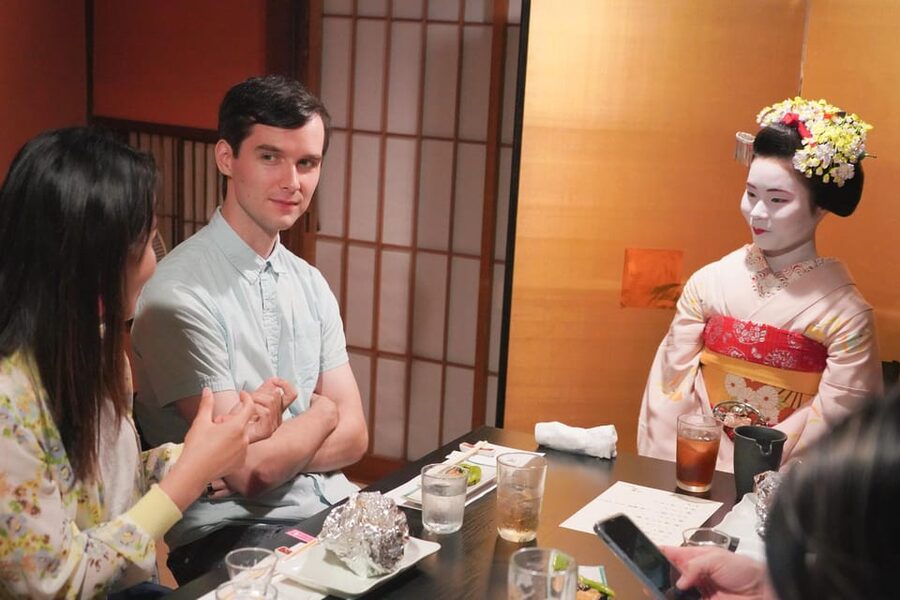
The main event arrives after dinner begins. The maiko enters the room and spends time with the group through conversation, traditional dance, and drinking games set to Japanese music.
The performances are a key reason to choose this experience. The dances offer a glimpse of a disciplined art form that is easy to admire but hard to understand from a quick street sighting. You may see two dances, as one past departure did, though the supplied details do not promise an exact number for every evening.
The conversation is just as important. You can ask about the maiko’s life and career, with the guide translating between English and Japanese. Several past participants especially valued this back-and-forth translation. It gives you a chance to ask thoughtful questions without expecting the maiko to conduct the entire evening in English.
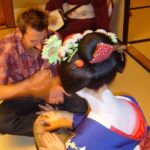
The games add a lighter side. They are social, simple, and designed to get everyone involved. You might enjoy them most if you are willing to participate rather than sit back with your camera. The maiko has been described as sweet, funny, outgoing, and engaging, but remember that the tone can vary with the individual performer and the group.
The guide’s etiquette briefing deserves attention. Ask questions, but do not treat the maiko like a costume prop. Listen when she speaks, follow the guide’s direction about photographs, and take part in the games without becoming overly competitive. The best version of this evening is friendly and curious, not loud or intrusive.
The group photo and the evening’s final moment
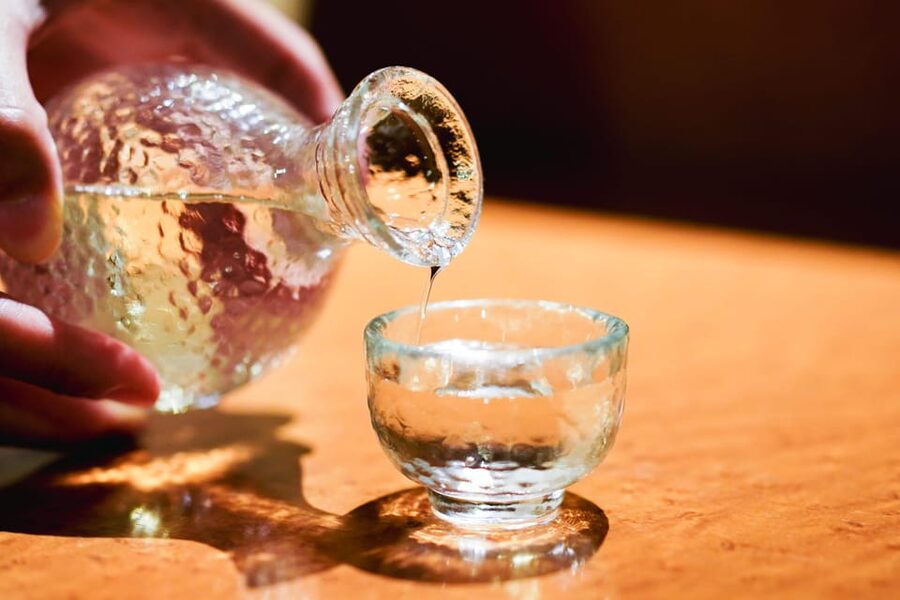
Near the end, you can take a group photo with the maiko. Photos during the tour are included, so you are not left to manage every image yourself while trying to stay present.
The photo is a pleasant souvenir, but it works best as the final piece of the evening rather than its main purpose. If your only goal is a picture in costume, you can find cheaper photo experiences in Kyoto. Here, the photograph carries more meaning because it follows the Gion walk, dinner, dance, conversation, and games.
The small group helps. With a maximum of seven people, the room should feel more personal than a large banquet. You have a better chance to ask a question, hear the translation, and get a clear group photograph. It also means your participation affects the mood. A quiet group may produce a more measured conversation, while a lively group may spend more time laughing and playing.
Is $292 a fair price?
At $292 per person, this is not a casual add-on. You should compare it with what the price includes, not just with the cost of a restaurant meal.
You receive about three and a half hours of hosting, a 40-minute Gion orientation, a full Kyoto-style course meal, all-you-can-drink service, an English-speaking guide, a maiko performance, games, conversation, and photos. The small group limit is another part of the value. Arranging all of that independently would be difficult, particularly the maiko meeting and the translation.
The price makes the most sense for a special evening, a first visit to Kyoto, or a trip where traditional performing arts are a top priority. It is less convincing if you care mainly about eating or seeing Gion from the street. Those goals can be met for much less.
An average rating of 4.8 from 55 ratings suggests strong consistency, and the praise has focused on the same elements: the guides, the food, the maiko’s warmth, the dance, and the chance to ask questions. That pattern matters more than a general claim that the evening is simply fun. The experience seems to work because its parts support one another.
Who should book this experience?
I would recommend it to adults and older teenagers who want a guided introduction to Gion and are comfortable with formal cultural exchange. It suits couples, solo visitors, and small groups who like food, history, traditional performance, and conversation in equal measure.
It is especially useful if you have visited Kyoto before but never found a respectful way to learn about geiko and maiko culture. One participant who had already been to Japan three times called this kind of evening a missing piece of earlier trips. That is a fair point: the experience offers access that ordinary sightseeing rarely provides.
I would not choose it for children under 15, anyone with serious mobility limits, or anyone needing vegan or gluten-free food. It is also a poor fit if you dislike group participation, drinking games, or being part of a shared photo.
Book at least a week ahead if your plans are firm. Free cancellation or rescheduling is available up to seven days before the start, with a full refund. Dietary requests need to be made at least one day before, and same-day changes cannot be accommodated.
Final call: book it for access, not just dinner
Book this tour if you want a carefully guided evening that connects Gion’s streets with a real maiko meeting. The combination of a small group, English translation, Kyoto cuisine, sake, performance, games, and photos is hard to reproduce on your own.
Skip it if $292 feels too high for a single night, or if you want a quiet meal with no planned interaction. For everyone else, this is one of Kyoto’s more memorable cultural splurges, provided you arrive ready to listen, participate, and show the same courtesy you would bring to any traditional art.
FAQ
Where does the tour meet?
Meet in front of the Izumo no Okuni Statue, just outside Exit 5 of Gion Shijo Station. The guide will hold a board marked Magical Trip.
How long does the experience last?
The experience lasts 210 minutes, or three and a half hours. The Gion walk takes about 40 minutes, followed by the restaurant portion.
Is the tour conducted in English?
Yes. An English-speaking live guide leads the experience and helps translate during the conversation with the maiko.
What is included in the price?
The price includes photos during the tour, a Kyoto-style course meal, all-you-can-drink service including Kyoto sake, the English-speaking guide, and the maiko performance.
Can vegetarians join?
Yes, a vegetarian menu is available with advance notice. Only limited dishes can be prepared without fish stock, so you should state your request at least one day before the tour.
Are vegan or gluten-free meals available?
No. The experience is not suitable for vegans or people with gluten intolerance. Allergy requests must be made at least one day before, but an allergy-free meal cannot be guaranteed.
Is the tour accessible by wheelchair or suitable for children?
The route includes places that are not accessible to wheelchairs or strollers, and it is not recommended for people with mobility issues. Children under 15 cannot join the small-group tour. A private tour is recommended for children aged 14 or younger and for people who need more mobility support.
More Dinner Experiences in Kyoto
More Dining Experiences in Kyoto
More Gion & Geisha Walks in Kyoto

More tours in Kyoto we've reviewed



Gion & Geisha Walks, compared.
 ★ 4.7Kyoto Geisha Walking Tour: Gion District & Hidden GemsFrom $252 hours
 ★ 4.7Kyoto: Gion Geisha District Walking Tour – Stories of GeishaFrom $202 hours
 ★ 4.9Best of Kyoto: Gion, Geisha, Pagodas & CobblestonesFrom $242 hours
 ★ 4.5Night Walk in Gion: Kyoto’s Geisha DistrictFrom $211h 40m
 ★ 5.0Kyoto Night Foodie Tour in Gion (9+ dishes + 6 Sake tastings)From $163
 ★ 5.0Kyoto Gion Geisha District Walking Tour – The Stories of GeishaFrom $25