
Reviewed · KYOTO BUS TOURS
Kyoto: Full-Day Guided Bus Tour to Top Highlights & Tickets
Kyoto packs centuries of temples, shrines, gardens, and old imperial power into a surprisingly compact city. This full-day bus tour gives you a practical way to reach five major sights in one sweep: Arashiyama Bamboo Grove, Nijo Castle, Golden Pavilion, Kiyomizu-dera, and Fushimi Inari.
I like two things right away: the bus removes much of the stress of crossing Kyoto, and the guides, including Alan, Alex, Paola, and Pastor on different departures, add useful context in English and Spanish. The tradeoff is a long, active day, often close to 10 or 11 hours, with plenty of walking, stairs, crowds, heat, and limited time for lunch.
In This Review
- Key points at a glance
- Why this bus tour works for a one-day Kyoto visit
- Meeting outside Hotel Keihan Kyoto Grande
- Arashiyama Bamboo Grove and the first taste of old Kyoto
- Golden Pavilion: a quick look at Kyoto’s famous gold-leaf temple
- Nijo Castle and the shogun’s nightingale floors
- Kiyomizu-dera and Kyoto from the wooden stage
- Fushimi Inari’s red torii gates
- What the guiding adds to the day
- The real cost: time, walking, and lunch
- How to make the day run smoothly
- Who should book this Kyoto day tour?
- Should you book it?
- FAQ
- Where does the Kyoto bus tour start?
- Where does the tour end?
- Which languages are available?
- Are admission tickets included?
- What happens if Nijo Castle is inaccessible?
- Is food included?
- Is the tour suitable for wheelchair users or people with mobility impairments?
Key points at a glance
- Five major Kyoto sights in one day: The route covers Arashiyama, the Golden Pavilion, Nijo Castle, Kiyomizu-dera, and Fushimi Inari.
- Bus transport saves time: You can relax between stops instead of piecing together several train and bus journeys.
- Guiding adds context: English and Spanish explanations cover Japanese culture, history, architecture, and practical tips at each site.
- The day requires stamina: Comfortable shoes are essential, and Fushimi Inari and Kiyomizu-dera include slopes or stairs.
- Ticket choice matters: Admission to the Golden Pavilion, Nijo Castle, and Kiyomizu-dera is included only when you choose the option with tickets.
- The schedule is tightly managed: The tour keeps moving, though that helps you see a lot without wasting time.
Why this bus tour works for a one-day Kyoto visit
If your time in Kyoto is short, this is a sensible greatest-hits plan. You get a broad look at the city rather than spending an entire day in one district. Arashiyama supplies bamboo and garden scenery, Nijo Castle gives you shogun-era history, the Golden Pavilion offers one of Japan’s most recognizable views, Kiyomizu-dera brings temple architecture and hillside views, and Fushimi Inari finishes with a walk through thousands of red torii gates.
I especially like the route for first-time visitors who do not want to decode Kyoto’s public transport system. Kyoto’s sights are spread across different parts of the city, and traveling between them can eat up time. A bus keeps the group together and gives you a place to rest after each stop.
The price is listed at $50 per person, with admission tickets added if you select that option. At that rate, the value comes from the transport and the amount covered in one day. Check the exact ticket option carefully before booking, since the basic choice does not necessarily include entry to all three paid sites.
A few more Kyoto tours and experiences worth a look

Meeting outside Hotel Keihan Kyoto Grande
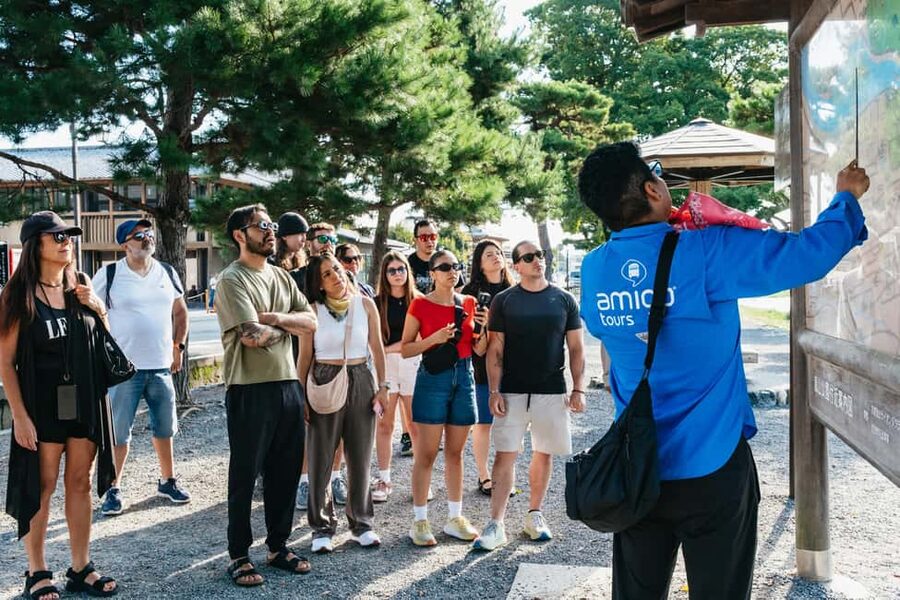
The tour starts outside Hotel Keihan Kyoto Grande, where you look for a guide holding an Amigo Tours sign. Arrive at least 10 minutes early for check-in. The meeting point is close to Kyoto Station, which makes it practical if you are staying near the station or arriving there by train.
Pay attention to the precise meeting location. A few people have had trouble recognizing the exact spot and waited around the corner, so do not rely only on a general map pin. Save the meeting instructions and look for the tour sign rather than assuming every bus or guide in the area belongs to this group.
The tour ends back at the same meeting point. That makes evening planning easier, though I would avoid booking a tightly timed dinner reservation or train immediately afterward. The route can take roughly 10 hours, and traffic, crowds, or weather may affect the return time.
Arashiyama Bamboo Grove and the first taste of old Kyoto
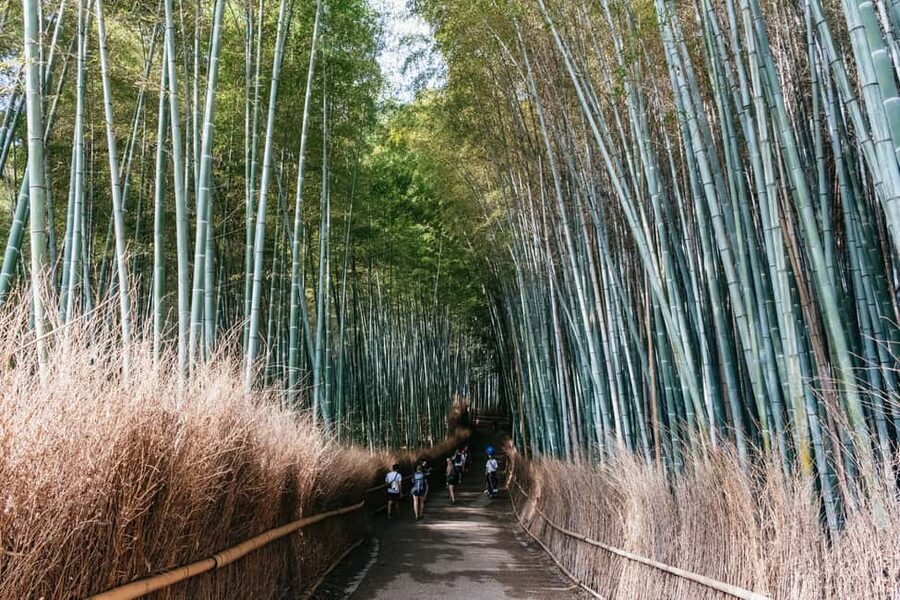
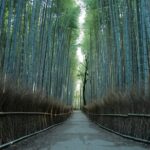
The day begins at the Arashiyama Bamboo Grove, one of Kyoto’s most photographed places. Tall bamboo rises on both sides of the path, creating a cool-toned corridor where the sound of moving leaves does much of the work.
This is a short, scenic walk rather than a remote forest adventure. The grove is famous, so expect other groups and plenty of people taking photos. The peaceful feeling can be strongest when you pause for a moment and look above the main path instead of trying to rush from one photo spot to the next.
You receive free time here to walk and take pictures. One guide, Alan, has recommended an additional temple garden during this part of the day, and that kind of local suggestion can make the stop more rewarding. Still, some schedules allow less time than people would like, so use your first minutes wisely.
Wear shoes with a good grip. You will be walking from the bus, along the grove, and between other parts of the sightseeing area. If you want to buy snacks or explore nearby streets, make sure you know exactly when and where to meet the group again.
Golden Pavilion: a quick look at Kyoto’s famous gold-leaf temple

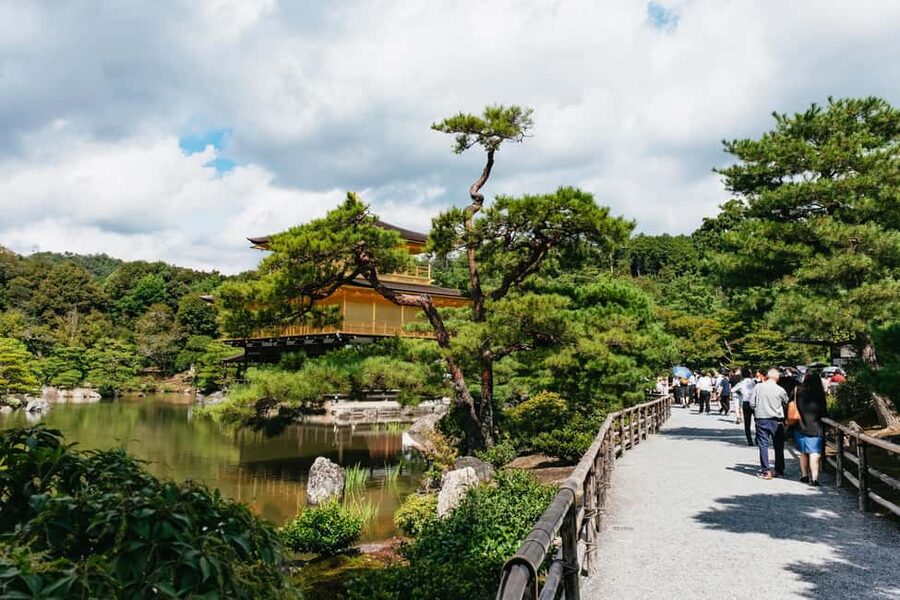
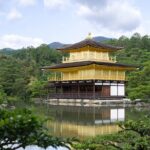
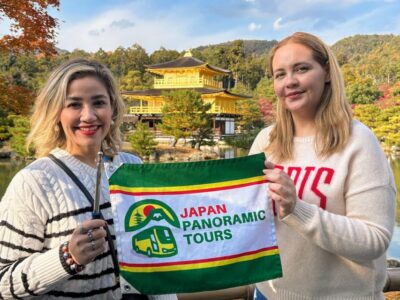
The Golden Pavilion, or Kinkaku-ji, is one of Kyoto’s signature sights. Its gold-covered upper stories reflect in the pond, with carefully arranged gardens framing the view. The appeal is immediate: this is a place where architecture and water are designed to be seen together.
The visit is included only if you purchase the ticket option in advance. If the Golden Pavilion is important to you, confirm that your booking includes admission rather than assuming the word tickets applies to every fare.
The grounds are made for a steady walk and photographs, but this is not an unhurried private garden visit. The pavilion itself is the main visual prize, and popular paths can feel crowded. Your guide helps you understand what you are seeing and directs you through the grounds efficiently.
I would treat this stop as a focused visit. Take your photos, listen to the explanation, and enjoy the pond view, but do not expect a long period of quiet reflection. The larger value is that you can see this famous site without spending a separate half-day arranging transport.
Nijo Castle and the shogun’s nightingale floors
Nijo Castle changes the mood of the tour. Instead of a shrine or garden, you enter a former shogun’s residence, with broad grounds and traditional rooms that show how power was presented in early modern Japan.
The castle is known for its nightingale floors. These floorboards were designed to squeak underfoot, helping alert residents to unwanted movement. Inside, tatami rooms and formal spaces offer a glimpse of court life and military authority, while the gardens provide room to slow down after the indoor visit.
Admission is included only with the ticket option. There is also an important caveat: circumstances outside the operator’s control may prevent access to Nijo Castle. If that happens, the itinerary substitutes Sanjusangen-do Temple.
The time here can feel tight. One schedule gave the group about 90 minutes, but a long explanation at the castle reduced the time available for walking through everything. That is not necessarily a flaw, since the guide’s context is useful, but you should keep moving once the main explanation ends.
A few more Kyoto tours and experiences worth a look




Kiyomizu-dera and Kyoto from the wooden stage
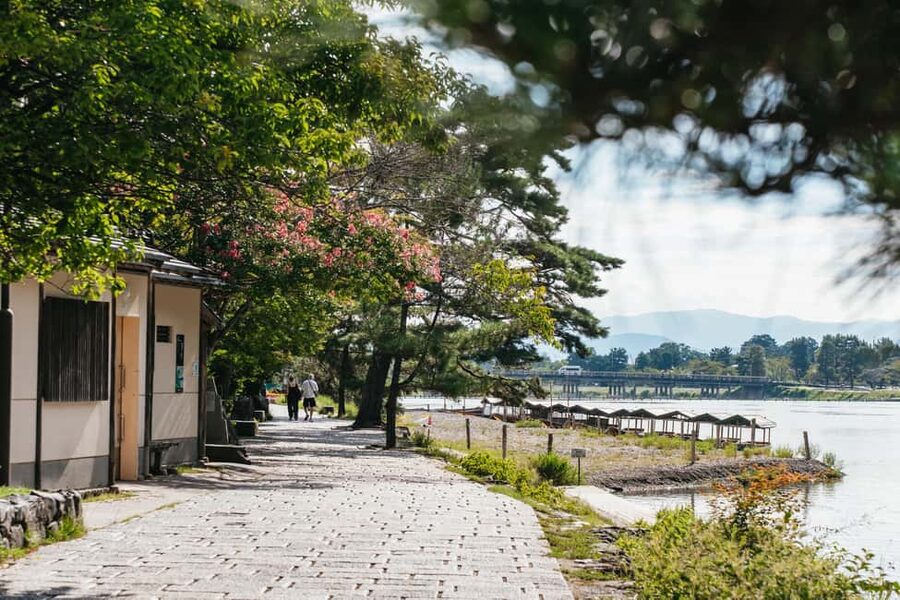
Kiyomizu-dera is one of Kyoto’s most rewarding stops for both architecture and views. The temple’s wooden stage projects over the hillside, giving you a wide look across the valley and city. The setting helps explain why this temple remains such a central part of a Kyoto visit.
The approach is lined with shops selling traditional sweets, souvenirs, and crafts. This gives you a chance to see a more commercial side of old Kyoto, though the route can be crowded and slow. Keep an eye on the clock if you stop to browse.
Kiyomizu-dera requires walking and can include stairs or sloping paths. The access ticket is included only when you choose the ticket-inclusive option. If you have mobility concerns, ask the guide about the easiest route, but this activity is not designed for wheelchair users or people with significant mobility impairments.
The best use of your time is to combine the main temple view with a quick look at the approach streets. Do not spend every minute in the shops. The wooden stage and the surrounding hillside are the reason this stop earns its place on the route.
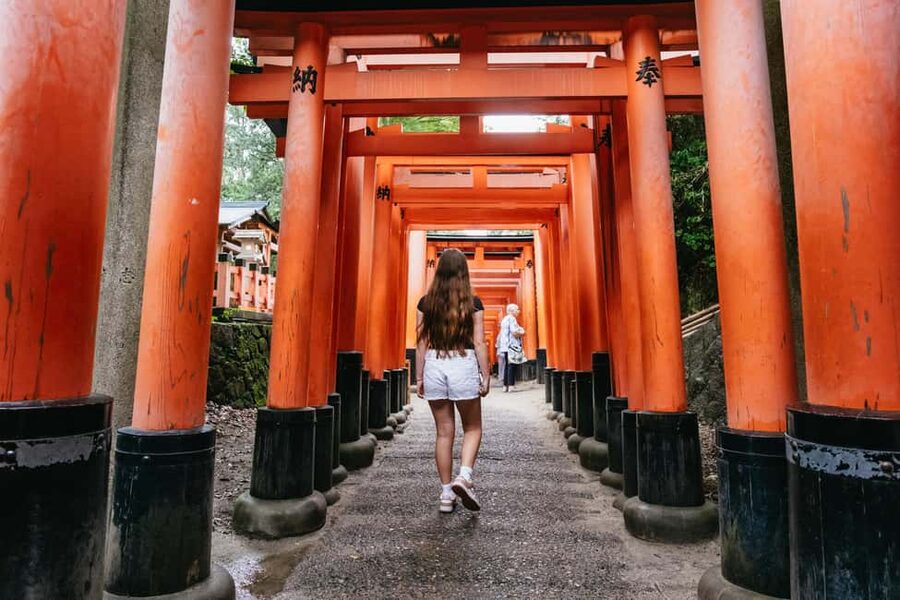
Fushimi Inari’s red torii gates
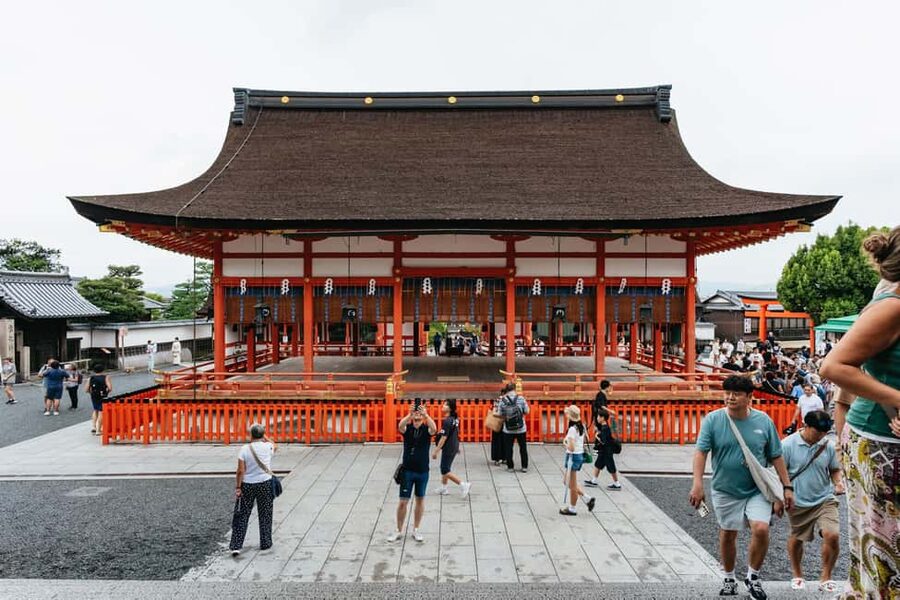
Fushimi Inari provides the tour’s most flexible ending. Here, the group receives free time to explore the shrine and its famous rows of red torii gates. The gates climb toward the wooded mountain, and the atmosphere changes as you move away from the entrance.
You do not need to complete the entire mountain route to enjoy the site. Even the lower section gives you the classic torii experience, while a longer walk takes you farther from the busiest entrance area. Your guide can help you understand the available paths and the return time.
This stop also requires good time management. It is easy to walk farther than planned because each turn reveals another line of gates. Wear comfortable shoes, note the meeting instructions, and turn back with enough time to reach the bus.
Rain does not necessarily ruin the visit, but it can make steps and paths more tiring. Bring water and a compact umbrella if rain is possible. A hat, sunscreen, and camera are also sensible in warm weather.
What the guiding adds to the day
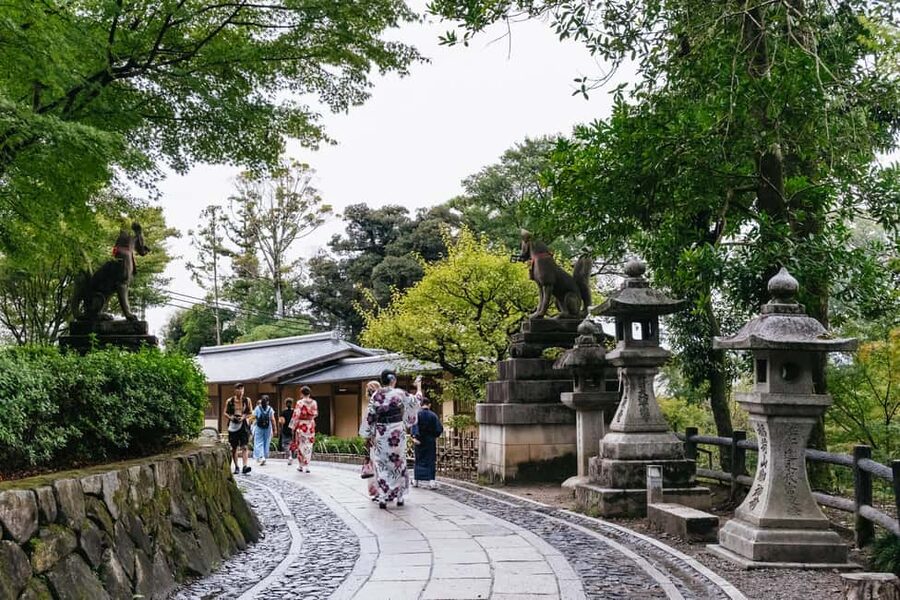
The guides are one of the strongest parts of this experience. English and Spanish are offered, and bilingual guides such as Alan have been praised for switching clearly between the two languages. Guides including Paola, Vicente, Alex, Pastor, and Alejandro have also been singled out for their explanations, humor, organization, and help with timing.
The best guides do more than recite dates. They explain why a castle was built, how temple design relates to nature, and what details to notice at each stop. They also give practical directions, point out good photo angles, and keep the group moving.
Because the day is bilingual, explanations may take longer than on a single-language tour. That can reduce free time at a stop, but it also makes the activity accessible to both English and Spanish speakers. The pace depends partly on the guide assigned to your departure.
One useful feature is the balance between guided instruction and independent time. You receive explanations at the main sites, then have room to take your own route, buy a snack, or focus on photography. You are not required to stay beside the guide every minute.
The real cost: time, walking, and lunch
The tour price looks appealing for a full day of transport and five major stops. You also avoid paying separate local fares between distant parts of Kyoto. The value is strongest if you want coverage and structure more than a slow, specialized visit.
Food and drinks are not included. The day may begin around 7 a.m., while the first chance for a restaurant meal might not come until about 2 p.m. Bring substantial snacks, not just a small bottle of water, and do not assume you will have time for a proper restaurant lunch.
This is a walking tour with bus rides between sections. You may cover temple grounds, castle paths, shopping streets, stairs, and shrine trails. People in good walking shape should manage it, but older participants or anyone with mobility limits may find the day exhausting.
Weather matters. July can be very hot, and rain can arrive during the final stop. Pack water, sunscreen, a hat, and an umbrella or rain jacket. The bus offers a break, though air-conditioning comfort may vary.
How to make the day run smoothly
A few simple choices will improve the experience:
- Arrive early at the Hotel Keihan Kyoto Grande meeting point.
- Wear supportive shoes that are comfortable for a full day.
- Bring water, snacks, sunscreen, a hat, and a camera.
- Confirm that your booking includes tickets for the Golden Pavilion, Nijo Castle, and Kiyomizu-dera if you want to enter them.
- Keep your guide’s meeting instructions visible at every stop.
- Do not wander too far at Fushimi Inari without checking the return time.
- Carry a little extra patience for crowds and traffic.
The bus is clean and comfortable according to the available descriptions, and the driver plays an important role in keeping the route on schedule. Several named drivers, including Kobashi-san, Tamara, Kensom, and Kibashu, were praised for safe and courteous driving.
Who should book this Kyoto day tour?
You should consider it if you have only one full day in Kyoto, want to see the major sights, prefer organized transport, or enjoy learning while you walk. Families may appreciate the simple logistics, and teenagers often respond well to the mix of castles, temples, bamboo, and dramatic torii gates.
It is also a good fit if you want English or Spanish guidance and do not want to plan several complicated transfers. The route gives you a useful first look at Kyoto, after which you can return to the area you liked best for a slower visit.
You may want another plan if you prefer quiet temples, long meals, independent wandering, or deep time at one attraction. The itinerary is packed, and popular sites are usually crowded. People with mobility impairments, wheelchair users, and anyone uncomfortable with long walks or stairs should skip this activity.
Should you book it?
Book this tour if your priority is seeing Kyoto’s headline sights in one organized day. At $50 per person, it offers solid value when you include the bus transport, bilingual guide, and efficient route, but check the admission option carefully and budget for food.
I would choose it early in a Kyoto stay, especially if you are unsure how to connect Arashiyama, central Kyoto, Kiyomizu-dera, and Fushimi Inari. Go in expecting a long day, crowded landmarks, a lot of walking, and only limited lunch time. With that mindset, this is a practical and informative introduction to Kyoto rather than a slow temple retreat.
FAQ
Where does the Kyoto bus tour start?
The tour starts outside Hotel Keihan Kyoto Grande. Look for the guide holding an Amigo Tours sign, and arrive at least 10 minutes before departure for check-in.
Where does the tour end?
The activity ends back at the original meeting point outside Hotel Keihan Kyoto Grande.
Which languages are available?
The tour is offered in English and Spanish with a bilingual guide.
Are admission tickets included?
Admission to the Golden Pavilion, Nijo Castle, and Kiyomizu-dera is included only if you choose the option with tickets when booking.
What happens if Nijo Castle is inaccessible?
If Nijo Castle cannot be visited due to circumstances outside the operator’s control, the tour includes Sanjusangen-do Temple instead.
Is food included?
No. Food and drinks are not included, so bring water and snacks. The first opportunity for a restaurant meal may not come until around 2 p.m.
Is the tour suitable for wheelchair users or people with mobility impairments?
No. The activity is not suitable for wheelchair users or people with mobility impairments, and you should expect substantial walking and some stairs.
More Guided Tours in Kyoto



More Tickets in Kyoto
More Kyoto Bus Tours in Kyoto

More tours in Kyoto we've reviewed




Kyoto Bus Tours, compared.
 ★ 5.0PERFECT KYOTO 1-Day Bus TourFrom $129
 ★ 4.8Kyoto: Fushimi Inari, Kinkakuji, Bamboo Grove 1 Day Bus TourFrom $122510 minutes - 9 hours
 ★ 3.9Kyoto: Hop-on Hop-off Sightseeing Bus TicketFrom $271 - 2 days
 ★ 4.7Kyoto/Osaka: Nara, Fushimi Inari Taisha, Arashiyama Bus TourFrom $529 - 10 hours
 ★ 4.7Osaka/Kyoto: Hiroshima Miyajima Bus Tour & Shinkansen TicketFrom $27712 hours
 ★ 4.9Kyoto: Nara & Traditional Matcha Experience Bus TourFrom $1228h 30m