
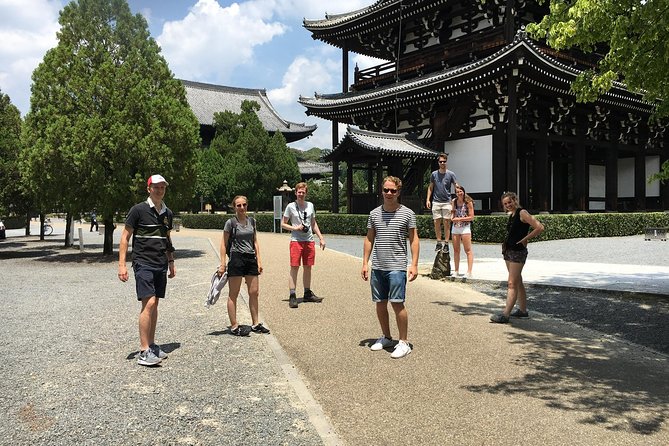
Reviewed · FULL-DAY
Full Day Biking Tour Exploring the Best of Kyoto
Kyoto reveals itself differently from a bicycle. You move from quiet backstreets and traditional homes to the Golden Pavilion, imperial grounds, Gion, and Fushimi Inari without spending the day waiting for buses. The route is generally flat, but it is a serious day out: expect roughly 18 to 20 miles of riding and plenty of walking.
I like the small-group size, capped at eight, and the way the ride mixes famous sights with less hectic streets. I also like that lunch and bottled water are included, which matters on a full day in the saddle. The main catch is stamina. Some riders finish tired, sweaty, and ready for a long rest, especially in warm weather.
In This Review
- Key points to know before you book
- Why this bike tour covers Kyoto so well
- Starting near Kyoto Station with a proper bike fitting
- Nishi Honganji and Kitano Tenmangu
- Kinkaku-ji, the Golden Pavilion
- The Imperial Palace grounds and Kyoto’s quieter streets
- Gion and the world of geisha
- Tofuku-ji and the road to Fushimi Inari
- How hard is the 18 to 20 mile ride?
- What the guide can add to the day
- Lunch, water, and the real value of the price
- Who should book this Kyoto cycling tour?
- Should you book it?
- FAQ
- Where does the Kyoto bike tour start?
- Where does the tour finish?
- How long does the tour last?
- How many people are in each group?
- What equipment is included?
- Is lunch included?
- What age must riders be?
- What sights does the tour visit?
- Can I cancel for a full refund?
Key points to know before you book
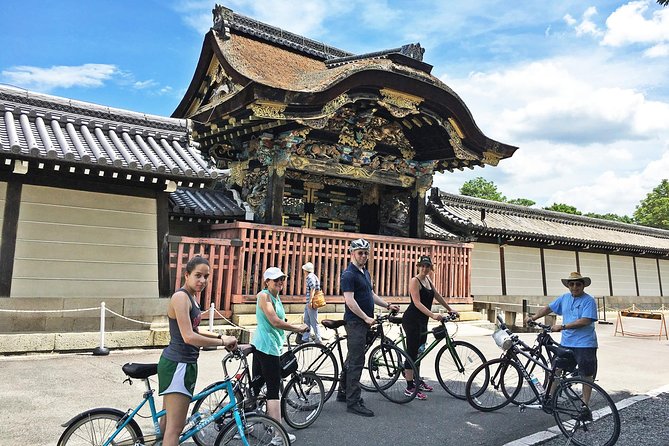
- A full Kyoto overview by bike: Reach Nishi Honganji, Kitano Tenmangu, Kinkaku-ji, the Imperial Palace grounds, Gion, Tofuku-ji, and Fushimi Inari in one long day.
- A mostly flat route: The riding is described as manageable, but the distance and walking at temples make this more active than a casual bike outing.
- Small groups matter: With no more than eight people, your guide can keep the group together and give more personal attention.
- Lunch is part of the value: A hearty Japanese meal and bottled water are included, with past routes stopping at local-style restaurants.
- Guide quality shapes the day: Guides named in past tour experiences include Jay, Karl, Juan, Paul, Indra, Quinn, and Jamie.
- Bring light luggage: The bike has only a small front pouch, so a backpack must be carried during the ride.
Why this bike tour covers Kyoto so well
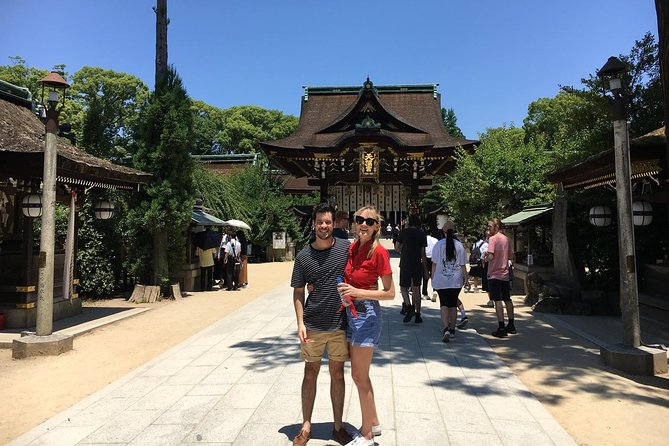
At $119.38 per person, this is not the cheapest way to see Kyoto. It is priced as a full-day experience, though, not a short rental. You receive a Cannondale bicycle, helmet, water, lunch, guide service, and entry to Kinkaku-ji.
The bigger value is time. Kyoto’s main sights are spread across the city, and a walking tour can only reach a small part of them. On a bus-based outing, you cover distance but often lose contact with the quieter streets between attractions. This ride gives you a broad city view while still letting you notice neighborhoods, rivers, small lanes, and traditional houses.
You should think of it as an orientation day. It will not replace several slow temple visits, but it shows you where Kyoto’s major areas fit together. Afterward, you can return by train or bus to the places that deserve more time.
The day usually runs about seven to eight hours. One particularly long outing ran from about 9 a.m. to 6 p.m., depending on the group’s pace and interest. The advertised schedule has time at each stop, but this is not a stopwatch-style city transfer. A good guide may pause for questions, a local ceremony, photographs, or an extra story.
Other cycling tours in Kyoto
Starting near Kyoto Station with a proper bike fitting
You meet at Cycle Kyoto, at 7 Higashikujō Nishisannōchō in Minami Ward. The shop is about one block south of Kyoto Station, making the start fairly convenient if you are staying near the station or arriving by train.
The first 15 minutes are for meeting the guide and group, fitting the bicycle, and getting ready. The tour provides a high-quality Cannondale bike and helmet. That is useful because an ill-fitting rental bike can spoil a long day quickly.
You must be at least 13 years old and comfortable riding a bicycle. The operator asks for a moderate level of physical fitness, and that wording deserves attention. You do not need to be a racing cyclist, but you should be happy riding for much of the day and walking through temple grounds.
The route is generally flat and uses smaller roads where possible. That helps, especially in a city that can look intimidating when you first see its busy main streets. Still, you are riding in an urban area, so you need to follow your guide, watch traffic, and stay alert.
Nishi Honganji and Kitano Tenmangu
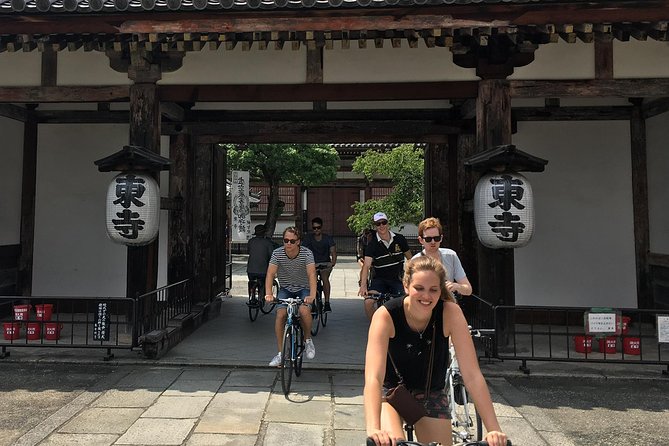
The first major stop is Nishi Honganji, one of Kyoto’s important Buddhist sites. The temple is known for its huge wooden buildings, and the tour gives you a chance to enter a religious site that many sightseeing schedules skip.
That makes this an excellent early stop. You begin with a place that feels spacious and substantial without the same level of attention drawn by Kinkaku-ji. Your guide can explain the temple’s role and point out details that are easy to miss when you are simply passing through.
Next comes Kitano Tenmangu Shrine, where you join local worshippers rather than moving only through a line of famous postcard sites. The visit lasts about 20 minutes, enough to get a feel for the shrine and hear about its past.
The short stop is also a reminder of the tour’s limits. You will see many places, but you will not have an hour at every one. If you want extended time for photographs, quiet reflection, or a detailed look at temple art, you will need to return later on your own.
Kinkaku-ji, the Golden Pavilion
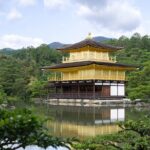
Kinkaku-ji is the visual showstopper. The upper levels of the Golden Pavilion shimmer over its pond, and the setting is one of Japan’s most recognizable sights.
The tour includes admission, and you spend about 30 minutes here. That is enough to view the pavilion, follow the grounds, hear the guide’s explanation, and perhaps stop for an ice cream. It is not enough for a slow, unhurried exploration of every corner.
Crowds can make this stop feel brisk. Your guide helps place the building in context, which is more useful than simply taking a photograph and moving on. The pavilion is a reconstruction rather than an untouched medieval building, a point worth remembering as you consider what you are seeing.
This is one of the places where a guide adds real value. You get the famous image, but also a clearer sense of why the site matters and how it fits into Kyoto’s religious and political story.
The Imperial Palace grounds and Kyoto’s quieter streets
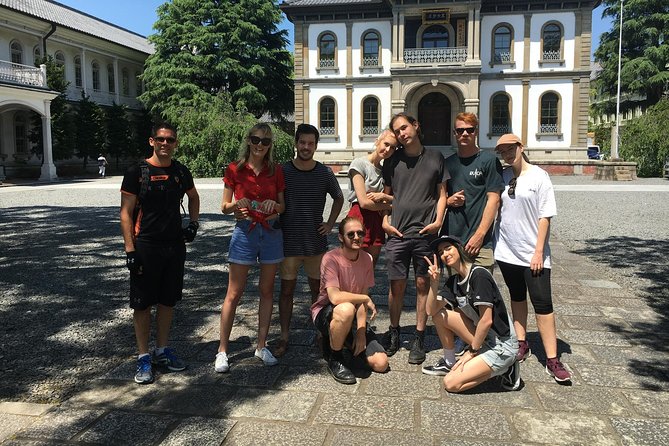
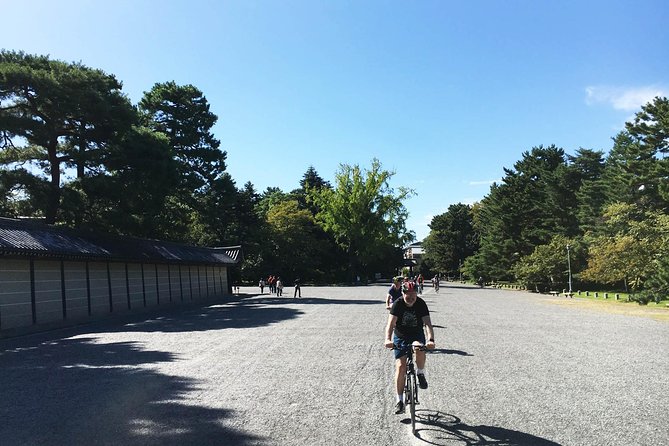
The route then passes through the grounds of the former imperial residence. The supplied schedule gives this stop no number, but it is an important part of the day. You ride through a broad, open area and hear about the imperial family’s former seat.
The change of setting is welcome. After temple buildings and shrine gates, the palace grounds give you room to breathe. Cycling also suits this part of Kyoto particularly well because you can appreciate the scale of the grounds without walking every stretch.
Between the major sights, the ride uses backstreets and quieter areas. This is where the bicycle earns its keep. You see ordinary Kyoto rather than only entrances, ticket gates, and souvenir shops.
Several guides have been praised for adding cultural details along the way. Quinn has spent more than 20 years in Japan, while Indra has been noted for explaining both Kyoto’s past and its place in Japanese culture. Jamie has used simple Japanese phrases, counting, and the names of the months to keep the group involved. Your exact guide will vary, but the experience can be much better when the guide treats the road between sights as part of the tour.
A few more Kyoto tours and experiences worth a look
Gion and the world of geisha
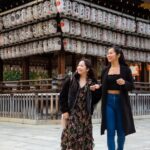
Gion is Kyoto’s famous geisha district and a place where good manners matter. The tour makes a short stop of about 15 minutes, giving you a look at the lanes and a basic explanation of the district’s traditions.
You might catch sight of a geisha or maiko, but there is no promise of that, and you should not treat the area like a stage set. The best approach is to keep your camera respectful, stay with the group, and listen to the guide’s explanation of the people who work and live there.
A bicycle lets you reach Gion without making it the entire focus of your day. You get an introduction, then continue to other parts of Kyoto. Some routes have included lunch in or near Gion, while other accounts describe a small family restaurant or noodle house. The exact restaurant is not specified, but lunch is included and is intended to be a substantial Japanese meal.
Tofuku-ji and the road to Fushimi Inari
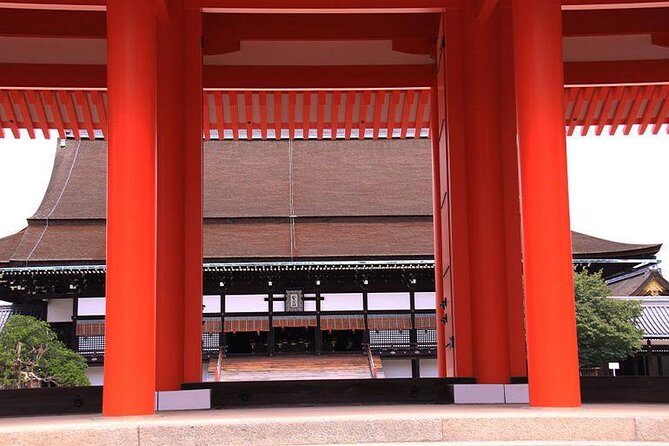
Tofuku-ji receives only a brief stop, around five minutes, but the setting is worth seeing. The temple is one of the oldest and largest Zen temples in Japan, and the bridge offers a notable view over its grounds.
Five minutes is enough for a quick look and a photograph, not a full temple visit. You should see this as a scenic pause rather than a detailed tour of the complex. If Tofuku-ji is high on your personal list, plan to return separately.
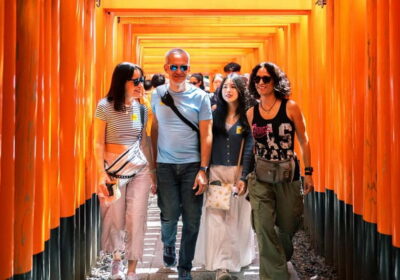
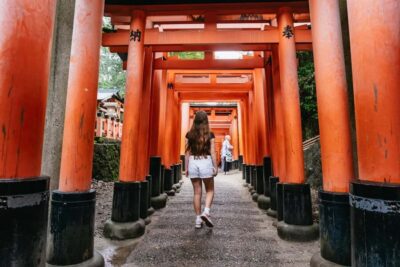
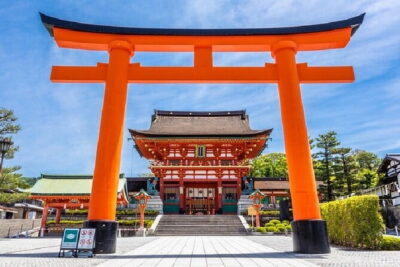
The final major stop is Fushimi Inari-taisha Shrine, famous for its thousands of orange torii gates. The full mountain route can take hours, and the lower section is often crowded. Your guide selects a practical path through the shrine area so you can experience the gates without trying to work out the route alone.
The stop lasts about 20 minutes, so you will not walk the entire torii trail. That is a sensible trade on a day already packed with cycling. You get the atmosphere and the essential view, then finish the ride back at the starting shop.
How hard is the 18 to 20 mile ride?
The route is often described as easy to follow and mostly flat. That does not mean effortless. Past rides have covered about 18 miles, with some reaching 20 miles, and one account also counted roughly 14,000 steps.
The walking comes from temple and shrine grounds, where bicycles cannot follow you. You may ride at a comfortable pace, then spend part of the day on foot, standing, climbing short paths, and moving through busy areas.
Your comfort will depend on weather, fitness, and how often you ride. In warm conditions, you may sweat even on flat streets. Bottled water is included, but you should still arrive ready for an active day.
The standard bike has a small front pouch for a phone and wallet. If you bring a backpack, you will carry it for the whole ride. Keep your load light, and use clothing that works for both cycling and temple visits.
Some riders choose an electric bike upgrade, but the available information does not specify its cost or exact terms. Ask about it before booking if you are unsure about the distance. Do not assume it removes the need for fitness, since you still have a long day of stops and walking.
What the guide can add to the day
The guide is the most variable part of this experience. A strong guide can turn a string of temples into a connected story about emperors, Buddhist institutions, Shinto practice, geisha culture, and daily life.
Names associated with past tours include Karl, Carl, Juan, Paul, Jay, Indra, Quinn, and Jamie. Several are described as funny, organized, attentive, and good with children. Karl has been praised for his command of Japanese history and for finding back roads through a sprawling city. Jay has been noted for taking group photographs and keeping the day lively.
That said, one less positive experience points out an important truth: the ride can still be enjoyable while the explanations fall short if the guide is unclear. This is a people-led tour, so the quality of the day depends partly on who leads your group.
The maximum group size of eight helps. It is small enough for questions and easier navigation, without the price of a fully private tour. Families with teens can do well here if the children already ride comfortably.
Lunch, water, and the real value of the price
Lunch is more than a small snack between temples. On a seven to eight-hour ride, a proper meal keeps the group moving and saves you the trouble of finding a restaurant during the busiest part of the day.
The exact menu and restaurant are not stated in advance. Past outings have included a traditional noodle house and a local family restaurant, and dietary requirements must be provided ahead of time. If you have food restrictions, tell the operator before the tour rather than waiting until lunchtime.
At $119.38, the tour makes the most sense if you want a single-day Kyoto overview and would otherwise pay separately for a bike, helmet, food, water, and several admissions. It is less attractive if you prefer slow visits, dislike group schedules, or only want to see one or two temple areas.
Free cancellation is available up to 24 hours before the start time. The tour requires suitable weather and a minimum number of participants. If poor weather or low enrollment cancels the outing, you are offered another date or experience, or a full refund.
Who should book this Kyoto cycling tour?
I would choose this tour for an active first visit to Kyoto, especially if you have limited time and want to understand the city’s layout. It also suits people who find long bus rides dull and want a closer look at neighborhoods between the headline attractions.
Families with riders aged 13 and above may enjoy it, provided everyone can manage a long day. The guides have handled children and teens well on past outings, but the distance remains the distance.
I would hesitate if you want a gentle half-day activity, have difficulty riding in city traffic, or prefer to spend an hour at each temple. I would also think twice in very hot or wet weather, since the tour can be canceled for poor conditions but may still feel demanding in ordinary summer heat.
Should you book it?
Book it if you want to see a large slice of Kyoto in one active day, with a small group, local-style lunch, and a guide who can connect the sights. The combination of famous places, quiet streets, and included equipment gives the price a fair case.
Skip it if your ideal Kyoto day is slow, quiet, and built around long temple visits. For everyone else, this is one of the more practical ways to cover the city’s wide spread of sights, as long as you arrive ready to pedal.
FAQ
Where does the Kyoto bike tour start?
It starts at Cycle Kyoto, 7 Higashikujō Nishisannōchō, Minami Ward, Kyoto, 601-8003, Japan.
Where does the tour finish?
The activity ends back at the Cycle Kyoto meeting point.
How long does the tour last?
The tour lasts approximately seven to eight hours.
How many people are in each group?
The group has a maximum of eight participants.
What equipment is included?
A high-quality Cannondale bicycle, helmet, and bottled water are included.
Is lunch included?
Yes. Lunch is included, and dietary requirements should be provided ahead of time.
What age must riders be?
Riders must be at least 13 years old and comfortable riding a bicycle.
What sights does the tour visit?
The route includes Nishi Honganji, Kitano Tenmangu Shrine, Kinkaku-ji, the former Imperial Palace grounds, Gion, Tofuku-ji Temple, and Fushimi Inari-taisha Shrine.
Can I cancel for a full refund?
Yes, if you cancel at least 24 hours before the experience start time. Cancellations or changes made less than 24 hours ahead are not refunded or accepted.
More Full-Day in Kyoto
More Cycling Tours in Kyoto

More tours in Kyoto we've reviewed


Full-Day, compared.
 ★ 4.5Kyoto: Full-Day English Guided Tour of Kyoto’s HighlightsFrom $88
 ★ 4.6Kyoto: Full-Day Guided Bus Tour to Top Highlights & TicketsFrom $50
 ★ 5.05 Top Highlights of Kyoto Full Day Bike Tour (E-bike option)From $172
 ★ 5.0Kyoto Private Car Tour – Full Day with Local Guide & Nara OptionFrom $170
 ★ 5.0Full Day Guided Tour to Kyoto and Nara from Osaka by VanFrom $96
 ★ 5.0Full Day Tour of Kyoto with Private TransportationFrom $247