
Reviewed · WORKSHOPS
Otsu-e Folk Art Workshop & Local Culture Walk Near Kyoto
Otsu-e folk art is the star here, but the route gives you much more than a craft lesson. With local guide Misato Takahashi, you walk through old shopping streets, taste small regional treats, see an actual festival float, and paint your own Otsu-e souvenir. The town is only about 10 minutes from Kyoto by train, yet it feels like a clear change of pace.
I like the small private format, which lets Misato adjust the walk to your interests. I also like the tasty details: mochi from a long-running sweets shop, a seasonal pickle, a retro snack, and welcome tea before you paint.
The main consideration is price. At $104.51 per person, plus the train fare and lunch, this is not a cheap add-on. You are paying for a private cultural guide, admissions, snacks, and a hands-on workshop, so it makes the most sense if you want more than a quick sightseeing stop.
In This Review
- Key points at a glance
- Why Otsu-e makes this Kyoto side trip different
- Starting near Otsu Station and Lake Biwa
- Sweets, dried food, and pickles along the old streets
- Festival floats and a preserved merchant house
- The Otsu-e shop and the family connection
- Tea, sweets, and your painting at Ichie Wado
- What $104.51 per person buys you
- Who will enjoy this Otsu experience most
- Should you book the Otsu-e workshop?
- FAQ
- How long does the Otsu-e experience last?
- Where does the tour start and finish?
- How much does the experience cost?
- Is transportation from Kyoto included?
- What can I paint during the workshop?
- Is lunch included?
Key points at a glance
- Paint a traditional Otsu-e design: Choose a Lucky Oni Bell or Three Wise Monkeys workshop and take your finished work home.
- Meet Otsu native Misato Takahashi: Her family connection to the Takahashi Shozan Otsu-e tradition gives the art lesson a personal local angle.
- Taste your way through old Otsu: Pick up Japanese sweets, dried food, a retro snack, and a seasonal pickle along the route.
- See an actual Otsu Festival float: The Hikiyama Exhibition Pavilion displays one of the large floats used in the city’s famous festival.
- Enter a preserved machiya house: Otsu Hyakuchokan offers a look at a traditional merchant home on the old shopping streets.
- Allow three and a half hours: The walking route and workshop suit people with moderate physical fitness, not anyone seeking a seated activity.
Why Otsu-e makes this Kyoto side trip different
Otsu-e is a form of folk painting that began in the Otsu area about 400 years ago. Unlike a museum visit, this experience lets you handle the tradition yourself. You learn about its history and features, then make a small work in the same broad artistic tradition.
The workshop is led by Misato Takahashi, an Otsu native and the daughter of Otsu-e artist Wado Takahashi. Her family is connected to the Takahashi Shozan master line, and the family’s work remains tied to the preservation of this local art.
That connection matters. You are not simply taking a generic Japanese painting class. The lesson is placed in the town where Otsu-e began, then linked to a working folk-art shop and a local family’s efforts to keep the practice alive.
You can choose between a Lucky Oni Bell and Three Wise Monkeys design. The lucky oni bell is especially appealing if you want something playful and distinctly Japanese to display at home. The finished piece becomes both a souvenir and a reminder of a day spent outside Kyoto’s main sightseeing circuit.
If you're still narrowing it down, here are other tours in Otsu we've reviewed.
Starting near Otsu Station and Lake Biwa
The route begins at the North ticket gate of Otsu Station, according to the walking plan. Otsu is an easy side trip from Kyoto, with the JR train taking about 10 minutes and costing JPY 200 per adult. A valid JR Pass covers that fare.
The meeting information also lists Ichie Wado Seminar House as the start and end point, so confirm the exact rendezvous instructions when you book. The tour finishes at Ichie Wado, where the painting session takes place. This is a small point, but it matters when you are planning a morning around train times.
From the station, the walk brings you past the ginkgo trees of Kekaiji Temple in Kyomachi. These trees once served as a notable landmark for boats on Lake Biwa. That detail gives you an early sense of how Otsu’s life was tied to the lake, shipping, and movement along the old routes.
The area is not presented as a grand sightseeing parade. It is a slower look at streets, shops, and local landmarks. Wear comfortable shoes and expect to spend much of the three and a half hours on your feet.
Sweets, dried food, and pickles along the old streets
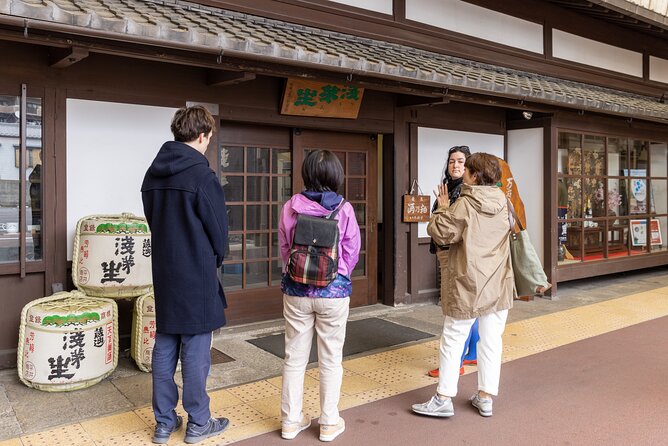
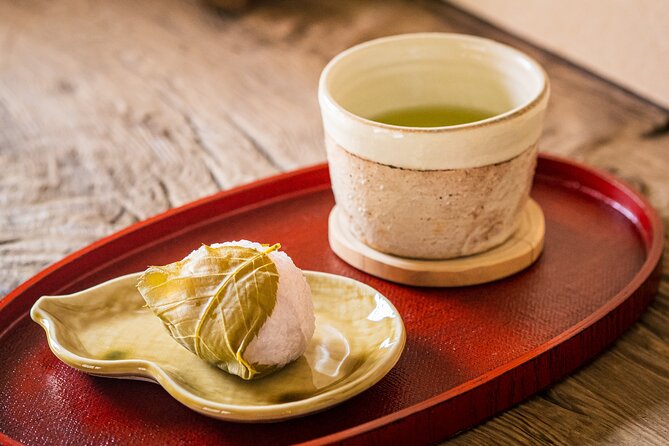
One of the pleasures of this experience is that food is used to introduce local life. At Mochihyo, a Japanese sweets shop facing the old Tokaido Road, you pick up sweets to enjoy later during the workshop.
The stop is short, around 10 minutes, but it adds flavor to the walk in both senses. Mochi was singled out as a highlight, so this is not just a token tasting. The exact selection can vary, but the plan is to carry the sweets with you for the painting session.
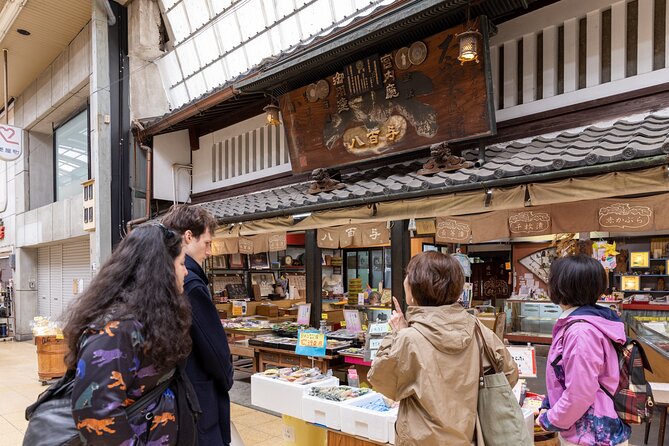
Next comes Senmaruya on Nakamachi Street. This long-running dried-food shop sells ingredients used in Japanese cooking, along with a retro snack. For you, the value is not only the snack itself. A shop like this shows how everyday Japanese food traditions are sold and preserved outside the polished department stores of central Kyoto.
The route then reaches Hirai Shoten in the Maruya-cho shopping arcade. This sake brewery has 365 years of history and sells its own local brand. The supplied details do not promise a sake tasting, so think of this as a chance to see a long-established producer and learn about its place in Otsu, rather than a drinking stop.
At Yaoyo, a pickle shop in the Hishiya-cho shopping arcade, you choose a seasonal pickle to enjoy later. Pickles are a simple but useful way to understand Japanese meals. They are not treated as an exotic extra here, but as part of the food kept on hand in ordinary households.
The small tastings are a strong part of the tour. One reported highlight was the pickled cucumber, described as the best the writer had tasted. You should not book this as a full food tour, though. The portions are snacks, and lunch is not included.
Festival floats and a preserved merchant house
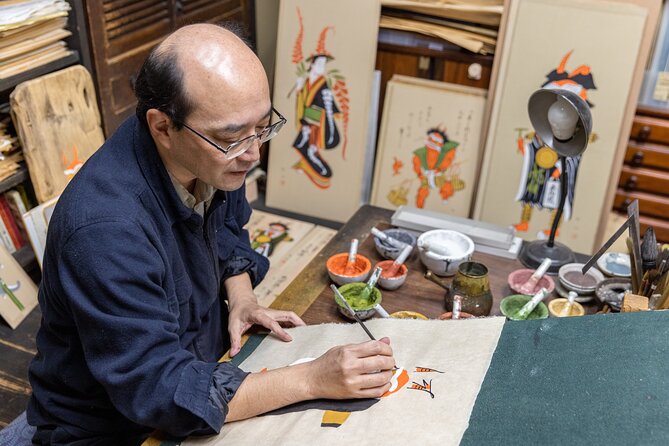
The Otsu Festival Hikiyama Exhibition Pavilion displays one of the actual floats pulled during the Otsu Festival. You get about 10 minutes here, with admission included.
That short visit gives the town’s festival tradition a physical focus. A float is very different from reading a paragraph about a festival. You can see the scale and craftsmanship of one of the objects used in the event, even if the festival itself is not taking place during your visit.
The next stop, Otsu Hyakuchokan, is more substantial at around 20 minutes. This preserved Otsu machiya merchant house shows the type of home and business space that once lined the old streets. Misato leads the house tour, and admission is included.
For me, this is one of the best stops for putting the rest of the walk in context. The shops selling sweets, dried foods, sake, and pickles are not random businesses placed along a sightseeing route. They fit into an older commercial pattern, and the machiya helps you picture how merchants lived and worked.
The walking pace is described as slower, which suits these stops. You are not rushing from one attraction to the next. Still, the tour requires moderate physical fitness, and there is no promise of a long rest period before the workshop.
The Otsu-e shop and the family connection
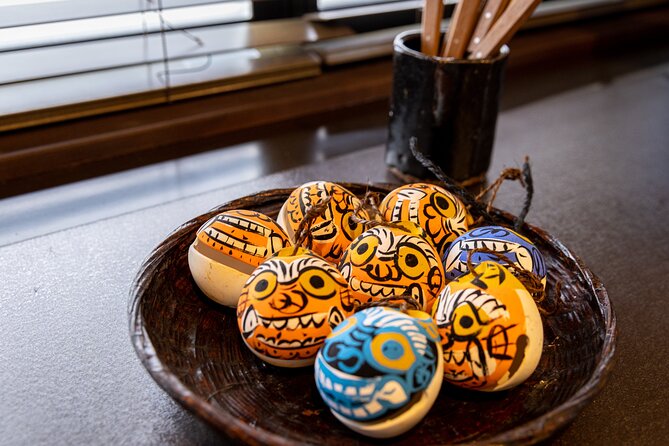
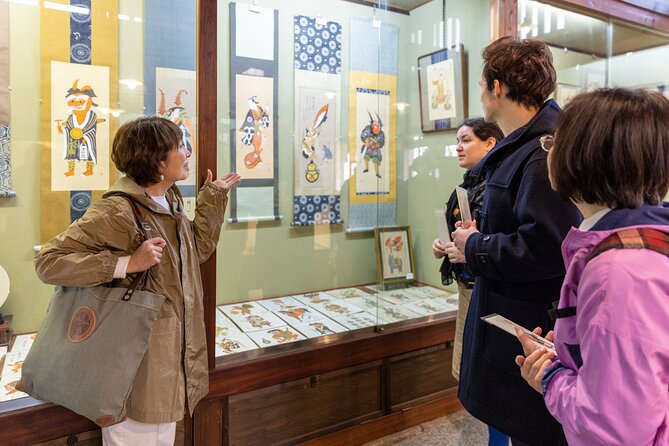
At Otsu-e no Mise on Miidera sando, you visit an Otsu-e folk-art shop and workshop. The business is succeeded by the fifth Takahashi Shozan, linking this stop to the family tradition behind Misato’s work.
The visit lasts about 20 minutes. It is a useful bridge between the town walk and the hands-on class. You first see the art in its local setting, then go on to make your own version.
This is also where the tour differs from a standard art class. The painting is not treated as an isolated activity. The streets, old shops, festival objects, and family story all help explain why this particular folk art belongs to Otsu.
If you are hoping for a large gallery or a long shopping session, adjust your expectations. The stop is brief, and the main making experience comes later at Ichie Wado.
Tea, sweets, and your painting at Ichie Wado
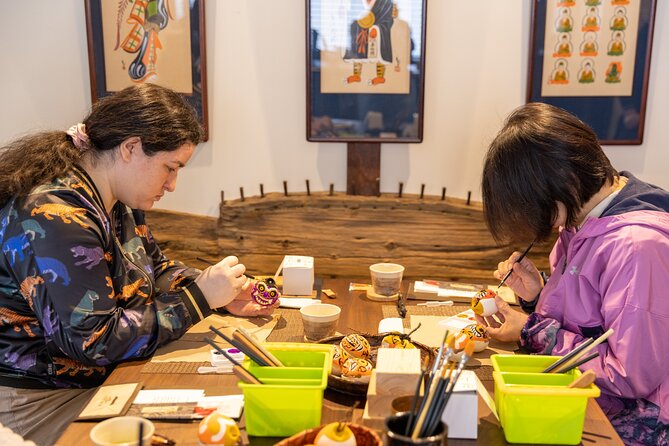
The final portion takes about 90 minutes at Ichie Wado Seminar House, in front of Nagara Jinja Shrine. This is the main event, and it gives the three and a half hour tour its shape.
You begin with a presentation about Otsu-e’s history and features. Welcome tea and sweets are served, along with the local snacks collected during the walk. This pause should feel welcome after several short stops and gives you time to enjoy what you picked up earlier.
Then you paint your chosen design, either the Lucky Oni Bell or Three Wise Monkeys. The supplied experience does not specify the exact teaching method or how much artistic skill is needed, so do not assume you will produce a museum-quality painting. The appeal is taking part in the process and carrying away an original Otsu-e souvenir.
The workshop has received especially strong praise for being fun and personal. One account describes painting an oni bell to take home, while another highlights Misato’s flexibility in shaping the experience around the group’s interests. That flexibility is a major benefit of a private activity.
You also avoid the pressure of keeping up with a large class. Only your group participates, so you can ask questions and spend more time on the parts that interest you. The activity ends at Ichie Wado rather than returning you to Otsu Station, so plan your onward route from the seminar house. A detailed area map to nearby stations is available.
What $104.51 per person buys you
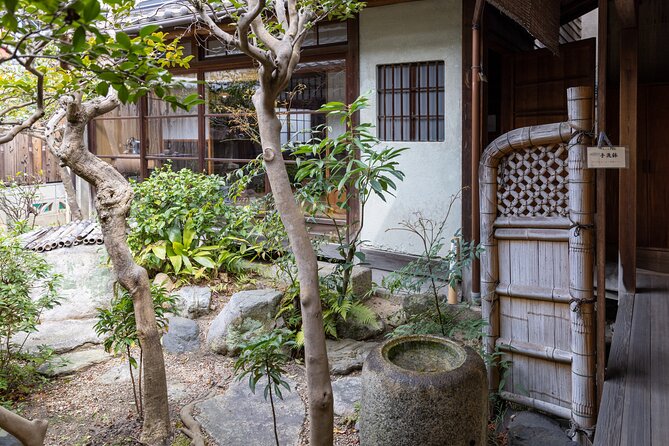
The listed price is $104.51 per person, with group discounts available. You still pay the JR fare from Kyoto to Otsu unless your rail pass covers it, and lunch is not included.
That price looks high beside a simple museum ticket or a self-guided walk. The comparison changes when you count what is included: an English-speaking professional guide, a private group format, the Otsu-e class, an original souvenir, welcome tea and sweets, local snacks, and admission to Otsu Hyakuchokan and the float exhibition hall, or alternative sites if needed.
I would judge the value by your priorities. If you want to see Otsu quickly and cheaply, use the train and explore on your own. If you want a guide to connect the old streets, food shops, festival culture, merchant houses, and folk art, the fee is easier to justify.
Group discounts may help if you are booking for several people. Since this is a private tour, it also works well for families or friends who prefer their own pace. The experience is less suited to someone who wants a major landmark checklist or a long lunch break.
Who will enjoy this Otsu experience most
I would recommend it to you if you enjoy local crafts, small food tastings, and the story behind ordinary town streets. It is particularly fitting for repeat visitors to Kyoto who want a nearby outing with a different feel.
Families may like the painting class and the oni bell design, though every participant should be comfortable with the walking involved. Art lovers will appreciate the direct link to the Takahashi Shozan tradition.
This is also a good choice if you want an English-language introduction to Otsu without arranging several separate admissions and stops. Misato’s local background and reported flexibility add value, especially if your group has a particular interest in food, architecture, or folk art.
You should think twice if your main goal is shopping, drinking, or a formal art lesson. The sake brewery is a sightseeing stop, not a promised tasting. The food items are snacks, not lunch. The painting is the central creative activity, but the details of the instruction and final size of the work are not specified.
Free cancellation is available until 24 hours before the start time. Changes or cancellations made inside that window are not accepted for a refund.
Should you book the Otsu-e workshop?
Book this tour if you want a quiet, personal look at Otsu and like the idea of bringing home something you made yourself. The strongest reasons are the private pace, Misato Takahashi’s family connection to Otsu-e, and the way the food shops and old buildings lead naturally into the workshop.
Skip it if you are counting every yen, have limited mobility, or want a full meal and a major attraction-packed day. For the right person, though, this is a thoughtful Kyoto side trip: close by train, grounded in local life, and far more hands-on than a quick stop at a famous temple.
FAQ
How long does the Otsu-e experience last?
The experience lasts approximately 3 hours and 30 minutes, including the walking route and the 1 hour and 30 minute painting workshop.
Where does the tour start and finish?
The walking plan starts at the North ticket gate of Otsu Station. The tour concludes at Ichie Wado Seminar House, 4-17 Kozekicho, Otsu. The meeting information also lists Ichie Wado as a start point, so confirm the exact meeting instructions when booking.
How much does the experience cost?
The listed price is $104.51 per person. Group discounts are available.
Is transportation from Kyoto included?
No. The JR train fare from Kyoto to Otsu is not included. The listed fare is JPY 200 per adult, and a valid JR Pass covers it.
What can I paint during the workshop?
You can choose an Otsu-e Lucky Oni Bell or Three Wise Monkeys painting. The finished work is included as an original souvenir.
Is lunch included?
No. The experience includes welcome tea and sweets, plus local snacks collected during the walk, but lunch is not included.
More Workshops & Classes in Otsu
More tours in Otsu we've reviewed
Workshops, compared.
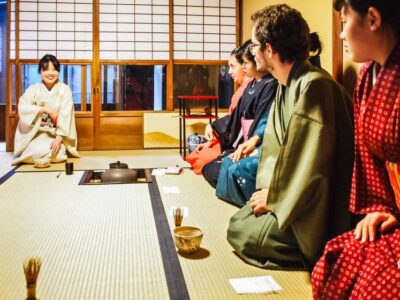 ★ 4.3Kyoto: 45-Minute Tea Ceremony Lesson ExperienceFrom $2245 min
 ★ 5.0Ramen Cooking Class at Ramen Factory in KyotoFrom $131
 ★ 4.9Kyoto: Ramen Cooking Class at a Ramen Factory with SouvenirFrom $1271h 30m
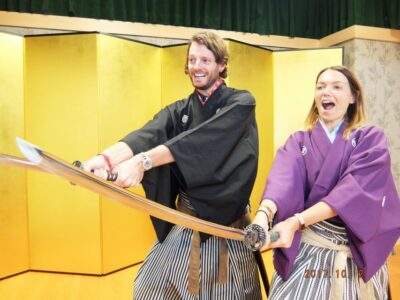 ★ 4.9Kyoto: Samurai Class, Become a Samurai WarriorFrom $70
 ★ 5.0Ninja 1-hour Hands-on Lesson by Japanese master in Kyoto -EntryFrom $80
 ★ 5.0Kyoto: Ramen, Gyoza, and Onigiri Cooking ClassFrom $901h 30m