
Reviewed · COOKING CLASSES
Kyoto: Ramen, Gyoza, and Onigiri Cooking Class
The clever part of this Kyoto cooking class is its focus on ramen broth, the piece most home cooks cannot simply pick up at a supermarket. You make both miso and shoyu-style soup with familiar seasonings, then build a full meal with gyoza and onigiri.
I like the practical recipes and the small groups, which make it easy to ask questions. I also like that you eat everything you prepare, rather than watching a demonstration and leaving hungry. The main caution is dietary: the class cannot handle vegan, pescatarian, gluten-free, or other special diets, despite a few individual accounts of extra accommodations.
In This Review
- Key points to know before booking
- Why the ramen broth is the real lesson
- A fast start with pre-portioned ingredients
- Making gyoza, from filling to first fold
- Shaping onigiri into a useful lunch
- Eating the meal you have just made
- What the small group changes
- The vegetarian rule needs careful reading
- Is $90 a fair price in Kyoto?
- Who will enjoy this Kyoto cooking class?
- My practical verdict
- FAQ
- Where is the Kyoto ramen cooking class held?
- How long does the cooking class last?
- What dishes will I make?
- Are ramen noodles made during the class?
- Is the class taught in English?
- How many people can join?
- Are vegetarian, vegan, or gluten-free menus available?
- What age must participants be?
- What is included in the $90 price?
Key points to know before booking
- Two ramen broths: Prepare miso and soy sauce bases with ingredients you can find at home.
- Hands-on gyoza practice: Learn the filling, folding, sealing, and pan-frying process.
- Onigiri included: Shape seasoned Japanese rice balls, a simple skill you can repeat for lunches.
- Small English-speaking class: The group is limited to eight, with instructors such as Nori, Kairi, Aoi, Minori, Ayuna, and Riho helping at the stations.
- A full meal in 90 minutes: The pace is brisk, and the portions are generous enough that you should arrive hungry.
- Important food limits: Only the regular menu and a pork-replaced-by-tofu vegetarian menu are officially offered.
Why the ramen broth is the real lesson
Many cooking classes teach you to assemble a dish. This one puts its main effort into the soup. That is a useful choice because ramen noodles are often easy to buy, while a good broth is harder to reproduce at home.
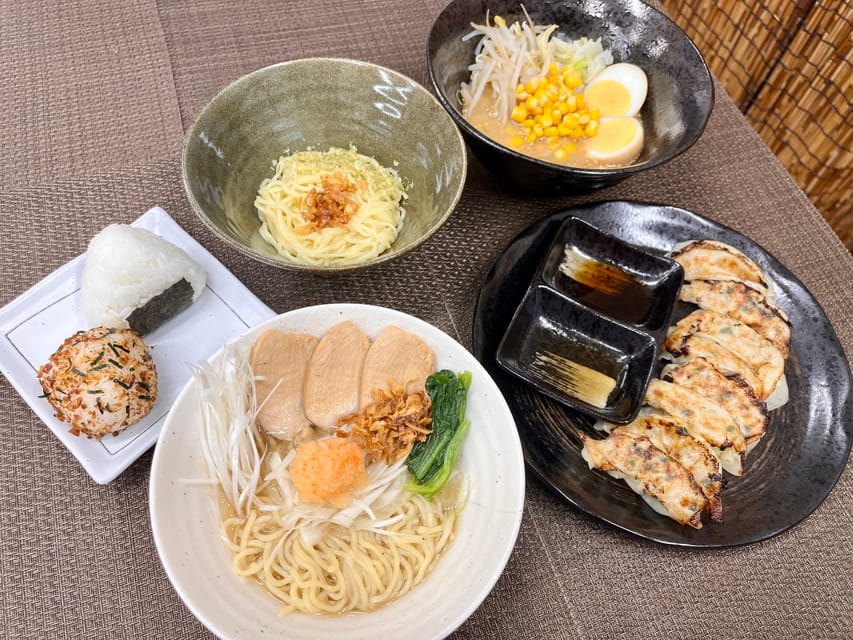
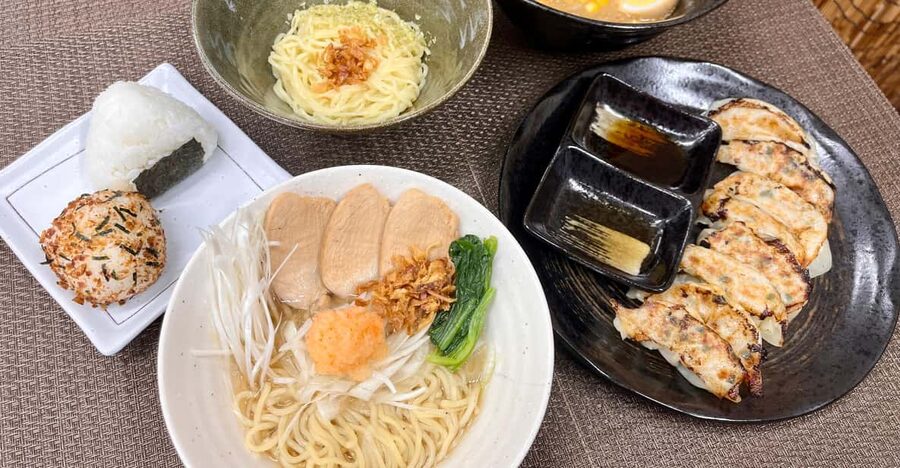
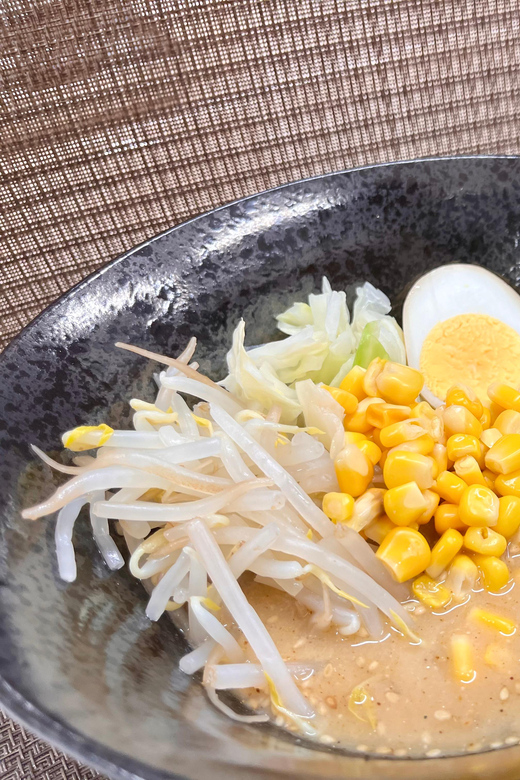
You prepare two styles. The miso ramen is paired with boiled egg, bean sprouts, green onions, and sweet corn. The shoyu ramen uses chicken, bamboo shoots, and green vegetables. The toppings are deliberately mild, since the soup carries the stronger flavor.
The ingredient list is practical rather than exotic. Chicken stock powder, soy sauce, oyster sauce, sesame oil, garlic, ginger, mirin, miso, butter, fish powder, chili oil, cooking sake, and common seasonings do most of the work. Ground pork, onion, chives, cabbage, and other easy-to-find ingredients complete the meal.
I find that approach useful for a home cook. You are not being asked to spend a fortune on a rare stock, an elaborate kitchen setup, or ingredients that will sit unused in your cupboard. The class shows how a few well-balanced seasonings can turn a basic stock into something satisfying.
There is one point to understand before you arrive: you do not make ramen noodles. The noodles are supplied or prepared separately, and the lesson concentrates on the broth and toppings. For most people, that is a sensible trade. Homemade noodle production would take much longer and would leave less time for the other dishes.
Other cooking classes in Kyoto

A fast start with pre-portioned ingredients
The class takes place in a basement room at the Life Building, one street back from the main road. The meeting point can be easy to miss, so search Google Maps for Manryo cooking class ahead of time. If you take a taxi, the useful landmark is the Family Mart at Sanjo Keihan, followed by a walk of about two minutes.
Arrive around ten minutes early. The side-street location has caused some people to lose time finding the entrance, and a late arrival would be especially awkward in a 90-minute class.
Once inside, the setup is designed to keep the cooking moving. Ingredients and equipment are ready at the stations, and much of the measuring has already been done. That means you spend less time weighing and chopping, and more time learning the key steps.
The tradeoff is that this is not a professional chef apprenticeship. You will not spend an hour breaking down a chicken or preparing every ingredient from scratch. It is closer to a guided home-cooking workshop, with the fiddly preparation removed so you can complete four dishes in a short sitting.
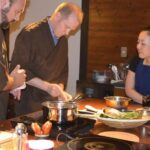
The instructors speak English and explain the ingredients, cooking methods, and some background about the dishes. Nori is frequently named as the lead teacher, while Kairi, Aoi, Minori, Ayuna, Riho, and other assistants help at the cooking stations. The teaching style is friendly and light, but the class still moves with purpose.
Making gyoza, from filling to first fold
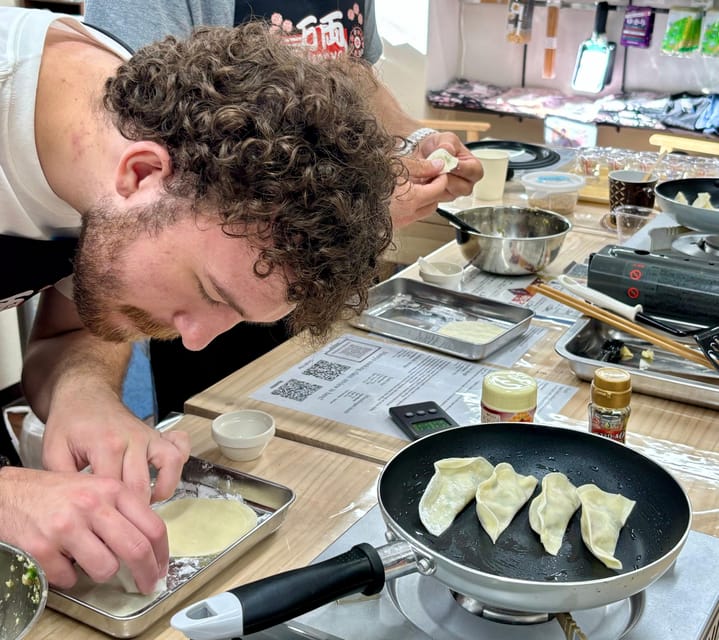
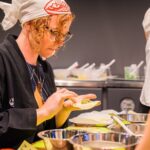
The gyoza section gives you the most tactile work. You combine a filling of ground pork, cabbage, onion, chives, garlic, ginger, and seasonings, then learn how to balance meat, vegetables, and liquid flavorings.
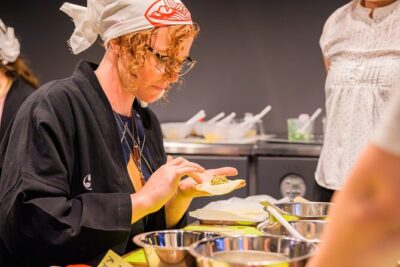
The important skill is not just mixing the filling. You also learn how much to place in each wrapper, how to moisten the edge, and how to fold and seal the dumpling so it keeps its shape during cooking. The instructors demonstrate the technique and then let you repeat it.
If you have never folded gyoza, the first few may look uneven. That is part of the fun, and the small group size helps. With no more than eight participants, an instructor can correct your grip or show you the fold again without stopping the whole room.
The finished dumplings are pan-fried, giving them a crisp base and a softer top. This is one of the most useful parts to repeat at home because the basic filling can be adjusted, frozen, and cooked in batches.
The class promises to teach the full gyoza process, but keep your expectations sensible. You are learning a reliable method, not training for a dumpling competition. The pre-measured setup makes the work accessible, though it also means the class is partly assembly rather than complete ingredient preparation.
Shaping onigiri into a useful lunch
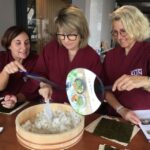
Onigiri are Japanese rice balls, often filled or seasoned and shaped by hand. They are simple food, but the shaping takes a little practice. You learn how to form neat rice balls that hold together without becoming hard or overpacked.
This is a good addition to the menu because it breaks up the heavier ramen and gyoza. Onigiri also has clear value after your holiday. It can become a quick lunch, a picnic food, or a practical alternative to sandwiches.
The lesson focuses on shape and handling rather than complicated cooking. That makes it approachable for beginners. You can leave with a technique you are likely to use, not just a dish you enjoyed once in Kyoto.
The exact range of onigiri fillings is not specified, so do not book this expecting a large tasting menu of rice-ball varieties. The strength is the basic method and the chance to make the food yourself.
Eating the meal you have just made
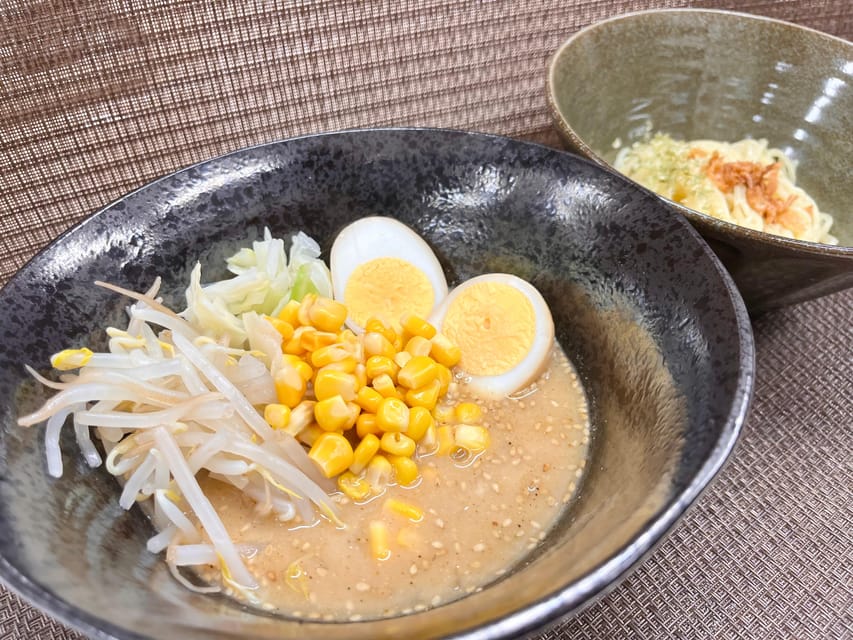
The cooking ends at the table, where you eat the ramen, gyoza, and onigiri prepared during the class. The meal is described as generous, and several participants found it filling enough to advise skipping breakfast or arriving with a light appetite.
You may also be able to buy beer after the meal, but it is not part of the listed inclusions. Coffee and tea are included, giving you a simple drink option during or after the class.
The food is designed for balance. The ramen toppings are restrained so they do not overpower the broth. The gyoza offers a crisp, savory contrast, while the onigiri adds rice and seasoning in a more compact form.
I like this format because the meal gives immediate proof that the methods work. You can taste the difference between miso and shoyu broth, compare the textures of the dumplings, and see how the rice-ball shape holds together before trying the recipes at home.
The meal can also make the timing feel tight. Cooking four items in 90 minutes requires a brisk rhythm, and you should be ready to listen, work, and eat without long pauses. That pace suits people who want a lively activity, but it may feel rushed if you prefer a slow, leisurely kitchen lesson.
Other cooking classes in Kyoto
What the small group changes
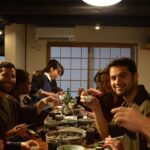
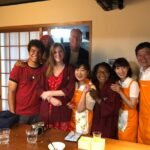
Eight people is the stated limit, and some sessions have been smaller. A very small group can feel almost private, with more time for questions about Japanese ingredients, cooking methods, or kitchen tools. One account described a class with only two participants, while another group of three had three people teaching and assisting.
That staff-to-participant ratio is a real advantage. The instructors can help with gyoza folds, watch your seasoning, and keep the meal moving. English explanations are intended for international visitors, and the class is specifically offered in English.
The atmosphere is social without requiring you to arrive with a large party. You can book as a couple, family, or solo participant and still have a shared cooking experience. The instructors also add short explanations about the origins of the dishes and Japanese food culture, so the class is not only a sequence of kitchen tasks.
The small setting does not mean unstructured free time. The ingredients are prepared, the stations are organized, and the teachers guide the order of work. If you want to experiment freely or design your own recipe, this may be too directed. If you want a smooth first introduction, the structure works well.
The vegetarian rule needs careful reading
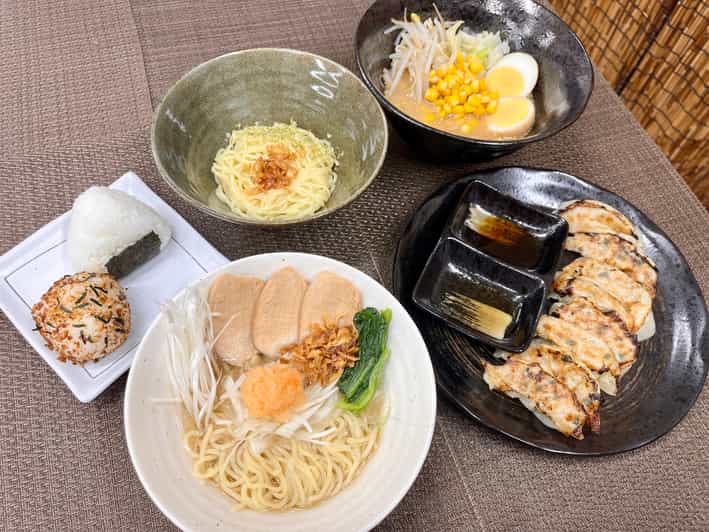
The official food choices are limited. The regular menu includes meat and fish-based ingredients, and the vegetarian menu replaces pork with tofu. Other ingredients remain the same.
That last point matters. The class does not officially accommodate vegans, pescatarians, gluten-free diets, or any other special diets. The listed ingredients include oyster sauce, fish powder, chicken stock powder, and cooking sake, so you should not assume that swapping the meat will solve every dietary concern.
A few individual accounts describe special arrangements, including vegan or pescatarian substitutions. Those are exceptions, not a dependable menu promise. I would contact the provider directly before booking if you have any restriction, allergy, intolerance, or medical concern. If your needs are strict, this is best treated as unsuitable unless you receive clear confirmation.
The experience is also not designed for young children who need hands-on assistance. The instructions say participants must be at least 13 and able to cook independently. Some families have attended with children younger than that, but the formal rule is the safer guide when deciding for your own group.
Is $90 a fair price in Kyoto?
At $90 per person, this is not a bargain meal. You can eat ramen, gyoza, and rice dishes for less in Kyoto. The question is what you want from the 90 minutes.
The fee includes an English-speaking instructor, all ingredients, equipment, the food you make, recipes for ramen and gyoza, and free coffee and tea. You are paying for instruction, a prepared cooking station, a small group, and the chance to repeat the dishes at home.
I consider the value strongest for people who will actually use the recipes. The broth lesson uses accessible ingredients, and the gyoza method can become a useful home meal. If you only want to taste ramen, a restaurant offers better value. If you want a social activity and a practical souvenir in the form of cooking skills, the price is easier to justify.
The menu also gives you a substantial meal. You make two ramen styles, dumplings, and onigiri, so this is more than a brief demonstration followed by a snack. Still, do not confuse quantity with a long culinary course. The pace and pre-portioned ingredients keep the class efficient.
Free cancellation is available up to 24 hours before the start time, and you can reserve now and pay later. Only one reservation should be made per group. Multiple bookings under the same name can be cancelled, since they hold places that other people could use.
Who will enjoy this Kyoto cooking class?
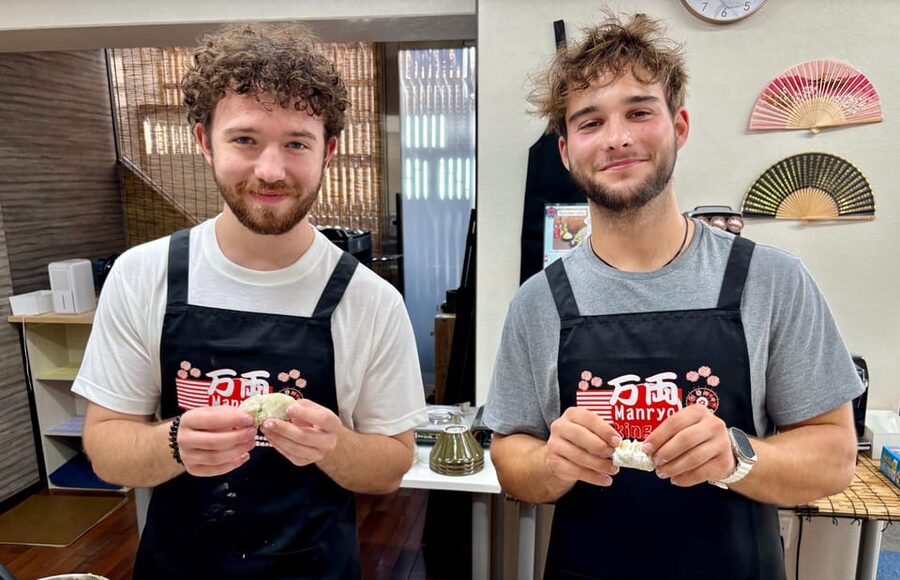
I would choose this class for:
- Couples looking for an indoor Kyoto activity with a meal included.
- Families with teenagers who can cook independently.
- Solo visitors who enjoy meeting people in a small group.
- Ramen fans who want to understand broth rather than only eat noodles.
- Home cooks who want straightforward Japanese recipes.
- Visitors seeking a short activity that fits between sightseeing plans.
It is less suitable for anyone seeking noodle-making, a formal chef qualification, a long market visit, or a flexible menu. It is also a poor match for vegans, pescatarians, people with gluten intolerance, and people with other strict food requirements.
Wear comfortable clothes and shoes. Wheelchair users and people with recent surgeries are listed as unsuitable, so check the physical requirements before paying.
My practical verdict
I like the way this class turns familiar Japanese comfort food into a usable home lesson. The broth focus is smart, the gyoza folding gives you a clear hands-on skill, and the onigiri adds an easy lunch idea. The instructors, especially Nori and the supporting teachers, appear to keep the tone warm while staying organized.
The strongest praise centers on three things: friendly English instruction, careful preparation, and a surprisingly large amount of delicious food in a short time. Those are exactly the areas that matter most in a cooking class.
Book it if you want to cook, eat, and leave with recipes. Skip it if your main goal is noodle-making, a slow culinary tour, or a reliably adaptable diet. For an eligible visitor, $90 buys a well-packed Kyoto food experience with skills you can carry into your own kitchen.
FAQ
Where is the Kyoto ramen cooking class held?
The classroom is in the basement level B1 of the Life Building. It is one street away from the main road. Search for Manryo cooking class on Google Maps, and if taking a taxi, get off near the Family Mart at Sanjo Keihan.
How long does the cooking class last?
The class lasts 90 minutes. Starting times vary, so you need to check availability for the date you want.
What dishes will I make?
You will make miso ramen, shoyu ramen, gyoza, and onigiri. The class focuses on ramen broth rather than making ramen noodles.
Are ramen noodles made during the class?
No. The class teaches you how to prepare the broth using ingredients and seasonings that are practical for home cooking. Ramen noodles are not made in the class.
Is the class taught in English?
Yes. English-speaking instructors lead the class and explain the cooking steps and ingredients.
How many people can join?
The class is limited to eight participants. Some sessions may have fewer people, depending on bookings.
Are vegetarian, vegan, or gluten-free menus available?
The official options are a regular menu and a vegetarian menu in which pork is replaced with tofu. Vegan, pescatarian, gluten-free, and other special diets cannot be accommodated according to the stated conditions.
What age must participants be?
Participants must be at least 13 and able to cook independently without staff assistance. Children under 12 are listed as unsuitable for the activity.
What is included in the $90 price?
The price includes the English-speaking instructor, ingredients, cooking equipment, the food you prepare, recipes for ramen and gyoza, and free coffee and tea. Hotel pickup and drop-off are not included.
More Workshops & Classes in Kyoto
More Cooking Classes in Kyoto
More Cooking Classes in Kyoto
More tours in Kyoto we've reviewed






Cooking Classes, compared.
 ★ 5.0Ramen Cooking Class at Ramen Factory in KyotoFrom $131
 ★ 4.9Kyoto: Ramen Cooking Class at a Ramen Factory with SouvenirFrom $1271h 30m
 ★ 5.0Kyoto: Japanese Washoku Bento Small Group Cooking ClassFrom $582h 30m
 ★ 4.9Kyoto: Afternoon Japanese Izakaya Cooking ClassFrom $673 hours
 ★ 5.0Izakaya Style Cooking ClassFrom $71
 ★ 5.0Gyoza Cooking Class in Kyoto: Traditional Japanese DumplingsFrom $118