
Reviewed · SAMURAI & KENDO EXPERIENCES
Ninja 1-hour Hands-on Lesson by Japanese master in Kyoto -Entry
The best part of this Kyoto activity is that you do more than dress up and pose. Inside a small dojo, you learn ninja breathing, walking, and meditation, then try a sword, shuriken, kunai, and blowgun under close instruction. Sho and Jack are among the instructors praised for clear English, humor, and strong command of ninja history.
I like the small maximum group of six, which gives you time to practice rather than watch from the back. I also like the family-friendly mix of history, movement, secret rooms, and safe target practice. The tradeoff is simple: at one hour, this is a lively introduction, not a serious martial arts course, and adults seeking a detailed study of ninja history may find it high-level.
In This Review
- What makes this one-hour lesson worth your time
- Getting started at the Kyoto dojo
- Kuji-In meditation, breathing, and the ninja walk
- The trick house and secret dojo features
- Sword training in a controlled setting
- Shuriken, kunai, and blowgun practice
- What the one-hour schedule really gives you
- Is $80.58 a fair price?
- Who will enjoy this most?
- Practical details before you book
- Should you book the Kyoto ninja lesson?
- FAQ
- Where does the ninja lesson take place?
- How long does the ninja lesson last?
- How many people can join the class?
- Is the lesson taught in English?
- What activities are included?
- Is ninja clothing provided?
- Is transportation included?
- Can I cancel for a full refund?
What makes this one-hour lesson worth your time
- A real hands-on format: You handle and practice with swords, kunai, shuriken, and a ninja blowgun.
- A compact Kyoto dojo setting: The training takes place at NINJA DOJO and STORE KYOTO, rather than on a sightseeing bus or in a large theater.
- A group capped at six: The small class size helps the instructor correct movements and keep weapon practice controlled.
- More than weapons: Kuji-In meditation, breathing, stealth walking, and a ninja trick-house demonstration add useful context.
- Good for mixed ages: Families with children as young as seven, couples, teenagers, and adults all have something to do.
- A clear one-hour choice: It fits neatly between temples, shopping, and meals, though a longer two-hour class may suit serious ninja fans better.
Getting started at the Kyoto dojo
You meet at NINJA DOJO and STORE KYOTO, at 528 Hakurakutencho, second floor, in Shimogyo Ward. The location is near public transportation, and the activity returns you to the same meeting point, so you do not need to arrange a ride at the end.
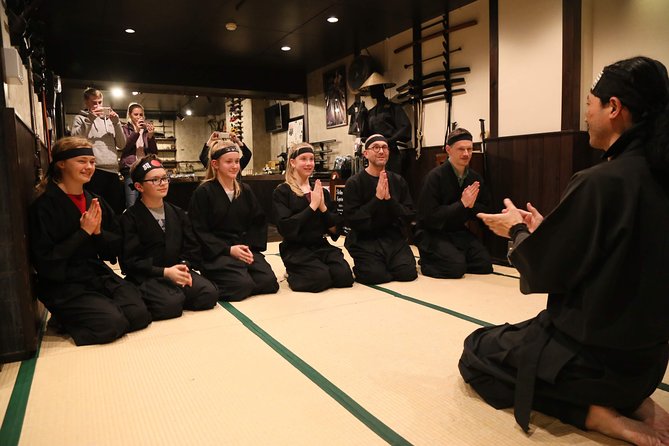
The lesson begins with ninja clothing rental. This is not just a photo opportunity. Changing into the outfit helps set the tone, especially for children, and makes the class feel separate from an ordinary sightseeing stop. It also gives you a practical souvenir option, since the dojo and store have ninja-related items for sale.
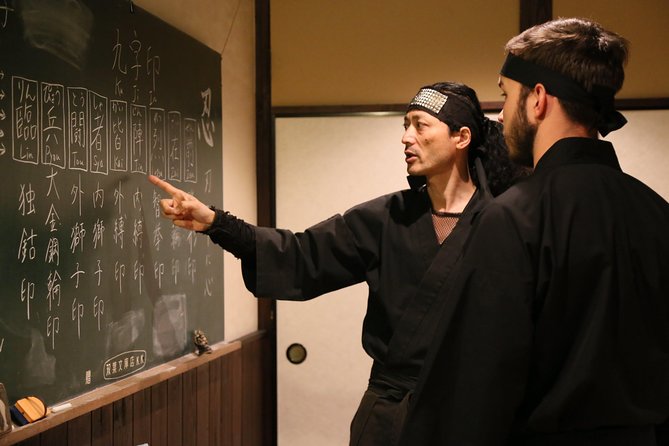
The class is taught in English by a Japanese Sensei trained in Ninja-Arts. Sho and Jack are names associated with especially lively instruction, but your teacher may be someone else. The key point is that the session is designed for English-speaking visitors, with explanations and demonstrations built into the hour.
The room itself has Japanese-style features and ninja artifacts. That setting matters because the lesson is not simply a weapons game laid out in a hotel conference room. At the same time, keep your expectations sensible. The experience is made for visitors, and some parts have a playful, theatrical feel.
A few more Kyoto tours and experiences worth a look

Kuji-In meditation, breathing, and the ninja walk
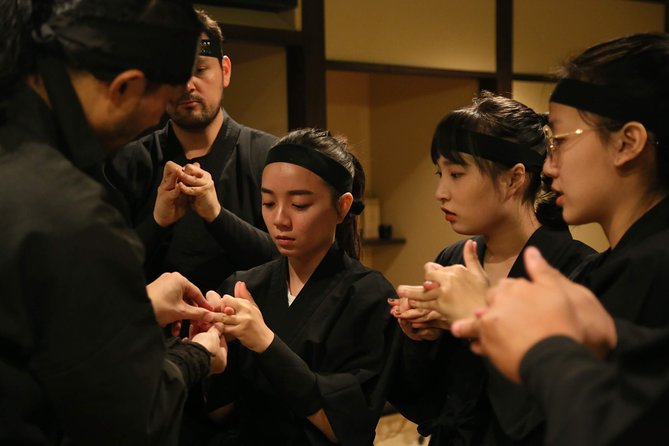
The first part introduces the mental and physical habits connected with ninja training. You practice Kuji-In meditation, a ritual form of hand positions and concentration, followed by breathing techniques and a special walking method.
The walking lesson is one of the more unusual parts of the hour. You learn to move quietly and carefully rather than simply crouching and creeping as movie ninjas do. A later demonstration uses a dark floor with spikes, showing how the ninja walk helps you avoid hazards. The instructor guides you through it, so the point is technique and control, not danger.
This opening section gives the weapons practice some context. You are not simply handed a plastic star and told to throw it. You first learn how a ninja might use stillness, breath, balance, and quiet movement. The explanation is brief, but it helps connect the physical exercises to the larger idea of stealth.
Do not expect a long meditation session. The class moves at a brisk pace because the hour also includes several tools and demonstrations. If you enjoy calm, detailed instruction, you may wish the breathing and Kuji-In portion lasted longer. If you are with children, the quick change of activities helps hold attention.
The trick house and secret dojo features
The lesson includes an introduction to gimmicks and traps in a ninja trick house. Secret doors and trap doors in the walls are part of the appeal, and children often enjoy seeing how the space works before moving on to the weapons.
This is also where the experience can feel most playful. You are not exploring a preserved historical residence, and the trick-house elements are presented as an interactive demonstration. Still, they provide a useful look at how ninja stories draw on hidden passages, misdirection, and surprise.
I would treat this section as a bonus rather than the main reason to book. The strongest value comes from the combination of explanation and practice. The secret features add atmosphere and give you good photographs, especially if you are visiting Kyoto with children or teenagers.
Some sessions also include extra personal touches from the instructor. Jack, for example, has been praised for sharing information beyond the basic lesson and even demonstrating the shamisen during a conversation about instruments. That kind of moment depends on the teacher and the group, so do not book expecting a music demonstration, but it shows the warm, flexible style this activity can offer.
Sword training in a controlled setting
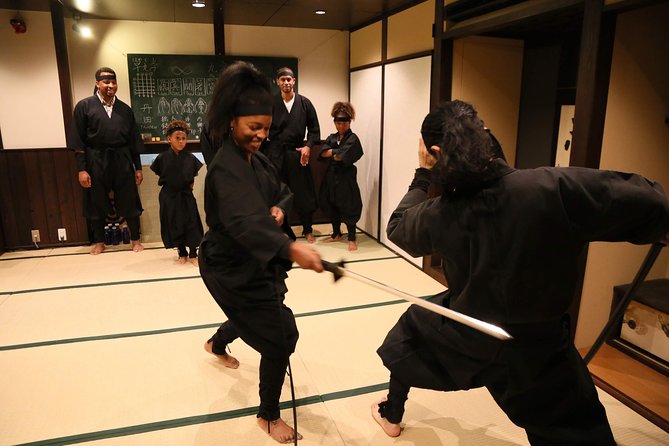
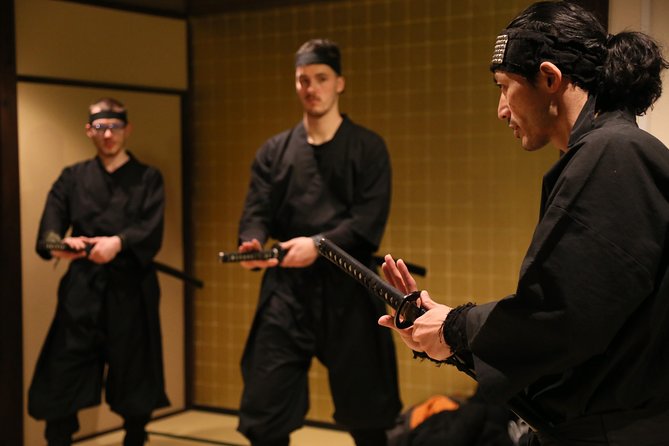
The sword portion begins with a demonstration. You then practice basic handling and movement under instruction. The emphasis is on learning a technique and following directions, not on free sparring or combat.
That distinction matters. The experience lets you hold and use a ninja sword, but it is not a certification course or a full martial arts lesson. The teacher controls the pace and shows you how to move safely. This makes it suitable for beginners who have never handled a sword.
For families, sword practice is often the moment when the class feels most special. Children get a clear task and adults can join rather than simply take photographs. You should still listen closely and follow the Sensei’s instructions. The activity includes weapons, even though the training is structured for general participation.
The sword lesson also helps separate this experience from a simple costume session. You are learning a movement sequence and gaining a small sense of the discipline involved. It will not turn you into a ninja in an hour, but it gives you a memorable physical connection to the subject.
Shuriken, kunai, and blowgun practice
The most hands-on part of the class brings out several ninja tools. You practice throwing shuriken, often called ninja stars, and kunai daggers at wooden targets. You also try a ninja blowgun with darts.
The targets give you a clear goal and keep the activity organized. You can see how your technique changes from one attempt to the next. Blowgun practice is especially popular because it feels unfamiliar and requires a different kind of breath control than throwing.
The instructor explains the purpose and use of the tools before you try them. You may also practice other simple throwing methods, including a chopstick toss mentioned by families who found it surprisingly difficult. These small challenges add laughs without requiring athletic ability.
Safety is taken seriously. The lesson is not built around speed or competition, and the teacher supervises the weapon work. Still, you need to pay attention, especially when children are involved. The activity is described as suitable for most participants, and service animals are allowed, but the presence of weapons means good listening is essential.
The range of tools is a major reason the one-hour class moves quickly. You do not spend the whole session mastering one skill. Instead, you get a sampler of ninja methods, with enough practice to understand what each tool demands.
A few more Kyoto tours and experiences worth a look



What the one-hour schedule really gives you
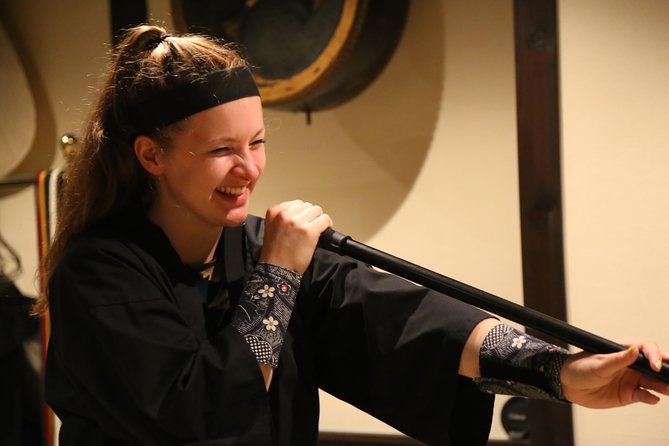
One hour sounds short, but the class packs in meditation, breathing, walking, trick-house features, sword work, kunai, shuriken, and blowgun practice. The pace is active, which is why the lesson tends to feel full rather than drawn out.
The limitation is depth. You receive an introduction to ninja history and methods, but not a long historical lecture. You will leave with a better sense of the tools and training ideas, not a detailed academic account of ninja life.
The one-hour format works well as a family activity or Kyoto afternoon break. It gives you something physical after a morning of shrines and temples, and the dojo is air-conditioned according to the experience details. That can be welcome during a hot day, though the activity also has a weather-related cancellation policy.
If ninja culture is a central interest, check if the two-hour version is available. Several participants wished they had booked more time after enjoying the first hour. The longer option would likely give the instructor more room for history and repeated practice, though the information provided here covers the one-hour entry lesson.
Is $80.58 a fair price?
At $80.58 per person, this is not a cheap way to fill sixty minutes. You are paying for a specialist-led class, clothing rental, admission, a small group, and the use of several training tools in a central Kyoto location.
The value improves if you are a family or couple looking for a shared activity rather than another museum ticket. Everyone takes part, photographs are often taken and shared at no extra cost, and the class gives you a story to talk about after you leave. A child who is tired of looking at temples may remember this hour more clearly than another display case.
The price is harder to justify if you want serious martial arts instruction or a long history lesson. The class is introductory and designed to entertain as well as teach. You should see it as a cultural activity with practical demonstrations, not as a professional training seminar.
The maximum of six helps support the cost. A large group would make sword and throwing practice less personal. With fewer people, the instructor can demonstrate movements, watch your attempts, and keep the session moving.
Who will enjoy this most?
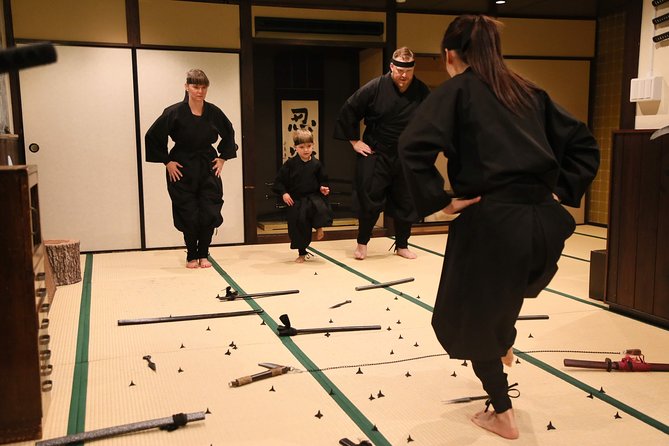
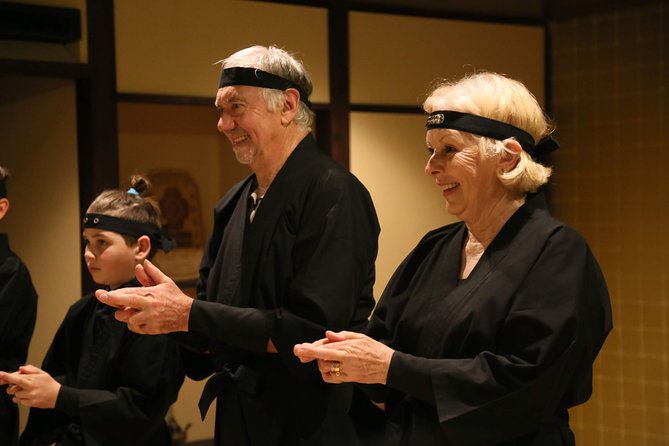
I would recommend this for families with older children, teenagers, couples, and adults who like unusual cultural activities. Children around seven have taken part successfully, and the class can work well for mixed-age groups because everyone can try the tools at a basic level.
It is also a smart choice for fans of ninja fiction and anime. One participant joked that watching Naruto may give you a slight advantage, but the class does not require prior knowledge. You only need curiosity and a willingness to follow instructions.
You may want to skip it if you dislike costume activities, staged trick-house features, or short introductory lessons. Some adults may find the presentation a little gimmicky, especially if they want an entirely traditional or scholarly experience.
The best mindset is to expect serious instruction delivered in a playful format. The history and techniques have substance, but the class is built to make you laugh, take photographs, and try several skills in quick succession.
Practical details before you book
Confirmation is provided when you book, and the experience uses a mobile ticket. Plan to reach the dojo at the stated meeting time, since the one-hour schedule is compact and a late arrival can reduce your practice time, even though an instructor has accommodated late participants in at least one case.
The activity ends back at the meeting point. Hotel pickup and drop-off are not included, and food and drinks are not provided, so plan those separately.
Most people can participate, and service animals are allowed. The booking information says the activity requires good weather and a minimum number of participants. If poor weather or low enrollment forces cancellation, you can receive a different date or a full refund.
Free cancellation is available up to 24 hours before the local start time. Canceling or changing the booking less than 24 hours ahead does not qualify for a refund, so leave room in your Kyoto schedule if your plans are uncertain.
Should you book the Kyoto ninja lesson?
Book it if you want a hands-on Kyoto memory with sword handling, target throwing, blowgun practice, ninja walking, and a little history in one compact class. The small group, English instruction, clothing rental, and family-friendly structure give it more substance than a simple dress-up photo stop.
Do not book it expecting a complete education in ninja history or advanced combat training. For that purpose, the hour is too short and too visitor-friendly.
For most families and first-time visitors, I think the mix works. You get an active break from sightseeing, the chance to try several unusual skills, and a dojo setting that feels more personal than a large stage show. If your child is fascinated by ninjas, this is likely worth a place in your Kyoto plans. If you are a serious adult martial arts student, choose the longer class if available and treat this one-hour session as an entertaining introduction.
FAQ
Where does the ninja lesson take place?
The class begins and ends at NINJA DOJO and STORE KYOTO, located at 528 Hakurakutencho, second floor, in Kyoto’s Shimogyo Ward.
How long does the ninja lesson last?
The entry-level lesson lasts approximately one hour.
How many people can join the class?
The activity has a maximum of six participants.
Is the lesson taught in English?
Yes. A Japanese Sensei trained in Ninja-Arts teaches the lesson in English.
What activities are included?
The session includes Kuji-In meditation, ninja breathing, ninja walking, a trick-house introduction, sword demonstrations and practice, kunai training, shuriken training, and ninja blowgun practice.
Is ninja clothing provided?
Yes. Ninja clothes are rented for use during the training.
Is transportation included?
No. Hotel pickup and drop-off are not included. You must make your own way to the dojo, which is near public transportation.
Can I cancel for a full refund?
Yes, if you cancel at least 24 hours before the experience’s local start time. Cancellations or changes made less than 24 hours ahead are not refunded.
More 1-Hour Experiences in Kyoto

More Workshops & Classes in Kyoto
More Samurai & Kendo Experiences in Kyoto
More tours in Kyoto we've reviewed











Samurai & Kendo Experiences, compared.
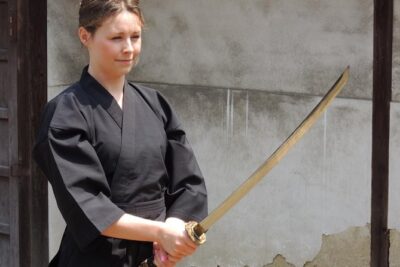 ★ 5.0Kyoto Samurai ExperienceFrom $119
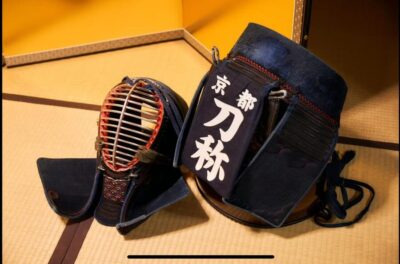 ★ 4.9Kyoto: Kendo and Samurai Experience with Uniform and GearFrom $1032 hours
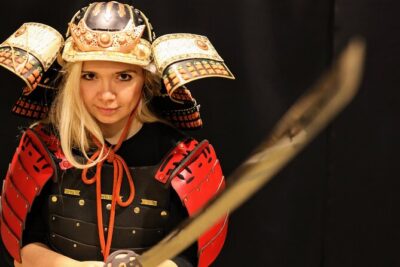 ★ 4.5Skip the lines Basic Ticket at SAMURAI NINJA MUSEUM KYOTOFrom $28
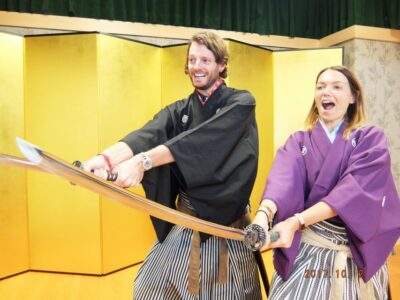 ★ 4.9Kyoto: Samurai Class, Become a Samurai WarriorFrom $70
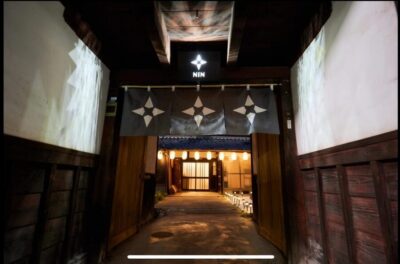 ★ 4.8Kyoto: Ninja Weapon Forging ExperienceFrom $1482h 30m
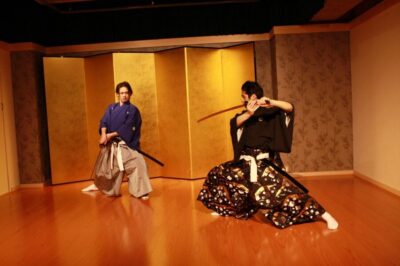 ★ 4.5Kyoto: Samurai Kenbu Traditional Sword Dancing ShowFrom $321 hour