
Reviewed · TEA CEREMONY EXPERIENCES
Kyoto: 45-Minute Tea Ceremony Lesson Experience
Kyoto’s Tea Ceremony Koto gives you more than a quick cup of matcha. You sit on tatami, watch a licensed Urasenke tea master perform the ritual, then make tea yourself while learning why each movement matters. I especially like the serious, traditional approach and the chance to taste two kinds of green tea with Japanese sweets.
I also like the small price, just $22 for 45 minutes, and the location beside Kinkakuji. The main consideration is the pace: 45 minutes passes quickly, and the lesson follows real tea ceremony rules rather than a loose tourist version. You should arrive ready to listen, follow instructions, and keep your phone away for the ceremony.
In This Review
- Key points at a glance
- What makes this Kyoto tea ceremony different
- Arriving beside Kinkakuji
- Taking your place on the tatami
- Learning to make your own matcha
- Japanese sweets and the meaning of hospitality
- The kimono add-on and photo time
- Choosing public, private, or candlelight
- Is $22 good value for 45 minutes?
- Pace, manners, and the right expectations
- Who should book this experience?
- Final verdict: a sound Kyoto culture lesson
- FAQ
- How long does the tea ceremony experience last?
- How much does the experience cost?
- Where does the tea ceremony take place?
- How close is the location to Kinkakuji?
- Is the tea ceremony available in English?
- Can I make my own matcha?
- What is included in the booking?
- Can I wear a kimono?
- Can I record the ceremony?
- Can I sit on a chair instead of the tatami?
- What ceremony options are available?
- Can I cancel the booking?
Key points at a glance
- A full thin-tea lesson: You watch the tea master prepare matcha, then whisk your own tea according to the proper rules.
- A Urasenke-trained host: Your English-speaking instructor is a licensed tea master from Japan’s largest tea ceremony school.
- Two green teas and sweets: The tasting gives you a useful sense of how tea preparation affects flavor.
- Four ways to attend: Pick a public group, private session, candlelight ceremony, or a kimono add-on.
- Beside Kinkakuji: The tea house is about one minute from the Kinkakuji-Michi bus stop and the temple gate.
- A quiet, respectful setting: Video recording is not allowed, and the ceremony is meant to be practiced rather than staged for quick photos.
What makes this Kyoto tea ceremony different
Many Kyoto tea activities reduce the ritual to a short demonstration, a sweet, and a photo. Tea Ceremony Koto takes a stricter route. The stated aim is to teach the ceremony as it is taught to Japanese beginners, so you learn basic manners and rules before making tea.
That approach shapes the mood. This is not a loud, playful class where everyone chats through the demonstration. You sit quietly on the tatami, watch closely, and copy the movements when it is your turn. I see that as a strength if you want cultural context, but it may feel formal if you are looking only for a casual matcha tasting.
The tea master explains the history and spiritual role of the ceremony in clear English or Japanese. You learn that preparation is not just a way to make a drink. The placement of the bowl, the handling of the whisk, the way you receive the tea, and the order of each action all form part of the welcome.
Past sessions have included a host named Joseph, along with several female tea masters. The strongest part of the teaching is the practical detail. You do not only hear about matcha. You learn how to whisk it, what to say, how to hold the bowl, and how different preparation methods change the taste.
A few more Kyoto tours and experiences worth a look
Arriving beside Kinkakuji
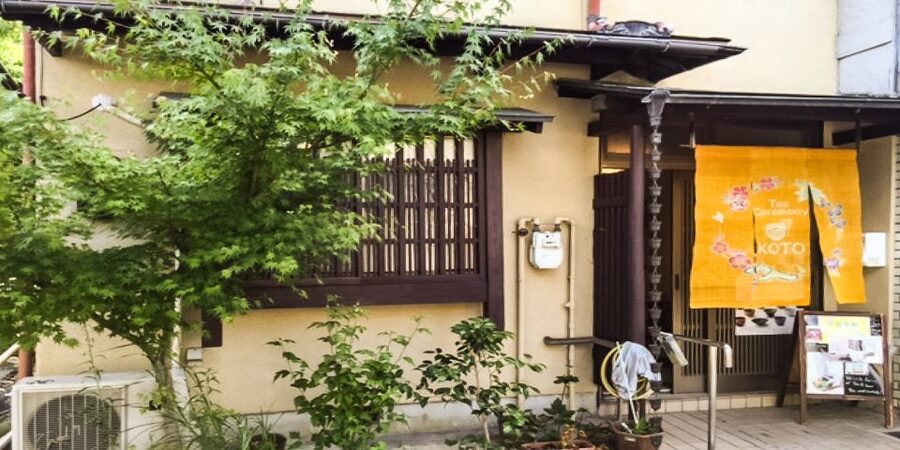
The meeting point is easy to connect with if you are already visiting the Golden Pavilion. The entrance is through a sliding door with an orange curtain. The building is about one minute from the gate of Kinkakuji and one minute from the Kinkakuji-Michi city bus stop.
From Kitaoji subway station or JR Enmachi, city buses 204 and 205 take roughly 10 to 15 minutes. Kyoto buses can be crowded and slow, so allow extra time. This matters because the opening demonstration is part of the lesson, and arriving late means missing the explanation that makes the ritual easier to understand.
If you add the kimono option, arrive 20 minutes early. A kimono cannot usually be added at the last moment, since the clothing reservation and preparation need to be arranged in advance. The activity has no dress code, so you can attend in normal holiday clothes if you skip the add-on.
A practical point for the end of the visit: arranging a taxi by phone may be difficult immediately afterward. A large taxi stand is in front of the location and usually opens around 5:30 PM. If you need a taxi, check the timing before booking a late afternoon session.
Taking your place on the tatami
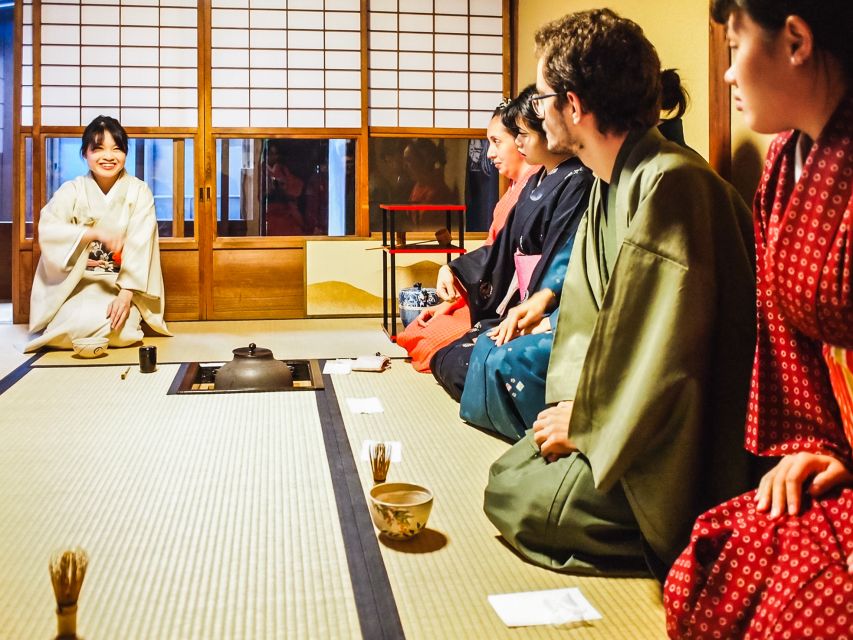
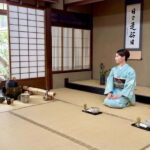
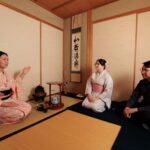
The lesson begins with you sitting on a traditional tatami mat. The host welcomes you and sets the tone before the tea is made. You should expect a calm room, formal gestures, and a focus on observation.
Sitting on the floor is part of the traditional setting, but it is not meant to be a test of flexibility. If you may have trouble sitting on the tatami, tell the supplier in advance. Chairs can be provided.
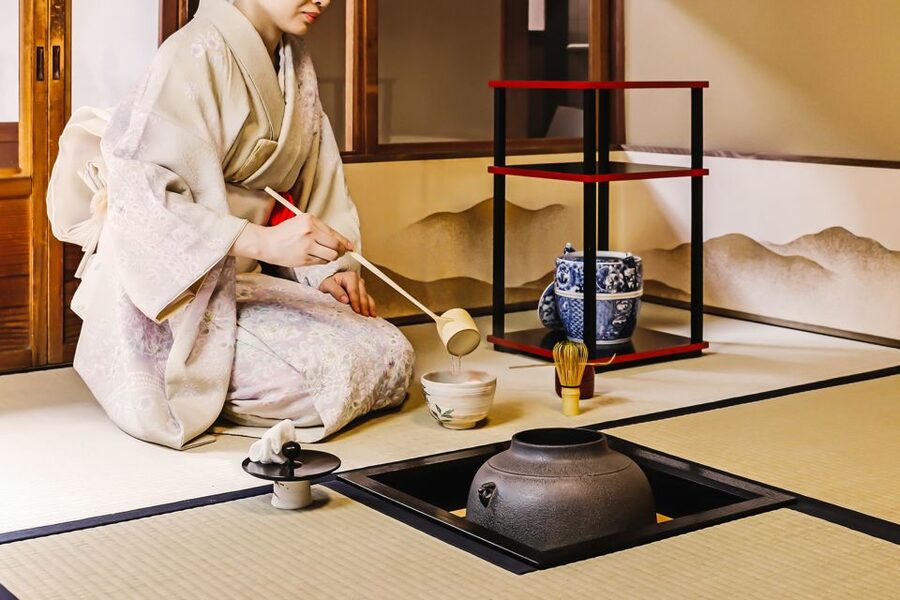
The host then performs the ceremonial preparation of matcha. Watch the order of the movements rather than treating it as a simple cooking demonstration. The tools are handled with care, and the tea master explains the meaning behind the process as it unfolds.
This first section is valuable because it gives you a pattern to follow. When you make your own tea later, you are not guessing what to do. You have already seen the motions, the pace, and the expected manners.
Learning to make your own matcha
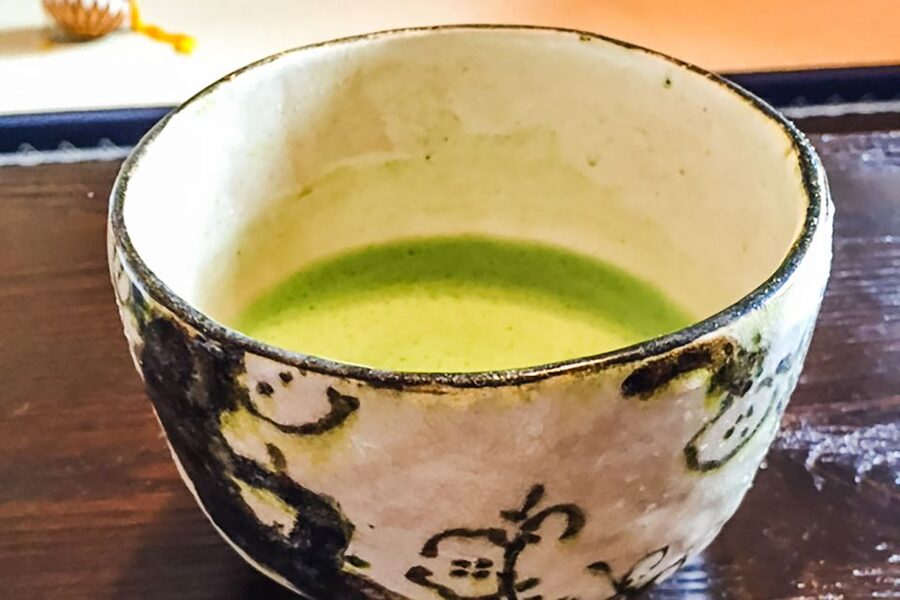
After the demonstration, you prepare tea yourself. The host guides you through the method, including how to use the whisk and how to produce the familiar frothy texture.
This is where the 45-minute format earns its keep. You are not merely watching a professional perform. You get a hands-on turn, and the rules become easier to remember because your own actions are part of the lesson.
The tea master also explains how preparation affects flavor. Matcha can taste bitter or grassy when handled poorly, but careful whisking and good tea make a noticeable difference. Some people who normally dislike matcha find the ceremonial tea smoother and sweeter than expected.
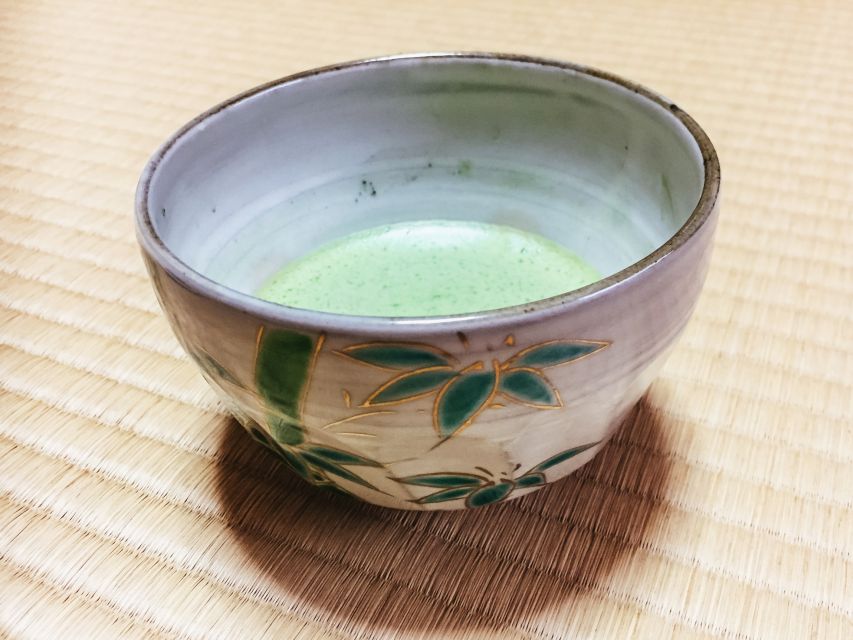
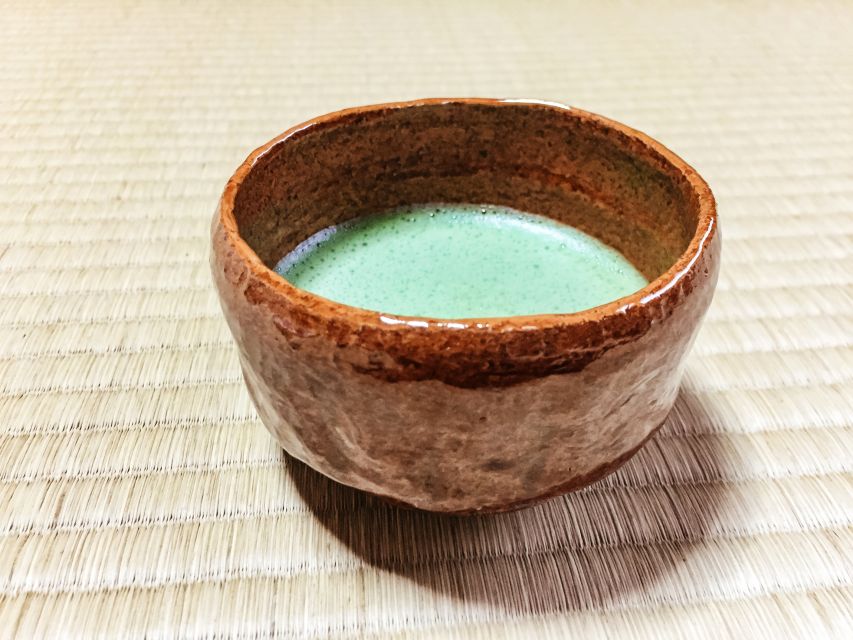
Two flavors of Japanese green tea are included. That is a small but useful tasting comparison. Instead of leaving with only an idea of how matcha looks, you can consider how the tea itself changes from one serving to another.
The lesson also covers the correct way to drink the tea. You learn the manners involved in receiving the bowl, appreciating the sweet, and taking the tea. These details may seem small, but they help you understand the ceremony as an exchange between host and guest rather than a series of decorative movements.
Japanese sweets and the meaning of hospitality
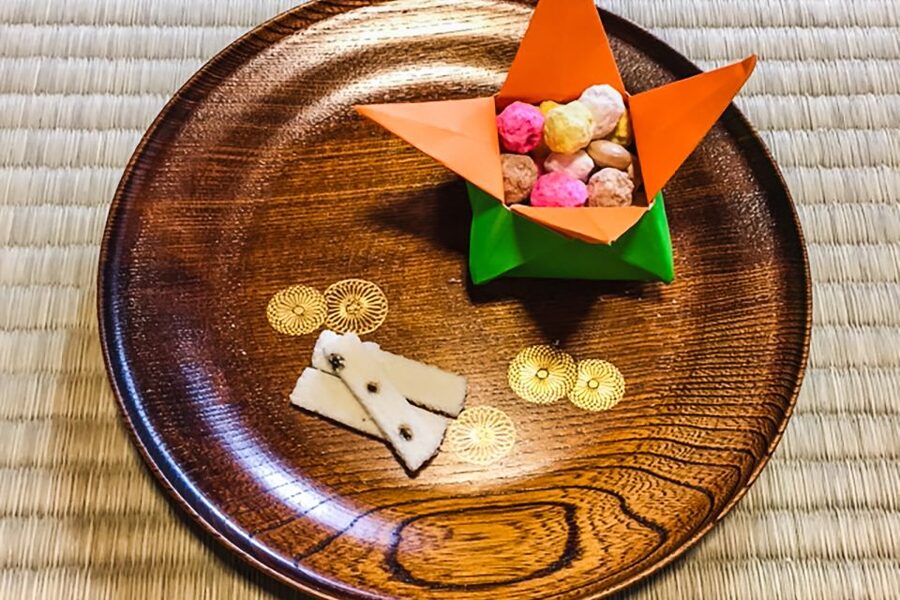
Traditional Japanese sweets are served with the tea. Their sweetness balances matcha’s sharper flavor, which is why the sweet is not just an extra snack placed beside the bowl.
The host explains the spirit of tea ceremony and the role of hospitality. The ceremony creates a shared moment in which the host prepares something carefully for the guest, while the guest responds with attention and respect. You do not need special knowledge before arriving, but you do need patience.
I like this part because it gives the ritual a human purpose. Without that explanation, the rules might seem fussy. With it, the careful movements become a way of showing consideration.
The setting is intentionally quiet. One useful rule is that video recording is not allowed. Photos are permitted after the ceremony, but you should not plan to film the lesson. This restriction may disappoint anyone hoping to record every step, yet it helps protect the stillness of the room.
A few more Kyoto tours and experiences worth a look


The kimono add-on and photo time
You can add a kimono to the booking and wear it during the experience. The clothing is put on before the tea ceremony, so you should arrive 20 minutes early. Hair setting is not included.
The kimono option adds a visual and physical connection to the setting. Sitting on tatami in traditional clothing can make the etiquette easier to appreciate, and it gives you a clear photo memory afterward. The available examples include kimonos and woven textiles from Kyoto’s Nishijin district, an area known for textile production.
Do not expect the clothing add-on to be a long fashion session. Some people found the dressing process quick. That is useful if you want the tea lesson first, but it may feel rushed if your main goal is an elaborate costume experience.
After the ceremony, you can take photos and look at the textiles and kimono examples. The host may take pictures for you. Keep your expectations practical: the main product is the tea lesson, while the kimono is an optional extra that adds atmosphere and photographs.
Choosing public, private, or candlelight
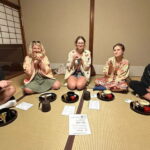
You can select a public ceremony and join a small group. This is the most social choice, and it lets you share the lesson with other beginners. It also means the tea master divides attention among several people.
A private ceremony gives you and your party the room and the tea master’s closer attention. I would choose this for a couple, a family with mixed ages, or anyone who wants to ask many questions. You can experience the ritual at a more personal pace, though the session still lasts 45 minutes unless the booking details say otherwise.
The candlelight option is available as a special evening session. Traditional candlelight changes the mood, making the room quieter and more old-fashioned after sunset. Families have used this option with children, and it can pair especially well with the kimono add-on.
Candlelight is not necessarily a different lesson. The core elements remain the same: history, etiquette, demonstration, tea preparation, and sweets. You are choosing the atmosphere rather than replacing the ceremony with another activity.
Is $22 good value for 45 minutes?
At $22 per person, this is one of the easier cultural activities to fit into a Kyoto budget. The price includes two flavors of Japanese green tea and traditional sweets, plus the instruction and the chance to prepare matcha yourself.
I consider that good value for three reasons. First, a licensed Urasenke tea master leads the session. Second, the lesson gives you context and participation rather than only a performance. Third, it sits near Kinkakuji, so you can combine it with one of Kyoto’s best-known sights without spending much time crossing the city.
The kimono is an additional cost, and you should judge it separately. If you want photographs and a stronger visual connection to the ceremony, it can be worthwhile. If your priority is learning about tea, the basic booking contains the essential activity.
A private or candlelight choice may also cost more than the base option. I would pay extra for privacy if your group values quiet attention. I would choose candlelight for the mood, not because it adds more instruction.
Pace, manners, and the right expectations
The main weakness is the tight schedule. The ceremony, historical explanation, demonstration, hands-on preparation, sweets, and closing photo opportunity all fit into 45 minutes. That makes the activity efficient, but it leaves little room for wandering conversation.
You should arrive early, especially near Kinkakuji, where buses and temple crowds can slow you down. A few people have been allowed to join after arriving three to seven minutes late, but you should not count on that. Missing the first section means missing the explanation that puts the rest of the class in context.
The tea master’s manner may feel direct at times. That is partly a result of teaching rules that must be followed and partly a reminder that this is a lesson, not a free-form show. Ask questions politely, watch the demonstration, and accept corrections as part of learning.
The experience suits adults and older children who can handle a calm, respectful activity. It may not suit very young children who need to move around, or anyone who dislikes sitting quietly on the floor. Chairs are available if sitting on tatami is difficult.
Who should book this experience?
I would recommend Tea Ceremony Koto if you want to understand the customs behind matcha and take part in the process. It is particularly good for a first visit to Japan, since the host explains both the broad meaning of tea ceremony and the small actions you would otherwise miss.
It also works well for a family or couple. A private booking gives you more personal attention, while candlelight and kimono can turn the lesson into a memorable evening event. The location makes it a sensible choice before or after Kinkakuji.
I would think twice if you want a fast, relaxed tasting with no rules. The host expects you to follow the traditional form, and the no-video rule is firm. That seriousness is precisely why the activity feels more substantial than a simple matcha sample.
The overall rating is 4.3 from 2,378 reviews, with especially strong praise for the tea masters’ teaching, the clear explanations, the peaceful setting, and the value. A few comments point to a rushed feel or a blunt teaching style, so go in prepared for a formal class rather than a chatty performance.
Final verdict: a sound Kyoto culture lesson
Book this if you want to learn the proper way to prepare and drink matcha, not just pose with a tea bowl. For $22, you get a licensed Urasenke tea master, two teas, sweets, a hands-on lesson, and a convenient location beside Kinkakuji.
Choose the basic public session for the best value. Pick private for close attention, candlelight for atmosphere, and kimono if photographs matter to you. Arrive early, watch the etiquette video beforehand, and give the ceremony the quiet attention it asks for. You will come away with more than a cup of tea. You will understand why every gesture is there.
FAQ
How long does the tea ceremony experience last?
The tea ceremony lesson lasts 45 minutes.
How much does the experience cost?
The listed price is $22 per person. Kimono rental is available as an add-on and is not included in that price.
Where does the tea ceremony take place?
It takes place near Kinkakuji in Kyoto, on Honshu, Japan. The entrance is through the sliding door with the orange curtain.
How close is the location to Kinkakuji?
The activity location is about a one-minute walk from the gate of Kinkakuji Temple and about one minute from the Kinkakuji-Michi city bus stop.
Is the tea ceremony available in English?
Yes. The instructor languages are English and Japanese.
Can I make my own matcha?
Yes. The tea master first demonstrates the ceremonial preparation, then guides you as you make tea yourself.
What is included in the booking?
The experience includes two flavors of Japanese green tea and traditional Japanese sweets.
Can I wear a kimono?
Yes. A kimono can be selected as an add-on during booking. You must arrive 20 minutes before the tea ceremony, and a reservation is required.
Can I record the ceremony?
Video recording is not allowed. Photos are permitted after the ceremony, including photos with the kimono option.
Can I sit on a chair instead of the tatami?
Yes. If sitting on the floor may be difficult, inform the supplier so chairs can be provided.
What ceremony options are available?
You can choose a public group ceremony, a private ceremony, or a candlelight ceremony. A private group is available.
Can I cancel the booking?
You can cancel up to 24 hours in advance for a full refund. A reserve-now-and-pay-later option is also available.
More Workshops & Classes in Kyoto
More Tea Ceremony Experiences in Kyoto
More tours in Kyoto we've reviewed



Tea Ceremony Experiences, compared.
 ★ 4.9Kyoto: Tea Ceremony in a Traditional Tea House in KiyomizuFrom $4945 min
 ★ 4.9Kyoto: Tea Ceremony Ju-An at Jotokuji TempleFrom $291h 10m
 ★ 5.0World Heritage Kyoto & Nara Uji Authentic Matcha ExperienceFrom $129
 ★ 4.9Kyoto: Table-Style Tea Ceremony at a Kyo-MachiyaFrom $451h 30m
 ★ 5.0Kimono Tea Ceremony at Kyoto Maikoya, NISHIKIFrom $65
 ★ 4.9Kyoto: Tea Museum Tickets and Matcha Grinding ExperienceFrom $231 hour