
Reviewed · UJI
Experience Authentic Japanese Home Cooking in Kyoto
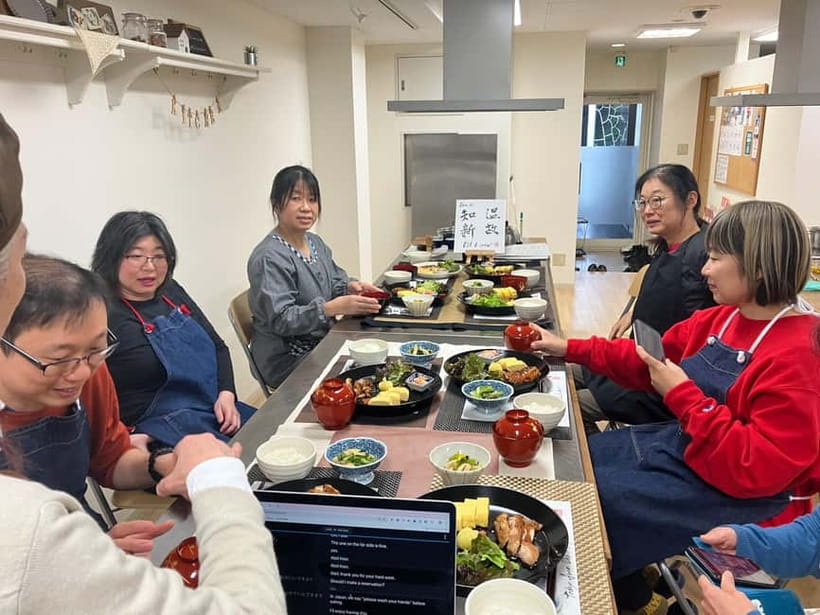
Kyoto’s best food lesson may begin with something simple: bonito flakes and kelp simmered into dashi. At Live Foods Academy, you learn the base of everyday Japanese cooking, then use it in rolled omelet, chicken teriyaki, simmered vegetables, and miso soup inside a more-than-100-year-old townhouse. Kayo leads the class with help from an English-speaking team and a translator when needed.
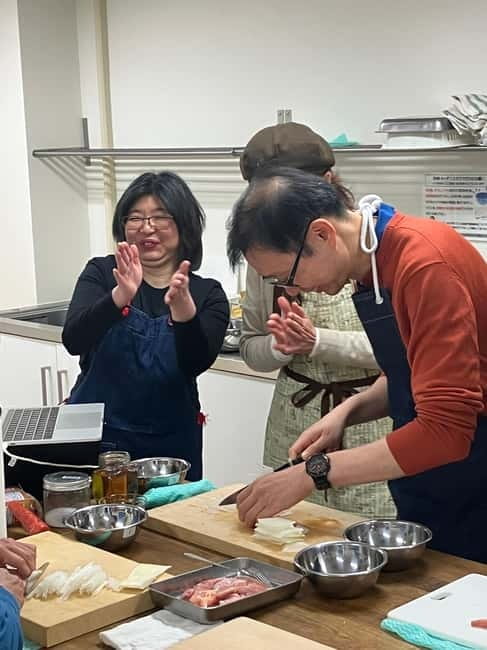
I like the hands-on format, since you do not just watch a demonstration. You handle delicate Japanese knives, prepare seasonal ingredients, cook with additive-free seasonings, and plate the meal yourself. I also like the practical menu. These are dishes you can make at home, not fancy restaurant creations that are hard to repeat.
The main consideration is the unusual booking restriction: men-only groups cannot attend at this home location, though a separate rental kitchen may be available by message. The information also gives both Sanjo and Shijo as station references, so confirm the exact pickup point after booking.
In This Review
- Key details before you book
- Starting with dashi in a Kyoto home
- Making dashi-maki tamago with fresh stock
- Cutting seasonal vegetables for a simmered dish
- Preparing chicken teriyaki and miso soup
- Eating what you have prepared
- What the $122 price includes
- Fitting the class into a day in Kyoto
- Who will get the most from this experience
- A few practical limits to keep in mind
- Should you book Live Foods Academy?
- FAQ
- How long does the cooking class last?
- What dishes will I make?
- Is the class taught in English?
- Where does the class meet?
- Is this a private class?
- Can an all-male group join?
- Are ingredients and a meal included?
- Can children participate?
Key details before you book
- Make dashi from scratch: Use real katsuobushi, or bonito flakes, and kombu rather than instant stock.
- Cook four everyday dishes: Prepare dashi-maki tamago, chicken teriyaki, simmered vegetables, and miso soup.
- Learn in a historic townhouse: The class takes place in a traditional Kyoto home more than 100 years old.
- Work with an English-speaking instructor: Kayo and her team guide the class step by step, with translation help available when needed.
- Enjoy a private group setting: You cook and eat with your own party rather than joining a large shared class.
- Plan around a two-and-a-half-hour lesson: The booking system may display the duration as one day, but the cooking session itself requires about 2 hours and 30 minutes.
Starting with dashi in a Kyoto home
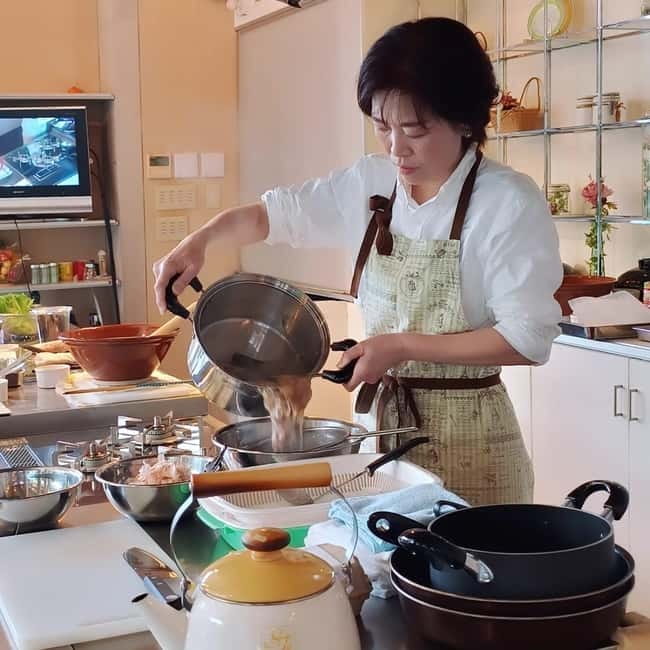
The class begins with dashi, the clear stock that gives many Japanese dishes their depth. You make it with katsuobushi and kombu, watching how two modest ingredients create a broth used throughout the meal.
This is more than a recipe step. Dashi helps you understand why Japanese food can taste full and satisfying without heavy sauces or large amounts of seasoning. The aroma of the bonito and kelp is part of the lesson, and the class connects this cooking method with both health and everyday family meals.
The focus follows the home-cooking approach associated with Katsuo Doi, a well-known Japanese authority on traditional household food. You are not being trained to reproduce a restaurant plate. You are learning the sort of food Japanese families might prepare for a normal meal, with attention to balance, seasonality, and careful preparation.
That distinction matters. A restaurant meal can show you what Japanese cuisine looks like at its most polished. This class gives you a better sense of how ingredients are handled before they reach the table.
If you're still narrowing it down, here are other tours in Uji we've reviewed.

Making dashi-maki tamago with fresh stock
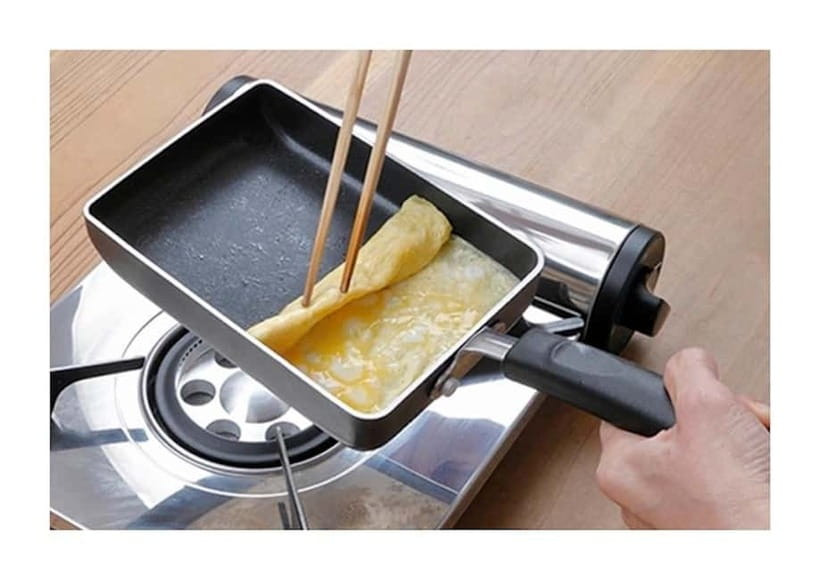
Once the dashi is ready, you use it in dashi-maki tamago, the soft rolled Japanese omelet. This is one of the most useful parts of the lesson because the dish looks easy but depends on timing, heat, and gentle movement with the pan.
You learn how freshly made stock changes the flavor and texture of the omelet. The result should be tender and lightly seasoned rather than dry or aggressively sweet. The instructor guides you through the process, so you do not need prior cooking experience to take part.
This is also where the lesson’s attention to tools becomes clear. Japanese kitchen knives are delicate and require controlled handling. You receive instruction in using them properly, an especially useful skill if you plan to prepare vegetables or recreate the menu at home.
The class is suitable for beginners, but it should not feel too basic for confident cooks. One participant who had spent much of his life working in kitchens still picked up new techniques. That suggests the instruction goes beyond simply handing you a printed recipe.
Cutting seasonal vegetables for a simmered dish
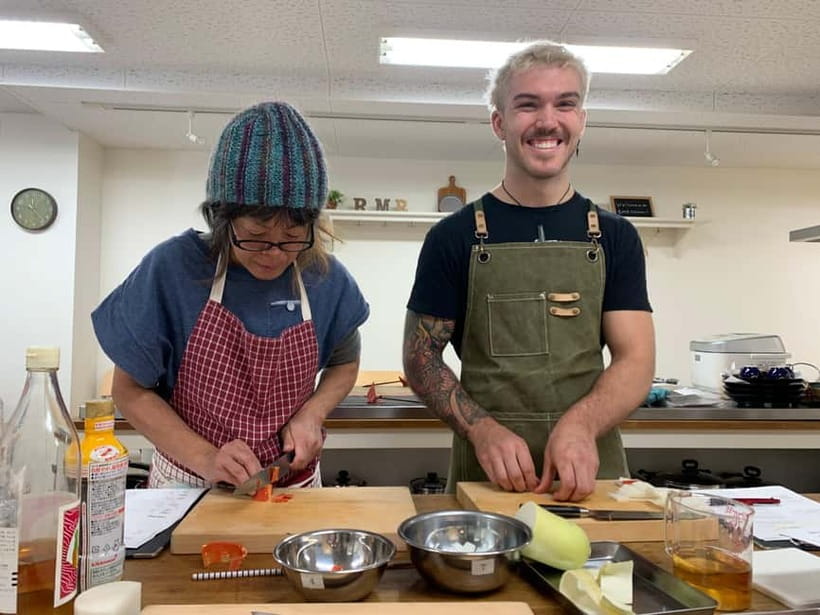
Simmered vegetables show another side of Japanese cooking. Instead of covering ingredients with a thick sauce, you allow their own taste and texture to remain part of the dish.
The vegetables change with the season, so the exact ingredients are not fixed. That is a strength if you want to understand how Japanese home cooking works, though it means you should not expect a precise list of items before class. You learn that different ingredients call for different cutting styles and preparation methods.
This part of the class rewards patience. The goal is not only to cook the vegetables through. Shape, size, and texture matter, and careful cutting helps each piece cook evenly and look attractive on the plate.
The use of additive-free seasonings is another practical touch. You get a clearer idea of how basic Japanese flavors work without depending on a long list of commercial flavorings. If you shop for Japanese ingredients at home, the teacher’s advice on good brands can save you some trial and error.
Preparing chicken teriyaki and miso soup
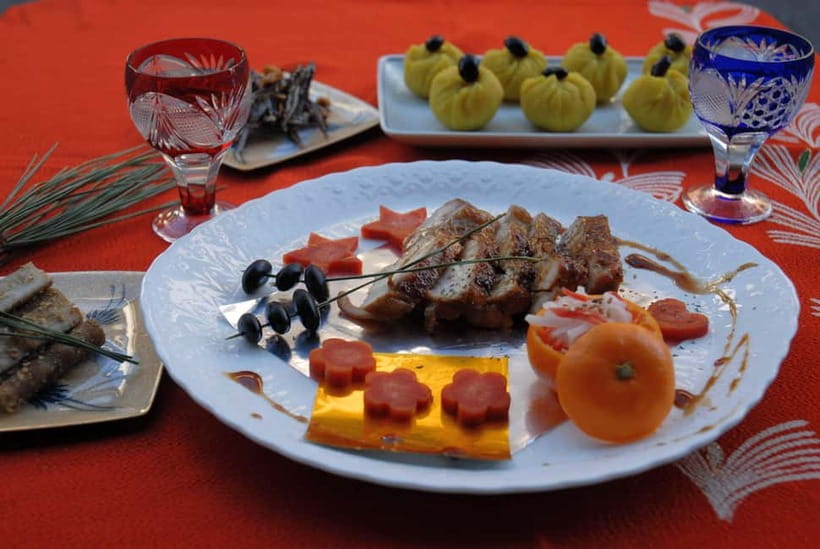
Chicken teriyaki brings a familiar dish into the class, but the traditional flavor comes from careful seasoning rather than restaurant-style excess. You prepare it as part of the wider meal, learning how Japanese home cooking can feel comforting without becoming heavy.
The menu also includes miso soup. Since you have already made dashi, the soup ties the class together. You see how the same basic stock can support several dishes while keeping the meal unified.
This is the kind of connection I value in a cooking class. You are not making four unrelated recipes. You are learning how one foundation ingredient fits into a meal, how seasonings work together, and how several small dishes create a balanced Japanese table.
The lesson also includes plating and table setting. That may sound minor, but presentation is part of the experience. Japanese meals often give attention to arrangement, color, and the relationship between dishes. You get to practice that final step before sitting down to eat what you prepared.
Eating what you have prepared
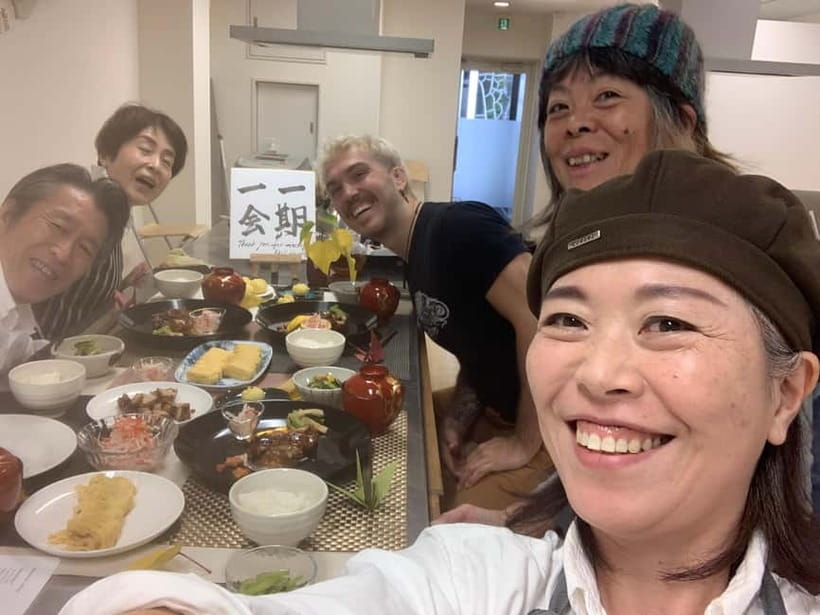
The meal is included in the $122 price, so you are not paying for a class and then buying lunch separately. You prepare the food, arrange the dishes, and eat together in the home setting.
That makes the lesson feel more personal than a standard food demonstration. The setting is an old townhouse, not a modern cooking studio designed only for classes. The age of the building gives the experience a stronger connection to Kyoto’s domestic life, although visitors who prefer polished commercial facilities may find a private home less predictable.
The meal is also the point where the class becomes social. You are sharing food with the teacher and your own group, and the atmosphere is designed around conversation as well as instruction. Kayo’s warmth and sense of fun were singled out in the feedback, and one German-speaking participant appreciated how closely the instructors responded to individual needs.
The language arrangement is worth knowing. Instruction is offered in English, and a translator was set up for one participant when needed. You should be able to follow the cooking, but this is not necessarily the same as having every technical point explained in perfect English. The hands-on format helps bridge that gap.

What the $122 price includes
At $122 per person, this is not a cheap meal, but it is more than a meal. The price includes the cooking experience, apron and cloth rental, all ingredients, every dish on the menu, and the meal you prepare.
You also pay for a private group class and personal guidance. That matters if you want to ask questions, work at your own pace, or avoid being one person in a large kitchen group. The teacher’s advice about ingredients and brands adds value for anyone planning to cook Japanese food after returning home.
The strongest value comes if you use the class as a practical starting point. You learn dashi, knife handling, seasoning, omelet technique, simmered vegetables, teriyaki, soup, plating, and table setting in one session. You will not become a Japanese home cook in 2 hours and 30 minutes, but you can leave with several repeatable dishes and a better sense of the ingredients.
The price may feel high if you mainly want to eat Japanese food. Kyoto has plenty of less expensive meals. Choose this class because you want instruction, conversation, and access to a home setting, not simply because you want lunch.
A dashi soup set is not included. If you want one to take home, you must arrange or purchase it separately. Merchandise is also excluded, so there is no built-in shopping component.
Fitting the class into a day in Kyoto
The class is useful on a day devoted to central Kyoto. The information names both Sanjo Keihan or Subway Sanjo Station and Subway Shijo Station, with about a 10-minute walk involved. Since the classroom is held at the instructor’s home, the instructor comes to the station for pickup after your reservation is confirmed.
Because two station references are provided, do not guess which one to use. Confirm the meeting point and pickup details directly after booking. This is a small but important planning step, especially if you are moving between sightseeing stops on a tight schedule.
The area works well for combining food with major sights. Heian Shrine, Gion, Yasaka Shrine, and Kyoto Imperial Palace are all described as being within a 15 to 20-minute walk. You may be able to schedule the cooking session between visits, though you should allow time to find the station and meet the instructor.
The exact class start times depend on availability. The activity is described as lasting one day in the booking details, but the class information gives the actual cooking time as 2 hours and 30 minutes. Plan around the shorter, specific lesson duration and confirm the start time before building the rest of your day.
Who will get the most from this experience
I would choose this class for you if food is part of your reason for visiting Japan, especially if you want to understand how ordinary home meals are made. It suits curious beginners, confident home cooks, and people who want recipes they can use after the trip.
It is also a good match for couples, families with older children, and private groups who value direct contact with a local instructor. Children under six cannot participate, so families with very young children need another plan.
The private format is helpful for travelers with particular needs or interests. You can ask about knife use, seasonings, ingredient substitutions, or the steps you want to repeat at home. The team has shown flexibility with language and individual requests, but you should communicate any needs by message before the class.
This is less suitable if you want a large social event, a professional chef competition, or a quick demonstration with no active cooking. It is also not the right choice for an all-male group at the townhouse location. A separate rental kitchen may be possible for men-only groups, but you must contact the provider first.
A few practical limits to keep in mind
The class centers on traditional home cooking, so the menu may not satisfy you if you are looking for sushi, ramen, wagashi, or a long list of regional specialties. You make a focused set of dishes built around dashi and everyday Japanese flavors.
Seasonal vegetables are used, which keeps the meal tied to the time of year. The tradeoff is that the exact produce may vary. If a particular ingredient matters to you, ask about the menu before reserving.
The home setting is a major part of the appeal, but it also means this is not a purpose-built culinary school. You should expect a more personal and domestic atmosphere rather than a large professional classroom.
Cancellation is free up to 24 hours before the start time, and you can reserve now and pay later. Those terms make it easier to fit the class into a changing Kyoto schedule. Still, confirm the station, time, group rules, and any dietary or language concerns before the cancellation deadline.
Should you book Live Foods Academy?
Book it if you want to do more than taste Japanese food. The class gives you a useful foundation in dashi, knife work, seasoning, and meal preparation, then lets you sit down to eat the results in a historic Kyoto townhouse.
I especially recommend it for people who enjoy practical souvenirs. A photo fades quickly, but knowing how to make dashi-maki tamago or a simple simmered vegetable dish can bring the trip back to your kitchen.
Skip it if your main goal is a low-cost meal, a sightseeing tour, or a broad survey of Japanese cuisine. At $122, the value depends on your interest in instruction and personal contact. For home cooks and food-focused visitors, the price is reasonable for a private, hands-on lesson with ingredients, equipment, and lunch included.
FAQ
How long does the cooking class last?
The class information gives a duration of approximately 2 hours and 30 minutes. The booking details may display the activity as lasting one day, so use the 2.5-hour class length when planning your schedule and confirm the available start time.
What dishes will I make?
You will make dashi, dashi-maki tamago, chicken teriyaki, simmered vegetables, and miso soup. You will also plate the dishes and set the table.
Is the class taught in English?
Yes. English instruction is available. Translation support was also arranged for a participant who needed it.
Where does the class meet?
The information refers to Subway Shijo Station and also to Sanjo Keihan or Subway Sanjo Station, each with about a 10-minute walk mentioned. Since the class takes place at the instructor’s home, confirm the exact station and pickup point after booking.
Is this a private class?
Yes. The activity is offered for a private group rather than as a shared group class.
Can an all-male group join?
Men-only groups cannot participate at the home location. A separate rental kitchen may be available for an all-male group if you contact the provider by message.
Are ingredients and a meal included?
Yes. The cooking experience, apron and cloth rental, ingredients, all listed menu items, and the meal are included. Merchandise and a dashi soup set are not included.
Can children participate?
Children under six cannot participate in the class.
More tours in Uji we've reviewed
Uji, compared.
 ★ 4.9Kyoto: Tea Museum Tickets and Matcha Grinding ExperienceFrom $231 hour
 ★ 4.8Uji: Green Tea Tour with Byodoin and Koshoji Temple VisitsFrom $111
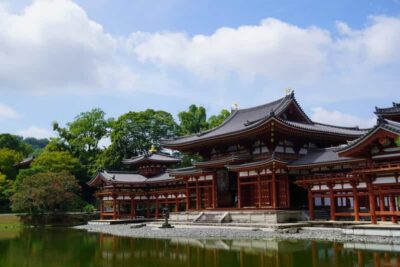 ★ 4.6Uji: UNESCO Heritage & Tea Ceremony Walking TourFrom $663 hours
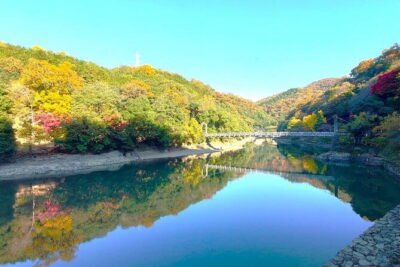 ★ 5.0Slow Cycling Tour at Uji’s Matcha Green Tea Fields and HeritageFrom $130
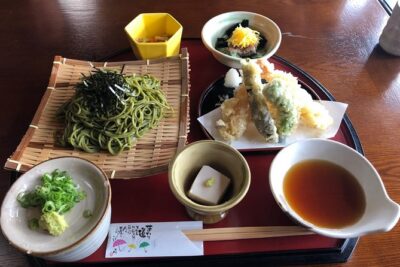 ★ 4.5Kyoto Matcha Green Tea TourFrom $221
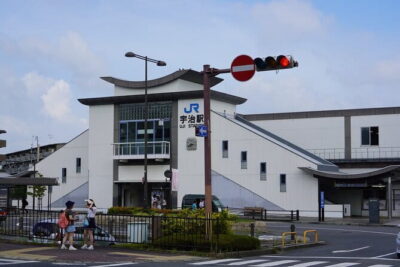 ★ 5.0Uji Tea Ceremony and UNESCO Heritage Walking TourFrom $70