
Reviewed · TEA CEREMONY EXPERIENCES
Uji: UNESCO Heritage & Tea Ceremony Walking Tour
Uji is more than a stop for matcha souvenirs. This three-hour walk brings you from Byodoin Temple, the famous UNESCO World Heritage Site, to two important Shinto shrines, with a traditional tea ceremony in between. The route gives you a useful first look at Uji’s temples, tea culture, and river setting without turning the day into a museum marathon.
I like the small group of no more than nine people, which makes it easier to hear the guide and ask questions. I also like the mix of major sights and local tastes: you get Byodoin’s grand architecture, then a quiet ceremony at Taihoan, followed by green tea treats near Uji Bridge. The main consideration is physical. This is a three-hour walking tour with bridges, shrine paths, and extended standing, so it is not suited to people with mobility impairments, heart or respiratory problems, or those who are pregnant.
In This Review
- Key points at a glance
- Why Uji makes a good half-day stop
- Byodoin Temple, the tour’s grand opening
- Taihoan and the quiet rules of tea
- Crossing the Tachibana and Asagiri suspension bridges
- Uji Shrine and Ujigami Shrine explained
- Matcha, mochi, and the final walk to Uji Bridge
- What $66 buys you
- Who will enjoy this walking tour
- Small details that improve the experience
- Should you book the Uji tea and temple walk?
- FAQ
- Where does the Uji walking tour start?
- Where does the tour finish?
- How long does the experience last?
- What language is the tour conducted in?
- Is Byodoin Temple admission included?
- Is the tea ceremony included?
- Can I take photographs during the tea ceremony?
- What should I bring?
- Can I cancel the booking?
Key points at a glance
- Byodoin in 50 minutes: Visit Uji’s best-known temple with entrance included and a guide to explain its place in Japanese history.
- A hands-on tea ceremony: Watch a Japanese-only ceremony at Taihoan, receive translation from your guide, and try the ritual yourself.
- Two important shrines: Learn how Uji Shrine and Ujigami Shrine differ from the Buddhist temple you visit earlier.
- Tachibana and Asagiri bridges: Cross suspension bridges for views along the Uji River and the surrounding hills.
- Matcha beyond the souvenir tin: Use the final 40 minutes to sample local snacks and consider recommendations for tea, mochi, and restaurants.
- Easy start and finish: Meet at JR Uji Station’s South Exit and finish at Uji Bridge, with no hotel transfer included.
Why Uji makes a good half-day stop
Uji sits in a useful position for anyone based in Kyoto, but this tour is not simply a quick temple visit. The city is closely tied to Japanese tea, and the route connects that everyday tradition with Buddhist and Shinto sites.
Starting at JR Uji Station keeps the meeting point simple. Your guide waits at the South Exit wearing a TripGuru shirt or holding a TripGuru sign. Arrive at least 10 minutes early. Uji is straightforward once you are there, but morning traffic around the wider Kyoto area can be unpredictable, so do not trust a navigation app’s shortest estimate too closely.
The tour ends at Uji Bridge rather than returning you to the station. That is practical if you want to continue exploring Uji, shop for matcha, or make your own way onward. It also means you should think about your next train before the tour begins, especially if you have a tight afternoon plan.
A few more Uji tours and experiences worth a look
Byodoin Temple, the tour’s grand opening
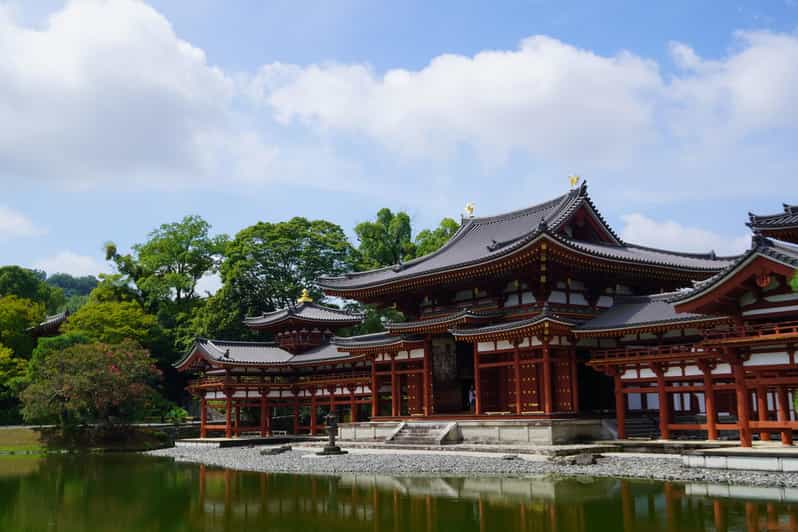
The first major stop is Byodoin Temple, with about 50 minutes for a guided visit. This is the visual centerpiece of the outing, and the entrance fee is included in the $66 price.
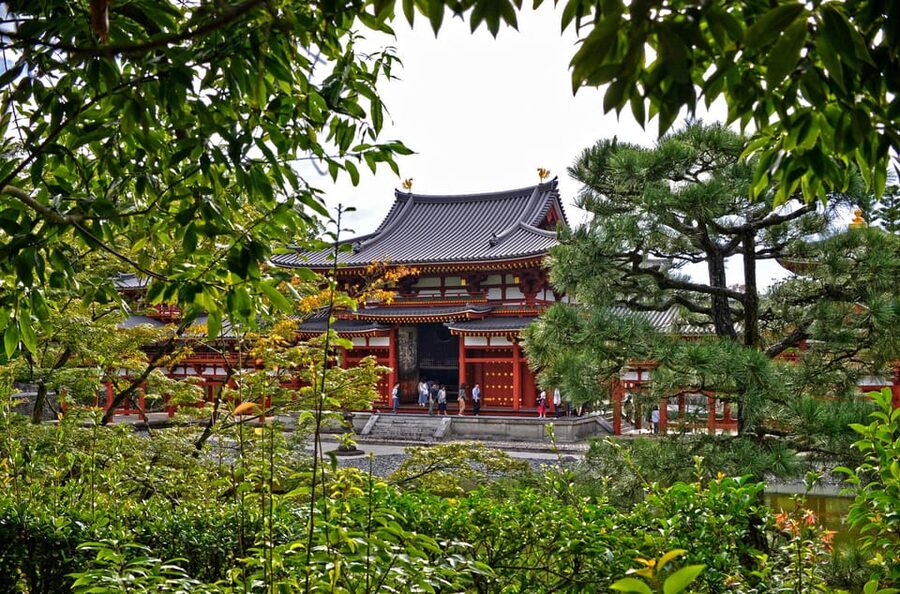
Byodoin is famous for its Phoenix Hall, an elegant building that appears on the back of Japan’s 10-yen coin. Its setting beside the reflecting pond helps explain why photographs of the temple are so familiar. A guide adds useful context that you might miss while simply walking around the grounds, especially when connecting the building to Buddhist ideas and the period in which it was created.
Fifty minutes is a sensible amount of time. You get enough room to see the main features and hear an explanation without spending the entire tour in one place. The trade-off is that this is a guided introduction, not a slow, independent study of every corner of the temple grounds.
Crowds can affect the mood at Byodoin, particularly during popular sightseeing periods. The advantage of having a guide is that you can focus on the details that matter instead of trying to decode signs or work out what you are looking at alone.
Taihoan and the quiet rules of tea
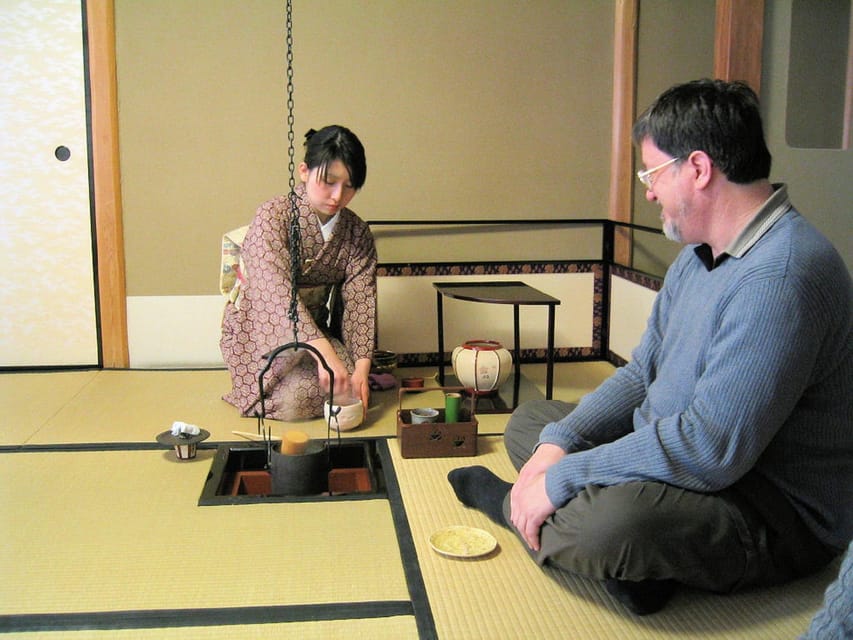
The tea ceremony lasts about 30 minutes as an included activity, while the scheduled visit takes roughly 40 minutes. That extra time allows for moving into position, receiving instructions, and having the ceremony explained.
The ceremony is conducted in Japanese. Your English-speaking guide translates and explains what is happening, so you are not left guessing why each movement matters. The host also gives precise instructions about how to behave, while allowing room for small mistakes. That balance is important for first-time participants. Japanese tea etiquette can feel formal, but the experience is less intimidating when you know what to do next.
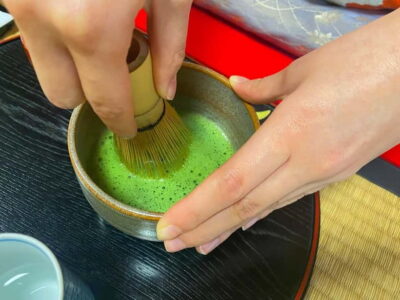
You may also get to prepare or try the tea yourself. The key value here is not speed or entertainment. It is the chance to watch a carefully ordered ritual in the place where Uji tea culture has a real local connection.
There is one firm rule: no photographs or video during the ceremony. Bring your camera for the rest of the tour, but put it away during this part. That restriction may disappoint anyone hoping for ceremony pictures, yet it also keeps the room quiet and respectful.
The ceremony is one of the strongest reasons to choose this tour instead of visiting Byodoin alone. You get a cultural activity that requires participation, not just observation. Guides named in the feedback include Yuko, Katsuhiko, Katsu, and Nobumasa Miyake, with repeated praise for clear English, patient explanations, and an easy manner.
Crossing the Tachibana and Asagiri suspension bridges
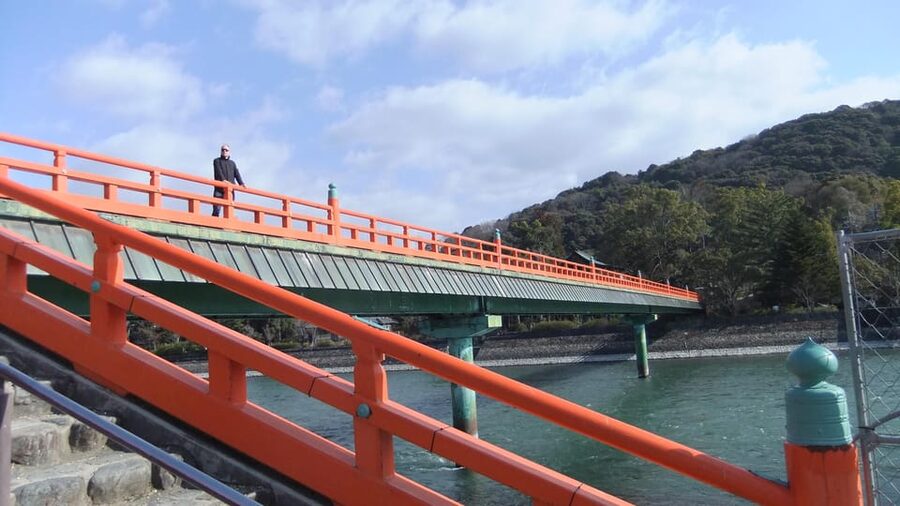
After the tea ceremony, the group walks for about 10 minutes before continuing toward the river and shrine area. The Tachibana and Asagiri suspension bridges add a change of pace after the more formal temple and tea settings.
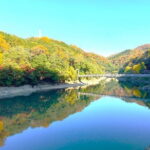
These crossings provide open views of the Uji River and surrounding hills. The bridges are not the main reason to book the tour, but they help you see Uji as a river town rather than a string of famous religious buildings. Keep your camera ready here, since this is one of the better points for broad views.
The route includes walking and some time on uneven or outdoor surfaces. The tour description specifically advises comfortable shoes and excludes people with mobility impairments. That is worth taking seriously. You do not need specialist hiking gear, but soft fashion shoes are a poor match for a three-hour route that includes bridges, shrines, and regular walking between stops.
Uji Shrine and Ujigami Shrine explained
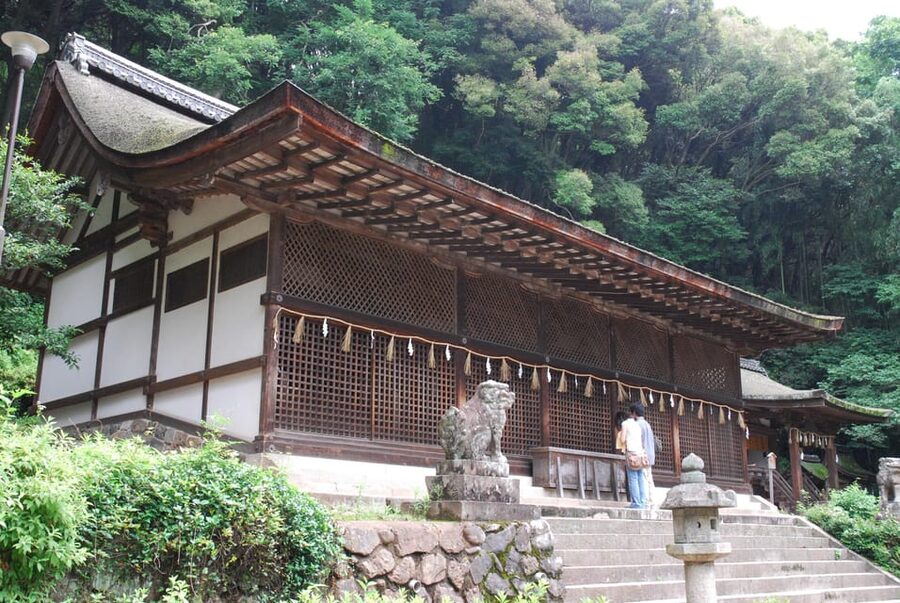
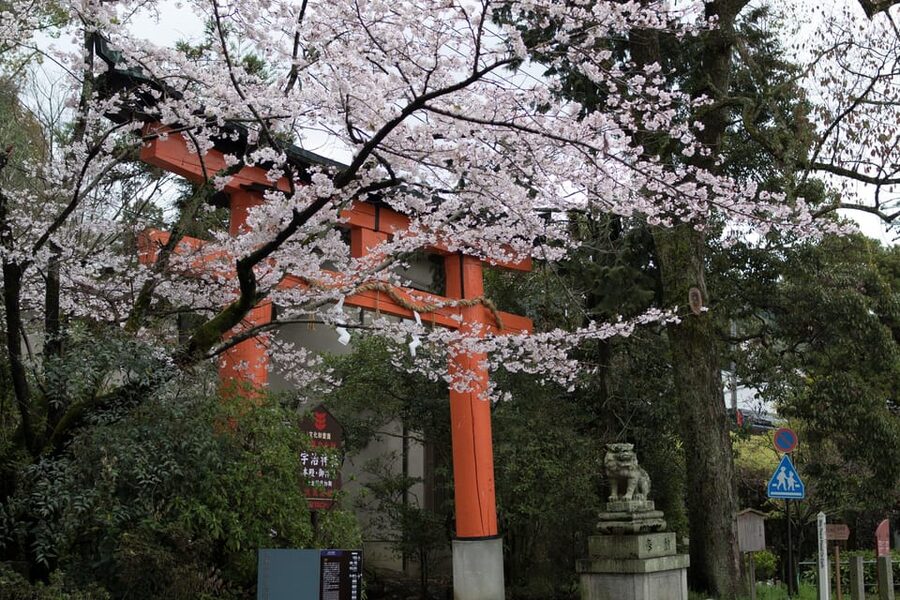
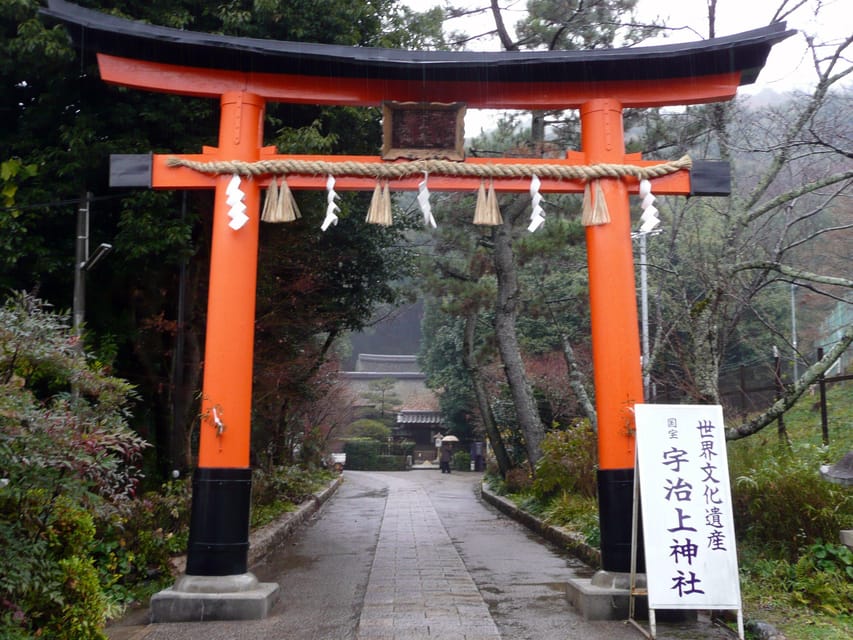
The tour spends about 20 minutes at Uji Shrine and another 20 minutes at Ujigami Shrine. Seeing both is useful because your guide can explain the difference between Shinto shrines and the Buddhist temple visited earlier.
Uji Shrine is a revered place with strong cultural importance. Ujigami Shrine is also significant and is often treated as one of the most important historic shrines in the area. The exact details can blur together when you visit several religious sites in one day, so having an English-speaking guide helps give each stop its own meaning.
These visits are less about grand scale than Byodoin. You will likely appreciate them most if you want to understand how Japanese religious traditions appear in daily spaces, not only in the country’s most photographed buildings. Your guide can point out customs and explain how to behave, which is especially helpful if you have not visited a Shinto shrine before.
The time at each shrine is short enough to keep the three-hour schedule moving. If you prefer long periods of quiet reflection or detailed photography, you may find the pace brisk. If you want a clear introduction, the timing works well.
A few more Uji tours and experiences worth a look





Matcha, mochi, and the final walk to Uji Bridge
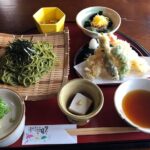
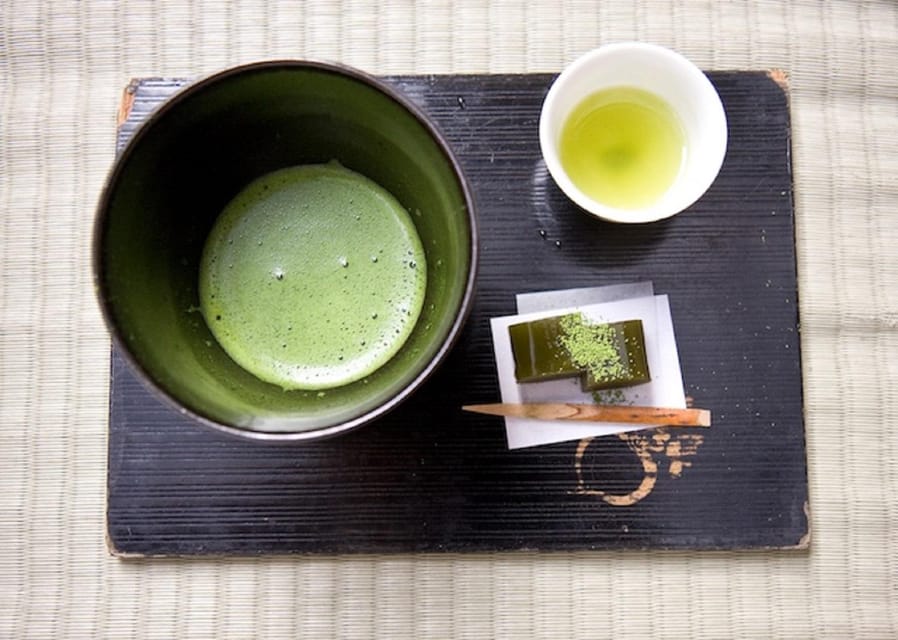
The last 40 minutes focus on local snacks and the flavors associated with Uji. Green tea is the obvious star, but the experience also includes culinary treats such as mochi and other matcha-based snacks.
This final portion gives the tour a practical edge. You can taste before committing to a purchase, and your guide may point you toward tea shops, mochi shops, or restaurants. Yuko was especially praised for giving useful local recommendations, including places to eat and buy matcha products.
Uji’s tea culture is easy to reduce to green-colored sweets for tourists. A good guide helps you see the larger picture: tea is part of the city’s identity, and the ceremony shows the careful side of that tradition while the snacks show how it appears in ordinary commercial life.
The walk ends at Uji Bridge. This is a pleasant finish, with the river and nearby streets giving you a natural point from which to continue on your own. You might want to budget extra time after the tour for shopping or a meal, since the official three hours are enough for an introduction but not for leisurely browsing every tea shop.
What $66 buys you
At $66 per person, the tour is reasonably priced if you want structure and cultural explanation. The fee includes an English-speaking guide, entrance to Byodoin Temple, and the tea ceremony. You are also paying for the convenience of connecting several sites in a sensible route, rather than arranging each visit yourself.
The value is strongest for first-time visitors to Uji. You receive background on temples, shrines, tea culture, and local customs in one compact outing. The small group limit of nine is another advantage. It is more personal than a large coach tour and gives you a better chance to ask about food, etiquette, and what to see next.
Personal expenses are not included, so bring cash for snacks, drinks, or purchases. Hotel pickup and drop-off are also not included. You meet at JR Uji Station and finish at Uji Bridge, so the tour works best if you are comfortable organizing your own transport to and from the area.
The cancellation terms are traveler-friendly: you can cancel up to 24 hours in advance for a full refund, and you can reserve now while paying later. Starting times vary, so you need to check availability for your chosen date.
Who will enjoy this walking tour

I would choose this experience if you want a clear introduction to Uji and prefer learning as you walk. It suits couples, solo visitors, and small groups who want an English explanation of Japanese religious sites instead of simply collecting photographs.
It is also a good match for anyone curious about tea but unsure how to approach a formal ceremony. The guide translates the Japanese instructions, and the host is described as friendly and forgiving when guests do not get every movement right.
The tour may be less suitable for independent visitors who want to set their own pace. You have fixed time at each stop, and the three-hour schedule leaves little room to linger. It is also not suitable for pregnant women, people with mobility impairments, or people with heart or respiratory problems.
Families should consider the walking and the formal quiet of the tea ceremony. The supplied information does not specify a minimum age, so confirm suitability before booking if you are traveling with children.
Small details that improve the experience
Wear comfortable shoes and carry water if you normally need it during a three-hour walk. Bring a camera for Byodoin, the bridges, shrines, and river views, but remember that photography and video are prohibited during the tea ceremony.
Arrive at the JR Uji Station South Exit at least 10 minutes early. Look for the guide in a TripGuru shirt or with a TripGuru sign. Guides who have led this route include Yuko, Katsuhiko, Katsu, and Nobumasa Miyake, though the assigned guide can vary.
Keep some cash with you for personal purchases and local snacks. If food and tea are a major part of your interest, tell the guide what you like. The route’s final stop is a good time to ask about matcha shops, mochi, and restaurants.
Should you book the Uji tea and temple walk?
Book it if you want Byodoin, a tea ceremony, two shrines, river views, and local snacks in one well-organized morning or afternoon. The strongest parts are the guide’s cultural explanations and the chance to take part in tea preparation rather than only hearing about it.
Skip it if you want a slow temple day, dislike fixed schedules, or cannot manage several hours of walking. For most first-time visitors to Uji, though, $66 is fair value because the entrance fee, guide, small group, and tea ceremony are bundled together. You leave with more than matcha sweets: you gain a working sense of how Uji’s temples, shrines, river, and tea traditions fit together.
FAQ
Where does the Uji walking tour start?
The meeting point is the South Exit of JR Uji Station. The guide waits there wearing a TripGuru shirt or holding a TripGuru sign.
Where does the tour finish?
The tour finishes at Uji Bridge. Hotel drop-off is not included.
How long does the experience last?
The tour lasts three hours. Starting times vary, so check availability for your preferred date.
What language is the tour conducted in?
The live guided tour is in English. The tea ceremony itself is conducted in Japanese, with translation from your guide.
Is Byodoin Temple admission included?
Yes. Entrance to Byodoin Temple is included in the tour price.
Is the tea ceremony included?
Yes. The included tea ceremony lasts 30 minutes, with about 40 minutes scheduled for the tea ceremony portion of the route.
Can I take photographs during the tea ceremony?
No. Photo and video recording are prohibited during the tea ceremony.
What should I bring?
Bring comfortable shoes, a camera for permitted parts of the tour, and cash for personal expenses and local purchases.
Can I cancel the booking?
You can cancel up to 24 hours in advance for a full refund. The reserve-now, pay-later option also lets you book without paying immediately.
More Walking Tours in Uji
More Uji & Matcha Trips in Uji
More Tea Ceremony Experiences in Uji

More tours in Uji we've reviewed

Tea Ceremony Experiences, compared.
 ★ 4.9Kyoto: Tea Ceremony in a Traditional Tea House in KiyomizuFrom $4945 min
 ★ 4.9Kyoto: Tea Ceremony Ju-An at Jotokuji TempleFrom $291h 10m
 ★ 4.3Kyoto: 45-Minute Tea Ceremony Lesson ExperienceFrom $2245 min
 ★ 5.0World Heritage Kyoto & Nara Uji Authentic Matcha ExperienceFrom $129
 ★ 4.9Kyoto: Table-Style Tea Ceremony at a Kyo-MachiyaFrom $451h 30m
 ★ 5.0Kimono Tea Ceremony at Kyoto Maikoya, NISHIKIFrom $65