
Reviewed · E-BIKES
E-Bike Tours of the highlights of Kyoto!!!
Kyoto’s famous sights make more sense when you reach them by bicycle, using quiet lanes instead of spending the day on crowded buses. This guided e-bike tour takes you through old neighborhoods, past geisha houses and shrines, and into major temple grounds with a local guide to explain what you’re seeing.
I like the small-group format, which makes it easier to ask questions and adjust the pace. I also like the way the route mixes headline sights with river paths, backstreets, and local neighborhoods. The main drawback is that you choose an east or west course, so one booking does not cover every stop listed here. The cycling also calls for moderate fitness, even with electric assistance.
In This Review
- Key points to know before booking
- Why Kyoto works so well by e-bike
- Choosing between Kyoto’s east and west courses
- East course: Heian Shrine and its quiet garden
- Ginkakuji: refined design without the silver
- The Philosopher’s Walk and Kyoto’s canal paths
- West course: the Golden Pavilion at Kinkakuji
- Ryoan-ji and the world-famous rock garden
- Arashiyama Bamboo Forest, beautiful but brief
- The best part may be between the sights
- How demanding is the ride?
- Is $109.43 good value?
- Meeting point, timing, and cancellation
- Who should book this Kyoto bike tour?
- Should you book it?
- FAQ
- How long does the Kyoto e-bike tour last?
- Are bicycles included in the price?
- Does the tour visit all six listed attractions?
- Is lunch included?
- Where does the tour start and finish?
- Can I cancel for a full refund?
Key points to know before booking
- Two distinct routes: The east course visits Heian Shrine, Ginkakuji, and the Philosopher’s Walk. The west course visits Kinkakuji, Ryoan-ji, and Arashiyama Bamboo Forest.
- E-bikes make Kyoto’s long distances manageable: Most roads are described as fairly flat, but you still cycle for several hours and walk around temple grounds.
- Guides add real local context: Philippe, Kevin, and Niall are praised for clear explanations about religion, history, homes, customs, and daily life.
- Small groups keep the ride personal: The tour is described as limited to six people in the overview, while the additional information lists a maximum of eight.
- Lunch is not included: You may have time for a grocery-store picnic or another meal, but you pay for lunch yourself.
- Weather matters: Poor conditions can lead to a new date or a full refund, and cancellation is free up to 24 hours before departure.
Why Kyoto works so well by e-bike
Kyoto is not a city where every sight fits neatly along one train line. Temples, shrines, gardens, old homes, and scenic paths spread across a broad area. You can use buses and taxis, but traffic and crowded streets can eat up much of your day.
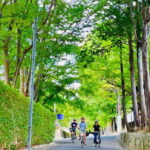
A bicycle gives you a better sense of how the city fits together. You pass from a quiet residential lane to a temple entrance, then along a river or canal, without the stop-and-start feel of public transport. The electric motor helps with distance and effort, though it does not turn the tour into a no-exercise outing.
The ride is broken into sections. You cycle between sights, then park and spend time walking through gardens or temple grounds. That makes this less of a nonstop bike workout and more of a sightseeing day with a bicycle as your main transport.
The route is designed around smaller roads and calmer paths when possible. That is important in Kyoto, where major streets can be busy and confusing. Still, cycling in a Japanese city requires attention. One poor experience specifically raised concerns about bike quality and crowded streets, so you should take the safety briefing seriously, ride at a controlled pace, and tell the guide if you feel uncomfortable.
Other cycling tours in Kyoto

Choosing between Kyoto’s east and west courses
The most important booking detail is the route. The advertised stops combine two separate options, not one giant circuit. The east course focuses on eastern Kyoto, while the west course links some of the city’s best-known western sights.
The east side is the stronger choice if you want gardens, shrines, canals, and a quieter feel. It includes Heian Shrine, Ginkakuji, and the Philosopher’s Walk, with cycling through less crowded parts of the city.
The west side is better for first-time visitors who want major postcard sights. It includes Kinkakuji, Ryoan-ji, and Arashiyama Bamboo Forest. These places are famous for good reason, but they can also draw large crowds.
The provider has clarified the route descriptions to reduce confusion, but you should still check the exact course selected at booking. If you have only one day for this activity, choose based on your priorities rather than assuming you will see all six listed locations.
East course: Heian Shrine and its quiet garden
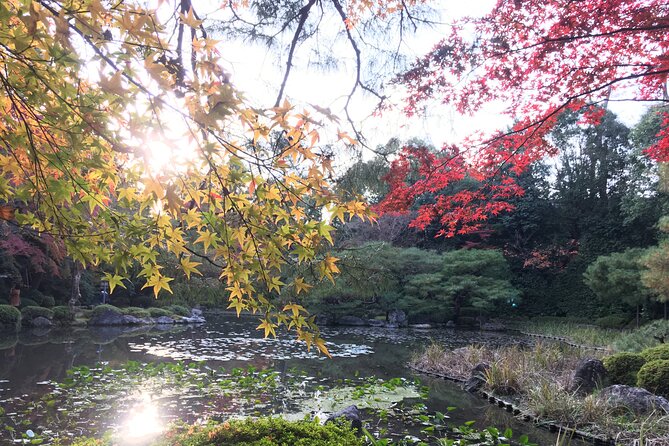
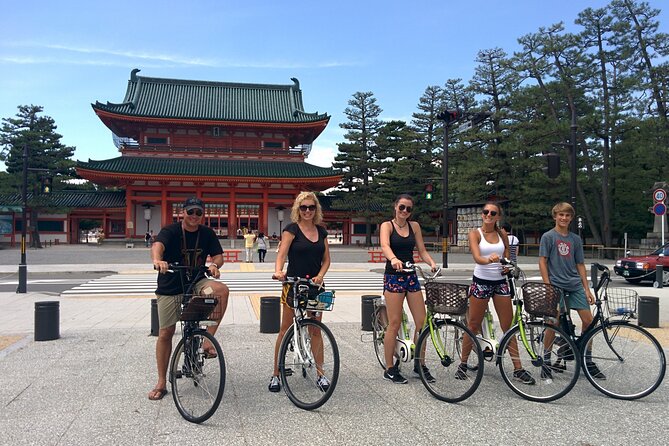
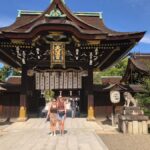
Heian Shrine is a striking opening stop. It was built as a recreation of Kyoto’s old imperial capital, so its broad grounds and ceremonial design give you a useful introduction to the city’s imperial past.
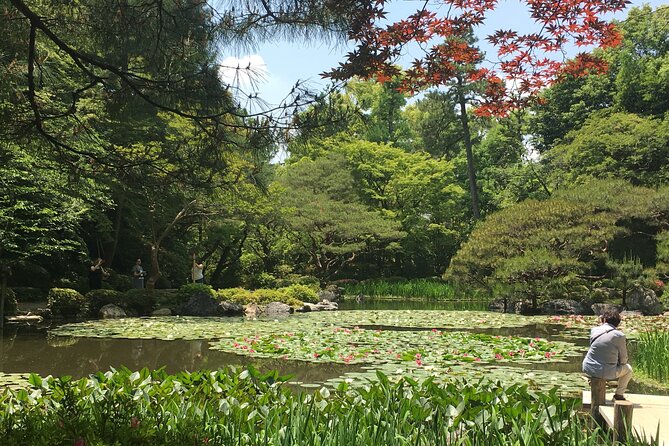
The tour includes admission to the shrine’s garden, which is more than a quick photo stop. Three large ponds and extensive natural scenery create space to slow down after the ride. The garden is also a good place to hear how Japanese garden design uses water, bridges, plants, and changing views.
I especially like that the garden is part of the planned visit rather than an optional extra. Several strong experiences on this tour come from places where you can sit, look around, and ask questions instead of rushing from one landmark to the next.
Allow about an hour here. The shrine’s scale can feel grand, while the garden offers a softer, more reflective break. If you are mainly interested in cycling and dislike long temple visits, this may feel slow. If you enjoy design, religion, and gardens, it is one of the east course’s best sections.
Ginkakuji: refined design without the silver
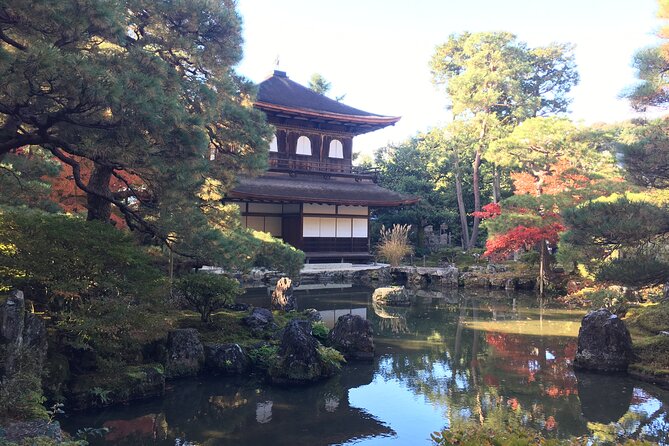
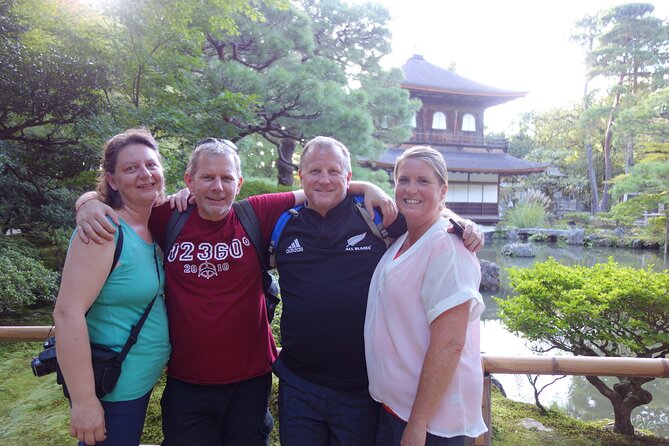
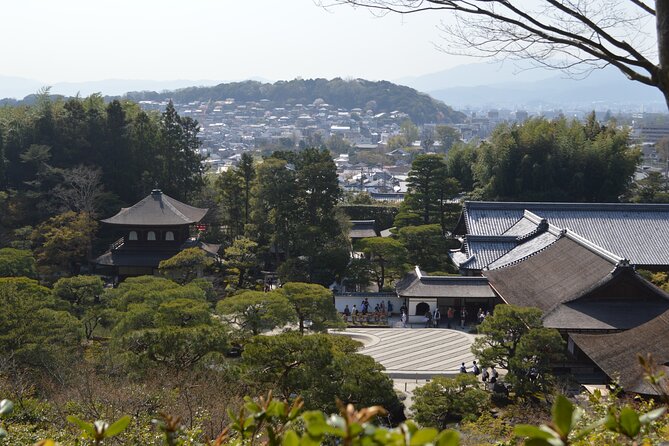
Ginkakuji is often called the Silver Pavilion, though the building is not covered in silver. Its appeal comes from the grounds, especially the carefully arranged sand and rock features and the surrounding garden paths.
The tour includes admission and about an hour at the site. Your guide can help explain the visual choices that might otherwise look simple at first glance. In Kyoto gardens, empty space, texture, water, and carefully framed views all matter. A guide can point out those details without turning the visit into a lecture.
Ginkakuji also has cultural importance as the home of a former shogun. That gives the stop more depth than a quick look at a pretty building. You see how political power, Zen practice, and garden design were linked in Kyoto.
The drawback is that Ginkakuji is a popular stop, so the experience depends partly on the day and time. The bicycle route helps by approaching through older streets rather than making the whole day feel like a line between major attractions.
The Philosopher’s Walk and Kyoto’s canal paths
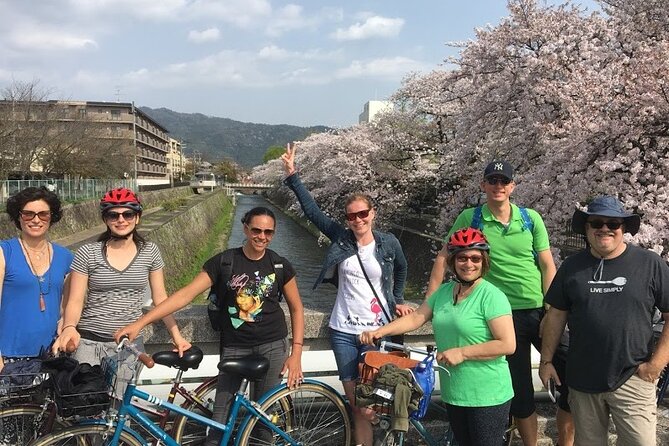
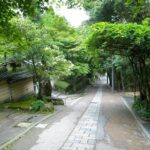
The Philosopher’s Walk is one of the most pleasant stretches on the east course. You cycle beside a canal, surrounded by trees and greenery, with the city’s noise kept at a distance.
The listed time is about 40 minutes, though the actual pace can depend on stops and group ability. This is not the place to race. It is a scenic connector between sights, and the pleasure comes from the steady ride, the water, and the changing views.
This part also shows why a bike tour can beat a car or bus. You are close enough to notice small houses, walls, gardens, and side paths. You can stop for photographs more easily, and the guide can point out details about local life that are easy to miss from a vehicle.
The east course has been praised for feeling less crowded than the most famous central sights. If you want a calmer day with a good balance of cycling and temple visits, I would give this route serious thought.
A few more Kyoto tours and experiences worth a look

West course: the Golden Pavilion at Kinkakuji
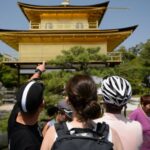
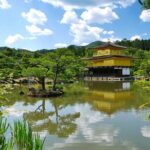
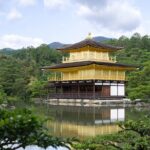
Kinkakuji, the Golden Pavilion, is one of Kyoto’s most recognizable sights. Its upper levels are covered in real gold leaf, and the building reflects in a pond surrounded by gardens.
You have about 45 minutes here, including admission. That is enough to see the main views and hear the key stories, though not enough for a slow, wandering visit through every corner of the grounds. The tour format is helpful because the guide can explain the site before you move on, giving the stop a sense of purpose.
Kinkakuji is also the west course’s most crowd-sensitive stop. It can be hard to enjoy the famous view when large groups gather around the pond. The bicycle tour does not remove that problem, but it does let you avoid wasting time on a long bus route between sights.
If Kinkakuji is high on your Kyoto list, the west route offers an efficient way to pair it with two very different places. Just expect this stop to feel more public and more photographed than the east course’s garden visits.
Ryoan-ji and the world-famous rock garden
Ryoan-ji provides a sharp contrast to Kinkakuji. Its fame comes from a simple rock and sand garden, often considered the best-known example of its type in the world.
You spend about 40 minutes here, with admission included. The garden is spare, and its meaning is not spelled out in one easy answer. This is exactly where a guide earns their place. You can learn about the garden’s imagery, arrangement, and Zen associations instead of simply taking a picture and moving on.
The stop suits you if you enjoy quiet visual details and open-ended interpretation. It may feel less rewarding if you want ornate buildings or a long list of things to see. The garden’s power comes from restraint.
Ryoan-ji is also a useful pause in a busy sightseeing day. After the bright gold of Kinkakuji, the plain sand and stones reset your attention. You get two major temple experiences that feel completely different.
Arashiyama Bamboo Forest, beautiful but brief
The Arashiyama Bamboo Forest is the west course’s most instantly recognizable stop. The path runs through tall bamboo in a natural setting, creating a striking change from Kyoto’s temples and city streets.
The visit is listed at about 30 minutes and admission is free. That is enough to walk through the main section and take photographs, but do not expect a long, solitary forest walk. Arashiyama is a major attraction, and the path can be crowded.
The short visit is actually useful. You get the famous sight without giving up the rest of the day. Your guide can also help you approach and leave by practical routes, rather than leaving you to work out the area’s lanes and connections on your own.
If you are hoping for a peaceful nature experience, this may be the least tranquil stop on the west course. If you want to see the Bamboo Forest while also visiting Kinkakuji and Ryoan-ji, the combination makes good use of your time.
The best part may be between the sights
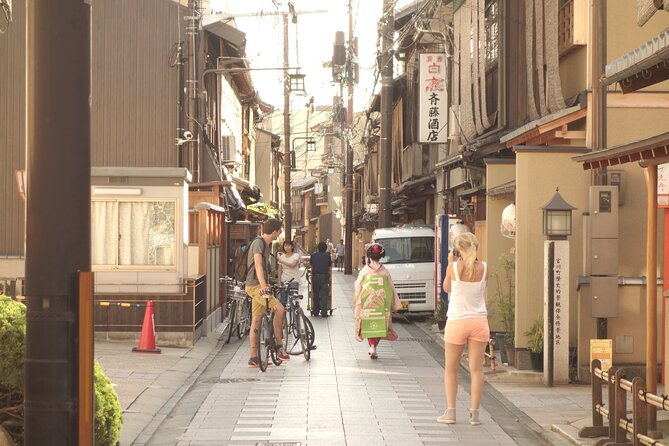
The formal stops matter, but the riding between them is where this experience becomes different from a standard temple tour. You pass through backstreets, see a mix of traditional and newer homes, and get a closer look at shops and ordinary neighborhoods.
Several guides receive strong praise for making those in-between sections meaningful. Philippe is described as an engaging storyteller with many years in Kyoto and a strong interest in Japanese culture. Kevin is praised for speaking multiple languages, explaining local customs, and making the day feel relaxed and friendly. Niall is noted for his history and daily-life commentary.
That range matters because the tour is not only about buildings. You learn about Shinto shrines, Buddhist temples, Japanese religious practice, traditional homes, and how people use the city today. The guides also adjust routes around festivals, closures, and crowds when needed.
The group may stop for photographs, and lunch can become part of the day’s rhythm. Lunch is not included, but the guide may ask what you prefer and help the group choose food from a local grocery store for a picnic. That is a practical, distinctly local option, but you should budget separately for it.
How demanding is the ride?
The tour requires a moderate level of physical fitness. You cycle for several hours, get on and off the bike, and walk through temple and shrine grounds. E-bikes reduce the strain, especially on longer stretches, but they do not remove the need to balance, steer, brake, and pay attention to traffic.
Most of the route is described as flat, which makes Kyoto a good city for this type of outing. One east course experience included a more challenging mountain trail and a city view, but that appears to be an added variation rather than a guaranteed part of every departure. Ask your guide about the planned route if walking uphill would be difficult for you.
The e-bikes are generally described as comfortable and easy to ride, with the bicycles included in the price. One negative account complained about bike quality, so it is sensible to check the brakes, seat, and controls before leaving. Report any problem at once. You should not spend the day trying to manage a bike that does not feel right.
This tour is best for adults and older teens who already feel comfortable on a bicycle. It may not suit young children or anyone who is very nervous about riding in city streets.
Is $109.43 good value?
At $109.43 per person, this is not the cheapest way to see Kyoto. You are paying for the e-bike, guide, facility fees, and route planning, but not lunch.
The value comes from the amount of ground covered and the time saved between sights. A day of separate taxis, admission fees, and self-guided navigation could approach the same cost, especially if you want help connecting distant parts of Kyoto. The guide also adds context that you would need to research yourself.
The small group improves the value. With six people, or up to eight under the stated maximum, you are less likely to feel like a number in a large tour procession. You can ask about a garden, stop for a photograph, or raise a question about a custom you notice.
I would not book it simply to collect a checklist of attractions. The tour works best when you want to understand how Kyoto’s temples, neighborhoods, rivers, and old lanes relate to one another.
Meeting point, timing, and cancellation
You meet at Kyoto Fun E-Bike Tours & Rentals, 222-2 Koyamacho, Kita Ward, Kyoto, 603-8152. The activity ends back at the same meeting point, and the location is near public transportation.
The stated duration ranges from about 3 hours 30 minutes to 6 hours, with the main description giving roughly 5.5 hours. Plan for a substantial part of your day, not a quick morning outing. The length can vary with the selected course, stops, group pace, and conditions.
A mobile ticket is provided, and booking confirmation is issued at the time of reservation. Free cancellation is available up to 24 hours before the local start time. Changes or cancellations inside that window are not refunded. If poor weather cancels the ride, you are offered another date or a full refund.
Who should book this Kyoto bike tour?
I would recommend it to you if:
- You want to see several parts of Kyoto without relying on buses.
- You enjoy temples and gardens but also want ordinary neighborhoods and backstreets.
- You like asking questions and learning from a guide.
- You can ride a bicycle confidently and handle a half-day of activity.
- You have limited time in Kyoto and want a broad first look at the city.
- You prefer a small group to a large coach tour.
I would think twice if you dislike cycling near cars, want a completely relaxed walking tour, or need to see every listed attraction in one outing. You should also be clear about the east versus west route before booking.
Should you book it?
Yes, if you want a practical and personal way to connect Kyoto’s major sights with its quieter everyday side. The strongest features are the e-bike access, small-group setting, flexible route choices, and guides such as Philippe, Kevin, and Niall, who bring history and local life into the ride.
Choose the east course for gardens, canals, Heian Shrine, Ginkakuji, and the Philosopher’s Walk. Choose the west course for Kinkakuji, Ryoan-ji, and the Bamboo Forest. If you can spare the time and enjoy cycling, this is a smart first-day orientation to Kyoto, with enough cultural substance to remain worthwhile even after you have found your bearings.
FAQ
How long does the Kyoto e-bike tour last?
The activity is listed as lasting about 3 hours 30 minutes to 6 hours, with the main description giving an approximate duration of 5.5 hours.
Are bicycles included in the price?
Yes. E-bike rental is included, along with the guide and landing and facility fees.
Does the tour visit all six listed attractions?
No. The attractions are divided between two courses. The east course includes Heian Shrine, Ginkakuji, and the Philosopher’s Walk. The west course includes Kinkakuji, Arashiyama Bamboo Forest, and Ryoan-ji.
Is lunch included?
No. Lunch is not included in the price. You should plan to pay separately if the group stops for lunch or buys food for a picnic.
Where does the tour start and finish?
The tour starts at Kyoto Fun E-Bike Tours & Rentals, 222-2 Koyamacho, Kita Ward, Kyoto. It ends back at the same meeting point.
Can I cancel for a full refund?
Yes, if you cancel at least 24 hours before the experience’s local start time. Cancellations or changes made less than 24 hours in advance are not refunded. Poor weather cancellation may result in a different date or a full refund.
More E-Bikes in Kyoto
More Cycling Tours in Kyoto

More tours in Kyoto we've reviewed



E-Bikes, compared.
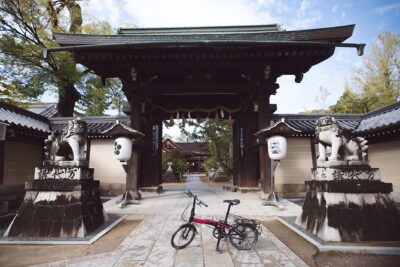 ★ 5.0Hidden Kyoto E-Biking tourFrom $116
 ★ 5.05 Top Highlights of Kyoto Full Day Bike Tour (E-bike option)From $172
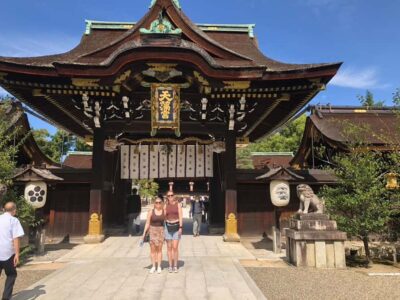 ★ 4.9Kyoto: Memory Kyoto E-Bike TourFrom $105
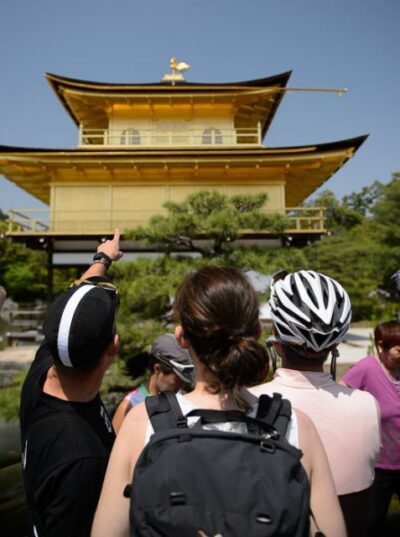 ★ 4.9Kyoto: City Secrets eBike TourFrom $1273h 45m
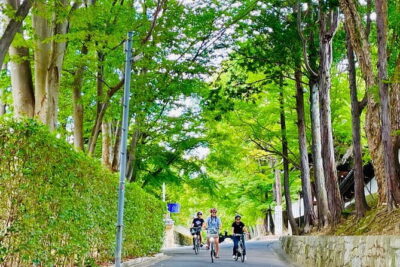 ★ 5.0Pedal Adventure Kyoto’s iconic landmarks on an e-bike tourFrom $86
 ★ 5.0Arashiyama Bamboo Forest E-Biking TourFrom $116