
Reviewed · LUNCH EXPERIENCES
Bike Tour Exploring North Kyoto plus Lunch
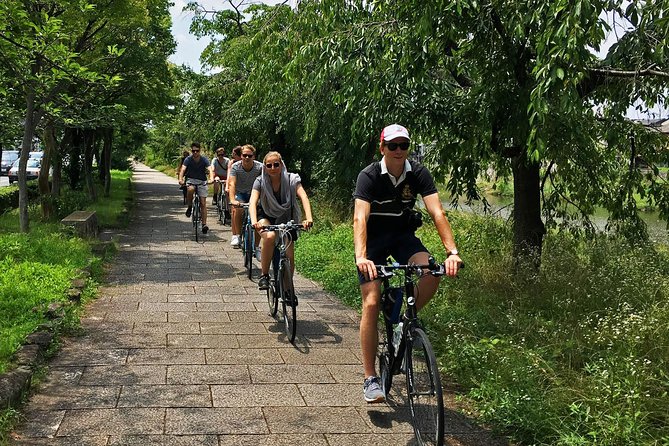
Kyoto makes more sense from a bicycle seat. This 5 to 6-hour ride links famous sights with quiet streets, back alleys, and small corners you could easily miss from a bus. You cover roughly 13 miles, or about 24 kilometers, but the route is broken up by temple visits, photo stops, water breaks, and lunch.
I like the small maximum group of eight, which gives guides such as Quinn, Jay, Indra, Mayko, Karl, Julian, and Jamie room to adjust the pace and explain the places you are seeing. I also like that the price includes a Cannondale bike, water, lunch, and the entrance fee for Kinkakuji, so you are not paying extra every time the group stops.
The main consideration is physical: this is an active day, not a sightseeing ride with a token pedal. Most of the route is manageable, but the total distance and Kyoto heat can wear you down. You need to be at least 13 and comfortable on a bicycle.
In This Review
- Key points to know before you book
- Why a bicycle works so well in Kyoto
- Starting at Cycle Kyoto near Kyoto Station
- Nishi Honganji and Kyoto’s great wooden spaces
- Kitano Tenmangu, a shrine with local life
- Kinkakuji and the famous Golden Pavilion
- Former imperial grounds and the ride between sights
- Japanese lunch as a real part of the tour
- Gion and Kyoto’s geisha district
- What the guides add to the day
- Value at $106.12 per person
- Who should book this ride?
- Should you book the North Kyoto bike tour?
- FAQ
- How long does the Kyoto bike tour last?
- How far do you cycle?
- What sights are included?
- Is lunch included?
- What equipment is provided?
- Who can take the tour?
Key points to know before you book
- Ride about 13 miles through Kyoto: Expect roughly 2.5 hours of actual cycling spread across a half-day tour.
- See more than the headline sights: The route mixes Nishi Honganji, Kitano Tenmangu, Kinkakuji, former imperial grounds, Gion, and quieter city streets.
- Lunch is included: Depending on the day, you might eat at a traditional noodle restaurant, a sushi bar, or a sushi train restaurant.
- Guides shape the experience: Quinn, Jay, Indra, Julian, Mayko, Karl, and Jamie have all led tours, with a strong focus on history, religion, safety, and local culture.
- The group stays intimate: The maximum is eight people, useful for questions and for keeping a steady, comfortable pace.
- Weather matters: Poor weather can lead to a new date or a full refund, and rain may require you to shift your plans.
Why a bicycle works so well in Kyoto
Kyoto’s major sights are spread across the city. Buses can be crowded, roads can be slow, and walking between distant temples takes time. A bicycle gives you a practical middle ground. You move faster than on foot, but you still see ordinary streets and residential corners between the famous stops.
This matters most in northern Kyoto. The route is not simply a string of photo opportunities. Your guide leads you between major sites, then gives you time to look around, ask questions, and notice how the city changes from one neighborhood to the next.
The ride is described as easy to moderate by many people who take it, with only a slight incline before Kinkakuji and a generally easier ride afterward. Still, the full day can feel demanding if you have not ridden for years. The pace is adjusted to the group, and frequent short breaks help, but you should not book this expecting a gentle two-hour outing.
The bikes are high-quality Cannondale models, fitted according to height. Extra seat padding is available, and helmets are optional. Bottled water is included, which is especially useful in Kyoto’s warm and humid months.
Other cycling tours in Kyoto
Starting at Cycle Kyoto near Kyoto Station
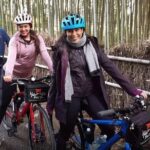
The day begins at Cycle Kyoto, at 7 Higashikujō Nishisannōchō in Minami Ward. The start time is 10:00 a.m., and the tour returns to the same meeting point.
The opening 15 minutes are used for introductions, bike fitting, and a short preparation period. This is more important than it sounds. A properly sized bike and a quick check of the saddle can make the difference between enjoying the ride and thinking about your legs for the next six hours.
You meet your guide and the rest of the group at the shop. Because the group is capped at eight, the guide can learn everyone’s name and get a quick sense of cycling ability. That personal touch appears repeatedly in the way the guides handle the day. Quinn, for example, is noted for remembering names and adjusting the route and speed to the group.
The meeting point is near public transportation, but you should still allow enough time to arrive calmly. The tour does not begin with a long formal briefing. It moves from fitting the bikes into the city fairly quickly.
Nishi Honganji and Kyoto’s great wooden spaces
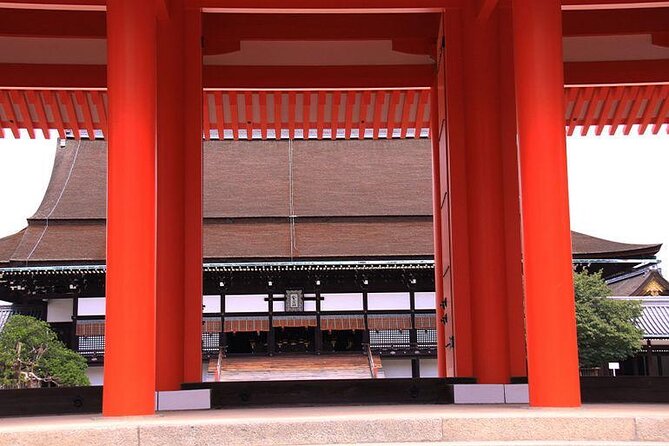
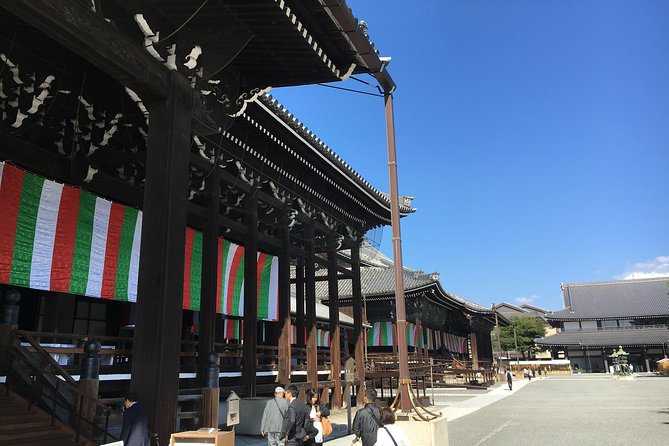
The first major stop is Nishi Honganji, one of Kyoto’s least visited major religious sites and home to one of the largest wooden buildings in the world. You spend about 15 minutes here.
That short stop works as an introduction to the tour’s approach. You are not asked to spend an hour examining every detail. Instead, your guide points out what matters, explains the site’s religious setting, and gives you time to take in the scale of the architecture.
Nishi Honganji can feel calmer than Kyoto’s best-known attractions. That makes it a useful early stop. You begin with a major place that does not usually command the same crowds as Kinkakuji, and you start learning how Buddhist sites fit into Kyoto’s wider story.
The buildings also reward close attention. One particularly memorable detail is the visible repair work on the historic structure. The mended areas are not treated as something to hide. They become part of the building’s character, a useful reminder that old architecture survives through care and repair rather than by remaining untouched.
Kitano Tenmangu, a shrine with local life
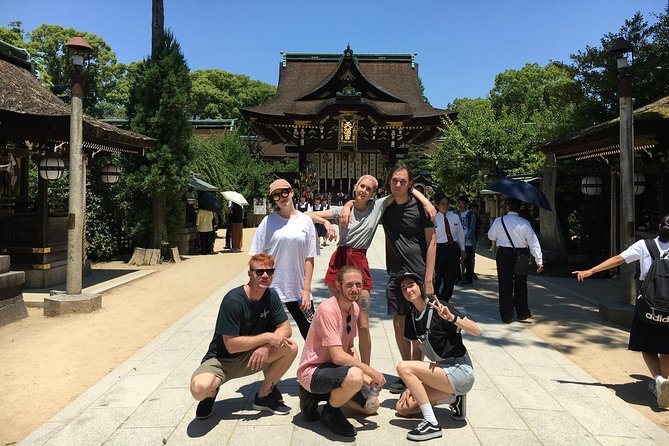
Next comes Kitano Tenmangu Shrine, with about 20 minutes to explore. This is a chance to see a working Shinto shrine and not just a monument arranged for sightseeing.
Your guide explains the shrine’s past and the customs that shape a visit. You can watch local shrine goers, take in the quieter mood, and compare the setting with the Buddhist temple you have just seen.
The religious context is one of the tour’s strongest features. Guides such as Indra and Quinn have been praised for explaining the differences between Buddhism and Shinto, along with the way these traditions have influenced Japanese culture. That background can make later temple and shrine visits far easier to understand.
Twenty minutes is enough for an orientation, but it is not enough for a detailed visit to every corner. If Kitano Tenmangu becomes one of your personal favorites, you may want to return later with more time. The benefit here is that you see it as part of a larger Kyoto story rather than as an isolated stop.
Kinkakuji and the famous Golden Pavilion
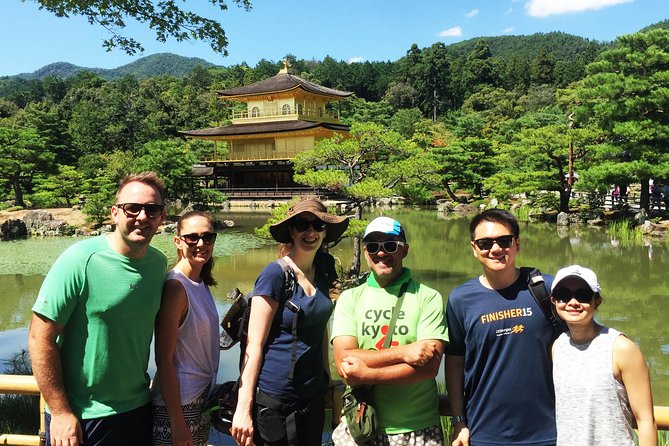
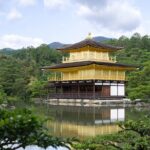
Kinkakuji, the Golden Pavilion, is the tour’s most famous stop. You spend about 30 minutes here, and the temple entrance fee is included.
The pavilion is one of Japan’s most recognizable sights, so expect this to be the busiest part of the ride. Your guide provides commentary, then you have time to look, take photographs, and perhaps buy an ice cream while enjoying the grounds.
The route has a slight incline before reaching Kinkakuji. It is not described as a major climb, but it can be noticeable after several hours in the saddle. Afterward, the route becomes easier, which is welcome.
The stop is well judged for a cycling tour. You receive the essential context and see the pavilion without losing the whole afternoon to one attraction. If you want extensive garden time or a slow photographic study, this tour will feel too brief. If you want to place Kinkakuji within a broader day of Kyoto sights, 30 minutes is a sensible compromise.
A few more Kyoto tours and experiences worth a look
Former imperial grounds and the ride between sights
The route also passes through the grounds of the former seat of Japan’s imperial family. The stop gives you time to consider Kyoto’s political past and how the city once functioned as Japan’s imperial center.
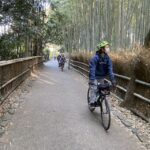
This part of the day also shows why the bicycle is useful. You are not being carried from one enclosed attraction to another. You ride through the city, with the ordinary streets acting as the link between temples, shrines, and historic districts.
The cycling itself takes about 2.5 hours, according to one detailed account of the route. The rest of the six-hour schedule is filled with sightseeing, lunch, explanations, and breaks. That distinction is helpful. You are active for much of the day, but you are not pedaling continuously for six hours.
Your guide leads from the front and keeps an eye on the group. Safety and comfort are recurring parts of the experience, especially in hot weather. Water is provided, and the pace can be adjusted for riders with different skill levels.
Japanese lunch as a real part of the tour
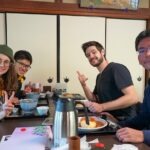
Lunch is included, and it is more than a quick sandwich between attractions. The meal has varied by day and circumstance. You might eat at a traditional noodle restaurant, a sushi bar, or a sushi train restaurant.
One particularly appealing possibility is a meal at a noodle restaurant with roughly 400 years of history. On another day, a planned noodle stop was closed, so the group went to a sushi bar instead. That kind of change is worth accepting. The point is a proper Japanese meal and a chance to refuel, not one fixed dish served without regard to the day’s conditions.
The meal also gives the group a natural pause. After several hours of riding, sitting down together helps reset your energy before the final section. Vegetarian arrangements can be made when dietary needs are provided in advance, but you should communicate those requirements before the tour date.
Extra drinks are not included, so bring some spending money if you want anything beyond the supplied bottled water and included meal. Lunch is a real value point at this price, since eating at a sit-down Japanese restaurant during a sightseeing day can otherwise add a noticeable cost.
Gion and Kyoto’s geisha district
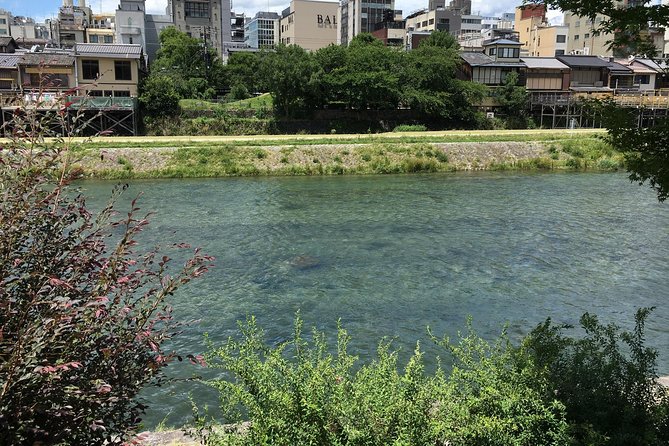
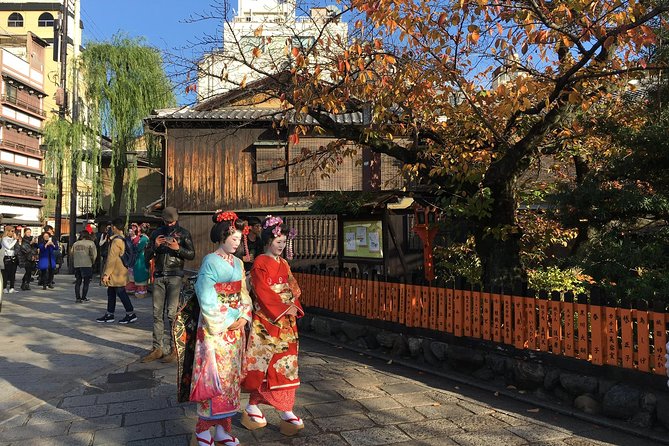
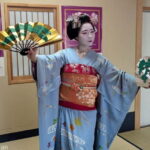
The final named stop is Gion, Kyoto’s famous geisha district. You spend about 10 minutes here, enough for a brief look at the streets and an explanation of the world associated with geisha and maiko.
This is not a promise of a private encounter or a long walking tour through Gion. You might catch a glimpse of an entertainer, but that is luck, not a scheduled part of the experience. The more reliable benefit is learning how the district works and seeing its atmosphere in person.
The brief stop also makes sense in the context of the route. Gion is a compact introduction at the end of a long day, while the ride itself gives you a wider view of Kyoto. If you want an extended evening in the district, plan to return on your own after the tour.
What the guides add to the day
The guide can make or break a city bike tour. Here, the strongest praise centers on clear explanations, warmth, and safe riding rather than on speed alone.
Quinn is particularly strong for groups interested in temples, shrines, and cultural background. He has been described as careful in hot weather, generous with water breaks, and willing to add extra time. Indra is noted for explaining Japanese religious traditions, historical periods, and the origins of geisha culture.
Jay has a friendly, informal style and is especially good with families. One family with children aged 12 to 17 found that his stories made a shrine one of the teenagers’ favorite parts of the trip. Karl brings humor and detailed answers to questions, while Julian is described as easygoing and well informed about Kyoto after many years in Japan.
Mayko has a talent for connecting individual sights with current Japanese customs. Jamie brings humor and enthusiasm to the ride. You should not expect one fixed personality or script, since the guide changes, but the format allows each guide to shape the day.
A guide cannot replace your own curiosity. Ask questions. The tour is at its best when you want to understand why a shrine operates differently from a temple, how Kyoto’s old districts developed, or what you are looking at beyond the standard photograph.
Value at $106.12 per person
At $106.12 per person, this is not the cheapest way to see Kyoto. You could rent a bicycle and visit some of the same areas for less. That option also means planning the route, navigating traffic, paying entrance fees, finding lunch, and learning the cultural background on your own.
The value here comes from combining several costs and services in one day:
- A high-quality Cannondale bicycle
- Bike fitting and guidance
- Bottled water
- Lunch
- Kinkakuji entrance
- A small group capped at eight
- A planned route through distant parts of Kyoto
- Explanations at temples, shrines, former imperial grounds, and Gion
The price makes the most sense if you want a first look at Kyoto and prefer structure over independent navigation. It is also useful early in your stay. The route helps you see many major areas in one day, then decide where you want to return for a longer visit.
The value is weaker if you dislike group activities, already know Kyoto well, or want to spend a full morning at one temple. You are paying for the guide’s time and route planning, not simply for a bicycle.
Who should book this ride?
I would recommend it to active visitors who can ride comfortably for several hours and want a broad introduction to Kyoto. It suits couples, solo visitors, families with older children, and anyone who learns better by moving through a city than by reading labels in a museum.
The minimum age is 13. Families should remember that a younger teenager may be able to ride but still struggle with the distance, heat, or sustained attention. The route is manageable for many people with moderate fitness, but it is not appropriate for someone who is uncomfortable cycling in city streets.
This is also a strong choice for a first full day in Kyoto. You will see major sights, learn the difference between key religious traditions, eat lunch, and get a feel for the city’s layout. If rain is in the forecast, book early in your stay when possible, since a weather postponement is easier to handle before your schedule fills.
Should you book the North Kyoto bike tour?
Book it if you want to cover a lot of Kyoto in one active day, value a skilled guide, and like the idea of mixing famous sights with ordinary streets. The included lunch, entrance fee, bike, and water make the $106.12 price reasonable for a guided small-group experience.
Skip it if you want a slow temple day, dislike cycling, or are visiting during weather that makes a long ride unpleasant. For most active first-time visitors, though, this is a smart way to get your bearings and see Kyoto from a more personal angle than a crowded bus allows.
Free cancellation is available up to 24 hours before the 10:00 a.m. start time. Changes made inside that window are not accepted, and poor weather or too few bookings may lead to a new date or a full refund.
FAQ
How long does the Kyoto bike tour last?
The tour lasts approximately 5 to 6 hours and begins at 10:00 a.m. It ends back at the Cycle Kyoto meeting point.
How far do you cycle?
The route is about 13 miles, or roughly 24 kilometers. Actual cycling takes around 2.5 hours, with sightseeing stops, lunch, explanations, and breaks spread throughout the day.
What sights are included?
The route includes Nishi Honganji, Kitano Tenmangu Shrine, Kinkakuji Temple, the grounds of the former seat of Japan’s imperial family, and Gion. The Kinkakuji entrance fee is included.
Is lunch included?
Yes. Lunch is included, though the restaurant and meal can vary. Possible stops include a traditional noodle restaurant, a sushi bar, or a sushi train restaurant. Dietary requirements should be shared ahead of time.
What equipment is provided?
A high-quality Cannondale bike, cycling guidance, and bottled water are included. Bikes are fitted by height, and helmets are optional. Extra seat padding is available.
Who can take the tour?
Riders must be at least 13 years old and comfortable riding a bicycle. A moderate level of physical fitness is recommended, since the day includes a substantial distance and can be tiring in hot weather.
More Lunch Experiences in Kyoto
More Cycling Tours in Kyoto
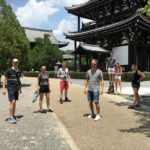
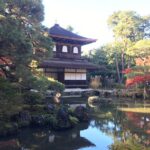

More tours in Kyoto we've reviewed


Lunch Experiences, compared.
 ★ 4.4Osaka/Kyoto: Arashiyama, Nara & Fushimi Inari Shrine w/LunchFrom $61
 ★ 5.0Kyoto Zen Meditation & Garden Tour at a Zen Temple with LunchFrom $110
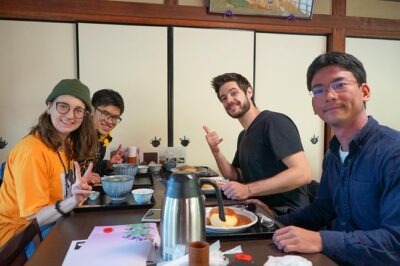 ★ 5.04.5-Hour Kyoto Bike Tour with Lunch and UNESCO Zen TemplesFrom $99
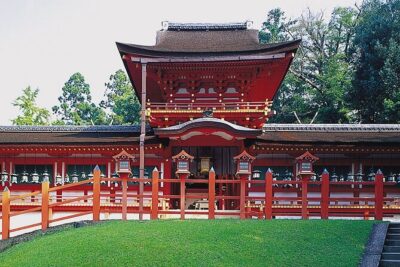 ★ 4.8From Kyoto: Nara History Guided Half Day Bus Tour with LunchFrom $776 hours
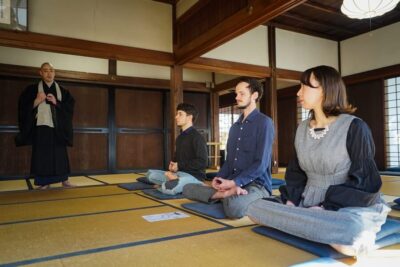 ★ 4.9Kyoto: Zen Meditation and Garden Tour at a Temple with LunchFrom $1074h 30m
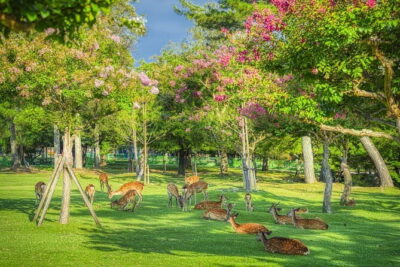 ★ 4.5From Osaka/Kyoto: Kyoto & Nara Day Trip with Optional LunchFrom $68