
Reviewed · BAR HOPPING & IZAKAYA TOURS
Izakaya Style Cooking Class
Kyoto’s Izakaya Style Cooking Class turns a familiar restaurant meal into something you can understand and repeat at home. In about three hours, you learn how dashi works, how Japanese sauces are balanced, and how casual dishes are prepared before sitting down to eat what you made.
I like the hands-on format and the broad menu. You may prepare as many as six dishes, from sesame spinach and teriyaki yellowtail to soup, tempura, rice, or dessert, depending on the season. I also like that the recipes go home with you. The main thing to consider is that the menu changes, and any sake offered with dinner may cost extra.
In This Review
- Key points to know before booking
- Why izakaya is worth learning in Kyoto
- What happens during the three-hour class
- Dashi first, then the sauces and side dishes
- Eating your own izakaya dinner
- A friendly class with real personal help
- Dietary needs and access
- Is $71.63 a fair price?
- Who should book this cooking class?
- Should you book it?
- FAQ
- Where does the Izakaya Style Cooking Class take place?
- What time does the class start?
- What is included in the price?
- Are drinks included?
- How many people can join the class?
- Is the class taught in English?
- Can dietary requirements be accommodated?
- Do I take recipes home?
- What is the cancellation policy?
Key points to know before booking
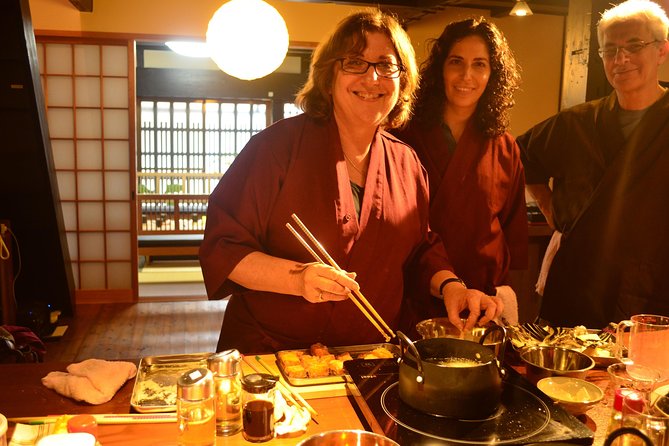
- Learn the base of Japanese cooking: You prepare dashi, the stock used in many Japanese soups and sauces, and practice seasoning techniques that are useful far beyond this class.
- Cook several dishes in one afternoon: The menu can include up to six small dishes, giving you a wide taste of home-style Japanese food rather than one showpiece recipe.
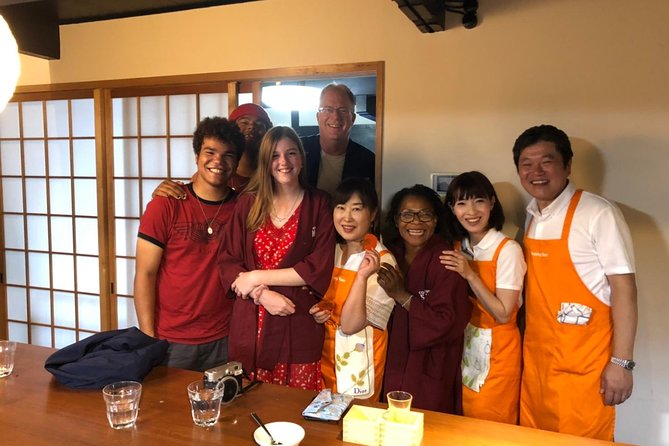
- Work in a small group: The class allows a maximum of eight people, with hands-on help from an English-speaking instructor and support from the wider Cooking Sun team.
- Eat a full dinner afterward: Ingredients, cooking, and dinner are included, so plan to arrive hungry.
- Take practical recipes home: The dishes are designed to be manageable in a home kitchen, and the class explains Japanese ingredients and utensils as you work.
Why izakaya is worth learning in Kyoto
Izakaya is often described as the Japanese answer to tapas, but that comparison only goes so far. An izakaya is a casual place for small dishes, drinks, and conversation. The food can range from simple vegetables and rice to grilled fish, fried foods, soups, and seasonal home cooking.
The tradition is tied to sake shops in the Edo period. Some shops began serving food alongside sake, and the custom grew into the relaxed dining culture found across Japan today. You get a short introduction to this background at the start of class, which helps explain why the meal is made up of several small dishes instead of one large main course.
I like this focus because it moves beyond the sushi and teriyaki menu many visitors already know. You learn the kind of food people might prepare at home or order at a casual neighborhood restaurant. That makes the lesson useful for understanding daily Japanese eating habits, not just special-occasion cooking.
The class begins at 2pm at Cooking Sun Kyoto, at 679 Funayacho in Kyoto’s Shimogyo Ward. The meeting point is in a traditional wooden house, an appealing setting for a lesson about Japanese food. The activity ends at the same location after dinner.
Other cooking classes in Kyoto

What happens during the three-hour class
The afternoon starts with an introduction to izakaya, the ingredients used in the day’s menu, and the basic methods you will practice. The chef demonstrates each step in English before you begin cooking yourself.
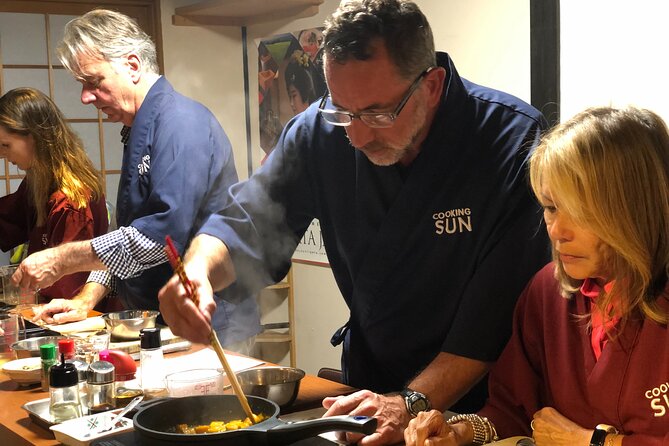
This is not a class where you simply watch a chef prepare a meal. You pick up a knife, handle the ingredients, mix sauces, and take part in the cooking. The instructors prepare some ingredients in advance, which keeps the pace moving and leaves more time for making several dishes.
That preparation is a real benefit. Cooking six different items from scratch could become slow and tiring, especially in a group. By reducing some of the early chopping and setup, the team can give you more variety without turning the class into a long wait between recipes.
The cooking team also keeps the work areas moving. Several comments about the class point to the instructors’ careful organization, quick cleaning, and timely delivery of ingredients. That matters in a shared kitchen, where a messy station can quickly make a lesson feel cramped.
You can expect instruction suited to mixed ability levels. The class has worked well for adults who cook often, complete beginners, and children as young as 10 and 12. If you enjoy cooking, you will have enough new ingredients and methods to keep things interesting. If you rarely cook, the demonstrations and direct help make the recipes approachable.
Dashi first, then the sauces and side dishes
One of the most useful parts of the lesson is learning to make dashi, the Japanese soup stock that forms the base of many dishes. Dashi is not just one recipe. It teaches you how Japanese cooking builds flavor through a few carefully chosen ingredients rather than heavy seasoning.
You also learn how Japanese sauces and condiments differ. The class may compare sauces used for teriyaki, sesame dressing, soup, or vegetable dishes. This is practical knowledge because small changes in salt, sweetness, acidity, and stock can make a dish taste completely different.
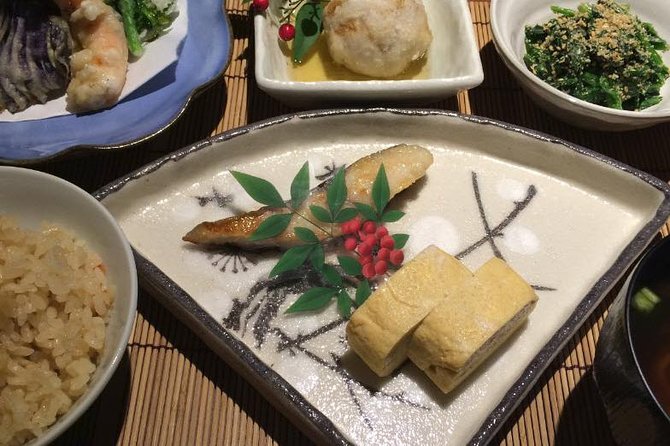
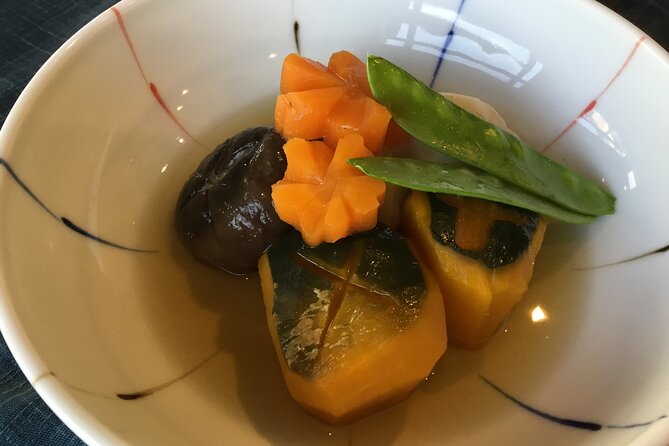
Possible dishes include spinach with sesame sauce, teriyaki yellowtail, vegetable chowder, mushroom tempura, and rice with vegetables. Other sessions have included cucumber salad, pumpkin soup, pasta, and mochi dessert. The exact menu depends on seasonal ingredient availability, so you should book this for the cooking format rather than for one guaranteed dish.
That changing menu is mostly a plus. Seasonal cooking is part of Japanese food culture, and the class can use what is available rather than force the same ingredients year-round. The tradeoff is simple: if you have your heart set on noodles, yellowtail, or tempura, you may get something else.
One point is worth noting for serious Japanese-food enthusiasts. At least one session included pasta rather than a Japanese noodle dish, which may disappoint you if you want every recipe to be strictly traditional. The wider menu still covers Japanese techniques and flavors, but the experience is best viewed as Japanese home cooking with an izakaya theme, not a formal kaiseki lesson.
Eating your own izakaya dinner
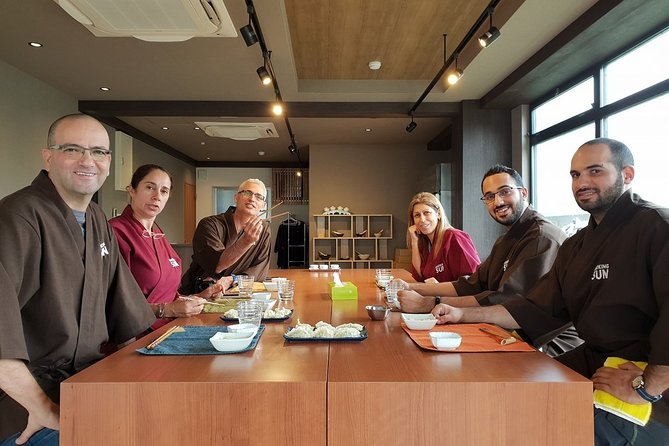
After the preparation, you sit with the group and eat the dishes you have made. The meal is included, along with the ingredients, apron, and English-speaking instruction.
The dinner format gives the class a pleasant rhythm. You cook one set of dishes, taste the first courses, then return to the remaining recipes before finishing the meal. It is also a good way to see how small dishes work together: a savory fish dish, a vegetable side, soup, rice, and something sweet can feel like a full meal even when each portion is modest.
Plan to arrive hungry. The class can produce a generous amount of food, and several menu combinations include six dishes. This is not a quick tasting with a token bite at the end. You are paying for a lesson that also functions as dinner.
Drinks need a little care. Food and dinner are included, but drinks are not included unless specifically stated. One person was offered sake and later charged 600 yen per glass, so ask the price before accepting any alcohol. There is no need to avoid the sake, but clear pricing is better than an unexpected addition to the bill.
A friendly class with real personal help
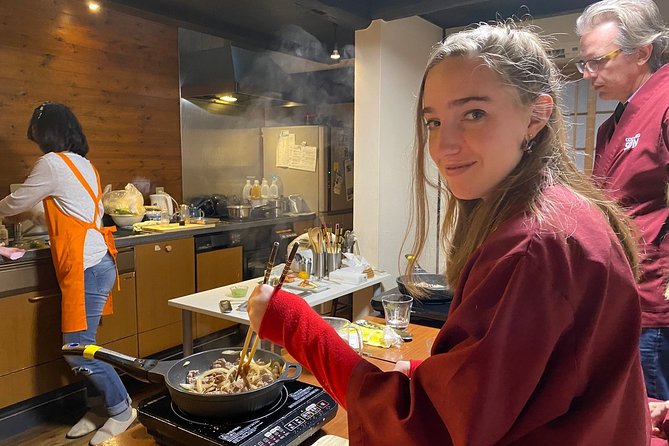
The group limit is eight people per booking and eight participants overall. That is small enough for the instructor to reach each cooking station, while still giving the session a social feel.
The class can be especially good for couples, families, and solo visitors who want an activity that encourages conversation. A family with children found the instructions easy to follow, while experienced cooks appreciated learning new flavor combinations and Japanese tools. The format does not depend on advanced knife skills.
Keiko and her Cooking Sun team receive especially strong praise for being patient, organized, and welcoming. The instructors explain clearly, answer questions, and help without making beginners feel out of place. In a busy cooking class, that support is more important than flashy demonstrations.
You should still expect a shared class rather than private instruction. The instructor divides attention among the group, and the pace is set for a range of abilities. If you want to spend an hour perfecting one dish with a chef beside you, this is not that kind of lesson. If you want to make several dishes and get help as needed, the group setup works well.
The class is offered in English, and the cooking team explains ingredients, sauces, and utensils as you go. That makes the session useful even if you have never cooked Japanese food before.
A few more Kyoto tours and experiences worth a look





Dietary needs and access
Tell Cooking Sun about dietary requirements when you book. The class has accommodated vegetarians and people with allergies, including celiac concerns, but you should not wait until the afternoon of the class to mention them.
The available information does not promise that every dietary request can be handled, so provide clear details in advance. Ask about ingredients if you have a serious allergy, particularly in a shared kitchen where sauces and cooking surfaces may vary.
Service animals are allowed, and the studio is near public transportation. Hotel pickup and drop-off are not included. You make your own way to 679 Funayacho, Shimogyo Ward, Kyoto, then return to that meeting point when the class ends.
The exact cooking studio location is provided at booking. Confirm the meeting details before setting out, especially if you are navigating Kyoto’s smaller streets or arriving from another part of the city.
Is $71.63 a fair price?
At $71.63 per person, this is not the cheapest meal in Kyoto, but price alone misses the point. You are paying for about three hours of instruction, all cooking ingredients, an apron, an English-speaking chef, a multi-dish dinner, and recipes to use later.
The value is strongest if you want to learn. A restaurant meal would let you taste izakaya dishes, but it would not show you how dashi is made, how sauces are balanced, or how the food is assembled. The take-home recipes also give the class a life beyond the afternoon.
The value is weaker if you mainly want a low-cost dinner or a polished chef demonstration. You will spend part of the time chopping, stirring, cleaning, and waiting for the group to keep pace. That work is the reason the class is useful, but it is not the right choice for someone who wants to sit back.
Group discounts may be available, which can help families or friends booking together. The class has a 4.9 rating from 219 ratings and a 99 percent recommendation rate, suggesting unusually consistent satisfaction. Still, the changing menu and possible drink charges are reasons to read the booking details carefully.
Free cancellation is available if you cancel at least 24 hours before the 2pm start time. Cancellations or changes within 24 hours are not refunded.
Who should book this cooking class?
I would point this class toward several kinds of visitors:
- First-time visitors to Japan who want a clearer sense of everyday Japanese food.
- Home cooks who want sauces, stock methods, and recipes they can repeat.
- Families looking for a shared activity that suits different skill levels.
- Vegetarians or diners with allergies who can provide details in advance and confirm the accommodation.
- Solo visitors and couples who enjoy meeting people through a practical activity.
- Food-focused visitors who want more than sushi, ramen, or restaurant dining.
It may be less suitable if you need a private class, want a fixed menu, dislike group activities, or are looking for advanced chef training. It is also not a substitute for a dedicated sushi, ramen, or Japanese noodle workshop.
Should you book it?
Book it if you want to understand how Japanese home-style food is built, not merely eat it. The combination of dashi, seasoning practice, several dishes, dinner, and take-home recipes gives you plenty to carry into the rest of your Japan trip and back into your own kitchen.
I would choose this class over a standard restaurant meal when your afternoon is free and you want a hands-on Kyoto activity. Ask about the current menu, declare dietary needs early, and confirm drink prices before accepting sake. With those points clear, the $71.63 cost is a fair trade for a useful lesson, a full meal, and a more personal connection to Japanese food.
FAQ
Where does the Izakaya Style Cooking Class take place?
The class takes place at Cooking Sun Kyoto, 679 Funayacho, Shimogyo Ward, Kyoto, 600-8466, Japan. It is held in a traditional wooden house, and the exact cooking studio location is provided at booking.
What time does the class start?
The class starts at 2pm and lasts approximately three hours.
What is included in the price?
The price includes dinner, all ingredients used for cooking, an English-speaking cooking instructor, and an apron.
Are drinks included?
Drinks are not included unless specifically stated. If sake or another drink is offered, ask about the price before accepting it.
How many people can join the class?
The activity has a maximum of eight participants. A maximum of eight people can be included per booking.
Is the class taught in English?
Yes. An English-speaking cooking instructor leads the class and explains the ingredients, techniques, and recipes.
Can dietary requirements be accommodated?
You should advise Cooking Sun of any dietary requirements at the time of booking. Vegetarian requests and food allergies have been accommodated, but specific needs should be confirmed in advance.
Do I take recipes home?
Yes. You receive the recipes so you can prepare the dishes for friends and family later.
What is the cancellation policy?
You can cancel at least 24 hours before the start time for a full refund. Cancellations or changes made less than 24 hours before the class are not accepted for a refund.
More Cooking Classes in Kyoto
More Bar Hopping & Izakaya Tours in Kyoto
More Cooking Classes in Kyoto
More tours in Kyoto we've reviewed





Bar Hopping & Izakaya Tours, compared.
 ★ 4.9Kyoto: Izakaya Bars Guided Walking TourFrom $253 hours
 ★ 5.0Kyoto Bar Hopping Night TourFrom $105
 ★ 5.0Kyoto Local Bar Crawl in Kawaramachi AreaFrom $28
 ★ 4.9Kyoto: Afternoon Japanese Izakaya Cooking ClassFrom $673 hours
 ★ 5.0Kyoto Local Gourmet Night Experience: Kaiseki & Izakaya & MatchaFrom $70
 ★ 4.4Kyoto : 3-Hour Bar Hopping Tour in Pontocho Alley at NightFrom $131