
Reviewed · TOKYO
Osaka: Kyoto By The Sea with Amanohashidate & Ine no Funaya
Amanohashidate and Ine no Funaya show you a quieter side of Japan, far from Osaka’s bright signs and Kyoto’s crowded lanes. You get a pine-lined sandbar, a small seaside village, and plenty of time to walk, take photos, and enjoy the views at an unhurried pace.
I like the chance to ride the Amanohashidate chairlift or monorail for a high view, and I like that the tour also includes the lesser-known boat houses of Ine. The main thing to consider is the time on the bus. Although the activity details state three hours, the listed schedule adds up to a full day, with roughly six hours of travel and several hours at the sights.
In This Review
- Key points at a glance
- Why Kyoto by the Sea is worth your day
- Starting early at Tsurutontan Soemoncho
- The Kyotamba-Ajimunosato rest stop
- Amanohashidate and the view from above
- Chionji Temple and the rotating Kaisen Bridge
- Amanohashidate Beach and lunch time
- The long ride to Ine no Funaya
- The optional Ine boat ride
- What the $55 price really covers
- Who should book this day trip
- Should you book Kyoto by the Sea?
- FAQ
- Where does the tour depart from?
- What languages does the guide speak?
- Is lunch included?
- How much do the optional rides cost?
- Is the activity suitable for strollers or wheelchairs?
- Can I cancel the booking?
Key points at a glance
- Amanohashidate’s 5,000 pine trees: Walk beside one of Japan’s top three scenic views.
- Chionji Temple’s fan-shaped fortunes: Visit a calm temple near the sandbar and try a distinctive local custom.
- Optional views and boat rides: Budget 850 yen for the chairlift or monorail and 1,000 yen for the Ine boat.
- Ine’s floating funaya: See more than 200 traditional boat houses built directly along the water.
- English and Korean guidance: Guides such as Yuri, Jun, and Jo have helped explain the stops and take photos.
- A full-day escape from Osaka: The $55 price covers transport and guiding, but not food or optional activities.
Why Kyoto by the Sea is worth your day
If you have already seen Osaka’s main shopping streets and Kyoto’s best-known temples, this trip gives you a very different picture of the region. Amanohashidate is open, breezy, and scenic. Ine feels like a working coastal settlement rather than a polished sightseeing district.
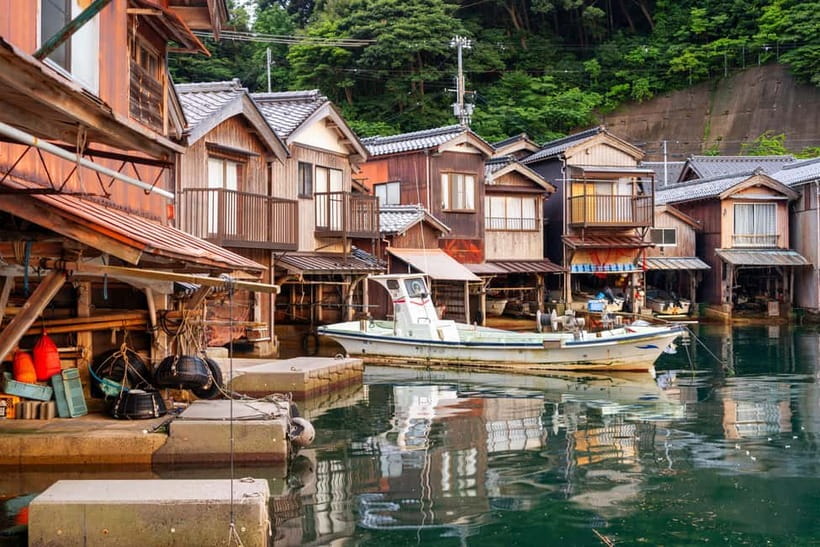
The appeal is not a packed list of attractions. It is the change of pace. You can walk under pine trees, pause by the sea, take a simple lunch, and watch a boat pass through a rotating bridge. At Ine, the old boat garages sit at water level, with homes above them. The result is a village that seems to float along the bay.
The $55 price is good value if you want both places but do not want to arrange several train and bus connections yourself. Transportation from central Osaka is included, as is an English or Korean-speaking guide. You will still pay for lunch, the hilltop ride at Amanohashidate, the boat at Ine, and personal purchases.
The tour is less compelling if you want a short outing or dislike long coach rides. From the timing provided, the journey includes about 80 minutes to the first rest stop, another 50 minutes to Amanohashidate, 50 minutes to Ine, and about three hours for the return journey with another rest stop. That is a lot of sitting, though it is also the practical cost of reaching this remote part of Honshu from Osaka.
If you're still narrowing it down, here are other tours in Tokyo we've reviewed.
Starting early at Tsurutontan Soemoncho
The meeting point is in front of Tsurutontan Soemoncho. You should arrive before 7:50 AM for an 8:00 AM departure. There are two starting and ending location options listed at the same spot, so check your booking details and arrive a little early rather than trying to find the group at the last moment.
The coach is the tour’s main practical advantage. You do not need to combine a train, a local bus, and a taxi to reach the coast. The guide handles the route while you rest, look out the window, or catch up on sleep after the early start.
The guide may also need to adjust the plan because Japanese law limits vehicle operation to 10 hours. Traffic and weather can change the amount of time available at each stop. That matters here because the tour covers a wide area, and the schedule is more of a useful framework than a guarantee down to the minute.
Several guides have been praised for making the day personal. Yuri has driven and guided smaller groups, while Jun and Jo have been especially warm and helpful. Jun and Jo have also taken photos and, in some cases, printed a small picture as a souvenir. Do not count on a printed photo every time, but you can reasonably ask your guide for help with a group picture.
The Kyotamba-Ajimunosato rest stop
The first coach ride lasts about 80 minutes before a 20-minute stop at Kyotamba-Ajimunosato PA. This is a useful chance to stretch your legs, use the facilities, and look for street food.
You should not treat this as a major sightseeing stop. Its value is practical. On a long day, a short break keeps the ride comfortable, and a snack can help if you did not have time for breakfast before the early departure.
The same rest area appears again on the return, with about 10 minutes to pause before the final ride to Osaka. That second stop is shorter, so plan to use it quickly.
Amanohashidate and the view from above
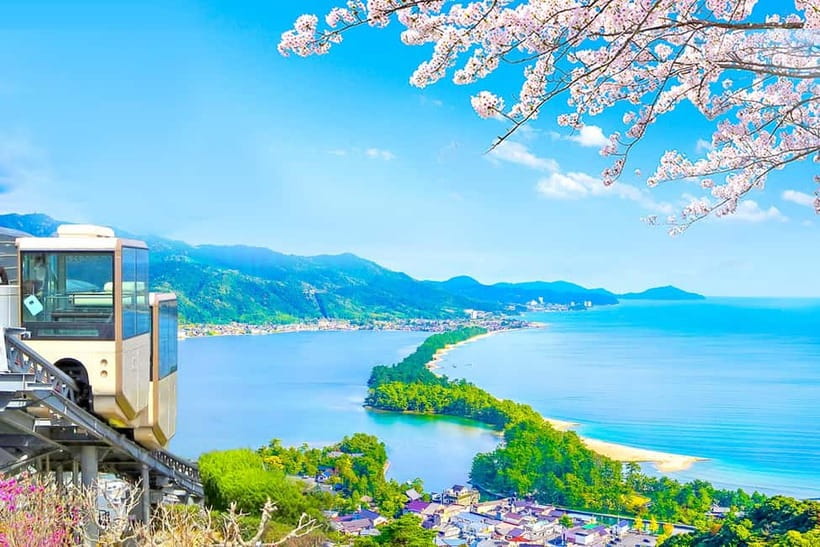
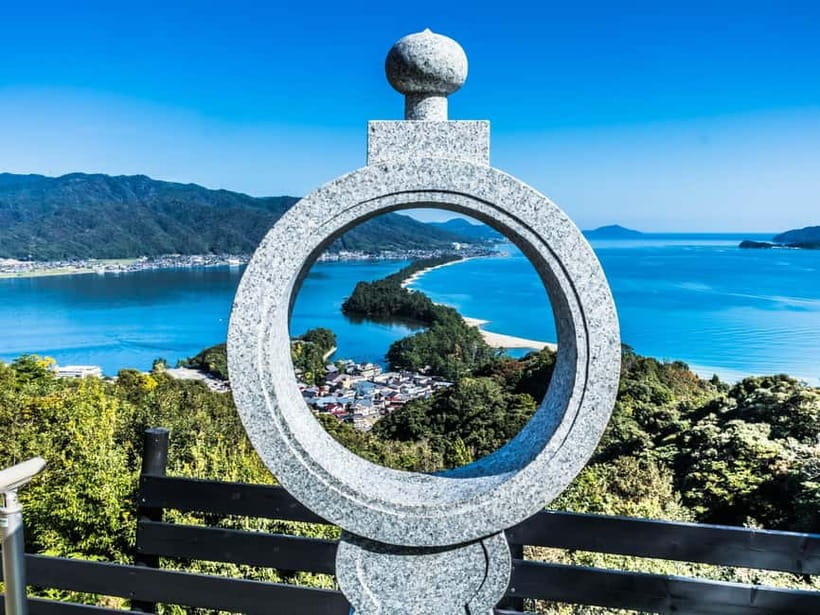
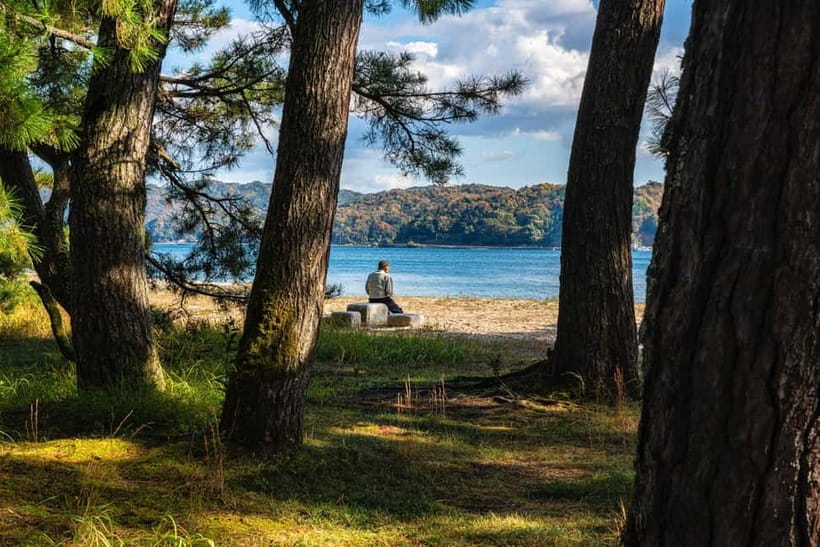
Amanohashidate is the main event. The name is often translated as Bridge to Heaven, referring to the long natural sandbar crossing Miyazu Bay. More than 5,000 pine trees grow along it, creating a long green line between the water on either side.
The classic way to appreciate the sandbar is from above. Amanohashidate View Land offers a hilltop view, reached by an optional chairlift or monorail for 850 yen. The ride is not included, so carry some Japanese yen if the high view matters to you.
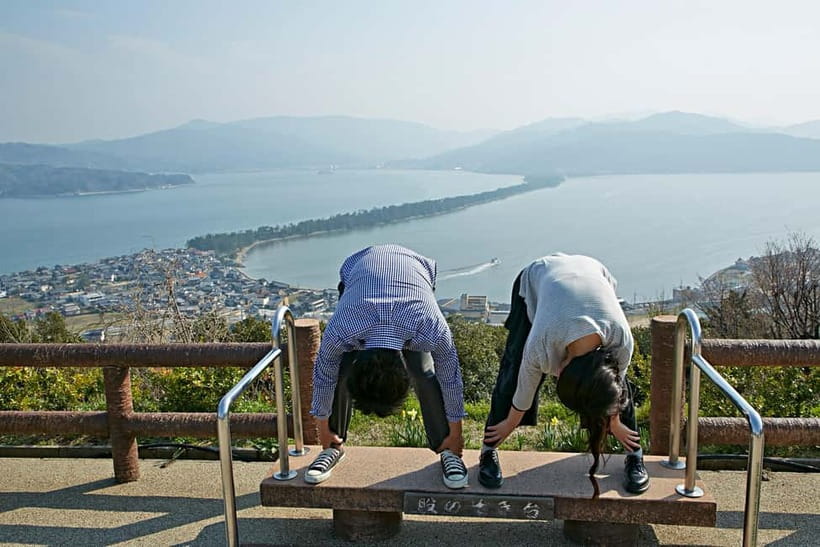
From the hill, the sandbar looks narrow and almost too neat to be natural. The famous local viewing custom involves bending over and looking between your legs, which can make the sandbar appear to rise toward the sky. It is playful, but it also helps you understand why this place became one of Japan’s best-known scenic views.
The hilltop area also has a sky bicycle. You pedal along a raised track while looking out over the bay. It is a fun extra for confident riders, though the activity information does not list a separate price or guarantee that it will operate during every visit. Ask the guide about current availability before building your plans around it.
You should allow time for both the view and the ground-level walk. A hilltop panorama gives you the shape of Amanohashidate, while the path below lets you notice the pine trees, sea air, and changing angles of the bay. One is a quick visual explanation. The other feels slower and more local.
Chionji Temple and the rotating Kaisen Bridge
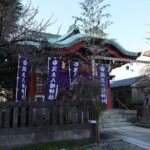
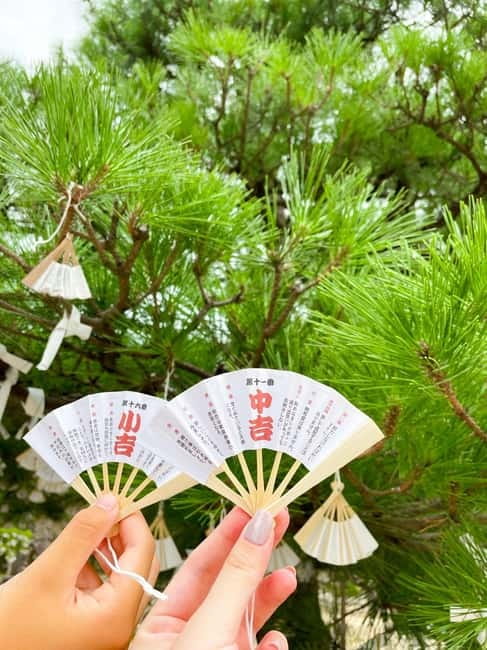
Chionji Temple sits close to the Amanohashidate approach. It is known for its fan-shaped fortune slips, an unusual detail that makes the visit more memorable than a quick photo stop.
The temple is associated with prayers for wisdom and success. You can take a quiet look around, draw a fortune, and enjoy a little space away from the main walking route. Keep your expectations sensible: this is a short visit within a wider coastal day, not a long temple study.
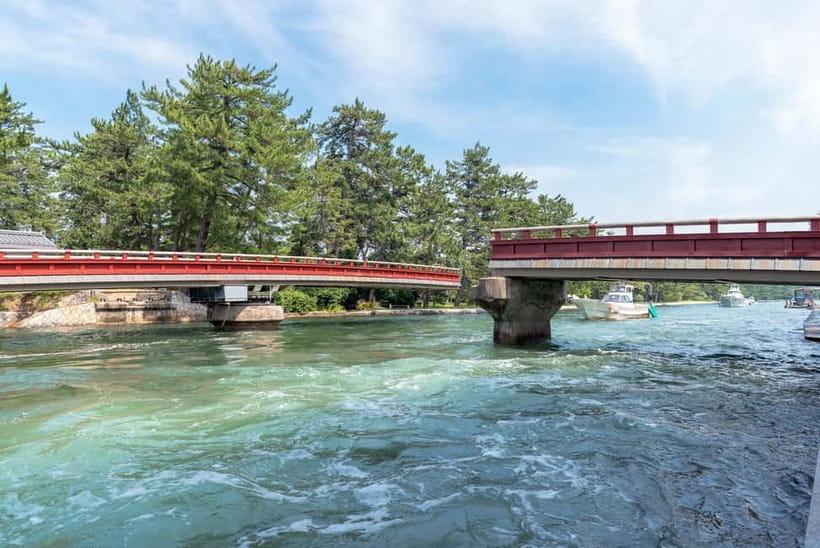
Nearby, Kaisen Bridge adds another small surprise. This rotating bridge opens when boats need to pass through. If the timing works, you may see it move. If not, it remains an interesting piece of local infrastructure and an easy place for a photo.
The tour gives you a choice of how to use your time. You can focus on the temple and bridge, walk toward the beach, or spend more of the stop by the sandbar. That flexibility is useful, especially if the weather changes or you prefer walking to paid rides.
Amanohashidate Beach and lunch time
Amanohashidate Beach offers a calmer stretch of the visit. You can walk along the shore, feel the sea breeze, and follow the pine-lined path. Bicycle rental is mentioned as an option for a leisurely ride, but the rental cost is not included in the tour price.
This is where the slow pace works best. You are not being rushed from one doorway to another. You can take photos, look across the bay, and enjoy a simple break before the next coach ride.
Lunch is at your own expense. Local choices are available around the Amanohashidate area, but the exact restaurant is not fixed. I would keep lunch straightforward and leave enough time for the meeting point. A long sit-down meal could cut into your walk, temple visit, or view from above.
If you want the chairlift, boat ride, and lunch, your extra budget should include more than the $55 booking price. The listed optional rides add 1,850 yen, before food and any bicycle rental. That is still reasonable for a full day, but the low headline price does not cover every activity.
The long ride to Ine no Funaya
After Amanohashidate, the coach continues for about 50 minutes to Ine. The change is noticeable. Amanohashidate is a scenic destination with a beach, temple, viewpoints, and walking paths. Ine is smaller and more focused on its waterfront buildings.
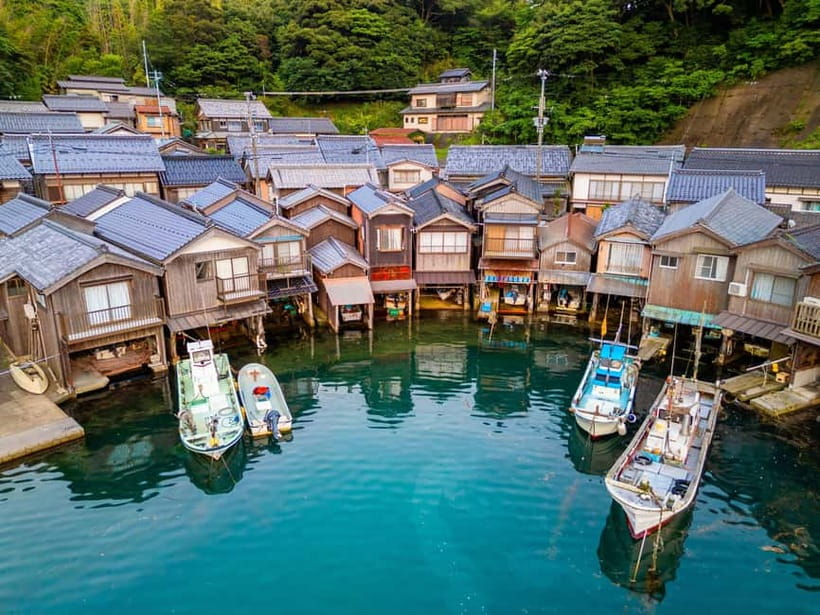
The village is known for more than 200 funaya, traditional boat houses built directly along the bay. Boats use the lower level, while the living space is above. From the shore, you see a line of practical working buildings that also create an unusually beautiful view across the water.
This is not a place to rush. Look closely at the shape of the buildings and how they meet the bay. The reflections can be especially attractive when the water is calm. The best photographs are likely to come from taking a few minutes to study the shoreline rather than snapping one picture and moving on.
The tour includes time at Road Station Funaya no Sato Ine, with about 70 minutes for photos, walking, and sightseeing. The road station provides a useful vantage point, though you should follow your guide’s directions about how much time to spend there and where to meet the coach.
The optional Ine boat ride
For 1,000 yen, you can take an optional sightseeing boat around the bay. This gives you a view of the funaya from the water, where the boat garages and upper homes make more sense as one complete design.
The ride also offers a chance to see the village from a lower angle. Reflections on the water can make the scene look almost like a painted row of houses. One review also describes feeding hawks during the boat ride, but that should be treated as a possible moment rather than a guaranteed part of the activity.
The boat is worth considering if the weather is good and you want more than a shore-level view. If you are uneasy on boats, short on cash, or would rather photograph the village from land, the included viewing time should still give you plenty to do.
What the $55 price really covers
At $55 per person, this is a transportation-first tour with two strong scenic stops. You are paying for the long transfer from Osaka, the convenience of a direct return, and guidance in English or Korean.
Included:
- Coach transportation
- English and Korean-speaking guide
- Stops at Amanohashidate and Ine
- Time for walking, photos, sightseeing, and lunch
Not included:
- Meals
- The 850 yen Amanohashidate chairlift or monorail
- The 1,000 yen Ine sightseeing boat
- Bicycle rental
- Travel insurance
- Other personal expenses
The price makes the most sense if you value simplicity. Reaching both destinations independently would require careful planning, and the return trip from Ine is not especially convenient. You give up some control over the schedule, but you gain a direct ride and someone who can explain the places and help with photos.
The small-group experience may vary. Yuri has handled guiding and driving when numbers were low, while other guides named in the feedback include Jun and Jo. A smaller group can feel more personal, but do not assume every departure will have the same size or the same guide.
Who should book this day trip
I would recommend it to you if you want coastal scenery, traditional buildings, and a break from city sightseeing. It suits people who enjoy walking and taking photos but do not need every minute filled with formal attractions.
It is also a good match for families who need a stroller-friendly activity. Tell the operator in advance if you bring a stroller. The activity is not wheelchair-accessible, and infants ride free but do not receive a seat, so those details matter when planning.
You should think twice if you need a wheelchair-accessible tour, want a short three-hour outing, or prefer to choose your own restaurants and departure times. The published three-hour duration does not fit the detailed route, which describes a long day from Osaka and back. Confirm the current schedule before booking.
The tour is also weather-sensitive. Amanohashidate is best appreciated with clear views and comfortable walking conditions, while Ine’s waterfront scenery depends on visibility and sea conditions. The guide can adjust the plan when weather or traffic requires it.
Should you book Kyoto by the Sea?
Book it if Amanohashidate and Ine are on your wish list and you want the easiest way to see both from Osaka. The combination is strong: a famous sandbar, a temple with unusual fortune slips, a rotating bridge, a beach walk, and a coastal village with more than 200 boat houses.
Bring comfortable shoes, cash for the optional rides, and patience for the coach. I would choose the hilltop ride at Amanohashidate if you want the defining view, then consider the Ine boat if the weather is calm. If you would rather keep the day inexpensive, both places can still be enjoyed from ground level.
The guides can add real value, especially when they help with photos, explain the stops, or suggest a cafe in Ine. Just remember that the tour’s strength is access and convenience, not a leisurely private schedule. For a $55 full-day escape from Osaka, that is a fair trade.
FAQ
Where does the tour depart from?
The meeting point is in front of Tsurutontan Soemoncho. You should arrive before 7:50 AM for the 8:00 AM departure.
What languages does the guide speak?
The tour provides a live guide in English or Korean.
Is lunch included?
No. Lunch is at your own expense, and you have free time to choose from local options near Amanohashidate.
How much do the optional rides cost?
The Amanohashidate chairlift or monorail costs 850 yen. The sightseeing boat at Ine no Funaya costs 1,000 yen. These charges are not included in the tour price.
Is the activity suitable for strollers or wheelchairs?
The activity is stroller-friendly if you inform the operator that you are bringing a stroller. It is not wheelchair-accessible.
Can I cancel the booking?
You can cancel up to 24 hours in advance for a full refund. Reserve now and pay later is also available.
More tours in Tokyo we've reviewed
Tokyo, compared.
 ★ 4.0From Tokyo 1-Day Kyoto English-guided Tour by Bullet TrainFrom $452
 ★ 4.5Tokyo to Kyoto 1-Full Day Private Guided TourFrom $490
 ★ 4.9Kyoto: Nijo Castle World Heritage Guided Tour with AdmissionFrom $401h 30m
 ★ 5.0From Tokyo to Kyoto and Nara: A Captivating Full-Day Private TourFrom $490
 ★ 4.7From Osaka: Kyoto & Nara Highlights Day Tour (7 attractions)From $53
 ★ 3.5One Day Private Tour in Kyoto and Nara From OsakaFrom $490