
Reviewed · TOKYO
From Tokyo 1-Day Kyoto English-guided Tour by Bullet Train
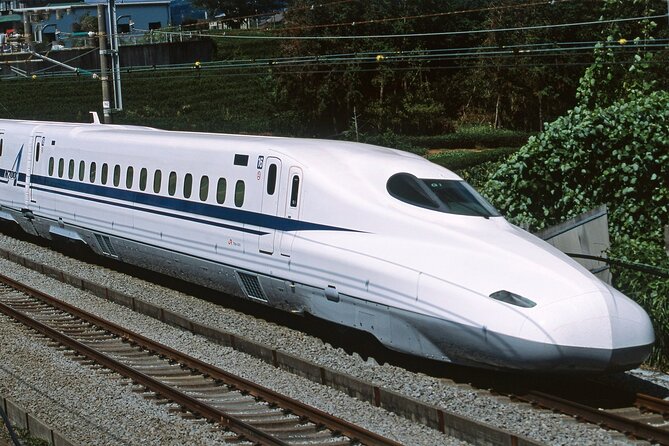
Kyoto is only a train ride away on this tour, but that train ride is the star. You leave Tokyo in the morning, cross Japan aboard the Nozomi Shinkansen, and reach Kyoto in about two hours and twenty minutes. On a clear day, keep an eye out for Mt. Fuji.
I like the careful station assistance and the efficient route through three major Kyoto sights. I also like that lunch, admission fees, return rail fare, and an English-speaking guide are included. The catch is simple: Kyoto gets only an afternoon, so expect a fast overview rather than a relaxed visit.
- See Kyoto by Nozomi Shinkansen: Round-trip rail travel takes about four hours and forty minutes.
- Visit three major sights: Fushimi Inari Taisha, Sanjusangen-do Hall, and Kiyomizu-dera Temple.
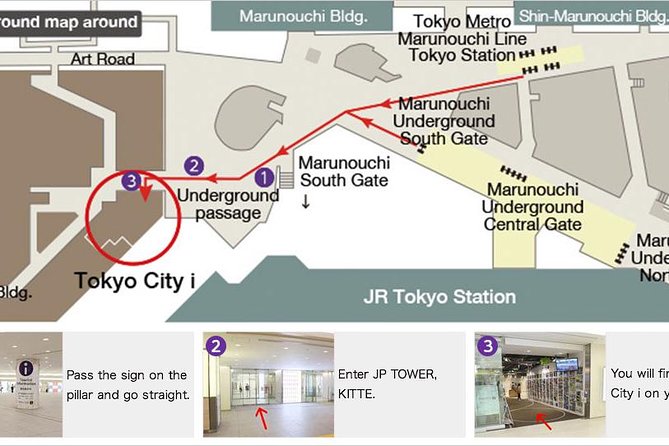
- Get help at both ends: Staff escort you from Tokyo City i to the train and meet you at Kyoto Station.
- Enjoy a hotel lunch: The 2025 meal is a semi-buffet, while the 2026 version is a vegetarian-friendly Western-style set menu.
- Choose your rail comfort: Standard and first-class bullet train tickets are offered.
- Plan for crowds: The temples and torii gates can be packed, making the short stops feel even shorter.
In This Review
- The Big Question: Is Kyoto Worth a Day Trip from Tokyo?
- Tokyo City i and the Morning Shinkansen
- Kyoto Station, Hotel Lunch, and the Tour Desk
- Fushimi Inari Taisha and the Famous Orange Gates
- Sanjusangen-do Hall and Its 1,001 Kannon Figures
- Kiyomizu-dera, Kyoto’s Hilltop View
- Returning to Tokyo by Bullet Train
- What the $452.45 Price Buys You
- Who Will Get the Most From This Tour?
- Practical Details to Know Before Booking
- Should You Book This Tokyo to Kyoto Day Trip?
- FAQ
- How long does the Tokyo to Kyoto tour last?
- Where does the tour start?
- Does the tour include Shinkansen tickets?
- Does a guide ride the Shinkansen with the group?
- What Kyoto sights are included?
- Is lunch included?
- Can I bring large luggage?
The Big Question: Is Kyoto Worth a Day Trip from Tokyo?
I think this tour makes sense when your Japan schedule is fixed in Tokyo and you cannot spend a night in Kyoto. You get the thrill of the bullet train, a proper introduction to Kyoto’s temples, lunch, and station-to-station help without having to organize the rail tickets and local transport yourself.
It is not the best way to experience Kyoto at a gentle pace. The full outing lasts about 12 hours, yet roughly four hours and forty minutes are spent on the train. Once lunch, transfers, gathering the group, and traffic are counted, your sightseeing time is limited.
That trade-off is the heart of the decision. If you want to check Kyoto off your list and see three famous places, this is practical. If you want quiet temple gardens, long walks, or time to explore neighborhoods, stay overnight in Kyoto instead.
Tokyo City i and the Morning Shinkansen
The day begins at 9:20 a.m. at Tokyo City i, located in the KITTE building at 2-chome 7, Marunouchi, B1F. This location is near Tokyo Station, but Tokyo Station is a maze, so allow time to find the meeting point. The most useful part of the morning escort is that you do not have to solve the station on your own.
An English-speaking tour conductor walks you to the Shinkansen platform and helps you board. Staff remain with you until departure, but the guide does not ride in the train carriage. That distinction matters. You are escorted onto the right train, then manage the ride independently until the Kyoto arrival team meets you.
The train journey is comfortable and scenic. The trip to Kyoto takes about two hours and twenty minutes, and a clear window seat may give you a view of Mt. Fuji. Seats may not be designated, so do not assume you can choose a particular side of the train or sit with a specific view.
You can select a standard or first-class ticket. The first-class Green Car can be worth considering because the ride is a large part of the day. It costs more, but the extra comfort may matter during a long day that also includes walking and standing at busy temples.
Large luggage needs planning. A suitcase whose total height, width, and length exceeds 160 centimeters cannot be brought onto the Shinkansen on this tour. Use a luggage delivery service on your own if necessary, and travel with a smaller bag for the day.
Other guided tours in Tokyo
Kyoto Station, Hotel Lunch, and the Tour Desk
A member of the English-speaking staff meets you on the platform at Kyoto Station. You are escorted to the lunch venue, which is across from the station at Miyako Hotel Kyoto Hachijo.
Lunch is Western-style rather than a traditional Kyoto meal. In 2025, it is served as a semi-buffet, with the main dish changeable to a vegetarian option if requested when booking. In 2026, the meal changes to a vegetarian-friendly Western-style set menu.
The hotel setting gives you a comfortable break after the train ride. Several people especially enjoyed the food, including the buffet selection, seafood, pastries, and desserts. Still, adjust your expectations if you are hoping for a carefully prepared local kaiseki lunch. This is a convenient hotel meal designed to feed a group efficiently.
After lunch, staff escort you on foot to the JTB Sunrise Tours Desk at Kyoto Avanti. This is another handoff point. You may meet people joining from other tours, then board a coach for the afternoon sightseeing portion.
The repeated changes of staff can feel reassuring or slightly confusing. You might meet one person at Tokyo Station, another at Kyoto Station, a sightseeing guide for the temple route, and another escort for the return train. The system is designed to prevent missed connections, but it is not a single-guide experience from start to finish.
Fushimi Inari Taisha and the Famous Orange Gates
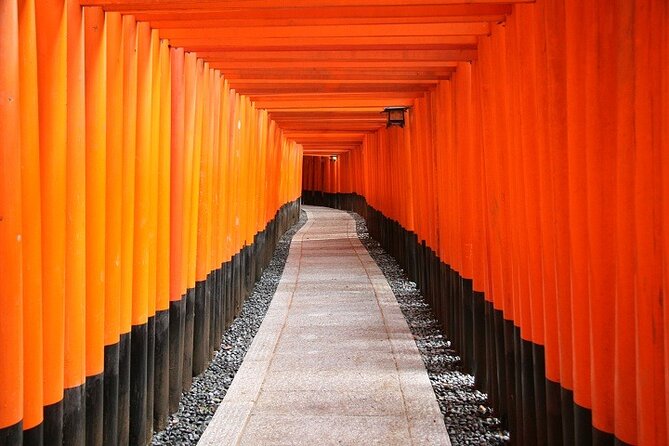
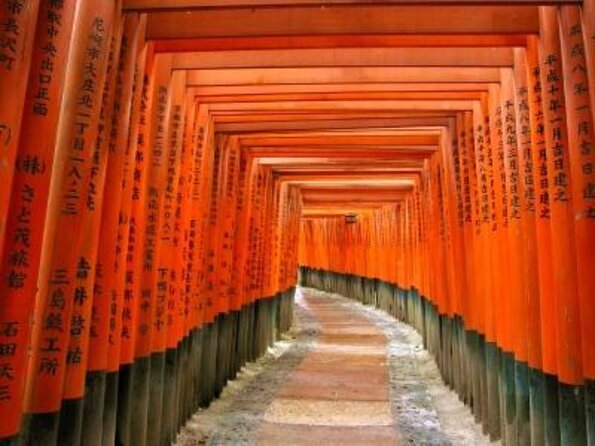
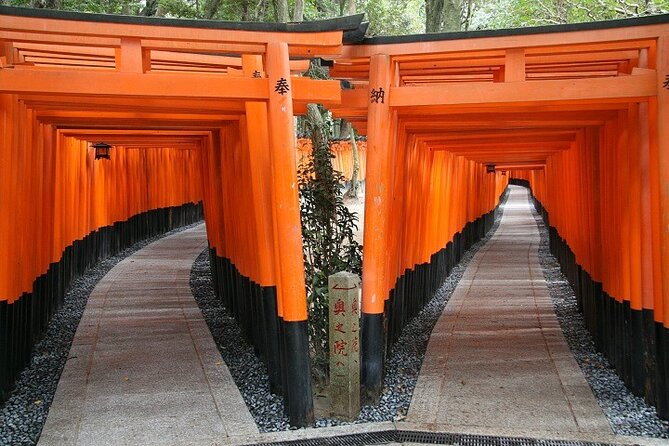
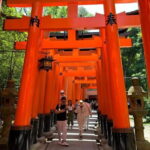
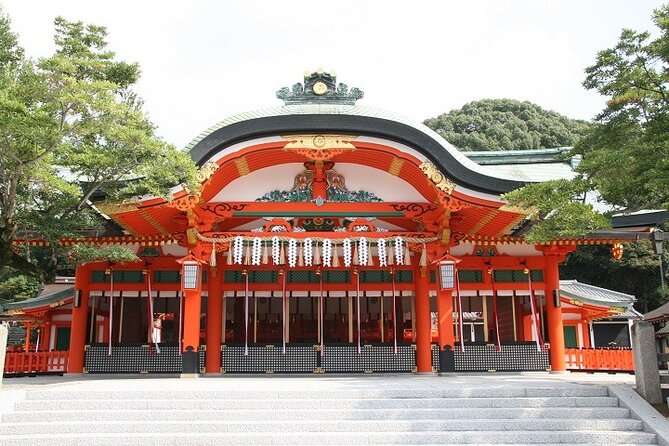
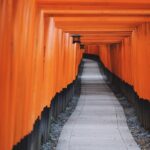
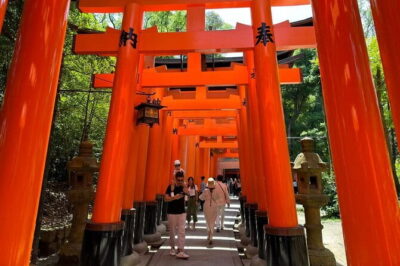
The first sightseeing stop is Fushimi Inari Taisha, the head shrine of roughly 40,000 Inari shrines across Japan. Its signature attraction is the Senbon Torii, a long sequence of bright orange gates climbing the lower slopes of Mt. Inari.
This is one of Kyoto’s most recognizable sights, and you will understand why as soon as you reach the gates. The color, repetition, and narrow passage create striking photographs. The shrine also introduces you to Inari worship, associated with the deity of rice, prosperity, and business.
The official stop lasts about 30 minutes, including the walk from the coach parking area. That sounds reasonable until you account for the distance, crowds, and the time needed to gather the group. In practice, you may have only a short period at the first torii gates before walking back.
Do not expect to climb far up Mt. Inari. This tour gives you a taste of the shrine rather than the full mountain route. If walking beneath the torii is your main reason for visiting Kyoto, you may wish for more time here.
Crowds are the major problem. The gates can be packed, and the narrow paths make it hard to stop for photos without blocking others. Stay close to your guide and pay attention to the meeting point. The stop works best if you accept that this is a quick look, not a private moment at a quiet shrine.
Sanjusangen-do Hall and Its 1,001 Kannon Figures
Next comes Sanjusangen-do Hall, a remarkable wooden Buddhist hall and one of Kyoto’s most unusual temple interiors. The building is famous for its length and for the 1,001 life-size statues of the thousand-armed Kannon, the Buddhist figure of compassion.
The hall dates from the 13th century, and its scale is impressive even if you know little about Buddhist art. The central statue is surrounded by rows of nearly identical figures, creating a powerful sense of order. Your guide explains the religious meaning and the temple’s connection with archery.
You get about 30 minutes here. That is enough for a focused visit, especially because the hall itself gives the stop a clear purpose. It is less about wandering and more about standing quietly before an extraordinary collection of statues.
Photography is not permitted inside the main hall, so this is a place to experience rather than document. Listen closely to the guide because the details about the figures and the building are what make the stop memorable.
This temple is also a useful change of pace after Fushimi Inari. Instead of orange gates and outdoor crowds, you move indoors for a quiet look at Buddhist sculpture. The short time limit remains, but the visit feels more contained than the other two stops.
Kiyomizu-dera, Kyoto’s Hilltop View
The final major stop is Kiyomizu-dera, one of Kyoto’s best-known temples and the place where the tour gives you its broadest city view. Built on a hillside, the temple looks over Kyoto, and the elevated position gives you a chance to see how the old city spreads below.
The route to the temple passes along a historic shopping lane. You may have time for snacks and souvenirs, but do not let the shops make you lose track of the group. The walk is part of the pleasure, though the slope and crowds can make it slow.
The scheduled visit is about one hour and ten minutes, the longest sightseeing stop of the day. Even so, this time can disappear quickly. You need to walk from the coach area, follow the guide’s explanation, see the temple platform and views, and return to the meeting point.
Crowding is often most difficult here. The approach roads and temple grounds can be jammed, especially during popular travel periods. A guide helps keep the group together, but you should not expect the calm atmosphere shown in many photographs of Kiyomizu-dera.
I would use this stop for the view and the atmosphere rather than trying to see every corner. Keep your camera ready, but stay aware of the clock. The tour has a fixed return train, and missing the group would create a serious problem.
A few more Tokyo tours and experiences worth a look
Returning to Tokyo by Bullet Train
After Kiyomizu-dera, the coach returns you to Kyoto Station for the Nozomi Shinkansen back to Tokyo. The return journey takes about two hours and twenty minutes, and the tour ends at Shin-Yokohama, Shinagawa, or Tokyo Station.
The approximate arrival window is 8:30 to 9:30 p.m. Train schedules can change, and traffic can affect the sightseeing order and arrival time. You should avoid booking an evening restaurant reservation or show that requires a precise arrival time.
The return escort is valuable, especially after a tiring afternoon. Staff help direct you to the correct train and departure area, which removes one more stressful station task. Again, the escort does not ride with you, so keep your ticket and meeting instructions handy.
This is a long day. The train itself is enjoyable, but you will probably feel the early start, walking, crowded paths, and strict schedule by the time you return. Comfortable shoes and a small day bag will make a real difference.
What the $452.45 Price Buys You
At $452.45 per person, this is an expensive day trip. The price includes round-trip bullet train fare between Tokyo and Kyoto, lunch, admission to the listed temples, the coach sightseeing tour, and a National Government Licensed English Guide Interpreter.
The value is strongest if you are nervous about arranging Japan’s rail system or if you have only one free day. You are paying not just for transportation, but for advance coordination, station escorts, reserved tour arrangements, a meal, and a guided route through places that are difficult to cover efficiently on your own.
The value is weaker if you are comfortable buying Shinkansen tickets, using Kyoto’s transport system, and choosing your own temples. Independent planning would give you more control over time and food, though it would not provide the same handoffs and group organization.
First class may improve the long rail segments, but it does not change the short sightseeing schedule or the crowds. I would consider it only if comfort on the train matters to you, not as a way to make the Kyoto portion more leisurely.
Who Will Get the Most From This Tour?
I would recommend this tour to a first-time Japan visitor who is based in Tokyo and wants a reliable taste of Kyoto. It also suits people who value clear instructions, organized transfers, and historical explanations more than independent wandering.
It is especially useful if you have limited time in Japan. The tour lets you see Fushimi Inari, Sanjusangen-do, and Kiyomizu-dera without changing hotels or arranging several separate tickets.
I would hesitate to recommend it to anyone who has already visited Kyoto or who dislikes group schedules. The maximum group size is 40, and traffic or delays can make the afternoon feel compressed. Kyoto is better with at least two days if you want gardens, quieter temples, local neighborhoods, and unhurried meals.
The guide can shape the experience. Guides named in participant feedback include Yumi, KC, Momo, Tammy, and Yamamoto, but assignments change. English ability and teaching style may vary, so go with an open mind and ask questions when the timing allows.
Practical Details to Know Before Booking
The tour is for international visitors, and residents of Japan cannot book it. Most people can participate, and the meeting point is near public transportation.
Children aged five and under may join free, but they do not receive a Shinkansen or coach seat or lunch. If you need those services, book the child rate. Written parental permission is required for participants under 18, and anyone under 15 or not yet in middle school must be accompanied by a parent or guardian.
Vegetarian requests must be made during booking. For the 2025 semi-buffet, only the main dish can be changed, and same-day changes are not accepted. The 2026 meal is described as a vegetarian-friendly Western-style set menu.
Free cancellation is available until 24 hours before the start time. Cancellations or changes made within 24 hours are not refunded or accepted. Confirmation is sent within 48 hours, subject to availability.
Should You Book This Tokyo to Kyoto Day Trip?
Book it if you want a carefully managed Kyoto sampler and the bullet train is part of the dream. The station escorts, return rail fare, lunch, and English explanations remove much of the work, and the three selected sights give you a solid first look at Kyoto.
Skip it if you want Kyoto at its best, which means more time and fewer deadlines. The temples are beautiful, but crowds and traffic can turn the afternoon into a temple rush.
My practical call: book this for convenience and first-time access, especially on a short Japan trip. If you can spare one or two nights, spend that money on staying in Kyoto instead. You will see less from a checklist, but far more of the city.
FAQ
How long does the Tokyo to Kyoto tour last?
The experience lasts approximately 12 hours. The scheduled start is 9:20 a.m., and the approximate return window is 8:30 to 9:30 p.m.
Where does the tour start?
You meet at Tokyo City i in the KITTE building, B1F, at 2-chome 7, Marunouchi, Chiyoda City, near Tokyo Station.
Does the tour include Shinkansen tickets?
Yes. Round-trip bullet train fare between Tokyo and Kyoto is included. Standard and first-class ticket options are available.
Does a guide ride the Shinkansen with the group?
No. Staff escort you to the train in Tokyo and meet you at Kyoto Station, but guides and other staff do not ride the Shinkansen with participants.
What Kyoto sights are included?
The sightseeing portion visits Fushimi Inari Taisha, Sanjusangen-do Hall, and Kiyomizu-dera Temple.
Is lunch included?
Yes. Lunch is included at Miyako Hotel Kyoto Hachijo. The 2025 meal is a Western-style semi-buffet, and the 2026 meal is a vegetarian-friendly Western-style set menu.
Can I bring large luggage?
Luggage exceeding a total height, width, and length of 160 centimeters cannot be brought onto the Shinkansen. You need to arrange a luggage delivery service on your own if you are carrying a larger bag.
More 1-Day Tours in Tokyo
More Guided Tours in Tokyo
More tours in Tokyo we've reviewed
Tokyo, compared.
 ★ 4.5Tokyo to Kyoto 1-Full Day Private Guided TourFrom $490
 ★ 4.9Kyoto: Nijo Castle World Heritage Guided Tour with AdmissionFrom $401h 30m
 ★ 4.6Osaka: Kyoto By The Sea with Amanohashidate & Ine no FunayaFrom $553 hours
 ★ 5.0From Tokyo to Kyoto and Nara: A Captivating Full-Day Private TourFrom $490
 ★ 4.7From Osaka: Kyoto & Nara Highlights Day Tour (7 attractions)From $53
 ★ 3.5One Day Private Tour in Kyoto and Nara From OsakaFrom $490