
Reviewed · NIJO CASTLE TOURS
Kyoto: Nijo Castle World Heritage Guided Tour with Admission
Nijo Castle is where political power learned to speak through architecture. The Tokugawa shoguns built this lavish Kyoto palace beside the Emperor’s residence, not mainly to fight, but to show who truly held control. I like the nightingale floors and the final room where the shogunate handed authority back to the Emperor in 1867.
I also like the small group limit of 10, since it gives you a real chance to ask questions. Guides such as Nao, Naoya, Uta, and Benjamin have earned praise for clear English, humor, local tips, and strong storytelling. The one drawback is that 90 minutes goes quickly, especially if you want time for both the palace and the gardens.
In This Review
- Key points to know before you go
- Why Nijo Castle tells Kyoto’s power story so well
- Meeting your guide at Nijōjō-mae Station
- Entering a palace built to intimidate
- Ninomaru Palace and the famous nightingale floors
- The room where shogunate rule ended
- Gardens, moats, and colorful koi
- What the 10-person limit changes
- Is $40 a fair price for 90 minutes?
- Who should book this Nijo Castle tour?
- Final call: a strong choice for history and human-scale guiding
- FAQ
- How much does the Nijo Castle guided tour cost?
- How long does the experience last?
- Where do I meet the guide?
- What language is the tour conducted in?
- How large is the group?
- Is admission to Nijo Castle included?
- Do I need to remove my shoes?
- Is the tour wheelchair accessible?
- Can I cancel or pay later?
Key points to know before you go
- Hear the floorboards chirp: Ninomaru Palace’s famous nightingale floors squeak beneath your shoes to reveal movement.
- See power in the room layout: Palace size, ceiling height, decoration, corridors, and gates all reinforced social rank.
- Visit the setting of a political handover: The tour explains how Tokugawa Yoshinobu returned authority to the Emperor in 1867.
- Keep the group personal: The tour accepts no more than 10 people, and small bookings may feel almost private.
- Look beyond the palace rooms: The castle grounds include photogenic gardens and moats where colorful koi carp swim.
- Plan for bare feet indoors: You must remove your shoes before entering the palace.
Why Nijo Castle tells Kyoto’s power story so well
Many Kyoto sights focus on religion, art, or traditional beauty. Nijo Castle gives you something different: a lesson in political theater.
The Tokugawa shoguns ruled Japan from Edo, now Tokyo. The Emperor lived in Kyoto, the old imperial capital. Building a grand shogun’s palace only steps from the Emperor’s residence sent a blunt message. The shogun did not need to shout or start a battle. The building itself announced authority.
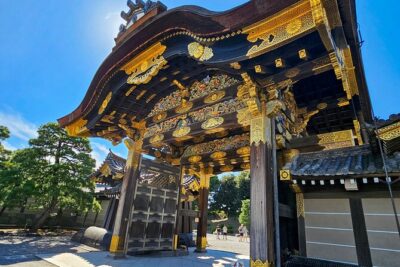
That is the useful idea to keep in mind as you walk. Nijo Castle was designed for display, intimidation, and control. Its gates, corridors, rooms, and decorations made visitors feel the power structure before anyone had spoken a word.
I find this approach far more rewarding than simply being told a list of dates. You learn to read the castle as a political machine. A room is not just large because it looks impressive. Its size and position helped define who could enter, where they could stand, and how they should behave.
The tour also connects the building to the end of the Tokugawa era. In 1867, Tokugawa Yoshinobu returned authority to the Emperor in Nijo Castle, ending more than 260 years of shogunate rule. That act helped usher in the Meiji Restoration, and the castle becomes much more than an attractive old palace once you understand that turning point.
If you're still narrowing it down, here are other tours in Tokyo we've reviewed.

Meeting your guide at Nijōjō-mae Station
The meeting point is outside Exit 1 of Nijōjō-mae Station. Look for a guide holding a Local Guide Stars sign.
This is a practical starting point. You meet at the station linked directly with the castle name, rather than trying to find a café, hotel lobby, or distant street corner. Still, give yourself enough time to reach Exit 1 and confirm you are in the right place. The tour begins with a walk through the castle and returns you to the same Nijojo-mae Station area.
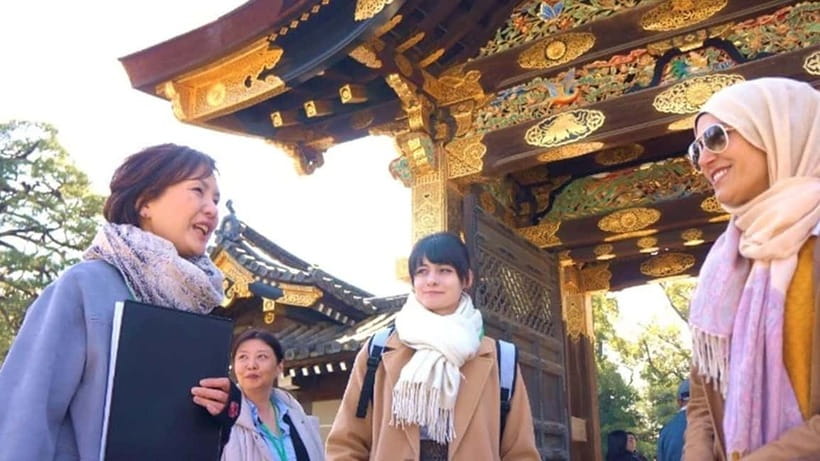
The tour is conducted in English. Guides named in the feedback include Nao, Naoya, Uta, and Benjamin. The strongest pattern is not one particular guide’s personality, but the staff’s ability to explain both castle history and Japanese customs in clear English.
Nao receives especially strong praise for detailed explanations and lively storytelling. Naoya is noted for answering questions, explaining past and present culture, and pointing out less obvious parts of the castle. Uta is described as warm and engaging, while Benjamin brings a friendly mix of facts and humor.
That matters in a place with a lot of visual detail. Without some guidance, you might admire the buildings but miss why the rooms are arranged as they are. A good guide helps you notice the meaning behind the design.
Entering a palace built to intimidate
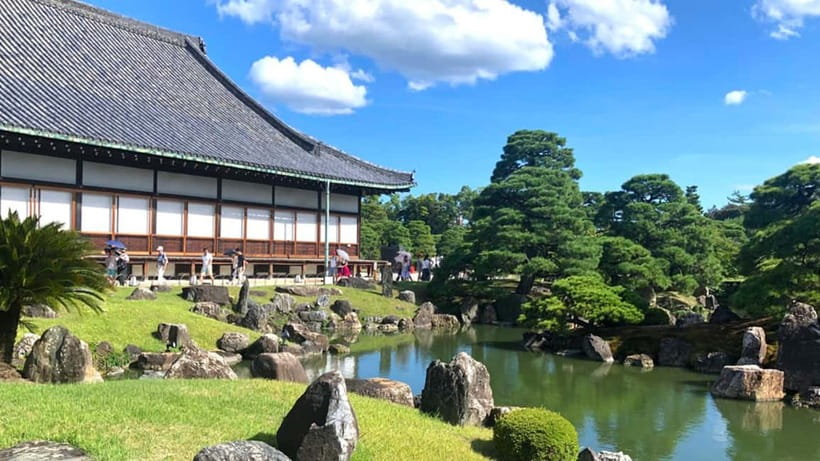
Once inside Nijo Castle, the tour spends about an hour on sightseeing and walking. The exact balance between palace interiors, grounds, and explanations can depend on the pace of the group.
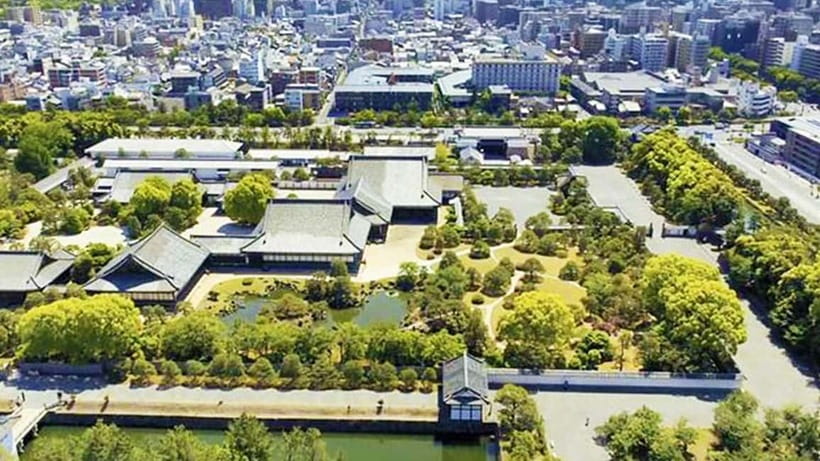
The first major idea is that this was not a fortress designed mainly for battlefield defense. It was a palace designed to impress. The shogun’s authority had to be felt by every official and visitor who crossed its thresholds.
Pay attention to the layers of gates and corridors. They were not random routes from one room to another. The design controlled how people approached important spaces and helped create a sense of ceremony and pressure.
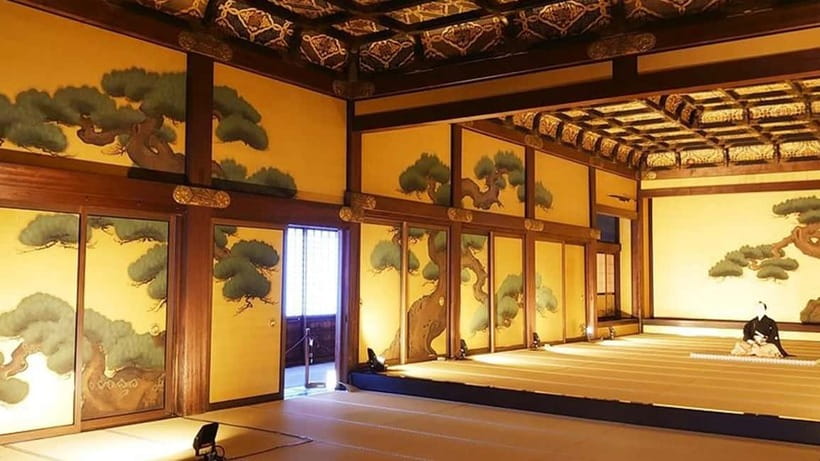
Your guide explains how room size, floor height, and decoration reflected strict social hierarchy. In other words, architecture told you where you belonged. A person of lower rank did not simply wander into the same kind of space as the most powerful visitor.
This is one of the tour’s best features because it gives you a method for looking. Instead of seeing painted rooms as isolated works of art, you connect them with rank, movement, and authority.
The tour is also a good fit if you prefer human stories to a long list of architectural terms. The rivalry between shogun and Emperor gives the visit a clear thread. You are following a contest for legitimacy, played out in the heart of Kyoto.
Ninomaru Palace and the famous nightingale floors
Ninomaru Palace is the main interior highlight. You remove your shoes before entering, so wear socks if you prefer not to walk in bare feet. The available information describes the terrain as mostly flat, and the activity is listed as wheelchair accessible, though palace shoe removal remains an important part of planning.
Inside, listen for the nightingale floors. The floorboards chirp or squeak as you walk across them. Their purpose was to expose unwanted movement and help protect those inside the palace.
This is a small physical detail with a big effect. You are not just hearing a guide describe security. You are feeling the building respond beneath your feet. It turns a historical explanation into something immediate and memorable.
The floors are also a reminder that the castle’s defenses were psychological as well as practical. Corridors and gates made visitors move in controlled ways. Palace rooms showed who had status. Even the sound of your footsteps could make you feel watched.
The guide can add the context that is easy to miss when visiting alone. You might notice the squeak, admire the decorations, and move on. With an English-speaking guide, you can connect that sound to the shogun’s wider strategy of silent control.
The palace may be less comfortable for anyone who dislikes removing shoes or standing and walking indoors. The route is only 90 minutes overall, but you should still expect a substantial amount of walking around the castle grounds and palace areas.
The room where shogunate rule ended
The most important stop is the room associated with Tokugawa Yoshinobu’s return of authority to the Emperor in 1867.
This was the formal end of more than 260 years of Tokugawa shogunate rule. The moment helped set Japan on the path toward the Meiji Restoration, a major shift in the country’s political order.
The room matters because it turns a broad historical chapter into a physical place. You are not just learning that the shogunate ended. You are standing in the setting where that transfer of authority took place.
I especially like this part for visitors who have already read about Tokugawa Japan or encountered the period through historical fiction. One person booked the tour after reading Shogun and wanting to see a castle connected with Tokugawa Ieyasu. You do not need that background to follow the tour, but prior interest can make the political story even more satisfying.
Ask questions here if the group has time. The tour is designed to be interactive, and the small size makes it easier to ask about the Emperor, the shoguns, or the changes that followed 1867. Guides have been praised for answering questions rather than simply delivering a fixed speech.
Other guided tours in Tokyo
Gardens, moats, and colorful koi
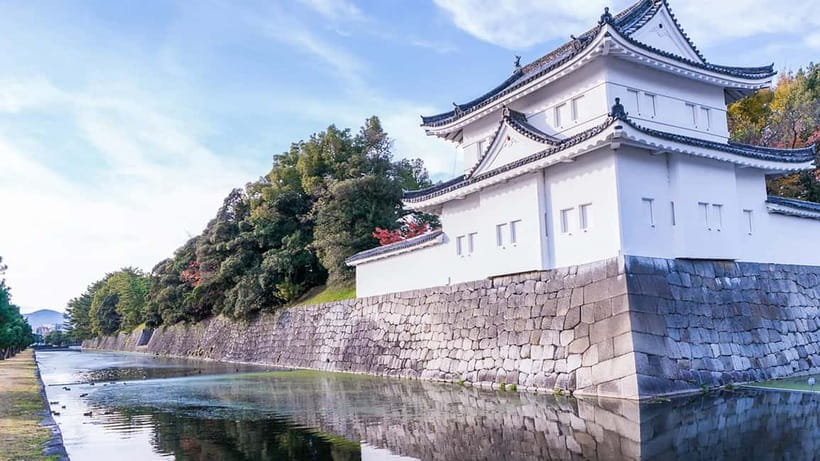
Nijo Castle is not only about corridors and political history. The grounds add a quieter visual side to the visit.
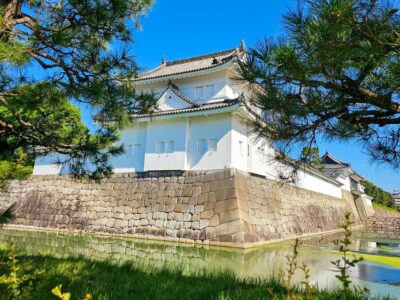
The gardens are photogenic, and colorful koi carp swim through the castle’s moats. This gives you a welcome change of pace after the palace interiors and political explanations. You can look closely at the water, trees, and formal spaces while still feeling the presence of the castle’s walls and gates.
The garden portion may feel brief if your main interest is photography. The experience lasts 90 minutes, and the guide needs to cover the palace, the shogun and Emperor rivalry, the nightingale floors, and the end of the shogunate. If you want extended time for photos, check the tour’s pacing and consider allowing extra time around your visit if your schedule permits.
Families can also find something to enjoy here. One guide handled a mixed group that included adults over 65 and children aged 8 and 13, adjusting the pace and answering questions. That suggests the tour can work well for a family with different attention spans, although the palace shoe rule and walking should still be considered.
What the 10-person limit changes
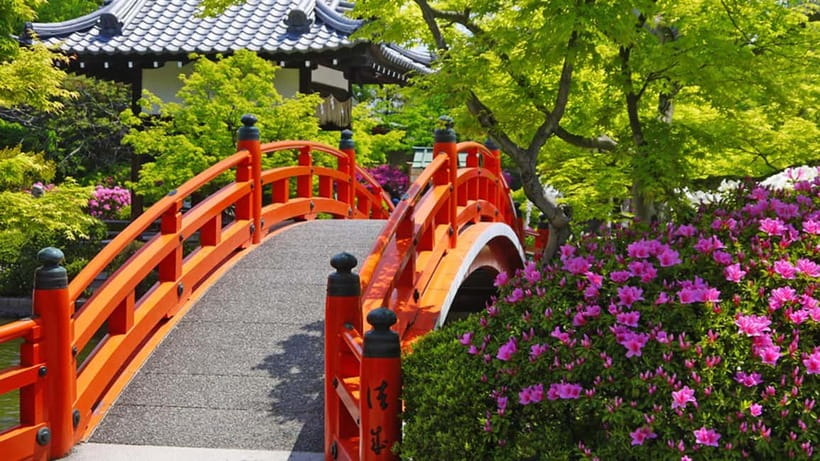
A group of up to 10 people is a meaningful feature, not just a marketing number.
At a large historic site, you can lose the guide’s voice, hesitate to ask a question, or end up at the back of a moving crowd. A smaller group makes it easier to hear explanations and stay involved as you move through rooms and gardens.
The small size can be even more valuable when the guide points out details that are not obvious from a distance. You have a better chance of stopping briefly, looking closely, and asking why a corridor or room is designed in a certain way.
Several bookings had only one participant, creating a private-tour feel. You cannot count on that, but the possibility tells you something about the experience. Even with a full group of 10, it should feel more personal than a large coach tour.
Guides have also helped with wider Kyoto planning. Nao and Naoya are praised for offering suggestions about places to see around the city and for sharing local customs. That extra advice can be useful early in your Kyoto stay, when you still have time to adjust your plans.
Is $40 a fair price for 90 minutes?
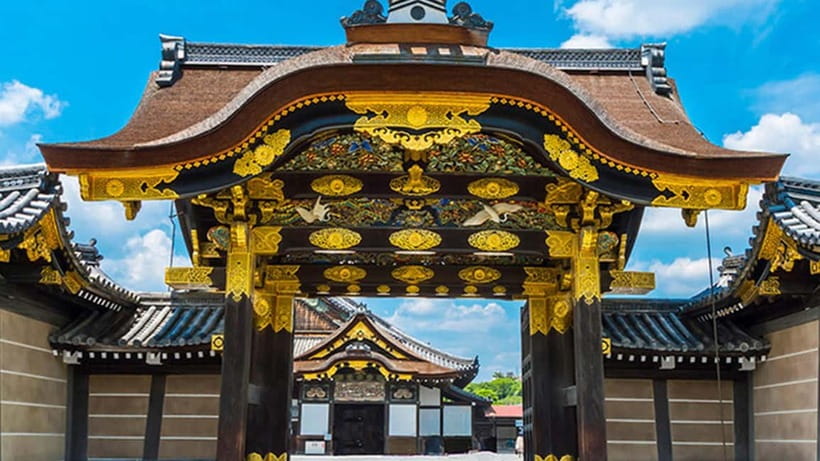
The cost is $40 per person, with Nijo Castle admission included.
You are paying more than the price of entering a site on your own, but the comparison is not simply admission versus admission. The fee also covers a 90-minute English-language tour, a small group capped at 10, and interpretation of a complicated political story.
I think the price makes the most sense if Nijo Castle is important to your Kyoto plans and you want more than a quick look at the buildings. The guide helps you understand why the shoguns built the palace beside the Emperor’s residence, how the rooms enforced rank, what the nightingale floors did, and why 1867 mattered.
The value is weaker if you prefer wandering silently, taking photographs at your own pace, or reading signs independently. A guided visit gives you structure, but it also means following the group’s timing. Since the entire experience lasts 90 minutes, you will not have unlimited time in every garden or room.
Free cancellation up to 24 hours before the tour reduces the risk of booking early. You can also reserve now and pay later, which helps if your Kyoto schedule is still moving around.
Who should book this Nijo Castle tour?
I would choose this tour if you want an understandable introduction to Tokugawa power, prefer a small group, or like asking questions as you walk.
It suits first-time visitors who might otherwise miss the meaning of the palace layout. It also works for history-minded visitors who want to connect the shogunate’s long rule with the 1867 transfer of authority.
Families may appreciate the guide’s ability to adjust the pace. The mostly flat terrain helps, and the activity is wheelchair accessible, but you must be comfortable with removing shoes before entering the palace.
You may want to skip the guided option if your priority is a slow photography session or a completely independent visit. The tour’s strength is explanation and interaction, not unlimited free time.
Final call: a strong choice for history and human-scale guiding
Book this Nijo Castle tour if you want the building to make sense, not just look beautiful.
The combination of admission, a 90-minute English tour, and a group of no more than 10 offers solid value at $40. The nightingale floors provide a memorable physical moment, the koi-filled moats add beauty, and the room connected with the end of the shogunate gives the visit real weight.
I would pay particular attention to the guide choice if names are shown during booking. Nao, Naoya, Uta, and Benjamin have each been praised for clear explanations, humor, patience, and useful Kyoto advice. The experience is short, but it gives you a focused way to understand one of Kyoto’s most important political sites.
FAQ
How much does the Nijo Castle guided tour cost?
The tour costs $40 per person, and admission to Nijo Castle is included.
How long does the experience last?
The guided experience lasts 90 minutes.
Where do I meet the guide?
Meet outside Exit 1 of Nijōjō-mae Station. The guide will be holding a Local Guide Stars sign.
What language is the tour conducted in?
The live tour guide speaks English.
How large is the group?
The group is limited to a maximum of 10 participants. Some bookings may have fewer people.
Is admission to Nijo Castle included?
Yes. Nijo Castle admission is included in the tour price.
Do I need to remove my shoes?
Yes. All visitors must remove their shoes before entering the palace.
Is the tour wheelchair accessible?
Yes, the activity is listed as wheelchair accessible, and the terrain is mostly flat.
Can I cancel or pay later?
You can cancel up to 24 hours in advance for a full refund. You can also reserve your place and pay later.
More Guided Tours in Tokyo
More tours in Tokyo we've reviewed


Nijo Castle Tours, compared.
 ★ 4.7Kyoto: Nijo-jo Castle and Ninomaru Palace Guided TourFrom $161 hour
 ★ 5.0Kyoto: Nijo, Kinkaku-ji, Arashiyama, Kiyomizu & Fushimi InariFrom $51
 ★ 4.7Kyoto: Imperial Palace & Nijo Castle Guided Walking TourFrom $493 hours
 ★ 4.5Kyoto Imperial Palace & Nijo Castle Guided Walking Tour – 3 HoursFrom $55
 ★ 4.6Kyoto: Nijo Castle and Kyoto Imperial Palace Guided TourFrom $633 hours
 ★ 5.0Nijo Castle and Imperial Palace Visit with GuideFrom $79