
Reviewed · TOKYO
Private Walking Tour: The Little Kyoto of Tokyo, Kagurazaka
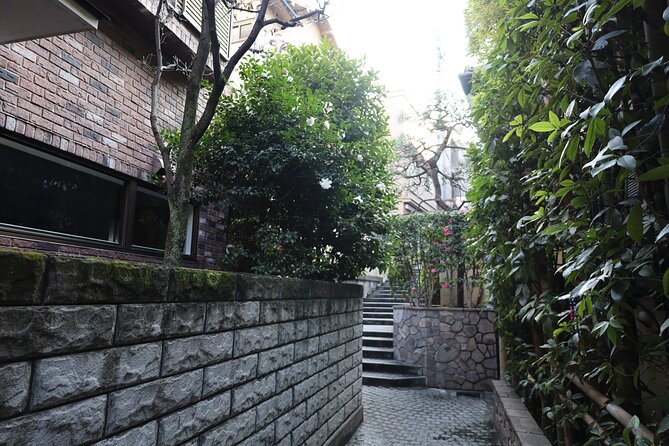
Kagurazaka gives you a side of Tokyo that busy sightseeing routes often miss: cobblestone lanes, black wooden fences, old shrines, and quiet residential corners tucked beside modern shops. The neighborhood grew around Edo Castle and its former entertainment district, so a short walk here brings together samurai history, geisha culture, religion, shopping, and literature.
I like two things right away. First, this is a private walk, so you can ask questions instead of keeping pace with a large group. Second, the route mixes major historical points with small details, such as heart-shaped stones and food shops selling croquettes, Japanese sweets, doughnuts, and tofu desserts. The main consideration is price: at $104.05 per person for about two hours, it makes the most sense if you value personal guiding and historical context.
In This Review
- Key things to know before you book
- Why Kagurazaka feels unlike central Tokyo
- Starting at Akomeya Tokyo in la kagū
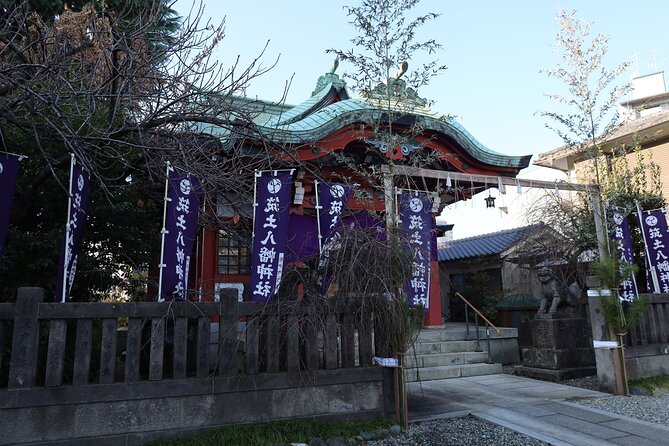
- Akagi Shrine and the layers of local belief
- Zenkoku-ji Temple and the Tokugawa connection
- Tsukudo Hachiman Shrine and older origins
- Ushigome Gate and the size of Edo Castle
- What the private format adds
- Food stops are optional, not part of the price
- Who will enjoy this walk most
- Is $104.05 a fair price?
- Final call: book it for context, not just sightseeing
- FAQ
- How long is the Kagurazaka walking tour?
- Is this a private tour?
- Where does the tour begin?
- Where does the tour end?
- Which languages are available?
- Are entrance tickets included?
- Can I cancel and receive a refund?
Key things to know before you book
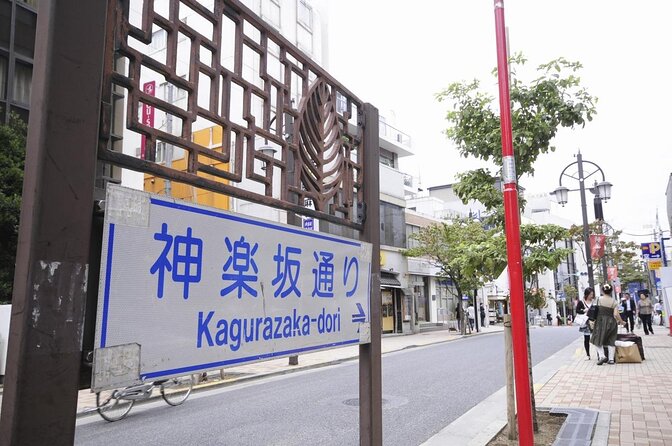
- Kagurazaka’s old streets: Walk cobbled paths and narrow lanes in one of central Tokyo’s more distinctive neighborhoods.
- Five substantial stops: Visit Akomeya Tokyo, Akagi Shrine, Zenkoku-ji Temple, Tsukudo Hachiman Shrine, and the remains of Ushigome Gate.
- Private format: Only your party takes part, making it easier to ask questions and adjust the pace.
- Multilingual guiding: Guides are offered in English, French, German, and Spanish.
- A food-rich route: Snacks are not included, but local treats and butcher-shop croquettes are available to buy along the way.
- A strong history lesson: The walk connects Edo Castle, the Tokugawa shoguns, temples, shrines, geisha culture, and modern Japanese writing.
Why Kagurazaka feels unlike central Tokyo
Kagurazaka was developed as a road in 1636 under Tokugawa Iemitsu, the third shogun. That date matters because it places the neighborhood in the Edo period, when Tokyo was still called Edo and the Tokugawa government controlled Japan from the nearby castle.
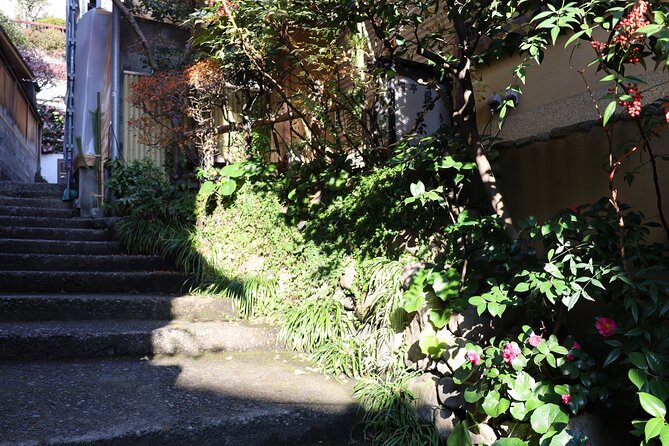
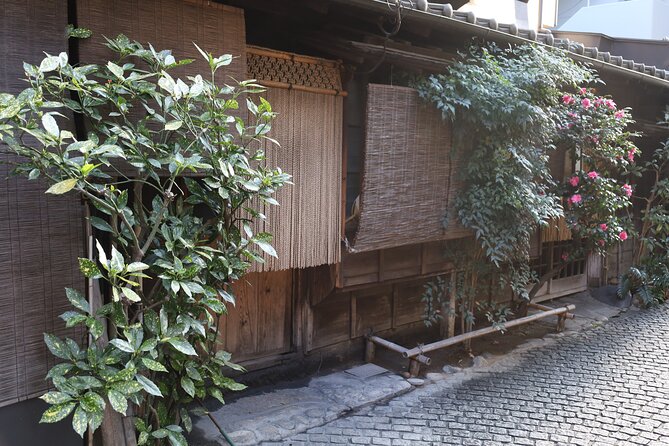
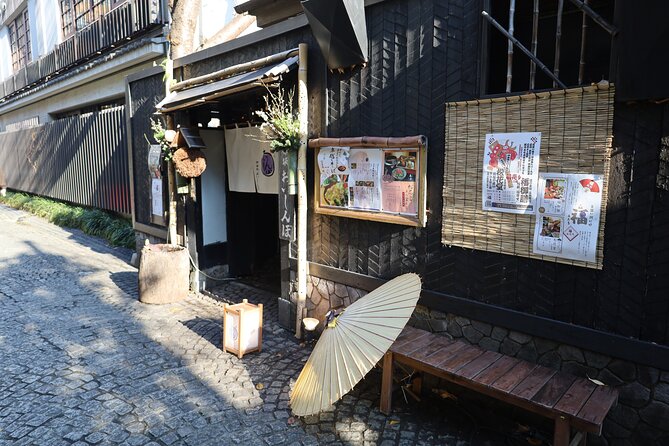
Today, you do not see a preserved old town in the museum sense. Kagurazaka is a working neighborhood, with shops, residences, restaurants, shrines, and modern buildings. That mixture is part of its appeal. You may pass a contemporary store designed by architect Kengo Kuma, then turn into a lane where the paving, fences, and slope feel much older.
The walk is marketed as a little Kyoto, but I would treat that as a useful comparison rather than a promise of a Kyoto replica. Kagurazaka has the quiet lanes and religious sites that many people associate with Kyoto, yet it remains distinctly Tokyo. It is compact, urban, and shaped by Edo Castle, local commerce, and the city’s modern literary life.
The route also has a sense of surprise. You might notice a heart-shaped stone, glimpse signs of the neighborhood’s geisha past, or find a food shop you would not have sought out on your own. Those small moments are more important here than a single grand monument.
If you're still narrowing it down, here are other tours in Tokyo we've reviewed.
Starting at Akomeya Tokyo in la kagū
The meeting point is Kagurazaka Station at Yaraicho. The first stop is Akomeya Tokyo in la kagū, a commercial facility created from a former warehouse belonging to Shinchosha Publishing Company. Architect Kengo Kuma handled the renovation.
This is a useful opening because it sets up the neighborhood’s old-and-new character. Akomeya Tokyo sells rice, dashi, seasonings, and other quality food products, along with household items. You are not simply beginning at a generic shopping center. You are seeing how an older structure has been given a new purpose while remaining tied to Japanese food and publishing.
The stop lasts about 10 minutes and admission is free. Do not expect this part to feel like a shrine visit or a major historical monument. Its value is architectural and cultural. It shows that Kagurazaka’s appeal is not only about preserved stones and traditional buildings. The neighborhood continues to change.
If you like Japanese pantry goods, this may also be a tempting place to browse. Since snacks are not included in the tour, you should think of any purchases here as optional extras rather than part of the package.
Akagi Shrine and the layers of local belief
Akagi Shrine receives about 15 minutes. Its story reaches back to 1300, when Ohgoshi Hikotaro Shigeharu moved from the foot of Mount Akagi in Gunma Prefecture and founded the shrine in Ushigome Waseda. It moved to its current location in 1555.
That origin gives the guide a chance to explain how Japanese shrines often connect a local community with a distant mountain, family, or place of origin. The shrine is not simply a scenic pause. It helps you understand how people, land, and religious practice moved through Japan over many centuries.
The short visit also keeps the tour from becoming a long lecture. You will have time to look around, ask questions, and then continue through the streets. Since this is a private walk, the guide can spend more time on the parts that interest you, within the limits of the two-hour schedule.
One practical point: the tour includes free admission to the listed stops, but it does not promise extended time at each site. If you prefer slow photography or quiet contemplation, you may find the schedule brisk. The benefit is variety. In two hours, you see several different parts of Kagurazaka instead of staying at one shrine.
Zenkoku-ji Temple and the Tokugawa connection
The next stop is Zenkoku-ji Temple, also called Bishamonten, for about 15 minutes. Tokugawa Ieyasu, the first shogun of the Edo shogunate, ordered its establishment in 1595 at Nihonbashi Bakurocho. After several fires, the temple was relocated to Kagurazaka.
This is one of the clearest places to connect Kagurazaka with the political power of Edo. The temple’s original purpose was to protect the nation, and its later moves show how fire repeatedly reshaped Tokyo. A guide can make those changes easier to follow than a plaque or map alone.
The temple also adds a different religious note after the shrine visit. A shrine and a temple are not interchangeable, and seeing both during one short route gives you a practical introduction to the distinction. You do not need specialist knowledge to appreciate the contrast. Your guide can explain what you are seeing in plain terms.
Zenkoku-ji is also close to the commercial side of Kagurazaka. This helps the walk move naturally between religion and daily life. You are not being led from one isolated monument to the next. You are walking through a neighborhood where worship, shopping, restaurants, and homes share the same streets.
Tsukudo Hachiman Shrine and older origins
Tsukudo Hachiman Shrine is another 15-minute stop. It is believed to be about 1,200 years old, making it far older than the Edo-period road that helped shape modern Kagurazaka.
The shrine’s story includes a small shrine containing a statue of Amitabha Buddha, said to have been carved by Saicho. Saicho was a major Buddhist figure, so this site opens a door into the long overlap between Buddhist and local religious traditions in Japan.
The wording around the shrine’s origins is important. Some historic and religious traditions are presented as beliefs rather than fully proven facts. A good guide should help you understand that distinction without stripping away the meaning these stories have held for the community.
For you, the stop offers a change of scale. Large, famous Tokyo sights can be impressive, but small religious sites often reward closer attention. Look at the setting, the approach, and the way the shrine fits into the surrounding streets. The tour’s strength is its ability to point out these details before you hurry on.
Other private tours in Tokyo
Ushigome Gate and the size of Edo Castle
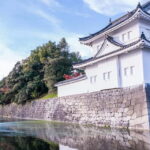
The final listed stop is the remains of Ushigome Gate, which takes about 10 minutes. The gate was built in 1636 as part of the outer moat of Edo Castle. Only stone remains survive, but even those pieces help show how large and defensive the castle complex once was.
This is a good ending because it returns you to the political geography of the area. Earlier stops introduce shrines and temples. Here, you see the military and administrative power that shaped the city around them.
The site is not a complete gatehouse. You should arrive expecting stone remnants rather than a reconstructed structure or grand entrance. Its appeal depends on context. Without the guide’s explanation, you might walk past and see only old masonry. With the right background, the stones help you picture the scale of Edo Castle and the road system around it.
The tour ends at JR Iidabashi Station’s West Exit. That makes the walk practical for continuing your day, although the route is not designed as a round-trip experience back at Kagurazaka Station.
What the private format adds
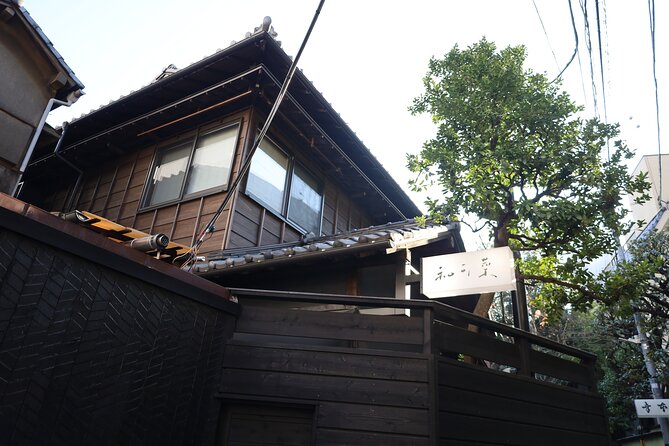
Private guiding is the main reason to consider this experience instead of walking Kagurazaka alone. The listed price is $104.05 per person, and the tour takes about two hours. That is not a bargain for a simple neighborhood stroll, especially since food and drinks are extra.
The value depends on how you travel. If you enjoy reading signs, following a map, and discovering streets without help, you can explore Kagurazaka independently. The neighborhood is accessible by public transportation, and the main sites do not charge admission.
I would pay more attention to the private format if you want history explained as you walk. A small party also lets you ask about topics that interest you, from samurai customs to Japanese religious practice or modern literature. One four-person group found the format especially useful because there was room for many questions. That is exactly where a private tour can earn its price.
The provider offers guides in English, French, German, and Spanish. Shinya Yamada is identified with the tour company, and Chiharu Iida has guided a related Kagurazaka evening experience. Your assigned guide may be different, so you should not book on the assumption that one particular person will lead your walk.
Group discounts are available, which may improve the value for families or friends booking together. Confirmation arrives within 48 hours, subject to availability. The activity is listed daily from 9:00 a.m. to 8:30 p.m., but your selected start time still needs confirmation.
Food stops are optional, not part of the price
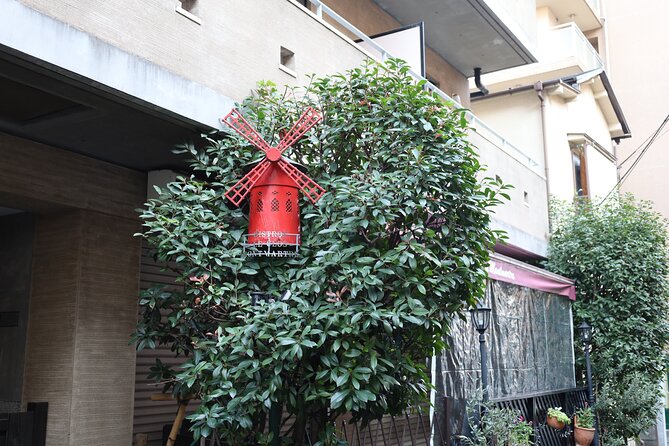
Kagurazaka is a good neighborhood for adding a small bite to a walking tour. Local options include traditional Japanese sweets, doughnuts, tofu desserts, and croquettes from butcher shops.
These foods are not included, so plan for extra spending if tasting local specialties is part of your goal. That may be a drawback for anyone expecting a food tour. On the other hand, keeping snacks separate lets you choose what appeals to you rather than paying for a fixed tasting menu.
I like this arrangement for a walking experience. You can stop when something catches your eye, or save your appetite for a meal after reaching Iidabashi Station. Ask your guide for suggestions during the walk, but remember that the published experience is primarily historical and cultural, not a dedicated food tour.
Who will enjoy this walk most
This experience suits you if you have already seen Tokyo’s large sights and want a quieter neighborhood with a clear story. It is also a good first introduction to Kagurazaka if you want help understanding why the streets look and feel different from nearby modern districts.
History-minded visitors will get the most from the route. The walk covers the Tokugawa shoguns, Edo Castle, shrines, temples, samurai culture, the former geisha district, shopping streets, residential lanes, and Japanese modern literature. That is a lot for two hours, so the tour works best when you welcome an overview rather than a long, detailed lecture at each stop.
The route may also suit couples, families, and small groups who prefer a private pace. Most people can participate, and service animals are allowed. Since the experience is a walking tour through streets and religious sites, wear comfortable shoes and be ready for a steady outing, although the supplied details do not specify the exact distance or terrain beyond the cobblestone paths.
You may see signs of geisha culture, but no meeting or performance is guaranteed. Treat that part as a glimpse into Kagurazaka’s past, not as a scheduled show.
Is $104.05 a fair price?
At $104.05 per person, the tour is expensive compared with visiting the neighborhood on your own. The five stops are free, snacks cost extra, and the total duration is only about two hours.
The price becomes easier to justify when you value private attention, multilingual service, and a connected explanation of places that can otherwise seem unrelated. You are paying for the guide’s time and interpretation, not entry tickets.
I would compare it with the cost of your own research and the ease of having someone handle the route. If your party is large enough for a group discount, the calculation may improve. If you are a confident independent walker, save the money and explore at your own pace.
The non-refundable cancellation policy deserves attention before booking. You cannot receive a refund or make changes for any reason, so choose your date carefully.
Final call: book it for context, not just sightseeing
Book this tour if you want Kagurazaka explained rather than merely photographed. Its best qualities are the private format, the mix of shrine, temple, castle remains, modern design, local food, and the chance to ask questions as the neighborhood unfolds.
Skip it if you want a cheap stroll, a food tasting, or a long visit at each individual site. You can see the streets independently, and the two-hour schedule leaves limited room for lingering.
For the right visitor, this is a compact and thoughtful way to meet an often-overlooked part of Tokyo. Come for the quiet lanes and stay for the connections between Edo power, local faith, geisha culture, and modern city life.
FAQ
How long is the Kagurazaka walking tour?
The tour lasts approximately two hours.
Is this a private tour?
Yes. Only your group participates in the activity.
Where does the tour begin?
The meeting point is Kagurazaka Station at Yaraicho in Shinjuku City, Tokyo.
Where does the tour end?
The walk ends at JR Iidabashi Station’s West Exit.
Which languages are available?
A multilingual local guide is available in English, French, German, or Spanish.
Are entrance tickets included?
The listed stops have free admission, and the tour includes the guide. Snacks are not included.
Can I cancel and receive a refund?
No. The experience is non-refundable and cannot be changed for any reason after booking.
More Private Tours in Tokyo
More tours in Tokyo we've reviewed

Tokyo, compared.
 ★ 4.0From Tokyo 1-Day Kyoto English-guided Tour by Bullet TrainFrom $452
 ★ 4.5Tokyo to Kyoto 1-Full Day Private Guided TourFrom $490
 ★ 4.9Kyoto: Nijo Castle World Heritage Guided Tour with AdmissionFrom $401h 30m
 ★ 4.6Osaka: Kyoto By The Sea with Amanohashidate & Ine no FunayaFrom $553 hours
 ★ 5.0From Tokyo to Kyoto and Nara: A Captivating Full-Day Private TourFrom $490
 ★ 4.7From Osaka: Kyoto & Nara Highlights Day Tour (7 attractions)From $53