
Reviewed · KYOTO FOOD TOURS
Kyoto Foodie Night Tour
Kyoto’s best food moments often happen in small restaurants where the menu is not built for tourists. This three-and-a-half-hour evening tour takes you from Nishiki Market to local izakaya and Kyoto-style dining spots, with at least seven tastings and two drinks included.
I like the maximum group size of eight, which makes it easier to ask questions and follow your guide through busy central Kyoto. I also like the mix of market bites, obanzai, bar food, sake, and a walk through Pontocho, rather than one long dinner in a single restaurant.
The main caution is the food-sharing setup. One disappointed diner found that small plates were divided among a large group, and that the evening leaned more toward alcohol than expected. You should also give food restrictions at least a week in advance, since vegan, vegetarian, and gluten-free choices are limited.
In This Review
- Key points at a glance
- Why this Kyoto food tour works well at night
- Nishiki Market: 25 minutes of small bites
- Two hours of obanzai and izakaya food
- Sake, beer, and the drinking balance
- Pontocho and the short cultural walk
- The guides make the biggest difference
- What $102.47 buys you
- Practical details before you book
- Who should choose this experience
- Should you book the Kyoto Foodie Night Tour?
- FAQ
- Where does the Kyoto Foodie Night Tour begin?
- Where does the tour finish?
- How long does the experience last?
- How many people can join the tour?
- How much food is included?
- Can the tour accommodate dietary restrictions?
- Can I cancel for a refund?
Key points at a glance
- Seven or more tastings: Expect Kyoto-style obanzai, izakaya dishes, market samples, and other local specialties.
- Two drinks included: Beer or sake may be served, with soft drinks also mentioned in the tour feedback.
- Nishiki Market comes first: You stop at two or three family-run shops for sample-size tastes and food history.
- Local restaurants follow: The main meal takes place at two or three restaurants over about two hours.
- Pontocho adds atmosphere: A short walk introduces one of Kyoto’s traditional entertainment districts and its geisha culture.
- Guides shape the evening: Sora, Chikako, Leandra, Yui, Taishi, Mana, Moe, Izumi, and others have been praised for warmth, English skills, and personal food recommendations.
Why this Kyoto food tour works well at night
The timing is smart. You meet at 5:00 p.m., when Kyoto is shifting from afternoon sightseeing into dinner mode. You finish near the old Sanjo Bridge, a useful spot for continuing your evening in central Kyoto.
This is not a cooking class or a formal restaurant meal. It is a guided walk with several stops, small tastings, drinks, and conversation. You get a broad look at how people eat in Kyoto, from market snacks to dishes ordered for sharing at an izakaya.
That variety is the tour’s strongest feature. A single Kyoto dinner can be excellent, but it may not show you much beyond one restaurant’s style. Here, you can compare casual food, traditional Kyoto preparations, bar snacks, seafood, tempura, and sake in one night.
The tour also gives you something that a restaurant reservation cannot: help with ordering and context. Your guide explains what is on the table, how the dish fits into local food culture, and what you might want to seek out later.
A few more Kyoto tours and experiences worth a look

Nishiki Market: 25 minutes of small bites
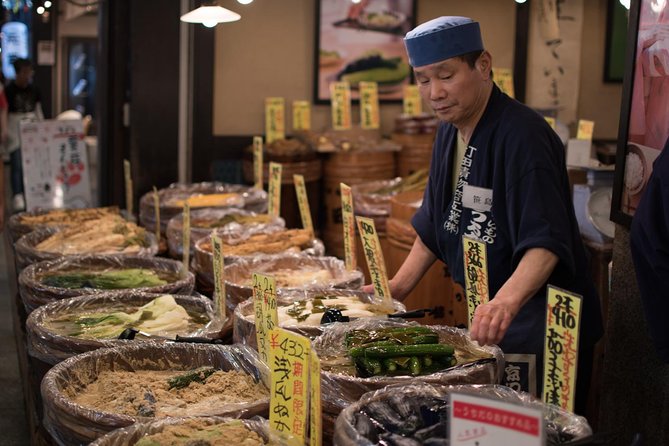
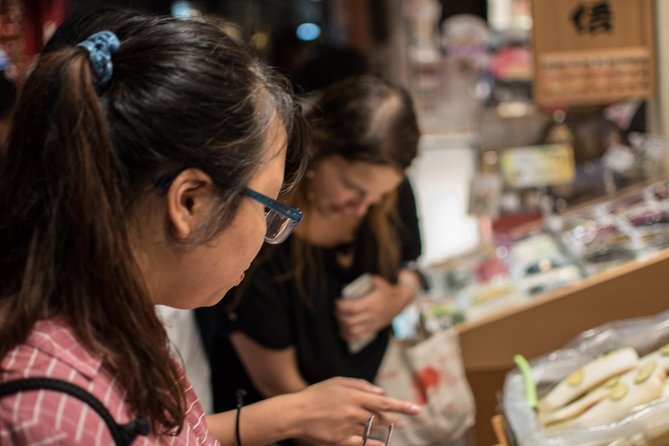
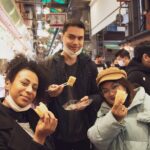
Nishiki Market is the natural first stop. This long downtown food market has shops selling ingredients and prepared foods tied to Kyoto’s cooking traditions. The tour spends about 25 minutes here and visits two or three family-owned shops.
Keep your expectations realistic. This is a short market introduction, not a full afternoon at Nishiki. You receive sample-size portions, so the goal is to get a taste and understand the food culture rather than fill up.
That short format has an advantage. Nishiki can feel crowded and confusing, especially on a first visit. A guide helps you focus on a few worthwhile stops instead of wandering past rows of unfamiliar foods without knowing what to try.
The market portion also sets up the rest of the night. You begin with quick bites and food traditions, then move toward seated restaurant dishes. The change in pace feels natural, and it keeps the evening from becoming a simple sequence of restaurant meals.
You might find some flavors unfamiliar. That is part of the point, but it can be a drawback if you want only familiar food. The tour is built around local eating, not a menu adjusted entirely to international tastes.
Two hours of obanzai and izakaya food
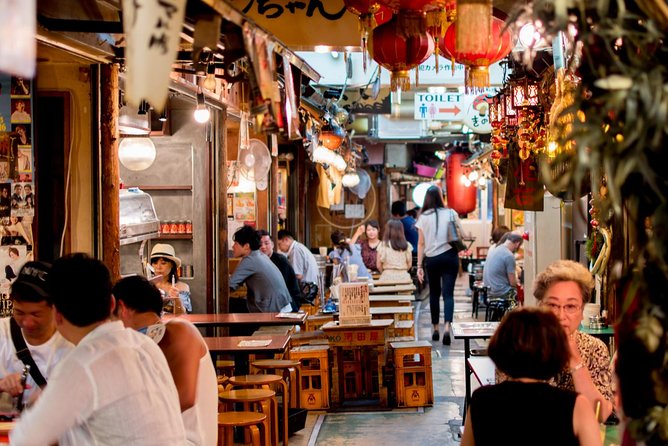
The heart of the experience is the restaurant section, which lasts about two hours. You visit two or three restaurants in central Kyoto and try dishes ranging from obanzai to local izakaya food.
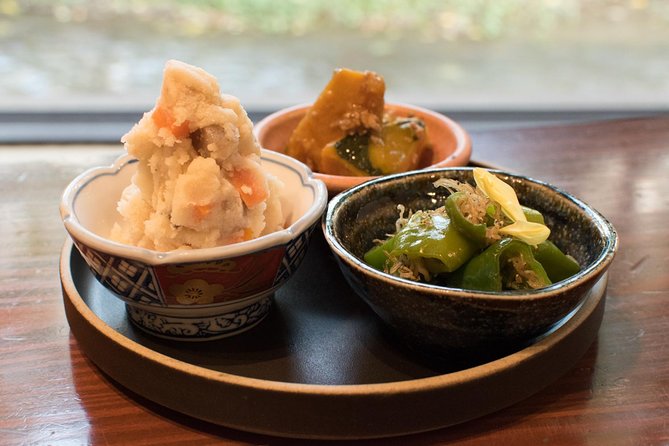
Obanzai is Kyoto-style home cooking, often served as several small side dishes rather than one large main course. This style gives you a look at everyday flavors and seasonal ingredients. It is also well suited to a group because several dishes can be shared.
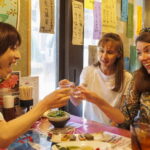
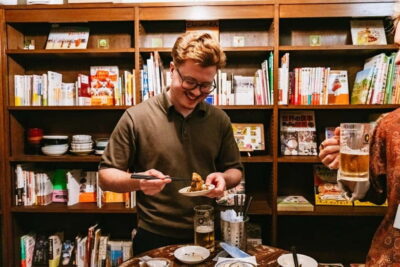
Izakaya food is more casual and social. Think of a Japanese pub where people order several plates for the table, along with beer or sake. The appeal is variety, but the shared format means you may receive only one bite of a particular item if the group is full.
That point matters. Some portions appear to be designed for tasting rather than individual servings. Several diners described the food as plentiful overall, while one person felt that plates were too small when shared among seven people and the guides.
The total amount of food seems to vary with the group and the guide’s choices, but the repeated advice is simple: do not eat a large dinner before meeting. Most people should expect to finish full. Still, do not confuse seven tastings with seven full restaurant portions.
The food can also be adventurous. Dishes may include seafood, sashimi, eel, tempura, and bar snacks you might not order by yourself. That can be the fun of the evening, especially if you like trying unfamiliar foods. It can also be frustrating if you have strong dislikes that are not discussed clearly at the start.
Tell the operator about restrictions at least one week before the tour. Vegan, vegetarian, and gluten-free options are limited, and last-minute requests may not be possible. If you simply dislike sashimi or eel, mention that early and repeat it to your guide before ordering.
Sake, beer, and the drinking balance
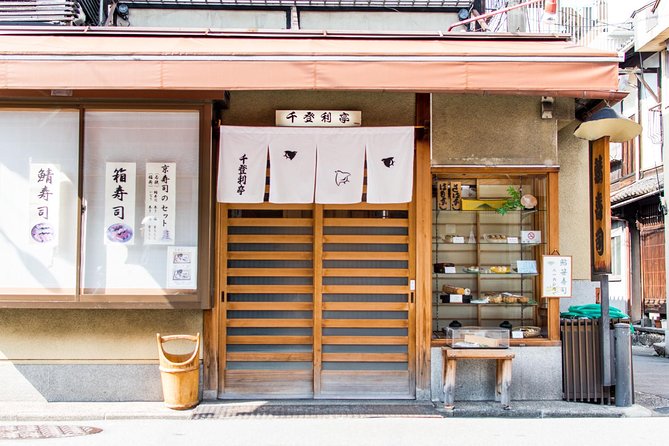
Two drinks are included, such as beer or sake. Several tour descriptions also refer to soft drinks being available, but the experience is clearly designed with Japanese drinking culture in mind.
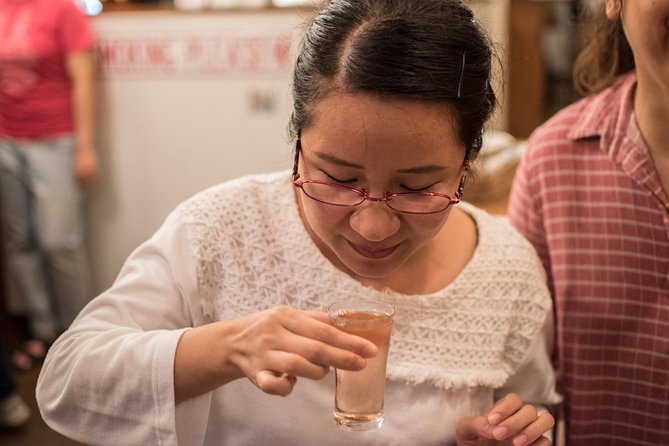
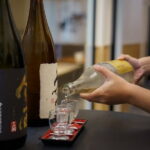
The sake tasting is one of the more distinctive parts of the evening. It gives you a chance to compare local flavors and learn how sake fits into a meal. The tasting has been singled out as a highlight by people who wanted more than a standard beer with dinner.
Still, this is not the ideal tour for someone who does not drink at all unless you confirm how the evening can be adjusted. One low-rated experience felt that the tour focused too much on alcohol and that the guides appeared to eat and drink along with the group.
That criticism is worth taking seriously. The tour’s food and drink balance may depend on the guide, the group, and the restaurant choices that night. If you are a light drinker, say so at the outset. You should not feel pressured to use both included drinks.
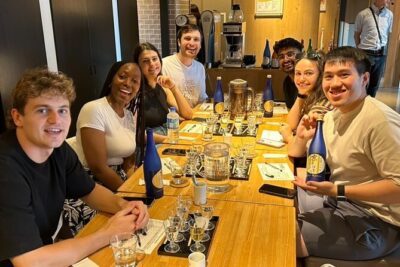
For most people, the drinks add to the social side of the evening. You sit with a small group, taste food together, and learn how locals might order several dishes for a shared table. If you want a strictly food-first experience, make your preference clear.
Pontocho and the short cultural walk
After the restaurant visits, the route passes through Pontocho District. The walk takes about 15 minutes and covers the area’s traditional entertainment culture, including its connection to geisha.
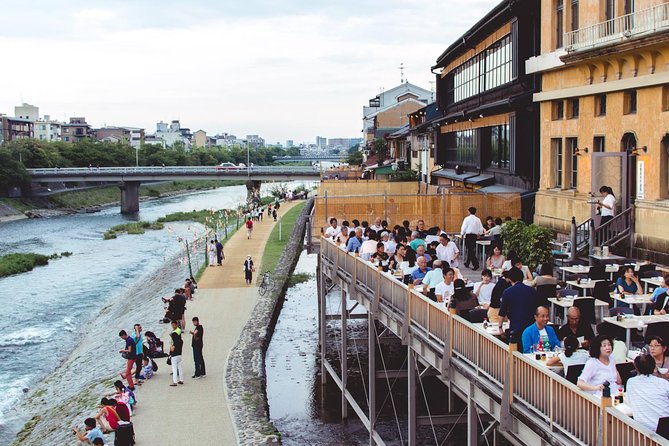
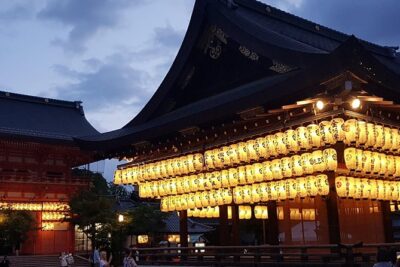
Pontocho is a narrow, atmospheric district near the Kamo River. Its small entrances and restaurant-lined lanes offer a sharp contrast with the open space of Nishiki Market. The walk is brief, but it helps connect Kyoto’s food scene with its older nightlife traditions.
Do not expect a long geisha presentation or a dedicated cultural lecture. This is an orientation walk folded into a food tour. Your guide explains the district and Kyoto’s past while leading you toward the final meeting point.
That balance is useful for a first evening in the city. You get a few food stops, a little local history, and a sense of where Kyoto’s central nightlife is located. The tour ends near the old Sanjo Bridge, not back at the starting point, so plan your next stop from there.
A few more Kyoto tours and experiences worth a look
The guides make the biggest difference
The operator uses several guides, and the guide you receive will shape the tone of your evening. Names praised in the supplied material include Sora, Chikako, Leandra, Yui, Taishi, Shun, Mana, Moe, Izumi, and Yuina.
Sora has been praised for taking groups to personal favorite spots, ordering generously, and answering cultural questions. Chikako has received strong marks from families and couples for explaining food, sake, restaurants, and Kyoto traditions.
Leandra appears especially comfortable with families and mixed groups. She has been praised for choosing local restaurants, explaining the history behind Nishiki Market, and leading people to places they might not find alone. Taishi has been noted for easy conversation, strong English, and personal recommendations.
Yui and Yuina have been appreciated for their gentle manner and willingness to help with Japanese language questions. Shun has been praised for clear English and his understanding of local food and culture.
These details suggest a tour where the guide is more than a person who leads you from door to door. You are paying for judgment: which restaurants to choose, how to order, and how to explain unfamiliar dishes.
The tradeoff is that no two evenings will feel exactly alike. A guide’s personal style can be a major strength, but the food selections and pacing may differ. If a particular guide is available when you book, choosing by name may be worthwhile, though availability is not guaranteed in the information provided.
What $102.47 buys you
At $102.47 per person, this is not a budget dinner. The value depends on how you use the experience.
You are paying for at least seven food tastings, two drinks, visits to two or three restaurants, the Nishiki Market stops, and a guide for about three and a half hours. You also avoid the uncertainty of choosing several unfamiliar restaurants on your own.
The price makes more sense if you are curious about Kyoto food but do not speak Japanese or feel confident ordering in small local establishments. A good guide can save you from spending an evening at places chosen only for convenience.
The value is weaker if you are a very selective eater, do not drink, or want full-sized portions of each dish. It is also less appealing if you already have a strong list of Kyoto restaurants and enjoy making your own choices.
For a first night in Kyoto, I see this as both dinner and orientation. You get fed, learn which foods interest you, and finish with a better sense of the central dining districts. That can be worth more than the cost of a single meal, especially early in a trip.
The tour is also a social experience. Small groups often include people from several countries, and the shared-table format makes conversation easy. Solo visitors and couples can fit in well, while families with teenagers have also found the range of food and cultural information appealing.
Practical details before you book
The starting point is Alba Creative Boutique in Kyoto’s Shimogyo Ward, at 358 Naramonochō. The tour begins at 5:00 p.m. and ends near the old Sanjo Bridge stone pillar in Nakajimachō.
You should be comfortable walking between food stops and standing in market areas. The listed itinerary includes about 25 minutes at Nishiki Market, two hours in restaurants, and 15 minutes in Pontocho, with the remaining time used for movement and conversation.
The group limit is eight people. That is small enough for personal questions and easier movement through narrow streets, though one account found a group of seven plus guides larger than ideal for sharing dishes.
You receive a mobile ticket, and booking confirmation is sent at the time of booking. Most people can participate, but the supplied information does not promise wheelchair access or describe the exact walking distance, so ask the operator if mobility is a concern.
The booking is non-refundable and cannot be changed for personal reasons. If bad weather cancels the tour, you are offered another date or a full refund. The same applies if the minimum number of participants is not reached.
Who should choose this experience
I would choose this tour if you want a friendly introduction to Kyoto’s food customs without spending days researching restaurants. It suits curious eaters who enjoy shared plates, casual dining, sake, and a guide who can explain what you are trying.
It is a good match for:
- First-time visitors who want help ordering local food
- Solo visitors who enjoy meeting a small group
- Couples seeking dinner with some neighborhood history
- Families with older children or teenagers open to new flavors
- People who want both market snacks and restaurant food
- Visitors who enjoy sake or beer as part of a meal
I would think twice if you need strict dietary control, dislike shared portions, avoid alcohol, or want a quiet, private dinner. The food is intended to be local and sometimes unfamiliar, so this is not a safe choice for a very cautious eater unless you discuss your preferences beforehand.
Should you book the Kyoto Foodie Night Tour?
Book it if you want variety, guidance, and a full evening of tasting rather than one polished restaurant reservation. The strongest reasons are the small group, the mix of Nishiki Market and izakaya dining, the included sake or beer, and the chance to learn directly from guides such as Sora, Chikako, Leandra, or Taishi.
Come hungry, tell the operator about restrictions a week ahead, and state clearly if you prefer less alcohol or want to avoid specific foods. With those expectations in place, this is a strong first or second-night choice in Kyoto. If you want large portions, full control of every dish, or a food-only experience, spend the $102.47 on your own restaurant hunt instead.
FAQ
Where does the Kyoto Foodie Night Tour begin?
It begins at Alba Creative Boutique, 358 Naramonochō, in Kyoto’s Shimogyo Ward. The start time is 5:00 p.m.
Where does the tour finish?
The tour ends near the stone pillar of the old Sanjo Bridge in Nakajimachō, Kyoto.
How long does the experience last?
The tour lasts approximately three hours and 30 minutes.
How many people can join the tour?
The maximum group size is eight participants.
How much food is included?
The tour includes at least seven food tastings, including market samples, obanzai, and local izakaya dishes. Two drinks, such as beer or sake, are also included.
Can the tour accommodate dietary restrictions?
You must contact the operator about food restrictions at least one week before the tour. Vegan, vegetarian, and gluten-free choices are limited, and last-minute requests cannot be guaranteed.
Can I cancel for a refund?
The experience is non-refundable and cannot normally be changed. If the operator cancels because of poor weather or because the minimum number of participants is not reached, you will be offered another date or a full refund.
More Food Experiences in Kyoto
More Night Walks & Ghost Tours in Kyoto
More Kyoto Food Tours in Kyoto
More tours in Kyoto we've reviewed



Kyoto Food Tours, compared.
 ★ 5.0Kyoto Night Foodie Tour in Gion (9+ dishes + 6 Sake tastings)From $163
 ★ 5.0Nishiki Market Brunch Walking Tour (7 Tastings + Brunch)From $68
 ★ 5.03-Hour Kyoto Insider Sake Brewery Tour with Tastings & PairingsFrom $84
 ★ 4.6Kyoto Night All-Inclusive Eats and Streets, Gion and BeyondFrom $101
 ★ 4.5Kyoto Nighttime All-Inclusive Eats and Streets, Gion and BeyondFrom $119
 ★ 5.01.5-Hour Kyoto Insider Sake Experience with 7 Tastings & PairingsFrom $68