
Reviewed · GION & GEISHA WALKS
Kyoto: Meet the Geisha Maiko with Gion Walking Tour
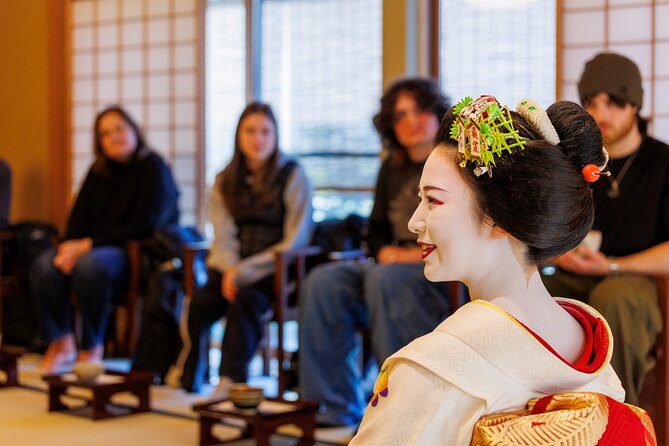
The rarest part of this Kyoto experience happens after the walk: you enter a private ochaya, or traditional teahouse, where a maiko performs and a former geiko answers questions about her life and training. This is not a street sighting or a stage show viewed from afar. It is a small cultural meeting with time for conversation.
I like the thoughtful route through Gion, especially the Shirakawa Canal and Hanamikoji Street, because it gives you useful context before the performance. I also like the open question period, where guides such as Mika, Naomi, Tom, Takuma, and Yuko translate and explain details that would otherwise be easy to miss.
The main consideration is timing. The dance itself may be brief, while the Q&A takes up much of the 90-minute teahouse visit. The whole outing can last three to five hours, so leave room in your schedule, especially if you have a train to catch.
In This Review
- Key points to know before booking
- Why the private teahouse meeting matters
- The Gion walk from the canal to Miyagawasuji
- Shirakawa Canal
- Tatsumi-jinja Shrine
- Hanamikoji Street
- Gion Corner and Kenninji Temple
- Miyagawasuji
- What the 90-minute maiko experience includes
- Kimono rental: a worthwhile add-on for some
- Price, group size, and real value
- Timing, clothing, and access details
- Who will enjoy this Kyoto experience most
- Should you book the Gion maiko tour?
- FAQ
- Where does the tour start?
- What happens if I choose the kimono rental option?
- How long does the tour last?
- Is the tour conducted in English?
- How long is the maiko performance?
- Can I take pictures and videos?
- Do I need to bring anything special?
- Is the venue accessible by wheelchair?
- Can children join the tour?
Key points to know before booking
- Private ochaya access: Enter a traditional teahouse venue that is normally difficult for independent visitors to access.
- A live maiko performance: Watch one or two traditional dances by a maiko, with the possibility of a former geiko taking part in the session.
- Real conversation: Ask about training, daily life, customs, and the difference between a maiko and a geiko.
- A useful Gion walk: See Shirakawa Canal, Tatsumi-jinja Shrine, Hanamikoji Street, Gion Corner, Kenninji Temple, and Miyagawasuji.
- Photo time included: Take pictures with the maiko during the permitted photo session.
- Important practical limits: Bring socks, expect stairs, and note that children under 10, wheelchair users, and people with mobility impairments cannot join.
Why the private teahouse meeting matters
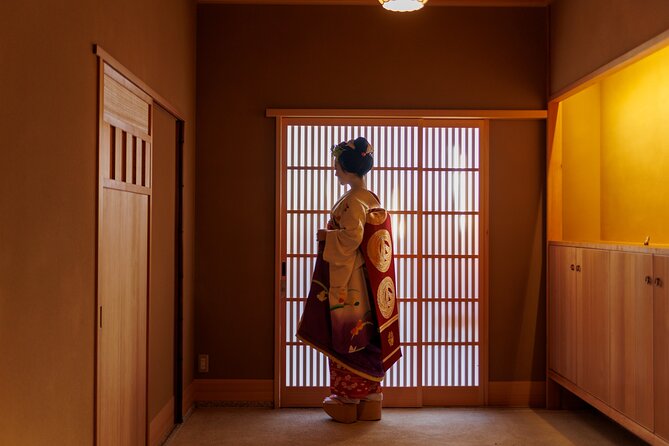
Kyoto’s geiko and maiko culture is easy to misunderstand. Costumes, white makeup, elaborate hairstyles, and the word geisha can make the tradition seem like a museum display. This experience helps correct that picture by giving you time with people who live within the tradition today.
A maiko is an apprentice geiko, still in training. A geiko is a professional entertainer who has completed that training. The names and roles matter, and the conversation gives you a chance to hear about them in plain terms rather than relying on movie stereotypes.
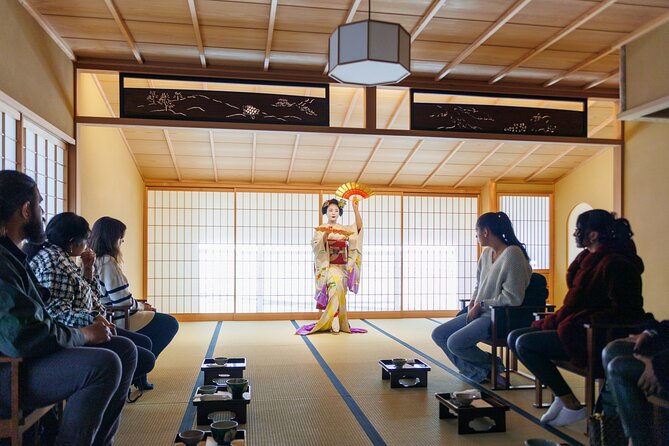
The setting also matters. The performance takes place on the second floor of a private house, reached by stairs. You are not simply passing through a public attraction. You are being admitted into a place with its own rules and customs, which is why the socks requirement and photography limits should be taken seriously.
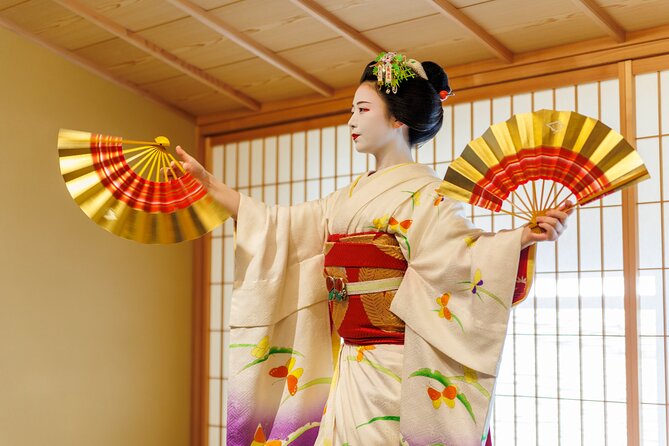
The performance includes one or two dances. They are graceful and formal, with the maiko’s movements, kimono, hair, and ornaments all part of the presentation. The dance may last only a few minutes, so watch closely. The quiet details are the point: the controlled gestures, the fan work, the music, and the way the performer uses a small space.
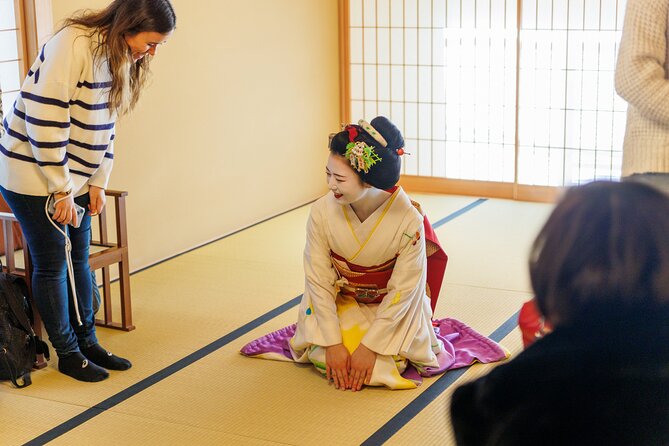
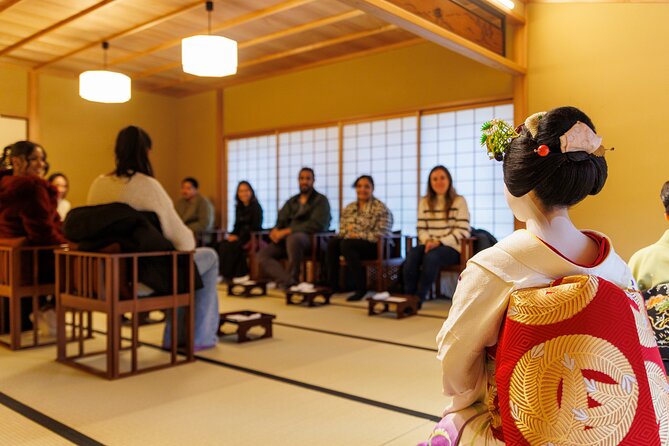
Afterward, the experience changes pace. You have a Q&A with the maiko and a venue owner or former geiko, with the guide translating where needed. This is often the most useful part for anyone who wants more than a pretty photograph. You can ask about training and customs, and hear personal stories that make the formal performance easier to understand.
Photography and video are allowed only during the performance and the official photo session. You must ask the maiko directly before posting her photographs online, and videos cannot be uploaded to the internet. These rules are simple, but follow them carefully.
A few more Kyoto tours and experiences worth a look
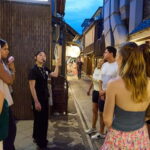

The Gion walk from the canal to Miyagawasuji
The walking portion lasts about 70 to 80 minutes. It is not a full-day historical tour, but it gives you a clear introduction to the parts of Gion connected with maiko and geiko life.
Your meeting point depends on the option you book. You may meet at the Izumo-no-Okuni statue, or choose the kimono rental option through the Wargo Kyoto Kimono Rental Gion-Shijo Store. If you rent a kimono, you change first and then walk to the statue on your own. The shop is about three minutes away, and the guide waits there.
Shirakawa Canal
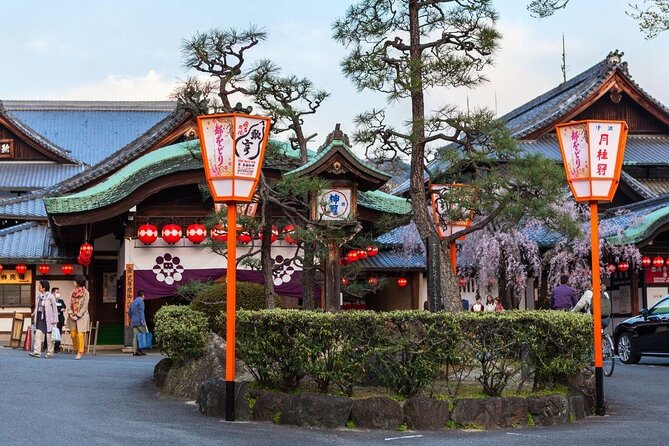
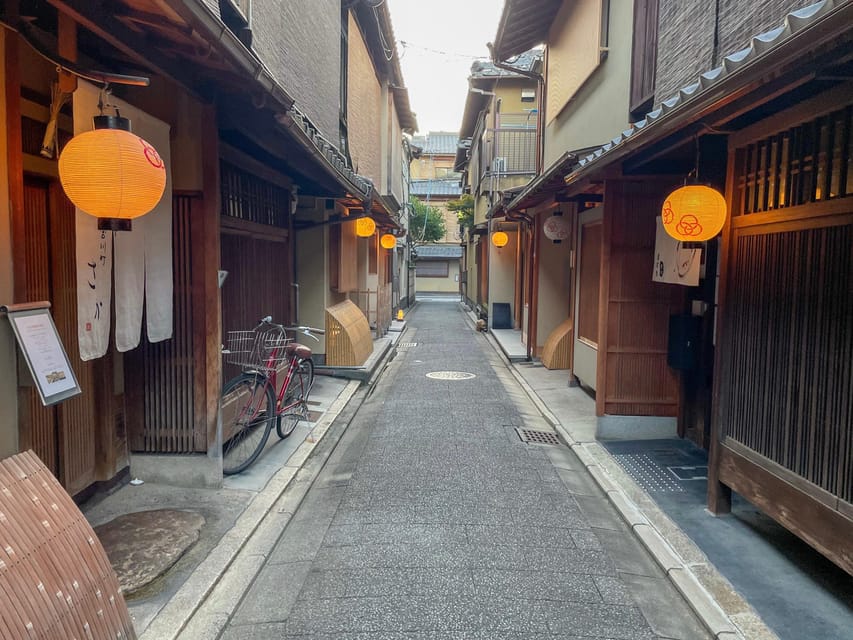
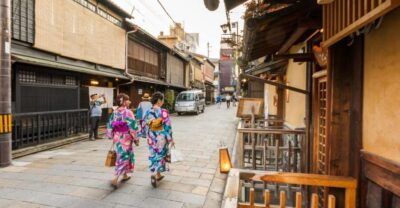
The walk begins around the Shirakawa Canal, one of the most attractive areas in Gion. Traditional buildings and the water give you an immediate sense of old Kyoto, and the guide explains how the district functions today.
This is a good place to slow down and take photographs, but remember that you are walking through a working neighborhood, not a theme park. Keep voices low, avoid blocking narrow paths, and do not photograph people without permission.
Tatsumi-jinja Shrine
The stop at Tatsumi-jinja Shrine is short, about five minutes. It is a compact visit rather than a long shrine tour, so you should not expect time for an extended look around.
Its value is in the route and the explanation. The guide uses the shrine and nearby streets to connect everyday Gion with the performing arts practiced in its teahouses.
Hanamikoji Street
Hanamikoji Street is one of the best-known lanes in Gion, lined with traditional facades and restaurants. It is also one of the places where visitors can forget that people work and live nearby.
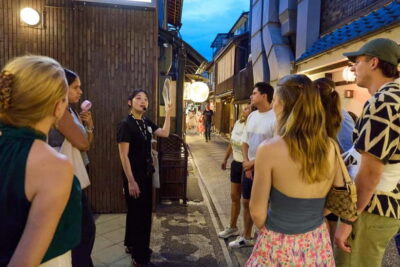
Your guide points out details about the district and its customs. The walk is especially useful if you have seen photographs of maiko but have not understood where they work or how the neighborhood fits together.
The information here may overlap with another Gion tour you have taken, particularly if you already joined a night walk. If you have limited time in Kyoto, though, the route still earns its place because it leads directly into the private teahouse visit.
Other walking tours we've reviewed in Kyoto
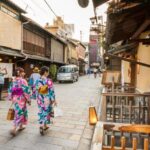





Gion Corner and Kenninji Temple
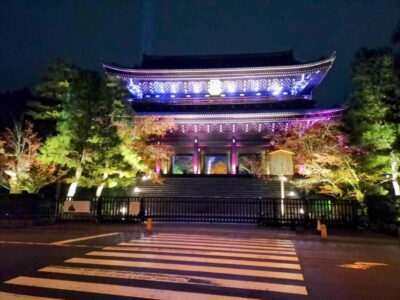
Gion Corner appears as part of the guided sightseeing route. The stop at Kenninji Temple is listed as a photo stop and guided visit lasting about 15 minutes.
Do not book this tour expecting a detailed temple inspection. The temple portion is brief, and the main focus remains Gion and the maiko meeting. If Kenninji is high on your Kyoto list, return separately so you can explore it at your own pace.
That limitation is worth knowing because the tour description gives the temple a place on the route, but the teahouse experience is clearly the main event.
Miyagawasuji
The walk ends around Miyagawasuji, where the group visits the venue for about 90 minutes. This area is another flower district, a term used for Kyoto’s traditional entertainment neighborhoods.
The change from public street to private house gives the afternoon its shape. First, you learn how to read Gion. Then you enter a quieter setting where the people and traditions you have been discussing become present and personal.
What the 90-minute maiko experience includes
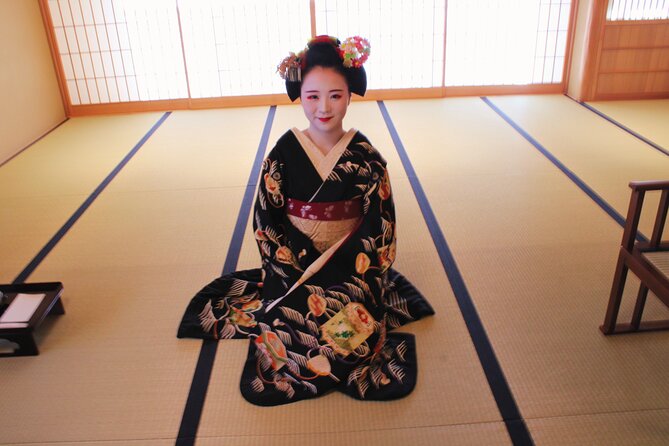
The teahouse visit normally combines several parts:
- A live performance by a maiko, with one or two dances
- A meeting with a maiko and a former geiko or venue owner
- A question-and-answer session
- A photo session with the maiko
The order may vary, but you should expect a mix of performance and conversation rather than a long theatrical show. One dance can take less than five minutes, while the questions and explanations fill much of the visit.
That balance suits me. A longer stage production might look impressive, but it would not necessarily tell you much about the people behind the art. Here, the performance provides the visual introduction, and the discussion supplies the meaning.
The guide’s role is important. English ability varies by guide, but the strongest reports name people such as Tom for fluent translation and broad cultural explanation, and Mika, Naomi, Chiko, Yuko, Ayako, Ellie, Eric, and Takuma for friendly, clear guiding. Since the guide often translates questions at the venue, good communication can make a major difference.
You should also expect respectful limits. The maiko is not there to act as a prop or answer anything without boundaries. Ask thoughtful questions, listen to the answers, and wait for the designated photo period. The direct permission rule for online images is part of treating this as a cultural exchange rather than a photo attraction.
Kimono rental: a worthwhile add-on for some
The kimono option lets you change before meeting the guide at the Izumo-no-Okuni statue. Walking through Gion in traditional dress can make the outing feel more connected to the setting, and it creates additional photo opportunities.
It also adds practical concerns. You must get from the rental shop to the statue yourself, although the walk is only about three minutes. A kimono can be warm and restrictive, which matters on hot days. One session in July became uncomfortable because of the heat, so consider the weather before choosing this option.
The rental is not required for the maiko meeting. If your priority is comfort, walking ease, or a tight schedule, regular neat clothing is the simpler choice. If you want the visual experience of wearing traditional dress in Gion, the add-on may be worth the extra effort.
Price, group size, and real value
At $106 per person, this is not a cheap sightseeing walk. The value comes from the unusual access, not from the number of locations visited.
A standard Gion stroll can show you canals, lanes, shrines, and historic facades. It cannot normally get you into a private ochaya for a maiko performance, direct questions, and a photo session. That private access is what makes the price easier to justify.
The small-group option is another plus. A group of around seven people creates a better setting for questions than a large tour bus, and it gives you a clearer view of the performance. Group size may vary by booking, so check the selected option rather than assuming every departure is intimate.
The tour is rated 4.8 from 371 reviews, and the strongest praise centers on the same elements: the maiko performance, the former geiko’s stories, the quality of the English translation, and the sense of being admitted into a normally restricted setting. Guides are repeatedly singled out by name, which tells you that the walking and interpreting work is not an afterthought.
Still, keep your expectations aligned. This is not a long dance recital, a full tea ceremony guaranteed at every departure, or a detailed visit inside every listed landmark. It is a cultural orientation walk followed by a focused meeting with living practitioners.
Timing, clothing, and access details
The listed duration is three to five hours, and the actual finish can run longer than expected. Do not schedule a bullet train or airport transfer immediately afterward. One participant nearly missed a train because the activity lasted longer than expected.
The tour operates rain or shine. On wet days, use an umbrella during the walk and arrive at the venue with dry clothes and socks. Wet socks are not allowed inside, and socks are required even in dry weather.
The private house is on the second floor, and you can reach it only by stairs. The activity is not suitable for children under 10, wheelchair users, or people with mobility impairments.
Cancellation is flexible up to 24 hours before the start for a full refund, and you can reserve now and pay later. If the organizer cancels, the activity is refundable, but related hotel or bullet train costs are not. Those details make travel insurance or a sensible Kyoto schedule useful if your plans are tight.
Who will enjoy this Kyoto experience most
I would choose this tour if you are genuinely curious about Japanese performing arts, social customs, and the difference between geiko and maiko. It is especially well suited to first-time visitors who want Gion explained before seeing a performance.
It also works well for photographers, provided you are happy to follow strict rules. You get an official photo period with the maiko, but not unrestricted filming or social media access.
The experience may be less satisfying if you want a long dance show, a private one-on-one meeting, or a leisurely temple tour. It is also a poor fit for anyone who dislikes walking, stairs, warm clothing, or a schedule that may stretch beyond the stated minimum.
Should you book the Gion maiko tour?
Book it if the chance to meet a maiko and former geiko matters more to you than ticking off a long list of sights. The performance is short, but the combination of access, translation, conversation, and photographs is unusual and difficult to arrange independently.
Choose the kimono option for the visual fun, not because it is needed for the cultural meeting. Bring socks, leave your afternoon open, and arrive ready to listen as much as you photograph.
If you want an authentic look at Kyoto’s living traditions, this is a strong choice. If you mainly want a conventional walking tour or a full evening show, spend your $106 elsewhere.
FAQ
Where does the tour start?
There are two possible starting options: the Izumo-no-Okuni statue or the Wargo Kyoto Kimono Rental Gion-Shijo Store. The meeting point depends on the option you book.
What happens if I choose the kimono rental option?
After changing into a kimono, you walk to the Izumo-no-Okuni statue by yourself. The rental store is about three minutes from the statue, where the guide waits for you.
How long does the tour last?
The total duration is listed as three to five hours. The Gion walk takes about 70 to 80 minutes, and the maiko meeting takes about 90 minutes. The activity may run longer on some days.
Is the tour conducted in English?
Yes. The tour has a live English-speaking guide. The guide also helps translate questions and answers during the teahouse visit.
How long is the maiko performance?
The performance includes one or two dances. The individual dance may be brief, while the rest of the approximately 90-minute venue visit focuses on conversation, questions, and photographs.
Can I take pictures and videos?
Photography and video are allowed only during the performance and the official photo session. You must ask the maiko directly before posting photographs online, and videos cannot be uploaded to the internet.
Do I need to bring anything special?
Bring socks. Socks are required at the performance venue, and wet socks are not allowed on rainy days.
Is the venue accessible by wheelchair?
No. The performance takes place on the second floor of a private house, accessible only by stairs. The activity is not suitable for wheelchair users or people with mobility impairments.
Can children join the tour?
Children under 10 cannot join this activity.
More Walking Tours in Kyoto
More Gion & Geisha Walks in Kyoto

More tours in Kyoto we've reviewed





Gion & Geisha Walks, compared.
 ★ 4.7Kyoto Geisha Walking Tour: Gion District & Hidden GemsFrom $252 hours
 ★ 4.7Kyoto: Gion Geisha District Walking Tour – Stories of GeishaFrom $202 hours
 ★ 4.9Best of Kyoto: Gion, Geisha, Pagodas & CobblestonesFrom $242 hours
 ★ 4.5Night Walk in Gion: Kyoto’s Geisha DistrictFrom $211h 40m
 ★ 5.0Kyoto Night Foodie Tour in Gion (9+ dishes + 6 Sake tastings)From $163
 ★ 5.0Kyoto Gion Geisha District Walking Tour – The Stories of GeishaFrom $25