
Reviewed · NARA DAY TRIPS
Nara Early Morning Tour (Kyoto or Osaka Departure Available)
Nara is at its most peaceful early in the day, before the deer park fills with tour groups and school parties. This small-group walk takes you from Kofuku-ji to Kasuga Grand Shrine, through Nara Park, and into Todai-ji, where Japan’s huge Great Buddha awaits.
I like the early start and the chance to hear the story behind each place rather than simply snap photos and move on. I also like the maximum group size of 12, since guides such as Momoka, Nana, Haruka, Futaba, and Koichiro have room to answer questions and adjust the pace. The drawback is the amount of walking: about 10,000 steps in four and a half hours, with your return trip to Kyoto or Osaka left to you.
In This Review
- Key points to know before booking
- Why the early morning timing matters in Nara
- Kofuku-ji Temple and the famous five-story pagoda
- Kasuga Grand Shrine and its 3,000 lanterns
- Nara Park and the deer that bow for rice crackers
- Todai-ji and the Great Buddha
- What the guides add to the morning
- Walking, transport, and the practical details
- Is $61.02 good value?
- Who will enjoy this Nara morning walk?
- Should you book the Nara Early Morning Tour?
- FAQ
- How long does the Nara Early Morning Tour last?
- Where does the tour start and end?
- Can I join from Kyoto or Osaka?
- Is transportation back to Kyoto or Osaka included?
- What sights are included?
- Is the Todai-ji entrance fee included?
- How large is the group?
- Is the tour suitable for young children or people with limited mobility?
Key points to know before booking
- Early access makes a real difference: You visit Nara before the biggest crowds arrive, especially useful during peak seasons.
- Four major sights in one morning: The route combines Kofuku-ji Temple, Kasuga Grand Shrine, Nara Park, and Todai-ji Temple.
- Groups are limited to 12 people: Smaller groups make it easier to ask about Buddhist temples, Shinto customs, deer, and local history.
- Transport can be added from Kyoto or Osaka: Check the option you book carefully, since only selected bookings include the ride to Nara.
- The Great Buddha entrance costs extra: Todai-ji admission is ¥800 per person.
- Plan for an independent finish: The tour ends at Nara Park, and transportation back to Kyoto or Osaka is not included.
Why the early morning timing matters in Nara
Nara is easy to reach from Kyoto and Osaka, but its most famous sights can feel very different as the day goes on. The deer gather around the park, tour groups arrive, and the approaches to the major temples grow noisy. An early visit gives you a quieter start and better space to look around.
The schedule lasts about four hours and 30 minutes. That is long enough to cover the main sights without turning the morning into a race, but short enough to leave your afternoon open for more sightseeing, shopping, or a return to Kyoto.
The timing also gives the tour a calmer mood. The forest paths near Kasuga Grand Shrine are especially suited to a morning walk, and the quiet helps you notice the lanterns, trees, stone paths, and religious details that can be easy to miss in a crowd.
The trade-off is simple: you must be ready early. If you prefer late breakfasts or relaxed starts, this may feel demanding. But if you have only one day for Nara, using the first part of the day well is a smart choice.
A few more Nara tours and experiences worth a look

Kofuku-ji Temple and the famous five-story pagoda
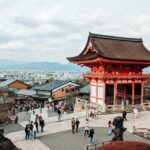
The tour begins at Kofuku-ji Temple, founded in Nara in 710, the same year Nara became Japan’s capital. Its five-story pagoda is the first major landmark you encounter and one of the best-known sights in the city.
The pagoda is the second-tallest wooden pagoda in Japan, only about seven meters shorter than the tallest. Even without entering a building, the site gives your guide a useful starting point for explaining how Nara developed as a center of government, Buddhism, art, and court culture.
You spend about 30 minutes here, with no admission fee listed for this stop. That short visit works well at the beginning of the route. You get an important architectural landmark without using too much of your morning, and you can ask questions before moving toward the shrine and park.
Kofuku-ji is not the longest stop, so set your expectations correctly. This is an orientation visit rather than a full temple complex tour. The value comes from the setting, the pagoda, and the background your guide provides.
Kasuga Grand Shrine and its 3,000 lanterns
Kasuga Grand Shrine gives the tour a very different feel. Kofuku-ji introduces you to Buddhist temple architecture, while Kasuga is a major Shinto shrine known for its lanterns and forest approach.
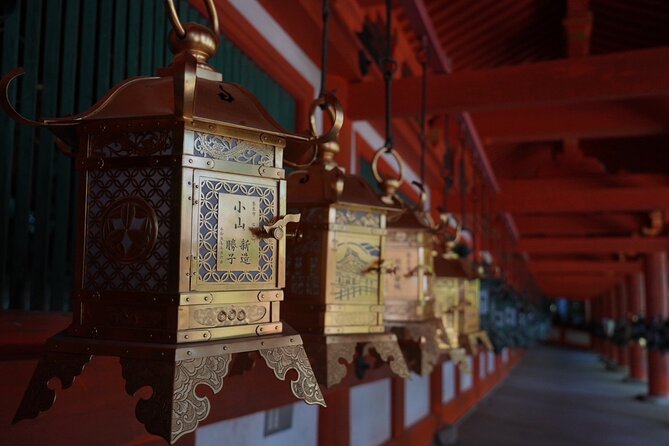
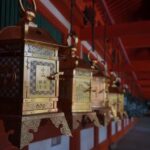
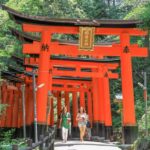
The shrine has about 3,000 stone and bronze lanterns donated by worshippers. These lanterns are one of the most memorable visual details of the visit, and your guide can help explain how religious practice, family devotion, and local tradition connect to the site.
You spend about one hour here, making it one of the more substantial stops. That extra time matters because the shrine is not just a quick photo stop. You can walk, look closely at the lanterns, and learn about the meaning of the place without being hurried from one gate to the next.
The forest setting adds to the atmosphere, especially in the morning. The route can feel peaceful and reflective, but it is still a walking route with uneven outdoor surfaces possible. Comfortable shoes are essential.
The tour does not include food or drinks, so do not count on a scheduled meal break. For many people, this is easy to manage during a four-and-a-half-hour morning, but you should plan ahead if you need regular snacks or water.
Nara Park and the deer that bow for rice crackers
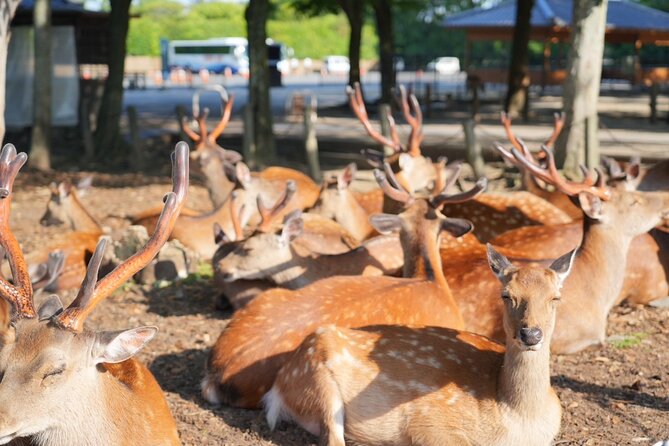
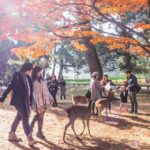
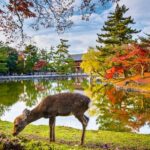
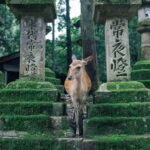
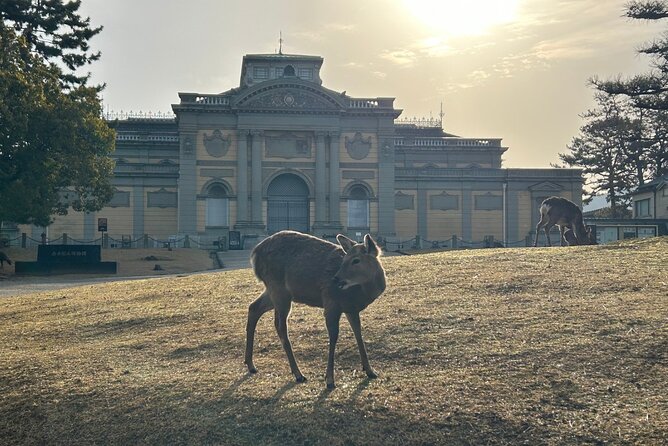
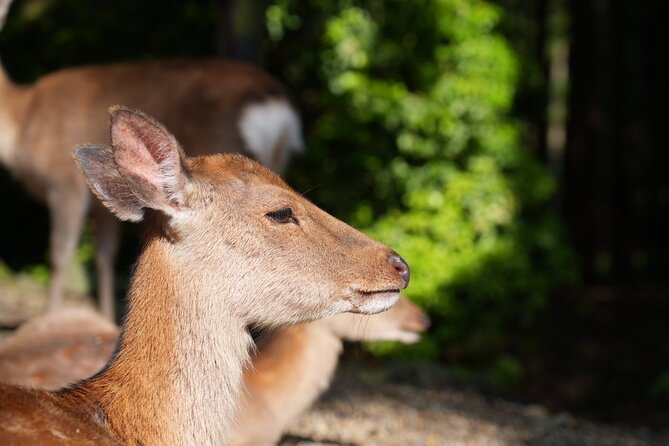
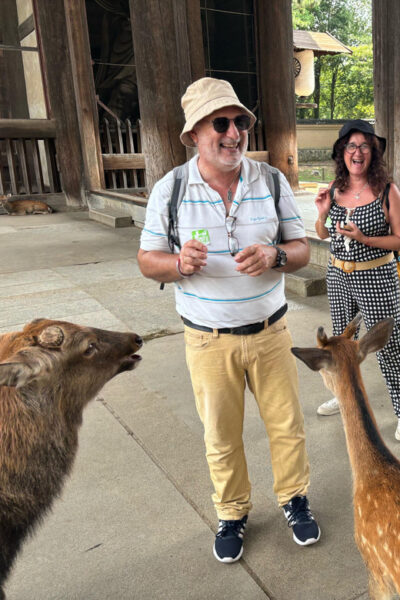
Nara Park is the part of the tour most likely to delight children, but adults often find it just as memorable. The park is home to thousands of free-roaming deer, considered sacred because of the belief that one of the four gods of Kasuga Shrine rode a deer to Nara.
You spend about 30 minutes in the park. That may sound brief, but the deer are woven into the route rather than treated as a separate attraction. You can see them as you move between the shrine and Todai-ji, which keeps the morning flowing.
You may buy special biscuits to feed the deer. Some deer bow for food, a charming behavior that quickly becomes part of the fun. Do keep your attention on the animals, though. They may look gentle, but one review from a private tour jokingly described the need for an experienced deer handler. The practical lesson is to follow your guide’s instructions and keep food under control.
Families should find this section especially rewarding. Guides such as Natsuho, Kevin, Futaba, and Momoka have been praised for making the experience accessible to children, answering questions, and keeping the pace comfortable.
The deer also give the tour a strong sense of place. You are not simply visiting an enclosure or watching a staged animal show. The deer move freely around an historic religious district, and that connection between wildlife, belief, and city life is one of Nara’s defining features.
Todai-ji and the Great Buddha
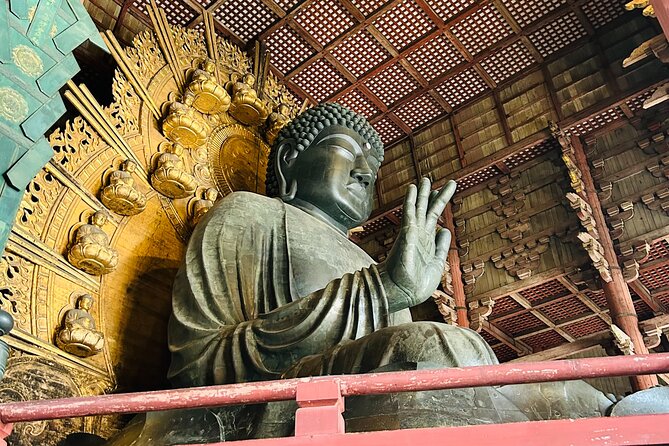
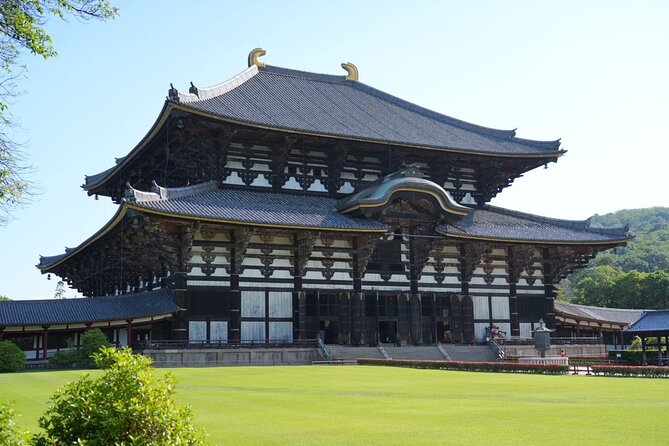
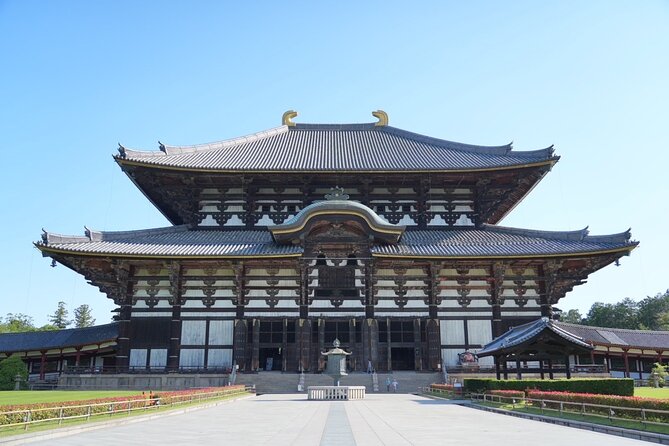
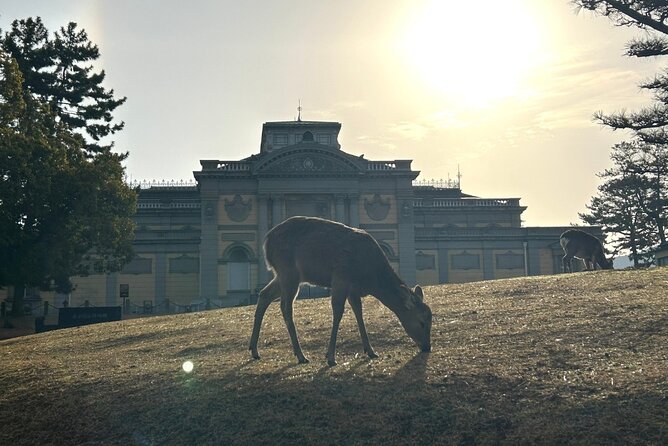
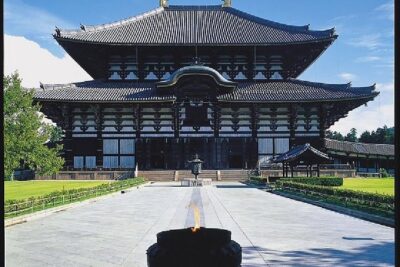
Todai-ji is the grand finale, and it is the stop that gives the morning its biggest visual impact. The temple is famous for its Great Buddha, described as the largest Buddha statue in Japan.
The main hall was, until recently, the world’s largest wooden building. That fact helps explain the scale of the site before you even focus on the statue. The building is enormous, but the Buddha inside gives the visit its emotional weight and provides a clear reason why Todai-ji is one of Nara’s essential sights.
You spend about one hour at Todai-ji. Unlike the other listed stops, entrance is not included. The fee is ¥800 per person, so add that cost to the tour price when comparing options.
The guide’s role is particularly useful here. Without context, the hall can become a quick visit for photographs. With explanations about the temple, the Buddha, architecture, and religious practice, you have a better chance of understanding why this place mattered to Nara and still matters today.
The visit can also feel busy by the time you reach it, even with an early start. That is one reason the schedule works well: you have already seen the shrine and park before the largest crowds arrive, and your guide can help you use the time efficiently.
What the guides add to the morning
The strongest part of this experience is not only the route. It is the human explanation along the way. The tour has featured guides including Momoka, Nana, Haruka, Futaba, Natsuho, Kevin, Shin, Koichiro, Koh, Ginko, Ayame, Toshiki, Itsuku, and Soichiro Toide.
The feedback points to a consistent style: clear explanations, patience with questions, local suggestions, and a friendly manner. Momoka has been praised for making architecture and history easy to follow, while Koichiro has been noted for answering questions about Japanese history, culture, religion, and folklore.
Koh has helped make train travel and meeting arrangements easier for visitors coming from Kyoto. Haruka has offered practical help with the return journey and restaurant suggestions. Futaba has used quizzes and questions to make the cultural side more interactive.
Of course, a shared tour cannot guarantee a particular guide unless the booking system allows you to select one. Still, the repeated strength of the guiding is important. Nara’s monuments are impressive on their own, but the connections between Buddhism, Shinto, the imperial capital, sacred deer, and the city’s architecture are much easier to grasp with a good guide.
The small-group format helps. With no more than 12 people, you are less likely to lose the guide in a crowd, and you have a better chance to ask about details that interest you. Some departures may be smaller still, with one group reported at only four people.
Walking, transport, and the practical details
You should be in moderate physical shape for this tour. About 10,000 steps are expected, spread across temple grounds, shrine paths, park paths, and city walking. The tour is not recommended for anyone over 75, and children under six cannot join.
The meeting point and ending point are both in Nara Park. That matters because your day does not end at Kyoto Station or Osaka Station. If you select the appropriate option, transportation from Kyoto or Osaka to Nara is included. The transportation fee for the return journey is not included, so you must arrange and pay for that yourself.
This setup works well if you want to remain in Nara after the tour. You can continue sightseeing, have lunch, or make your own way back when convenient. It is less convenient if you want a fully escorted round trip with no transport decisions.
The activity is near public transportation, but the exact departure arrangements depend on the option you book. Read the transport selection closely before paying. The basic price is listed at $61.02 per person, while transport from Kyoto or Osaka is included only when that option is selected.
The tour provides an English-speaking guide. Food and drinks are not included, and Todai-ji costs ¥800 per person. These are modest extra costs, but they should be part of your budget.
Is $61.02 good value?
At $61.02 per person, the tour is fairly priced for a guided half-day visit, especially if you want historical context and help managing the route. The ticket price is not paying for a long list of admissions, since most stops are free and Todai-ji costs extra. You are mainly paying for the guide, organization, small group, and the chance to see the main sights in a useful order.
The value is strongest for first-time visitors to Nara. A guide can point out why Kofuku-ji matters, explain the difference between a Buddhist temple and a Shinto shrine, describe the sacred status of the deer, and make Todai-ji more than a giant wooden hall with a statue inside.
It is also good value if you are traveling from Kyoto or Osaka and want to avoid figuring out every step of the morning yourself. Just remember that the return journey is your responsibility, and the transport inclusion depends on the booking option.
Independent visitors may prefer to explore at their own speed. If you want to linger for hours inside Todai-ji, spend a long time feeding deer, or add other Nara sights, the fixed four-and-a-half-hour route may feel limiting.
Who will enjoy this Nara morning walk?
I would recommend it to first-time visitors, families with children over six, and anyone who wants a clear introduction to Nara’s major sights. The deer are a natural hit with children, while the temples and shrine give adults plenty of cultural material to think about.
It also suits people who prefer a relaxed guided walk instead of a large coach excursion. The route covers a lot, but the guides have been praised for pacing the group, allowing photo stops, and making time for questions.
You should think twice if long walks are difficult for you, if you are over 75, or if you dislike early starts. It is also not the best match for visitors who need a guaranteed private tour or a return transfer to Kyoto or Osaka.
For photographers, the early hour is a useful advantage. The quieter paths and softer morning atmosphere can make the shrine, pagoda, deer, and temple grounds easier to appreciate. Sakura season can add another layer, and Koichiro has directed people toward good blossom photo spots.
Should you book the Nara Early Morning Tour?
Book it if you want to see Nara’s main sights in one well-paced morning, prefer smaller groups, and value explanations from a local English-speaking guide. The early timing is the main selling point, while the combination of sacred shrine, free-roaming deer, and the Great Buddha gives the route plenty of variety.
Skip it if you want a slow, unstructured day or if 10,000 steps sounds like too much. Before booking, check three things: whether your selected option includes transport from Kyoto or Osaka, how you will return from Nara, and the extra ¥800 Todai-ji admission.
For most first visits, I think the balance is right. You get the essential Nara experience, a guide who can connect the sights, and enough time left in the day to continue exploring on your own.
FAQ
How long does the Nara Early Morning Tour last?
The tour lasts approximately four hours and 30 minutes.
Where does the tour start and end?
The tour starts and ends at Nara Park in Nara, Japan.
Can I join from Kyoto or Osaka?
Yes. An option with transportation from Kyoto or Osaka to Nara is available. Transportation is included only if you select that option when booking.
Is transportation back to Kyoto or Osaka included?
No. The return transportation from Nara to Kyoto or Osaka is not included.
What sights are included?
The route includes Kofuku-ji Temple, Kasuga Grand Shrine, Nara Park, and Todai-ji Temple.
Is the Todai-ji entrance fee included?
No. Admission to Todai-ji costs ¥800 per person.
How large is the group?
The tour has a maximum of 12 people.
Is the tour suitable for young children or people with limited mobility?
Children under six cannot join, and the tour is not recommended for people over 75. You should also be prepared to walk about 10,000 steps and have a moderate level of physical fitness.
More Nara Day Trips in Nara
More tours in Nara we've reviewed
Nara Day Trips, compared.
 ★ 5.0World Heritage Kyoto & Nara Uji Authentic Matcha ExperienceFrom $129
 ★ 4.7Kyoto/Osaka: Nara, Fushimi Inari Taisha, Arashiyama Bus TourFrom $529 - 10 hours
 ★ 4.4Osaka/Kyoto: Arashiyama, Nara & Fushimi Inari Shrine w/LunchFrom $61
 ★ 4.5Kyoto and Nara Day Trip from KyotoFrom $194
 ★ 4.5Nara Afternoon Tour from Kyoto or OsakaFrom $102
 ★ 4.6From Kyoto: Nara Guided Morning TourFrom $774 hours