
Reviewed · NARA DAY TRIPS
Kyoto and Nara Day Trip from Kyoto
Kyoto’s polished Golden Pavilion and Nara’s enormous bronze Buddha make a striking pair, but the real value here is the amount of ground you cover in one day. I like the air-conditioned coach between sites and the chance to see both cities without piecing together trains, buses, and admission tickets. I also like the guides, including KC, Momo, Yuki, and others praised for clear English, humor, and careful timekeeping.
This is a fast-paced introduction, not a leisurely temple day. You will walk quite a bit, follow a fixed schedule, and have limited time to linger at Nara Park. The meeting point below Kyoto Station can take a few minutes to find, so arrive early.
In This Review
- Key points to know before booking
- Why this Kyoto and Nara combination works
- Starting below Kyoto Station at 8:20 a.m.
- Nijo Castle and the world of the shogun
- Kinkaku-ji and Kyoto’s famous golden reflection
- Kyoto Imperial Palace and its ceremonial setting
- Lunch choices and the Kyoto to Nara transfer
- Kasuga Grand Shrine and its stone lanterns
- Todai-ji and the enormous Great Buddha
- Nara Park and the deer encounter
- Who will get the most from this tour
- Getting the price and pace right
- Should you book this Kyoto and Nara day trip?
- FAQ
- How long is the Kyoto and Nara day trip?
- Where does the tour begin?
- Is lunch included?
- What happens if Kyoto Imperial Palace is closed?
- Can young children join the tour?
- Can I cancel for a refund?
Key points to know before booking
- Five major sights in one day: Visit Nijo Castle, Kinkaku-ji, Kyoto Imperial Palace, Kasuga Grand Shrine, and Todai-ji.
- The Great Buddha is the Nara highlight: Todai-ji’s huge wooden hall and bronze Buddha give the afternoon real weight.
- Guides make the difference: KC, Momo, Yuki, Yoshito, Tammy, Miyuki, Keicy, and Etsuko have all led this route, with strong praise for their English and presentation.
- Lunch is optional: Choose no lunch, a Western-style set menu, or an Indian thali. Special halal and gluten-free meals are not available.
- Expect a long day: The tour begins at 8:20 a.m. and ends around 6:30 p.m. at Kyoto Station.
- Watch your step and your shoes: You remove your shoes at Nijo Castle, and Nara’s deer can be pushy when food is involved.
Why this Kyoto and Nara combination works
Kyoto and Nara are often planned as separate days, yet this route gives you a useful first look at both. Kyoto supplies the grand residences, gardens, and imperial setting. Nara adds an older religious center, a giant Buddha, forest-edge shrine paths, and deer wandering through the park.
At $194.85 per person, the cost is not low for a day trip in Japan. Still, the price includes transportation, a licensed English guide, and entrance fees. If you value someone else handling the route and explaining what you are seeing, the math is reasonable. If you already know Kyoto well, speak Japanese, or prefer to set your own pace, public transport and individual admission tickets will give you more freedom for less money.
The group can reach 40 people, so this is not a private tour. That size helps keep the price below a private guide’s rate, but it also means you must return to the coach on time. The strongest guides are a major part of the experience. KC is praised for mixing humor with detailed explanations, while Momo is noted for keeping a large group moving without making the day feel harsh. Yuki, Yoshito, Tammy, Miyuki, Keicy, and Etsuko have also been singled out for warmth, clear explanations, and attention to the group.
A few more Kyoto tours and experiences worth a look
Starting below Kyoto Station at 8:20 a.m.
The meeting point is the JTB Sunrise Tours Desk in the basement of AVANTI, at 31 Higashikujō Nishisannōchō in Kyoto’s Minami Ward. That location is close to Kyoto Station, but the station is large and the exact basement desk is not always obvious to a first-time visitor. I would allow extra time to find it rather than arrive at 8:19 and start the day flustered.
The tour uses air-conditioned transport between the main stops. That matters in Kyoto, where summer heat can make a full day of temple visits tiring, and in winter, when waiting for local connections is less pleasant. Seats may not be assigned, so follow the guide’s instructions and do not count on choosing a particular place.
The road between Kyoto and Nara can be affected by traffic. The order of the stops and the arrival times may change, so treat the schedule as a framework rather than a minute-by-minute promise.
Nijo Castle and the world of the shogun
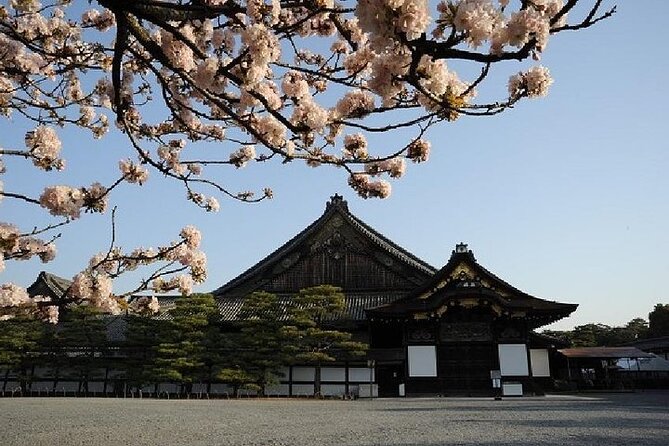
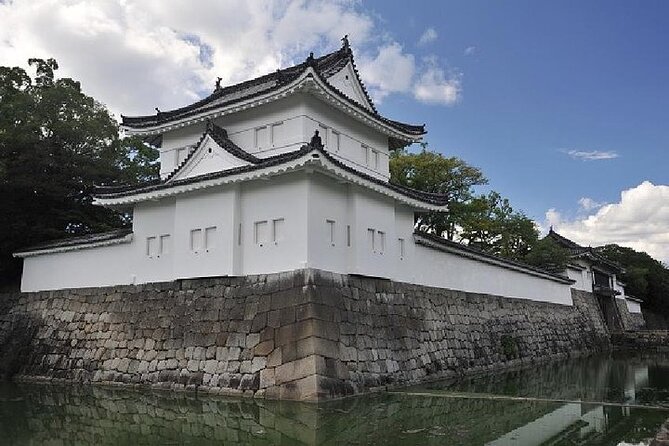
The first stop is Nijo Castle, built in 1603 and completed in its more elaborate form in 1626. It was made for the Tokugawa shogun when he came to Kyoto and also served as a political counterweight to the Imperial Palace.
You get about 50 minutes here, with admission included. The castle’s appeal comes from contrast. Its exterior has a formal, guarded look, while the interior is filled with elaborate carvings and decorative rooms. The floors are famous for their nightingale-like squeaks, designed to warn of unwanted visitors when people walked across them.
You must remove your shoes inside the castle. Wear socks without holes, and choose footwear you can take off and put back on easily. The time limit is enough for a good introduction, but not for a slow examination of every room and garden path.
The guide’s explanation is useful here because Nijo Castle is more than a pretty wooden building. It helps you understand the long contest between the imperial court and military rulers. The tour does not ask you to sort out that political story alone.
Nijo Castle is closed on Tuesdays in January, July, August, and December, as well as from December 26 to January 3. If a closure affects your date, the replacement is Ryoan-ji Temple. There is no refund for the substitute visit, so check the calendar if Nijo Castle is a must-see.
Kinkaku-ji and Kyoto’s famous golden reflection
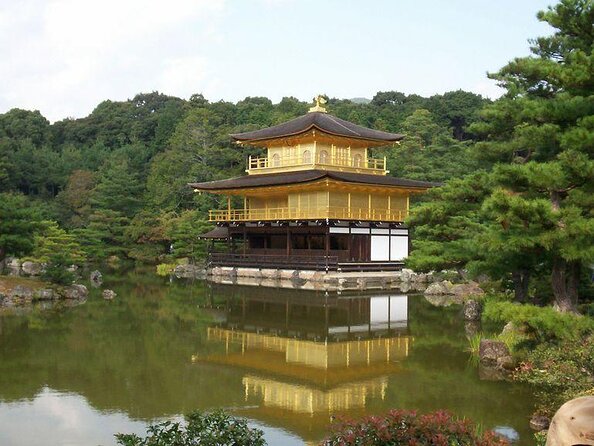
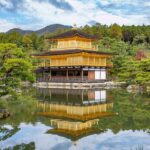
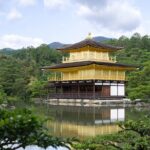
Kinkaku-ji, also called the Golden Pavilion, receives about 45 minutes. Admission is included, and the main view is the three-story pavilion covered in thin layers of gold leaf beside its pond.
This is Kyoto’s most instantly recognizable photo stop. The pavilion, water, trees, and garden paths create the image many people carry in their heads before arriving in Japan. The catch is that you see the building from the designated route rather than wandering wherever you like. Your time is enough for photographs and a look around, but it will feel short if you want to study the garden in detail.
I like this stop because the guide can explain how the building’s religious and political roles fit together. The setting is not just decoration. The pond and garden shape the view, and the pavilion is meant to be seen as part of that whole composition.
Try not to spend the entire 45 minutes facing the gold exterior. Look at the surrounding garden, the changing angles across the water, and the visitors moving through the grounds. Still, if photography is important to you, this is one place where a fixed route works well: you can get the classic view without losing half the day.
Kyoto Imperial Palace and its ceremonial setting
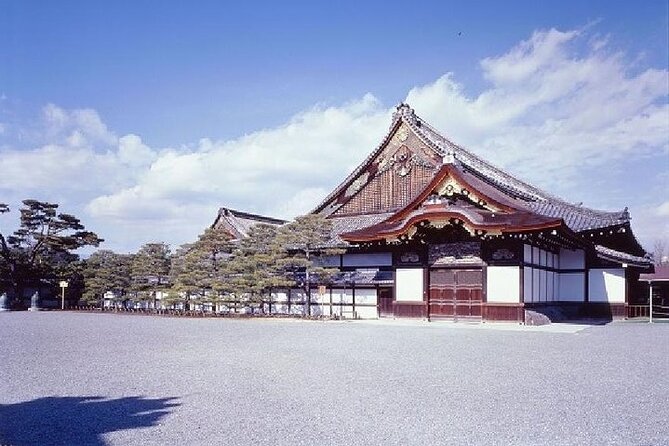
The Kyoto Imperial Palace stop lasts about 40 minutes. The grounds and buildings offer a different side of the city from Nijo Castle. This was the Emperor’s residence until roughly 150 years ago, and the Shishin-den hall was used for important state ceremonies.
The palace grounds are spacious and formal. You will not get the same decorative intensity as at Nijo Castle or the bright visual punch of Kinkaku-ji. Instead, this stop gives the morning a sense of scale and ceremony. It also helps explain why Kyoto remained the center of court life even while shoguns held military power.
The palace is closed on Mondays, on the following day when Monday is a public holiday, and on dates affected by an Imperial Household Agency event. In those cases, the tour visits Kitano Tenmangu Shrine. If the closure falls on the 25th, the replacement is Nishi Hongan-ji Temple.
That flexibility keeps the day running, but you should know that an alternate stop is not a reason for a lower price or a refund. If the Imperial Palace is your main reason for booking, confirm the date before paying.
A few more Kyoto tours and experiences worth a look


Lunch choices and the Kyoto to Nara transfer
Lunch depends on the option you select. The no-lunch version gives you free time to eat in the Kyoto Station area, while paid options include either a Western-style set menu or an Indian thali. The Western meal can be adjusted to vegetarian if you request it when booking. The Indian thali is vegetarian and includes several curries, vegetable pakora, yogurt, naan or roti, rice, salad, and a non-alcoholic drink.
You cannot switch between the Western and Indian meals on the day. Halal, gluten-free, and other special meal requests are not available, so check the menu carefully if you have allergies or strict dietary needs. A note that someone will bring their own food may affect how the meal is handled, so ask the operator about arrangements before the tour date.
The bus ride to Nara is useful recovery time after the Kyoto stops. A good guide can add context on the way, and guides such as Momo and Yuki have been praised for continuing the cultural explanation between sites rather than treating the transfer as dead time.
If you choose no lunch, do not assume the bus will wait while you find food after the morning sightseeing. The no-lunch option is tied to free time in the Kyoto Station area, so plan that part carefully.
Kasuga Grand Shrine and its stone lanterns
Kasuga Grand Shrine is scheduled for about an hour, with admission included. This Nara Period shrine is part of the UNESCO World Heritage area, and its atmosphere differs sharply from Kyoto’s palace and castle settings.
The shrine is known for more than 3,000 lanterns lining its grounds and interior areas. The stone lanterns along the approach give the walk a distinct feel, while the bronze lanterns inside create a darker, more enclosed mood. Nara’s deer are traditionally regarded as messengers of the shrine, tying the religious site to the animals you will see throughout the park.
From January 2025, the route is also intended to include the Main Sanctuary special visit area. Operational limits or events can prevent entry, in which case the visit changes to the Kasuga Taisha Museum or Todaiji Museum. Again, the substitute does not bring a partial refund.
The shrine stop requires walking, and the route can feel long late in the day. Comfortable shoes matter more here than stylish ones. You may also encounter deer near the approach, so keep food and paper items secure.
Todai-ji and the enormous Great Buddha
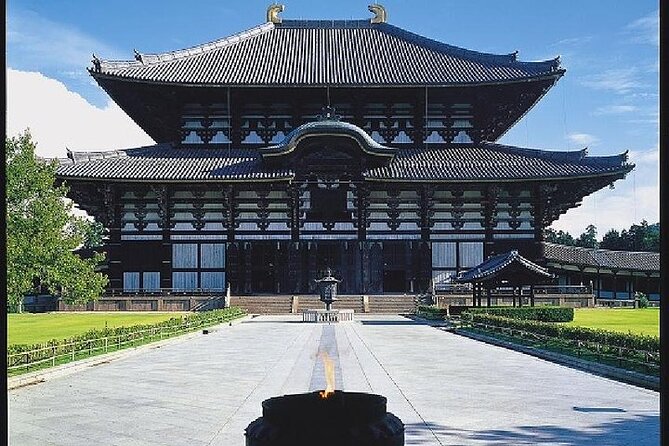
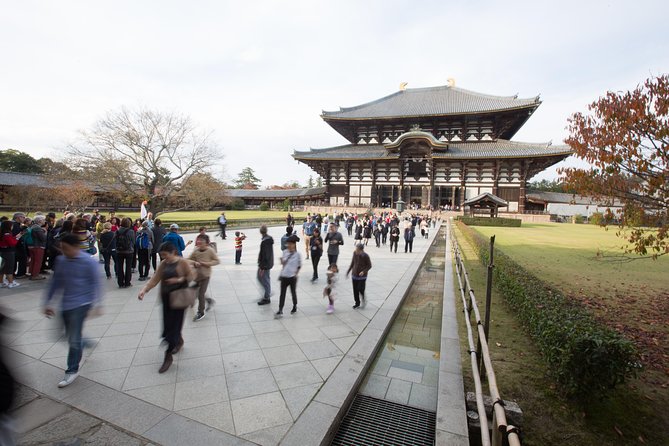
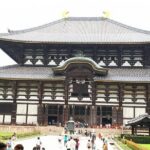
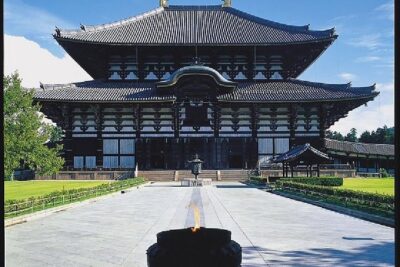
Todai-ji is the afternoon centerpiece. You have about 1 hour and 10 minutes, and admission is included. The temple complex is associated with the Nara Period and contains the Great Buddha Hall, one of the world’s largest wooden structures.
Inside, the bronze Great Buddha gives the visit its force. The scale is hard to appreciate from a photograph. The huge hall, the statue, and the steady flow of people create a sense of a national religious project built on a massive scale.
The guide’s explanation adds needed context. Without it, you may see a large statue and an impressive wooden building but miss why Todai-ji became such a powerful symbol of Nara. Guides including KC, Yuki, and Yoshito have been praised for explaining the temples, shrines, and changing systems of Japanese rule in accessible English.
The schedule gives you enough time to enter the hall, see the Buddha, and look around the complex. It does not give you an afternoon for every side building. If Todai-ji is your main interest, you may wish the tour allowed more time here, but that would come at the expense of Kyoto’s morning stops.
Nara Park and the deer encounter
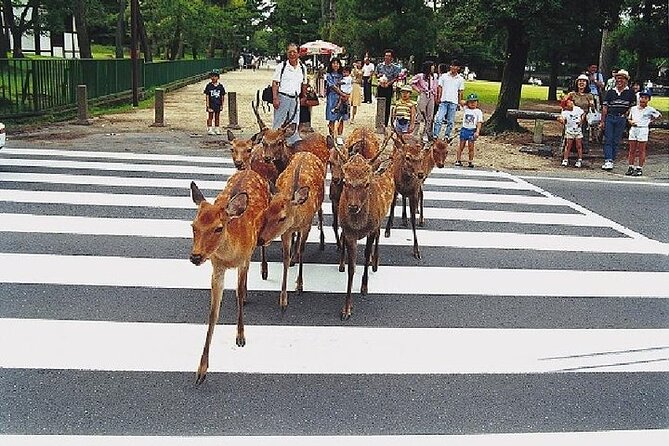
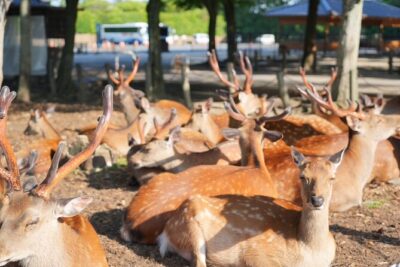
Nara Park brings a dose of nature to a day otherwise filled with architecture. The deer roam freely, and you can see them near the shrine and temple grounds. They are a memorable part of Nara, but they are not all gentle photo props.
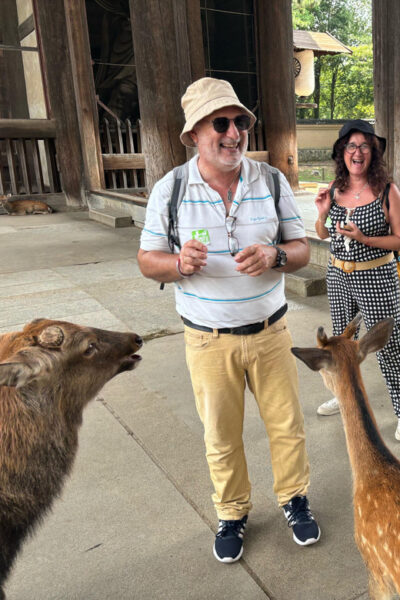
If you feed them, keep your attention on the animal in front of you. Some can become aggressive when they expect food, especially if you have biscuits or other treats visible. Follow the guide’s instructions, keep your belongings under control, and do not let children wander off from the group.
The practical complaint about this part of the day is limited free time. Nara has enough to occupy several hours, yet this tour gives you a guided look rather than an open-ended visit. You may also face a fairly long walk to and from the bus area, which is tiring after the morning’s sightseeing.
Who will get the most from this tour
I would choose this trip for a first visit to Kyoto and Nara, especially if I had only one full day for both cities. It is also a good fit if you want English explanations, included admissions, and a driver who handles the transfers.
It suits you if you can walk for much of the day and keep track of a meeting time. The pace is less suitable if you need long rests, want to spend hours photographing one garden, or prefer to decide lunch and departure times as you go.
Families can join, but children up to age five may ride free without a bus seat or lunch. If you need a seat or a meal for a child in that age group, book the child rate. Anyone under 18 needs written parental permission, and anyone under 15 or not yet in middle school must be accompanied by a parent or guardian.
Service animals are allowed, the tour is near public transportation, and most people can take part. The group size can reach 40, so people with concerns about illness on a shared bus should consider that setting carefully. One very poor experience involved sick passengers and dissatisfaction with how the concern was handled, a reminder that group transport always carries this limitation.
Getting the price and pace right
At $194.85, I see the strongest value in the combination of transport and guiding. Five admission-based sights, two cities, and a full day of logistics would be difficult to organize smoothly on your own, especially if you are new to Japan.
The price feels less attractive if you plan to return to Kyoto, because you will only get a brief look at each place. Independent visits let you spend a whole morning at Nijo Castle or Todai-ji, eat exactly what you want, and leave Nara when you please.
The tour ends at Kyoto Station around 6:30 p.m. There is no hotel drop-off, so you handle the final trip back to your accommodation. That is simple if you are staying near the station or using Kyoto’s transport network, but it is worth allowing energy and time for the journey after a long day.
Free cancellation is available up to 24 hours before the start time. Changes or cancellations inside that window are not accepted for a refund.
Should you book this Kyoto and Nara day trip?
Book it if you want a strong first-day survey of both cities and prefer a guide to explain the religious and political background. The route covers the sights most first-time visitors want, and the air-conditioned coach saves effort.
Skip it if you already know Kyoto, dislike fixed schedules, or want unhurried time with the deer and temples. For everyone else, the tour is a practical trade: less freedom and more walking in exchange for seeing a great deal in one carefully managed day.
FAQ
How long is the Kyoto and Nara day trip?
The experience lasts about 10 to 11 hours. It starts at 8:20 a.m. and ends at Kyoto Station around 6:30 p.m. for the Kyoto start and end option.
Where does the tour begin?
It begins at the JTB Sunrise Tours Desk in the basement of AVANTI, near Kyoto Station, at 31 Higashikujō Nishisannōchō in Kyoto’s Minami Ward.
Is lunch included?
Lunch is included only if you select a lunch option when booking. You can choose a Western-style set menu, an Indian thali, or no lunch. The Indian thali is vegetarian, and vegetarian requests for the Western meal must be made at booking.
What happens if Kyoto Imperial Palace is closed?
The tour visits Kitano Tenmangu Shrine instead, except when the closure falls on the 25th, when it visits Nishi Hongan-ji Temple. No refund is provided for an alternative destination.
Can young children join the tour?
Children up to age five may join free without a bus seat or lunch. If they need a seat or lunch, book the child rate. Participants under 18 need written parental permission, and those under 15 or not yet enrolled in middle school must travel with a parent or guardian.
Can I cancel for a refund?
You can cancel up to 24 hours before the experience begins for a full refund. Cancellations or changes made less than 24 hours before the start time are not accepted.
More 1-Day Tours in Kyoto
More Nara Day Trips in Kyoto

More tours in Kyoto we've reviewed





Nara Day Trips, compared.
 ★ 5.0World Heritage Kyoto & Nara Uji Authentic Matcha ExperienceFrom $129
 ★ 4.7Kyoto/Osaka: Nara, Fushimi Inari Taisha, Arashiyama Bus TourFrom $529 - 10 hours
 ★ 4.4Osaka/Kyoto: Arashiyama, Nara & Fushimi Inari Shrine w/LunchFrom $61
 ★ 5.0Nara Early Morning Tour (Kyoto or Osaka Departure Available)From $61
 ★ 4.5Nara Afternoon Tour from Kyoto or OsakaFrom $102
 ★ 4.6From Kyoto: Nara Guided Morning TourFrom $774 hours