
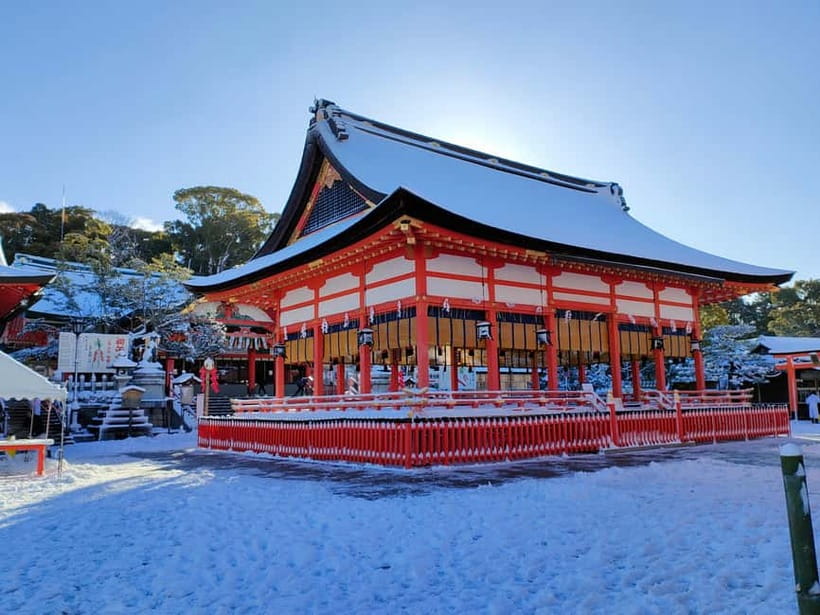
Reviewed · MORNING
Kyoto: Early Morning Walking Tour with Local Guide
Kyoto is at its best before the tour buses arrive, and this six-hour private walk makes that early start count. You begin at Kiyomizu-dera, pass through old lanes and temple grounds, then finish beneath the famous red torii gates of Fushimi Inari.
I like the calm morning setting and the chance to see several major sights without spending the whole day on buses. I also like the local focus: guide Michele can explain Japanese customs, everyday life, and lesser-visited corners, not just point out buildings. The main consideration is the price, $316 per group of up to 10, plus the Kiyomizu-dera entrance fee and your own food and transport costs.
In This Review
- Key points at a glance
- Why the early start changes Kyoto
- Kiyomizu-dera and the Koyasunoto Pagoda
- Sannen-zaka and Ninen-zaka on foot
- Yasaka Pagoda and Yasaka Shrine
- Chion-in’s grand temple architecture
- Gion before the district wakes up
- The 15-minute train ride to Fushimi Inari
- Fushimi Inari and the red torii gates
- What the private format is worth at $316
- Who should book this Kyoto walk
- Should you book it?
- FAQ
- How long does the Kyoto walking tour last?
- What is the price of the private tour?
- Where does the tour start?
- Can I request a hotel pickup?
- Which languages does the guide speak?
- Is the tour private?
- Which major Kyoto sights are included?
- Is the Kiyomizu-dera entrance fee included?
- Is food included?
- Where does the tour end?
- What should I bring?
- Can I cancel for a refund?
Key points at a glance
- Start at Kiyomizu-dera before the crowds: The early hour gives you cooler temperatures, quieter temple grounds, and open views across Kyoto.
- Walk Kyoto’s old streets: Sannen-zaka, Ninen-zaka, Gion, and the area around Yasaka Pagoda show off the city’s traditional wooden architecture.
- Cover several major sights in one morning: The route links Kiyomizu-dera, Chion-in, Yasaka Shrine, and Fushimi Inari.
- Finish at the red torii gates: Fushimi Inari provides a dramatic final stop, with easy access to trains afterward.
- Book a private group: The fixed group price can work well for families or larger parties of up to 10 people.
- Ask for flexible interpretation: Michele has adjusted routes for families and can add quieter temple corners and local stories when time allows.
Why the early start changes Kyoto
Kyoto’s famous sights can feel very different at 7 or 8 in the morning than they do later in the day. At Kiyomizu-dera, you get cooler air, less foot traffic, and more room to pause at viewpoints without being pushed along by a crowd.
That timing also helps with the walking. The route includes temple approaches, old lanes, stairs, and several hours on your feet. Starting early makes the physical side easier, especially during Kyoto’s warmer months. Bring water, wear comfortable shoes, and use sunscreen. A camera is useful, but you will want to keep one hand free for steps and railings.
The exact starting time depends on availability, so check before booking. The meeting point is the FamilyMart in front of the Higashiyama Fire Station at 4 Chome-182-18 Kiyomizu. You can also request a meeting point at your Kyoto hotel, which is handy if you are traveling with children or carrying luggage.
Other walking tours we've reviewed in Kyoto

Kiyomizu-dera and the Koyasunoto Pagoda
The tour opens with about an hour around Kiyomizu-dera. This is a strong choice for the first stop because it gives you an immediate sense of Kyoto’s setting, with temple buildings high on the eastern hills and broad views over the city.
Kiyomizu-dera is also one of Kyoto’s busiest sights, so the early visit matters. You can take in the architecture and viewpoints at a calmer pace, then continue toward the Koyasunoto Pagoda area. The route includes a Kiyomizu-dera entrance charge of about $3, which is not included in the tour price.
Expect a mix of temple grounds and walking streets rather than a single indoor museum-style visit. If you want plenty of time for photographs, tell Michele at the start. The tour is private, so the pace can be adjusted, though there are several major stops still ahead.
Sannen-zaka and Ninen-zaka on foot
From Kiyomizu-dera, the walk continues through Sannen-zaka and Ninen-zaka. These sloping lanes are among the most recognizable parts of old Kyoto, with traditional buildings, small shops, and carefully preserved street views.
Their charm is strongest in the morning. Later, these narrow streets can become difficult places to stop and look around. Early in the day, you have a better chance to appreciate the rooflines, stone paving, and small details without treating the walk as a slow-moving queue.
These lanes are also where good shoes matter. The route is not a flat city stroll, and the stone streets can be tiring after the first temple visit. You may want to save shopping for another visit, since this tour is built around moving through the historic districts and reaching several temples and shrines.
Yasaka Pagoda and Yasaka Shrine
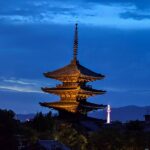
The five-story Yasaka Pagoda is one of the walk’s most photogenic landmarks. It rises above the nearby streets and gives this part of Higashiyama its classic Kyoto look. The tour focuses on seeing the pagoda from the surrounding area rather than promising an interior visit.
Yasaka Shrine follows with about 30 minutes of sightseeing. Its broad grounds and distinctive shrine details provide a useful contrast to the temple architecture at Kiyomizu-dera. This is a good place to ask Michele about the difference between Buddhist temples and Shinto shrines, as well as the rituals connected with each.
The shrine is described as a lively part of the route, but early morning keeps the atmosphere more measured. You will not get hours here, so think of Yasaka Shrine as a focused stop within a larger walking circuit. If you want a long, unhurried visit at every location, this six-hour route may feel full.
Chion-in’s grand temple architecture
Chion-in receives about 30 minutes, enough for a look at its impressive approach and major architectural features. The temple offers a different mood from the shop-lined lanes and open shrine grounds earlier in the walk.
I like this stop because it breaks up the route with a quieter setting. It gives you time to notice scale, gates, steps, and roof construction rather than simply collecting another famous name. Michele can also add context about religious practice and Japanese daily life, which gives the buildings more meaning.
Thirty minutes is a short visit, particularly if you are taking photographs or stopping to ask questions. The strength of the tour is its range, not extended study at one temple. You see more of eastern Kyoto in one morning, but you give up the freedom to explore each place at length.
Other guided tours in Kyoto


Gion before the district wakes up
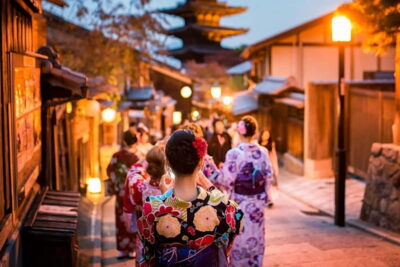
The tour allows about an hour in Gion, Kyoto’s best-known geisha district. The morning is an appropriate time to walk here because the narrow streets are quieter and the traditional facades are easier to view without the evening crowds.
Gion requires respectful behavior. It is a working neighborhood, not a stage set, and the tour’s early timing encourages looking rather than chasing photographs. You may see the lanes and buildings associated with the district, but you should not expect a guaranteed geisha sighting. The supplied details promise a visit to the district, not a performance or meeting.
This is also one of the places where a local guide can add real value. Michele has spoken about Japanese society, daily routines, and local customs, and he has taken groups through less visited corners of Kyoto. Those details can make a short walk through Gion more useful than simply taking pictures of its best-known street.
The 15-minute train ride to Fushimi Inari
After the central and eastern Kyoto stops, the route uses a local train for about 15 minutes to reach Fushimi Inari Taisha. That change of pace is practical. It avoids turning the day into one long city walk and connects two major areas that are not next door to each other.
Check the transport details when you reserve. The tour information says transportation to the meeting point and transportation from the end point are not included. A local train appears within the route, but the fare is not separately explained, so it is sensible to ask whether you should carry cash or a transit card for that ride.
The train is not the focus, but it helps the tour work as a one-way route. You start near Kiyomizu-dera and finish at Fushimi Inari, rather than doubling back to the beginning. That saves time and leaves you near train connections at the end.
Fushimi Inari and the red torii gates
Fushimi Inari is the final major stop, with about an hour for sightseeing. Its long rows of red torii gates are among Kyoto’s most familiar sights, and seeing them in person gives you a strong finish after the older streets and large temple grounds earlier in the morning.
One hour lets you enter the torii-lined route and get a good sense of the shrine, but it is not enough to walk the entire mountain path. The experience is best if you treat this as an introduction and decide later if you want to return for a longer climb.
Ending here is convenient. You can continue exploring on your own or use the nearby train access to reach another part of Kyoto. The guide does not take you back to your hotel, so plan your onward route before you set out.
What the private format is worth at $316
The price is $316 for a private group of up to 10 people. For one or two people, that is a substantial cost compared with a shared walking tour. For a family or group of friends, the per-person price becomes more reasonable, especially if you value a private pace and the ability to request a hotel meeting point.
The price includes the guided walking service and visits to the listed areas. It does not include food, drinks, the roughly $3 Kiyomizu-dera entrance fee, transportation to the start, or transportation after Fushimi Inari. Set aside a little extra for those items.
For me, the best value comes from the route design and the guide’s flexibility. You cover several major Kyoto sights, avoid returning to the same neighborhood, and have a guide who can explain customs and adjust the walk for a family. The value is weaker if you prefer to linger at one temple, shop slowly, or explore independently.
Two Italian-speaking participants especially valued Michele’s flexibility and his ability to explain Japanese rites and everyday life. One family found the route workable with children. That makes this a promising option for families, provided everyone is ready for a long morning of walking.
Who should book this Kyoto walk
I would choose this tour if you have limited time in Kyoto and want a clear introduction to the city’s eastern sights. It is also a good fit if you prefer a private group, want to ask plenty of questions, or would like help understanding the difference between temples, shrines, and local customs.
Families may appreciate the adjustable pace and hotel meeting option. The route gives children a succession of visually different stops, including pagodas, shrine grounds, old streets, a train ride, and red torii gates. Still, it is six hours, so comfortable shoes and water are not optional extras.
I would be more cautious if your priority is shopping in Sannen-zaka and Ninen-zaka, a long visit inside each temple, or a full hike through Fushimi Inari. The schedule covers a lot, but the sightseeing periods range from 30 minutes to one hour. You are sampling Kyoto’s highlights rather than studying every site in depth.
The tour is offered in English and Italian. Cancellation is free up to 24 hours before the start, and you can reserve now and pay later. Those terms help if your Kyoto plans are still changing, but the main decision remains the route: early start, steady walking, several famous sights, and a one-way finish at Fushimi Inari.
Should you book it?
Book this experience if you want to see Kyoto’s best-known eastern sights before the crowds and prefer a private guide who can explain local life along the way. Michele’s flexibility is especially useful for families and Italian-speaking groups.
Skip it if you want a slow day at one temple or dislike early starts and extended walking. At $316, the tour makes the most sense for a group of several people who value a private route, local explanation, and efficient travel between Kiyomizu-dera and Fushimi Inari.
FAQ
How long does the Kyoto walking tour last?
The tour lasts six hours.
What is the price of the private tour?
The price is $316 per group of up to 10 people.
Where does the tour start?
You can meet at the FamilyMart in front of Higashiyama Fire Station at 4 Chome-182-18 Kiyomizu, Higashiyama Ward, Kyoto, 605-0862.
Can I request a hotel pickup?
Yes. You can request a different meeting location, such as your hotel in Kyoto city.
Which languages does the guide speak?
The tour is offered in English and Italian.
Is the tour private?
Yes. It is a private group experience for up to 10 people.
Which major Kyoto sights are included?
The route includes Kiyomizu-dera, Sannen-zaka, Ninen-zaka, Yasaka Pagoda, Yasaka Shrine, Chion-in, Gion, and Fushimi Inari Shrine.
Is the Kiyomizu-dera entrance fee included?
No. The Kiyomizu-dera entrance fee is about $3 and is paid separately.
Is food included?
No. Food and drinks are not included.
Where does the tour end?
The tour ends at Fushimi Inari Shrine, which has easy access to trains. Transportation from the end point is not included.
What should I bring?
Bring comfortable shoes, water, sunscreen, and a camera.
Can I cancel for a refund?
Yes. You can cancel up to 24 hours in advance for a full refund.
More Morning in Kyoto

More Guided Tours in Kyoto
More Walking Tours in Kyoto
More tours in Kyoto we've reviewed










Morning, compared.
 ★ 5.0Kyoto Early Morning Tour with English-Speaking GuideFrom $68
★ 4.9Kyoto: Early Morning Tour with English-Speaking GuideFrom $1015h 30m
★ 5.0Kyoto Early Morning Tour with English-Speaking GuideFrom $68
★ 4.9Kyoto: Early Morning Tour with English-Speaking GuideFrom $1015h 30m
 ★ 5.0Nara Early Morning Tour (Kyoto or Osaka Departure Available)From $61
 ★ 4.6From Kyoto: Nara Guided Morning TourFrom $774 hours
 ★ 4.6Kyoto: Gion Night or Morning Walking Tour with Local SnacksFrom $46
 ★ 4.0Kyoto Morning Tour from Kyoto or OsakaFrom $87