
Reviewed · OSAKA & HIROSHIMA DEPARTURES
Shore excursion: Full Day Private Kyoto Tour From Osaka/Kobe Port
Kyoto’s big sights are spread across the city, and this private shore excursion tackles the hard part first: getting from your ship to Arashiyama, Kinkaku-ji, Nishiki Market, Gion, and Fushimi Inari in one long day. I like the door-to-door vehicle service and the chance to shape the day around your group, especially with guides such as Ahmed, Keiko, Ayako, and Kingo.
I also like the mix of famous sights and local flavor. You get the Golden Pavilion and red torii gates, but you can also stop for okonomiyaki, ramen, a tea ceremony, or vegan food if you arrange it with the guide. The main catch is serious: the advertised $490 price does not include transportation, which can add JPY 120,000 or JPY 140,000 per booking. Confirm every charge before you sail.
In This Review
- Key points to know before booking
- Why this Kyoto shore trip works
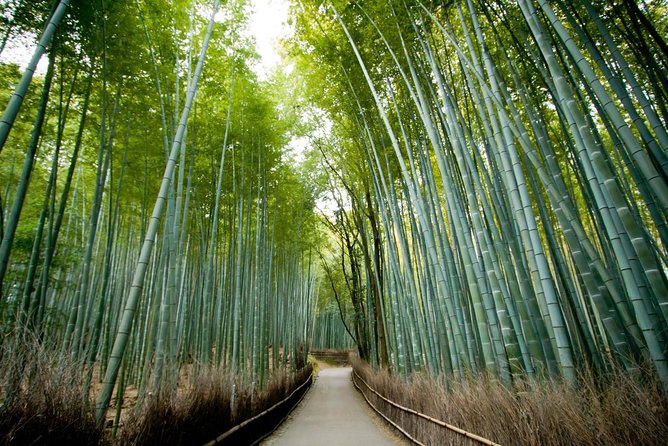
- Arashiyama Bamboo Grove begins the long day
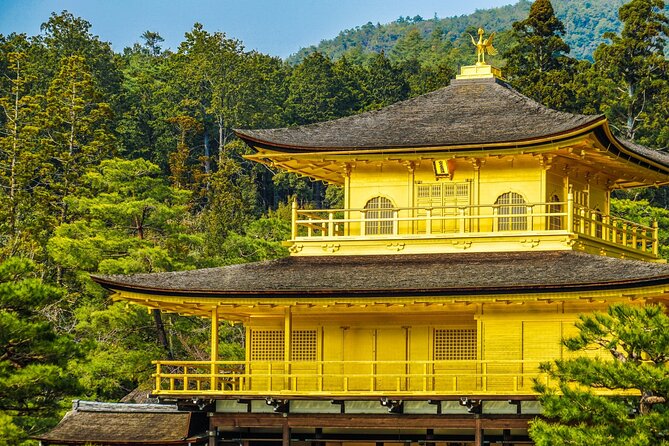
- Kinkaku-ji gives you Kyoto’s classic picture
- Nishiki Market is the best place to pause for lunch
- Gion and Pontocho show Kyoto’s traditional side
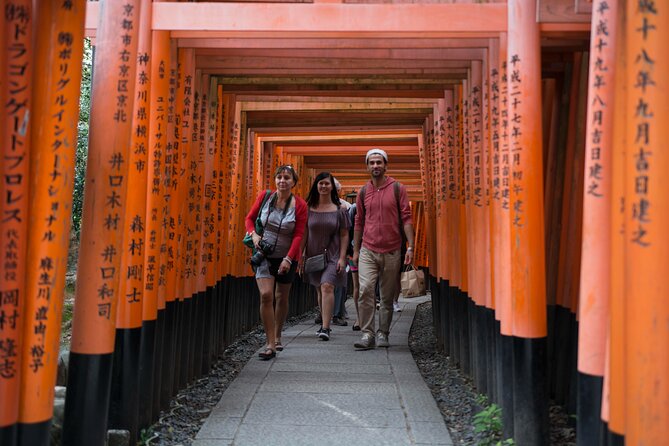
- Fushimi Inari ends the sightseeing with red torii gates
- Guides are the heart of the experience
- The extra transportation fee changes the value
- What the day feels like in practice
- Practical details before you commit
- Should you book this Kyoto day?
- FAQ
- How long does the Kyoto shore excursion last?
- Is transportation included in the $490 price?
- How many people can join the private tour?
- Which Kyoto sights are included?
- Is the Kinkaku-ji entrance fee included?
- What happens if I need to cancel?
Key points to know before booking
- Five major Kyoto areas in one day: Arashiyama, Kinkaku-ji, Nishiki Market, Gion, and Fushimi Inari give you a broad first look at the city.
- Private touring for up to 12 people: Your group travels together rather than following a fixed public-tour group.
- Transportation costs extra: The car or van is priced separately at JPY 120,000 for up to five people or JPY 140,000 for larger groups, according to the supplied details.
- Guides can adjust the plan: Ahmed, Keiko, Ayako, and other guides have arranged changes, food stops, and added cultural activities.
- Cruise timing matters: Traffic, late ship arrival, crowds, and the long drive from the port can make this a brisk day.
- Best for first-time Kyoto visitors: You see the headline sights efficiently, but you will not have much time for a slow, quiet exploration of each one.
Why this Kyoto shore trip works
Kyoto is not a compact sightseeing town. Arashiyama lies west of the city, Fushimi Inari is in the southeast, and Gion and Nishiki Market sit closer to central Kyoto. From Kobe or Osaka port, you also face a long road transfer before the sightseeing begins.
That makes a private vehicle useful. You are not spending the day figuring out train connections, changing lines, or walking back to a station after a temple visit. The driver can bring you close to the sights, wait while you explore, and return you to the ship.
The private format also helps if your group has mixed needs. Some people may want photos, some may need a slower pace, and some may care more about food than temples. Several guides have adjusted the route around those requests. One group added a Japanese tea ceremony, while another arranged a memorable small restaurant serving okonomiyaki.
The tradeoff is value. The initial price looks modest for a full-day private tour, but the separate vehicle fee changes the math. For five people, JPY 120,000 divided evenly is JPY 24,000 per person before the $490 tour charge. For eight people, JPY 140,000 divided evenly is JPY 17,500 each for transportation. A large group can make the cost easier to justify. A couple or small family may find it expensive.
If you're still narrowing it down, here are other tours in Kobe we've reviewed.
Arashiyama Bamboo Grove begins the long day
After pickup at the port, the drive to western Kyoto takes about two hours. That is a large slice of a 10-hour excursion, but Arashiyama is one of Kyoto’s most recognizable sights and a sensible first stop.
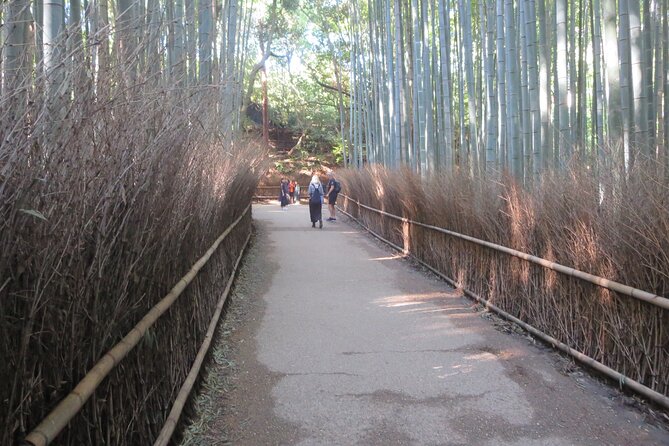
The Bamboo Grove is a short, memorable walk beneath tall green stalks. The path is photogenic, but do not expect total silence or solitude. This is one of Kyoto’s famous stops, so your guide will need to help you keep moving if the day is to stay on schedule.
The supplied schedule places Arashiyama around 10:00, with the broader stop description allowing up to three hours in the area. The overview then moves to Kinkaku-ji at 11:30. Those timings do not match perfectly, so ask the operator which version applies to your sailing date.
You may have time for more than the bamboo path if traffic and ship departure time allow. One past route included Tenryuji Temple, and other customized days added additional temples. Do not assume those extras are part of the standard plan. Ask before booking if Arashiyama is your main priority.
Kinkaku-ji gives you Kyoto’s classic picture
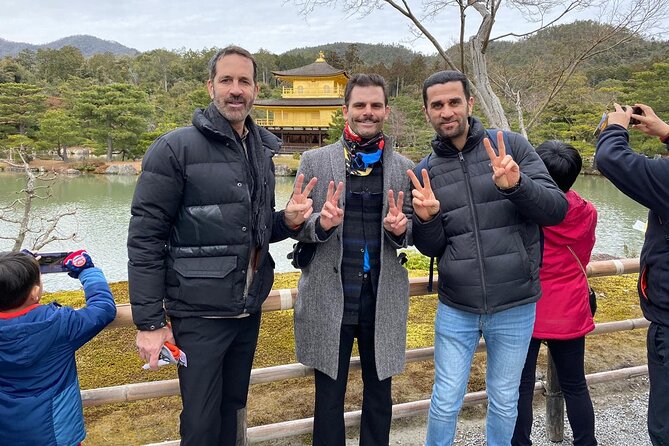
Kinkaku-ji, the Golden Pavilion, is the visual centerpiece of the day. The temple shines beside a pond, with carefully arranged gardens around it. Even with a short visit, the setting gives you a strong sense of Kyoto’s old courtly style.
The planned visit lasts about one hour. That is enough to walk the visitor route and take photographs, but it is not a leisurely garden visit. Crowds can slow you down, especially during cherry blossom season, when the roads and major sights become far more difficult to manage.
The supplied information is inconsistent about the entrance fee. One section says Kinkaku-ji admission is included, while another says the entrance fee is not included. Treat this as a point to settle in writing before the tour. Do not rely on the headline price until you know exactly what admission, transport, and guide services cover.
Your guide’s role matters here. Keiko has been praised for explaining the stories behind the places, while other guides have offered practical help with shrine and temple customs. If you want more than a quick photo stop, tell your guide at the beginning that you prefer cultural explanation over squeezing in another sight.
Nishiki Market is the best place to pause for lunch
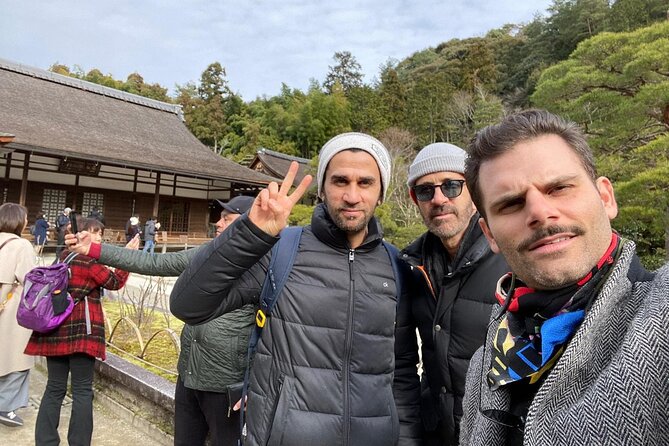
Nishiki Market is Kyoto’s Kitchen, a long shopping street lined with more than 100 vendors and food shops. It is a useful change of pace after two temples. Instead of looking at another formal garden, you can browse food stalls and choose lunch based on what catches your eye.
The planned stop is one hour, including the lunch break. That is enough for a quick meal and a walk through part of the market. It is not enough for a relaxed food tour, so decide early whether you want to eat quickly or shorten another sightseeing stop.
Food needs careful planning in a private tour. Guides have helped arrange ramen, okonomiyaki, and vegan meals, but you should share dietary needs before the day begins. One group specifically praised the driver and guide for accommodating vegan requirements.
Nishiki can feel crowded, and the narrow market street is not ideal for a large group that wants to move together at a slow pace. Stay close to your guide and agree on a meeting point. If you are eager to sample several foods, ask for extra time here and cut a less important stop.
Gion and Pontocho show Kyoto’s traditional side
The route then moves to Pontocho and Gion, Kyoto’s best-known traditional entertainment districts. Narrow lanes, wooden machiya houses, teahouses, and old streets give this part of the city a very different mood from Arashiyama’s open paths and Kinkaku-ji’s formal grounds.
The planned Gion visit lasts about one hour. You can walk through the district, see Hanamikoji Street and Yasaka Shrine if the route is adjusted, and look for details in the older buildings. The area is especially useful for understanding how Kyoto’s traditional neighborhoods still function as living city districts.
Be respectful here. Gion is not a stage set, and people live and work in these streets. Follow local signs and your guide’s advice about photography. A good guide can help you notice architectural details and customs without turning the visit into a hunt for geisha photographs.
Several guides have added or substituted sights when time allowed. One short cruise-day route included Chion-in Temple, Yasaka Shrine, Hanamikoji Street, and Gion. Another included Nijo Castle and additional temples. These examples show the value of a private route, but they also show why you should agree on priorities before departure.
Other private tours in Kobe
Fushimi Inari ends the sightseeing with red torii gates
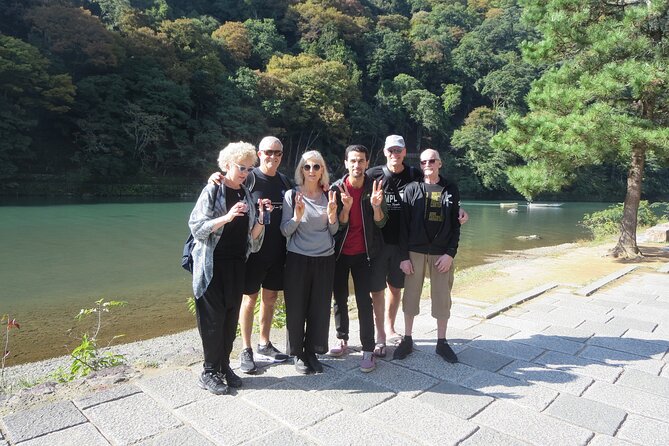
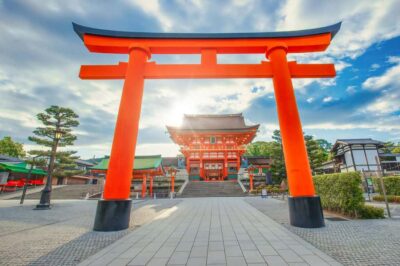
Fushimi Inari-taisha is famous for its long corridors of orange-red torii gates climbing the wooded hillside. It is a powerful final stop because the repeated gates create a scene unlike the Golden Pavilion or the bamboo path.
The plan allows about two hours here, though the overview places the shrine at 16:00. You do not need to walk the entire mountain to enjoy Fushimi Inari. Your guide can help you decide how far to go based on fitness, remaining time, and your ship’s departure.
This is one of the more physical parts of the day. The route includes walking and stairs, and the tour requires a moderate level of fitness. A private car reduces some unnecessary walking between sites, but it cannot remove the steps within the shrine grounds.
The schedule becomes tight at this point. The overview lists a return toward the port at 16:45 and drop-off at 18:00, while the full excursion is described as approximately 10 hours from an 08:00 start. Traffic can also be heavy. If your ship has a firm all-aboard time, confirm the planned return buffer and do not add optional stops without checking the clock.
Guides are the heart of the experience
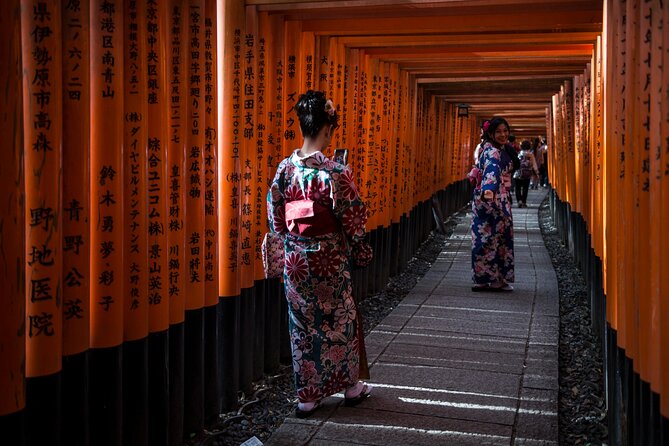
The strongest part of this tour is the guide match. Ahmed receives repeated praise for clear explanations, calm organization, photography, and last-minute changes. He has also helped groups create custom routes and add a tea ceremony.
Keiko is another frequently used guide. She has led visits to Arashiyama, Kinkaku-ji, and Fushimi Inari, and has also built routes including Tenryuji, Ryoanji, Nijo Castle, and Gion. Ayako has been praised for listening carefully to a group’s needs and arranging a special local lunch.
Kingo has helped guests learn how to approach shrines, find good food, and take better photographs. Toshi has been described as flexible and engaged, while Yuji has handled a short day by fitting in several central Kyoto sights. The range of names suggests that the exact quality and style depend on the guide assigned to your date.
That is not a reason to reject the tour. It is a reason to communicate clearly. Tell the operator if you want detailed cultural background, fewer stops with more time, food guidance, photography help, or a gentle pace. The more specific you are, the more useful the private format becomes.
The extra transportation fee changes the value
The experience price is listed at $490 per group of up to 12. That fee covers tour management, guiding, and arranging pickup and drop-off, but transportation is separate.
The stated vehicle charge is JPY 120,000 for up to five people and JPY 140,000 for up to eight people. The supplied details contain a small inconsistency about the upper group limit, with one line referring to seven people and another to eight. Ask for the exact vehicle rate and capacity for your party.
This fee must be discussed before the day of the tour. Several complaints focused not on the Kyoto sightseeing itself, but on the surprise of being asked for hundreds of dollars more shortly before departure. The operator’s terms do identify transportation as an extra cost, yet the pricing can still be easy to misunderstand when the main booking screen highlights only $490.
For a family of four senior adults, the convenience may be worth the cost because the car cuts down on transfers and some walking. For a group of eight to ten, the transport charge spreads across more people and becomes more sensible. For two people, compare the total with a train-based day or a smaller shared excursion.
Also confirm whether the driver, guide, entrance fees, and meals are paid separately. Personal expenses and tips are not included. Tips are appreciated but not required.
What the day feels like in practice
This is a packed sightseeing day, not a slow Kyoto ramble. You will cover a great deal of ground, but each stop has a time limit and road traffic can take control of the schedule.
The private car helps the day feel easier. Drivers have been praised for clean, comfortable vehicles, safe navigation, and dropping groups near site entrances. That matters at the end of a long day, when a train transfer can feel like one task too many.
The experience can also work well for a larger family or cruise group. A group of ten used the service for a customized Kyoto day, and an eight-person party found the vehicle comfortable. The private setting lets everyone agree on lunch and sightseeing rather than splitting up.
The main risk is rushing. One unhappy account described a guide who gave too little explanation and moved too quickly, while another described the same general style of day as efficient but packed. You can reduce that risk by choosing your top three priorities and accepting that the rest may receive only a short visit.
Practical details before you commit
You receive confirmation when booking, and the tour is private for your own group. A mobile ticket is provided. The standard start is 08:00 at Osaka or Kobe port, with a total duration of about 10 hours.
A moderate fitness level is required. Expect walking at the bamboo grove, temple grounds, market streets, Gion, and shrine paths, with stairs at Fushimi Inari. Comfortable shoes are more important than dressy clothes.
The cancellation policy allows a full refund if you cancel at least 24 hours before the local start time. Changes or cancellations inside 24 hours are not accepted for a refund. If poor weather causes the operator to cancel, you are offered another date or a full refund.
Before booking, send a written message asking for:
- The full price including the vehicle
- The exact vehicle size and passenger limit
- Which entrance fees are included
- Your expected pickup and ship return times
- The guide’s name, if available
- Any food, mobility, or pacing requests
Should you book this Kyoto day?
Book it if you are arriving by ship, want the major Kyoto sights in one private day, and have a group large enough to share the vehicle fee. The combination of a driver, guide, flexible route, and direct port return is the point of the experience. Ahmed, Keiko, Ayako, Kingo, Toshi, and Yuji have each been associated with strong days, especially when groups explained their wishes in advance.
Think twice if you are a small party on a tight budget or if you prefer one temple explored slowly. The separate transportation charge is substantial, and the route can feel rushed when traffic and crowds build.
My practical verdict is positive, with one firm condition: get the complete price in writing before you pay or sail. If the transport fee fits your budget and you treat this as a first look at Kyoto rather than a leisurely study tour, it offers a convenient way to see the city’s essential sights from Kobe or Osaka port.
FAQ
How long does the Kyoto shore excursion last?
The tour lasts approximately 10 hours. The standard schedule begins at 08:00 at Osaka or Kobe port and aims to return you to the port later the same day.
Is transportation included in the $490 price?
No. Transportation is listed as an additional charge. The supplied details give a rate of JPY 120,000 for up to five people and JPY 140,000 for up to eight people. Confirm the exact amount for your group before booking.
How many people can join the private tour?
The booking is for a private group of up to 12 people. The separate vehicle pricing lists different limits, so ask which car or van will be used for your party.
Which Kyoto sights are included?
The planned route includes Arashiyama Bamboo Grove, Kinkaku-ji Temple, Nishiki Market, Gion and Pontocho, and Fushimi Inari Shrine. The itinerary is customizable, so other sites may be possible if time allows.
Is the Kinkaku-ji entrance fee included?
The supplied tour details conflict on this point. One section says the entrance fee is included, while another says it is not included. Confirm this directly before the tour.
What happens if I need to cancel?
You can receive a full refund if you cancel at least 24 hours before the experience begins. Cancellations or changes made less than 24 hours before the start time are not accepted for a refund. Bad-weather cancellations offer another date or a full refund.
More Full-Day in Kobe
More Private Tours in Kobe
More tours in Kobe we've reviewed
Osaka & Hiroshima Departures, compared.
 ★ 4.1Osaka/Kyoto:Kinkakuji,Arashiyama,FushimiInariShrine,NaraParkFrom $66
 ★ 4.5One-Day Tour of Kyoto’s Highlights from Osaka/KyotoFrom $66
 ★ 4.7Osaka/Kyoto: Hiroshima Miyajima Bus Tour & Shinkansen TicketFrom $27712 hours
 ★ 4.4Osaka/Kyoto: Arashiyama, Nara & Fushimi Inari Shrine w/LunchFrom $61
 ★ 4.3From Osaka: Sagano Train Ride and Kyoto Guided Day TourFrom $66
 ★ 4.0Kyoto and Nara Day Trip from OsakaFrom $198