
Reviewed · KYOTO BUS TOURS
Osaka/Kyoto: Hiroshima Miyajima Bus Tour & Shinkansen Ticket
Hiroshima and Miyajima make a powerful pair: one asks you to face the cost of war, while the other offers calm water, shrine gates, deer, temples, and a slower rhythm. This 12-hour day trip from Osaka or Kyoto connects both places without asking you to decode Japan’s train and ferry systems on your own.
I like the well-organized transport, especially the reserved round-trip Shinkansen tickets and tour bus. I also like the thoughtful order of the day: Hiroshima comes first, then Miyajima gives you space to breathe. The main drawback is time. The Peace Memorial Museum can feel rushed, and both the museum and Miyajima can be crowded.
In This Review
- Key points to know before booking
- Why this Hiroshima day trip works
- From Osaka or Kyoto to Hiroshima by Shinkansen
- Hiroshima Castle and the road to the Dome
- One hour at the Peace Memorial Museum
- Hiroshima okonomiyaki at lunch
- Ferrying across to Miyajima
- An hour to make Miyajima your own
- What the organization is really worth
- Walking, crowds, and group size
- Who should book this Hiroshima tour?
- Should you book it?
- FAQ
- How long is the Hiroshima and Miyajima tour?
- Where does the tour start?
- Is the Shinkansen ticket included?
- Does the tour include hotel pickup?
- Is lunch included?
- Can the lunch accommodate dietary restrictions?
- How much time is spent at the Peace Memorial Museum?
- What happens if the Peace Memorial Museum is closed?
- Is the tour suitable for wheelchair users?
Key points to know before booking
- Two major Japanese sights in one day: Visit the Atomic Bomb Dome, Peace Memorial Museum, and Itsukushima Shrine without arranging separate trains, buses, and ferries.
- A full Shinkansen experience: The journey from Osaka or Kyoto to Hiroshima takes about 1.5 hours each way.
- Hiroshima-style okonomiyaki included: Expect pork, cabbage, bean sprouts, fish powder, eggs, and noodles, with advance options for some dietary needs.
- A moving but busy museum visit: You receive about one hour inside the Peace Memorial Museum, enough for an introduction but not a close look at every display.
- Free time on Miyajima: After the shrine visit, you have about an hour to browse, eat local treats, or walk toward pagodas and temples.
- A walking-heavy group tour: Earphone guides help you hear the English guide, but this is not suitable for wheelchair users or anyone who struggles with extended walking.
Why this Hiroshima day trip works
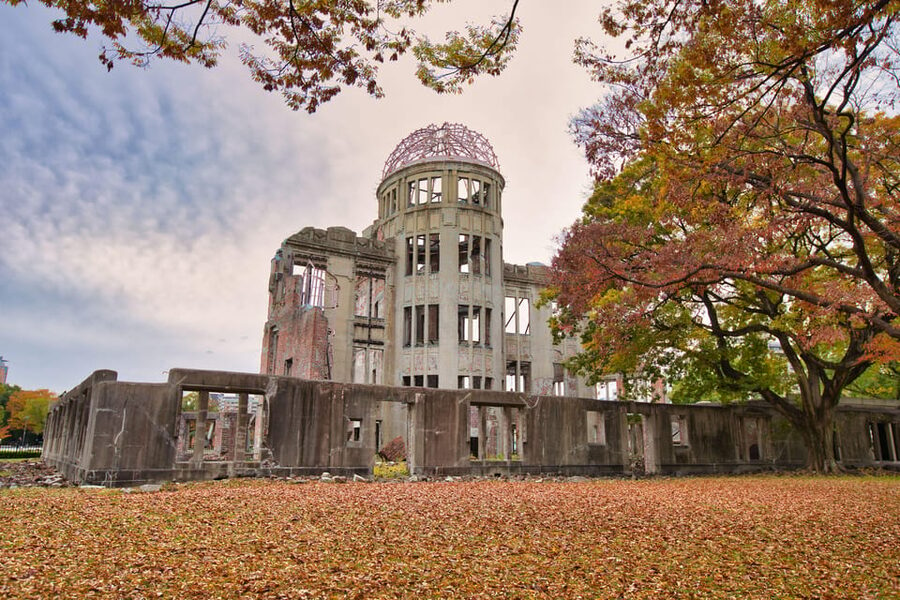
Hiroshima is not just another stop on a Japan sightseeing route. The Atomic Bomb Dome and Peace Memorial Museum require attention and emotional energy. The Dome’s exposed frame and blown-out windows are hard to take in from a distance, yet seeing it in person gives the 1945 bombing a physical presence that books and photographs cannot match.
The tour helps you approach this difficult subject with care. Guides such as Joe, Kane, Hiro, Azusa, and Chikako have been praised for explaining the city with warmth, humor, and personal stories. That matters here. A good guide can give you context without turning a memorial site into a rushed lecture.
The trip also gives you a needed change of mood. After Hiroshima’s memorial sites and a filling okonomiyaki lunch, you cross the water to Miyajima. The island’s Itsukushima Shrine, with its famous torii gate over the sea, brings a quiet cultural contrast. I like that the day does not finish inside the museum. You get time to think, walk, and enjoy a beautiful part of Japan.
Still, you need realistic expectations. This is a long day, especially from Kyoto. The schedule fits a great deal into 12 hours, but it cannot give you the same depth as an overnight stay in Hiroshima. If the Peace Memorial Museum is your main reason for coming, you may wish for more than the allotted hour.
A few more Osaka tours and experiences worth a look
From Osaka or Kyoto to Hiroshima by Shinkansen
Your day begins at either Shin-Osaka Station or Kyoto Station. Staff provide your round-trip Shinkansen tickets at the meeting point and guide you to the correct train. This is a useful service because large Japanese stations can be confusing, especially when you are watching the clock and carrying luggage.
The train ride takes about 1.5 hours. I consider this one of the best parts of the package. The Shinkansen is fast, comfortable, and a classic Japanese experience in its own right. Instead of spending the morning changing between local trains, you can sit down and prepare for the day.
Hotel pickup is not included, so you must reach the selected station yourself. Check the meeting point for the option you book, since it can vary. Luggage can be kept in the bus luggage compartment during the tour, which helps if Hiroshima is a stop between hotels.
After arriving at Hiroshima Station, you meet the English-speaking guide and transfer to an air-conditioned bus. Earphone guides are supplied during the walking portions, a small but important detail when the group is spread out around a memorial or shrine. Take care of the equipment, since loss or damage can lead to a replacement fee of up to 18,000 yen.
Hiroshima Castle and the road to the Dome
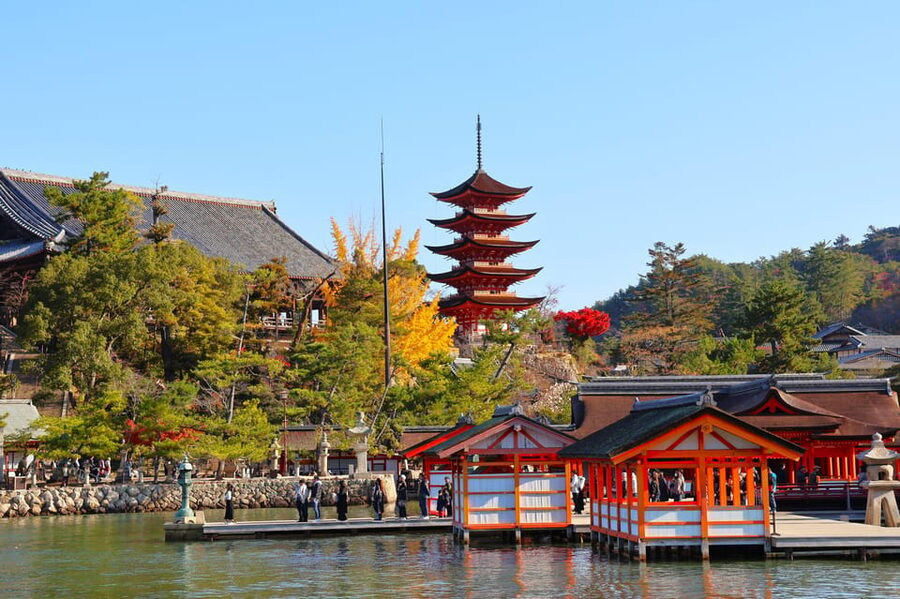
The bus passes Hiroshima Castle on the way into the main sightseeing area. This is a scenic drive rather than a castle visit, so do not expect time to enter or explore the grounds.
That brief pass-by still helps set the scene. Hiroshima is not only a memorial city. It is a living regional center with older landmarks, modern streets, restaurants, and everyday local life. The bus saves your legs and keeps the schedule moving, but it also means you see some places only through the window.
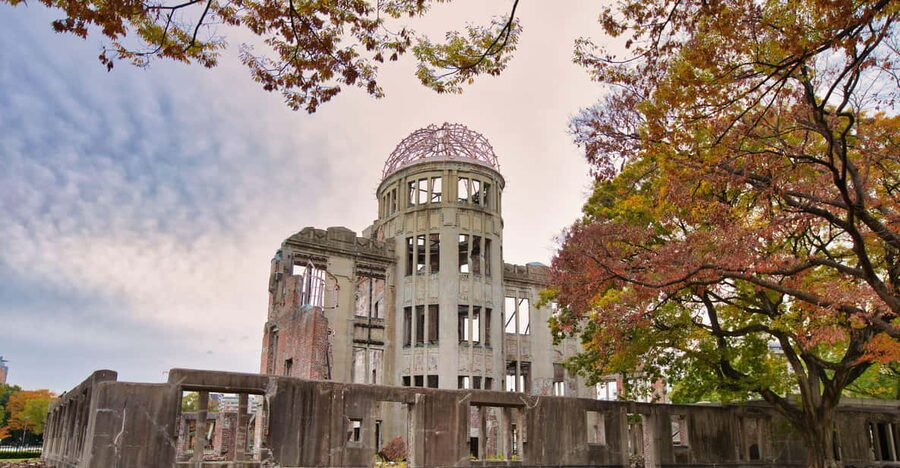
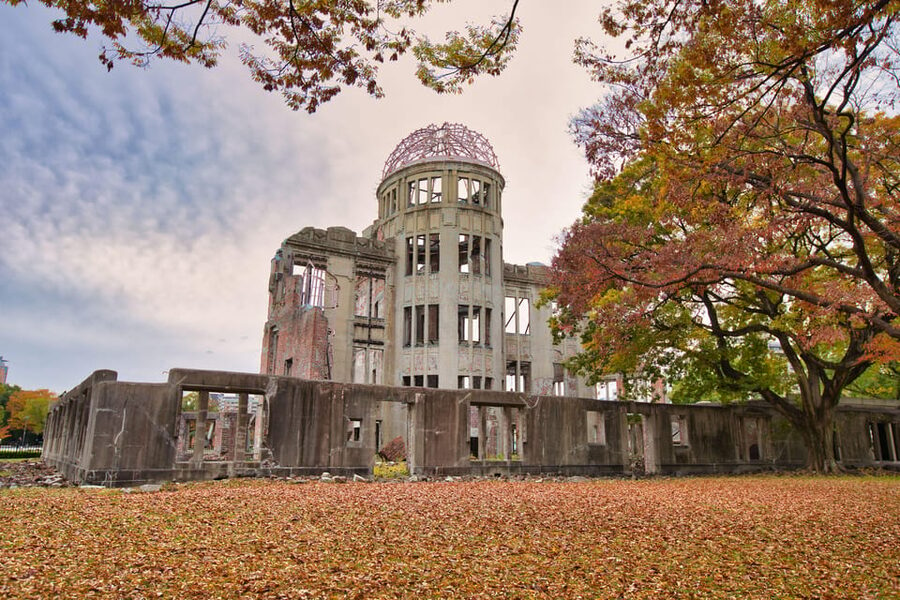
The first main stop is the Atomic Bomb Dome in Hiroshima Peace Memorial Park. You have around 30 minutes here. The remaining structure is visually stark, and the damaged windows and exposed interior make the effects of the blast immediate.
This is a place for quiet attention rather than constant explanation. Your guide may point out details and explain what happened, but you also receive a little time to look for yourself. I would use the short visit to focus on the Dome and the surrounding park rather than trying to take too many photographs.
One hour at the Peace Memorial Museum
The Hiroshima Peace Memorial Museum is the emotional center of the day. The exhibits present the bombing and its human cost through objects, photographs, testimony, and personal stories. You should expect a serious visit, not a casual museum stop.
The planned visit lasts about one hour. That is enough to understand the museum’s main message, but not enough to read every panel carefully. The museum can also be very crowded, which slows your progress through the displays. Several people have wished for additional time here, and I agree that this is the clearest compromise in the schedule.
You can make the hour count by staying focused. Read the displays that draw your attention, allow time for the most important rooms, and do not feel obliged to see every corner. If you prefer a slow museum visit, an overnight Hiroshima stay would suit you better.
The museum is closed on December 30 and 31 and from February 16 to 21. When it is closed, the tour visits the Hiroshima National Peace Memorial Hall for the Atomic Bomb Victims instead. The alternative keeps the day centered on remembrance, but it is not the same museum experience.
Hiroshima okonomiyaki at lunch
Lunch follows the memorial sites at a local restaurant. Hiroshima-style okonomiyaki is built with cabbage, bean sprouts, pork, fish powder, eggs, and noodles. Compared with the better-known Osaka version, the layered noodles give it a particularly substantial texture.
I like this placement in the itinerary. Food gives you a practical break after an intense morning, and the dish connects the tour to Hiroshima’s local cooking. One useful detail is that the food is prepared in front of you, according to the experience details provided for the restaurant.
Three menu choices are available when arranged in advance:
- Regular okonomiyaki
- Okonomiyaki without pork, with eggs
- Okonomiyaki without pork, fish powder, or eggs
Tell the operator about allergies or dietary restrictions when booking. Menu changes cannot be made on the day, and you should not bring your own food or drinks into the restaurant. One person with allergies received a separate mix, grill, sauce, and utensils, but advance notice is still essential.
The supplied details also mention wagyu in connection with one lunch experience, but the standard meal described for this activity is Hiroshima-style okonomiyaki. I would book this tour expecting okonomiyaki, not a wagyu meal.
A few more Osaka tours and experiences worth a look

Ferrying across to Miyajima
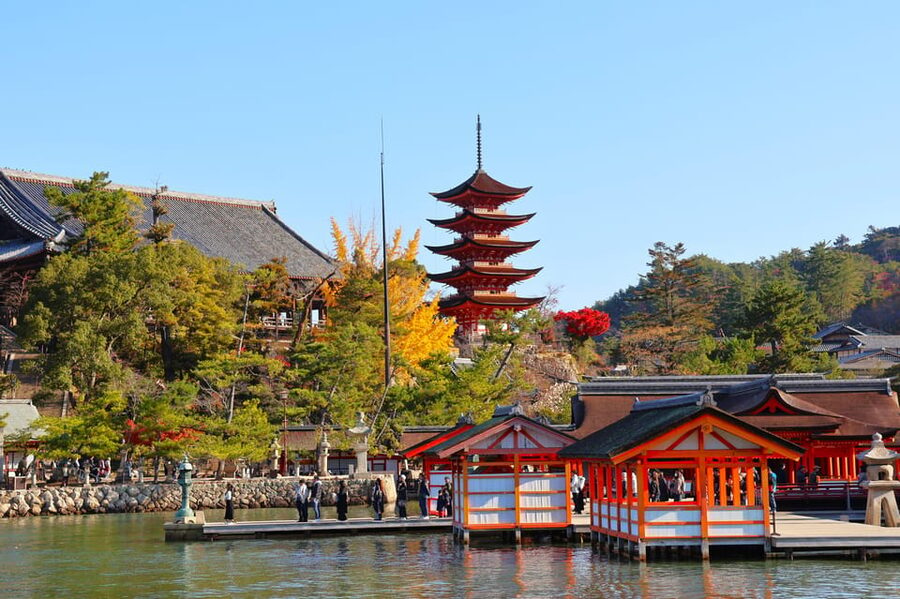
After lunch, the bus takes you toward the ferry. The ferry ride to Miyajima lasts about 10 minutes. It is short, but the water crossing changes the feel of the day. You leave the city behind and approach one of Japan’s most photographed cultural sites by sea.
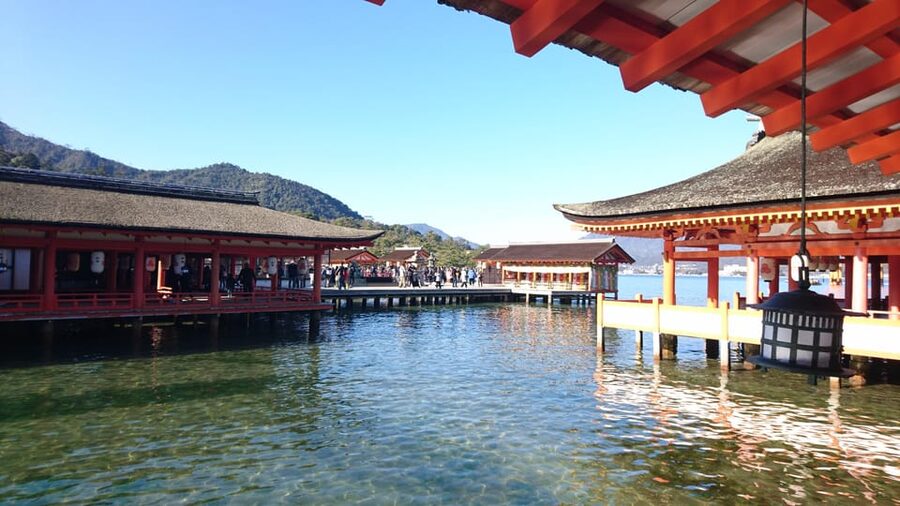
Miyajima is formally known as Itsukushima. The island is associated with Shinto, the traditional Japanese way of honoring the gods, and its shrine has long been linked to the water. The ferry adds a sense of arrival that a road transfer would miss.
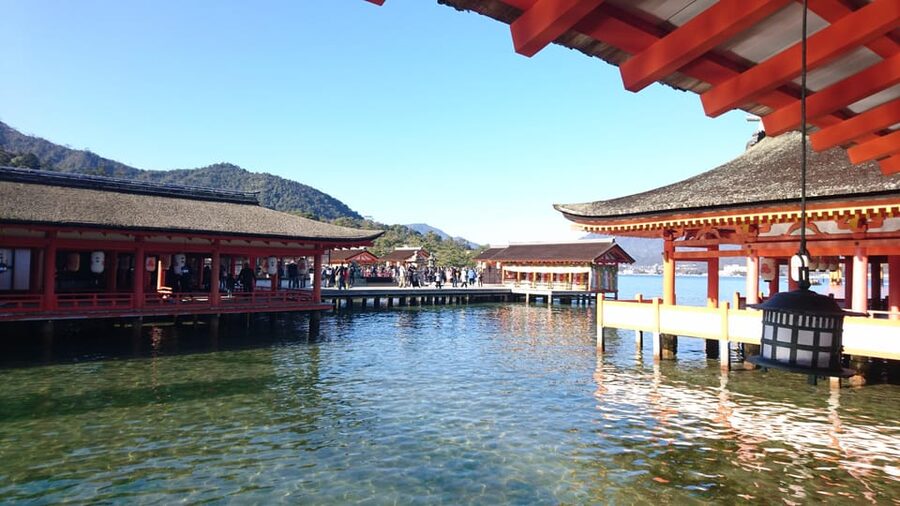
The group visits Itsukushima Shrine for about an hour. The shrine’s setting over the water is the main attraction, particularly when the famous torii gate appears offshore. Tide levels affect how much water surrounds the gate, so the exact view can differ from photographs you have seen.
The shrine is an important cultural site, not only a picture stop. Listen to the guide’s explanation, but leave a little space to notice the wooden walkways, the water, and the changing view through the shrine buildings. Crowds are common, and the narrow paths can make photography slow.
An hour to make Miyajima your own
After the guided shrine visit, you receive about an hour of free time on Miyajima. This is one of the tour’s smartest features. You can browse the food street, try local snacks such as fried oysters, lemon beer, or maple cakes, and spend time with the island’s deer.
You can also walk farther from the main shrine area. Some people use the free hour to find pagodas and temples or begin a short hike. I would not attempt a major mountain outing in this time, but a short walk away from the busiest lanes can give you a better feel for the island.
The hour may feel generous after the museum, yet Miyajima can easily fill a full day. If shopping, food, photography, or temple visits are your priority, you will probably wish for more time. The advantage is that the schedule gives you a choice. You can follow the guide, explore independently, or simply sit with a snack and watch the water.
After Miyajima, you take the ferry back, ride the bus to Hiroshima Station, and board the Shinkansen for Kyoto or Shin-Osaka. The return journey is another 1.5 hours, bringing the total day to roughly 12 hours.
What the organization is really worth
At $277 per person, this is not a cheap excursion. The value comes from what is bundled into that price: round-trip Shinkansen tickets, air-conditioned bus transport, both ferry rides, entry to the Peace Memorial Museum, entry to Itsukushima Shrine, an English-speaking guide, and lunch.
Buying the same transport and admissions separately may reduce the price if you are an experienced independent planner. But you would need to coordinate a long-distance train, Hiroshima bus travel, the ferry, timed sightseeing, and the return train. A missed connection or a wrong station exit could cost more than money, especially on a single day.
I see the strongest value for people with only a few days in Japan. You can reach Hiroshima from Osaka or Kyoto, visit two major sites, and return without changing hotels. The tour also takes luggage in the bus compartment, which helps if you are moving between cities.
The tradeoff is freedom. You cannot set your own pace at the Dome, museum, restaurant, or shrine. The group moves on a fixed timetable, and the museum hour is the clearest example. You are paying for structure and transport rather than a private, slow-paced visit.
Walking, crowds, and group size
This is an active day. You walk through Peace Memorial Park, inside the museum, around the shrine, and through Miyajima’s streets. The tour is not suitable for wheelchair users, and the operator advises against booking if you have trouble walking.
The bus and train reduce the strain between locations, but they do not remove it. Wear comfortable shoes and prepare for standing in stations, on ferries, and in crowded museum areas.
This is a shared tour, not a private one. The group can be large, but the earphone system helps you hear the guide during outdoor visits. The strongest praise has gone to guides who keep people together, answer questions, and handle train changes or delays with care.
Guide quality can vary by departure, but the names repeatedly associated with strong days include Joe, Kane, Hiro, Azusa, Tom, Miyuki, Masako, and Chikako. Their styles differ, yet the useful pattern is clear: the guide is central to the experience. You are not just being transported to famous sights. You receive explanations, cultural context, personal stories, and help when the schedule gets complicated.
Who should book this Hiroshima tour?
I would choose this tour if you are staying in Osaka or Kyoto, want to see Hiroshima and Miyajima in one day, and value not having to plan the transport. It is especially useful for first-time visitors to Japan, families with older children, and anyone who wants a guide for the memorial sites.
It also suits you if the Shinkansen is part of your Japan wish list. The train, bus, and ferry combination gives the day a pleasing variety, and the schedule makes a distant city practical as a day trip.
I would hesitate if you want a quiet museum visit, a long climb on Miyajima, or plenty of time for independent wandering. In that case, stay overnight in Hiroshima and split the sights across two days.
Book early enough to provide dietary information, check the exact starting station, and leave room in your plans for a long day. Cancellation is free up to 7 days and 21 hours before departure, according to the activity terms. Once you are on the tour, keep your expectations clear: this is an efficient introduction, not an exhaustive exploration.
Should you book it?
Book this tour if you want the easiest route from Osaka or Kyoto to two of western Japan’s essential sights. I especially recommend it when your schedule is tight and you want Hiroshima’s memorial sites followed by the beauty of Miyajima.
Do not book it expecting deep museum study or leisurely island time. The day is tightly packed, the museum may be crowded, and the walking adds up. For most people who have only one day available, though, the combination of Shinkansen, guided history, local lunch, shrine, ferry, and free time makes the $277 price reasonable.
FAQ
How long is the Hiroshima and Miyajima tour?
The tour lasts 12 hours, including the train rides between Osaka or Kyoto and Hiroshima.
Where does the tour start?
You can start at Shin-Osaka Station or Kyoto Station, depending on the option you book.
Is the Shinkansen ticket included?
Yes. Round-trip Shinkansen transportation from Kyoto or Osaka is included.
Does the tour include hotel pickup?
No. Hotel pickup and drop-off are not included. You must reach the selected meeting point at Kyoto Station or Shin-Osaka Station.
Is lunch included?
Yes. Hiroshima-style okonomiyaki is included. The standard dish contains pork, cabbage, bean sprouts, fish powder, noodles, and eggs.
Can the lunch accommodate dietary restrictions?
Three meal options are available if arranged in advance: regular okonomiyaki, no pork with eggs, and no pork, no fish powder, and no eggs. Tell the operator about allergies or dietary restrictions when booking. Menu changes are not available on the day.
How much time is spent at the Peace Memorial Museum?
The scheduled museum visit lasts about one hour. The Atomic Bomb Dome visit lasts about 30 minutes.
What happens if the Peace Memorial Museum is closed?
If the museum is closed, the tour visits Hiroshima National Peace Memorial Hall for the Atomic Bomb Victims instead. The museum is closed December 30 to 31 and February 16 to 21.
Is the tour suitable for wheelchair users?
No. The tour is not suitable for wheelchair users and involves a lot of walking.
More Tickets in Osaka
More Osaka & Hiroshima Departures in Osaka
More Kyoto Bus Tours in Osaka
More tours in Osaka we've reviewed




Kyoto Bus Tours, compared.
 ★ 5.0PERFECT KYOTO 1-Day Bus TourFrom $129
 ★ 4.8Kyoto: Fushimi Inari, Kinkakuji, Bamboo Grove 1 Day Bus TourFrom $122510 minutes - 9 hours
 ★ 3.9Kyoto: Hop-on Hop-off Sightseeing Bus TicketFrom $271 - 2 days
 ★ 4.7Kyoto/Osaka: Nara, Fushimi Inari Taisha, Arashiyama Bus TourFrom $529 - 10 hours
 ★ 4.6Kyoto: Full-Day Guided Bus Tour to Top Highlights & TicketsFrom $50
 ★ 4.9Kyoto: Nara & Traditional Matcha Experience Bus TourFrom $1228h 30m