
Reviewed · NARA DAY TRIPS
Kyoto and Nara Day Trip from Osaka
Kyoto’s Golden Pavilion, Imperial Palace, and Nijo Castle in one morning, followed by Nara’s deer, Kasuga Shrine, and the Great Buddha by afternoon: this trip packs Japan’s former capitals into one long day. It is an excellent first look, especially if Osaka is your base and you have little time.
I like the way transportation and admission fees are handled, and I like the mix of grand buildings, gardens, shrine lanterns, and friendly deer. Guides such as Momo, KC, and Hatchi have earned warm praise for clear explanations, humor, and steady care of the group. The catch is simple: the pace is brisk, with roughly 40 to 70 minutes at most Kyoto sights and little room for a slow wander.
In This Review
- Key points at a glance
- Why this Osaka day trip works
- The early start and rail connection
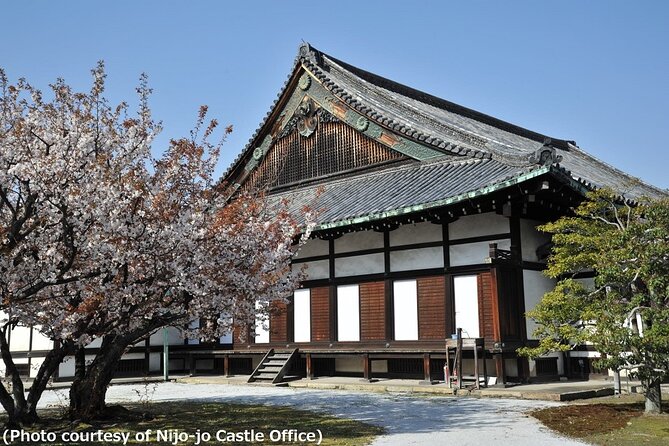
- Nijo Castle and the sound of history
- Kinkaku-ji, Kyoto’s Golden Pavilion
- Kyoto Imperial Palace or Kitano Tenmangu
- Lunch: convenience over culinary discovery
- Nara’s Kasuga Grand Shrine and lanterns
- Todai-ji and the Great Buddha
- Returning to Osaka through Namba
- The guides and group pace
- Who should book it?
- Final verdict: an efficient first taste
- FAQ
- How long does the Kyoto and Nara day trip last?
- Where does the tour start?
- Where does the tour end?
- Is transportation included?
- Are train seats reserved?
- What sights are included?
- What happens if Kyoto Imperial Palace is closed?
- Is lunch included?
- Can children join the tour?
Key points at a glance
- Five major sights in one day: Nijo Castle, Kinkaku-ji, Kyoto Imperial Palace, Kasuga Grand Shrine, and Todai-ji Temple.
- A fast rail connection: Depending on group arrangements, you may use a rapid or local train to Shin-Osaka, then the shinkansen to Kyoto.
- A full day from Osaka: Meet at Hotel Granvia Osaka at 7:15 a.m. and finish near Osaka-Namba Station around 6:30 p.m.
- Nara’s deer and Great Buddha: The afternoon brings time at Nara Park, Kasuga Shrine, and one of Japan’s most impressive temple halls.
- Lunch needs careful selection: The included meal varies by booking option, and the standard Western-style meal may not suit anyone seeking a traditional Japanese lunch.
- Good for a first visit: You see the headline sights efficiently, but independent visitors will have more time and freedom at each place.
Why this Osaka day trip works
Kyoto and Nara are easy to reach from Osaka, but fitting both into one day takes planning. This experience removes much of that work. Your guide helps you move through train stations, transfers, coach boarding, temple entrances, and the final return to Osaka.
The price is $198.15 per person. That is a serious sum for a day of sightseeing, so value depends on what you need. If you are comfortable buying train tickets, finding buses, checking opening days, and planning your own route, you can likely spend less independently. If you want a guide, reserved admissions where applicable, arranged transportation, and a single route connecting five famous sites, the price buys convenience.
I would treat this as an orientation day, not a leisurely study of Kyoto and Nara. You will see the main sights and hear the basic stories behind them. You will not have much time to sit in a garden, compare temple details, or stop for an unplanned snack.
The tour is limited to a maximum of 40 people, though large groups can still feel unwieldy at crowded monuments. The morning begins with an English-speaking assistant from Hotel Granvia Osaka to the Sunrise Tours desk in Kyoto Avanti. A licensed English guide leads the main sightseeing portion, while an assistant accompanies the return from Kintetsu Nara Station to Osaka-Namba Station.
A few more Osaka tours and experiences worth a look

The early start and rail connection
Meet at Hotel Granvia Osaka at 7:15 a.m. The first leg uses public transportation. Depending on the number of participants and the day’s arrangements, you may take a rapid or local train to Shin-Osaka, then ride the shinkansen to Kyoto, or use another arranged combination of train and bus.
The rail portion is a smart choice. Kyoto sits close to Osaka, but a guided group can lose time simply getting everyone through stations and onto the correct train. The bullet train helps shorten the Osaka to Kyoto connection, though all train seats are non-reserved and seating is not guaranteed.
Once you reach Kyoto Station, walk to the Sunrise Tours desk in the basement of Kyoto Avanti. This is where the group joins the coach for the sightseeing route. The transfer takes effort, particularly for anyone unfamiliar with large Japanese stations, but an assistant is present for this part.
Bring comfortable shoes. You will walk through castle grounds, temple gardens, shrine approaches, station corridors, and Nara Park. The day lasts about 11 hours and 15 minutes, so the early alarm and long finish are part of the bargain.
Nijo Castle and the sound of history
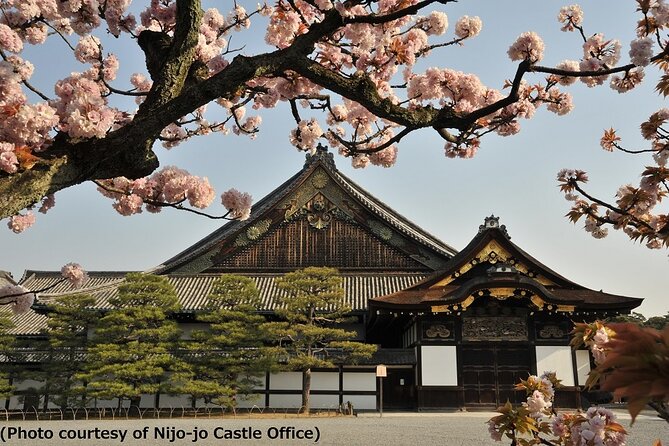
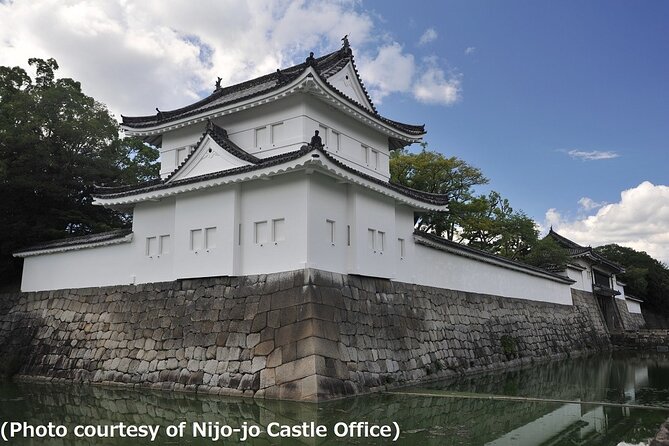
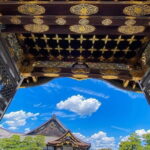
Nijo Castle is the first major stop, with about 50 minutes inside. Built in the early 17th century for the Tokugawa shogun, it served both as a residence and as a statement of power near the Imperial Palace.
The exterior is formal and heavily decorated, but the interior is the real draw. Elaborate carvings and richly finished rooms show how political authority was presented through architecture. The famous nightingale floors, designed to make a chirping sound underfoot, add a memorable human detail to an otherwise imposing complex.
Fifty minutes gives you a useful introduction, but not a full visit. You will need to stay with the group and keep moving through the main areas. If Nijo Castle is closed on a Tuesday in January, July, August, or December, the itinerary changes to Ryoan-ji Temple. A holiday can shift the closure to the following day.
Kinkaku-ji, Kyoto’s Golden Pavilion
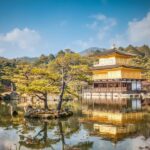
The next stop is Kinkaku-ji, better known as the Golden Pavilion. You have about 45 minutes to see the building, pond, and garden.
The pavilion’s gold-covered wooden exterior reflects across the water, which explains its place on nearly every first-time Kyoto route. The setting is carefully composed, with the building framed by trees and water rather than presented as a stand-alone monument.
This is a photo-heavy stop, and it can be crowded. School groups are common, and the path moves at a set pace. You will have enough time to see the main view and walk part of the garden, but not enough to explore every corner.
I like this stop because it gives you a quick lesson in Japanese temple design: the building, water, plants, and viewing path work together. I would not expect a quiet spiritual visit. The Golden Pavilion is one of Kyoto’s most popular sights, and the tour’s short visit keeps the schedule moving at the cost of calm.
Kyoto Imperial Palace or Kitano Tenmangu
Kyoto Imperial Palace receives about 40 minutes. The palace served as the Emperor’s residence until roughly 150 years ago and offers a different mood from the ornate Tokugawa castle and gleaming pavilion.
The design is more restrained, with broad courtyards and clean lines that reflect a simpler court style. The guide provides the political and ceremonial setting, helping you understand why Kyoto remained important long after Japan’s government moved elsewhere.
The palace does not open to this tour on Mondays, the day after a Monday holiday, or during certain Imperial Household Agency events. In those cases, the route goes to Kitano Tenmangu Shrine. If the closure falls on the 25th, the alternative is Nishi Hongan-ji Temple.
There is no refund when an alternative site replaces the palace. Check the date before booking if the Imperial Palace is one of your main reasons for choosing this experience.
A few more Osaka tours and experiences worth a look
Lunch: convenience over culinary discovery
Lunch depends on the option you select. The Western-style lunch is served as a set menu or buffet-style meal, while the Indian thali option includes vegetarian curries, vegetable pakora, yogurt, naan or roti, rice, salad, and a non-alcoholic drink.
The standard lunch has drawn mixed reactions. Some people find it filling and convenient, while others find it ordinary and expected a more traditional Japanese meal. I would choose the lunch option for ease, not for a special food experience.
Vegetarian requests must be made when booking. The Indian thali is suitable for vegetarians, but halal, gluten-free, and other dietary requests are not available. The two lunch groups eat in separate dining areas, and you cannot change from one menu to the other on the day.
If you select no lunch, you receive free time to eat around Kyoto Station. That may be the better choice if you want control over your meal or have a dietary concern. It also gives you a small break from the group, though you must manage the timing yourself.
Nara’s Kasuga Grand Shrine and lanterns
The afternoon shifts to Nara, with about one hour at Kasuga Grand Shrine. This ancient shrine is linked to the Nara Period and is designated as a World Heritage site.
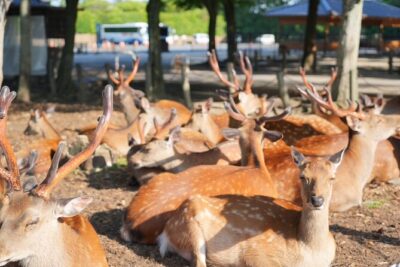
Kasuga is famous for its rows of stone and bronze lanterns. The shrine’s sacred deer are traditionally regarded as messengers, tying the animals of Nara Park to the religious setting rather than treating them as a simple attraction.
From January 2025, the route includes the Main Sanctuary special visit area when operating conditions allow. If that area is unavailable because of an event or another operational issue, the visit changes to the Kasuga Taisha Museum or Todaiji Museum.
This is one of the more rewarding stops for anyone interested in how nature and worship meet in Japan. The time is still limited, but the shrine offers a different experience from Kyoto’s polished palace and temple buildings. Stay alert for the group’s meeting point, since the grounds and paths can spread people out.
Todai-ji and the Great Buddha
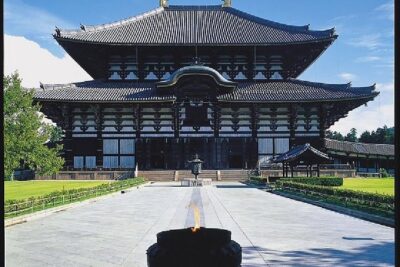
Todai-ji Temple gets about 1 hour and 10 minutes, making it the longest scheduled stop. That extra time matters. The temple’s huge main hall is one of the world’s largest wooden structures, and inside it sits the bronze Great Buddha.
The scale is hard to grasp from a photograph. The hall, the statue, and the surrounding crowds create a powerful first impression, even on a fast-moving schedule. Todai-ji also holds important national treasures, giving the guide plenty to explain beyond the main statue.
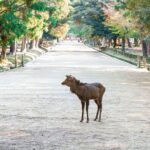
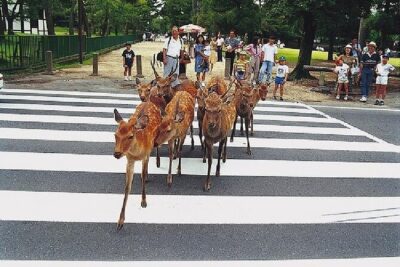
The visit normally includes Nara Park, where you can see the famous deer. Deer crackers are sold on site. Feed carefully and firmly: the animals may bow for food, then press in quickly when they realize you have more. Keep your hands clear once the crackers are gone.
This is the part of the day that often feels most relaxed, simply because the time allowance is longer and the park gives you more visual space. Even so, school groups and crowds can fill the temple grounds during busy periods.
Returning to Osaka through Namba
The return normally uses the Kintetsu Railway from Nara to Osaka, with non-reserved seating. A tour assistant guides the group from Kintetsu Nara Station to Osaka-Namba Station. Depending on the group and operating conditions, a bus may replace the train.
The tour ends around 6:30 p.m. at Osaka-Namba Station. There is no hotel drop-off. If your accommodation is near Osaka Station or Hotel Granvia, allow time to find your way back through Osaka’s large underground and station network.
This final detail matters more than it sounds. Osaka-Namba is a major transport area, and station exits are not always obvious. Before leaving, ask the assistant which direction or exit best suits your hotel. You may find phone maps less useful underground, so a simple written note can save time.
The guides and group pace
The guide can make or break a schedule this tight. Momo, KC, and Hatchi are among the named guides associated with especially warm experiences, with praise for humor, historical explanations, and help with group movement. Guide quality can vary by departure, but the structure gives you a guide for the core sightseeing and assistants for the rail portions.
A recurring practical issue is hearing the commentary. At crowded sites, the guide may be walking ahead while speaking, and background noise can make English explanations hard to follow. This tour does not specify personal audio headsets, so stay near the guide whenever possible.
The pace is not suitable for everyone. People who walk slowly, families with very young children, and anyone needing frequent rest may find the schedule tiring. Children under five can join free, but they do not receive a bus seat or lunch unless booked at the child rate. Children under 15, or anyone not yet in middle school, must be accompanied by a parent or guardian.
Who should book it?
I would recommend this day trip if you are staying in Osaka, have only one open day, and want the major sights without handling the transport yourself. First-time visitors often benefit from the historical links between Kyoto, Nara, the Imperial court, and the Tokugawa government.
It also suits couples, families with older children, and confident walkers who prefer a clear schedule. The best reason to book is not luxury. It is efficiency.
I would skip it if you want quiet temple time, local food stops, flexible photography, or long conversations with guides. An independent Kyoto and Nara plan will let you choose fewer sights and spend more time at each one. The price also deserves thought: transportation, admissions, and guiding add convenience, but the value drops if you do not care about seeing all five headline sites.
Free cancellation is available until 24 hours before the start time. Confirmation arrives within 48 hours, subject to availability.
Final verdict: an efficient first taste
This is a demanding but useful day. You get Kyoto’s castle, golden temple, and palace in the morning, then Nara’s shrine, deer, and Great Buddha in the afternoon. The route gives you a broad view of Japan’s former capitals, but it does so with a stopwatch in hand.
Book it when your priority is coverage and guidance. Choose the no-lunch option if food matters to you, check the Imperial Palace and Nijo Castle closure rules, and prepare for a long day on foot. If you want to truly explore Kyoto or Nara, choose fewer sights and go independently. If you simply want to see the essential monuments from an Osaka base, this trip gets the job done.
FAQ
How long does the Kyoto and Nara day trip last?
The experience lasts approximately 11 hours and 15 minutes. It starts at 7:15 a.m. and ends at Osaka-Namba Station around 6:30 p.m.
Where does the tour start?
The meeting point is Hotel Granvia Osaka at 3-chōme-1-1 Umeda, Kita Ward, Osaka. An English-speaking assistant helps with the first portion of the journey.
Where does the tour end?
The tour ends at Osaka-Namba Station. Hotel drop-off is not provided, so you must return to your accommodation independently.
Is transportation included?
Yes. Admission fees and transportation costs are included. The route may use a rapid or local train, the shinkansen between Shin-Osaka and Kyoto, a coach, and the Kintetsu Railway or a bus from Nara to Osaka.
Are train seats reserved?
No. Train seats are non-reserved, and seating is not guaranteed when public transportation is used.
What sights are included?
The main stops are Nijo Castle, Kinkaku-ji Temple, Kyoto Imperial Palace, Kasuga Grand Shrine, and Todai-ji Temple. The route also includes time in Nara Park.
What happens if Kyoto Imperial Palace is closed?
The tour visits Kitano Tenmangu Shrine instead. If the closure falls on the 25th, the alternative is Nishi Hongan-ji Temple. No refund is provided for this change.
Is lunch included?
Lunch is included only when you select a lunch option during booking. Choices include a Western-style meal, an Indian thali suitable for vegetarians, or no lunch.
Can children join the tour?
Children up to five years old may join free, but they do not receive a bus seat or lunch unless booked at the child rate. Participants under 15, or those not yet in middle school, must be accompanied by a parent or guardian.
More 1-Day Tours in Osaka


More Osaka & Hiroshima Departures in Osaka
More Nara Day Trips in Osaka
More tours in Osaka we've reviewed




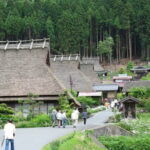
Nara Day Trips, compared.
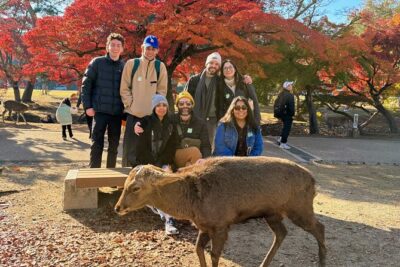 ★ 5.0World Heritage Kyoto & Nara Uji Authentic Matcha ExperienceFrom $129
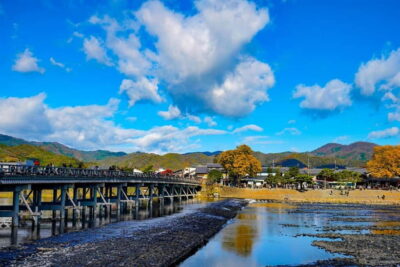 ★ 4.7Kyoto/Osaka: Nara, Fushimi Inari Taisha, Arashiyama Bus TourFrom $529 - 10 hours
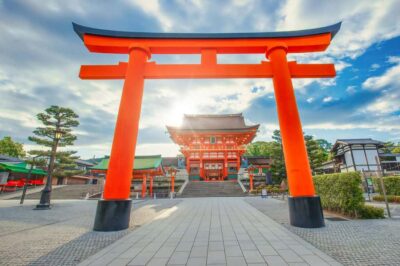 ★ 4.4Osaka/Kyoto: Arashiyama, Nara & Fushimi Inari Shrine w/LunchFrom $61
 ★ 5.0Nara Early Morning Tour (Kyoto or Osaka Departure Available)From $61
 ★ 4.5Kyoto and Nara Day Trip from KyotoFrom $194
 ★ 4.5Nara Afternoon Tour from Kyoto or OsakaFrom $102