

Reviewed · OSAKA
Audio Guide App Japan Tokyo Kyoto Takayama Kanazawa Nikko and others
Japan is easier to understand when you have a little context at the right moment. This app gives you that context across Tokyo and Kyoto, then extends it to Takayama, Kanazawa, Nikko, and other destinations. You can follow neighborhood walks, temple routes, food stops, and Google Maps points without joining a fixed group.
I like the six language choices, including English, Spanish, Portuguese, German, Italian, and French. I also like the freedom to skip stops, change the order, or build your own plan. The main caution is the app itself: one person found it difficult to use and never received the access code, while the overall score is 2.8 out of 5 from four ratings.
In This Review
- Key things to know before you buy
- How this Japan audio guide works
- Tokyo: six different city experiences in one package
- Odaiba and the waterfront
- Central Tokyo and the Bunkyo, Chiyoda, and Chuo districts
- Shibuya and the Meiji Shrine area
- Shinjuku
- Asakusa, Ueno, and temple districts
- Eastern Tokyo
- Kyoto: temples, gardens, and old districts
- Northern Kyoto
- Southern Kyoto
- Higashiyama and central Kyoto
- Arashiyama
- Gion and Pontocho
- Kyoto essentials
- Takayama, Kanazawa, Nikko, and the less-detailed days
- Price, access, and the app’s weak spot
- Who should book this Japan audio guide?
- FAQ
- Where does this audio guide experience begin?
- How long does access last?
- What languages are available?
- Is this a live guided tour?
- Can I walk the routes?
- Are car routes included?
- Which Tokyo areas are covered?
- Which Kyoto areas are covered?
- Does the guide include Takayama, Kanazawa, and Nikko?
- Can I cancel for a refund?
- Should you book it?
Key things to know before you buy
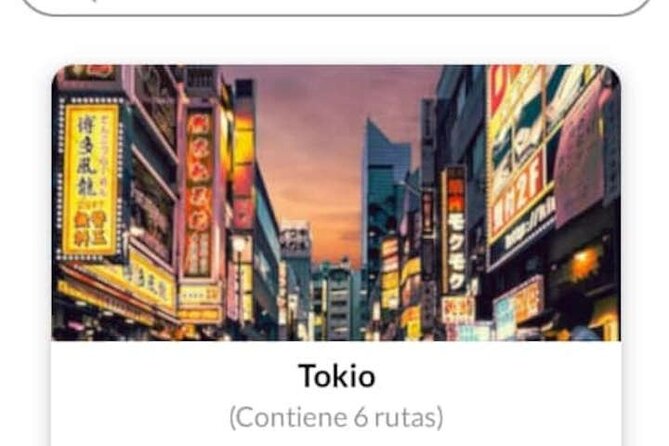
- Tokyo coverage is wide: Routes include Odaiba, Shibuya, Shinjuku, Asakusa, central Tokyo, and the eastern districts.
- Kyoto gets the fullest treatment: You receive separate routes for northern Kyoto, southern Kyoto, Higashiyama, Arashiyama, Gion, and the city’s major sights.
- You choose the pace: Walking routes and car routes are available, and you can skip points that do not fit your day.
- Short audio stops suit families: A Takayama user found the brief explanations useful for teenagers and appreciated being able to leave out stops.
- The web panel adds practical storage: You can customize a route and keep travel documents in one place.
- It is not a live guided tour: The product is a self-guided mobile experience, despite being described as private for your group.
How this Japan audio guide works
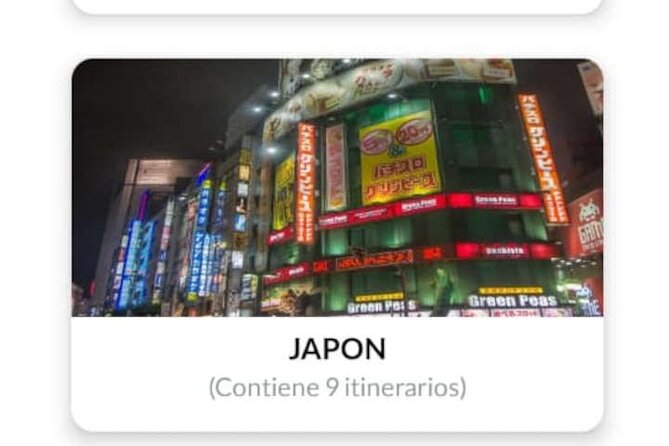
Think of this as a large digital library of self-guided routes rather than one tour with a guide leading you from place to place. You receive access to audio and written information for points of interest, along with routes that connect them.
The experience lasts about eight days and costs $87. That price makes the most sense if you visit several destinations and use the app often. If you only spend two days in Tokyo and one day in Kyoto, you may not use enough of the material to get full value.
Each point is linked to Google Maps, and geolocation helps you identify where you are. That is useful in cities where a famous temple may sit behind a quiet gate or where several nearby attractions compete for your attention.
The app supports English, Spanish, Portuguese, German, Italian, and French. That is a real advantage for mixed-language groups, though the experience depends heavily on getting access and learning the interface early.
You also receive a web panel. Use it to adjust routes and store travel documents. This can help you keep the practical side of a Japan trip together, but it does not replace the need for your own transport planning, opening-hours checks, or ticket reservations.
Other guided tours in Osaka

Tokyo: six different city experiences in one package
Tokyo is too large for one sensible walking tour, so dividing it into districts is the right approach. The guide offers separate sections for waterfront Odaiba, central Tokyo, Shibuya, Shinjuku, the temple districts, and eastern Tokyo.
Odaiba and the waterfront
The Odaiba section includes 18 points of interest. You can hear about Tokyo Tower, Fuji TV Headquarters, Odaiba, Daiba Park, Rainbow Bridge, the Statue of Liberty replica, Gundam, DiverCity, Miraikan, Aqua City, Roppongi Hills, Decks, Sengakuji Temple, Nezu Museum, Mori Art Museum, Shibakoen, the Ako Gishi Museum, and a Sumida River cruise.
This is a varied list, mixing futuristic buildings, shopping centers, museums, parks, views, and religious sites. The audio is most useful here because Odaiba can feel like a collection of separate attractions rather than a single district.
You can use a walking route or a car route. That choice matters. The sights are spread out, and a car route may suit you if your group wants to cover many points in one day. A walking route lets you slow down around Daiba Park, the waterfront, and the large commercial areas.
Do not assume you will comfortably see every listed point in one outing. The value lies in having choices. Families can focus on Gundam, Miraikan, and the shopping areas, while art lovers may prefer the museums and architecture.
Central Tokyo and the Bunkyo, Chiyoda, and Chuo districts
The central Tokyo section covers Nezu Shrine, Shinobazu Avenue, Rikugien, Koishikawa Korakuen Gardens, Akihabara, Ginza, the Imperial East Gardens, Kitanomaru Park, and other points.
This section brings together very different sides of the city. Akihabara is associated with electronics and popular culture, while Ginza offers a polished commercial center. The gardens and shrines provide a quieter change of pace.
A car route is included for Bunkyo, Chiyoda, and Chuo. That is a useful option on paper, but you should treat the route as a planning aid rather than a guarantee of easy driving. The material does not provide traffic guidance, parking details, or exact timing.
The audio can help you connect each place to the larger city story. Without context, it is easy to rush through a garden or mistake a shrine visit for just another photo stop.
Shibuya and the Meiji Shrine area
The Shibuya section has 29 points and two walking routes. It includes Meiji Shrine, Omotesando Avenue, the Imperial Garden, the Hachiko Statue, Shibuya 109, Nezu Museum, Takeshita Street, and other nearby sights.
This is one of the strongest parts of the package for first-time visitors because the area changes quickly from broad avenues to dense shopping streets and then to shrine grounds. A walking route helps you see those contrasts at street level.
The large number of points also creates a problem: you need to make choices. If you stop at every location, the day can become a checklist. I would use the guide to pick a few anchor sights, then let the audio fill in details as you go.

Shinjuku
The Shinjuku route has 13 audio points. It includes Shinjuku Gyoen National Garden, the Tokyo Metropolitan Government viewpoint, Toho cinemas, and other locations. A car route is also provided.
The garden and government viewpoint give you a useful pair: one offers open green space, the other a city view. Toho cinemas and the surrounding district add a modern entertainment angle.
The smaller number of points may make this section easier to manage than Shibuya. Still, the app does not give a fixed schedule, so you decide how much time to spend in the garden or at the viewpoint.
Asakusa, Ueno, and temple districts
This section focuses on temples, shrines, and traditional streets. Points include Senso Temple, Kiyomizu Kannon-do Temple, Tokyo Skytree, Bentendo Temple, the Edo-Tokyo Museum, and Ameya-Yokocho Market.
This is a good place to use audio rather than simply follow a map. Religious buildings can look similar at first, and a short explanation can help you notice the difference between a temple, a shrine, a gate, a pagoda, and a garden setting.
The mix with Skytree and Ameya-Yokocho keeps the route from becoming only a temple circuit. You get older religious sites beside a modern tower and a market district.
Eastern Tokyo
The eastern section covers 14 points in Edogawa and Koto. It includes Tokyo Big Sight, teamLab Planets, the Edo Museum, Tokyo Disneyland, Tokyo DisneySea, Funabori Tower Hall, and Kiyosumi Garden.
This is less of a compact neighborhood walk and more of a collection of destinations. The car route may help you connect them, while Disneyland and DisneySea are presented as walking experiences.
You should plan this section carefully. Theme parks alone can consume a full day, so treat them as separate choices rather than assuming they fit neatly with the other points.
Kyoto: temples, gardens, and old districts
Kyoto receives the most detailed treatment, with separate sections for the north, south, Higashiyama, Arashiyama, Gion, and the city’s essential sights. That division makes sense because Kyoto’s attractions are spread across several areas.
Northern Kyoto
The northern route includes 19 points. Kinkaku Temple, Ryoan Stone Garden, Shimogamo Shrine, Daikaku Temple, Myoshin Temple, Ryoan Temple, Mount Kurama, Kamigamo Shrine, and Kitano Tenmangu Shrine are among them.
This is a strong area for visitors who want gardens, temple architecture, and quieter religious sites. Kinkaku Temple is the famous sight, but the route also points you toward places that can feel less obvious on a first visit.
A car route is included. Again, use it as a guide to the order of places, not as a promise of quick travel. The information supplied does not explain parking, road conditions, or exact distances.
Southern Kyoto
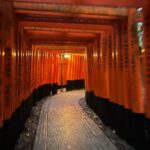
The southern section includes Fushimi Inari Taisha Shrine, Daigo Temple, Ninna Temple, Jonangu Shrine, and other points. A car route connects the area.
Fushimi Inari is likely to be the main draw, but the audio can help you give time to the other locations instead of treating them as minor extras. Daigo Temple and Jonangu Shrine add different settings to the route.
This section rewards a selective approach. Pick the points that match your interests and use the map links to keep the day practical.
Higashiyama and central Kyoto
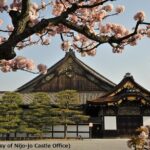
The Higashiyama section has 27 points. They include Heian Shrine, Kyoto National Museum, Sanjusangendo Temple, Eikan Temple, Kyoto Art Museum, Nijo Castle, Chion Temple, and the Kyoto Railway Museum.
This is a large amount of material. It covers temples, museums, a castle, and a railway museum, so you can build either a culture-heavy day or a mixed plan for a family.
The advantage is choice. The drawback is possible overload. You will need to check which locations belong together geographically and which deserve more time. The app gives information, but it does not remove the basic work of shaping a realistic day.
Arashiyama
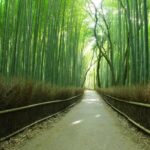
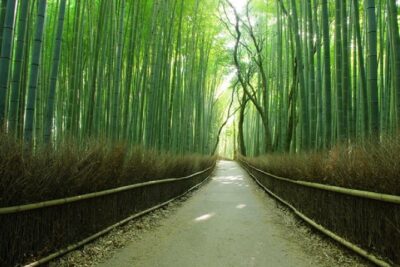
The Arashiyama route includes the Bamboo Forest, Daikaku Temple, Tenryu Temple, Saiho Temple, and other points. A walking route is available.
This is one of the places where walking makes the most sense. The route lets you connect the bamboo area with temples and streets instead of viewing the forest as an isolated photo stop.
The guide’s value here is its ability to give you several points in one area. Still, the bamboo forest is only one part of Arashiyama, and you should not expect the audio to provide crowd forecasts or exact visit times, since those details are not included.
Gion and Pontocho
The Gion route covers the geisha district, Yasui Sanctuary, Pontocho Street, and other points of interest.
This section is best suited to slow walking and careful observation. The point is not only to reach a building, but to understand the character of the lanes, shrines, and traditional district.
You should follow local etiquette and respect private areas. The supplied information does not give detailed behavior guidance, so do not rely on the app alone for every cultural question.
Kyoto essentials
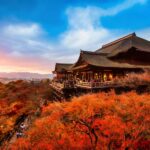
The essentials route gathers Kiyomizu Temple, Ryoan Temple, Higashiyama Street, Heian Shrine, Kinkaku Temple, Nijo Castle, the Philosopher’s Path, and other major sights.
This is the most useful section if you have limited time. It gives you a broad shortlist rather than forcing you to sort through every regional route first.
I would use it to set priorities, then switch to the more detailed northern, southern, Higashiyama, Arashiyama, or Gion sections when you want a fuller day in one area.
Takayama, Kanazawa, Nikko, and the less-detailed days
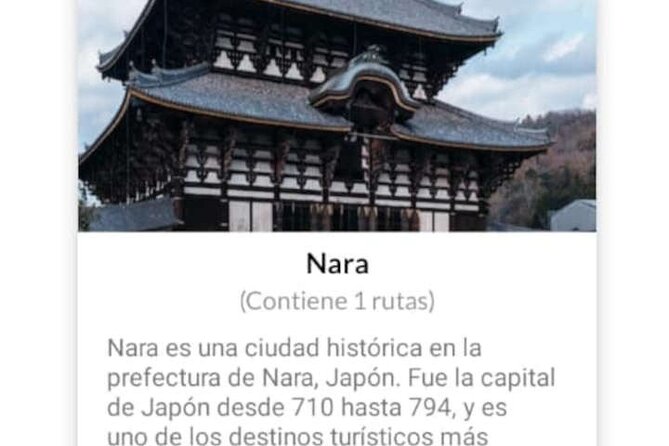
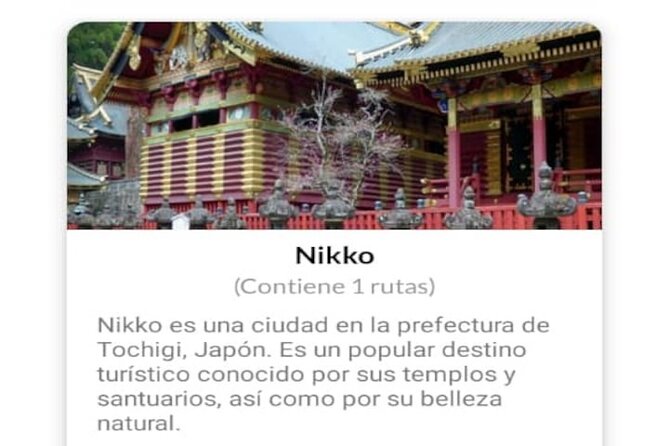
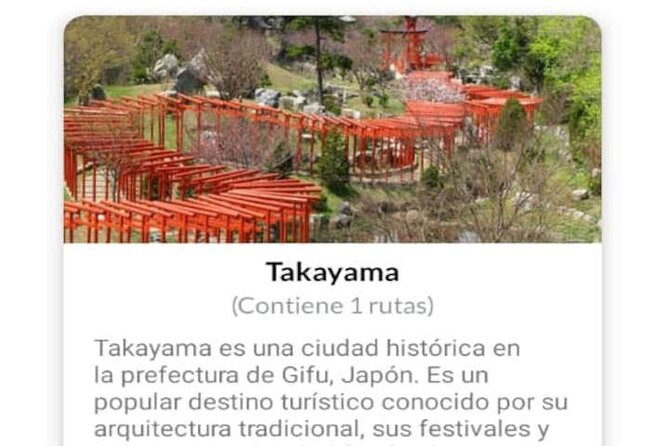
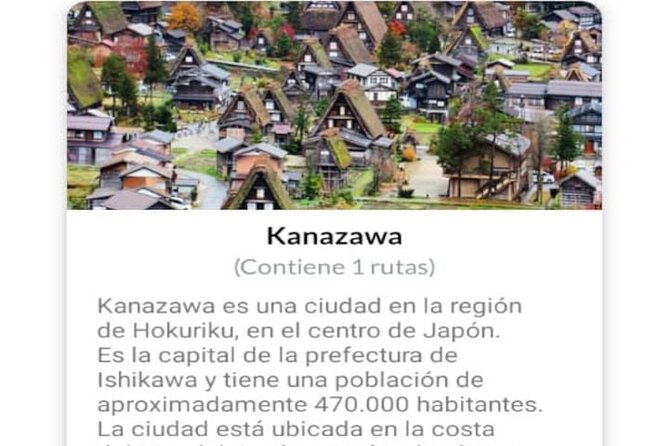
The product title includes Takayama, Kanazawa, Nikko, and other Japanese destinations. The supplied schedule gives detailed names for Tokyo and Kyoto, but the later six days are represented only by generic audio-guide points.
That means you should not buy this expecting a clearly published stop-by-stop plan for every destination. You receive audio points for those days, but the exact sights, route names, and number of points are not specified here.
The one concrete experience available for Takayama suggests the audio stops are short. That can suit families, especially teenagers who do not want long lectures at every building. It also lets you skip points without losing an entire guided group visit.
The tradeoff is depth. Short explanations are handy for orientation, but they may not satisfy you if you want a long specialist talk about architecture, local customs, or history. The package gives you flexibility, not a personal expert walking beside you.
Price, access, and the app’s weak spot
At $87 for about eight days, the price is reasonable only if you use the guide across several cities. A live private guide would normally offer conversation and real-time answers, but this product is an app with written and audio material. Compare it with the cost of separate audio guides, then consider how many days you will actually use it.
The private-tour label needs careful reading. Only your group participates, but there is no named guide and no live guide described. You are buying private access for your party, not private guiding in the usual face-to-face sense.
The most serious issue is access. One purchaser could not use the app, found the interface unfriendly, and did not receive the access code. Since the experience cannot be refunded or changed after purchase, check your booking details promptly and make sure you understand how access is delivered.
Service animals are allowed, and most people can participate. The experience uses a mobile ticket, so your phone becomes the main tool for maps, audio, and documents.
Who should book this Japan audio guide?
I would recommend it most to independent visitors who:
- Plan to visit several Japanese cities during the eight-day period
- Prefer setting their own pace instead of joining a fixed group
- Want short explanations at many sights
- Travel with teenagers or family members who may want to skip points
- Need audio in one of the six available languages
- Like having route planning and travel documents in a web panel
I would be more cautious if you want a live guide, detailed personal advice, or a fully timed daily plan. I would also hesitate if you dislike troubleshooting apps or cannot accept the risk of a non-refundable purchase.
FAQ
Where does this audio guide experience begin?
The experience is listed in Osaka, Japan, and provides audio-guided routes for destinations across Japan.
How long does access last?
The duration is approximately eight days.
What languages are available?
Audio guides are available in English, Spanish, Portuguese, German, Italian, and French.
Is this a live guided tour?
No live guide is described. The experience provides mobile audio and written information with walking and car routes.
Can I walk the routes?
Yes. Walking routes are available for several neighborhoods and temple areas, including Shibuya, Arashiyama, and the geisha district of Kyoto.
Are car routes included?
Yes. Car routes are included for several areas in Tokyo and Kyoto, including central Tokyo, northern Kyoto, southern Kyoto, and Higashiyama.
Which Tokyo areas are covered?
The material includes Odaiba, central Tokyo, Shibuya, Shinjuku, Asakusa and nearby temple areas, and eastern Tokyo.
Which Kyoto areas are covered?
The routes include northern Kyoto, southern Kyoto, Higashiyama, Arashiyama, Gion, and a general Kyoto essentials section.
Does the guide include Takayama, Kanazawa, and Nikko?
The experience title includes Takayama, Kanazawa, Nikko, and other destinations. The supplied details do not identify the exact points for each of those locations.
Can I cancel for a refund?
No. The experience is non-refundable and cannot be changed after booking for any reason.
Should you book it?
Book this if you want a broad, flexible audio library for an ambitious Japan trip, especially one covering Tokyo and Kyoto. The short stops, six languages, Google Maps links, and route choices are useful, and families can skip points without holding anyone up.
Do not book it as a substitute for a live local guide. The access problem reported by one purchaser also matters, especially because the booking is non-refundable. At $87, it can be good value across eight days, but only if you confirm access and plan to use the material in several destinations.
More Guided Tours in Osaka

More tours in Osaka we've reviewed



Osaka, compared.
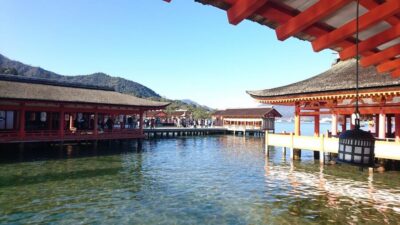 ★ 4.7Osaka/Kyoto: Hiroshima Miyajima Bus Tour & Shinkansen TicketFrom $27712 hours
 ★ 4.5Kyoto: Full-Day English Guided Tour of Kyoto’s HighlightsFrom $88
 ★ 4.5Ancient Capital Tour: Kyoto and Nara Highlights from Kyoto/OsakaFrom $90
 ★ 4.0Kyoto and Nara Day Trip from OsakaFrom $198
 ★ 4.5Sagano Romantic Train & Arashiyama, Kiyomizudera, Fushimi Inari Taisha Day TourFrom $82
 ★ 5.0Full Day Guided Tour to Kyoto and Nara from Osaka by VanFrom $96