
Reviewed · NARA DAY TRIPS
From Osaka/Kyoto:Private Kyoto-Nara Day Tour
Kyoto’s famous Fushimi Inari gates and Nara’s free-roaming deer make a memorable pair, and this private day tour lets you see both without wrestling with train connections. You can start from Osaka, Kyoto, or Nara, then return to any of those three places.
I like the private vehicle and hotel pickup, especially for a packed day crossing the Kansai region. I also like the relaxed feel reported by past customers, along with friendly hosts and quick, respectful handling when a small company-side problem came up. The main caution is time: Kyoto and Nara offer more sights than one day can comfortably hold, and the guide may provide limited historical explanation.
In This Review
- Key points to know
- One private vehicle, two historic cities
- Kinkaku-ji and the Golden Pavilion
- Arashiyama Bamboo Grove and Tenryu-ji
- Lunch and a taste of Kyoto cooking
- Walking beneath Fushimi Inari’s torii gates
- Nara Park and the famous nodding deer
- Todai-ji and the Great Buddha
- Kasuga Taisha among stone lanterns
- What the host adds, and what may be missing
- Is $597 a fair price for two?
- Who should book this Kyoto and Nara day trip?
- Should you book it?
- FAQ
- How long does the tour last?
- Where can pickup take place?
- Where can the tour end?
- Is transportation private?
- How many people can join the private tour?
- Are entrance tickets included?
- Which languages are available?
- Can I cancel the booking?
Key points to know
- One private day for up to two people: The $597 group price works out to $298.50 per person for two.
- Pickup from three Kansai bases: Start in Osaka, Kyoto, or Nara, with drop-off available in any of the three.
- A big-name Kyoto route: The planned day can include Kinkaku-ji, Arashiyama, Tenryu-ji, and Fushimi Inari.
- Nara’s best-known sights: Feed the deer in Nara Park, see the Great Buddha at Todai-ji, and visit Kasuga Taisha.
- Practical inclusions: Hotel transfers, private transportation, a driver, host or greeter, refreshments, and a snack are covered.
- Flexible booking: Cancel up to 24 hours ahead for a full refund, or reserve now and pay later.
One private vehicle, two historic cities
This is a long but efficient sightseeing day. You are not joining a large coach group or figuring out how to move between Kyoto and Nara on your own. A driver collects you at your accommodation, and the private format gives your small party more control over the pace.
The tour costs $597 per group of up to two people. For two, that is $298.50 each. The price makes the most sense if you value a dedicated vehicle, hotel-to-hotel service, and the ability to begin and end in different Kansai cities. It is less attractive if you mainly want a low-cost way to visit a few temples by rail.
The advertised duration is 10 hours. That sounds generous until you count the driving, several major temples, lunch, and the move from Kyoto to Nara. You should think of this as a highlights tour, not a slow, detailed study of every stop. A private vehicle helps cut down on transfers, but it cannot remove distance or crowds.
Pickup is available in Osaka, Kyoto, or Nara. Drop-off can be arranged in Osaka, Kyoto, or Nara as well. Meet your host 10 minutes before the scheduled start, and confirm the pickup details carefully because hotel collection is part of the plan.
A few more Osaka tours and experiences worth a look

Kinkaku-ji and the Golden Pavilion
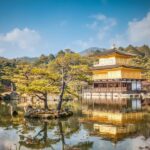
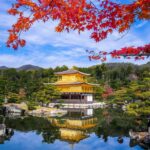
If the day follows the proposed route, Kinkaku-ji is an early Kyoto stop. The temple is famous for its gold-covered pavilion reflected in a pond, a picture-perfect scene that explains its place on nearly every first-time Kyoto list.
The best reason to arrive early is simple: the setting is easier to appreciate before the paths fill up. You will view the pavilion from the established visitor route rather than wander freely through the temple grounds. This is a quick visual hit, but a memorable one.
Kinkaku-ji is also a good example of the tour’s tradeoff. You get a famous Kyoto sight without spending half a day getting there, but a short stop leaves little room for detailed discussion. If learning the full story of each temple matters greatly to you, ask the host for more explanation as you go.
Arashiyama Bamboo Grove and Tenryu-ji
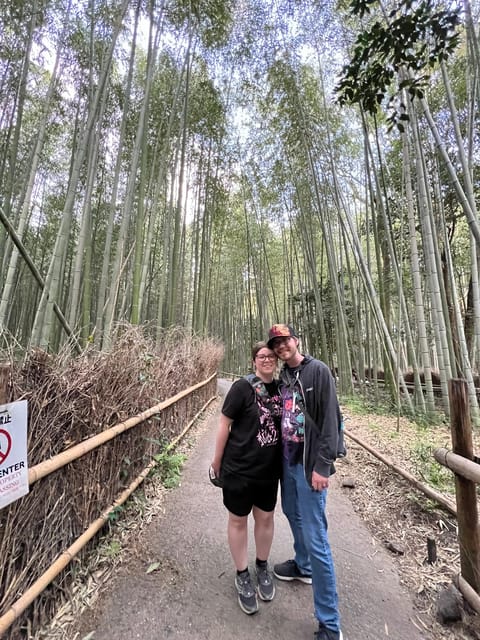
The route then heads west to Arashiyama, where tall bamboo creates a shaded walking path unlike anything else on this itinerary. The grove is visually striking, but it is not a silent wilderness. You may find other people sharing the narrow route, so keep your expectations practical.
The walk is fairly straightforward, though the day includes several temple grounds and outdoor paths. Wear comfortable shoes. The tour is listed as wheelchair accessible, but the specific route through each site can vary, so anyone using a wheelchair should confirm the details with the operator before booking.
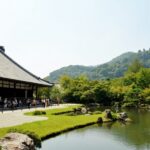
Next door, Tenryu-ji adds more space and calm. This UNESCO World Heritage Site is known for its temple buildings and carefully arranged gardens, with views toward the surrounding mountains. I like this pairing because the bamboo grove offers a short, atmospheric walk, while Tenryu-ji gives you a more open place to pause.
You will likely want time here. That creates another planning question: every extra minute in Arashiyama reduces time later in Kyoto or Nara. A private tour gives you a driver waiting for you, but the overall day still has a fixed 10-hour limit.
Lunch and a taste of Kyoto cooking
Lunch is not specified as included, so plan to pay separately for your meal. The suggested choices include traditional Kyoto dishes such as kaiseki or tofu-based food.
Kaiseki can be elaborate and expensive, while tofu dishes may offer a simpler meal. Ask your host what fits the schedule and your budget. Since the tour includes refreshments and a snack, you will have something small provided, but that should not be treated as a full lunch.
This is a useful point to discuss before the day begins. A private host can help you choose a meal that matches the tight route, but the supplied details do not promise a particular restaurant or cuisine. You should not book this experience expecting a food tour.
Walking beneath Fushimi Inari’s torii gates
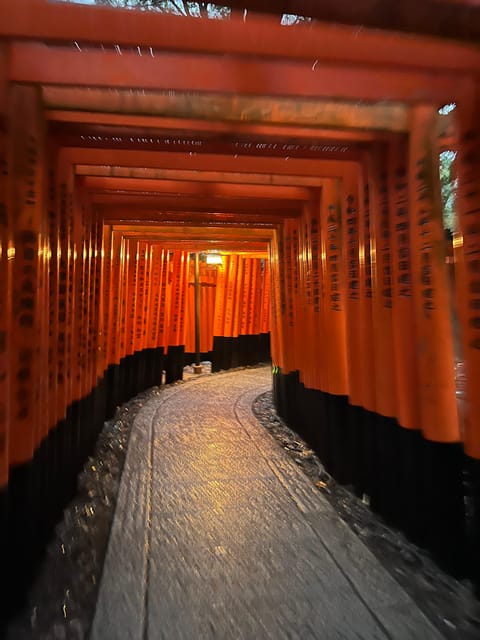
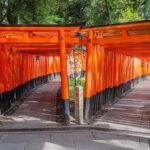
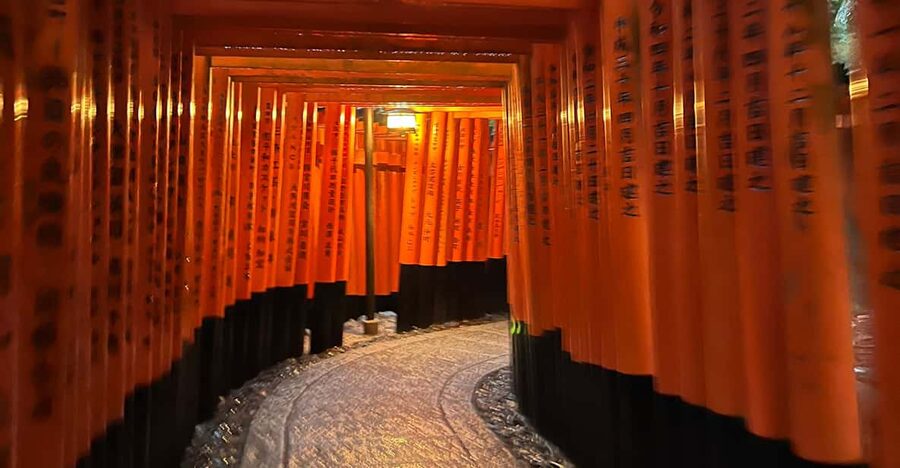
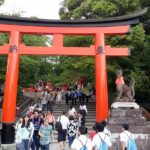
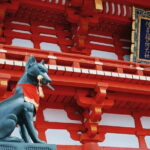
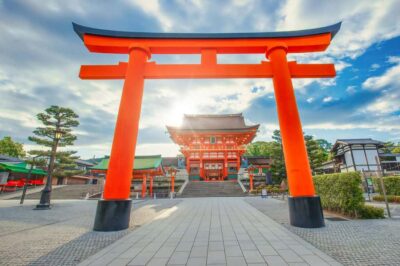
Fushimi Inari Taisha is one of Kyoto’s most recognizable sights. Its hillside path runs beneath thousands of orange torii gates, creating a long tunnel through the wooded slope.
You do not need to walk the entire mountain route to understand why the shrine is special. A shorter section near the entrance gives you the classic view, while a longer walk brings more quiet and exercise. The route description does not set a fixed walking distance, so use the time available and tell your host if you prefer a shorter visit.
Fushimi Inari is a shrine, not simply a photo stop. The torii gates were donated over time, and the path continues upward through the forest. Even if you only walk partway, take a moment to notice the change from the busy entrance area to the more peaceful upper path.
This may be the most time-sensitive Kyoto stop. Fushimi Inari, Arashiyama, and Kinkaku-ji are all major attractions. Trying to give each one a long visit would make the Nara portion rushed. I would treat Fushimi Inari as a focused walk, not a full mountain hike.
A few more Osaka tours and experiences worth a look
Nara Park and the famous nodding deer
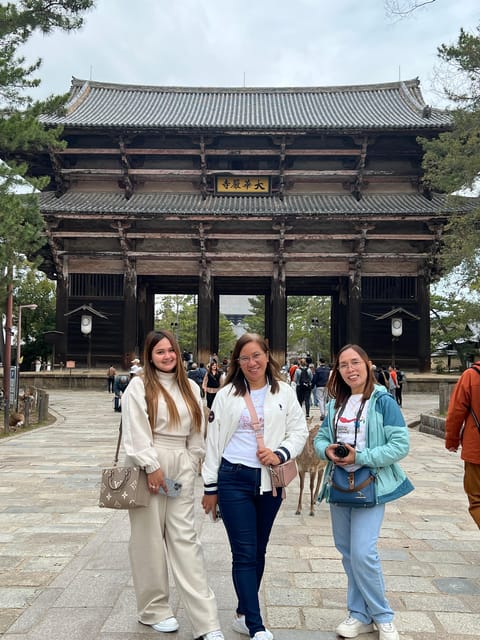
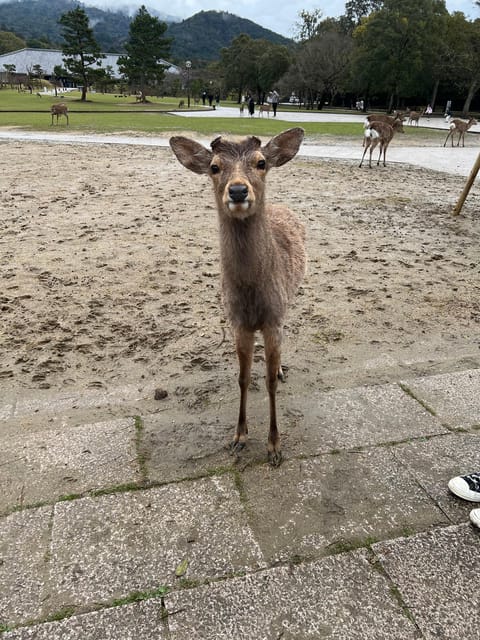
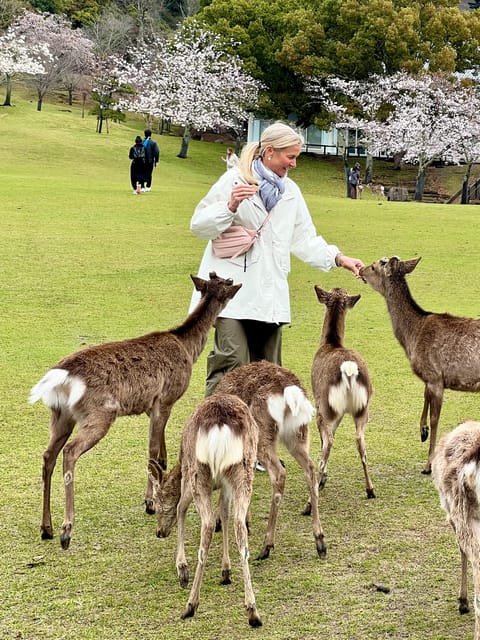
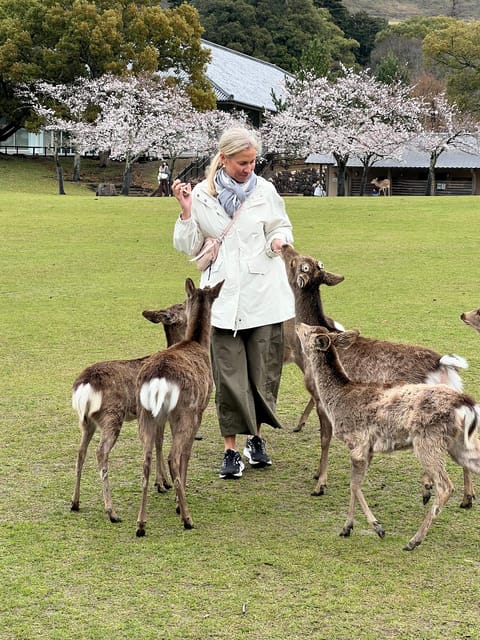
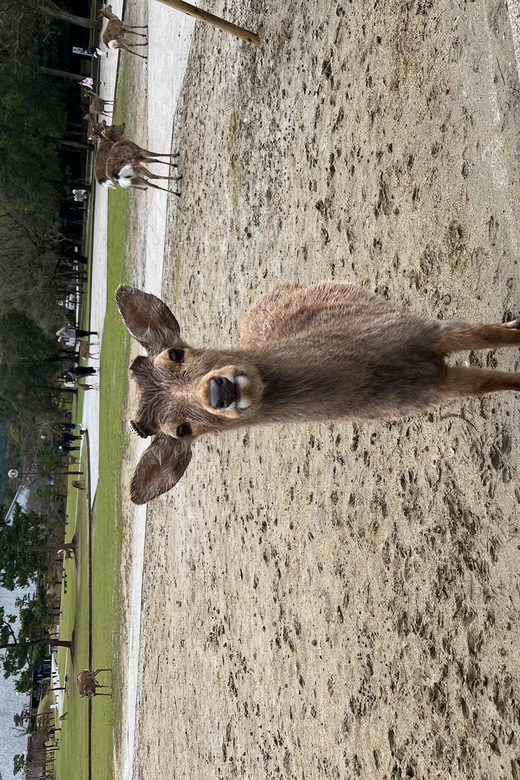
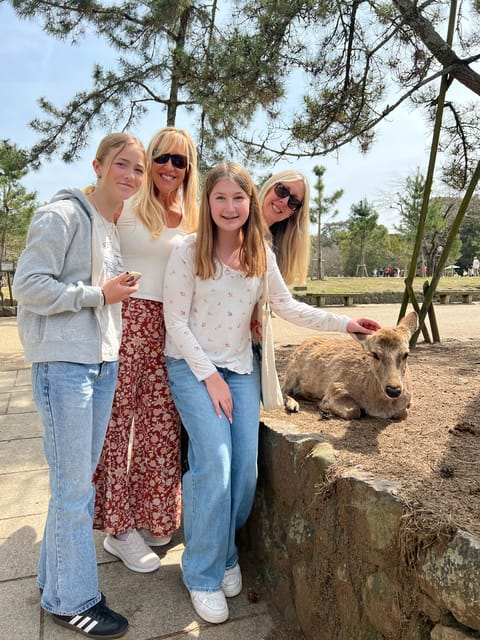
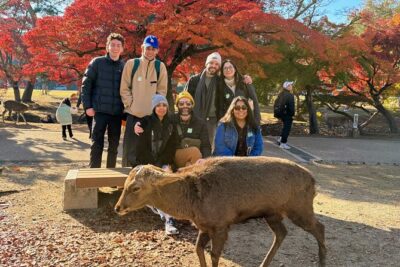
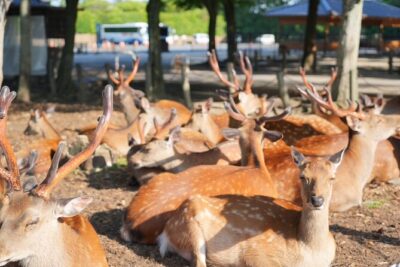
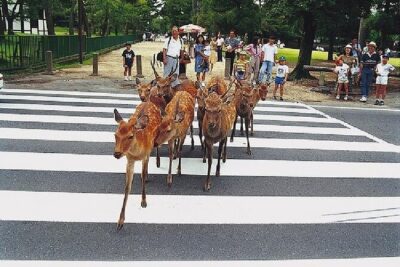
After Kyoto, the tour continues to Nara. The mood changes quickly. Nara Park is open and green, with deer moving freely around the grounds. You can buy deer crackers from stalls and offer them to the animals.
The deer are accustomed to people and may approach when they see food. Keep your movements calm, and finish the crackers promptly. The tour description specifically highlights touching and feeding the deer, but animals remain animals, so follow the host’s instructions and use common sense.
Nara Park is more than a deer encounter. It links several important sights, including Todai-ji and Kasuga Taisha. You will appreciate having a private driver because the day involves moving between two cities and several widely known sites.
The deer are also one of the most family-friendly parts of the outing. Children usually respond well to the hands-on experience, though younger kids should stay close to an adult. The tour is private, so your group can spend a little more time here if the deer are the highlight, provided the rest of the schedule allows it.
Todai-ji and the Great Buddha
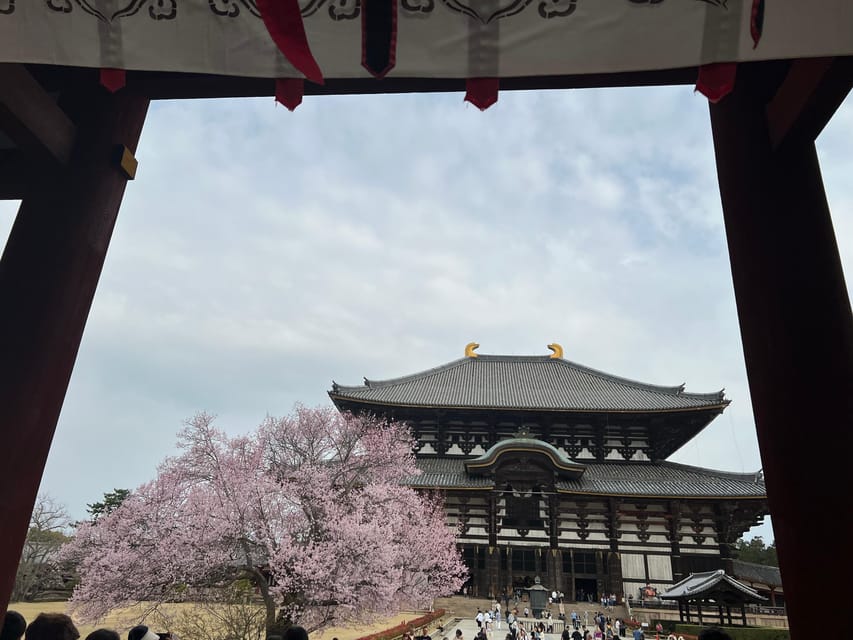
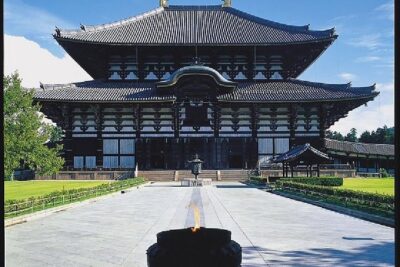
Todai-ji houses the Great Buddha, one of Japan’s largest bronze Buddha statues. The main hall is itself an impressive sight, with a huge wooden structure built to contain the statue.
This is the Nara stop that gives the day its strongest sense of scale. After the open park and small deer, you enter a massive temple hall and face a monumental image. It is worth making time for, even if you need to keep the visit focused.
Todai-ji requires an entry ticket, and entry fees are not included in the tour price. Budget for tickets at the Kyoto and Nara attractions you choose to enter. The supplied details do not give current admission prices, so check them before departure.
The guide’s role matters here. A friendly host can help with the practical flow, but the experience may not include lengthy historical commentary. One past customer liked the guide and the easy pace but wished for more explanation about the sites. If you want deeper context, ask questions directly rather than assuming each temple will receive a full talk.
Kasuga Taisha among stone lanterns
Kasuga Taisha offers a quieter close to the Nara portion. The shrine is known for vermilion buildings, stone lanterns, and wooded surroundings. After Todai-ji’s huge hall, this stop brings the pace down.
The shrine’s lanterns are among its most recognizable details. Look for the way they continue along the paths and blend into the forest setting. You may find this a more peaceful place to walk, though the available time will depend on how long you spend at Nara Park and Todai-ji.
Kasuga Taisha is also a good reason to avoid treating Nara as only a deer park. The animals are fun, but the shrine gives you a better sense of the city’s religious character. If your priority is temples and ceremony rather than animal encounters, ask the host how much time can be reserved here.
What the host adds, and what may be missing
The tour includes a driver and host or greeter, with English, Japanese, and Tagalog available. The host can help you meet the schedule, handle the movement between stops, and make the day feel less like a self-guided transport puzzle.
The strongest praise has been for the friendly welcome and considerate service. One customer specifically appreciated the Filipino connection of the tour company and said a problem was handled quickly and respectfully. That suggests a personal, service-minded operation, though no individual guide names are provided.
The main weakness is the amount of site information. You may get a good introduction and practical help without receiving a detailed lecture at every temple. I would book this for transportation, company, and efficient sightseeing first. If expert-level cultural interpretation is your main goal, ask before booking how much commentary your host usually provides.
The private format is a real advantage here. You can ask for a slower walk at Fushimi Inari, more time with the deer, or a shorter stop at a place that interests you less. Still, do not assume every request can be accommodated. The route covers a lot of ground in one day.
Is $597 a fair price for two?
For two people, the price is $597 total. The value rests mainly in convenience. Hotel pickup and drop-off, private transportation, a driver, a host, refreshments, and a snack are included. You also avoid arranging separate train rides, local transfers, and the return journey.
Entry tickets are extra, and lunch is not listed among the included items. Add those costs when planning your budget. The tour also does not promise a special meal, private temple access, or a long specialist lecture.
I see the strongest value for couples, friends, or family members staying in Osaka who want to cover Kyoto and Nara in one day. It can also suit you if you are finishing in a different city, since pickup and drop-off options include Osaka, Kyoto, and Nara.
For solo visitors, the group price is less appealing because the full $597 applies to a group of up to two. For larger parties, the supplied pricing does not explain how the rate changes, so confirm that before booking.
Who should book this Kyoto and Nara day trip?
I would choose this tour if you want a private, door-to-door day and have limited time in Kansai. It is especially useful if public transportation feels tiring, if you are traveling with a child, or if you want to finish in a different city from where you started.
The tour also works well for first-time visitors who want the major sights: Kinkaku-ji, Arashiyama, Tenryu-ji, Fushimi Inari, Nara Park, Todai-ji, and Kasuga Taisha. You will see a lot, but you will not have unlimited time at each place.
I would hesitate if your ideal day is slow and scholarly. The itinerary is ambitious, and the guide may not offer much historical detail unless you ask. You should also allow extra money for admissions and lunch.
Free cancellation up to 24 hours before departure and the reserve-now, pay-later option make planning easier. The activity is listed as wheelchair accessible, and the private group setup keeps the day more personal than a large shared tour.
Should you book it?
Book this tour if your priority is seeing Kyoto and Nara’s headline sights in one long day with private transportation and hotel service. The friendly host style, flexible starting and ending cities, and chance to feed Nara’s deer give it broad appeal.
Choose another option if detailed historical teaching, a slow pace, or included meals matter more to you. Before paying, ask how much time will be assigned to each stop and how much commentary the host normally provides. That one question will tell you if this efficient Kyoto and Nara sampler matches your travel style.
FAQ
How long does the tour last?
The tour lasts 10 hours. Check availability for the available starting times.
Where can pickup take place?
Pickup is available from guest accommodations in Nara, Kyoto, or Osaka.
Where can the tour end?
Drop-off can be arranged in Osaka, Kyoto, or Nara.
Is transportation private?
Yes. The experience includes private transportation with a driver and a host or greeter.
How many people can join the private tour?
The listed price covers a private group of up to two people.
Are entrance tickets included?
No. Entry tickets are not included in the tour price.
Which languages are available?
Host or greeter support is available in English, Japanese, and Tagalog.
Can I cancel the booking?
Yes. You can cancel up to 24 hours in advance for a full refund. You can also reserve now and pay later.
More Private Tours in Osaka


More Osaka & Hiroshima Departures in Osaka
More Nara Day Trips in Osaka
More tours in Osaka we've reviewed




Nara Day Trips, compared.
 ★ 5.0World Heritage Kyoto & Nara Uji Authentic Matcha ExperienceFrom $129
 ★ 4.7Kyoto/Osaka: Nara, Fushimi Inari Taisha, Arashiyama Bus TourFrom $529 - 10 hours
 ★ 4.4Osaka/Kyoto: Arashiyama, Nara & Fushimi Inari Shrine w/LunchFrom $61
 ★ 5.0Nara Early Morning Tour (Kyoto or Osaka Departure Available)From $61
 ★ 4.5Kyoto and Nara Day Trip from KyotoFrom $194
 ★ 4.5Nara Afternoon Tour from Kyoto or OsakaFrom $102