
Reviewed · OSAKA & HIROSHIMA DEPARTURES
Kyoto One Day Sightseeing Tour from Osaka or Kyoto
Kyoto packs centuries of Japan into one long day: a shogun’s castle, thousands of red torii gates, bamboo paths, a famous bridge, and the Golden Pavilion. This nine-hour bus tour gives you that broad first look without asking you to plan several train routes and local connections.
I like the range of sights, from the formal rooms of Nijo Castle to the quiet black gate at Nonomiya Shrine. I also like the practical transport, especially if you are staying in Osaka and want to see Kyoto without building the day around timetables. The tradeoff is clear: the schedule is brisk, and the tour may feel more like a carefully managed overview than a slow cultural visit.
Some guides, including Theodore Chan and Jay, have been praised for keeping the day moving, explaining the sights, and adding humor. But the experience is not equally detailed at every stop. If you want a full talk at each monument, confirm what your guide provides, since the amount of explanation can vary.
In This Review
- Key points at a glance
- What this Kyoto day is really designed to do
- Nijo Castle and the power of the Tokugawa shoguns
- Fushimi Inari’s endless red gates
- Arashiyama in four short chapters
- Arashiyama Bamboo Forest
- Nonomiya Shrine’s unusual black torii
- The Kimono Forest installation
- Togetsukyo Bridge over the Katsura River
- Kinkaku-ji and Kyoto’s golden finish
- The guide can shape the entire day
- Timing, group size and the bus format
- What the $65 price includes and leaves out
- Who should book this day trip?
- Should you book the Kyoto One Day Sightseeing Tour?
- FAQ
- How long is the Kyoto sightseeing tour?
- Where does the tour depart from?
- What transportation is provided?
- Is lunch included?
- Are Nijo Castle tickets included?
- Is Kinkaku-ji admission included?
- Is there an admission fee for Fushimi Inari?
- Can I bring a stroller or large luggage?
- Can I cancel for a full refund?
Key points at a glance
- Eight Kyoto stops in about nine hours: You cover Nijo Castle, Fushimi Inari, Arashiyama and Kinkaku-ji in one demanding day.
- A useful Osaka base option: The air-conditioned vehicle saves you from arranging the Osaka-to-Kyoto journey and several local transfers yourself.
- The best contrast is between castle and shrine: Nijo Castle shows shogun-era power, while Fushimi Inari offers a long corridor of red torii gates.
- Arashiyama is split into several short visits: Bamboo Forest, Nonomiya Shrine, Kimono Forest and Togetsukyo Bridge each get a separate slice of time.
- Two major entry fees are extra: Budget 1,300 yen for Nijo Castle and Ninomaru Palace, plus 500 yen for Kinkaku-ji.
- The group can reach 45 people: That helps explain the organized bus format, but it can also make meeting times and movement feel less personal.
What this Kyoto day is really designed to do
This is a highlight tour, not a leisurely neighborhood walk. You will move across Kyoto by air-conditioned vehicle and stop at several of the city’s best-known places, with roughly 40 minutes to an hour at the major sites.
That format has real value. Kyoto is spread out, and the day combines eastern, western and central sights that would take more effort to arrange alone. From Osaka, you avoid piecing together a long-distance train, subway or bus plan, then repeating the process between attractions.
The cost is $65 per person before the two main admission fees and lunch. With those tickets added, the required sightseeing cost is 1,800 yen per person, and lunch remains your responsibility. The price is reasonable for a full-day vehicle and guide, especially if you value simplicity over independent routing.
You should not expect every stop to receive a long historical talk. One low-scoring experience specifically found the tour mostly unguided, with only brief explanations while riding between sites. That is the key question to ask yourself: do you want efficient sightseeing, or do you want an in-depth guided study of Kyoto?
A few more Osaka tours and experiences worth a look

Nijo Castle and the power of the Tokugawa shoguns
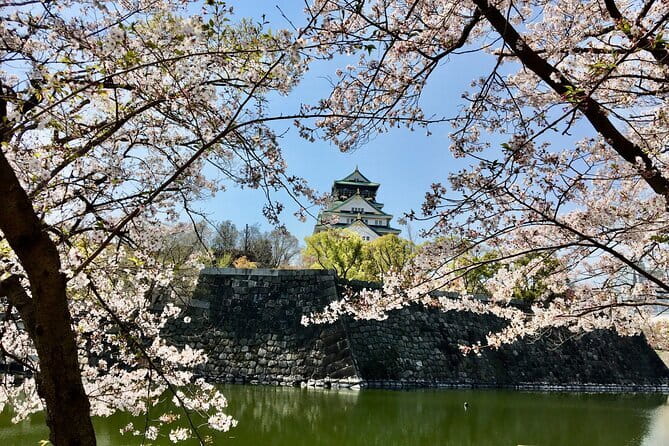
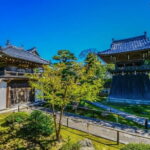
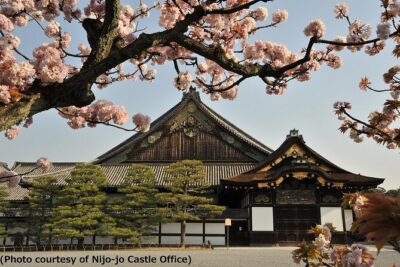
The day begins at Nijo Castle, built in 1603 as the Kyoto residence of Tokugawa Ieyasu, the first shogun of the Edo Period. Its importance is not only architectural. The castle has witnessed major moments in Japanese history across four centuries and is now a UNESCO World Heritage site.
You have about one hour here. That is enough to get a strong sense of the grounds and palace buildings, but it is not an open-ended visit. The Ninomaru Goten Palace is the main paid addition, and its ticket costs 1,300 yen.
I like this opening because it gives the day a firm historical anchor. Before you reach the shrines and bamboo, you see the controlled, formal world of military government. The palace buildings are among Japan’s best surviving examples of castle-palace architecture from the feudal era.
The practical catch is the extra admission fee and limited time. If you want to examine palace rooms carefully, listen to every explanation and wander the grounds at an easy pace, one hour will feel short. Keep your attention on the structure, gardens and historical role, then accept that you will not see every corner.
Fushimi Inari’s endless red gates
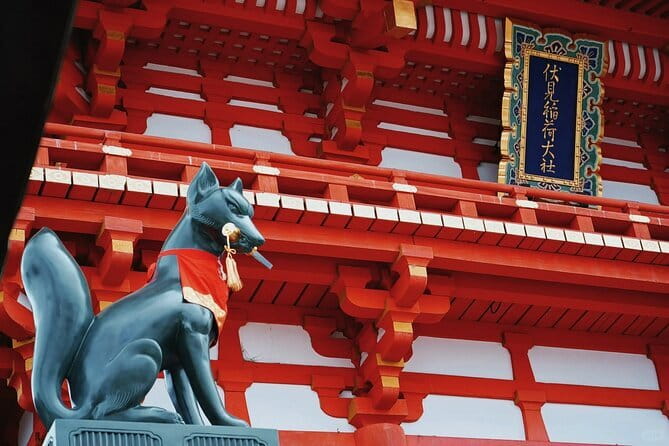
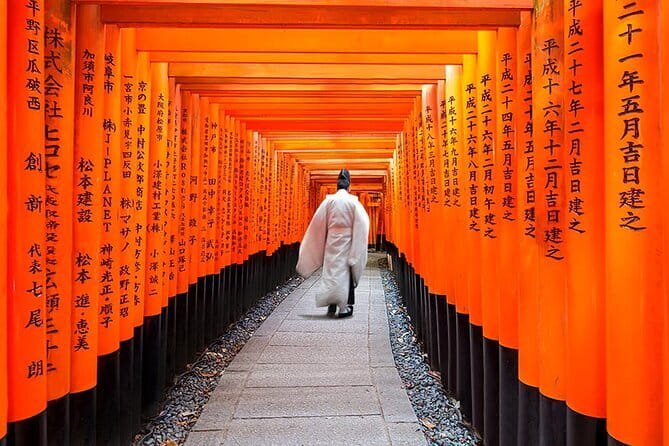
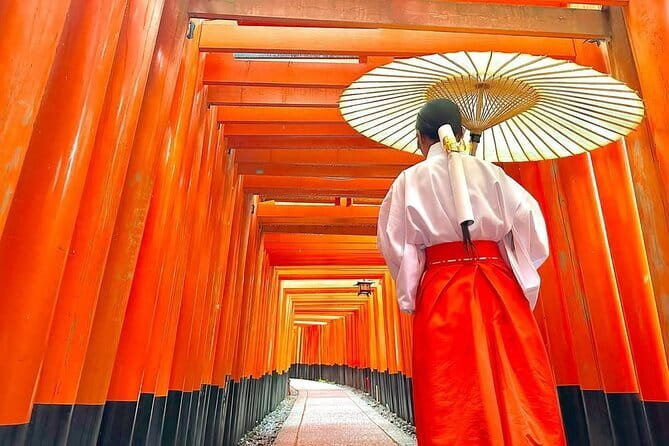
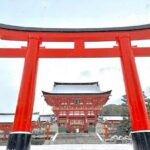
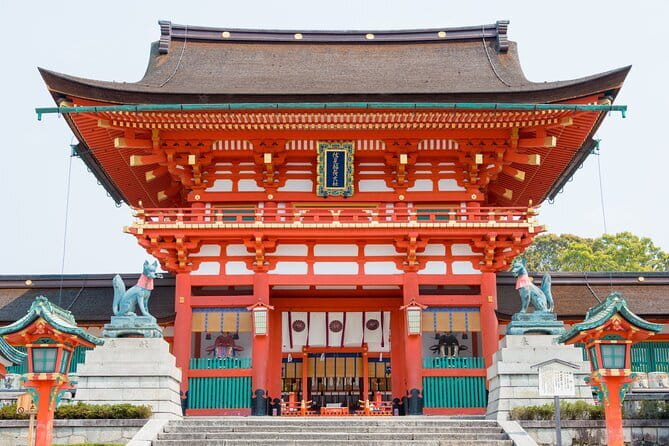
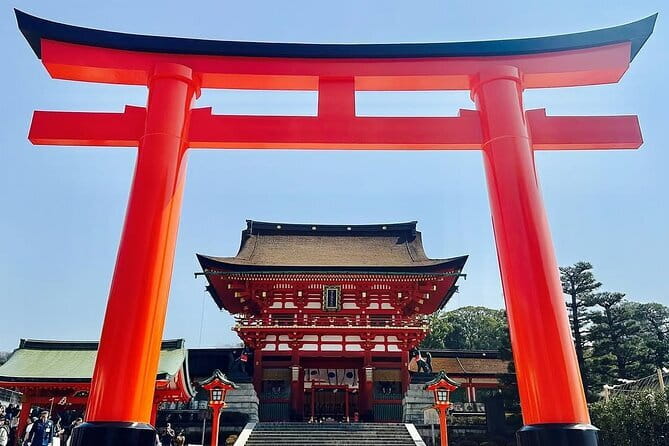
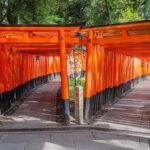
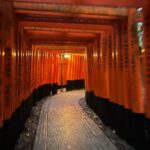
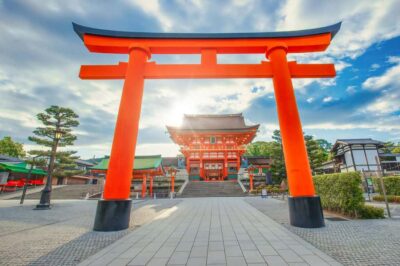
The next major stop is Fushimi Inari Taisha, the head shrine of roughly 30,000 Inari shrines across Japan. Inari is associated with rice, and the shrine is famous for its Senbon Torii, or Thousand Torii Gates.
The tour allows about one hour and 10 minutes, with no admission charge. That sounds generous until you see how far the torii-lined route can continue up the mountain. You will not walk the entire shrine area in this time, so use your visit for a focused stretch rather than trying to reach every point.
The red gates create the tour’s most memorable visual scene. They form a changing corridor of light and shadow, and the scale of the shrine feels different from the formal spaces at Nijo Castle. I would use this stop to walk at a steady pace, take a few photographs, and leave time to find your way back to the meeting point.
Because the shrine is free, this is one of the strongest value stops on the day. The limitation is not cost but time and crowd movement. The tour does not promise a private route or a long guided explanation, so you will get the most from it by knowing what you want to see before you step off the bus.
Arashiyama in four short chapters
Arashiyama receives several separate stops, which is useful because the district offers more than one famous photo point. It is in western Kyoto and is known for natural beauty, historic sites and scenic attractions. The area has been popular since the Heian Period.
The schedule gives 20 minutes for Arashiyama itself, followed by 40 minutes in the Bamboo Forest, 20 minutes at Nonomiya Shrine, 20 minutes at the Kimono Forest, and 20 minutes at Togetsukyo Bridge. These times may overlap in practical walking terms, so pay close attention to the guide’s instructions and meeting locations.
Arashiyama Bamboo Forest
The Bamboo Forest is one of Kyoto’s signature sights. Tall bamboo stalks create a narrow, calm-looking path, and the setting is very different from the red gates at Fushimi Inari.
You have 40 minutes here, the longest Arashiyama allocation. That should let you walk the main stretch and take in the atmosphere, but it is still a timed visit. The path is a popular stop, so do not spend the whole slot trying to find a completely empty view.
I like that the tour includes the forest as part of a wider Arashiyama visit rather than treating it as the entire district. The drawback is that bamboo photographs can make the stop look more spacious and peaceful than a short organized visit feels. Keep your expectations realistic and enjoy the walk itself.
A few more Osaka tours and experiences worth a look

Nonomiya Shrine’s unusual black torii
Nonomiya Shrine is a small Shinto shrine in Arashiyama with a distinctive black torii gate. That detail matters because many Kyoto shrine images feature bright vermilion gates, while Nonomiya offers a quieter visual break.
The visit lasts 20 minutes. This is enough for a look and a brief pause, not a deep exploration. I would treat it as a compact cultural stop that adds variety to the bamboo walk.
Its location in Arashiyama also makes the timing logical. You can connect the famous forest with a smaller shrine that might be easy to miss if you were rushing through the district alone.
The Kimono Forest installation
The Kimono Forest is a modern textile installation made from 600 clear acrylic cylinders, each two meters tall. The pillars contain kimono fabrics in different designs, creating a colorful corridor near the train station area.
You get 20 minutes here. It is not an old temple or shrine, and that is precisely why it belongs in the day. Kyoto is not frozen in the past. This stop shows how traditional fabric patterns can be presented in a modern public installation.
The short visit is appropriate, though you may want a little time for photographs. Since the tour includes several Arashiyama points, the Kimono Forest helps you see the district as a living place rather than only a bamboo backdrop.
Togetsukyo Bridge over the Katsura River
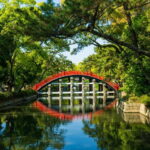
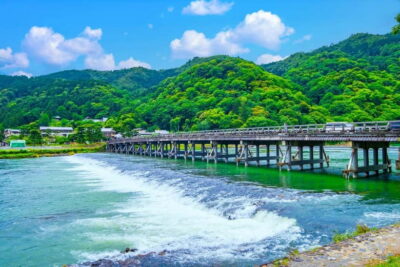
Togetsukyo Bridge is Arashiyama’s best-known landmark. The original bridge dates to the Heian Period, from 794 to 1185, while the most recent reconstruction was completed in the 1930s. It crosses the Katsura River and gives you one of the area’s defining views.
The allotted 20 minutes is enough to reach the bridge, look along the river and take photographs. It is not enough for a long riverside walk, so decide quickly if you want the bridge, the water, or a wider view of the surrounding area.
I like this final Arashiyama element because it broadens the visit beyond enclosed paths and shrine gates. You get open space and a sense of why the district became a favored seasonal retreat. Just remember that several short stops add up to a lot of walking and repeated regrouping.
Kinkaku-ji and Kyoto’s golden finish
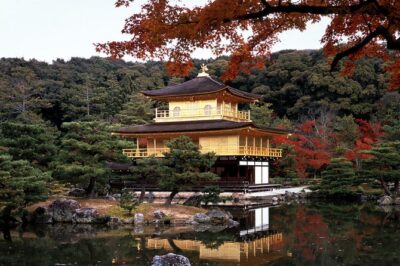
Kinkaku-ji, the Golden Pavilion, is a Zen Buddhist temple and UNESCO World Heritage site. Its gold-covered exterior sits beside serene gardens, creating the classic final image many people associate with Kyoto.
The tour allows 40 minutes, and admission costs 500 yen. That time should give you a view of the pavilion and a walk through part of the garden route, but it will not support a slow visit.
Kinkaku-ji is a strong closing stop because it provides a polished contrast to the rougher, more atmospheric experiences earlier in the day. Nijo Castle is formal and tied to shogun power. Fushimi Inari is rhythmic and spiritual. Arashiyama is rooted in scenery and local landmarks. Kinkaku-ji brings the day back to a carefully composed temple setting.
The famous view is also the main limitation. You will see the pavilion from the designated visitor route, but the tour’s timing means you cannot linger as long as you might on an independent visit. If this is your top Kyoto priority, consider returning on another day instead of relying on this short stop alone.
The guide can shape the entire day
The strongest experience depends heavily on the person leading the group. Theodore Chan has been singled out for being organized, informative, patient and good-humored. Jay has also been praised for friendly explanations and for keeping the schedule under control.
Those qualities matter more here than on a single-site tour. You are moving through eight listed stops, keeping track of a bus, and dealing with a large possible group of up to 45 people. Clear instructions can save time and prevent the day from turning into a series of rushed searches for the meeting point.
At the same time, the guide’s role may be more practical than academic. Some of the feedback describes excellent organization, while one experience found the tour mostly unguided, with brief information given on the bus. You should book this with the expectation of orientation, transport and selected commentary, not a private specialist tour.
If you are assigned a guide like Theodore or Jay, you may get a more informative and polished day. But the provider does not guarantee a particular guide, so I would not make the booking solely on one guide’s name.
Timing, group size and the bus format
Nine hours is a lot of sightseeing, but the itinerary is tightly packed. Nijo Castle receives an hour, Fushimi Inari a little more, and most Arashiyama points only 20 to 40 minutes. Travel time between districts also takes part of the day, even if the schedule does not present it as a sightseeing stop.
The air-conditioned vehicle is a major convenience. Kyoto’s distances can make an independent day tiring, especially when you are trying to connect Fushimi Inari with western Kyoto and then reach Kinkaku-ji. The bus gives you a fixed structure and a place to sit between visits.
The possible group size is 45 people. That is not a small walking tour, and you should expect the guide to use firm meeting times and clear procedures. One particularly organized experience even received bus seat numbers in advance, but that is not stated as a standard feature for every departure.
If you are booking separately from relatives or friends, tell the provider at least one day ahead that you want to stay together. This helps reduce the chance of being placed in different vehicles. Also mention a stroller or large luggage when booking, since the vehicle arrangement may need advance notice.
What the $65 price includes and leaves out
At $65, the tour’s value comes from coverage and transport. You are paying to connect several far-flung Kyoto highlights in one day, with an air-conditioned vehicle and guide included.
You still need to add:
- 1,300 yen for Nijo Castle and Ninomaru Goten Palace
- 500 yen for Kinkaku-ji
- Lunch
The two admission fees are easy to overlook because the tour price itself is modest. Add them before comparing this with a self-guided day. You may save money by using public transport, but you would also take on the work of planning the route and managing transfers.
I see the tour as good value for a first Kyoto visit from Osaka, especially if your time is limited. It is less compelling for a return visit, or for anyone who already knows Kyoto’s transport system and wants to spend half a day at one shrine or temple.
Who should book this day trip?
I would recommend it to you if you want a broad first look at Kyoto, have only one available day, or are based in Osaka and prefer not to arrange the route yourself. It also suits visitors who enjoy seeing major landmarks in a clear sequence and do not mind fixed time limits.
Families and older visitors may appreciate the bus, though the day still includes walking and frequent stops. Most people can participate, but anyone bringing a stroller or large luggage should disclose it in advance.
I would hesitate if your main goal is detailed cultural interpretation. The tour can be well organized and informative, but the commentary may be brief, and the group can be large. I would also hesitate if you dislike rushing, since Arashiyama alone is divided into several short visits.
Free cancellation is available if you cancel at least 24 hours before the start time. Changes or cancellations inside that window are not accepted for a refund, and the cut-off follows local time.
Should you book the Kyoto One Day Sightseeing Tour?
Book it if you want maximum Kyoto coverage with minimum route planning. Nijo Castle, Fushimi Inari, Arashiyama and Kinkaku-ji make a strong set of first-visit sights, and $65 is fair once you factor in the vehicle and guide.
Skip it if you want a slow, deeply explained day. The tour’s real strength is efficient access, not long visits. Go in ready to follow the schedule, pay the two extra admission fees, and use each stop wisely. For a one-day introduction from Osaka or Kyoto, that is a sensible bargain.
FAQ
How long is the Kyoto sightseeing tour?
The tour lasts approximately nine hours.
Where does the tour depart from?
You can depart from Osaka or Kyoto.
What transportation is provided?
An air-conditioned vehicle is included. The tour operates in a bus format, with a maximum group size of 45 people.
Is lunch included?
No. Lunch is not included in the tour price.
Are Nijo Castle tickets included?
No. Admission to Nijo Castle and Ninomaru Goten Palace costs 1,300 yen and is not included.
Is Kinkaku-ji admission included?
No. The Kinkaku-ji Temple ticket costs 500 yen and is paid separately.
Is there an admission fee for Fushimi Inari?
No. Admission to the Fushimi Inari stop is free.
Can I bring a stroller or large luggage?
You should indicate when booking if you are traveling with a stroller or large luggage.
Can I cancel for a full refund?
Yes, if you cancel at least 24 hours before the experience start time. Cancellations or changes made less than 24 hours in advance are not accepted for a refund.
More 1-Day Tours in Osaka
More Osaka & Hiroshima Departures in Osaka
More tours in Osaka we've reviewed



Osaka & Hiroshima Departures, compared.
 ★ 4.1Osaka/Kyoto:Kinkakuji,Arashiyama,FushimiInariShrine,NaraParkFrom $66
 ★ 4.5One-Day Tour of Kyoto’s Highlights from Osaka/KyotoFrom $66
 ★ 4.7Osaka/Kyoto: Hiroshima Miyajima Bus Tour & Shinkansen TicketFrom $27712 hours
 ★ 4.4Osaka/Kyoto: Arashiyama, Nara & Fushimi Inari Shrine w/LunchFrom $61
 ★ 4.3From Osaka: Sagano Train Ride and Kyoto Guided Day TourFrom $66
 ★ 4.0Kyoto and Nara Day Trip from OsakaFrom $198