
Reviewed · GUIDED
Guide tour of Japanese bathing culture at Funaoka Onsen
Funaoka Onsen is not a sightseeing stop where you take a quick look and move on. It is a working Kyoto bathhouse, and this 90-minute experience shows you how to use it properly before you step into the water. Local guide Atsuki explains the customs, the health side of bathing, and the small actions that help you relax instead of worry about doing something wrong.
I like two things here. First, the opening lesson takes place at Sarasa Nishijin, a cafe made from a former public bathhouse, so the setting adds a useful piece of Kyoto’s bathing story. Second, the group is capped at five people, which gives Atsuki room to guide first-time bathers closely. The main consideration is simple: Funaoka requires nude bathing, with men and women separated, so couples cannot bathe together.
In This Review
- Key points to know before booking
- Why a public bath makes a better lesson than a postcard view
- Sarasa Nishijin, a cafe with a bathhouse past
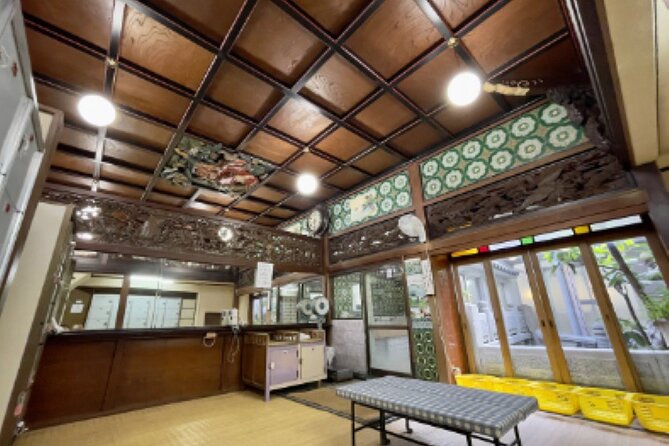
- Funaoka Onsen, a working Kyoto institution
- What the bathing routine means for you
- Nude bathing and gender separation
- Atsuki’s role and the English question
- Is $45.72 a fair price?
- Timing, meeting point, and practical planning
- Who will get the most from this experience?
- Should you book the Funaoka Onsen bathing tour?
- FAQ
- How long does the Japanese bathing tour last?
- What is included in the experience?
- Where does the tour meet?
- Is bathing at Funaoka Onsen nude?
- Who is the guide?
- Is the tour conducted in English?
- How many people can join?
- Can I cancel for a refund?
Key points to know before booking
- A former bathhouse becomes your classroom: Begin with a drink and a short cultural lesson at Sarasa Nishijin.
- Funaoka Onsen is a real local bathhouse: You do not just watch a demonstration. You use the facility after learning the proper steps.
- Atsuki provides personal guidance: He explains etiquette and stays involved as you work through the bathing process.
- The bathing is nude and gender-separated: Men and women use separate areas, and couples will be apart during the soak.
- The tour suits first-time bathers: You receive practical instructions you can use later at other Japanese public baths and hot springs.
- The experience lasts about 90 minutes: It costs $45.72 per person and allows no more than five participants.
Why a public bath makes a better lesson than a postcard view
Japanese bathing culture is easy to misunderstand from the outside. You may know that people remove their clothes, wash before entering the bath, and keep the bathwater clean. But knowing those facts is not the same as feeling comfortable with the routine.
This experience deals with that gap. You learn the meaning behind public bathing, the correct sequence, and the behavior expected inside a Japanese bathhouse. Then you put the instructions into practice at Funaoka Onsen.
I like the way the tour treats bathing as a cultural ritual rather than a simple spa visit. Japan’s public baths are tied to everyday life, wellness, and social customs. The lesson gives you a clearer sense of why the bath matters, not just a checklist of rules.
The format also helps if you are visiting alone. You do not need a companion to explain what to do at each stage. The small group and the guide’s support can take away the worry that you might offend someone or miss an important step.
Still, this is not the right choice for everyone. You must be comfortable bathing without a swimsuit. The facility separates bathers by gender, so partners and friends of different genders will have separate experiences once they enter the bathing areas.
Other guided tours in Kyoto
Sarasa Nishijin, a cafe with a bathhouse past
The experience begins at Sarasa Nishijin, listed as a cafe that was renovated from a public bathhouse. That detail gives the introduction some character. You are not starting in a plain meeting room with a stack of slides. You are sitting in a place connected to the subject itself, with a drink while you learn about Japanese public baths.
The first portion lasts about 15 minutes. It is short, but it sets up the rest of the visit. Atsuki explains the background of bathing in Japan and covers the proper way to bathe. You also receive a guide to take with you, which is useful because bathhouse etiquette is easier to remember when you can review it later.
The lesson covers both customs and health benefits. You can expect practical advice on how to prepare, how to behave around the water, and how to make the bath more relaxing. The focus is not on academic history alone. You are being prepared to use the next bathhouse with confidence.
Sarasa Nishijin is also a good choice for anyone who wants a little context before entering Funaoka. A public bath can look confusing at first: lockers, changing areas, washing stations, pools of different temperatures, and signs you may not read. The opening talk gives those details a place in the wider Japanese tradition.
The limitation is that this stop is brief. Do not expect a long cafe visit or a full museum tour. Its purpose is to introduce the subject and prepare you for the main event.
Funaoka Onsen, a working Kyoto institution
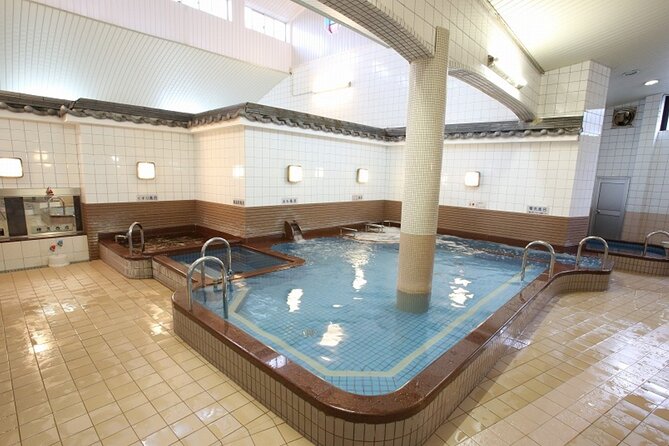
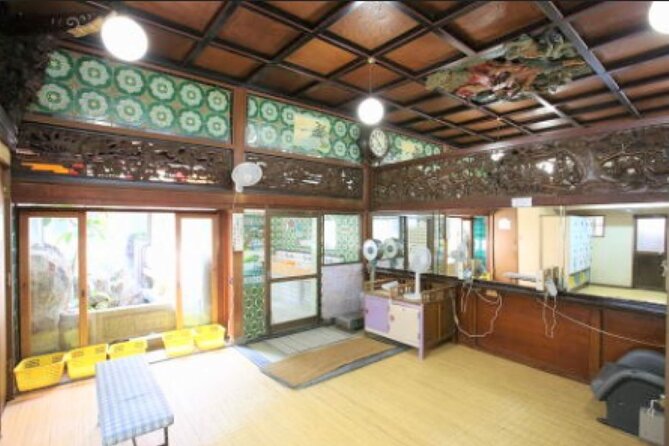
The second stop is Funaoka Onsen, where the actual bathing takes place. The bathhouse is described as a long-loved Kyoto facility with an interesting story of its own. Its founders competed with traditional geothermal hot springs, a useful reminder that Japanese bathing culture includes more than naturally heated resort baths.
That distinction matters. The word onsen is often used loosely by international visitors, but Japan has several kinds of bathing facilities. Funaoka gives you a chance to experience a public bath in an ordinary local setting, rather than only visiting a resort designed for tourists.
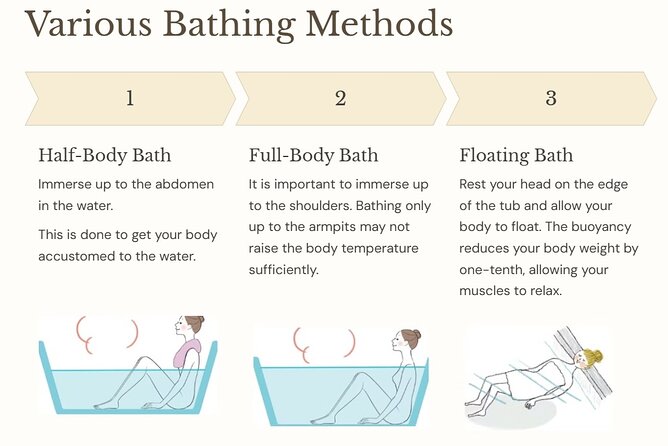
Before you bathe, Atsuki uses materials to go over the methods again. This second explanation is important. The cafe talk gives you the cultural frame, while the lesson at Funaoka prepares you for the exact process you are about to follow.
Then you try it yourself. The experience includes admission, so you are not paying for a talk and then arranging a separate bathhouse visit. The tour ends back at the meeting point after the roughly one-hour Funaoka portion.
I particularly like this teach-then-practice structure. If you are nervous about entering a Japanese bath for the first time, the guide is there to answer questions before you have to act. That support can make the difference between enjoying the hot water and spending the whole visit wondering if you are breaking a rule.
What the bathing routine means for you
The value of the tour is not only the time spent in the water. It is the confidence you carry into future baths. Atsuki explains that the same basic bathing steps and etiquette apply at other Japanese hot springs and public baths, so the lesson can serve you well beyond Funaoka.
You will learn how bathing works as a sequence. The point is to clean yourself before entering the shared water, then use the bath for soaking and relaxation. That sounds simple, but first-time visitors often need reassurance about where to sit, when to enter, and how to behave around other bathers.
A guided introduction also helps with cultural awareness. Public bath water is shared, so cleanliness and quiet behavior matter. The bath is not treated like a swimming pool. You are there to wash and soak, not to splash, swim, or turn the room into a social activity.
The health discussion adds another layer. Warm bathing can be relaxing, but it is not suitable for everyone. The experience specifically excludes people with serious heart or lung disease, recent gastrointestinal bleeding, advanced malignant tumors, severe anemia, or other medical reasons to avoid hot springs. You should also skip the tour if you have a fever, feel unwell, or have consumed alcohol.
If a doctor has told you not to use hot springs, follow that advice. This is one part of the experience where enthusiasm should not overrule common sense.
Nude bathing and gender separation
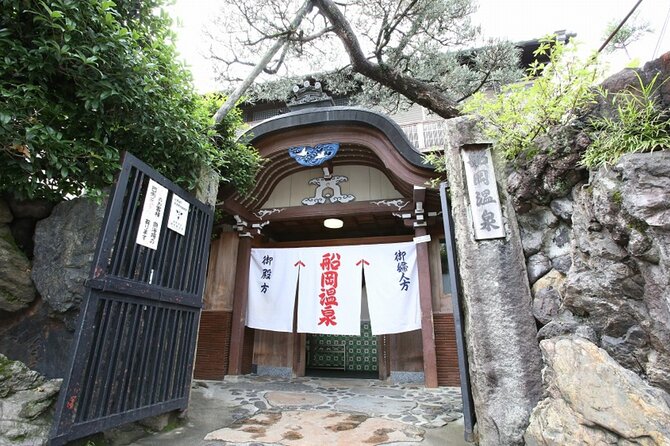
You need to understand this before booking. Funaoka Onsen requires nude bathing, and the bath areas are separated by gender. Swimsuits are not part of the stated experience.
That arrangement is standard for many Japanese public baths, but it can still feel unfamiliar. You will not bathe alongside a partner of another gender, and couples will be separated for the soaking portion. One of the published comments specifically points out that this may not suit everyone.
The guide can explain the custom and help you understand what to expect, but he cannot change the facility’s rules. If mixed bathing is important to you, this is not the experience to choose.
The gender-separated setup may be reassuring for some first-time bathers, since you will not be sharing the room with a mixed crowd. Even so, the absence of clothing is a personal boundary, and you should make that call honestly before you reserve.
A few more Kyoto tours and experiences worth a look
Atsuki’s role and the English question
Atsuki is a local Japanese guide who specializes in explaining public-bath customs. He gives the introduction, covers the bathing steps, and remains available as you work through the process at Funaoka.
The group limit of five is a real advantage. A large group would make a personal bathhouse lesson feel more like a lecture. With a maximum of five people, you have a better chance to ask questions and receive help with the parts that feel unclear.
There is one important qualification: the guide’s English is limited. The tour can still work well if you are patient and comfortable with simple explanations, visual materials, and demonstrations. It may not suit you if you want a long, detailed discussion in fluent English about Japanese history or health science.
I would prepare a few clear questions in advance. Keep them short and specific. The included take-home guide also gives you something to refer to if a point moves quickly during the lesson.
The guide’s enthusiasm comes through in the way he presents the experience. His goal is not simply to usher you into a bathhouse. He wants you to understand the routine well enough to use other onsens and sento baths during your time in Japan.
Is $45.72 a fair price?
At $45.72 per person, this is more expensive than entering a public bath on your own. You are paying for more than admission, though. The price includes the cafe-based introduction, the cultural explanation, guidance at Funaoka, bathhouse admission, and a small-group format.
For a confident visitor who already understands Japanese bath etiquette, the extra cost may not be necessary. You could simply pay the bathhouse fee and learn by watching others. That approach saves money, but it also leaves you to work out the rules while standing in an unfamiliar changing room.
For a first-time visitor, the value is easier to see. One awkward mistake can make a bathhouse visit stressful. A clear explanation before you enter lets you spend your time soaking instead of guessing.
The tour also has value for people who want cultural meaning, not just a hot bath. Sarasa Nishijin, Funaoka’s place in Kyoto bathing culture, and the explanation of local customs make this more than a wellness stop.
The small maximum group size supports the price, especially if the tour runs with only a few participants. You are buying personal guidance and reassurance, not a mass-market sightseeing experience.
Timing, meeting point, and practical planning
The total duration is about 1 hour and 30 minutes. The first portion at Sarasa Nishijin lasts around 15 minutes, and the Funaoka portion takes about an hour. The remaining time allows for moving through the experience and transitions.
The listed meeting point is Funaoka Onsen at 82-1 Murasakino Minamifunaokacho, Kita Ward, Kyoto, 603-8225. The activity ends back at the meeting point. Because Sarasa Nishijin is part of the program, check the exact meeting instructions in your booking confirmation and allow enough time to arrive without rushing.
The experience is near public transportation, and confirmation is issued when you book. A mobile ticket makes it easy to keep the booking on your phone.
This is a good activity to place after a morning of temples or walking. A bath can feel especially welcome after a full day on Kyoto’s streets, and the experience is designed to be calm rather than physically demanding. Give yourself enough time afterward to continue at an easy pace.
Free cancellation is available if you cancel at least 24 hours before the start time. Cancellations or changes made inside that window are not refunded or accepted, so check your plans before the deadline.
Who will get the most from this experience?
I would recommend this tour to you if you meet one or more of these conditions:
- You have never used a Japanese public bath or hot spring.
- You want a local cultural activity beyond shrines and major sights.
- You are traveling alone and want personal help with the routine.
- You enjoy wellness experiences with a clear cultural connection.
- You want to learn etiquette that you can use elsewhere in Japan.
- You prefer a small group over a large guided visit.
It is less suitable if you require fluent English instruction, cannot bathe nude, want to stay with a partner of another gender, or have a medical reason to avoid hot springs.
The experience is also not designed as a long historical tour. Its history section supports the bathing lesson. The main goal is to help you enter, use, and enjoy a Japanese bath properly.
Should you book the Funaoka Onsen bathing tour?
Book it if the idea of a public bath interests you but the rules make you hesitate. The combination of Sarasa Nishijin, Atsuki’s instruction, and a real visit to Funaoka gives you both context and practice. You will leave with more than a pleasant soak. You will understand how to approach other Japanese baths during your trip.
Think twice if nude, gender-separated bathing is a firm no, or if you expect polished, fluent English. The price is fair for a small, guided cultural lesson, but unnecessary if you already feel at home in Japanese bathhouses.
For the right person, this is a quiet, practical way to connect with a part of Japanese life that many sightseeing schedules miss. Just arrive healthy, sober, open to the customs, and ready to follow the local routine.
FAQ
How long does the Japanese bathing tour last?
The experience lasts approximately 1 hour and 30 minutes. About 15 minutes is spent at Sarasa Nishijin, followed by about one hour at Funaoka Onsen.
What is included in the experience?
The experience includes the cafe-based introduction, instruction about Japanese bathing culture and methods, admission to Funaoka Onsen, and the bathing experience itself. A take-home guide to proper bathing techniques is also provided.
Where does the tour meet?
The listed meeting point is Funaoka Onsen, 82-1 Murasakino Minamifunaokacho, Kita Ward, Kyoto, 603-8225, Japan. The activity ends back at the meeting point.
Is bathing at Funaoka Onsen nude?
Yes. The bathing requires nude bathing, and the facility is separated by gender. Couples of different genders will not bathe together.
Who is the guide?
The guide is Atsuki, a local Japanese guide who explains Japanese bathing customs and leads the experience at Funaoka Onsen.
Is the tour conducted in English?
The guide is not very good at English, so you should be comfortable with simple English explanations and materials.
How many people can join?
The activity has a maximum of five participants.
Can I cancel for a refund?
You can cancel for a full refund up to 24 hours before the experience start time. Cancellations or changes made less than 24 hours before the start time are not accepted and are not refunded.
More Spa & Hot Springs in Kyoto
More Guided Tours in Kyoto
More tours in Kyoto we've reviewed
Guided, compared.
 ★ 5.0Kyoto Early Morning Tour with English-Speaking GuideFrom $68
 ★ 5.0Kyoto 6hr Private Tour with Government-Licensed GuideFrom $155
★ 4.9Kyoto: Early Morning Tour with English-Speaking GuideFrom $1015h 30m
★ 5.0Kyoto 6hr Private Tour with Government-Licensed GuideFrom $155
★ 4.9Kyoto: Early Morning Tour with English-Speaking GuideFrom $1015h 30m
 ★ 4.7Kyoto: Nijo-jo Castle and Ninomaru Palace Guided TourFrom $161 hour
 ★ 4.9Kyoto: Izakaya Bars Guided Walking TourFrom $253 hours
 ★ 5.0Kyoto Gion Night Walk & Geisha District Guided TourFrom $18