
Reviewed · GION & GEISHA WALKS
Kyoto Gion Night Walk & Geisha District Guided Tour
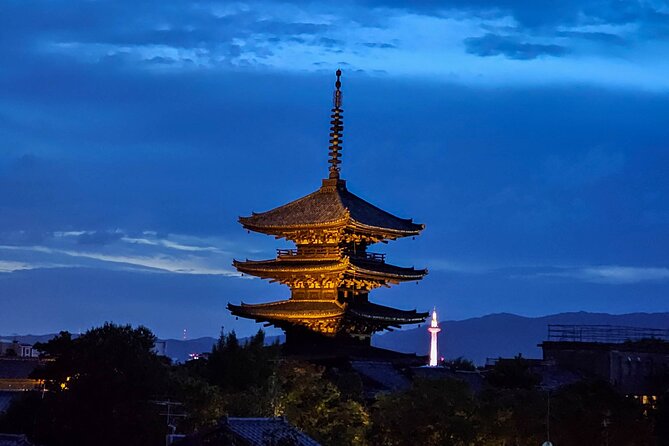
Gion after dark is Kyoto at its most atmospheric. Lanterns glow outside restaurants and teahouses, narrow lanes grow quiet, and the old geisha district feels far removed from the city’s modern streets. This walk takes you through Gion, Hanamikoji Street, and Yasaka Shrine while a guide explains the customs behind what you see.
I like the small-group format, which is advertised at no more than nine people for an outing, and the chance to explore side streets and lesser-known shrines instead of simply following the busiest sightseeing route. I also like the range of guides, including Naoki, Jasmine, Shingo, Vincent, and Raphael, who are often praised for clear English, patience, humor, and useful restaurant advice.
The main drawback is the timing. Three hours on foot can run across dinner, and winter evenings may feel cold. You may also see no geisha or maiko at all, and the meeting point near Kyoto Kawaramachi Garden can be confusing when several groups gather on the same busy street.
In This Review
- Key points to know before booking
- Why Gion after dark is worth your evening
- Starting near Kyoto Kawaramachi Garden
- Gion, the main two-hour walk
- Hanamikoji Street and the rules of respectful sightseeing
- Yasaka Shrine, the final major stop
- A small group, with one important qualification
- What the $18 price delivers
- Walking comfort, weather, and seasonal planning
- Who will enjoy this Gion walk most
- Should you book the Kyoto Gion Night Walk?
- FAQ
- How long does the Kyoto Gion Night Walk last?
- Where does the tour start?
- Where does the tour end?
- Is hotel pickup included?
- Is the tour conducted in English?
- How many people are in the group?
- Is a snack included?
- Will I definitely see a geisha or maiko?
- Does the tour run in bad weather?
- Can I cancel for a full refund?
Key points to know before booking
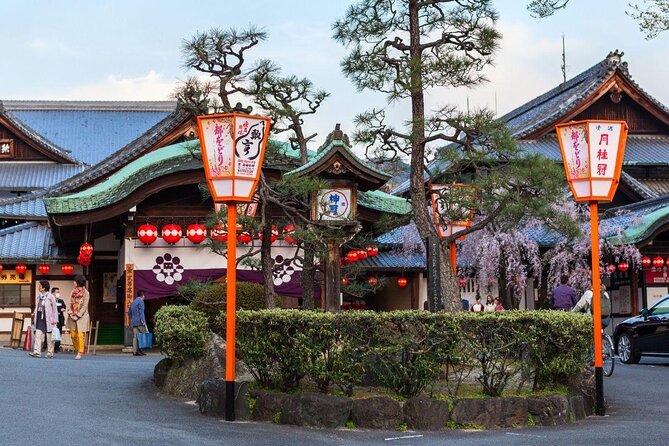
- Gion looks best after sunset: Lanterns, teahouses, bars, and old wooden streets create the mood that daytime sightseeing misses.
- Expect about three hours of walking: The route covers Gion, Hanamikoji Street, Yasaka Shrine, and additional lanes and sites.
- The advertised outing is small: Group departures are limited to no more than nine people, though the general activity information also lists a maximum capacity of 25.
- A geisha sighting is never promised: You might see a maiko or geisha, but the tour is more dependable for culture and architecture than celebrity spotting.
- Premium and private choices change the inclusions: The basic tour includes a guide and walking tour. A snack is listed for Premium Group and Private Tour bookings.
- The $18 price is strong value: You receive three hours of local context for less than the cost of many short city tours, but meals and drinks are not included.
Why Gion after dark is worth your evening
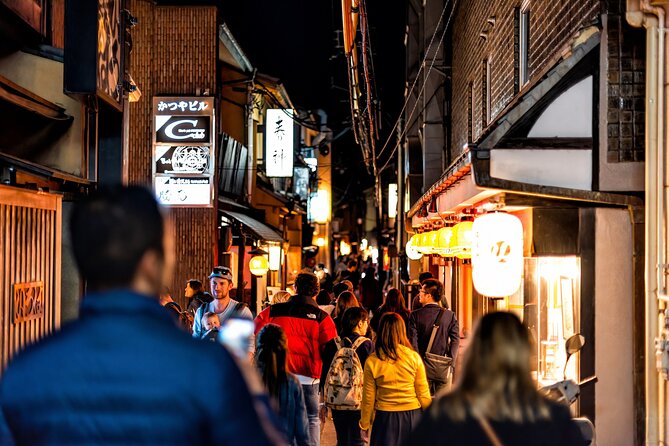
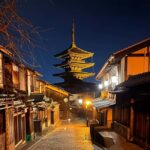
Gion is not a theme park built for sightseeing. It is a working district with restaurants, bars, teahouses, shrines, and residential lanes. The pleasure comes from noticing small details: a lantern above a doorway, a narrow passage leading toward a shrine, or the difference between a public street and a private entertainment house.
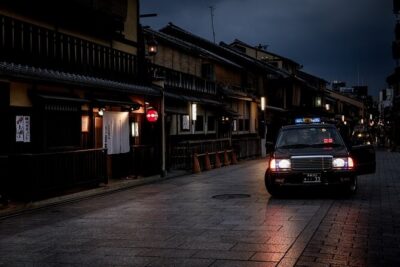
At night, the district’s traditional buildings are easier to appreciate. The warm light softens the streets, and the lack of daytime glare gives the walk a quieter feel. That said, the area can still be busy, especially near major streets and popular photo spots.
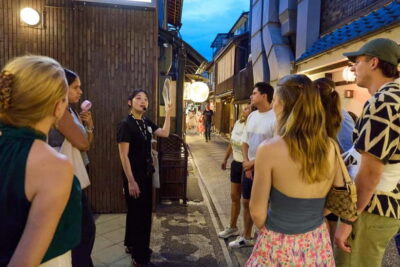
The guide gives the setting a useful frame. Instead of only taking pictures, you learn about the customs of Gion, the role of geisha and maiko, the architecture of the district, and the religious sites woven into the neighborhood. I see this as the tour’s main value. You are not simply being led from one photogenic street to another.
The rating is listed at 4.8 from 786 reviews, with 94 percent recommending the experience. That is a strong result, but the variation in individual guide performance and the occasional criticism about the route’s overall story are worth keeping in mind.
A few more Kyoto tours and experiences worth a look

Starting near Kyoto Kawaramachi Garden
The meeting point is Kyoto Kawaramachi Garden, at 68 Shinchō in Shimogyo Ward. The location is near public transportation, but allow extra time to find your guide. One person found the meeting point unclear because many guides and groups were gathered on a busy street.
This is a practical point, not a minor one. A delayed start can make a three-hour walk feel rushed, and one guide had to help a participant who became lost on the way. I would arrive early, keep the booking confirmation ready on your phone, and look carefully for the tour guide rather than assuming the first group nearby is yours.
The tour ends at Sanjō Ōhashi Bridge in Nakagyo Ward. This is not the same as Kyoto Station, and the end point has caused confusion for some people expecting a different finish. Plan your return route before setting out, especially if you have a dinner reservation or a train to catch.
Gion, the main two-hour walk
The first and longest part of the outing is Gion itself, with about two hours allocated to the district. You walk through the illuminated streets and back lanes while the guide explains the area’s traditions, buildings, and customs.
This portion can feel like a gentle introduction to Kyoto’s old entertainment quarters, or like a long walk with many short explanations, depending on your guide and your interests. Strong guides connect the details into a clear story. They explain not just what a building looks like, but why the street developed in this way and how the district functions today.
Several guides receive especially warm praise. Naoki is often singled out for his thoughtful explanations of Kyoto and Japanese culture. He also added historical details and food suggestions for one participant. Jasmine is noted for answering questions patiently, keeping the pace comfortable, and including everyone in the group. Shingo is praised for his English and for taking a participant to sites they would not have found alone.
Other guides, including Raphael, Vincent, Miyake, Eloise, Guillaume, and Alex, are also praised for their humor, cultural understanding, and ability to make the walk feel personal. The quality of the experience appears to depend heavily on who leads your group, which is common with walking tours.
The less positive experiences point to two things. First, some people felt the information came as disconnected pieces rather than one clear explanation of Gion’s culture and past. Second, communication can be a problem if the guide’s English is not strong enough for your needs. The tour provider offers a private upgrade in several languages, which may be a better choice if detailed conversation is especially important to you.
Hanamikoji Street and the rules of respectful sightseeing
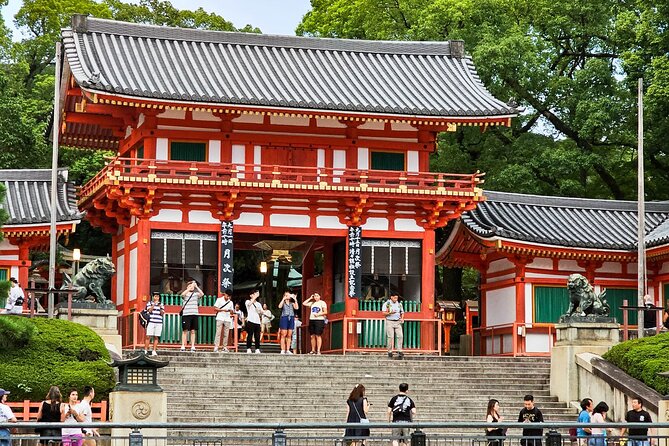
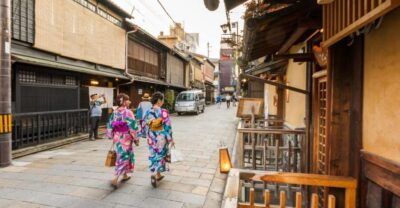
Hanamikoji Street receives about 30 minutes of the route. It is one of Kyoto’s best-preserved historic streets, with traditional facades and the atmosphere associated with Gion’s tea houses.
This is likely to be one of the most photographed sections of the walk. Your guide can help you understand the setting instead of treating it as a backdrop. The area is also where you may have a chance to see a maiko or geisha, though sightings are entirely dependent on the evening and should never be treated as a promise.
One participant reported seeing one geisha and two maiko near Hanamikoji Street. Another evening produced no such sighting, with restaurants closed and the neighborhood unusually quiet. Both outcomes are normal. The tour should make sense even if you do not see anyone in traditional dress.
That expectation matters because Gion is a place where respectful behavior is essential. A guide can explain local customs and help you avoid treating people who work in the district as photo props. You should follow instructions about photography and remain aware that the streets are not an open-air performance venue.
The route may include alleys and small sites that you would likely pass without noticing on your own. One guide even added a side activity involving a so-called magic rock, which became a memorable moment for the group. Such extras cannot be guaranteed, but they show how the experience can vary from a fixed checklist.
Yasaka Shrine, the final major stop
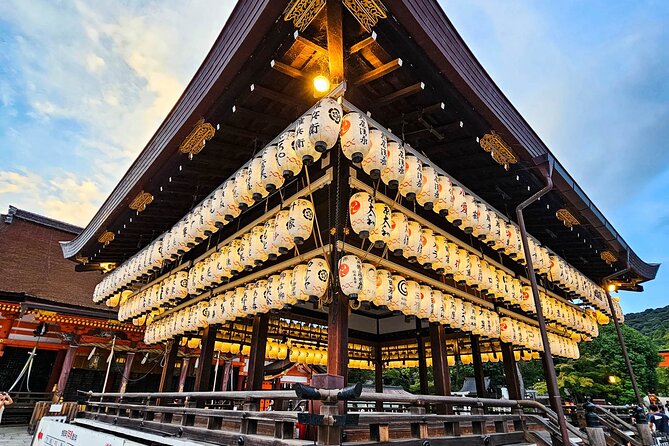
The walk continues to Yasaka Shrine, also called Gion Shrine, with about 30 minutes set aside for the visit. The shrine adds a religious and architectural layer to an evening otherwise focused on streets, restaurants, and traditional entertainment.
This stop helps place Gion in a wider Kyoto context. The guide discusses the shrine’s history, design, customs, and connection to the neighborhood. You gain a better sense of how religious life and entertainment districts exist side by side in the old city.
The shrine is also a useful change of pace. After walking narrow streets for two hours, the open grounds provide room to pause and look around. Still, the tour has limited breaks overall. Several people describe the walk as long, with few opportunities to sit down, so you should be comfortable walking for most of the three hours.
The itinerary also says and more, meaning the exact sequence and additional stops may vary. That flexibility can be a benefit if your guide finds an interesting lane or small shrine, but it also means you should not expect a tightly scripted tour with every minute identical.
A few more Kyoto tours and experiences worth a look


A small group, with one important qualification
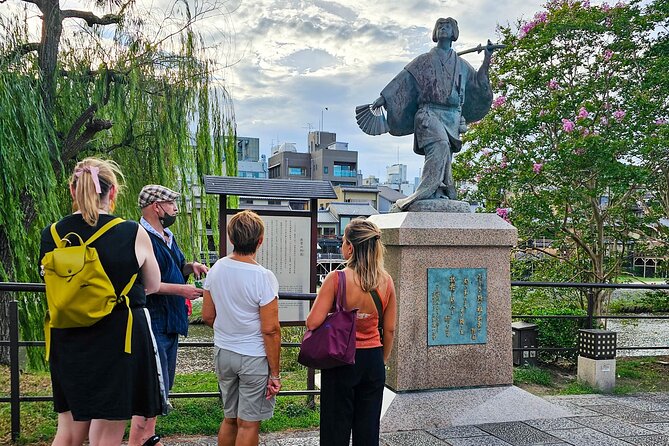
The tour is promoted as a small-group experience with no more than nine people per outing. That is a meaningful advantage in Gion. A guide can answer questions, keep the group together in narrow streets, and make it easier for everyone to hear.
A group of eight with children aged 12 to 16 enjoyed the walk and found the hidden lanes especially interesting. Families can make this work, but the length and dinner-hour timing deserve attention. Younger children may tire before the end, and the route includes walking up and down Gion’s streets for roughly three hours.
The additional activity information lists a maximum of 25 participants. Since that conflicts with the advertised limit of nine, I would check the specific booking option before paying. The smaller limit appears to apply to the regular outing, while the larger figure may describe the overall operating capacity or a different departure type.
A private upgrade is available, with multiple language options. I would consider it for families with different walking speeds, people who want to ask many questions, or anyone who wants a more tailored route. The private option costs more than the advertised $18, so its value depends on how much personal attention you want.
What the $18 price delivers
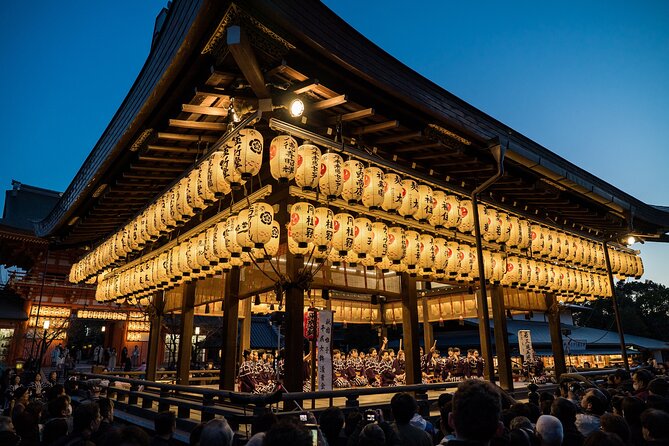
At $18 per person, this is inexpensive for a three-hour guided walk in one of Kyoto’s most famous districts. The price is especially fair if you want cultural background rather than a meal, a show, or an elaborate paid attraction.
The basic inclusion is an English-speaking guide and the walking tour itself. Hotel pickup and drop-off are not included, and neither are meals, extra drinks, or personal expenses. The snack is listed only for Premium Group and Private Tour bookings, so do not assume the standard $18 option includes food.
That distinction matters because the tour runs across normal dinner hours. One family ended the walk hungry, and this is easy to prevent. Eat beforehand, carry a small snack, or plan a meal after the tour near the Sanjō Ōhashi Bridge end point.
The low price also means you are paying mainly for interpretation. If you already know Gion well and only want night photography, you may not need the tour. If you are new to Kyoto and want a fast introduction to local customs, architecture, and the geisha district, the cost is easier to justify.
Walking comfort, weather, and seasonal planning
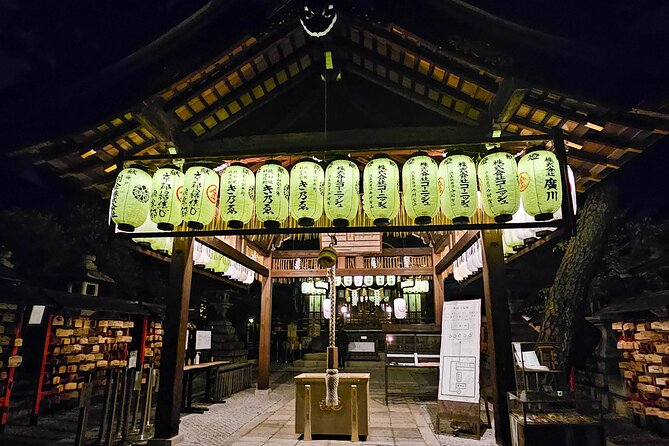
This is an outdoor walking tour lasting about three hours. Most people can participate, but the pace and limited breaks make sensible preparation important.
Wear comfortable shoes. Dress warmly in winter, when the evening can feel cold after sunset. The route requires walking through streets and lanes rather than sitting at a series of indoor attractions, so an umbrella or rain layer may also be sensible.
The experience requires good weather. If poor weather causes cancellation, you are offered another date or a full refund. You can cancel for a full refund up to 24 hours before the start time, based on local time. Changes or cancellations inside that 24-hour window are not accepted for a refund.
The best timing depends on your priorities. Night is the whole point of this outing, and the lights are at their most attractive after sunset. If your priority is busy restaurants or the best chance of seeing working geisha, remember that national holidays and quiet evenings may mean closed businesses and fewer people on the streets.
Who will enjoy this Gion walk most
I would recommend this tour to first-time Kyoto visitors who want a clear introduction to Gion without paying for a formal cultural show. It also suits people who like history, architecture, local customs, and walking through streets that are easy to miss on a self-guided route.
It works well for couples, friends, and families with older children. The group format encourages questions, and several guides are praised for drawing everyone into the conversation. It is also useful early in a Kyoto stay because guides may offer restaurant suggestions and help you understand places to explore later.
You may want another option if you dislike walking for several hours, need frequent seating, or expect guaranteed access to a tea house or a geisha performance. One participant was directed toward a private teahouse and found the situation uncomfortable. The tour should be treated as a street walk with cultural explanations, not as an invitation into private establishments.
I would also choose the private upgrade if you need a specific language, want a slower pace, or care more about discussion than price. For a standard introduction, the $18 group tour offers better value.
Should you book the Kyoto Gion Night Walk?
Book it if you want to see Gion lit by lanterns and learn why the district looks and operates as it does. The strongest part is the combination of atmosphere and explanation: Hanamikoji Street, Yasaka Shrine, side lanes, and stories from guides such as Naoki, Jasmine, Shingo, and Vincent.
Go in with realistic expectations. You may not see a maiko or geisha, the tour may cross dinner time, and the experience depends on your guide’s communication style. Arrive early at Kyoto Kawaramachi Garden, eat before you start, wear warm and comfortable clothing, and confirm the group size and snack inclusion for your booking category.
For $18, I think this is a sensible Kyoto evening choice for most first-time visitors. It is not a performance and it is not a shortcut to private teahouses. It is a long, useful walk through one of Kyoto’s most evocative neighborhoods, with the best value coming from the guide who helps you read the streets.
FAQ
How long does the Kyoto Gion Night Walk last?
The tour lasts approximately three hours. The listed route includes about two hours in Gion, 30 minutes on Hanamikoji Street, and 30 minutes at Yasaka Shrine.
Where does the tour start?
The meeting point is Kyoto Kawaramachi Garden, 68 Shinchō, Shimogyo Ward, Kyoto, 600-8001, Japan.
Where does the tour end?
The tour ends at Sanjō Ōhashi Bridge, Ohashicho, Nakagyo Ward, Kyoto, 604-8004, Japan.
Is hotel pickup included?
No. Hotel pickup and drop-off are not included.
Is the tour conducted in English?
The standard tour includes an English-speaking guide. A private Kyoto walking tour is available in multiple languages.
How many people are in the group?
The experience is advertised as having no more than nine people per outing. The additional activity information also lists a maximum of 25 travelers, so check the specific departure and booking category for confirmation.
Is a snack included?
A snack is listed for Premium Group and Private Tour bookings. The standard inclusion details list the guide and walking tour, but not a snack for the basic option.
Will I definitely see a geisha or maiko?
No. You may see a maiko or geisha, particularly around Hanamikoji Street, but sightings are not guaranteed.
Does the tour run in bad weather?
The experience requires good weather. If it is canceled because of poor weather, you will be offered a different date or a full refund.
Can I cancel for a full refund?
Yes. You can cancel at least 24 hours before the start time for a full refund. Cancellations or changes made less than 24 hours before the start time are not refunded.
More Walking Tours in Kyoto
More Night Walks & Ghost Tours in Kyoto
More Gion & Geisha Walks in Kyoto
More tours in Kyoto we've reviewed




Gion & Geisha Walks, compared.
 ★ 4.7Kyoto Geisha Walking Tour: Gion District & Hidden GemsFrom $252 hours
 ★ 4.7Kyoto: Gion Geisha District Walking Tour – Stories of GeishaFrom $202 hours
 ★ 4.9Best of Kyoto: Gion, Geisha, Pagodas & CobblestonesFrom $242 hours
 ★ 4.5Night Walk in Gion: Kyoto’s Geisha DistrictFrom $211h 40m
 ★ 5.0Kyoto Night Foodie Tour in Gion (9+ dishes + 6 Sake tastings)From $163
 ★ 5.0Kyoto Gion Geisha District Walking Tour – The Stories of GeishaFrom $25