
Reviewed · MORNING
Kyoto Early Morning Tour with English-Speaking Guide
Kyoto is at its best early in the day, before tour buses, school groups, and selfie sticks fill the paths. This 5 to 6-hour outing takes you to Fushimi Inari Shrine, Arashiyama Bamboo Grove, and Kinkaku-ji, using the city’s trains and buses rather than keeping you inside a tour vehicle.
I like two things right away: the small maximum of eight people keeps the group calm, and the guide handles the public transit, which saves you from sorting out Kyoto’s routes on your first morning. Guides such as Aya, Genki, Arisa, Haruki, and Ramu have also been praised for clear English, good pacing, photo help, and useful advice for the rest of a Kyoto stay.
The tradeoff is simple: this is an active morning with plenty of walking and several transit rides. The ¥1,240 transport cost and ¥500 Kinkaku-ji admission are extra, and an early start may not suit anyone hoping for a slow hotel breakfast.
In This Review
- Key points at a glance
- Why an early start matters at Fushimi Inari
- Arashiyama Bamboo Grove and the value of local guidance
- Kinkaku-ji, Kyoto’s Golden Pavilion
- What the public transit adds to the experience
- Group size, guides, and the pace of the morning
- What the $68.98 price really covers
- How to use the rest of your Kyoto day
- Who should book this Kyoto morning tour?
- Final call: book it for access and ease
- FAQ
- How long does the Kyoto Early Morning Tour last?
- Which sights are included?
- Is an English-speaking guide included?
- How large is the group?
- Are public transportation fares included?
- Is Kinkaku-ji admission included?
- Are food and drinks included?
- Can I cancel for a full refund?
Key points at a glance
- Fushimi Inari before the crowds: The famous red gates are far easier to photograph early, when the approach and lower paths are quieter.
- Three major sights in one morning: You cover Kyoto’s southeast, west, and north in a tightly planned half-day.
- Public transit with a local guide: You learn how Kyoto’s trains and buses fit together while moving between the sights.
- Small groups of up to eight: The format gives you more room to ask questions and keep a steady pace.
- Useful for families and first-time visitors: Guides have been praised for patience with children, clear explanations, and help navigating the city.
- Good afternoon payoff: The tour ends with much of the day still available for markets, museums, meals, or a slower neighborhood walk.
Why an early start matters at Fushimi Inari
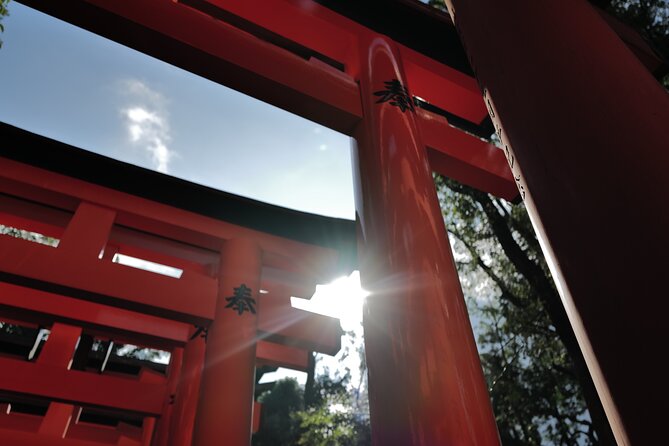
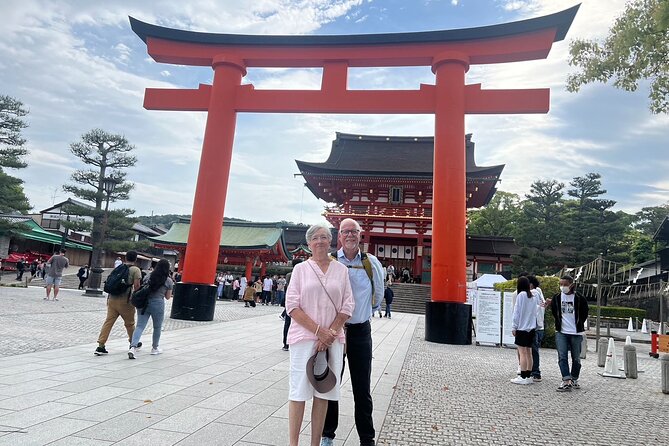
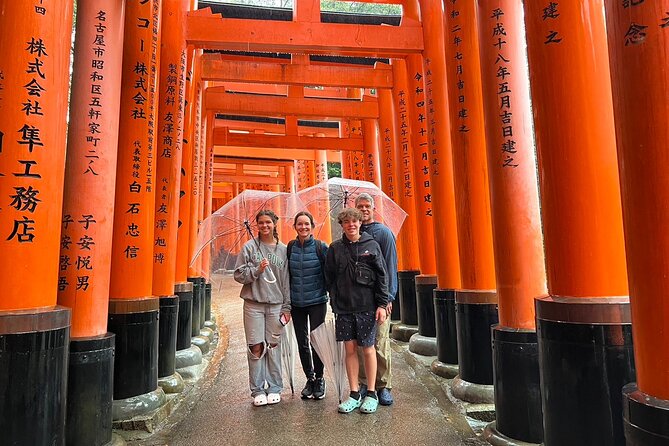
Fushimi Inari-taisha is the morning’s natural opener. The shrine is famous for its long corridors of orange-red torii gates, each one creating a frame within a frame as the path climbs into the wooded hills.
You do not need to walk the entire mountain to appreciate the place. The tour allows about an hour, enough to enter through the shrine grounds, pass beneath the best-known gates, and take photographs before the paths become difficult to navigate.
That timing matters more here than at many Kyoto sights. Fushimi Inari is open around the clock, so an early visit can offer a much quieter start than a late-morning arrival. One practical benefit is the freedom to stop for photographs without constantly waiting for a gap in the crowd.
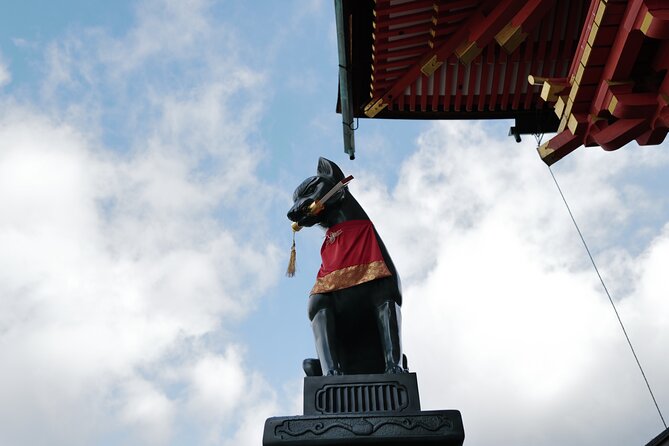
Your guide can also explain the difference between a Shinto shrine and a Buddhist temple, point out customs at the entrance, and give context for the fox figures associated with Inari worship. The value is not just reaching the famous gates. It is knowing what you are looking at and how to behave respectfully.
The limitation is that an hour is a taste rather than a full mountain hike. If your main goal is to climb to the summit and explore every shrine along the way, you will want extra time on another morning. For a first introduction, though, the shorter visit keeps the wider itinerary moving.
Other guided tours in Kyoto
Arashiyama Bamboo Grove and the value of local guidance
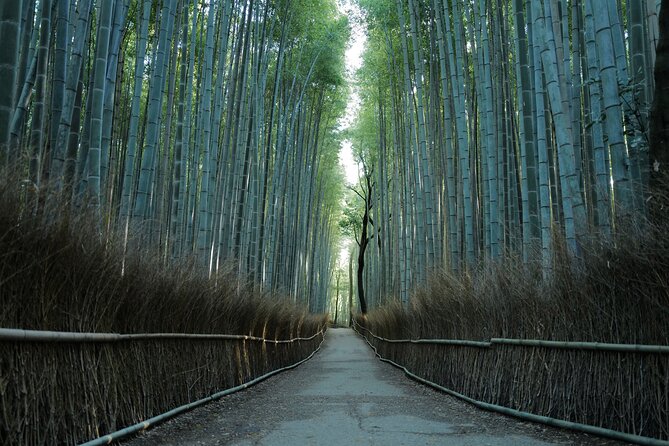
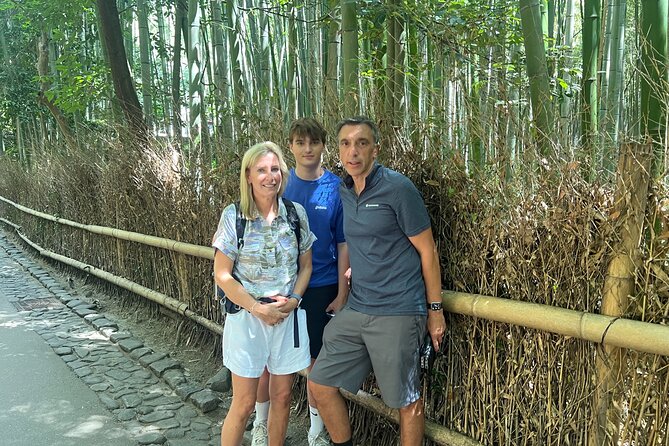
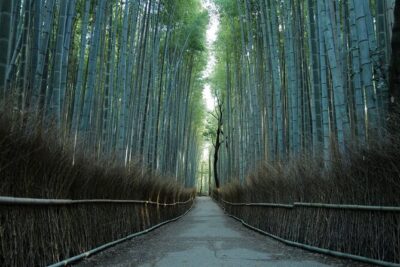
The second stop is Arashiyama, on Kyoto’s western side. Its bamboo grove is one of the city’s most photographed locations, with tall stalks rising on both sides of a narrow walking route.
The grove can feel almost otherworldly when the path is quiet. Early light filters through the bamboo, and the gentle movement of the stalks gives the place a calm mood that is harder to find once the route fills up.
Your guide helps turn a short walk into a broader look at the area. The supplied schedule allows about an hour, and that may include time around the bamboo path rather than a long tour of every nearby temple, garden, or riverside lane. Some guides also offer time for photographs, local snacks, and suggestions for returning independently later.
This is one of the tour’s strongest practical features. You get the headline view without spending your whole day figuring out which station, bus, or walking route connects to it. Guides such as Aya and Hina have been singled out for photo help, while other guides have offered snack suggestions and ideas for seeing more of Arashiyama after the organized portion.
Do not expect the bamboo grove to be a solitary nature walk. Even early in the day, it is a famous stop. The promise is fewer people, not no people. The path itself is also not a strenuous hike, but the full morning adds up to a fair amount of walking.
Kinkaku-ji, Kyoto’s Golden Pavilion
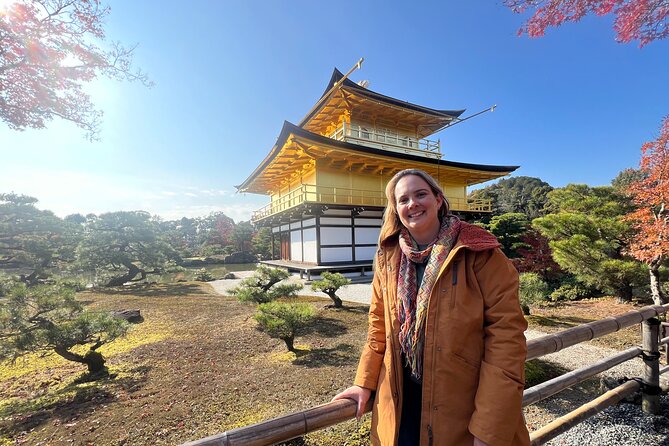
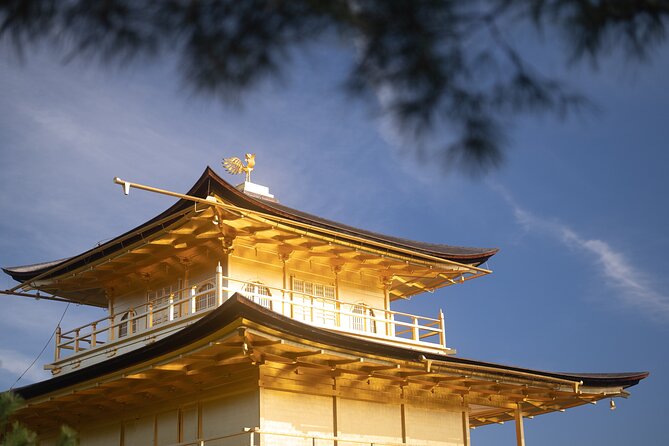
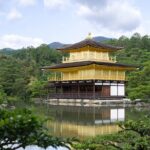
The final major stop is Kinkaku-ji, commonly called the Golden Temple. Its gold-covered upper stories reflect in the pond, creating one of Kyoto’s most instantly recognizable views.
The visit is more about seeing the pavilion from the surrounding garden route than entering the building. The temple’s appearance changes with the light and weather, which makes the stop rewarding even if you have seen photographs many times before.
The admission fee is ¥500 per person and is not included. That extra charge is modest, but you should add it to the tour price when comparing the total cost. The stop is allotted about an hour, giving you time to walk the grounds and take in the pavilion without turning the visit into a rushed photograph-only stop.
Guides add useful background about Japanese temple design, religious practice, and the site’s place in Kyoto. Several guides have been praised for making the temples easier to understand, especially for families and people visiting Japan for the first time.
Kinkaku-ji is also the point where the tour’s schedule feels most efficient. The three locations are spread across Kyoto, so seeing them independently in one morning would require careful planning. The organized route removes much of that mental work, though the price of efficiency is less freedom to linger.
What the public transit adds to the experience
This is not a private-car sightseeing trip. You move around Kyoto by public transportation, with the guide showing you how the system works along the way.
That can be a real advantage. Kyoto’s transit network is manageable once you understand it, but the first few rides can feel confusing when you are watching station signs, checking fares, and trying not to miss a transfer. A guide such as Karin or Suzuka can make that process feel much more manageable.
You also get a look at ordinary city life between the postcard sights. Riding a commuter train with local passengers gives the morning a more grounded feel than moving directly from one attraction to the next in a private vehicle.
The transport fare is about ¥1,240 and is paid separately. Food and drinks are also not included. Bring enough Japanese yen or another accepted payment method for transit and the temple admission, and consider eating before the tour if you do not want to wait until the finish.
Travel time counts toward the 5 to 6-hour total. That is important when setting expectations. You are not receiving five or six full hours inside monuments and gardens. You are receiving a guided morning that combines sightseeing, walking, waiting, and moving across town.
Group size, guides, and the pace of the morning
The group limit is eight people. That is small enough for a guide to answer questions and keep an eye on the group without the formal feel of a large coach excursion.
The guide is the main reason this experience can work well. Names connected with particularly strong outings include Genki, Aya, Arisa, Haruki, Akari, Ramu, Hina, Karin, Kanami, Suzuka, Koi, Hiro, and others. The consistent qualities you can reasonably look for are clear English, help with transit, explanations of customs, and attention to the group’s pace.
Several guides have been praised for working well with children. One guide, Haruki, was noted for being patient and fun with a 10-year-old. Another guide, Kanami, was praised for engaging both adults and children. That makes the format a sensible option for families who want cultural context without asking children to follow a long lecture.
The pace is described as relaxed but active. You will have time for photos and questions, yet the schedule must keep moving because the sights are far apart. If you walk slowly, use a cane, or need frequent breaks, consider the moderate fitness requirement carefully before booking.
Rain can also affect the experience. The tour requires good weather, and a poor-weather cancellation comes with the choice of a different date or a full refund. On a damp day when the tour does operate, bring suitable clothing and protect your phone or camera.
A few more Kyoto tours and experiences worth a look


What the $68.98 price really covers
The listed cost is $68.98 per person. At first glance, that is more than simply buying train tickets and visiting the sites yourself. The better comparison is with the time and planning needed to link three distant parts of Kyoto in one morning.
The fee includes an English-speaking guide. It does not include about ¥1,240 in public transportation, ¥500 for Kinkaku-ji, or food and drinks. Your actual outlay is therefore higher than the headline price.
I see the value most clearly if you are new to Kyoto, have only one free morning, or want to use the afternoon for independent sightseeing. The guide gives you an early introduction to the city, explains the major religious sites, and teaches you enough about transit to make later trips less intimidating.
If you already know Kyoto’s train and bus system and prefer to spend as long as you like at one location, booking each visit yourself will give you more control. You may also spend less, depending on your route and what else you visit.
The tour is a stronger buy for people who place a premium on a smooth first morning. It is less compelling for repeat visitors who have already seen these three headline sights or who want a slow, unstructured day.
How to use the rest of your Kyoto day
One of the smartest features is what the early finish leaves open. After seeing the three major sites, you still have much of the afternoon and evening for your own plans.
You could use the guide’s suggestions to choose a nearby lunch, visit another temple, browse a market, or explore a district at your own pace. Guides have also shared recommendations for independent sightseeing during the rest of a stay, which gives the tour value beyond the scheduled stops.
The morning works especially well at the start of a Kyoto visit. You get your bearings, learn basic transit habits, and see three places that help define the city. Later, you can return to the area that interested you most rather than trying to cover every district in one hurried day.
I would avoid booking this on the same day as another fixed morning appointment. Transit delays, photo stops, and the amount of ground covered mean you should protect the full 5 to 6-hour window.
Who should book this Kyoto morning tour?
I would recommend it to first-time visitors, short-stay visitors, solo visitors who want company, and families that prefer not to manage Kyoto’s transport alone. It is also useful for business visitors with one free day, since it provides a quick cultural introduction without taking the entire day.
The small group and English-speaking guide make it easier to ask about customs, temple etiquette, local food, and later sightseeing. If you are traveling with children, the reports of patient guides and a comfortable pace are encouraging.
I would think twice if you dislike early starts, cannot manage a moderate amount of walking, or want extended time at one shrine. The itinerary is fixed around three major sights, and travel time is part of the experience.
Final call: book it for access and ease
Book this tour if you want Kyoto’s three famous sights before the worst crowds, plus a guide who can explain the culture and get you across town by public transit. The early visit to Fushimi Inari is the biggest practical win, and the small group makes a busy city feel easier to handle.
Skip it if you are comfortable planning Kyoto alone and want to set your own pace. For everyone else, the $68.98 fee, plus transport and Kinkaku-ji admission, buys a well-used morning and leaves the rest of your day free.
FAQ
How long does the Kyoto Early Morning Tour last?
The tour lasts approximately 5 to 6 hours. Travel time between sights is included in that total.
Which sights are included?
The tour visits Fushimi Inari-taisha Shrine, Arashiyama Bamboo Grove, and Kinkaku-ji, also known as the Golden Temple or Golden Pavilion.
Is an English-speaking guide included?
Yes. An English-speaking guide is included.
How large is the group?
The tour allows a maximum of eight people.
Are public transportation fares included?
No. Public transportation costs about ¥1,240 and are paid separately.
Is Kinkaku-ji admission included?
No. The entrance fee is ¥500 per person and is not included in the tour price.
Are food and drinks included?
No. Food and drinks are not included.
Can I cancel for a full refund?
Yes, if you cancel at least 24 hours before the experience start time. Cancellations made less than 24 hours in advance are not refunded. If poor weather causes the provider to cancel, you can choose another date or receive a full refund.
More Morning in Kyoto
More Guided Tours in Kyoto

More tours in Kyoto we've reviewed


Morning, compared.
 ★ 4.9Kyoto: Early Morning Tour with English-Speaking GuideFrom $1015h 30m
 ★ 5.0Nara Early Morning Tour (Kyoto or Osaka Departure Available)From $61
 ★ 4.6From Kyoto: Nara Guided Morning TourFrom $774 hours
 ★ 4.6Kyoto: Gion Night or Morning Walking Tour with Local SnacksFrom $46
 ★ 4.0Kyoto Morning Tour from Kyoto or OsakaFrom $87
 ★ 5.0Kyoto: Morning Japanese Bento Cooking ClassFrom $673 hours