
Reviewed · FUSHIMI INARI TOURS
Fushimi Inari & Nara Highlights Walking Tour
Fushimi Inari’s long tunnel of vermilion torii gates and Nara’s grand Buddhist temples make a fine one-day pairing. This private walking tour takes care of the route, so you can focus on the shrines, architecture, deer, and photo stops instead of studying train maps.
I like two things right away: the guide helps connect Japanese history with what you are seeing, and the tour includes both the famous gates at Fushimi Inari and Nara’s major religious sights. The main consideration is pace. Six hours is a short window for Kyoto and Nara, and the roughly hour-long train ride to Nara leaves limited time for wandering.
In This Review
- Key points at a glance
- Fushimi Inari’s torii gates set the tone
- A private guide makes a packed day easier
- The Kyoto to Nara transfer takes real time
- Todaiji Temple brings scale and ritual
- Kasuga Grand Shrine adds a different mood
- What the six-hour schedule really gives you
- Is $106.10 a fair price?
- Who will enjoy this route most?
- Booking and cancellation details worth knowing
- Should you book the Fushimi Inari and Nara tour?
- FAQ
- How long is the Fushimi Inari and Nara tour?
- What time does the tour begin?
- Where does the tour start?
- Where does the tour finish?
- What sights are included?
- Are transportation costs included?
- Is admission to Todaiji Temple included?
- Can I cancel for a full refund?
Key points at a glance
- Thousands of torii gates: Walk through the famous vermilion passageways at Fushimi Inari Taisha.
- Three major stops: Visit Fushimi Inari, Todaiji Temple, and Kasuga Grand Shrine in one day.
- Private guiding: Only your group participates, with a guide handling the route and explaining history and architecture.
- Extra costs are clear: Budget ¥1,380 per person for public transportation and ¥800 per person for Todaiji Temple.
- A useful Kyoto to Nara link: Start at Kyoto Station at 9:00 am and finish at Nara Station.
- Strongest for first-time visitors: The tour suits you best if you want the main sights without planning the connections yourself.
Fushimi Inari’s torii gates set the tone
Your morning begins at Kyoto Station at 9:00 am. From there, the guide takes you to Fushimi Inari Taisha Otabisho, the first major stop on a route that later crosses into Nara.
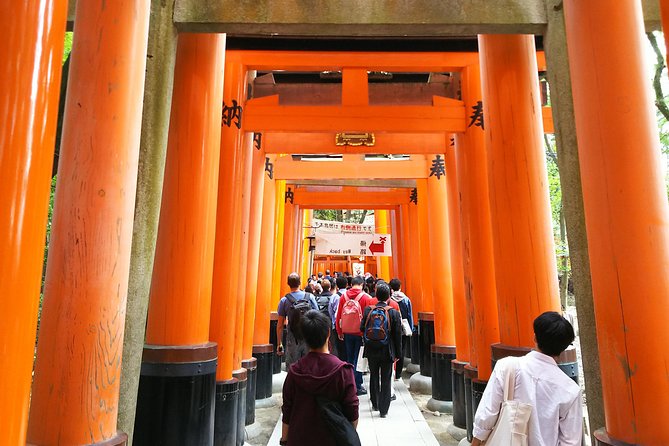
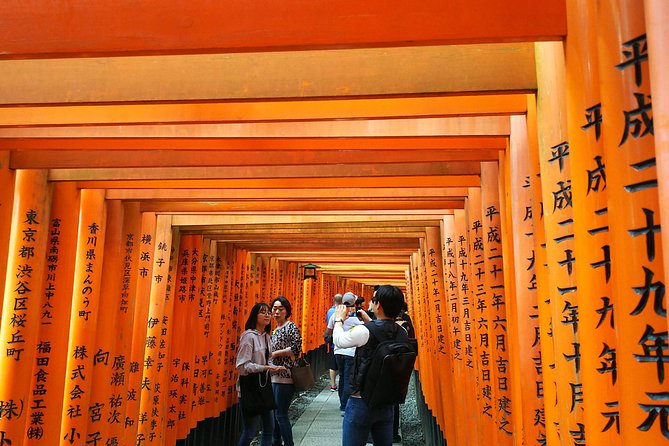
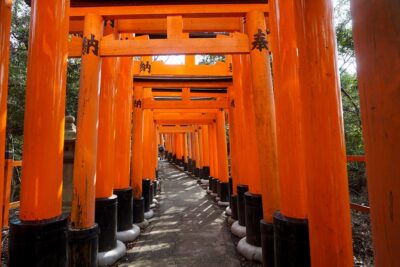
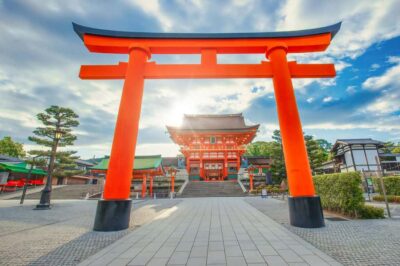
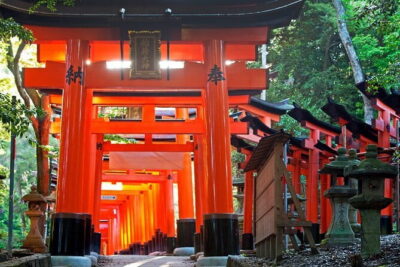
Fushimi Inari is best known for its seemingly endless rows of vermilion torii gates. Worshippers donated these gates in thanks for good fortune, and each one helps form the striking corridor seen in countless photographs. The color, repetition, and changing light make this the tour’s most immediately photogenic section.
You have about an hour here. That is enough to experience the famous gate tunnel and hear context about the shrine, but it is not a full exploration of every path on the mountain. Keep that distinction in mind. Fushimi Inari is a large religious site, and a one-hour stop gives you the headline experience rather than unlimited time to roam.
The meeting point is listed as Fushimi Inari Taisha Otabisho, while the tour itself begins at Kyoto Station. Confirm the exact meeting instructions when you book so you know where to meet the guide and how the first transfer will work. The guide’s presence is useful here because the shrine paths can feel confusing, especially when you are trying to balance photos, walking, and the schedule.
There is no admission charge listed for this stop. That helps keep the morning simple. You can concentrate on the setting instead of handling another ticket.
A few more Kyoto tours and experiences worth a look

A private guide makes a packed day easier
The tour is private, so only your group participates. That matters more here than it might on a single-site visit. You are covering two destinations in different cities, with public transportation between them and a fixed end point at Nara Station.
A private guide can adjust explanations to your interests and keep the group moving. The tour description also places emphasis on Japanese history and architecture, so expect more than a quick photo walk. You can ask questions as you go, particularly at the temples and shrines where religious details may otherwise be easy to miss.
The available feedback gives the guide high marks for being informative and helpful. One particularly favorable assessment describes having fun while moving around Fushimi Inari and Nara’s Buddhist temple complex. No guide name is provided, so you should not book this expecting a particular named guide.
The private format does not remove every practical limit. The route still lasts about six hours, and the public transportation fare is separate. You also need to keep an eye on the clock. A guide can make the day smoother, but cannot turn a half-day tour into a leisurely two-day visit.
The Kyoto to Nara transfer takes real time
The tour uses public transportation and finishes at Nara Station, rather than returning you to Kyoto. The listed transportation cost is ¥1,380 per person. A separate comment puts the train trip at about an hour, which is a useful planning figure.
This transfer is both a strength and a compromise. It lets you connect two essential sights without arranging the route yourself, and ending in Nara can work well if you plan to stay there or continue from the station. On the other hand, roughly an hour each way within the wider route reduces time for the actual sights.
You should also note the inconsistent access information supplied for the experience. It says the tour is near public transportation, but another line says no public transportation is nearby. Since the route clearly includes public transport and begins at Kyoto Station, use the confirmed booking instructions for the precise meeting location. If mobility or sight access is important to you, the information says the experience is accessible for people with limited mobility and limited eyesight, but you should still confirm the walking requirements before booking.
Todaiji Temple brings scale and ritual
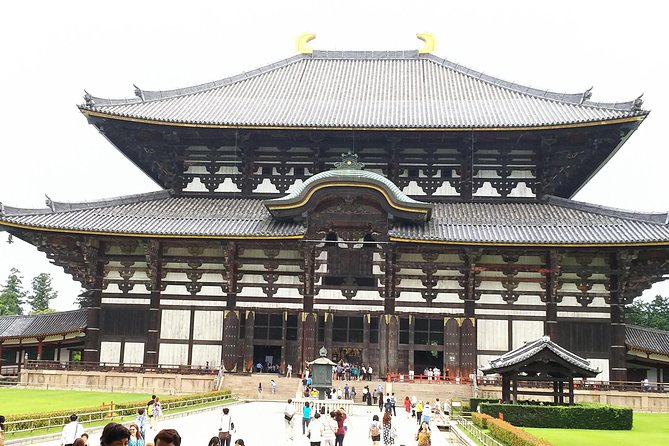
In Nara, the route turns to Todaiji Temple, also written as Todai-ji. You have about an hour at this stop, with an admission fee of ¥800 per person. The guide fare does not include this ticket.
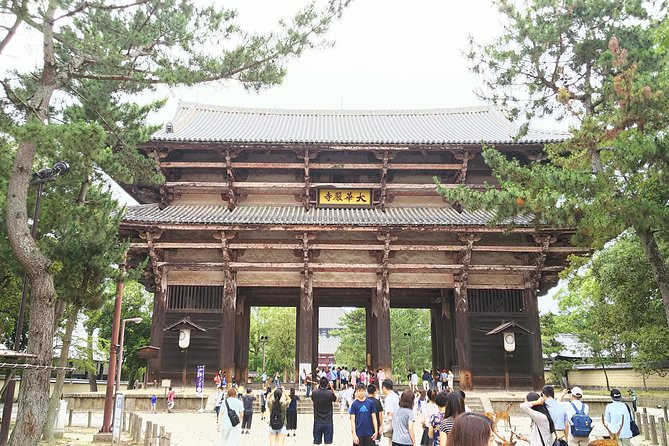
Todaiji is known for its enormous wooden temple building. The first impression is one of scale: the building feels much larger than a typical neighborhood temple, and the entrance corridor gives you time to take in its size before you move farther inside.
The visit also includes a basic Buddhist cleansing practice at a purifying trough, where you wash your hands and rinse your mouth. This small act helps you approach the temple as a religious place rather than just another landmark. Your guide can explain how the ritual fits into the visit and point out details in the architecture.
An hour is a sensible amount of time for a first look, but it will feel brief if you want to linger over every feature. The temple’s size makes it easy to spend time simply looking upward and taking photographs. If religious art, architecture, or temple history is your main interest, you may wish the schedule allowed longer.
The temple is one of the strongest reasons to choose this tour over a simple deer-focused Nara visit. You get a major architectural sight and a guided introduction to Buddhist practice, not just a quick stop in a park.
Kasuga Grand Shrine adds a different mood
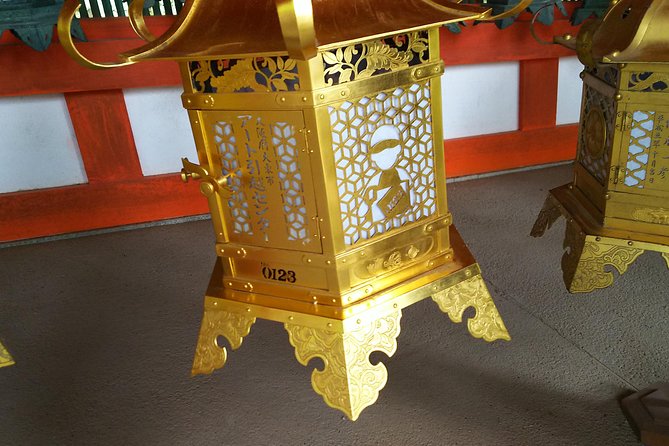
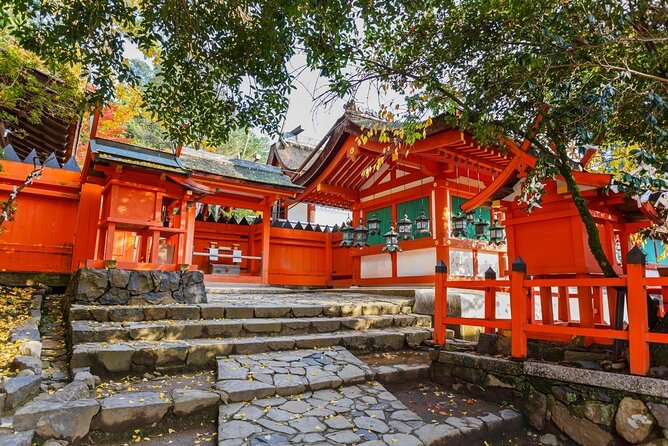
The final listed stop is Kasuga Grand Shrine, with about an hour to explore. This shrine was built around 1,300 years ago and has about 1,000 branch shrines across Japan. Its precincts contain more than 3,000 lanterns, described as the largest collection in Japan.
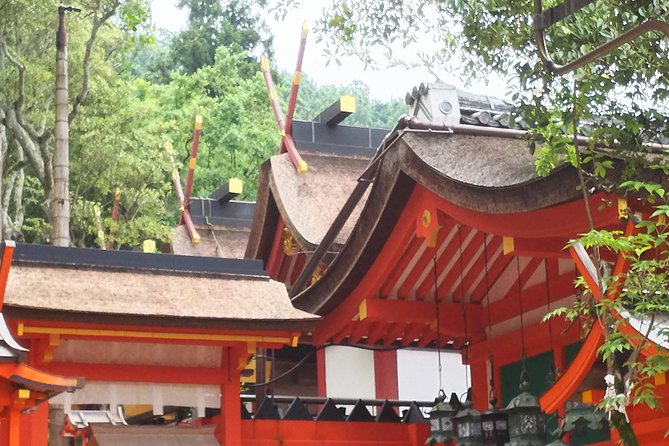
Kasuga feels different from Todaiji. Todaiji makes its impression through massive wooden construction, while Kasuga draws your attention to lanterns, shrine colors, and the atmosphere of its wooded grounds. The contrast gives the day useful variety. You are not seeing one temple after another with the same visual character.
The vermilion shrine details and lanterns create excellent photo opportunities. The tour specifically highlights Kasuga as a place for photographs, but remember that good pictures require a little patience. With only an hour, you will need to follow the guide’s timing and decide quickly which views matter most to you.
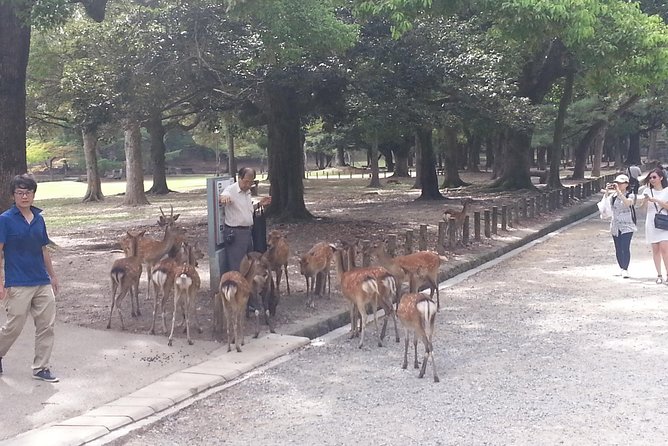
This is also the stop where Nara’s spiritual and natural setting come together most clearly. The information provided does not promise a specific deer encounter at Kasuga, but the Nara portion is associated with deer and shrines, and seeing deer is one of the attractions that makes the city memorable. Keep your attention on the shrine itself too. It deserves more than a quick backdrop for animal pictures.
A few more Kyoto tours and experiences worth a look



What the six-hour schedule really gives you
The official duration is approximately six hours. The three principal stops are each allotted about one hour, leaving the remaining time for movement between Kyoto, Fushimi Inari, and Nara.
That structure is efficient, not relaxed. I would choose it if you have limited time in Japan and want a guided introduction to both destinations. You will leave with a clear sense of what makes each place important, along with photographs from three distinct settings.
I would not choose it if you want a slow day. Fushimi Inari alone can occupy much longer than an hour, and Nara has more to see than the two listed temple and shrine stops. The tour covers highlights, not every corner of either destination.
The route also ends at Nara Station. That can be convenient if you want to continue exploring Nara after the tour, but it means the experience is not a simple round trip from Kyoto. Plan your afternoon around that finish. The activity does not include meals, so you should also account for food outside the tour schedule.
Is $106.10 a fair price?
At $106.10 per person, the price is not simply an entrance-ticket package. It mainly pays for the private guide and the convenience of linking two cities in one organized outing.
You still need to add ¥1,380 per person for public transportation and ¥800 per person for Todaiji Temple. Meals are also separate. That makes the total higher than the headline price, but the guide can be worthwhile if you would otherwise spend time working out the train route, temple order, and meeting points yourself.
The value improves for a small group, particularly because group discounts are available and only your party takes part. A private arrangement can cost more than a large group tour, but you are paying for a more focused experience and direct help with navigation.
I see the price as reasonable for a first visit when your time is tight. It is less compelling if you are comfortable using Japanese trains, reading maps, and researching shrine customs on your own. In that case, you could visit the same broad sights independently and keep more control over your schedule.
The four-star rating from the available feedback suggests the experience has been very well received, though the total number of ratings is small. The clearest praise centers on the guide’s helpful and informative approach, while the practical caution is the travel time between Kyoto and Nara.
Who will enjoy this route most?
I would recommend this tour to you if you:
- Have one open day and want both Fushimi Inari and Nara
- Prefer a private guide to independent route planning
- Want historical and architectural explanation at the sites
- Like photography but do not need long, unstructured visits
- Are comfortable walking and using public transportation
- Want to finish in Nara rather than return automatically to Kyoto
Families and small groups may find the private format especially useful. The supplied information says most people can participate, and it lists access for people with limited mobility and limited eyesight. Still, the day includes shrine and temple grounds, walking, and train travel, so ask for precise accessibility details before you commit.
The animal policy is also unclear in the supplied details. One line says animals or pets are allowed, while another says the experience is not suitable for pets. Treat the latter as the safer guidance and confirm directly before bringing an animal.
Booking and cancellation details worth knowing
Confirmation is provided when you book, and mobile tickets are available. The tour requires good weather. If poor weather causes cancellation, you are offered another date or a full refund.
You can cancel for a full refund up to 24 hours before the local start time. Cancellations or changes made less than 24 hours before the 9:00 am start are not accepted for a refund. That policy is fairly flexible for normal planning, but check the forecast before the final day.
The experience is provided by KAMNAVI Tours. Since it is a private activity, your group will not be combined with other participants.
Should you book the Fushimi Inari and Nara tour?
Book it if you want an efficient, guided introduction to two of Kyoto’s most requested side trips and you would rather not manage the route yourself. The strongest parts are the private format, the guide’s role in explaining history and architecture, and the range of sights: torii gates, a huge wooden temple, and an ancient lantern-filled shrine.
Skip it if you want to hike deeply around Fushimi Inari, spend a full day in Nara, or return to Kyoto with no extra planning. The six-hour schedule is tight, transportation and admission are extra, and the train journey takes a meaningful slice of the day.
For a first visit with limited time, I think the tour earns its place. You get the essential views, a guide to make sense of them, and a practical finish at Nara Station. Just budget for the added costs and accept that this is a highlights tour, not a slow exploration.
FAQ
How long is the Fushimi Inari and Nara tour?
The tour lasts approximately six hours.
What time does the tour begin?
The start time is 9:00 am.
Where does the tour start?
The tour starts at Kyoto Station in Kyoto, Japan.
Where does the tour finish?
The tour ends at Nara Station, at 1 Sanjohonmachi, Nara, 630-8122, Japan.
What sights are included?
The route includes Fushimi Inari Taisha, Todaiji Temple, and Kasuga Grand Shrine.
Are transportation costs included?
No. Public transportation costs ¥1,380 per person and are paid separately.
Is admission to Todaiji Temple included?
No. Todaiji Temple admission costs ¥800 per person and is not included in the guide fare.
Can I cancel for a full refund?
Yes. You can cancel at least 24 hours before the local start time for a full refund. Cancellations or changes made less than 24 hours before the start are not refunded or accepted.
More Walking Tours in Kyoto



More Nara Day Trips in Kyoto
More Fushimi Inari Tours in Kyoto
More tours in Kyoto we've reviewed









Fushimi Inari Tours, compared.
 ★ 4.8Kyoto: Fushimi Inari, Kinkakuji, Bamboo Grove 1 Day Bus TourFrom $122510 minutes - 9 hours
 ★ 5.0Fushimi Inari Hidden Hiking Tour (Private Option Available)From $63
 ★ 4.7Kyoto/Osaka: Nara, Fushimi Inari Taisha, Arashiyama Bus TourFrom $529 - 10 hours
 ★ 4.4Osaka/Kyoto: Arashiyama, Nara & Fushimi Inari Shrine w/LunchFrom $61
 ★ 5.0Kyoto: Nijo, Kinkaku-ji, Arashiyama, Kiyomizu & Fushimi InariFrom $51
 ★ 5.0Kyoto Fushimi-Inari Night Walking TourFrom $43