
Reviewed · WORKSHOPS
Kyoto: Japanese Hair Accessories & Brooch Workshop
The best part of this Kyoto workshop is that you make something you can actually wear. Your accessory works as both a Japanese hair ornament and a brooch, built from washi paper, mizuhiki cords, origami, and artificial Japanese flowers. You choose the colors and materials, so the finished piece feels personal rather than shop-bought.
I like the calm, hands-on pace and the chance to wear a traditional haori jacket while you work. I also like the generous extras: Japanese tea and sweets, a certificate, a handmade gift, and a photo session with your finished piece. The one point to consider is the price, $80 per person, which makes the most sense if you value guided craft time and several keepsakes, not just the final accessory.
In This Review
- Key points to know before booking
- Making a wearable souvenir near Nijo Castle
- Choosing washi, mizuhiki, and Japanese flowers
- What happens during the 90-minute session
- Wearing a haori makes the photo session worthwhile
- Tea, sweets, and the extra keepsakes
- Why the family-friendly format works
- The $80 price and what you receive
- When to fit it into your Kyoto plans
- Who will get the most from this workshop
- Should you book the Kyoto hair accessory workshop?
- FAQ
- How long does the Kyoto hair accessory workshop last?
- How much does the workshop cost?
- What will I make during the workshop?
- Which materials are included?
- Is a traditional outfit included?
- Are tea and sweets included?
- Will I receive anything besides the accessory I make?
- Is the workshop suitable for children?
- What languages are spoken during the workshop?
Key points to know before booking
- Two ways to wear it: Create one accessory that works as a hair piece or a brooch.
- Traditional materials: Use washi, mizuhiki cords, origami, and artificial Japanese flowers.
- Central Kyoto setting: The workshop is near Nijo Castle, with easy access to Gion, Arashiyama, Kawaramachi, and Karasuma.
- Named instructors: Mikiko-san and Ayumi-san have been praised for patient, clear guidance.
- Good family option: Children can take part through a kid-friendly version of the workshop.
- Several keepsakes included: Take home your creation, a handmade Japanese gift, and a certificate.
Making a wearable souvenir near Nijo Castle
This is not a craft demonstration where you sit back and watch someone else work. You make the accessory yourself, with an instructor helping you shape the design and handle the materials. In 90 minutes, you have enough time to choose a style, assemble the parts, and finish a piece suitable for modern clothing or traditional dress.
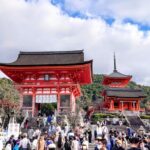
The workshop is located near Nijo Castle, one of Kyoto’s major UNESCO World Heritage sights. That location makes it easy to add the activity to a sightseeing day. You can visit the castle first, take a break for crafting, then continue toward Kawaramachi or Karasuma. Gion and Arashiyama are also listed as easy areas to reach from the workshop, though you should allow normal Kyoto travel time between stops.
I find this kind of activity especially useful on a busy sightseeing trip. Kyoto can fill your day with temples, shrines, gardens, and long walks. A quiet period at a table gives you a different view of the city, one based on making rather than looking.
A few more Kyoto tours and experiences worth a look


Choosing washi, mizuhiki, and Japanese flowers
The materials give the workshop its Japanese character. Washi is traditional Japanese paper, valued for its texture and visual warmth. Mizuhiki cords are decorative paper cords often used in Japanese gift wrapping and ornaments. Origami adds folded paper shapes, while artificial Japanese flowers provide color and a floral finish without the fragility of fresh blooms.
You get a range of colors and materials to choose from. This matters because the accessory can be soft and understated, bright and decorative, or matched to clothing you already own. The information does not specify a fixed menu of designs, so you should expect guided choice rather than a completely open studio with unlimited options.
The two-way format is practical. Wear the finished piece in your hair during a special dinner or cultural visit, then attach it to a jacket, scarf, or bag as a brooch. It gives the souvenir more use than a decorative item that stays in a drawer.
The craft also leaves room for self-expression. Daniel from the United States described the setting as relaxing and appreciated the freedom to create. That is useful guidance for you: this is not mainly about producing an identical, perfect model. It is about making a piece that reflects your choice of color, shape, and materials.
What happens during the 90-minute session
The precise minute-by-minute schedule is not provided, but the workshop has a clear rhythm. You can expect the session to begin with an introduction to the materials and the accessory format. The instructor then helps you select components and guides you through putting them together.
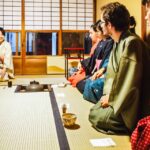
You will work with washi, mizuhiki, origami, and artificial flowers. English and Japanese instruction is available, so you do not need to be fluent in Japanese to take part. The instructors are described as kimono-clad, adding a visual link to the traditional clothing and craft setting.
Mikiko-san and Ayumi-san are the instructors named in the available feedback. Mikiko-san is described as kind and patient, while Ayumi-san is noted for her kindness during a mother and daughter session. You might not have one of these instructors on your date, but their teaching style gives you a useful idea of the workshop: expect personal help, clear explanations, and room to work at your own pace.
The session is short enough to fit into a sightseeing day, but long enough to feel like an activity rather than a quick souvenir stop. If you tend to rush through craft sessions, keep an eye on the clock. Choosing colors can take longer than expected, especially when several combinations appeal to you.
Wearing a haori makes the photo session worthwhile
A free haori rental is included. The haori is a traditional Japanese jacket, worn over other clothing, and it gives you a simple way to add a Japanese element to the workshop without arranging a full costume rental.
You wear the haori while crafting and then take photos with your finished accessory. Bring a camera, as the photo session is part of the appeal and no separate photography service is listed. Comfortable clothes are also recommended. You will be seated and working with small craft materials, so an outfit that lets you settle in for 90 minutes is more useful than formal sightseeing clothes.
The photo opportunity is not only for social media. It helps record the whole experience: your design, the haori, and the finished accessory together. If you are visiting Kyoto with family or friends, this also gives you a shared image from the day rather than only individual snapshots at temples.
The activity information does not specify the number of people in each session or the exact photography setup. You should therefore think of it as a casual photo session with your own camera, not a formal studio shoot.
Tea, sweets, and the extra keepsakes
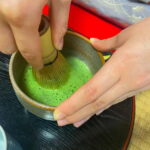
Japanese tea and sweets are included. This small break adds a social touch to the workshop and gives you a chance to enjoy something local while looking at your work. It also makes the experience more comfortable for families and companions who may need a pause during a day of sightseeing.
You also receive a certificate of completion. It is a modest souvenir, but it gives the activity a sense of occasion, especially for children. In addition, a handmade Japanese gift is included alongside the accessory you create. That is important when judging the $80 price, since you are not paying only for materials and instruction.
The value is strongest if you enjoy the full package: a guided creative activity, traditional clothing, tea and sweets, a certificate, a gift, and a personalized item. If you only want a small brooch, you can probably find less expensive souvenirs in Kyoto. The workshop earns its price through the time, attention, and experience around the object.


Why the family-friendly format works
Children are welcome, and a kid-friendly version of the workshop is available. That makes this a useful choice for families who want an activity beyond temples and shopping. Children can make design choices and leave with something they helped create, rather than simply receiving a souvenir.
Parents should still consider the child’s patience and interest in crafts. The session lasts 90 minutes, and the work may involve careful handling of small decorative pieces. The available information confirms a child-friendly version, but it does not give an age range or explain exactly how the children’s format differs.
For couples and friends, the workshop offers a gentle shared activity. You can make completely different designs while working at the same table, then compare colors and styles during tea. Solo visitors can also take part without needing a partner, since the instructor provides guidance and the project is individual.
The calm setting is one of the strongest reasons to book. Daniel specifically valued the freedom to express himself and said the skills could be used to make more accessories at home. That suggests the session has some value beyond the single finished piece. You may leave with ideas for adapting the same techniques to your own crafts.
The $80 price and what you receive
At $80 per person, this is not a budget activity. The price is easier to justify because the package includes the 90-minute workshop, all crafting materials, haori rental, tea, sweets, a certificate, a handmade gift, and your own two-way accessory.
High-quality materials are specifically included in the package description, though the exact brands or quantities are not given. You also receive instruction in English or Japanese, which reduces the uncertainty that can come with a craft class abroad.
I would compare the cost with what you want from your Kyoto day. If your goal is to see as many sights as possible, $80 may feel high for a short activity. If you want a personal souvenir and a relaxed break near Nijo Castle, the added items and guided time improve the value.
There are no hotel transfers or unspecified outside expenses included. Plan your own way to the workshop and budget separately for transport, meals, and anything else you buy in Kyoto. The location near Nijo Castle is convenient, but the activity does not remove the need to plan your route.
When to fit it into your Kyoto plans
The 90-minute duration gives you several possible uses. You could schedule it after visiting Nijo Castle, using the workshop as a restful middle stop. You could also place it before an evening in Kawaramachi or Gion, when wearing the finished hair ornament or brooch would feel fitting.
The activity is also useful on a rainy day. The included information does not describe the indoor layout, but a craft workshop naturally provides a break from outdoor sightseeing. Check the available starting times before you build the rest of your day, since the schedule varies by date.
Avoid packing the workshop between two far-apart reservations. Kyoto’s attractions are spread across the city, and the workshop itself takes 90 minutes before you add arrival and departure time. The central location helps, but it does not make every part of Kyoto close by.
Flexible booking is another practical advantage. You can reserve now and pay later, and cancellation is free up to 24 hours in advance for a full refund. That helps if your Kyoto schedule is still shifting.
Who will get the most from this workshop
I would recommend it most to:
- Solo visitors who want a personal cultural activity with a useful souvenir.
- Couples who enjoy making different versions of the same object.
- Families looking for a calmer option between major sights.
- Craft lovers who like choosing colors and working with traditional materials.
- Visitors who want to wear a haori without booking a full kimono experience.
- Anyone looking for a small, easy-to-pack reminder of Kyoto.
It is less suitable if you dislike guided crafts, want a long cultural lecture, or care only about finding the cheapest accessory. The workshop is practical and creative, not a major historical presentation. Its value is in the making, the personal design, and the relaxed setting.
The available comments give a consistent picture of the teaching. Mikiko-san is described as patient, Ayumi-san as kind, and the guide’s explanations as clear. That fits the needs of first-time crafters, including children and visitors who are not confident with Japanese.
Should you book the Kyoto hair accessory workshop?
Book it if you want to make a wearable souvenir, enjoy hands-on activities, and have room in your Kyoto schedule for a peaceful 90-minute break. The two-way design, haori rental, tea, sweets, certificate, and handmade gift make the $80 package more substantial than a basic craft lesson.
Skip it if your budget is tight or if your priority is sightseeing time over creative activities. For everyone else, this is a well-rounded choice near Nijo Castle, especially for solo visitors, couples, families, and small groups. Choose comfortable clothes, bring a camera, and leave enough time around the session so you can enjoy the craft instead of watching the clock.
FAQ
How long does the Kyoto hair accessory workshop last?
The workshop lasts 90 minutes.
How much does the workshop cost?
The price is $80 per person.
What will I make during the workshop?
You will make a two-way accessory that can be worn as a Japanese hair ornament or a brooch.
Which materials are included?
Materials include washi paper, mizuhiki cords, origami, and artificial Japanese flowers. Crafting materials are included in the price.
Is a traditional outfit included?
Yes. A traditional haori jacket rental is included for the workshop.
Are tea and sweets included?
Yes. Japanese tea and sweets are included.
Will I receive anything besides the accessory I make?
Yes. The package includes a certificate of completion and a handmade Japanese gift in addition to your own creation.
Is the workshop suitable for children?
Yes. Children are welcome, and a kid-friendly version of the workshop is available.
What languages are spoken during the workshop?
Instruction is available in English and Japanese.
More Workshops & Classes in Kyoto
More tours in Kyoto we've reviewed










Workshops, compared.
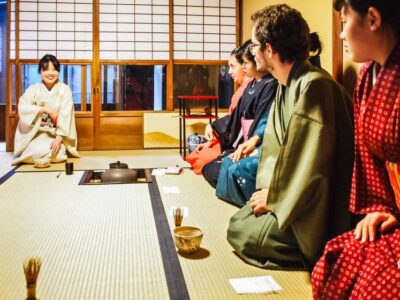 ★ 4.3Kyoto: 45-Minute Tea Ceremony Lesson ExperienceFrom $2245 min
 ★ 5.0Ramen Cooking Class at Ramen Factory in KyotoFrom $131
 ★ 4.9Kyoto: Ramen Cooking Class at a Ramen Factory with SouvenirFrom $1271h 30m
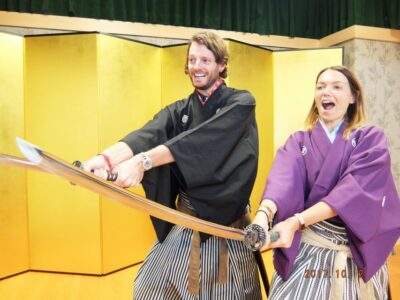 ★ 4.9Kyoto: Samurai Class, Become a Samurai WarriorFrom $70
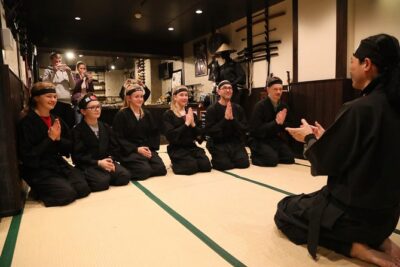 ★ 5.0Ninja 1-hour Hands-on Lesson by Japanese master in Kyoto -EntryFrom $80
 ★ 5.0Kyoto: Ramen, Gyoza, and Onigiri Cooking ClassFrom $901h 30m