
Reviewed · KYOTO PREFECTURE
Itajime Shibori Scarf Class at Kyoto Shibori Museum
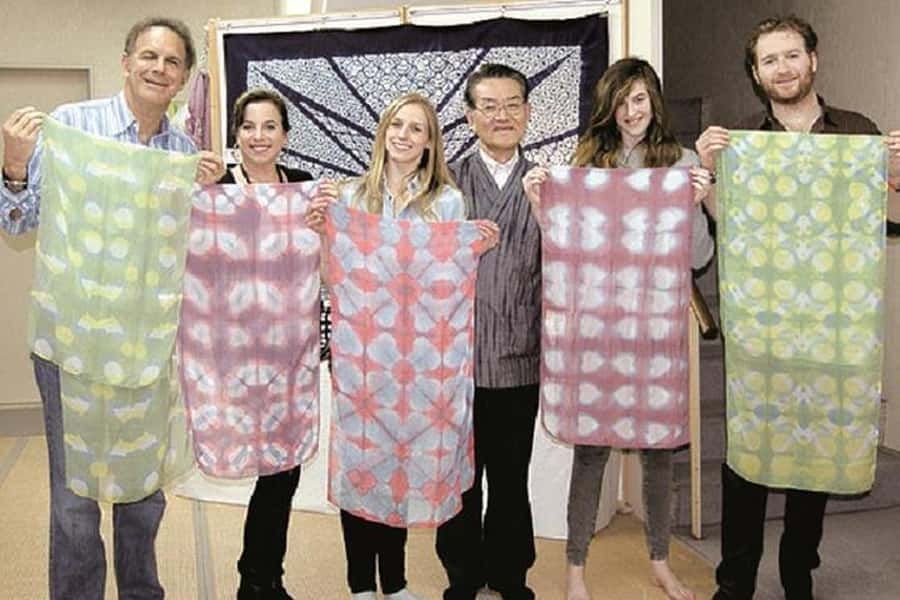
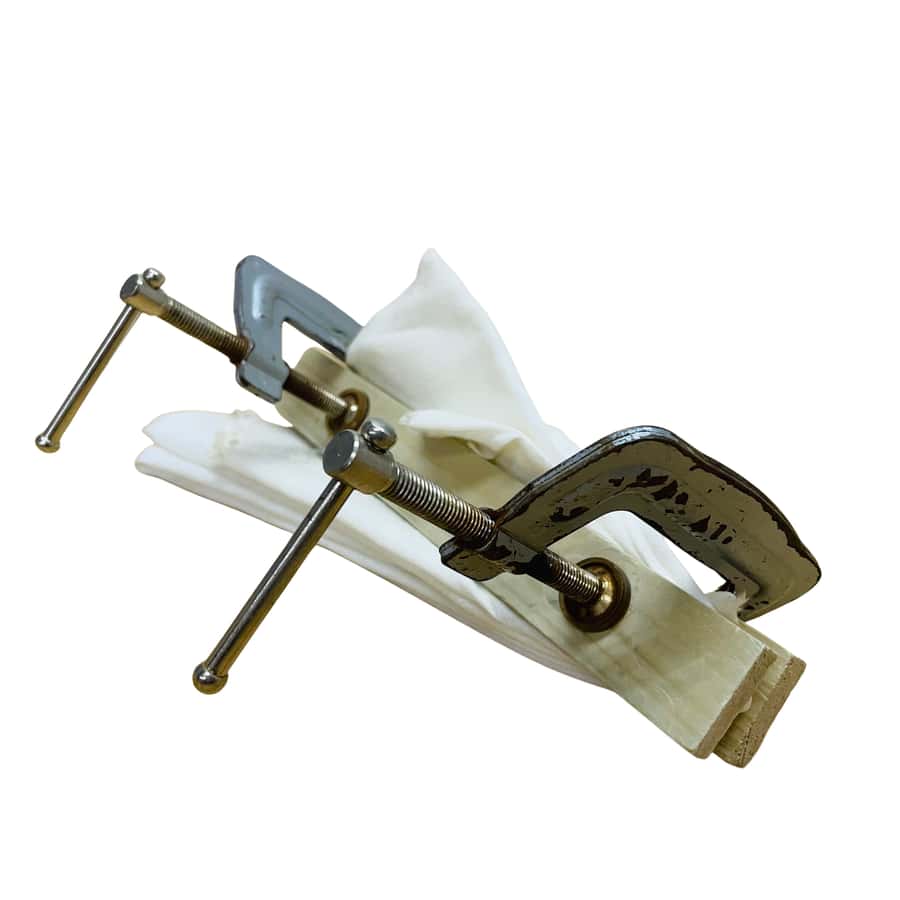
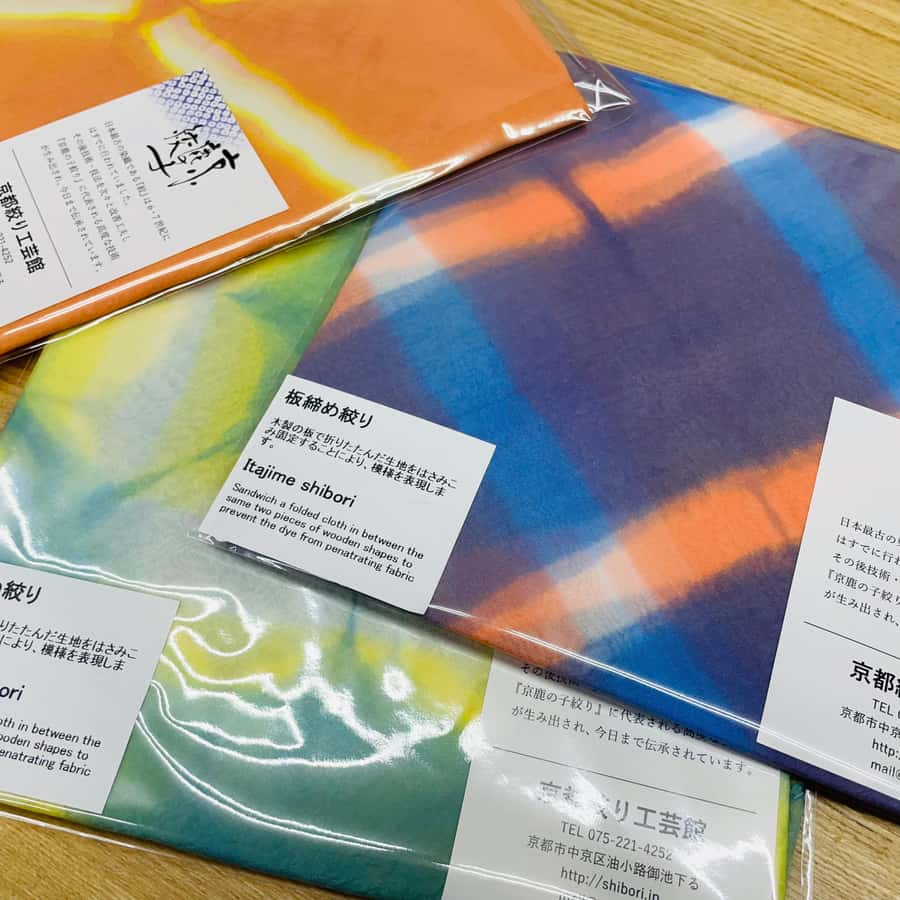
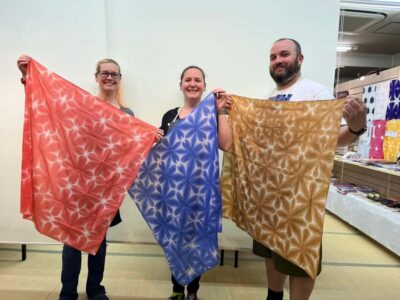
The clever part of this shibori workshop is that you create the pattern without drawing it. Your silk scarf is folded and sandwiched between boards, then dyed in two colors. The boards block some areas and expose others, producing a design that only appears when the fabric is opened.
I like the personal help, especially since instructors assist throughout the process and check the work as you go. I also like the timing: your scarf dries while you explore the museum’s textile displays, so the one-hour visit has more to it than a quick craft lesson. The main consideration is that the class is short, usually 30 to 60 minutes, so this is an introduction rather than a full course in shibori.
In This Review
- Key points to know before booking
- Making a scarf with boards and two dyes
- What the instructor does during the class
- Watching the pattern appear
- The museum while your scarf dries
- The shop and its finished examples
- Why the Nijo Castle location helps
- Is $42 a fair price?
- Who will enjoy this workshop most?
- Booking details worth knowing
- Should you book the Kyoto shibori scarf class?
- FAQ
- Where is the Kyoto Shibori Museum?
- How long does the shibori scarf class last?
- What technique do you use in the workshop?
- What do you make during the class?
- Is museum admission included?
- What can you do while the scarf dries?
- Is instruction available in English?
- How large is the workshop group?
- Can you cancel the booking for a refund?
Key points to know before booking
- Make a one-of-a-kind silk scarf: The board-and-dye method means your finished pattern is created by your choices and the folding process.
- Get close instruction: The small group is limited to eight people, with English and Japanese instruction available.
- Use drying time well: Explore the museum’s shibori works and video presentation while your fabric dries.
- Visit near Nijo Castle: The museum is about a five-minute walk from one of Kyoto’s best-known sights.
- Receive museum admission: Workshop participants get free entry, normally priced at 1,000 yen.
- Take home a useful souvenir: The result is not just a paper craft or quick decoration, but a silk scarf you can wear.
Making a scarf with boards and two dyes
Kyoto Shibori Museum’s most popular workshop uses itajime shibori, a method based on folding cloth and pressing it between shaped boards. Dye reaches the exposed sections while the covered sections resist the color. When the boards come away, the scarf reveals a pattern that could not be seen during the preparation.
That moment is the heart of the class. You make decisions about the board design and color arrangement, but the final result still contains an element of surprise. The method gives you a hands-on link to a traditional Japanese textile practice without asking you to spend a whole day learning complex dyeing techniques.
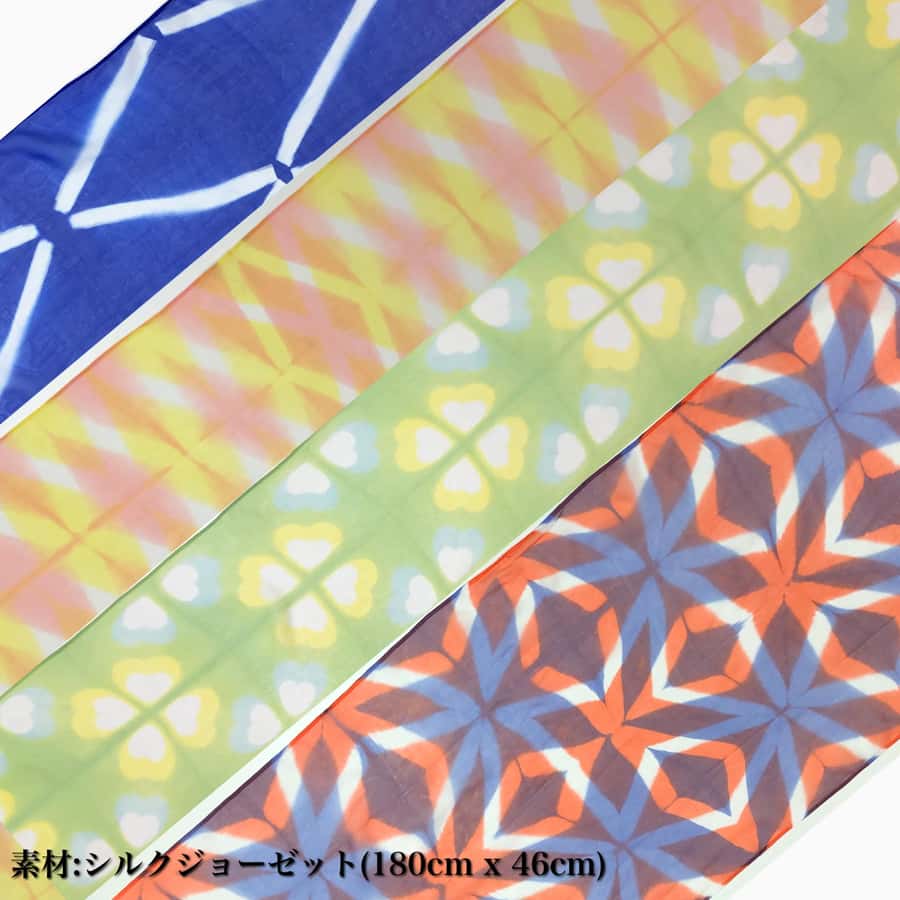
The workshop uses a silk scarf and two colors of dye. The combination allows for more than a single-color souvenir. Depending on the boards and folding choices, you can produce repeated shapes, blocks of color, or a more irregular pattern. I would choose this class if you want a finished object with a clear connection to the process, not simply a demonstration where an expert does all the work.
The activity lasts about an hour, with the actual making portion taking roughly 30 to 60 minutes. That range matters. If you prefer a relaxed pace and personal help, expect the class to occupy most of your available hour. If the hands-on work finishes quickly, you still have the museum and shop to see.
Other museum experiences in Kyoto Prefecture

What the instructor does during the class
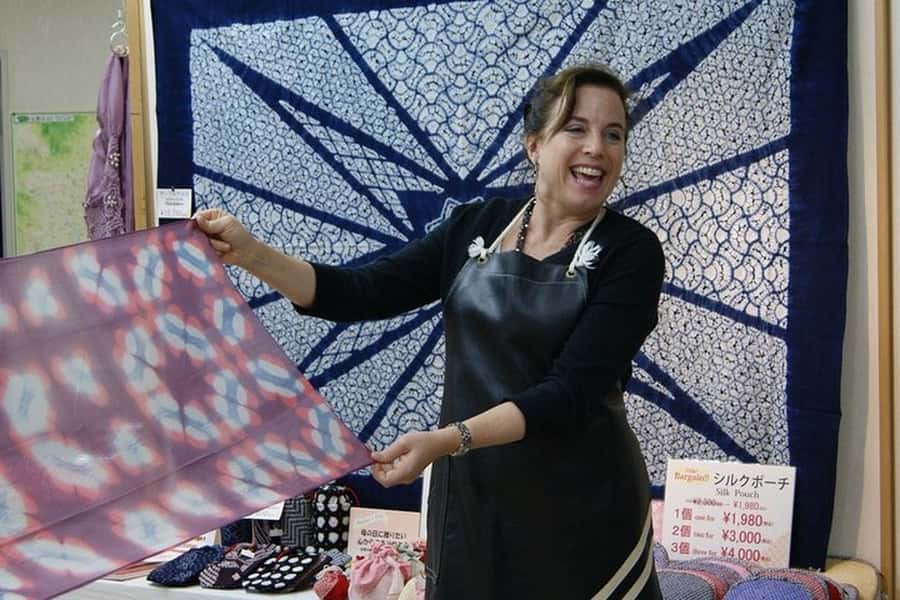
The instructors guide you through each stage and help with quality control. That assistance is important because the folds, boards, and dye placement determine the pattern. A small mistake before dyeing can change the result, so having someone check your work takes away much of the worry.
English and Japanese instruction is available. Akiko is one of the instructors praised for giving clear, efficient guidance, and the staff are described as helping participants throughout the process. The group limit of eight also gives the class a more personal feel than a large demonstration.
You should not expect a long lecture before touching the fabric. The value here is practical instruction: how to arrange the cloth, how to use the boards, and how to work with the two colors. The instructors’ role is part teacher and part quality checker, which is a good fit for a craft where the final appearance depends on small choices.
The museum team also has a family connection to shibori that reaches across generations. That adds useful context to the activity, since you are learning a living craft from people who work closely with the tradition rather than trying a generic souvenir-making exercise.
Watching the pattern appear
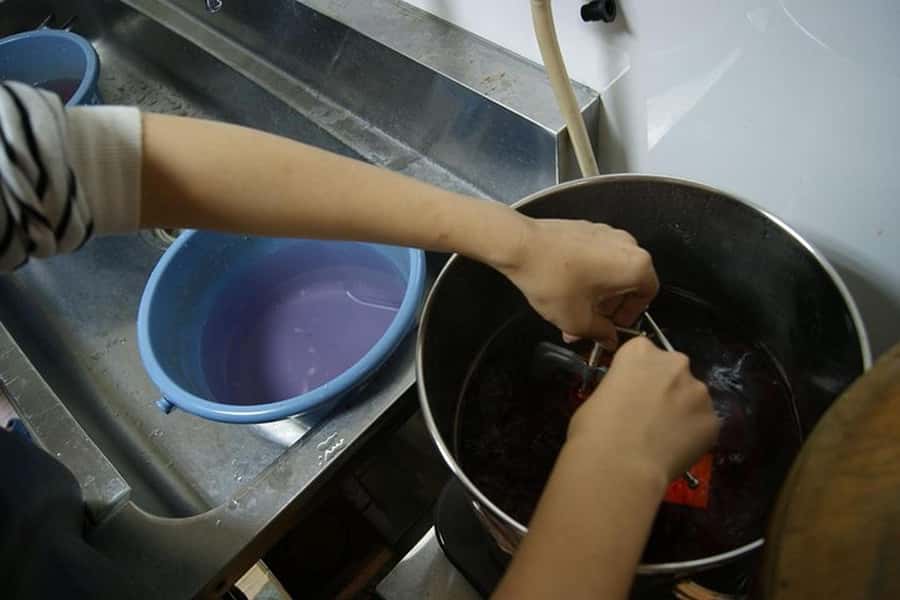
Itajime shibori rewards patience. Before the dye is applied, you see a folded scarf held between boards. Afterward, you see the repeated marks and color blocks created by the resistance process. The finished item is unique because the exact folds, board placement, and dye movement will not be repeated in precisely the same way.
This makes the workshop especially good for people who like a little uncertainty in a creative activity. You have control, but not complete control. Two people following the same broad method can leave with very different scarves.
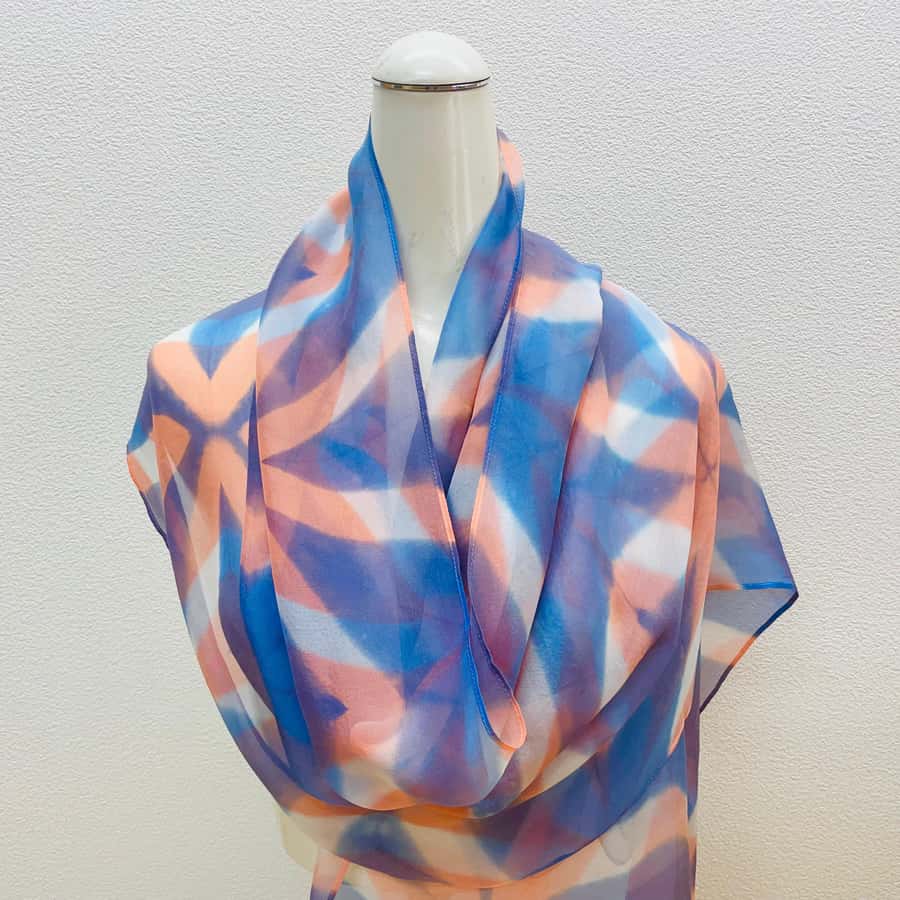
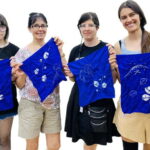
The result is also practical. The silk scarf is a wearable souvenir, and one participant later described wearing the finished piece. That is a better travel keepsake for many people than an object that sits in a suitcase and never gets used.
Still, you should keep your expectations sensible. A short class cannot cover every shibori technique. You will learn one popular board-resist method, not the complete range of folding, stitching, binding, and dyeing approaches used in Japanese textile work.
The museum while your scarf dries
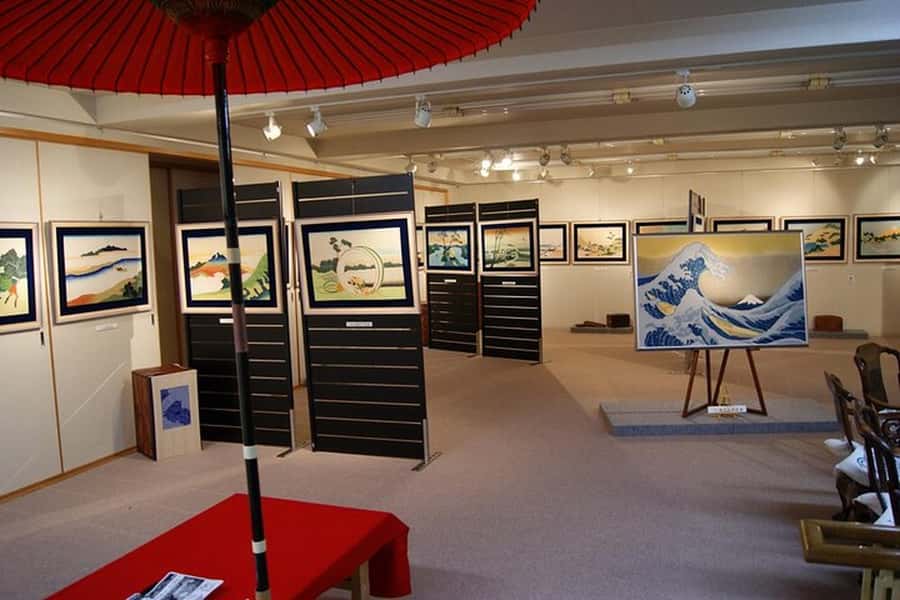
The workshop includes free admission to the Kyoto Shibori Museum, normally 1,000 yen. The museum opened in 2001 and is dedicated to shibori works, samples, and related displays.
Your scarf needs time to dry, and the museum gives that waiting period a purpose. You can examine finished art pieces and examples of the craft while your own work is still being prepared. This side of the visit helps you understand the difference between a simple hands-on activity and the larger textile tradition behind it.
The museum also includes a video presentation about shibori. That can be useful if you want a clearer sense of the process and background after making your own scarf. The displays are described as focused rather than sprawling, so you can see the main material without needing half a day.
The museum’s connection to older Japanese craft is also part of its appeal. Shibori techniques have continued since the Nara period, giving the activity a long historical frame. You are not simply using boards and dye for decoration. You are trying a method connected to centuries of Japanese textile work.
The free museum entry improves the value of the booking. Even if you already planned to visit the museum, the workshop adds a practical layer. If you would otherwise skip small museums, the included admission gives you a reason to spend time with the exhibits while your scarf dries.
The shop and its finished examples
After the class, the museum shop gives you a chance to compare your new scarf with professionally made pieces. It carries original shibori items, fabrics, souvenirs, and equipment. The displays can help you see how the same broad ideas become more refined in the hands of experienced makers.
I like this part because it keeps the workshop from feeling isolated. You make one small item, then see the wider range of colors, patterns, and finished goods available from the craft. Your scarf will not look like a museum masterpiece, and it does not need to. The shop shows where the basic technique can lead.
The shop is also useful if your own scarf makes you want to learn more. You can admire completed works or look at materials and equipment connected with shibori. The available information does not promise that every item can be shipped or that every tool is suitable for beginners, so treat the shop as a place to browse rather than assume you will find a complete follow-up course.
For gift hunters, this stop adds choice. You can leave with the scarf you made, buy another textile, or simply look at the difference between your first attempt and polished work made by the museum team.
A few more Kyoto Prefecture tours and experiences worth a look


Why the Nijo Castle location helps
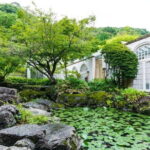
The Kyoto Shibori Museum is about a five-minute walk from Nijo Castle. That makes the class easy to pair with sightseeing in central Kyoto, especially if you want a quieter indoor activity after visiting the castle.
The one-hour format also fits neatly into a busy day. You do not need to give up an entire morning or afternoon, and the museum visit is built into the time when the scarf dries. I would place it near a Nijo Castle visit rather than cross the city for it alone, unless textile arts are a main interest.
The location is one of the clearest practical advantages. Kyoto days can fill quickly with temples, gardens, and crowded streets. A small craft class gives you a change of pace, and the short walk from Nijo Castle makes that change easy to arrange.
No transportation details beyond the nearby Nijo Castle location are provided, so check the exact meeting instructions and starting time when booking. Several start times may be available, depending on the date.
Is $42 a fair price?
At $42 per person, the workshop is not the cheapest craft activity you will find in Japan. The price needs to be judged against what you receive: a silk scarf, instruction, personal help in a group of no more than eight, museum admission, and time to see the exhibits and shop.
The 1,000-yen museum admission is included for workshop participants. That does not account for the full price, but it improves the package, particularly if you already want to visit the museum. The scarf is the bigger part of the value because it is both the material you work on and the souvenir you take home.
I think the price makes sense for you if you value a guided cultural activity and want something usable at the end. It makes less sense if you only want a quick look at shibori or are mainly searching for the lowest-cost souvenir.
The personal assistance is another reason the price feels reasonable. You are not left to guess how the boards and dye work. The small group keeps the class focused, though the brief duration means you are paying for an introduction, not advanced instruction.
Who will enjoy this workshop most?
This class suits first-time crafters, couples, families with an interest in making something together, and anyone who prefers an activity with a physical result. You do not need to arrive with previous textile experience, and the instructors provide the guidance needed to follow the process.
It is also a good choice for art lovers who want more than a museum display. You can see finished pieces, then try one traditional method yourself. That link between looking and doing gives the visit more meaning.
The workshop works well for a short Kyoto itinerary. A one-hour activity near Nijo Castle is easier to fit around sightseeing than a long studio session. The small group is another plus if you prefer direct help rather than a crowded class.
I would be cautious about booking it if you want a full technical course. The class focuses on making one scarf using boards and two dyes. It will introduce you to the method, but it will not cover every form of shibori or provide extensive time for experimentation.
Booking details worth knowing

You can cancel up to 24 hours before the activity for a full refund. A reserve-now, pay-later option is also available, which lets you hold a place without paying at the time of booking.
The workshop is offered in English and Japanese. The group is limited to eight participants, and the duration is one hour. Check the available starting times for your date, since the class is not described as having one fixed daily departure.
The recent booking information includes dates through January 2026, so confirm availability when you plan your visit. The activity provider is the Kyoto Shibori Museum itself, not a separate sightseeing company.
Should you book the Kyoto shibori scarf class?
I would book this if you want a compact Kyoto activity that combines instruction, history, a museum visit, and a useful souvenir. The strongest reasons are the silk scarf, the close help from the instructors, the two-color board-dye method, and the convenient location five minutes from Nijo Castle.
The class is particularly good for you if you enjoy making something with your hands but do not want a long lesson. You get a real introduction to a traditional craft, and your finished scarf will be different from every other one.
Skip it if you are looking for a large museum, a long workshop, or advanced textile training. For everyone else, $42 buys a focused hour with a take-home result and free museum admission. That is a fair exchange, especially on a Kyoto day that already includes Nijo Castle.
FAQ
Where is the Kyoto Shibori Museum?
The museum is in Kyoto on Honshu, Japan. It is about a five-minute walk from Nijo Castle.
How long does the shibori scarf class last?
The activity lasts one hour. The hands-on scarf-making portion takes about 30 to 60 minutes.
What technique do you use in the workshop?
You create the pattern by sandwiching fabric between boards and dyeing it. Different boards and two colors of dye produce the design.
What do you make during the class?
You make a shibori silk scarf that you can take home after the activity.
Is museum admission included?
Yes. Workshop participants receive free admission to the Kyoto Shibori Museum. Regular admission is 1,000 yen.
What can you do while the scarf dries?
You can explore the museum’s shibori works, samples, and exhibition displays. The museum also has a video presentation about shibori.
Is instruction available in English?
Yes. The instructors provide guidance in English and Japanese.
How large is the workshop group?
The workshop is a small-group activity limited to eight participants.
Can you cancel the booking for a refund?
Yes. You can cancel up to 24 hours in advance for a full refund. A reserve-now, pay-later option is also available.
More Workshops & Classes in Kyoto Prefecture
More Museum Experiences in Kyoto Prefecture
More tours in Kyoto Prefecture we've reviewed


Kyoto Prefecture, compared.
 ★ 4.9Kyoto: Zen Meditation and Garden Tour at a Temple with LunchFrom $1074h 30m
 ★ 5.0Kyoto: Hike and Hot Springs in KuramaFrom $804 hours
 ★ 5.0Shibori Furoshiki Course at Kyoto Shibori MuseumFrom $421 hour
 ★ 5.0Kyoto Satoyama Cycling with Lunch and English GuideFrom $78
 ★ 5.0Kyoto 1 Day Suntory Yamazaki Distillery Tour and Asahi Art MuseumFrom $163
 ★ 5.0Kyoto Half Day Yamazaki Whisky Museum and Asahi Art MuseumFrom $65