
Reviewed · KYOTO PREFECTURE
Kyoto: Ikebana (Japanese Flower Arrangement)
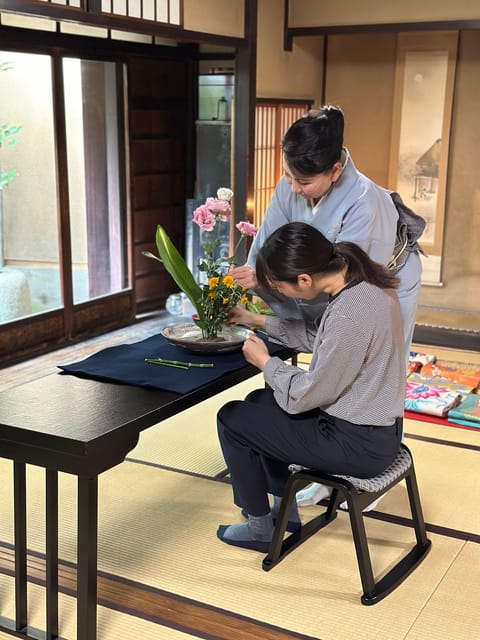
Ikebana here is more than putting flowers in a vase. You learn how Kyoto’s flower art grew from a 1462 arrangement meant to express harmony between nature and human space, then create your own piece inside a 140-year-old machiya. I like the mix of hands-on craft and living history. The garden setting also gives your finished arrangement a fine photo backdrop.
I also like that the flowers, tools, and entrance are included, and that this is a private group rather than a large class. The main concern is value: at $122 per person, the 90-minute session needs to feel full. Some recent bookings describe a warm, detailed lesson, while others found the flower work very brief and wanted more explanation or a demonstration.
In This Review
- Key points at a glance
- Starting with ikebana’s Kyoto origin story
- Making your own arrangement with seasonal flowers
- Photographing the finished work by the garden
- Exploring Tondaya, the 140-year-old machiya
- How the $122 price measures up
- Language support and the shape of the lesson
- The practical details you should not miss
- Who will enjoy this most
- My booking advice
- FAQ
- Where does the ikebana experience take place?
- How long does the experience last?
- How much does it cost?
- Is the activity suitable for beginners?
- What does the price include?
- Are English instructors available?
- Is the group private?
- Can one person make a reservation?
- What should I wear?
- Can I cancel for a refund?
Key points at a glance
- A beginner-friendly introduction to ikebana: Seasonal flowers and all required tools are supplied.
- A lesson tied to Kyoto’s past: You hear how a 1462 flower arrangement helped shape the art form.
- A historic machiya setting: Tondaya is a 140-year-old townhouse and a cultural landmark recognized by Kyoto’s city government.
- A private group format: Reservations require at least two participants, which suits couples, families, or small groups.
- A garden photo moment: Your completed arrangement is displayed in front of the garden after the lesson.
- A clothing detail that matters: Wear socks, and avoid bare feet, stockings, and tights.
Starting with ikebana’s Kyoto origin story
The session begins with an introduction to ikebana, the Japanese art of arranging flowers. The historical starting point given here is 1462, when an arrangement made in Kyoto was admired for its beauty and elegance.
That date matters because it points to a change in purpose. Earlier flower arrangements were linked with religious offerings. Ikebana developed into something different: an art form that expresses balance between nature and the human space around it.
I like this short history because it gives the practical lesson a clear reason for being. You are not simply trimming stems and placing them in a container. You are learning an art shaped by ideas about space, harmony, and the character of each seasonal flower.
The amount of theory may vary depending on the instructor and language support. English and Japanese are listed as the working languages, and an interpreter or translation device may be used when needed. If you want detailed instruction on rules, form, and technique, it is wise to confirm how much English guidance will be available when you book.
If you're still narrowing it down, here are other tours in Kyoto Prefecture we've reviewed.
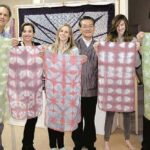
Making your own arrangement with seasonal flowers
The central activity is your own flower arrangement. Flowers and tools are included, so you do not need to bring supplies or prepare materials ahead of time.
The experience is designed for beginners. That makes it a good choice if you have never studied ikebana and want a structured introduction rather than an advanced workshop. You receive guidance from an ikebana instructor as you work, with staff support available in English or Japanese.
This is also where expectations need care. The supplied description promises instruction, but the practical detail of the lesson can depend on the person leading it and the interpretation available. One highly positive account describes each step being explained through an instructor and translator. Other accounts wanted a clearer demonstration and more discussion of ikebana theory.
I would treat this as a short cultural workshop, not a full art course. In a strong session, you should come away with an arrangement, some understanding of why ikebana looks the way it does, and a better sense of how flowers can shape a room. If your main goal is to study formal schools of ikebana in depth, 90 minutes will feel limited.
The private-group format helps. With no large class listed, you should have a more personal setting than you would in a crowded studio. Reservations require at least two people, so this is not suitable for a solo booking under the stated terms.
Photographing the finished work by the garden
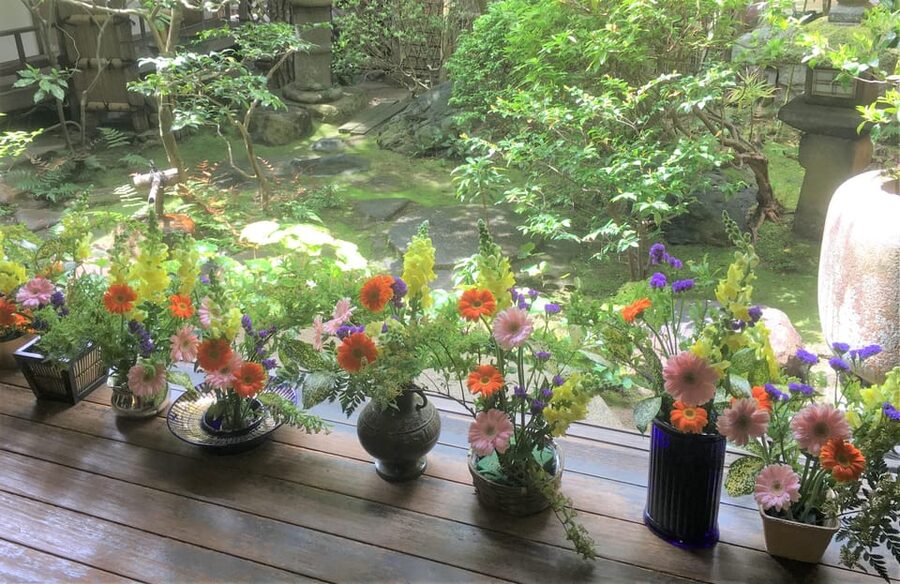
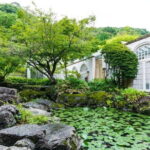
After you finish, your arrangement is displayed in front of the garden. This is a small part of the program, but it gives the experience a satisfying final step.
You get to see the work in a setting rather than leaving it on a classroom table. The garden also provides the natural background that fits the spirit of ikebana. If you enjoy taking photographs of cultural activities, this is one of the better details of the visit.
Do not confuse this with taking the arrangement home. The information provided says it will be displayed for photographs, but it does not say that you can keep the flowers or take the arrangement with you. If that matters to you, ask before booking.
Exploring Tondaya, the 140-year-old machiya
The second part takes you through Tondaya, also called the Nishijin Lifestyle Museum Tondaya. This traditional Kyoto townhouse is 140 years old and has been designated a culturally significant landmark by the Kyoto City Government.
The building gives the flower lesson a broader setting. A machiya is not just a pretty old house. It represents a way of urban life connected with Kyoto’s traditional neighborhoods, crafts, and domestic culture. At Tondaya, you can see historically valuable artifacts and hear stories about the building and its place in Kyoto’s living heritage.
This portion may be the strongest reason to book the activity instead of choosing a flower class alone. The visit joins a creative activity with a cultural site, so you are not spending the entire 90 minutes at a work table.
The amount of the tour inside Tondaya is not specified. Staff members guide you through the property and share its stories, but there is no detailed room-by-room route provided. Set your expectations accordingly: you are receiving an introduction to the townhouse and its heritage, not a full museum day.
A separate kimono option may also be available at an additional cost. One booking paired the flower activity with traditional kimono wear and a short tour of the historic venue. Since this costs extra and is not part of the listed price, ask for current terms if that appeals to you.
How the $122 price measures up
At $122 per person, this is not a bargain flower-arranging class. The cost covers the materials, tools, entrance fee, instruction, and the private-group setting. It also pays for access to a historic machiya rather than a plain modern classroom.
That can be fair value if you care about the setting and want two connected experiences in one visit. You are paying for the cultural venue as much as for the flowers. The private format may also matter if you prefer personal attention or are traveling with family or a partner.
Still, the price creates a high bar. The stated duration is 90 minutes, but several accounts found the practical flower session much shorter than expected. One described only about 15 minutes of activity, while another wanted a proper demonstration and stronger value for the money.
This does not prove that every session is brief. It does show why you should ask a direct question before paying: how much of the 90 minutes is spent on history, flower arranging, photographs, and the Tondaya tour? A clear answer will help you decide if the cost fits your plans.
I would consider the experience a better buy for someone who values a private cultural visit in a historic house than for someone seeking intensive ikebana training. If you only want to place flowers in a vase, $122 is hard to justify. If you want an introduction to ikebana tied to Kyoto’s traditional architecture, the calculation is more favorable.

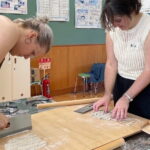



Language support and the shape of the lesson
The listed languages are English and Japanese. Staff members have experience with several traditional arts, including kimono, tea ceremony, calligraphy, and ikebana. Not every staff member speaks English, so an interpreter may be arranged, and a translation device may be used if necessary.
That arrangement can work well, especially for simple demonstrations and step-by-step instructions. It may be less satisfying if you want to discuss subtle ideas about line, balance, asymmetry, or the meaning of particular forms.
I would contact Tondaya ahead of time if detailed English instruction is important to you. Ask whether an English-speaking instructor or interpreter will be present for your date. This is especially useful if you are booking for someone who wants to understand the art rather than simply complete the craft.
The strongest experience will likely be one where the instructor demonstrates an arrangement first, explains the choices, and then guides you through your own work. That demonstration is worth requesting politely at the start if it is not offered.
The practical details you should not miss
Tondaya is at 697 Ishiyakushichō in Kyoto’s Kamigyo Ward. You meet at the Nishijin Japanese Cultural Experience Museum Tondaya itself.
Arrive on time. The session lasts 90 minutes, and a late arrival could cut into both the flower lesson and the townhouse visit. Starting times vary, so check the available schedule when you choose a date.
The dress rule is simple but strict:
- Wear socks.
- Do not arrive barefoot.
- Do not wear stockings or tights.
This is an easy detail to overlook, especially in warm weather. Pack a pair of ordinary socks if your footwear or outfit does not already include them.
The booking requires at least two participants. The group is private, which makes it a natural fit for couples, friends, and families who want to share the activity without strangers in the room.
You can cancel up to 24 hours before the scheduled experience for a full refund. A reserve-now, pay-later option is also available, so you do not have to pay at the time of booking.
Who will enjoy this most
I would recommend this for adults and families who want a calm, hands-on introduction to Kyoto culture. It suits people who enjoy crafts, flowers, traditional houses, and small museums more than people seeking a fast sightseeing stop.
It also makes sense for a pair of visitors looking for a private activity. The minimum booking of two is a drawback for solo visitors, but it helps create a more personal atmosphere for everyone else.
The experience may be especially appealing if you have already seen Kyoto’s major temples and want something participatory. You learn a little, make something with your hands, and then see a historic townhouse rather than simply passing through another famous gate.
I would be more cautious if you are booking mainly for serious ikebana instruction. The information does not promise a formal school, a named ikebana lineage, an extended demonstration, or advanced theory. The session is aimed at beginners, and the quality of explanation may depend on the instructor and language arrangement.
My booking advice
This experience has a good idea at its core: begin with the history of ikebana, make a seasonal arrangement, photograph it beside a garden, and then explore a 140-year-old Kyoto machiya. The setting and the private format give it more character than a basic craft class.
The weak point is the gap between the price and the short reports from some bookings. Before reserving, confirm how much time is guaranteed for instruction and whether an English-speaking guide or interpreter will be present.
Book it if you want a small, personal cultural visit and you value Tondaya’s historic setting as much as the flower arrangement. Skip it if you need a long technical lesson, want to keep your finished work, or are traveling alone and cannot meet the two-person minimum.
FAQ
Where does the ikebana experience take place?
It takes place at Tondaya, the Nishijin Japanese Cultural Experience Museum, at 697 Ishiyakushichō, Kamigyo Ward, Kyoto, Japan.
How long does the experience last?
The scheduled duration is 90 minutes.
How much does it cost?
The listed price is $122 per person.
Is the activity suitable for beginners?
Yes. It is presented as a beginner ikebana experience, with seasonal flowers and the required tools provided.
What does the price include?
The price includes the flowers, tools, and entrance fee.
Are English instructors available?
English and Japanese are listed as the available languages. Not every staff member speaks English, so an interpreter or translation device may be used when needed.
Is the group private?
Yes. The activity is offered as a private group experience.
Can one person make a reservation?
Reservations require a minimum of two participants.
What should I wear?
You should wear socks. Bare feet are not allowed, and stockings or tights should be avoided.
Can I cancel for a refund?
You can cancel up to 24 hours in advance for a full refund. A reserve-now, pay-later option is also available.
More tours in Kyoto Prefecture we've reviewed

Kyoto Prefecture, compared.
 ★ 4.9Kyoto: Zen Meditation and Garden Tour at a Temple with LunchFrom $1074h 30m
 ★ 5.0Kyoto: Hike and Hot Springs in KuramaFrom $804 hours
 ★ 4.9Itajime Shibori Scarf Class at Kyoto Shibori MuseumFrom $421 hour
 ★ 5.0Shibori Furoshiki Course at Kyoto Shibori MuseumFrom $421 hour
 ★ 5.0Kyoto Satoyama Cycling with Lunch and English GuideFrom $78
 ★ 5.0Kyoto 1 Day Suntory Yamazaki Distillery Tour and Asahi Art MuseumFrom $163