
Reviewed · WORKSHOPS
Osaka: Japanese Drum Taiko Workshop
The first hard strike of a taiko drum does more than make noise. It gives you a direct, hands-on look at a Japanese tradition that has served festivals, ceremonies, communities, and performers for centuries. At this two-hour workshop near Osaka, you learn the basics, watch a professional performance, and finish by playing a simple piece with the group.
I like the easy train access from Osaka or Kyoto and the friendly, beginner-focused teaching. I also like the small cultural touches, especially writing a personal wish in Kanji on a hachimaki before putting on a happi coat for the closing photo. The main thing to watch is timing: the two hours include transport, and late arrivals cannot join.
In This Review
- Key points to know before you book
- Why this taiko workshop feels different from a stage show
- Meeting at JR Takatsuki, the useful halfway point
- Writing your wish on a hachimaki
- The professional performance sets the bar
- Learning the first movements without pressure
- Playing one group piece together
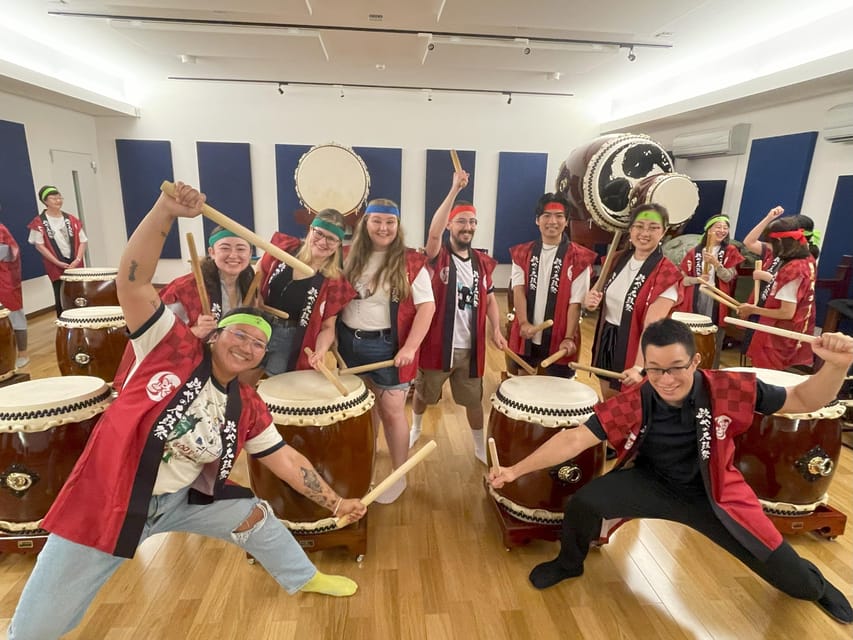
- The costume photo is more than a souvenir
- Is $103 a fair price?
- Who will enjoy this most
- Planning the day around your two hours
- Should you book the Osaka taiko workshop?
- FAQ
- Where does the taiko workshop meet?
- Is the meeting point at JR Takatsuki or Hankyu Takatsuki?
- How long does the experience last?
- Is the workshop suitable for beginners?
- Can children participate?
- What does the price include?
Key points to know before you book
- JR Takatsuki puts you between Osaka and Kyoto: The station is about 15 minutes by train from either city, though you must use the JR station, not Hankyu Takatsuki.
- A professional taiko performance comes before your lesson: You first see what the drums can do, then learn the movements yourself.
- The workshop is built for beginners: You do not need previous drumming experience or special coordination.
- Your group performs one simple piece: The focus is shared rhythm and energy, not a polished concert.
- Traditional dress adds a memorable finish: You wear a happi and hachimaki for a commemorative photo.
- You should allow extra time after the class: Travel is included in the two-hour schedule, and leaving early is not recommended.
Why this taiko workshop feels different from a stage show
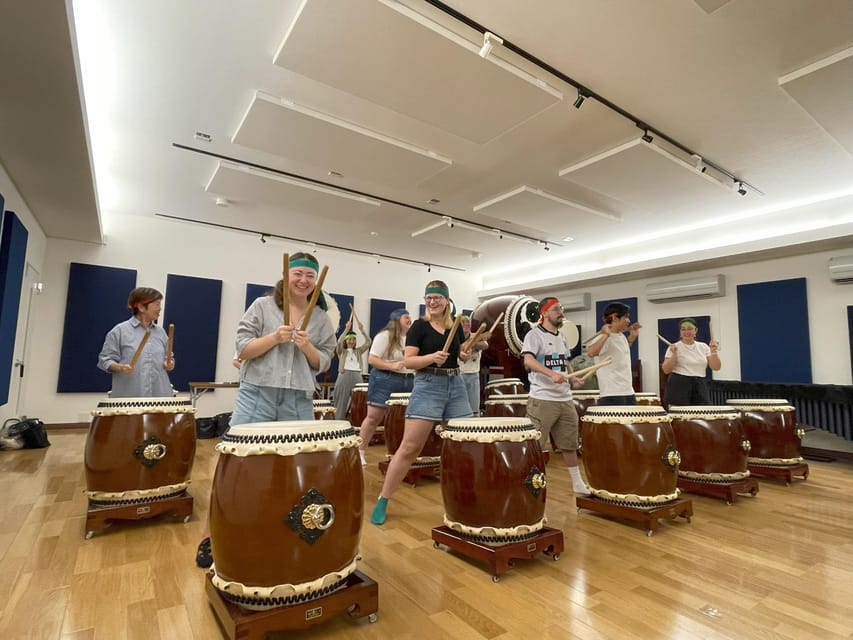
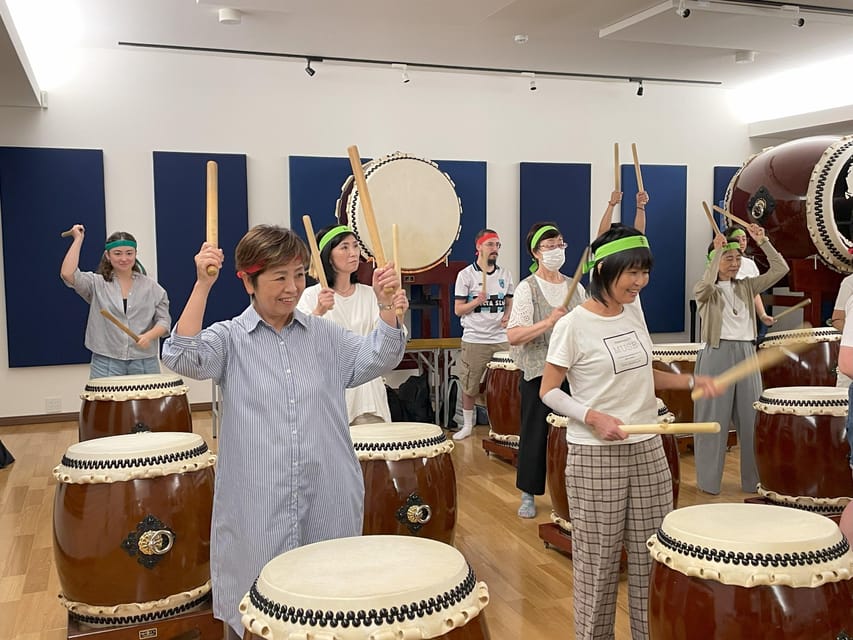
A taiko concert can be thrilling, but sitting in an audience keeps the tradition at arm’s length. This workshop lets you feel the size of the drum, the force of the stick, and the need for exact group timing. You are not simply watching Japanese culture being performed. You are asked to take part in a small piece of it.
The session begins with a short explanation of taiko’s place in Japanese life. That introduction matters because the drum is not presented as just a large percussion instrument. You learn why it has cultural meaning before you pick up the sticks. The opening lesson also gives you a few useful points of context, so the later demonstration has more impact.
Then comes the professional performance. The demonstration is one of the strongest parts of the experience because it shows the gap between basic instruction and expert control. You will see power, timing, and physical commitment up close. One participant especially appreciated seeing taiko at such close range, while another found the performance so impressive that they wished there had been more time to play alongside the professional.
That wish is fair. The demonstration is a highlight, but it is also a short part of a compact schedule. The goal is to give you an introduction, not a full concert or a long master class.
A few more Kyoto tours and experiences worth a look


Meeting at JR Takatsuki, the useful halfway point
The meeting point is the central ticket gate on the second floor of JR Takatsuki Station. Stay upstairs and do not go down. Your English-speaking guide will be waiting with a banner showing a taiko drum.
This location works well if you are staying in either major city. The JR train from Osaka to Takatsuki takes about 15 minutes, and the station is also about 15 minutes from Kyoto. That makes the workshop a practical side trip instead of a major relocation. Taxis from Osaka are not a good choice because they take longer and cost more.
Pay close attention to the station name. Takatsuki has both a JR station and a Hankyu station, and the meeting point is JR Takatsuki Station, not Hankyu Takatsuki Station. This is the sort of small detail that can turn a relaxed cultural activity into a rushed start if you overlook it.
Arrive 15 minutes early. The guide and vehicle cannot wait for late arrivals, and you cannot join after the activity begins. Build in enough time to find the correct platform and station exit, especially if you are making the trip from central Osaka or Kyoto with children or luggage.
Transportation by car between Takatsuki Station and the studio is included. That removes one more navigation problem, though the total two-hour duration includes travel. I would not schedule a major attraction immediately afterward. The organizers specifically advise against leaving early, and the schedule is not designed for people who need to hurry away.
Writing your wish on a hachimaki
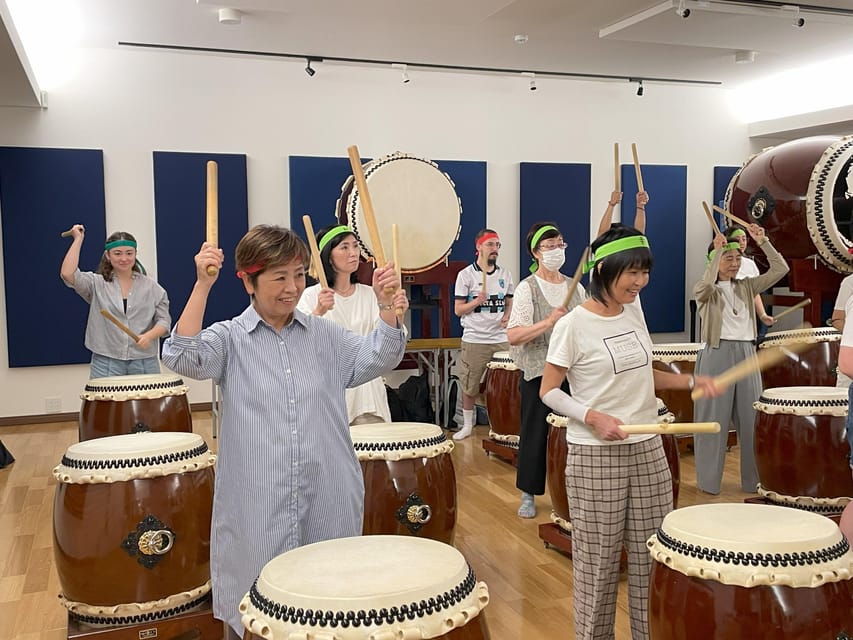
Before the drumming starts, you write a wish in Kanji on a hachimaki, the traditional Japanese headband. This is a simple activity, but it gives the session a personal beginning. Instead of receiving a costume item as a generic souvenir, you put your own mark on it.
You do not need to arrive with a Japanese phrase prepared. The supplied information does not promise calligraphy instruction or translation help for the wish, so you should ask the English-speaking guide if you need help choosing or writing the characters. The hachimaki then becomes part of your costume for the final photograph.
This step also gives the group a calm opening before the loudest part of the workshop. Taiko is physical and energetic, so a short cultural task helps set the tone and explains that the class is about more than hitting a drum.
The professional performance sets the bar
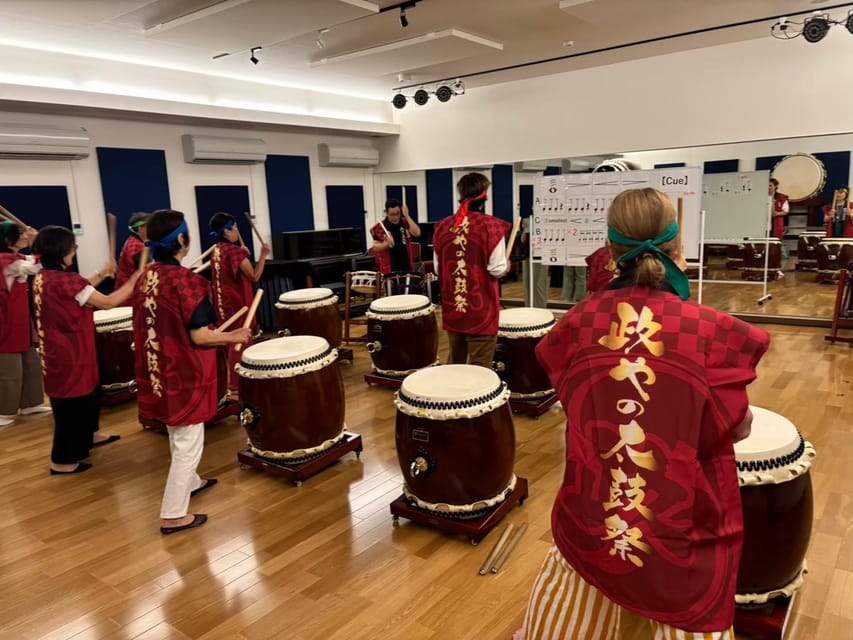
The instructor’s demonstration is designed to make an impression. You see the instrument played with far more control and force than a first-time participant can manage. That contrast is useful rather than intimidating. It shows you the sound you are working toward while making clear that this is a beginner class, not an audition.
The performance has been led by talented instructors at the studio, including Aoi, who also teaches the hands-on portion. Guides such as Michiko and Naru have provided English translation and kept the introduction easy to follow. Since staff assignments can change, you should treat those names as examples rather than a guarantee of who will lead your session.
The demonstration is also a good reason to book this instead of seeking a drumming lesson alone. You get both sides of taiko: the practiced stage art and the basic physical experience. The professional segment is short enough to leave room for your own lesson, but powerful enough to give the afternoon a clear centerpiece.
Learning the first movements without pressure
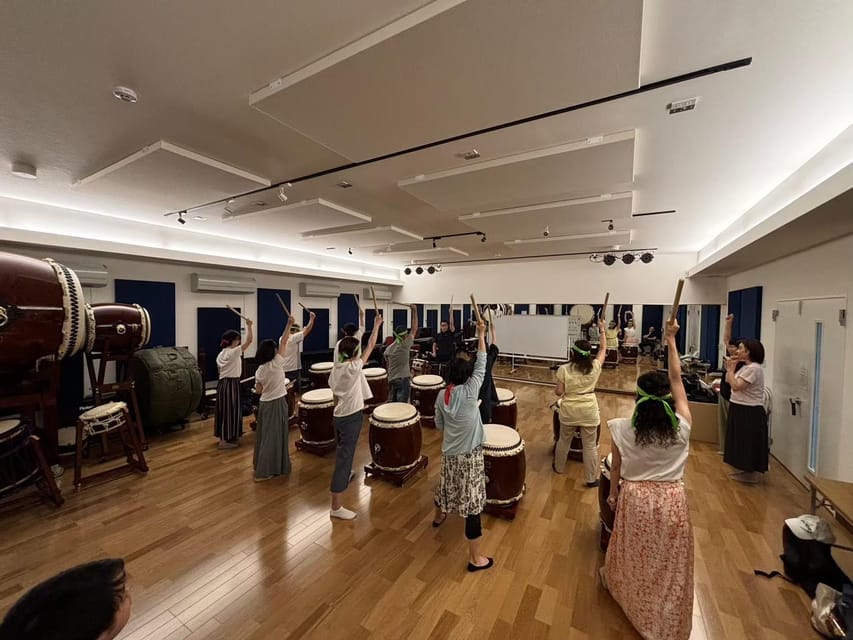
After the performance, a friendly instructor teaches the basic movements and techniques. The workshop is aimed at people with no taiko background, so you are not expected to read music or understand Japanese drumming patterns before you arrive.
The physical side should not be underestimated. One participant described it as a nice workout, and that is useful advice for planning your day. You will be standing and moving your arms, so comfortable clothes and shoes make sense. The supplied details do not specify a dress code, but you should avoid treating this as a sit-down cultural lecture.
The teaching style appears to allow a wide range of ability. A keen drummer can notice similarities and differences between taiko and other percussion instruments, while someone with no rhythm training can follow the instructor’s basic patterns. The class is not designed to turn you into a taiko player in two hours. It is designed to help you feel the main movements, understand the rhythm, and contribute to the group.
That distinction keeps expectations sensible. If you already play drums, you may want more technical detail or longer practice time. The workshop gives you an introduction rather than advanced coaching. If your main goal is to try something physical, cultural, and social, the short format works better.

Playing one group piece together
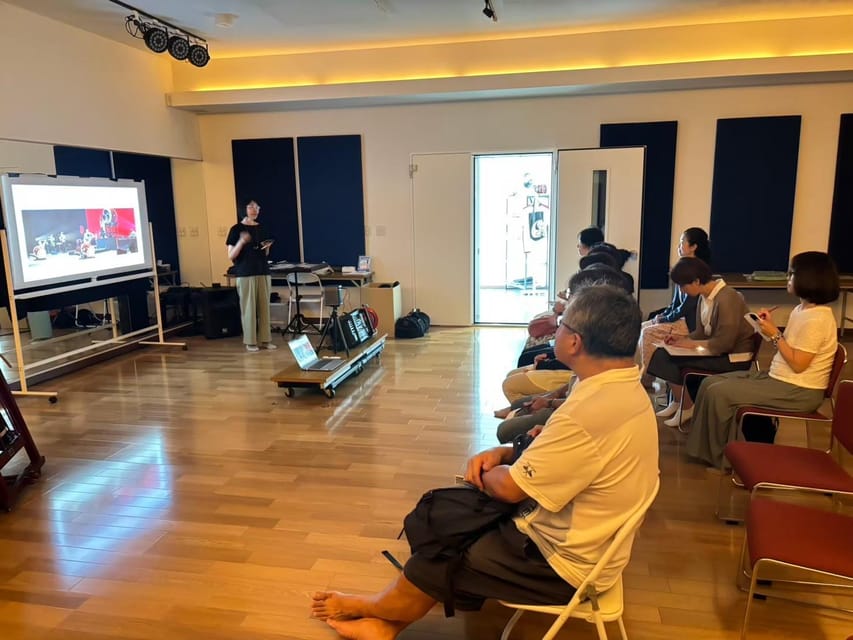
The final drumming activity brings everyone into a simple piece of music. This is where the workshop becomes a shared experience rather than a private lesson. You listen to the instructor, watch the other players, and try to keep your timing together.
Do not expect a long set or a recorded concert. The session finishes after the group has learned and played one piece. One participant wished for the chance to learn more songs and play longer with the professional, which points to the clear limit of the schedule. Still, completing one piece gives the class a satisfying target.
Group drumming can also be more forgiving than playing alone. You are part of a common beat, and the instructor can guide the room through the pattern. That makes this a good pick for families, couples, and mixed-age groups with different levels of musical confidence.
The activity has worked particularly well for families of five and for couples where one person already plays an instrument. It also suits solo participants when a booking is available, though some dates do not accept a single-person reservation. On those dates, you may need to reserve and pay for two places.
The costume photo is more than a souvenir
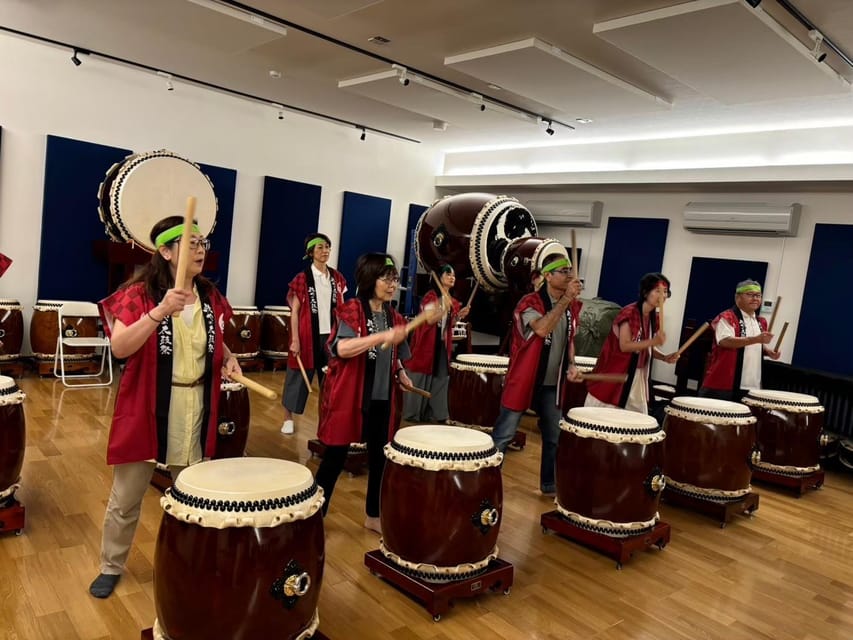
At the end, you put on traditional Japanese clothing, including a happi and the hachimaki you prepared earlier, for a commemorative photo. The costume gives the workshop a clear finish and creates a record of the experience beyond a few blurry phone pictures.
Photos are taken for participants to keep at no extra charge. That is useful because your hands will be busy during the drumming, and you may not have a chance to document the best moments yourself. One point to keep in mind is that video of the final performance is not listed as an included feature. If you want moving footage, ask the staff what is possible on the day rather than assuming a video will be provided.
The photo also works well for families. Young participants can see the session as a special event, while adults get a simple memento that connects the cultural lesson, the drumming, and the traditional dress.
Is $103 a fair price?
At $103 per person, this is not the cheapest short activity near Osaka. The value comes from what is bundled into the price: an English-speaking guide, the taiko instructor, the cultural introduction, the professional performance, the hands-on class, the hachimaki, the costume photo, and car transport between the station and studio.
You are also paying for access to a structured introduction that would be difficult to arrange independently. A free festival performance might let you hear taiko, but it would not normally give you instruction, a guided explanation, or the chance to play in a group. For someone who wants participation rather than observation, the price is easier to justify.
The value is weaker if you are looking for a long lesson, advanced percussion training, or an extended concert. Two hours including travel leaves limited time for repeated practice. You should book this for the combination of culture, performance, and a first playing experience, not as a substitute for a serious music course.
Observers who do not take part in the drumming pay 8,000 yen in cash at the studio. You must notify the organizer in advance if someone will only watch, because transport may not be arranged without notice. That fee is worth considering carefully. If your companion is physically able and interested, participating offers much better value.
Who will enjoy this most
I would recommend the workshop to families with children aged seven or older, couples, first-time visitors who want a cultural activity, and anyone who likes music but does not want another passive performance. It is especially appealing if your Japan itinerary already includes temples and city sights and you want one activity that gets you moving.
It also suits people with different musical backgrounds. A drummer can compare taiko with familiar percussion, while a complete beginner can follow the basic instruction. The upbeat group format helps take the pressure off perfection.
Children under seven cannot participate. The information does not specify other physical restrictions, so if you have concerns about standing, arm movement, or the workout involved, ask before booking. The experience is active, and you should not plan it as a quiet break.
Planning the day around your two hours
The safest plan is to treat the workshop as a fixed block that begins at the meeting time and ends after the return travel. Arrive at JR Takatsuki 15 minutes early, then leave room afterward rather than booking a train, meal, or attraction at the exact two-hour mark.
If you are coming from Osaka, use the JR train rather than a taxi. If you are coming from Kyoto, the same central location makes the activity practical from that direction too. Check the starting time when booking because the available sessions can vary.
The experience offers free cancellation up to 24 hours before the start time, and you can reserve now and pay later. Those terms help if your Osaka or Kyoto schedule is still taking shape, but they do not protect against arriving late. Once the session begins, no refund is given for missing it.
Should you book the Osaka taiko workshop?
Book it if you want a hands-on cultural experience with clear English support, a professional performance, and a group activity that works for beginners. The short train ride from Osaka or Kyoto, included station transport, traditional costume, and free photos add practical value.
Think twice if you want a full-length taiko concert or serious technical training. The workshop gives you one simple group piece, and the two-hour schedule includes travel. For most visitors, that is enough to understand the appeal of taiko and leave with a strong memory. Just reach JR Takatsuki early, wear comfortable clothes, and be ready to make some noise.
FAQ
Where does the taiko workshop meet?
Meet at the central ticket gate of JR Takatsuki Station on the second floor. Do not go down. The guide will hold a banner showing a taiko drum.
Is the meeting point at JR Takatsuki or Hankyu Takatsuki?
It is at JR Takatsuki Station. Takatsuki has two stations, so do not go to Hankyu Takatsuki Station.
How long does the experience last?
The total duration is two hours, including travel between Takatsuki Station and the studio. Returning early is not recommended.
Is the workshop suitable for beginners?
Yes. The instructor teaches basic taiko movements and techniques, and the workshop is designed for people without previous taiko experience.
Can children participate?
Children under seven cannot participate.
What does the price include?
The $103 price includes the Japanese drum experience, English-speaking guide, taiko instructor, hachimaki, and car transport to and from the studio and Takatsuki Station.
More Workshops & Classes in Kyoto
More tours in Kyoto we've reviewed




Workshops, compared.
 ★ 4.3Kyoto: 45-Minute Tea Ceremony Lesson ExperienceFrom $2245 min
 ★ 5.0Ramen Cooking Class at Ramen Factory in KyotoFrom $131
 ★ 4.9Kyoto: Ramen Cooking Class at a Ramen Factory with SouvenirFrom $1271h 30m
 ★ 4.9Kyoto: Samurai Class, Become a Samurai WarriorFrom $70
 ★ 5.0Ninja 1-hour Hands-on Lesson by Japanese master in Kyoto -EntryFrom $80
 ★ 5.0Kyoto: Ramen, Gyoza, and Onigiri Cooking ClassFrom $901h 30m