
Reviewed · KYOTO
Kyoto: Sumi Ink and Brush Calligraphy Experience
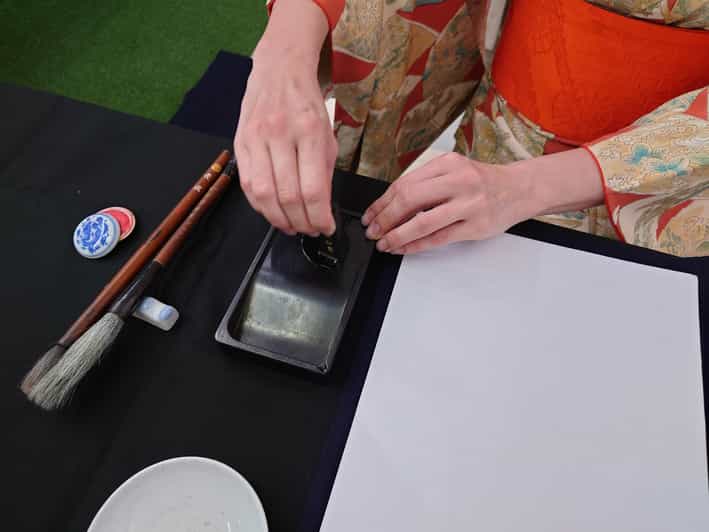
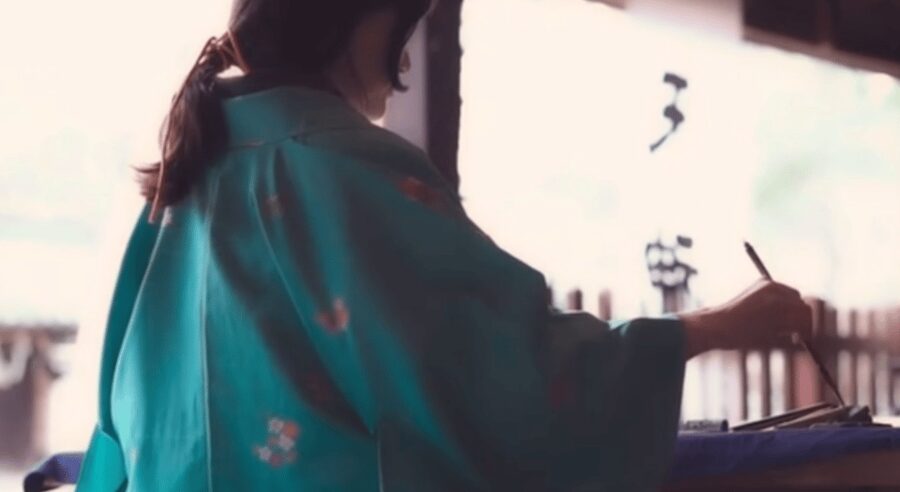
The most appealing part of this 50-minute calligraphy class is that you do not simply dip a brush into ready-made ink and copy a character. You grind sumi ink yourself on a suzuri inkstone, notice its scent and texture, then use it to paint bamboo and write Japanese characters on a shikishi board.
I like two things here. First, the class combines painting and calligraphy, so you get more than a single practice sheet. Second, the small group of up to six gives the instructor room to teach brush control step by step. The main drawback is the short session: you will make a keepsake, but you will not become a calligraphy expert in under an hour.
In This Review
- Key points to know before booking
- Grinding sumi ink gives the class its quiet center
- Brush practice comes before the bamboo
- Painting bamboo on a shikishi board
- Adding 竹, 和, or your own requested characters
- Why the six-person limit matters
- A 50-minute activity with a clear rhythm
- Is $49 a fair price?
- Who will enjoy this class most
- Practical preparation for the brush and ink
- My verdict: book it for the process, not just the souvenir
- FAQ
- How long does the sumi ink and brush calligraphy experience last?
- What will I make during the class?
- Do I need previous calligraphy experience?
- Which Japanese characters can I write?
- Is the ink included?
- What languages are available?
- Is the activity wheelchair accessible?
Key points to know before booking
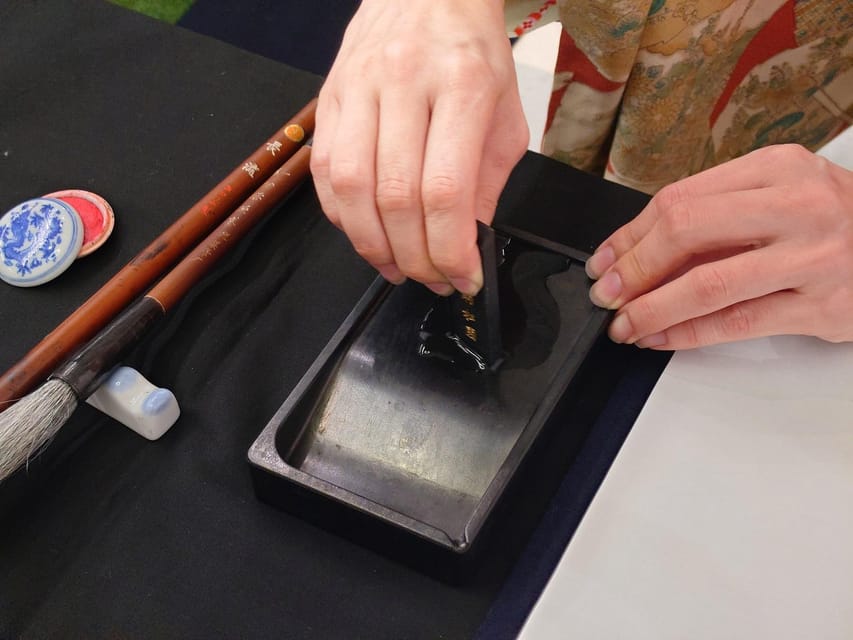
- Grind your own sumi ink: Use water and an inkstone instead of relying on pre-made ink.
- Learn two brush methods: Practice soku-hitsu with the brush held on its side, then choku-hitsu with the brush upright.
- Paint bamboo with ink and water: The class focuses on controlled strokes and refined simplicity.
- Add Japanese characters: Write 竹, meaning bamboo, or 和, meaning harmony, beside your painting.
- Take home a shikishi board: Your finished square board becomes a compact souvenir.
- Work in a small class: The maximum group size is six, with instruction available in English and Japanese.
Grinding sumi ink gives the class its quiet center
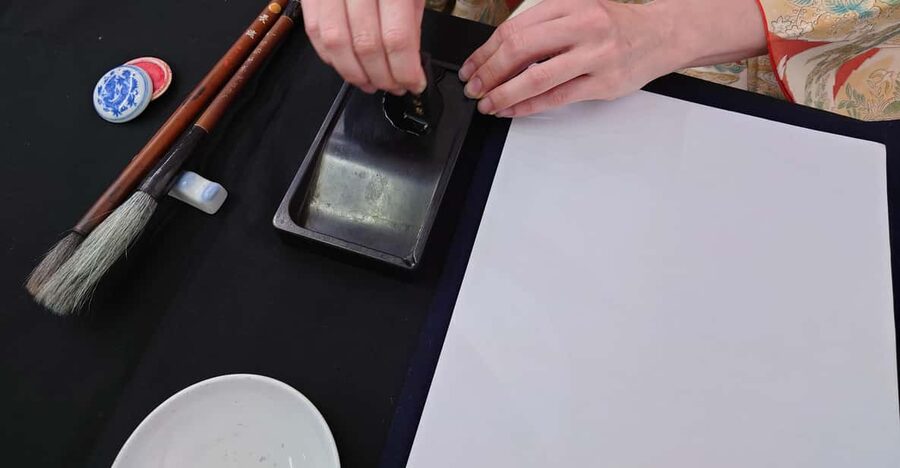
Sumi ink is more than black liquid in a bottle. Traditional ink is ground with water on a suzuri, a flat inkstone, and this first task slows the class down before the brush touches paper.
You will be given the tools you need, including the inkstone. As you grind, the ink gradually develops its usable texture and tone. The process also lets you notice the fragrance of the ink, one of the small details that can disappear when a class uses ready-made supplies.
The activity does not include pre-made sumi ink, which is not a problem here. The point is to experience the preparation. If you prefer to get straight to painting, this part may feel slow, but I think it is one of the strongest reasons to choose this class over a quick souvenir workshop.
You should arrive ready to pay attention to small changes. The ink is not just about producing a dark mark. Your handling of water affects the flow and the shade, so the finished bamboo can have lighter and darker strokes.
If you're still narrowing it down, here are other tours in Kyoto we've reviewed.

Brush practice comes before the bamboo
The instructor does not send you straight to the final board. You first practice how the brush behaves in your hand.
The first technique is soku-hitsu, using the side of the brush. This helps you make broader marks and understand how pressure changes the stroke. Next comes choku-hitsu, with the brush held upright. This gives you a different line and asks for more direct control.
That order makes sense for beginners. You can test the brush, make mistakes, and repeat the movement before working on the piece you will take home. The class is designed for people with no previous calligraphy experience, so you do not need to know Japanese characters or have artistic training.
The short format means practice time matters. You should use it rather than rushing to the final board. The instructor’s guidance is especially useful here, since a tiny change in brush angle can affect the width and feel of a line.
Painting bamboo on a shikishi board
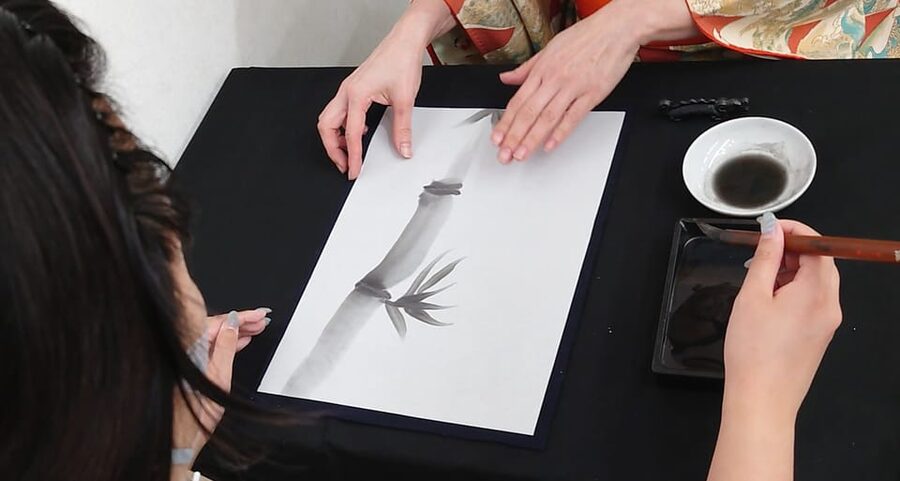
After the brush exercises, you move to the main artwork: bamboo painted with ink and water on a shikishi board.
Bamboo is a practical subject for a first sumi painting. Its stalks, joints, and leaves can be built from clear brush movements, and the simple subject suits the restrained look of ink painting. You will use the techniques from the practice stage and work through the painting one part at a time.
A shikishi board is a firm, square art board made for display. It is more satisfying than taking home a loose sheet because it already feels like a finished object. The board also keeps the souvenir compact, which matters if you are carrying purchases through the rest of a Japan trip.
Do not expect every stroke to look perfect. The appeal of this style comes partly from variation. A line that is a little lighter or heavier can give the bamboo a sense of movement. The class is less about producing a flawless copy and more about learning how ink, water, pressure, and posture work together.
You will have a chance to practice before making the final version. Take that chance. If you are nervous about ruining the board, spend extra time repeating the bamboo forms on the practice material.
Adding 竹, 和, or your own requested characters
The final stage combines your painting with writing. The suggested characters are 竹, bamboo, and 和, harmony. You practice the characters first, then write them beside the bamboo on your shikishi board.
This adds a personal touch without asking you to invent an entire composition. If you already have another character in mind, you can ask the guide about it. The supplied details say the guide can write requested characters for you, which is helpful if you want to copy a meaningful word but are unsure of the correct form.
You should think about your choice before the last stage. 竹 connects directly with the painted subject, while 和 has a broader meaning and a calm visual presence. If you want a souvenir that records the activity clearly, 竹 is the obvious choice. If you prefer a character with a wider idea behind it, 和 may suit you better.
The result is not only a sample of Japanese writing. It records the contrast between the loose bamboo painting and the more deliberate character strokes. You leave with something you made during the class, rather than a mass-produced item bought on a shopping street.
Why the six-person limit matters
The class allows no more than six participants. That is a useful size for a hands-on activity, especially one involving brush posture and individual corrections.
In a large workshop, you might spend much of the session watching from the back or waiting for help. Here, the instructor can demonstrate the techniques and give each person more direct attention. The available teaching languages are English and Japanese, so English-speaking participants can take part without needing to know Japanese calligraphy terms in advance.
The instructor’s role is practical. Feedback from the class has highlighted patience, clear communication, step-by-step teaching, and plenty of practice. Those qualities matter more than a long lecture in a session this short. You need someone who can show you how to adjust the brush, then let you try again.
The class has received an overall rating of 4.7 from four recorded ratings, with comments emphasizing the teacher’s skill, friendly manner, patient instruction, and enjoyable pace. That is a small sample, so I would not treat the number as a guarantee. Still, the repeated praise points to the part of the activity that matters most: hands-on instruction rather than a rushed demonstration.

A 50-minute activity with a clear rhythm
The schedule is compact but logical:
- You meet near the giant crab sculpture of Kani Doraku.
- You receive the prepared calligraphy tools and begin grinding sumi ink with water.
- You practice soku-hitsu, using the side of the brush.
- You practice choku-hitsu, holding the brush upright.
- You paint bamboo on a shikishi board.
- You practice and write Japanese characters beside the bamboo.
- You take the finished board home.
There are no listed transport services, so you need to make your own way to the meeting point. The Kani Doraku crab is a useful landmark, but you should check the exact meeting instructions before setting out, especially since the activity is presented as a Kyoto experience while the named landmark is the giant crab sculpture associated with Kani Doraku. The supplied information identifies the location only as Honshu, so do not assume your hotel or station is nearby.
Arrive on time. A 50-minute session has little spare room, and missing the opening ink-grinding or brush demonstration would reduce the value of the class.
The activity takes place indoors, making it a sensible option if you need a break from sightseeing or the weather is poor. You are lent an apron, so you do not need to treat the class as a formal occasion. Comfortable clothes are still the sensible choice.
Is $49 a fair price?
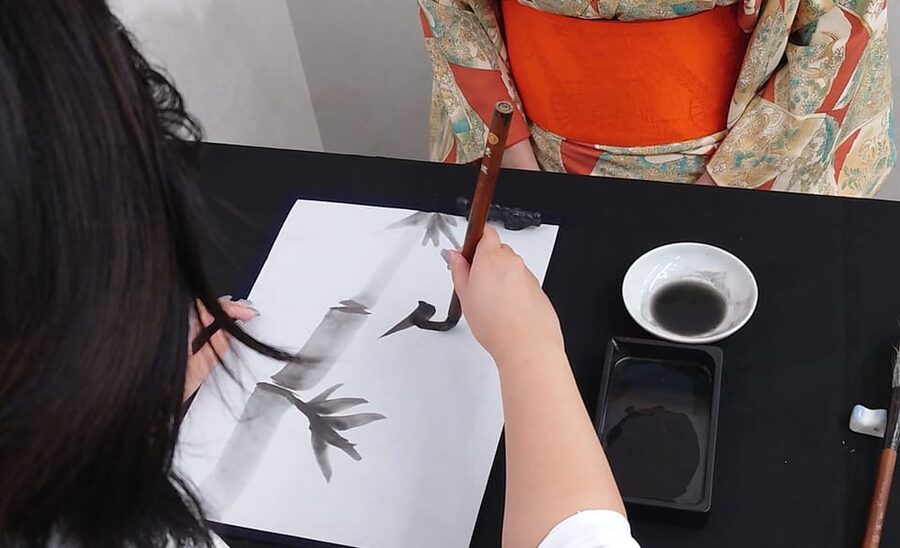
At $49 per person, this is not the cheapest way to spend 50 minutes in Japan. You are paying for instruction, prepared tools, the inkstone, the shikishi board, and the chance to take your finished artwork home.
The value depends on what you want. If you only want a quick introduction to writing one Japanese character, the price may feel high for the duration. If you want a guided activity with materials included and a physical souvenir, the cost is easier to justify.
The class also saves you from buying several items separately. You do not need to find a suzuri, brushes, ink, practice materials, and a display board on your own. You receive guidance on how to use them, which is the part that turns supplies into an activity.
I would compare it with the cost of another short craft class rather than with a museum ticket or a free temple visit. This is a focused creative break. Its value comes from the process and the board you take away, not from the number of sights covered.
Who will enjoy this class most
This activity suits you if you like making things with your hands, want a calm indoor stop, or are looking for a Japanese souvenir with a personal connection. It also works well for a first calligraphy lesson because the instructor introduces the brush methods before asking you to create the final piece.
It is a good choice for couples, friends, and solo participants who enjoy a small class. The six-person limit should help the session feel more personal, though the activity remains short enough that you should not expect long individual coaching.
You may want to skip it if you are looking for a longer artistic workshop or a detailed lesson in Japanese characters. The class gives you an introduction, practice, and a finished board. It does not promise an extended study of calligraphic styles or Japanese language.
The physical requirements deserve careful attention. The information supplied for this activity says both that it is wheelchair accessible and that it is not suitable for wheelchair users or people with mobility impairments. Those statements conflict. If access is important to you, contact JEUGIA Corporation before booking and ask for a clear answer about the venue, seating, entrance, and movement during the class.
Practical preparation for the brush and ink
Wear comfortable clothes and shoes. An apron is provided, which protects your clothing, but loose, easy-to-manage clothing will make it simpler to work at the table.
The suggested items include a hat, sunscreen, and water. The class is indoors, but you may need those items for the journey to and from the meeting point. You should also leave enough room in your luggage for the completed shikishi board.
No previous calligraphy experience is required. You do not need to know how to read 竹 or 和 before arriving, and you can ask the guide about other character requests. English and Japanese instruction is available.
The activity offers free cancellation up to 24 hours before the start time for a full refund. You can also reserve now and pay later, which helps if you are still adjusting a Japan schedule. These policies are useful, but the most important planning detail is still the meeting point and arrival time.
My verdict: book it for the process, not just the souvenir
I would book this class if I wanted a short, hands-on cultural activity with a real finished piece to take home. Grinding the ink, learning two brush techniques, painting bamboo, and adding a character gives the 50 minutes a clear purpose.
The strongest reason to choose it is the teaching approach. Patient, clear, step-by-step instruction and plenty of practice are exactly what a beginner needs. The main cautions are the limited duration, the $49 price, and the conflicting accessibility information.
Book it if you value a small group and want to slow down for an hour. Skip it if you want a long workshop, a broad tour, or the lowest-cost souvenir. Before paying, confirm the exact venue because the Kani Doraku meeting landmark may not match what you expect from the Kyoto title.
FAQ
How long does the sumi ink and brush calligraphy experience last?
The activity lasts 50 minutes. Starting times vary, so you should check availability when choosing a booking.
What will I make during the class?
You will paint bamboo with sumi ink and water on a shikishi board. You will then write characters beside the bamboo and take the finished board home.
Do I need previous calligraphy experience?
No. The class is suitable for beginners, and the instructor teaches the brush techniques before you work on the final board.
Which Japanese characters can I write?
The suggested characters are 竹, meaning bamboo, and 和, meaning harmony. You can ask the guide about other character requests, and the guide can write them for you.
Is the ink included?
The necessary calligraphy tools and an inkstone for grinding sumi ink are included. Pre-made sumi ink is not included because you grind the ink yourself with water during the activity.
What languages are available?
Instruction is available in English and Japanese.
Is the activity wheelchair accessible?
The information provided gives conflicting details. It describes the activity as wheelchair accessible but also says it is not suitable for wheelchair users or people with mobility impairments. Contact JEUGIA Corporation before booking to confirm the current access arrangements.
More tours in Kyoto we've reviewed

Kyoto, compared.
 ★ 5.0PERFECT KYOTO 1-Day Bus TourFrom $129
 ★ 4.8Kyoto: Fushimi Inari, Kinkakuji, Bamboo Grove 1 Day Bus TourFrom $122510 minutes - 9 hours
 ★ 4.9Kyoto: Tea Ceremony in a Traditional Tea House in KiyomizuFrom $4945 min
 ★ 4.7Kyoto Geisha Walking Tour: Gion District & Hidden GemsFrom $252 hours
 ★ 4.9Kyoto: Tea Ceremony Ju-An at Jotokuji TempleFrom $291h 10m
 ★ 4.3Kyoto: 45-Minute Tea Ceremony Lesson ExperienceFrom $2245 min